Tag: A Dose of God Today

  • A Reflection of a Pastoral Counseling Volunteer

    A Reflection of a Pastoral Counseling Volunteer

    In July 2021, I committed myself to being a volunteer pastoral counselor at St. Clement’s Pastoral Care and Counseling Ministry. I knew about this program from the ministry’s Facebook page. I am happy knowing that counselors whom I know (since we are from the same university) are volunteers of this program. It caught my attention, and I felt a bit of interest in being part of this worthwhile community service.

    God truly knows my heart’s desires, so when one of the inspiring people, one of the people behind this program, Dr. Baby Rose Robles, invited me to join their group, I was overjoyed. And this is it! I never hesitated, and I said, “Sure, I want to.”

    It was still in the midst of the pandemic, and we counselors were grappling with this alternative mode of counseling, which is tele/cyber/online counseling. God prepared me for this when, at the height of the COVID-19 pandemic, professionally all I could do was attend webinars in this mode of counseling.

    There came my first client in the ministry in August, then another, and several more. Because He prepared me for this, I was able to trust my competence. I fervently prayed and hoped that I would be able to help them, help themselves.

    Now, my two Sundays every month are dedicated to this service to the community. I loved going to St. Clement’s Church and, more so, to the Pastoral Care and Counseling Ministry Office with its homey atmosphere for face-to-face sessions. In spite of the exhausting weekly tasks that I attend to, I eagerly look forward to seeing clients, listening to them, and probing together for solutions to the circumstances they experience. How good it is to have this rewarding feeling at the end of the session, hearing how they have been relieved of the heavy emotions that have tormented them for some time.

    Forrest Gump said, “Life is like a box of chocolate; you never know what you’re going to get.” Yes, it’s true; every time I enter the center, I know that I will hear issues, concerns, dilemmas, challenges, traumas, and emotional wounds, but it is still for me to find out how deep those are.

    For almost all of them, circumstances have threatened to be overwhelming. In the respite of silence during my sessions with them, I feel a tickle of hope. How I thank you, Lord, our Emmanuel, for showing them the way to our ministry. I see You in the various faces and pitches of pain. As much as I am able to help them, I have been helped as well, as I have come to many realizations about life and suffering. How, despite everything, knowing You’re with us makes everything bearable.

    God is like our leader; we do our tasks as members, and we do not worry if there is more to do, and if we fall short of our abilities; trust our leader; He is in control,” I always tell my clients. Then, I saw a grin, and, sharing the same confidence, we both smiled. My faith in God has been my protective factor, as I personally affirm what the studies say: that people who trust in His faithfulness can easily cope with stressful life circumstances and are able to find meaning and see hope.
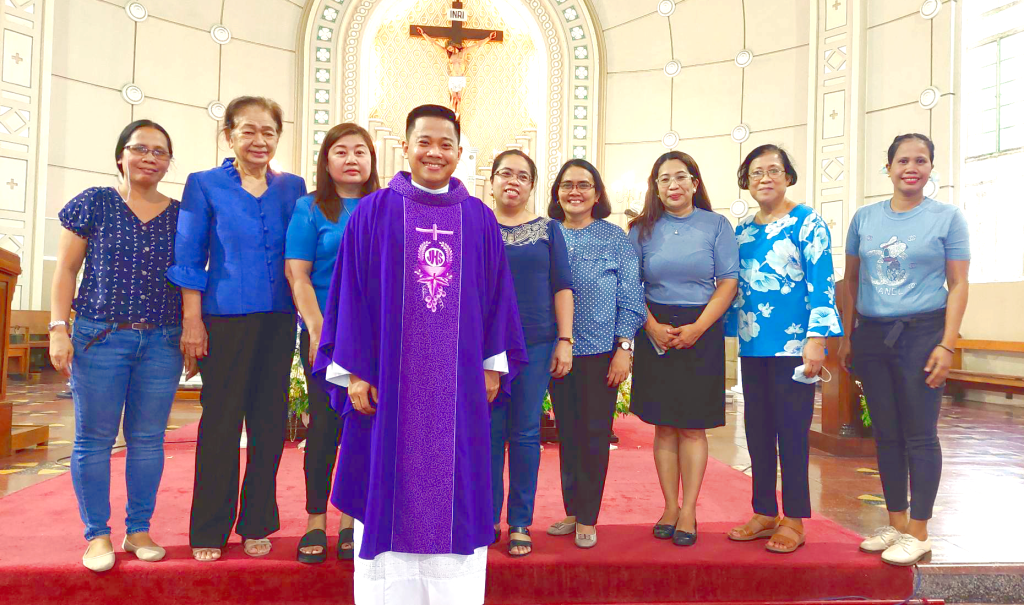
    With Fr. Jom Baring, CSsR and the Pastoral Counselors after their Renewal of Commitment to the ministry.

    From the various faces of suffering that we are facing today—emotional and psychological wounds, traumatic pasts, and haunting guilt, among others—God, who is with us, is inviting us to the safest space where we can run—to His arms. “Praise be to the God and Father of our Lord Jesus Christ, the Father of compassion and the God of all comfort, who comforts us in all our troubles, so that we can comfort those in any trouble with the comfort we ourselves receive from God.” (2 Corinthians 1:3). His arms hold security and affection. Who doesn’t want to belong, then?

    He is telling us to further trust the process. What we endure right now can be very challenging and at times very exhausting, but haven’t we been assured of the outcome? How can we be afraid of the battles that we are currently in when we know that ultimately we will win them? God has assured us of strength, wisdom, and redemption. Let us let go and have faith that things will work out as they were intended to in their ripe and perfect timing. Although this process is lengthy and rigorous, it renews our attitude and character to be pleasing to Him. 

    Lastly, He invites us to surrender and commit our lives to Him. Remembering His promise in Isaiah 40:29–31 “He gives strength to the weary and increases the power of the weak.” Even youths grow tired and weary, and young men stumble and fall, but those who hope in the Lord will renew their strength. “They will soar on wings like eagles; they will run and not grow weary; they will walk and not be faint.”

    Moreover, our kindergarten days would let us recall, the childlike faith that we have, through this song,

    “ Ang mga pispis nga nagalupad, gin- atipan sang Diyos
           Nagahimo pugad…
      Ang mga isda nga nagalangoy, gin-atipan sang Diyos
          Wala nagnguyngoy…
      Ang mga kahoy nga nagasanga, gin-atipan sang Diyos
          Madamo ang bunga…
      Ang mga subay nga nagkubay, gin-atipan sang Diyos
         Wala nagsu-ay…
     Labaw kita sa ila kay larawan kita sang tagtuga
          Indi magkasubo, mga utod ko …”

    My childhood days are indeed the best days of my life. It’s where I am so carefree, happy, and peaceful because my mother and father are there to oversee my needs. Well then, God’s invitation brings us to this state; who would want to refuse serenity and contentment?

    Thank you for lending me your ears as I share with you my reflections as a volunteer pastoral counsellor in this momentous occasion. My gratitude Father Jomil Baring for giving me this opportunity to share my thoughts.

    About the Author I Marie Rosette Lacuesta-Cainday
    ( She is Licensed Guidance Counselor who volunteers and gives her time and presence for the St. Clement’s Pastoral Care and Counseling Ministry, Iloilo City)
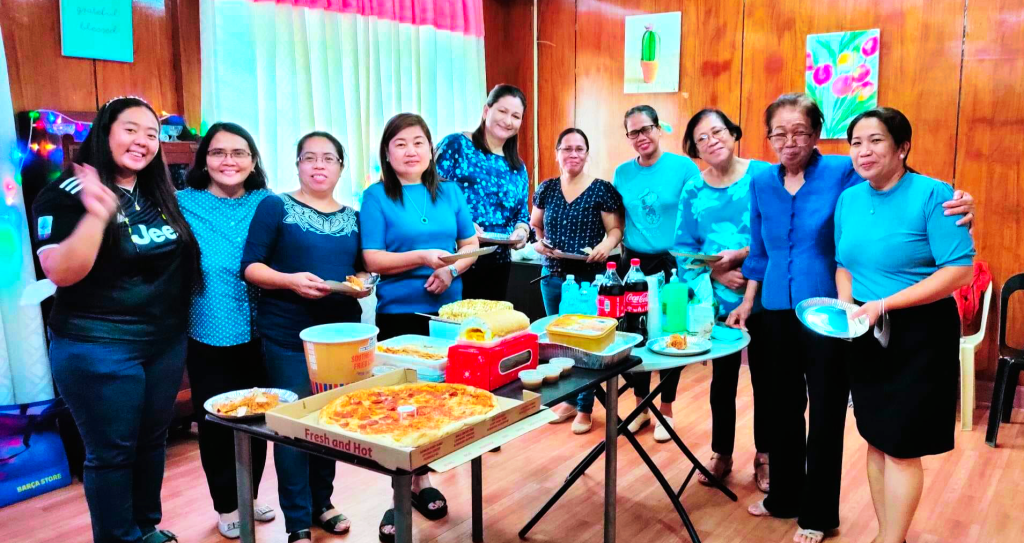
    Volunteer Pastoral Counselors with Maam Rosette at the far right.
  • We are Products of our Family Stories and of God’s Story

    We are Products of our Family Stories and of God’s Story

    December 17, 2022 – Second Day of the Misa de Aguinaldo

    Click here for the readings (https://bible.usccb.org/bible/readings/121722.cfm)

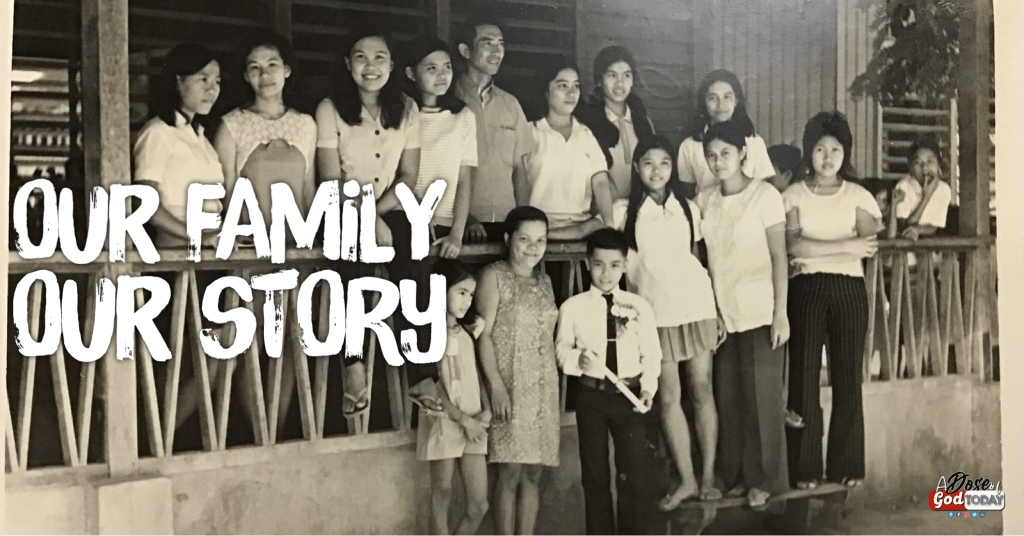
    Each of us is a product of our vast family history. It is not that we are doomed and chained by the past, but we are being enriched by a vast history. Our families have our own history of both joys and sorrows, failures and successes, of horrors and victories.

    Our family history tells us who we are and it is part of our identity. It is also very important that we become in touch with our own family history and see how God works within our stories. Besides, knowing our family history, this will be an opportunity for us to allow God to heal our broken and painful past present in our family history.

    Let me bring you now on how God works within a human family and how God reveals the Divine Plan in the family history of the whole humanity.

    The first reading from the Book of Genesis tells us how Jacob called his sons and bestowed the blessing to Judah the fourth son. The blessing also contains the prophecy of the rise of a King, in the person of David, the very lineage of Jesus claimed in the Gospel of Matthew.

    This family of Jacob was filled with guilt and shame. The lineage had stories of repeated unfaithfulness and scandalous personalities. Jesus’ lineage is not perfect and not wholesome at all.

    Thus, we find Judah who sold his own brother, Joseph for money. King David who raped Bathsheba and then later ordered to murder her husband. Rahab, who was a prostitute. King Ahaz burned his own son alive as a human sacrifice. King Joash committed idolatry against Yahweh and murdered the people in the Temple area. The once revered King Solomon who built the Temple of God but later on, turned to be unfaithful by turning to the gods and goddesses of his many wives.

    In this kind of family history, is there any good news here, when in fact, Jesus did not come from a “good” and “blameless” family?

    Despite the unfaithfulness and guilt within this family history, God never wavered His plan to make something good, wonderful and beautiful in this family. The Gospel of Matthew that has been proclaimed today, contained a long list of generations until the birth of Jesus.

    Matthew recorded the family tree of Jesus with 42 generations divided into three, that makes it 14. 14 is the equivalent of two 7. Seven is a perfect number in Jewish belief. And the repeated use of 7 means that God works in this human family in an absolutely perfect way. The family tree though not perfect but with traces of sins and unfaithfulness, God works within this human family to bring healing and life.

    The family tree and history of Jesus is God’s statement to us that God indeed journeyed with us, in all our humanity, in all our sins and unfaithfulness. Jesus, being born in a human family, tells us that God fully embraces our humanity. With our imperfection, God made it to be the very space for us to encounter him and to know him. Indeed, this also speaks to us that we are all products of our own family stories as well as of God’s story who never abandoned us or wavered his faithfulness to us.

    This calls us now to own and recognize the gift of our family. Some of us must have been traumatized and carrying deep wounds because of what happened in our family, others could have been divided because of conflict over material possessions. Many families are also struggling to live because of so much poverty. Yet even with these imperfections, God invites us today, that as we recognize our sins and failures, God also tells us to recognize how God unfolds blessings and graces in our human family.

    And so on this second day of the Misa de Aguinaldo, we pray for our own family history, we pray for peace and reconciliation, we pray for healing and freedom so that anything that holds us back, traumatizes us, or haunts us may be healed and be given peace. As for this grace, so that as we will celebrate the birth of Jesus, who has come as part of the big human family, may also bless our families. Kabay pa.

  • Look around and See how God surprises us

    Look around and See how God surprises us

    December 11, 2022 – Third Sunday of Advent, Gaudete Sunday

    Click here for the readings (https://bible.usccb.org/bible/readings/121122.cfm)

    Recently, Bro. Karl Gaspar, CSsR, a confrere of mine was hospitalized for three weeks and was admitted in the Intensive Care Unit due to complications of his veins for his regular dialysis. When he got better and can finally able to move, he sent a message that somehow captured what he has been through in the past three weeks. And I would like to share with you his message and reflection that brings us deeper into this Season of Waiting, of Advent.

    WAITING…the last 3 weeks in the hospital was waiting to breathe again, waiting to have drops of water down my throat, waiting for pain to subside, waiting for wounds to heal, waiting for the doctors to make the right decisions, waiting for visitors who never arrived due to protocols, waiting for prayers to be answered. These waiting hours certainly  help to understand the biblical meaning of keeping watch of the dark night to make truly appreciate the gift of light that shines on Christmas Day!

    What Bro. Karl expressed would certainly tell us how waiting for something good to happen can become frustrating and even tiring. Yet, what Bro. Karl also shared speak to us that there are many things in our life that are not under our control. Thus, we wait for prayer to be answered and we hope that it would be the one we are hoping for.

    Just as what Bro. Karl shared, I am sure many could also relate well when we also face realities of waiting and hoping. We wait that we may be healed from our sickness. We wait that our relationships will be repaired. We wait that our anger and hatred may subside and be reconciled. We wait that the person we long for may at last come to us. We wait to be loved. We wait to be embraced and accepted. We wait that our problems and issues may be solved. We wait that our financial debt may be fully paid. We wait that our dreams may come true.

    However, there are also those who may wait longer than others. The longer we wait, the more we also lose our patience, our peace, hence, becoming anxious and disturbed. Frustrations and discouragements may come to us to the point that we could also feel that we are about to surrender. To stop fighting. To stop dreaming. To stop waiting. To stop hoping. And these are realities in our life.

    Indeed, when our suffering, anxiety and frustrations in life become overwhelming, others would succumb and stop at all. This is how we find ourselves become lifeless and passive, or when we allow our anger and hatred to consume us, or when we let our bitterness and guilt control us. This is how we also lose our focus and patience.

    For this reason, the Letter of James speaks to us today reminding us “to be patient.” James, in his wisdom employed the image of a farmer who waits for the precious fruit of the earth. James actually tells us that there is a process in everything. Like, healing is a process. Reconciliation is a process. Growth is a process. Building healthy relationship is a process.

    James affectionately tells us to trust the process of God and to trust his grace to work in us. This is how James also reminds us again “not to complain about one another that we may not judge.” He is basically telling us not to allow our bitterness and negativities to hold us back and to let us lose hope.

    This brings us now into the experience of the Hebrew people who for more than 700 years earlier from the time James wrote the letter, were being exiled and subjected to slavery. This is what we find in the Book of Prophet Isaiah. His prophecy was addressed to these Hebrew people who had been in such miserable and depressing life situation. The people were removed from their homeland and were exiled to Babylon. At that time of their captivity, the people had to walk approximately 1,700 miles or about 2,735 kilometers. The people believed that this happened to them because of their unfaithfulness and because their leaders turned away from Yahweh. And so the people longed to be rescued by God. Yet, the years and years that had passed and the suffering and slavery they had to endure had made them frustrated and discouraged. They felt abandoned. They lost their patience to wait. They felt hopeless. I am sure, they too have asked, “Will God come to save us? Will the Lord help us?

    To give them hope, Isaiah appeared in their midst and proclaimed to them what the Lord promised. Isaiah proclaimed, “Be strong, fear not! Here is your God… he comes to save you. Then will the eyes of the blind be opened, the ears of the deaf be cleared; then will the lame leap like a stag, then the tongue of the mute will sing.” These are images of healing, reconciliation, restoration, freedom and fullness of life – as Isaiah also prophesied, “they will meet with joy and gladness, sorrow and mourning will flee.”

    And this is good news because what the prophet actually calls us is to have a reason to rejoice because God has come. This is the reason why on this Third Sunday of Advent we lighted the third candle in the advent wreath. That is the Candle of Joy that calls us to rejoice. In fact, today is called Gaudete Sunday, which means, “REJOICE!” Through the prophet, God speaks to his people telling them, “I HAVE NOT FORGOTTEN YOU! AND I WILL NEVER ABANDON YOU!” The words in the first reading is God’s joyful promise to his people. God comes and we will surely rejoice.

    This is being reechoed in our Gospel today. John the Baptist who was in prison felt the same despair and disappointment. And we can sense this in his question for Jesus. John asked, “Are you the one who is to come, or should we look for another?” John must be desperate because he too was suffering. He was surely brave yet, he too asked the Lord and needed a confirmation to give him hope. He had been preaching about the joyful coming of the Messiah who will come to bring justice in the world and uplift the poor and the oppressed.

    In response, Jesus told the disciples of John to go and tell John what they have heard and saw. Thus, Jesus says, “Look around you. Look at what’s happening – blind people see, lame people walk, deaf people hear, lepers are cleansed, dead people are raised to life, poor people for a change receive good news.” This is the true Messiah – the one who comes to alleviate suffering, to heal broken hearts, and to give hope to the hopeless.

    In recollection, how does Gaudete Sunday calls us now? The call to rejoice in the presence of our God is a call to look around us and to recognize how Jesus becomes more present in us and among us.

    Remember, Jesus becomes more present with us and in our lives when we Christians become more like him. This is how we are called today, which means that when we ourselves become healers and consolers of the afflicted, promoters of reconciliation, generous givers, advocates of justice and honesty, builders of the kingdom of God in our communities, spreaders to others that God has come and is our friend and become life-giving persons in our homes and workplaces, then, we become the presence of the Messiah today. This is truly good news! A reason to be joyful! Sana all. Kabay pa.

  • NAGMAHAL AT UMASA

    NAGMAHAL AT UMASA

    An Advent Reflection by Mabie Gonzales. Mabie is the Assistant Over-All Goal Animator of RYM-Iloilo (Redemptorist Youth Ministry) and a Youth Mission Volunteer.

    Advent is a “Season of Joyful Waiting, a Season of Hope.” This is what the song, “O Come, O Come Emmanuel” beautifully describes to us. This season prepares us for Christmas.

    Well, have you realized that while we wait for Christmas to come, there is a different aura during December?

    People tend to be more generous, more smiling, more concerned and more loving. In every place, we see decorations around, we hear joyful music, we hear glad greetings. Advent indeed, prepares us for that wonderful day on Christmas. And it is because of Advent, of this time of preparation and of joyful waiting that makes our heart flutter and be full of excitement. Advent is not only the season in which we prepare for Christmas but it is also the season of loving and hoping. Tonight,  let us allow ourselves to be embraced by these two Filipino words – NAGMAHAL AT UMASA.

    For you, what does loving and hoping mean? And how do these two go?

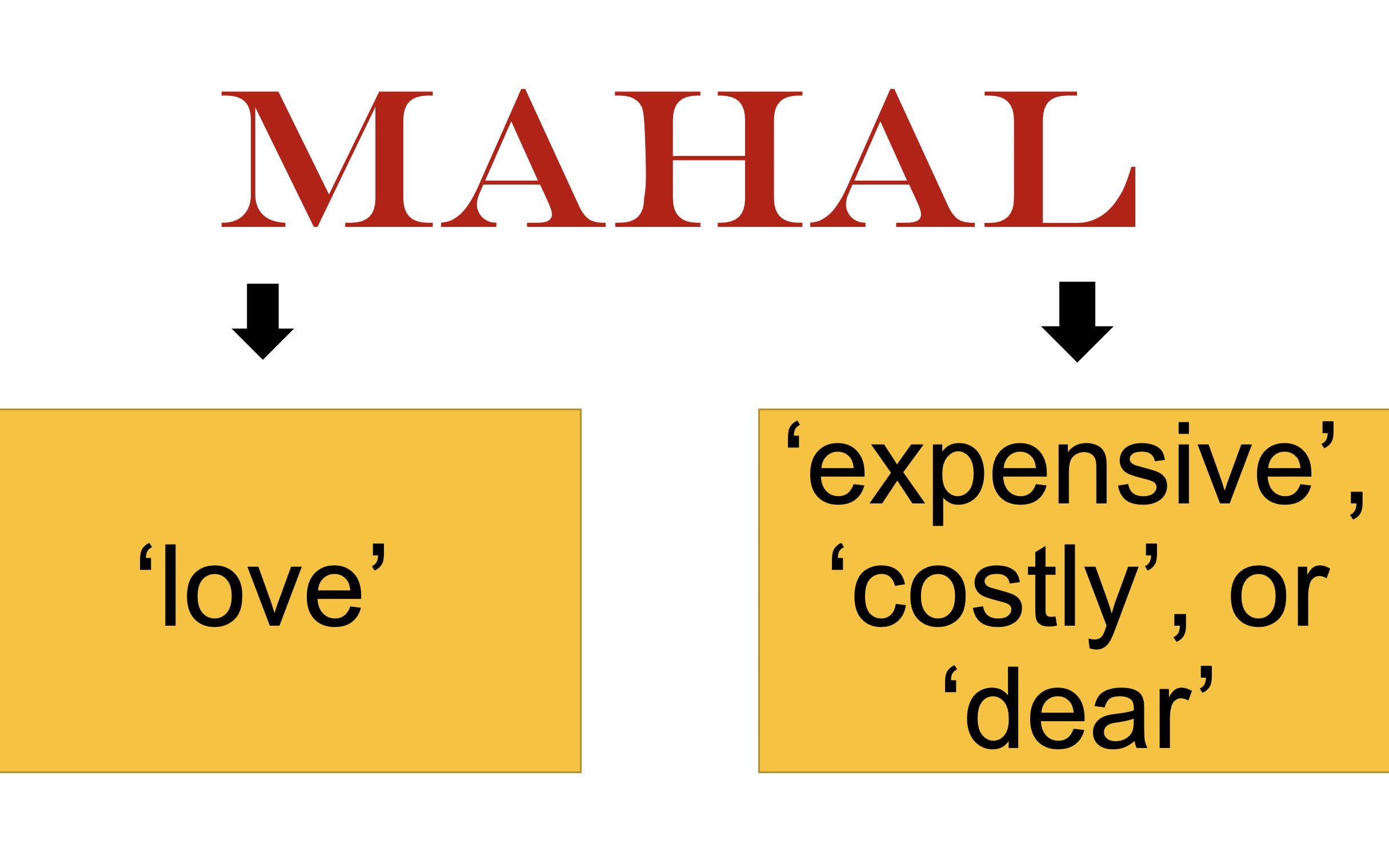
    According to the Oxford Languages Dictionary, Love is an intense feeling of deep affection while Hope is a feeling of expectation and desire for a certain thing to happen. Now, the word MAHAL has two meanings. The Tagalog word mahal as a noun means ‘love’ but as an adjective it means ‘expensive’ or ‘costly’ or ‘dear.’

    Mahal ang tunay na nagmamahal. It is expensive to truly love. What does this mean? Why is it expensive to love? Financially speaking, we will think that it is expensive because you’ll think of what to give during, month-saries, anniversaries, birthdays, Christmas, and other occasions. This expensiveness of love doesn’t end there. Aside from the money that we spend, we also spend our time, effort, our presence, service, energy, commitment, and any other acts of love.

    In my previous relationship, I have experienced giving and receiving gifts. I would even spend my money to buy that person something for a midnight snack, would make my time free for us to be able to see each other. I would sacrifice some time just for us to be together. As time passed by, I would still receive some gifts, but unfortunately the time and presence of that person slowly faded away. At first, I was in denial, letting myself think that that person was just busy, has his own life and I was just part of it. YES, gifts do really make me happy but when I think of it, gifts are just nothing compared to the presence and time that I seek from that person.

    I can easily buy gifts, but how can I buy that person’s time and presence? It made me think that time and presence of that person is more expensive than tangible gifts.

    We measure the value of an item usually based on how much we paid for it. Some common things that we see are cheap because we can find them anywhere. But the cheaper it is, the cheaper the quality. Yet, we tend to find things that are great in value. Thus, we determine that the more expensive is more valuable.

    Love is expensive, indeed, because it is one value that we humans have. It is expensive because each and everyone of us desires it, but only few are interested and invest with true love. Love is not just all about the gifts we receive and give, but it also requires that willingness to experience all the emotions and give all our life. And that made love expensive.

    Now, from the experience that I have, it made me also think that God’s love for us is not cheap. God’s love is expensive. How? It cost the Almighty God Himself to show us what Love is. God’s love for me is unconditional and infinite. He saved me from that relationship. He picked me up when I was really down. He showered me with love through the people around me, my friends, family, and co-youth.  The time, effort, and the life of people around me are expressions of love that God has given me. And these are all expensive.

    As we love expensively, we sometimes lose what we have, lose our life, lose ourselves. This is how the Lord expressed his love for us as well. Jesus emptied himself, to become human like us and becoming vulnerable and powerless, yet, the Lord continues to hope and still hoping that we will fully embrace him, welcome him and be with him.

    As a youth, what are the things that you hope for? Ano ang inaasahan mo? I asked some of my friends and the most common answers are first, freedom. Freedom to choose, speak, stand and think on their  own, and some would live on their own – to be independent. Second, good or high grades. Pressured or not, youth hope for high grades in order to achieve with honors or with high honors. Some hope for this because they want to make their parents proud and some would just like themselves to excel. Third, the youth hope to become physically and mentally healthy. Youth hope for this because, we want to live forever young.

    Personally, those are also my hopes but in addition, at this moment, I am hoping for healing, good relationships in the future, more wisdom and success in my Teachers’ board review. Healing from what? Healing from traumas, heartaches, and pressures. If this healing would be successful, it could lead to good and healthy relationships, not just migo-miga, jowa-jowa relationships but also relationships with our family, friends, co-youth, classmates.

    I am currently in a review to take the March 2023 License Examination for Teachers, I am hoping that I will pass the exam and by God’s grace, TOP the exam. Walang masamang mangarap, walang masamang umasa.

    Hoping is a sign of life, a part of a person. You are not truly living if you are not hoping. The virtue of hope challenges us and empowers us to be determined, resolute, intentional, purposive, and steadfast. Hope is not wishful thinking or just passive waiting. It means that whatever we hope for we have an intention, we live a life with a purpose. We live hopeful lives. A person who lives knowing that there is hope in every challenge, has been shaped by the setbacks or disappointments – yet that person chose to get back in order to be a model of hope for others.

    In this time of advent, as we wait for Christmas, we can express our hope through these three points that I have.

    Give time and attention. If you want to give hope to others, listen to them just like God who listened and waited for us to come to Him. If you think you can’t help, just listen to them. The fact that you offer and give  them your time and attention, would make them feel that there is hope in life.

    Offer Help. Do a random act of kindness. For example, you can help your parents plan on what you can help for the preparation of Christmas. You can help with the house decorations or for your meal plan. Another is that you can give help to street-dwellers by giving them food or even asking them what kind of help they need.

    Be hopeful yourself. Remember, we cannot give what we do not have. Show people that you’re negative then they too will think negative but when you show them hope, joy and even love, they too would feel the same. If you want others to become hopeful, be a person full of hope. Work hard and be a source of sunshine and hope for others.

    In this season of advent, we are invited to join in God’s patient love by reaching out to those who have wounded us in the past, by giving ourselves to those who do not reciprocate our love and by caring for those who have not cared for us. In Advent, we are called to remember that this is how God has loved us. Let us also take time to remember at this time that God is both the light at the end of a long tunnel and our faithful companion who will never desert or abandon us.

    To all the youth, I have a challenge for you. Take time to sprinkle love and hope and in order for this to happen,  I  challenge you to become bearers of Love and Hope to the world. Hangga’t tayo ay nabubuhay tayo ay patuloy na magmamahal at umaasa.

  • OUR FAITH IN THE MESSIAH

    OUR FAITH IN THE MESSIAH

    December 4, 2022 – Second Sunday of Advent

    Click here for the readings (https://bible.usccb.org/bible/readings/120422.cfm)

    Have you ever encountered a leader who is filled with vanity and only thinks of himself or herself? A leader in a group or in an organization, or in a company or community or in a nation who has become pretentious but insecure can be very dangerous. It would be in this kind of leaders that we find persons who have no intentions to serve others but rather abuse the authority conferred upon them for their personal advantage and comfort. This is how we suffer because of such ruthless, incompetent and corrupt leaders which may happen even in our small groups, organizations, companies, communities, churches or even countries.

    Our failure as people is when we become indifferent, lenient and have no concern when our leaders turned against the weak and powerless. When members of an organization or even in a small community would play blind over the dishonest dealings of a leader, then, members start to condone and perpetuate such abuses.

    The Hebrew people to whom the Book of the Prophet Isaiah was written had this similar experience. The people had been through a lot of suffering and disgrace. The people suffered because of their incompetent, selfish, abusive and corrupt leaders. Both their religious and political leaders had turned against the weak and the powerless in their society. The appointed leaders who were given authority to build the nation and uplift the people, were the very ones who caused suffering to many. This was how the prophets were chosen in order to call the attention of the leaders and give hope to the suffering people.

    This is what we have heard in the first reading on this Second Sunday of Advent. Isaiah tells us of the birth of a child who will be the Messiah. This child shall restore order, peace, harmony and prosperity through reconciliation and forgiveness of sins, through change of our way of life.

    Isaiah tells us of the person of the Messiah. His arrival will be as silent as a shoot sprouts or as a bud blossoms. Many will not notice his coming for it will be completely no grandeur. It will be simple yet powerful because he has the Spirit of the Lord. He confronts the wicked and the corrupt. He defends the poor and heal the afflicted. He is just and faithful. He brings peace and harmony to all. He is gentle and not violent.

    This is the very hope also expressed in our Psalm today that, “Justice shall flourish in his time and fullness of peace forever.” This is God’s promise which reminds us of the event in Bethlehem, the place of birth of the Messiah. Holding on to this promise of the birth of the Messiah, calls us now to faith. Thus, the second candle of advent has been lit. That is why, that candle is called the Candle of Bethlehem and Candle of Faith.

    Besides, the second reading from the letter of Paul to the Romans invites us to be open and welcoming of everyone, not to be discriminating. Paul expresses this call in two points. First, Paul prayed, “May the God of endurance and encouragement grant you to think in harmony with one another.” This tells us that living in harmony is an act of giving glory to God because the Lord is a God of community. Second, Paul taught, “Welcome one another, as Christ welcomed you.” This tells us that to be able to embrace one another despite our differences, also gives glory to God. Welcoming others is an expression of God’s presence among us.

    Therefore, having harmony in our community, showing compassion, justice and concern for each one is what the Lord calls us to be. This is also what we are hoping for, a time of peace.

    Both readings from Isaiah and Paul are addressed to the unfaithful and the faithful people, to the oppressors and oppressed, to the poor and the rich, to the powerless and the powerful. Indeed, a time of peace shall come through the “birth of a child.” This is the birth of the Messiah who shall come with peace and joy. This is God’s expression of faithfulness to us.

    Yet, this promise also brings an invitation for us and that is to REPENT, to change our wicked ways, to reform our selfish and evil intentions. This is what the Gospel of Matthew tells us through the person of John the Baptist. John, a cousin of Jesus, prepares us to welcome the Lord fully and joyfully, without reserve, pretentions or conditions. John also expressed this in two points. First, to repent, for the kingdom of heaven is at hand. Second, to prepare the way of the lord and make straight his paths.

    The very life of John is a testament of that call to change our ways by “acknowledging our sins.” However, the acknowledgement of sins here is not about our petty-personal-habitual sins that we usually confess. Indeed, there is something lacking in our conscience when we can only see those petty-personal-habitual sins and limit our awareness on our failure to attend Sunday Mass, in our failure to say our prayers, or in telling white lies and our sexual fantasies. Yet, when our heart is blind and indifferent to the many “social sins” in our institutions and communities, our conscience is truly limited or worst damaged! This makes us sick!

    Social sins exist in our groups and communities that condone any structure, or belief or culture that oppresses and abuses people or even the environment, that violates human dignity, suppresses freedom and imposes great inequality.[1]

    That is why, John especially called the attention of the many Pharisees and Sadducees who came to see him. These people were leaders in their communities who cannot even get along with each other but both held power over the people. Both tend to abuse their influence over the people for their own personal advantage.

    Therefore, John calls us to acknowledge our sins of “indifference to corruption and dishonesty, in condoning and tolerating these practices in our institutions and communities, in our failure to side with the poor and the economically disadvantaged, and in our failure to uphold justice.

    Thus, this Second Sunday of Advent invites us now with these three points of reflections.

    First, to fully acknowledge our social sins as individuals and as a community.

    Second, to be more available for God and others. This means that we are called to build among us a culture that is sensitive and aware of the needs of others.

    Third, this calls us to faith, faith in the Messiah that we ourselves will become his presence today as we commit to work for justice, to defend the powerless and to resist the temptation of dishonesty and corruption in our institutions, workplaces, organizations and communities. Kabay pa.


    [1] https://www.wearesaltandlight.org/learn-together/understanding-social-sin