Tag: A Dose of God Today

  • NO ONE SHOULD BE DEPRIVED OF THE GRACE OF GOD

    NO ONE SHOULD BE DEPRIVED OF THE GRACE OF GOD

    February 1, 2023 – Wednesday of the Fourth Week in Ordinary Time

    Click here for the readings (https://bible.usccb.org/bible/readings/020123.cfm)

    God gives life, blesses life and renews our life. God never stops that. This is the reason why grace overflows so that no one will be deprived of the grace of God. The Letter to the Hebrew reminds us of this. It calls us to strive for peace with everyone because without peace what we shall have are troubles and bitterness in our hearts. As the grace of God overflows, the Letter also invites all Christian believers to “see to it that no one is deprived of the grace of God.”

    This means that our participation has an effect in making God’s grace to truly overflow and be experienced by all. Certainly, one can deprive oneself or others of the grace of God when the heart refuses God’s grace. Yet, why would a person refuse to welcome and accept something that is so wonderful like the grace of God? Is this even possible? Yes, this is very possible that a person will refuse to accept God’s grace because of a heart hardened by jealousy, false judgment, bitterness and hatred.

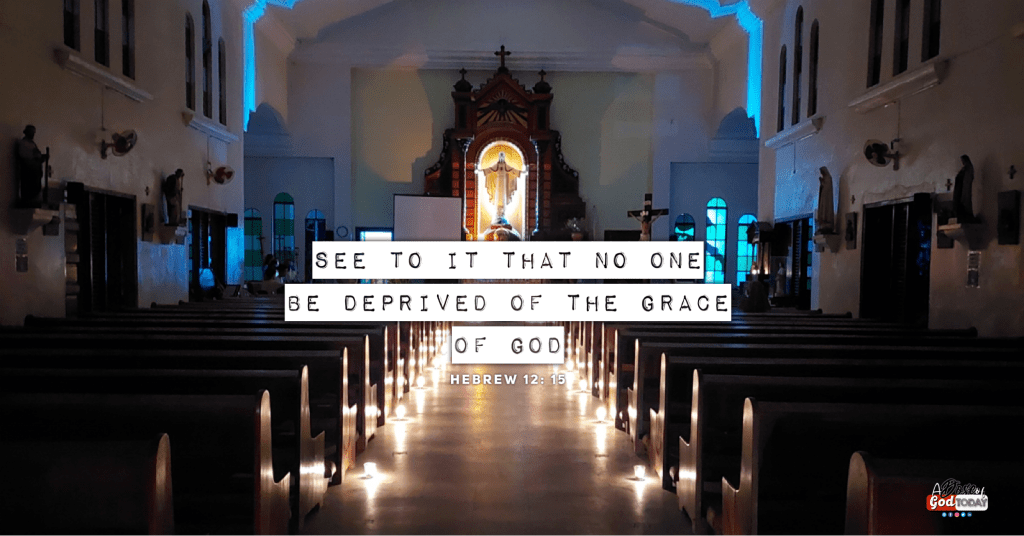
    As the grace of God overflows, the Letter also invites all Christian believers to “see to it that no one is deprived of the grace of God.”

    Let us take for example today’s Gospel story. Jesus who went home was welcomed with bitterness and hatred by his own neighbors. Jesus who did many miracles in other places was questioned and judged by the people. Their thoughts were merely based on the familiar background of Jesus of being a carpenter, being a son of Mary, being a brother to his cousins.  Outside of these, they failed to see that there was more in the person of Jesus. They failed to see the grace in the life of Jesus. As a result, the people took offense at him.
    They felt offended because they could not accept the opportunity of being graced by the person of Jesus who seemed to be only ordinary for them. This is how a bitter and hateful heart affects our relationship with others. All Jesus could do was to heal few sick people. It was not that Jesus did not want to do any miracle for them because of their bitter attitude towards him. Jesus just couldn’t because the people did not cooperate with the grace of God. They deprived themselves of the grace of God.

    Indeed, God can only work when we allow God to work miracles. The lack of faith of the people is a refusal of God’s grace. This tells us that God, though all-powerful, does not impose His power on us. God would rather invite us to allow Him to work miracles with us.

    Besides, the people expressed their non-cooperation with the grace of God through their lack of faith. This made Jesus to be amazed. It was just amazing for the Lord because the people have seen how the grace of Jesus’ life could do for them yet they still refused. The lack of faith in them was even reinforced because their hearts were filled with jealousy, false judgment, bitterness and hatred.

    And as the Letter to the Hebrews calls us, “see to it that no one is deprived of the grace of God.” This is the call for us today. Let us not deprive ourselves of the grace of God or deprive others. Let God’s grace overflow then, through us and through the gift of persons of one another.

    Instead of nurturing bitterness, hatred, jealousy and false judgment in our hearts, let us rather nurture an attitude that welcomes the grace of God through the gift of our persons. Kabay pa.

  • Being Blessed from God’s Perspective     

    Being Blessed from God’s Perspective     

    January 29, 2023 – Fourth Sunday in Ordinary Time

    Click here for the readings (https://bible.usccb.org/bible/readings/012923.cfm)

    How do we understand being Blessed? We usually think of a life that is blessed on the level of having material wealth, success, prosperity – like having a good family, a prosperous business, a successful career or a good paying job, or having a good health. We also believe that being blessed has something to do with having power and influence that a person possesses, with privileges and perks that we enjoy.

    Thus, as it was in the ancient times and until today, poverty is never a blessing, being in sorrow and in grief is never a blessing. Being powerless and oppressed, being sick, being rejected and persecuted is never a blessing. If we are experiencing such life, we consider ourselves to be cursed, weak and insignificant.

    However, the readings this Sunday are quite opposite from the standard of being blessed that we usually believe. Our human understanding of being blessed is different from God. Indeed, there is a need for us to understand being blessed and our life as Christians from Jesus’ perspective.

    The Gospel of Matthew gave us that perspective of Jesus that the Lord wants us to recognize and to learn. Matthew tells us that Jesus saw the crowds. Not just a crowd but crowds of people composed of groups of poor and rich, Pharisees, Sadducees and common Jews, sick and old, men, women, children, beggars, merchants, pickpockets and spectators, his own disciples and others who followed him faithfully.

    And Jesus saw the many realities of the people of his time. What he saw was not just limited with what can be seen from the outside. Jesus saw and realized the anguish of the people and the cause of their miseries perpetrated by those who took advantage of the weak and powerless. Jesus saw and realized how the social evils of greed, hatred, and indifference contributed to the senseless sufferings of the people. Jesus saw and realized how the people felt abandoned, in need of mercy and love, in search of justice and salvation, longing for a blessed life.

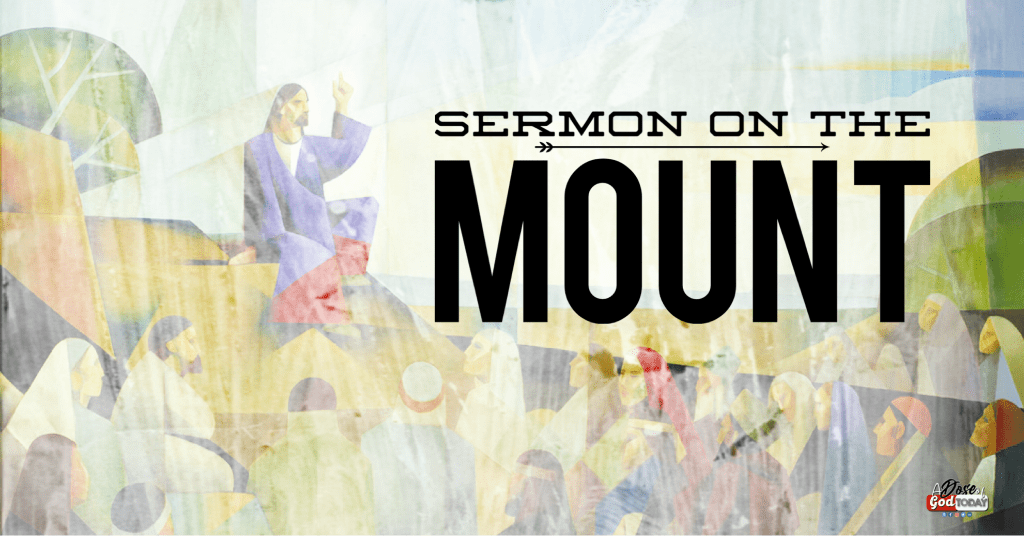
    This prompted Jesus to express what he saw and what was in the heart of God for His people. Jesus began to teach while sitting on a mountain which gave him the perspective of the Father. This Sermon on the Mount, as this is commonly called, is indeed quite symbolic. From this symbolism of Jesus teaching from the mount, the Lord evokes a different perspective of being blessed. Not anymore from our human perspective and standard, but from God’s eyes.

    In God’s perspective, the blessed ones are those who are poor, who are mourning and sick, the humble and unassuming, the powerless and merciful, those who are contented in life and those who are persecuted. But why? It is because in their poverty and difficulty, in their powerlessness and nothingness that they also realize their dependence and need of God. Indeed, such insecurities in life bring us to understand that we are so small in this world and we are in need of God’s grace. That is why, Jesus addressed these Beatitudes to the people, assuring them of his presence and assuring them of a blessed life in the Kingdom of Heaven. Though the Kingdom is to be fully manifested later, yet, being blessed is already experienced in the here and now.

    Thus, the very presence of God in our life is what makes us “blessed.” Since God favors those who are weak, poor, suffering, the sick and struggling in life, they are the ones who are blessed because they understand their dependence and need of God. God comes to us when we are ready to accept God in our life and to let God be our God there in our poverty and weaknesses.

    This is what Prophet Zephaniah reminds us in the first reading to seek the Lord which can only be possible through a humble heart that recognizes God’s presence and power. An arrogant and self-satisfied heart will never acknowledge God and thus, can be very vicious to people around.

    “God comes to us when we are ready to accept God in our life and to let God be our God there in our poverty and weaknesses.”

    Moreover, Paul in his first letter to the Corinthians expressed powerfully the wisdom and favor of God. He says to us, “God chose the foolish of the world to shame the wise, and God chose the weak of the world to shame the strong, and God chose the lowly and despised of the world, those who count for nothing, to reduce to nothing those who are something.”

    This indeed is a warning to those who in the standard of the world are blessed such as the self-satisfied and self-absorbed, the corruption-driven-rich, the powerful, the popular and the influential. Why? It is because the danger lies in the attitude of the heart that becomes independent from God, a heart that rejects God’s mercy and love. In fact, the Lord warns us when we tend to accumulate more wealth for ourselves at the expense of the poor, or when we gather fame and influence at the expense of others.

    Such attitude of the heart is filled with arrogance and self-centeredness that has no need of God. True enough, when we are so filled with ourselves and too satisfied of what we have gained and achieved, we don’t need God anymore. Our successes and we, ourselves, have become ‘gods.’ This leads us to worship our achievements, wealth, our power and ourselves. But then, all of these will corrupt us because we will never be satisfied. We will thirst and hunger for more wealth, recognition and fame which will also lead to our own destruction and those who are around us and those blocking our way to gain for more.

    Thus, through these Beatitudes, God invites us to claim that we are blessed and can bless others even when we are poor and insecure, in grief and in search for justice, in need of mercy and in showing mercy.

    This also calls us that as we understand being blessed in God’s perspective, then, the material wealth that we have gained, the influence and fame that we have received and the successes that we have achieved are signs of God’s grace and generosity. When we have these, may it lead us to humble ourselves and to recognize that these are gifts and we ought to share them to others. Thus, if you have received much, share the blessing to those who are in need. If you are enjoying success in life, share the experience with those who failed. If you have power and influence over others, then, use them to liberate the oppressed and to work for justice. If you have been shown mercy despite your sins, then, let that mercy flow in your relationships by becoming merciful to others. It is in this way that the Kingdom of Heaven will truly be present among us, and that we ourselves will not just be blessed but will also be a blessing to our community. Kabay pa.

  • Price of Faith

    Price of Faith

    January 29, 2023 – 4th Sunday in Ordinary Time

    Click here for the readings (https://bible.usccb.org/bible/readings/012923.cfm)

    A story once told about a beggar who owns nothing but his tin rice bowl to beg. He is particularly ashamed of begging that he would just bow his head & cannot even look at the eyes of others. But poverty & hunger usually force him to bully others for some money & food to survive. Like any beggars, he hopes to be free from his situation & dreams of becoming rich & wealthy someday. But he knows that his dreams of better living is just wishful thinking for he owns nothing except his old and dirty tin rice bowl – which he just inherited from his poor grandparents. Yes, he considers himself useless, hopeless, & helpless. A nobody & nothing at all, who even blames God & his family for his sufferings & poverty in life.

    Now while begging for some left-overs and coins in the market, one day a merchant approached him and asked to have a good look at his rice bowl. After examining his rice bowl, the merchant told him, “You idiot, you don’t have to beg. You should not beg at all because you are a rich person. Do you know that this rice bowl of yours is precious? This rice bowl is made of priceless gold. Just have this rice bowl clean and sell it to the highest bidder, you will be the wealthiest man in this town. You know what? If only I have money, I’ll buy it for 80 million dollars.” But the beggar just laughs off and would not believe what he heard from the merchant. He would not believe that his rice bowl is made of gold. That is why, until now, he continues to beg for alms from others… using his priceless golden rice bowl.

    There are times in our lives that we become like that beggar. The Good news of Christmas and the whole Christian life simply proclaims to us how blessed we are for God has already offered us His life and his salvation through his son, Jesus Christ.

    However, often at times we missed it, because we fail and even refuse to recognize the blessings, to the point that we do not accept the importance of the graces God has given us. It so happens that we are not contented with, and we even feel ashamed of God’s presents. Pre-occupied with our own selves, our own concerns, biases, and expectations, mostly we are blinded from the value and sacredness of God’s graces and blessings given us. 

    This is what our readings are trying to tell us today. It wishes to remind us, especially Jesus in our gospel today, that we should be awake and be aware that people who are poor, humble, helpless, weak, oppressed, and most abandoned find favor in God’s eyes. Because of their deep faith and need for God, and their acknowledgement of Jesus, as God’s gift, they are blessed and worthy of God’s kingdom.

    In our gospel today, we hear the Beatitudes. Jesus announced how blessed already we are – not for being poor, humble, helpless, mourning, weak and abandoned, but because God finds favor in us. We are blessed then because of God’s gift of our faith in Jesus, and not because of our poverty, humility, weakness, persecution, and abandonment. As our world prefers wealth, popularity, power, & prestige, we are reminded that God rather chooses & favors people of great faith and trust in His Son, our Lord Jesus Christ.   

    Here, Jesus encourages us to recognize and have confidence on the value of our Christian faith in life. God has already given us our Christian faith – our way of life and salvation. We must not downgrade it but instead, recognize and value its importance into our lives today. Jesus reminds us that Blessed are we and those who welcomes and follows Him for God has already endowed us with enough faith to redeem us & live our lives meaningful now & always.

    Remember his first message proclaimed: “Repent for the Kingdom of God is at hand” that is – Change your ways… not because of our sins and mistakes but because God’s grace is here with us now. In other words, “Behave for God’s grace is Here with You”. And Now Jesus is telling us the Beatitude – proclaiming how blessed and lucky we are  -not only because we behave well, but also because God finds favor on us who have faith & trust in His son & have welcome Him into our life.

    Through the Beatitudes, Jesus is somehow proclaiming to us how Blessed and Fortunate we are who owns and treasure our golden rice bowl of faith for we are already in God’s favor. In other words, Worthy, Blessed and Fortunate are we who willingly welcome, value, and believe in Jesus, God-given gift of salvation to us, for God’s kingdom is already & always upon us. Priceless then is our Christian faith in Jesus for God finds favors in us, who believes & trusts in Him.

    Perhaps we consider these days on how maximize of own rice-bowl of faith. Do we make use of our faith just to beg… OR to honor & value Him who offers & presents us God’s favor?

    We pray then that we must learn how to see, recognize, accept, and treasure our God-given Christian faith now & always.

  • IN SEARCH OF THE TRUE MEANING OF THE FEAST OF THE EPIPHANY

    IN SEARCH OF THE TRUE MEANING OF THE FEAST OF THE EPIPHANY

    The Epiphany of the Lord

    Many decades ago as we were growing up, January 6 was celebrated by the Christian world as the Feast of the Three Kings. The event being celebrated was the arrival of Melchor, Gaspar and Balthazar in Bethlehem to offer gifts of gold, frankincense and myrrh to the newly-born child whom they came to worship.

    Today, liturgically this is known as the Feast of the Epiphany (referred to as Theophany for Eastern Christians). Epiphany means the manifestation of a divine or supernatural being and for us Christians this feast celebrates the revelation of God incarnate in Jesus. Instead of referring to the three visitors as Kings, they are now more popularly known as Magi or Wise Men.  Across the world the celebration can range from January 6 to whatever is the Sunday nearest this date.  Thus in our country, it would be celebrated on January 8.

    Except for Matthew (Mt 2: 1-23), the narrative involving the three Magi does not appear in the accounts of the three other Evangelists. It is a very brief account where the tyrant ruler Herod is also mentioned.  There are very few details that help us know the wise men better except that they were from the East and that their journey to Bethlehem was guided by a star. Otherwise, the narrative ends up as a mythical story shrouded in mystery thus leading to all kinds of conjectures.

    Consequently, many have deconstructed the text and provided a deeper meaning to this narrative. Just this year on the Feast of Epiphany (celebrated at the Vatican with Cardinal Luis Tagle presiding and Pope Francis giving the homily), the Pope provided us his own reflection of the meaning of the Epiphany. Thus, his words:

    “The Magi’s restless questioning and continuous journeying in dialogue with the Lord finds its end in the worship of God… Like the Magi, let us fall down and entrust ourselves to  God in the wonder of worship. Let us worship God, not ourselves; let us worship God and not the false idols that seduce by the allure of prestige and power…  let us love God and not bow down before passing things and evil thoughts, seductive yet hollow and empty.

    The purpose of everything is not to achieve a personal goal or to receive glory for ourselves, but to encounter  God. To let ourselves be enveloped by his love, which is the basis of our hope, which sets us free from evil, opens our hearts to love others, and makes us people capable of building a more just and fraternal world.”

    We can further reflect on how this narrative relates to our contemporary life in our own society and focus our reflection on who were these wise men? The biblical reference indicates they were from the East, which should make it interesting for us Filipinos as we are in this part of the world – the East or the Orient. Some writers theorized that they came from the nearby countries of Israel, namely Persia (now Iran) even as far as India.

    But why were they referred to as wise men? Relying on ethnographic data providing us data  on the Oriental civilizations existing long before the West entered into its Industrial Revolution, there were advanced societies already existing in the Orient from China to India to the Arab countries. They had developed the various fields of philosophy and science, much earlier than the Western world.

    Thus, we can conjecture that Melchor, Gaspar and Balthazar – as they were guided by the star – had knowledge of astronomy if science had developed to that extent during that era. There is, however, one better explanation that anthropologists would posit. Could they be shamans who had developed the gift of communing with the supernatural?

    If they were coming from the East, what faith traditions have evolved in their societies? While there were established religions already during the reign of Herod in other parts of the world and in Israel (Hinduism, Judaism, etc.), Islam and Christianity were still to evolve. But were the magi also shamans who served as ritual officiants of their communities which were ensconced within an indigenous belief system?  We know for a fact that across the world and through the centuries, shamans have developed a keen sense of understanding the mystical realm.  Could this have been the case of the three wise men?

    Perhaps it is futile to have the answer to this question even if there theologians who would like to pursue this question in dialogue with anthropologists. However, we can expand the search of meaning and link it with our attempts to better pursue some of the pastoral challenges in our post-Vatican II Church especially in the discourses of inter-faith dialogue and inculturation.

    A fundamentalist reading of the Matthew text would insinuate that as the magi worshipped the child as God, they had abandoned whatever faith tradition they belong and embraced a new faith. On the other hand, a progressive reading of the text allows for an encounter of faith traditions in dialogue with each other. Thus the Matthew narrative would be very useful for advocates of inter-faith dialogue, as one of the first events in Jesus’ early life pointed to the possibility of faith traditions entering into a dialogue with each other.

    In this day and age, when there are still countries where different groups of believers – Christians, Jews, Hindus, Muslims, Buddhists and others –  are engaged in conflicts leading to the eruption of violence, the encounter of Jesus and the Magi provide the hope that a day will come when all faith traditions would learn to embrace the gift of an encounter that brings peace!

    When that moment arises, all of earth’s people of goodwill can truly celebrate all together a feast of the Epiphany no matter what faith tradition they worship God (in whatever God’s name is invoked!).

  • WHAT DOES IT MEAN TO LOVE AND BEING LOVED?

    WHAT DOES IT MEAN TO LOVE AND BEING LOVED?

    December 21, 2022 – Sixth Day of the Misa de Aguinaldo

    Click here for the readings (https://bible.usccb.org/bible/readings/122122.cfm)

    Before I begin my homily for this morning. I have a short exercise that I would like you to do first. This will hopefully keep you awake and make you more inspired as you start your day today.

    So, I would like to invite those who are with their husband or wife, girlfriend or boyfriend to look at the eye of your beloved. Silently say, “I love you!” And for those who single and still waiting, you may close your eyes “na lang” and you may say loudly, “I love you self!” 😍

    Being said that, may I present to you this question for reflection, “What does it mean then, to love and being loved?” I am sure you have your own answers to this based on your human experiences of loving and being loved. Yet, for today may I offer you my humble reflections of loving and being loved based on the readings we have on this sixth day of the Mise de Aguinaldo. Let us also see how the Lord calls us to be truly loving and be more confident in being loved.

    Our first reading from the Book of Song of Songs wonderfully described to us the relationship between a lover and the beloved. What we have heard from the reading is that it’s filled with excitement (or kilig-moments) because of the longing to see the person being loved.

    Thus, the lover calls the beloved in these wonderful invitations. The lover said, “Arise my beloved, come!” The lover is described to be like a small deer who was so excited and in its excitement would peep to have a glimpse of the beloved. The lover also said, “my beloved, see, the winter is past, the rains are over and gone, the flowers appear on the earth.” This calls the beloved to recognize that sorrow and grief is over and to embrace life and freedom. Finally, the lover said, “Let me see you. Let me hear your voice.” This is an expression of intimacy that longs for the beloved.

    With these, I therefore conclude, how beautiful and wonderful it is to be in love! – to be filled with love, to be loved and to love! Isn’t it? But, friends, know that I am not just talking about romantic love, thought that’s part of it. Why? Because the Song of Songs by using the images of romantic love, reveals to us now that God is our lover who is more than excited to see us and to be with us. We are God’s beloved. We are the one being loved. And this beautiful Book of Song of Songs invites us to arise from sadness and embrace life. Indeed, the presence of the one who loves us brings comfort as well us life.

    In response to God our lover, our Psalm today expresses our hope and longing for God. The people waits for God’s coming whose presence is the strength of the people. In that anticipation, joy can be felt, thus, a calling to rejoice and sing praises to God. This is wonderfully captured in the last verse, “Our soul waits for the Lord who us our help and our shield; for in him our hearts rejoice.”

    This has been fulfilled and concretely manifested in today’s Gospel. We find Mary, a person who is filled with so much love, because in her womb, is love. The Gospel story today was right after the annunciation of the angel that Mary shall conceive a son and when she realized that it was indeed true. At that moment, Mary carried in her womb God’s concrete manifestation of love. And the love that Mary carried in her womb completely transformed Mary, her presence, her actions and her words.

    At this point, I will be enumerating how Mary responded in loving and in being loved. In each response of Mary, I will be giving questions that would hopefully challenge us to respond in love.

    The first response of Mary is, “she set out in haste.” Mary realized the need and assistance of her old cousin Elizabeth. This response of Mary tells us that she is a person who loves and arises for the sake of others. She is a person who loves and responds immediately to a particularly need. And she is a person who loves and moves out of the self. This is evident at how Mary travelled a long way from Nazareth to a town in the hill country of Judah. At that time, Mary possibly walked for about 130 kilometers to reach the house of Zechariah and Elizabeth.

    In this first response of Mary, Pope Francis said in his message to the youth of the world, “Mary did not hold back or remain indifferent. She thought more of others that of herself.” And so in our way of loving, “Do we also move in haste in order to respond to the needs around us? Do we take the risk to go out of our own comfort and concerns for the sake of others? Or do we remain unmoved, more focused on ourselves and indifferent?”

    The second response of Mary is, “she entered the house of Zechariah and greeted Elizabeth.” Mary cared to enter into the life of others, bringing love. This is how we realize that the very presence of Mary in that house, brought life? How? At the greetings of Mary, the infant in the womb of Elizabeth leaped. It was a joyful reaction of the infant. Indeed, even at hat early moment, the infant John already recognized the fullness of life and love present in the womb of Mary.

    And so in our way of loving, “Do our words bring comfort and assurance of love? Or do our words rather, become forms of insults, harassment and bitterness towards others? Does our presence gives confidence and love to others or rather brings fear, trauma and pain?”

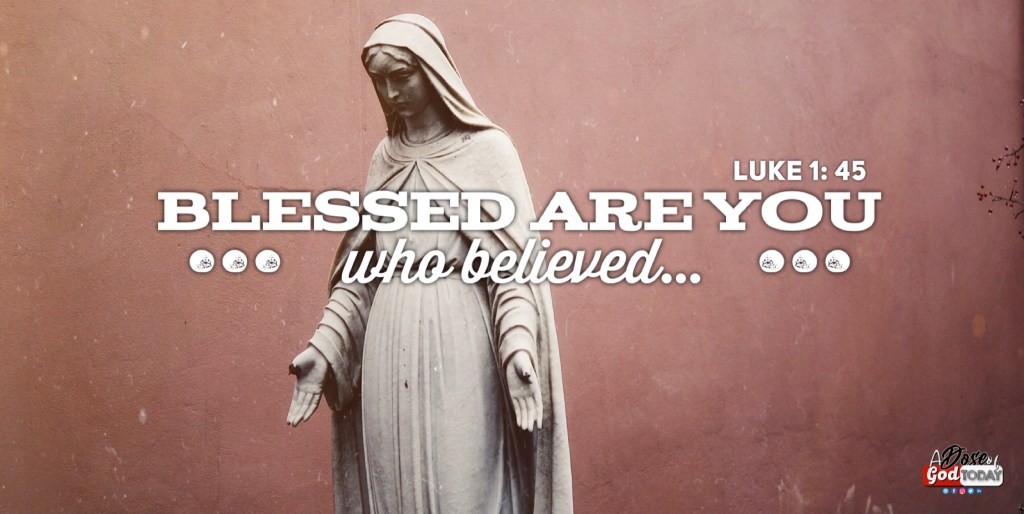
    The third response of Mary is, “Mary believed!” As to the words of Elizabeth, she said, “Blessed are you who believed that what was spoken to you by the Lord would be fulfilled.” This tells us that Mary’s faith brings forth life, concern and intimacy, care and gentleness. These become natural for Mary because first and foremost, her faith is motivated and inspired by love. Mary is filled with love. She is confident that the Lord loves her. Indeed, she believed! – because love has been fulfilled in her and that love is slowly taking a human form in her womb.

    And so in our way of loving, “Has our faith been inspired and motivated by our love, of being loving and being loved? Does our faith also bring life, concern, care and gentleness? Or rather motivated by fear, guilt, fanaticism or superstition?”

    As we bring to mind all these points for reflections, we may all be filled with love and be assured of that love so that like Mary, we too shall dare to move, respond and care for others. As we are about to celebrate the birth of Jesus, the love-made-flesh, may our way of loving then, be life-giving and love-fulfilling. Ok lang? Sana all.