Category: Year 2

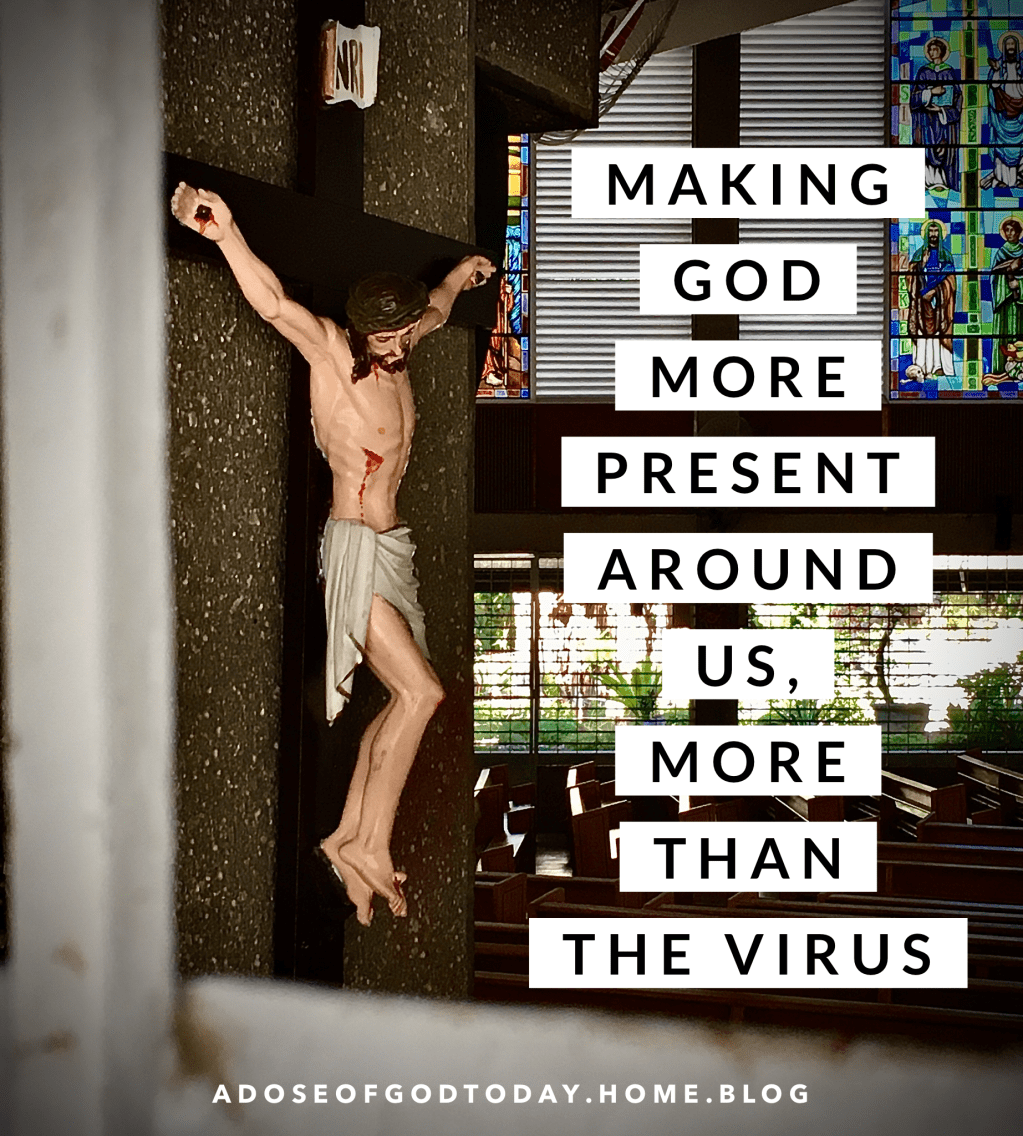
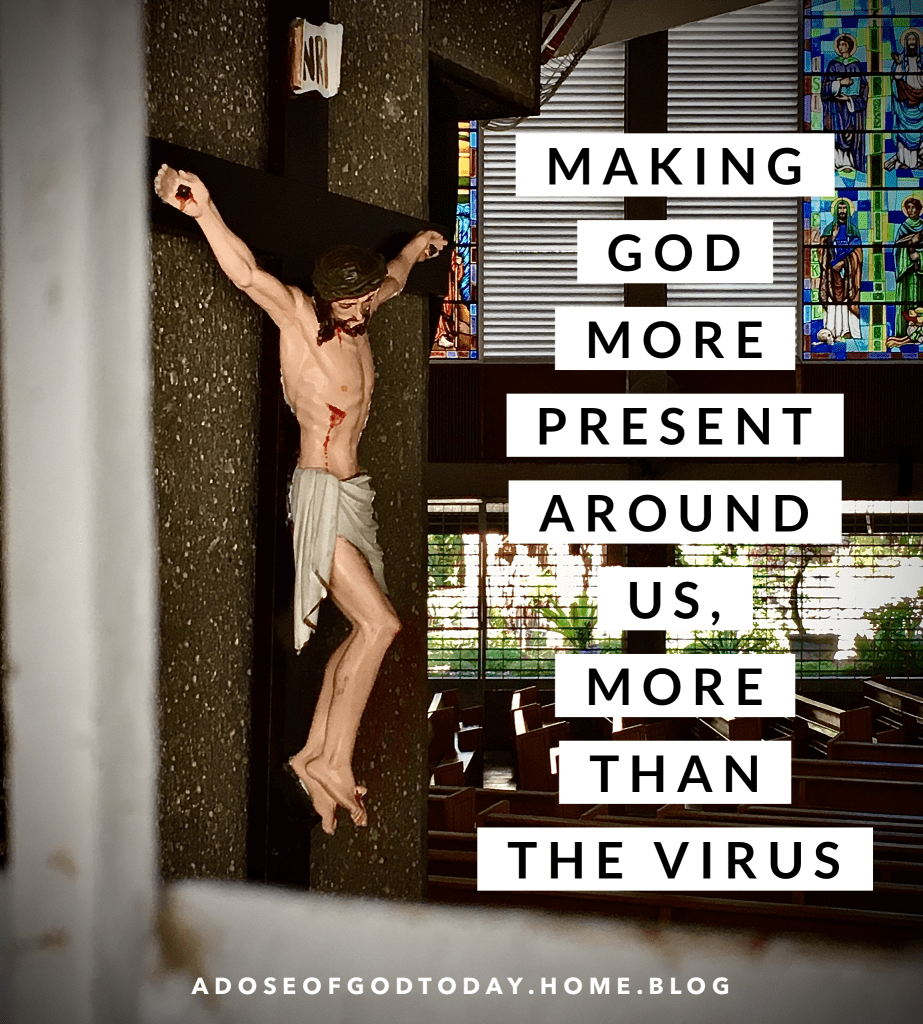
  • Making God more present around us, more than the virus

    Making God more present around us, more than the virus

    March 16, 2020 – Monday 3rd Week of Lent

    Click here for the readings (http://www.usccb.org/bible/readings/031620.cfm)

    Homily

    Why would the people reject Jesus? Why was it too difficult for them to accept him?

    People at that time became aggressive and even violent towards Jesus particularly because of the attitude that Jesus was showing to them. The Jews at that time believed that the Messiah was only for the Jews. Indeed, the people believed that God only belonged to them, as if, God cannot be God to others but only to them.

    However, Jesus showed a different image of God. He presented to them a Messiah that welcomes everybody, the sinners and the righteous, the sick and the healthy, the poor and the rich, the gentiles and Jews, believers and non-believers of God. 

    This is what we find in the story of Naaman, the Syrian Army Commander who was healed from his leprosy. Despite his unbelief at the beginning, but when he submitted himself to the advice of Elisha, Naaman became a witness and a recipient of God’s goodness and healing power. This has moved Naaman, a foreigner, to recognize God through Elisha.

    This tells us now that God initiates to approach those who are even non-believers, even those who are doubting and confused. And God initiates to approach, to call through people whom God has chosen as witnesses and instruments of God’s presence and power.
    This is fully expressed through the person of Jesus, yet, the people whom God has chosen as God’s people, the Jews, denied and rejected God-self in Jesus. They couldn’t accept because they wanted to monopolize God. This is where the people at that time failed to recognize God who was just around them.

    For us today, we too are called to recognize God who is just around us. God has chosen witnesses, prophets and instruments to bring His presence and power to all. And this is where we can find the two invitations for us today.

    First, open our eyes to see and recognize how God works in our life. Be more sensitive also of God’s presence working in the life of others because God brings his grace to us through people around us. Like Naaman, we are invited to be welcoming of God’s instruments who could just be our family member, a friend, a colleague or even a stranger.

    Second, allow Jesus to make us His instruments. Like Elisha, be more welcoming of those who seek help from us. Indeed, God calls us in our own capacity to be an instrument of healing and of God’s grace. We may be moved to make ourselves available for God and for others out of gratitude to God.

    Thus, in a concrete way, and as we are now facing a difficult situation because of the pandemic Covid-19 virus, not just for our country but for the whole church and the global community, be instruments and witnesses not of indifference and selfishness but of goodness and charity, of healing and mercy for others. Reports of hoarding some medical supplies or even of food, and provoking panic to others, do not help our community. These attitudes would just deprive others and worsen the situation. We may be moved, then, to respond to those who are in need in whatever capacity we have. In this way, we truly make God ever more present around us, more than the virus. Hinaut pa.

    Jom Baring, CSsR

  • Loving beyond the minimum

    Loving beyond the minimum

    March 7, 2020 – Saturday 1st Week of Lent

    Click here for the readings (http://www.usccb.org/bible/readings/030720.cfm)

    Homily

    If you love those who love you, what is special about that? And if you are friendly only to your friends, what is so exceptional about that?

    These questions are not from me, but from Jesus for all of us.

    Loving those who love us or being friendly with those who are only our friends means that we are only doing what is minimum and easy which requires less effort from us. 

    Have you met persons who live their life to what is only minimum?

    There are people who tend to work to what is only expected from them. They won’t be late yet they will never come early. They will be the first person to “time out” and the first person out of the door. They won’t dare going an extra mile yet, we cannot accuse them of not doing their job. 

    There are also some of us who fulfill their Sunday obligation or other religious obligations and stop there. Yet, they would also stop from extending themselves to do some volunteer works or from joining solidarity causes of the Church.

    There might be some of us also who would tend to relate with others in a casual and in a minimum encounter with others. This minimum encounter does not require us of building deeper relationship but only superficial. It does not require more energy and effort of extending oneself for the other. It only stays to what is safe, not risky and self-beneficial.

    Hence, doing what is only minimum can become an attitude of complacency and would developed into indifference. This is what Jesus was criticizing about. And this is also the very attitude that Jesus wants us to get out and to go beyond. When we become complacent, we become stagnant and won’t grow. When we become indifferent, we become detached and isolate ourselves from God and from others.

    Remember, when we truly love somebody, this love does not do the minimum, but always the maximum. And surely, to many of us, this kind of loving beyond the minimum is being experienced at home where parents sacrifice or go an extra mile to provide better opportunities for their children. This is also experienced among couples who take the risk of loving each other despite their differences. This is also showed by people who work tirelessly to serve others such as teachers, nurses, doctors, etc. 

    What Jesus is calling us now is that in our relationships too and in the expression of our faith, go beyond what is minimum. And this is done by loving our enemies and by making them our friends, at least in our own perspective. Not just to settle down to what is only beneficial for us but to extend ourselves to others by becoming more generous of ourselves and presence to those who need company, friendship and assurance of love and affection. 

    Though there is beauty in minimalism and goodness in it but not in loving. Do not be a minimalist in loving because it won’t be love anymore. Love as much as we can as God has done it for us. Express such love in concrete ways and let your relationships be founded on it, your profession and work be its inspiration, and our faith be its power. Hinuat pa.

    Jom Baring, CSsR

  • To be righteous beyond what is minimal

    To be righteous beyond what is minimal

    March 6, 2020 – Friday of the First Week of Lent

    Click here for the readings (http://www.usccb.org/bible/readings/030620.cfm)

    Homily

    There was a wealthy man who told a young priest that he was not so religious, in the sense that he would not go to Church. However, as a form of religious piety that he could do, since he was rich, he would only donate big amount of money to several parish churches in the city.

    The wealthy man proudly enumerated how he helped through his charity to finish the construction of a particular church, helped another church to build its own adoration chapel and assisted another church for its air-conditioning and so on. The man was indeed wealthy, yet, as the wealthy man enumerated his charitable acts, there was no mention if he ever gave just compensation to his many workers and laborers, if he ever been a good and faithful husband and father, or an honest and just businessman. 

    The young priest did not judge the wealthy man for this but this gave the priest questions in his heart. The young priest asked himself,

    Is it enough to only do what is comfortable for me? Is it enough to show to others that I am charitable and to be proud of my good works? Is it enough for God that I will just do some good works but remain indifferent with others?”

    With this, this reminds me of today’s challenge of Jesus in the Gospel. The Lord calls his disciples and also all of us today, “unless you surpass the righteousness of the Lawyers and the Pharisees, then, you will not enter the kingdom of Heaven.”

    Without condemning these people, who were the Jewish Lawyers and Pharisees, Jesus wants us to realize something beyond the usual actions of these people and to become righteous beyond what is minimal

    Indeed, they were more inclined in focusing on the letters of the law, meaning, these people were more concerned of following trivial things in the Jewish Law. However, this kind of attitude prevented them to be compassionate to others and more expressive of mercy to the sinners, the sick and the poor.

    Thus, Jesus gave a very practical challenge to his disciples, an action that expresses mercy and compassion. Jesus calls for “Reconciliation” and “Reparation” of the damage we have caused to others. To be reconciled with the person whom we have hurt and those who have hurt us expresses the essence of this Season of Lent.

    Hence, Lent invites us to look closely at our failures and sins and to recognize them. Yet, we do not stop at the recognition of sin but we step forward by making peace, by reconciling ourselves with others, by doing the right thing and doing what God desires us to do.

    This tells us that God also challenges us to go beyond from what is only easy and comfortable for us. It is a big temptation to settle to what is only minimal and become complacent and indifferent towards others. And true enough, it is very easy  for us to continue what we are doing like going to mass, praying our rosary and novena, and going to confession regularly, but then, remaining unmoved by the many social issues that surround us, or remaining indifferent to the needs of people around or in doing the same sins over and over again.

    Today, Jesus invites us to be more expressive of our devotion to him by being honest and true in our words and actions and by seeking reconciliation and peace with our brothers and sisters. In these ways, then, we make a room for Jesus to renew our heart and to experience God’s mercy. Hinaut pa.

    Jom Baring, CSsR

  • God is for everyone and His mercy is for all

    God is for everyone and His mercy is for all

    March 4, 2020 – Wednesday 1st Week of Lent

    Click here for the readings (http://www.usccb.org/bible/readings/030420.cfm)

    Homily

    Jonah was quite rebellious to God because he was sent by God to do something, which he did not want to do. For that reason, Jonah tried to escape from God and to escape from the responsibility that God gave him. 

    Jonah was sent to Nineveh, a city of which Jonah hated so much because they were Assyrians, the very people who oppressed them. Indeed, Jonah’s people suffered so much from the Assyrians.

    We can understand why Jonah hated the Assyrians and why he tried to escape from God. God sent him to Nineveh in order to preach repentance so that God may show mercy to them and will save them from death. Jonah feared that these people will repent and believe in God and then, God will show mercy to them. Jonah wanted these people to suffer, to die and to rot in hell. He did not want his enemies to be saved and to be shown mercy.

    Yet, this is what really happened. When Jonah called the people to repent, they indeed repented and believed in God and that was why God showed mercy to them and saved them from death.

    This tells us something of our attitude like Jonah. We might also find ourselves wishing suffering and death to those whom we hate, especially those who have caused us so much pain. We might have wished and cursed those people who did something terrible to others too. When a violence and or a crime is done to an innocent, we might have demanded too, the same violence and crime to perpetrators. Like Jonah, we too might have believed that justice is attained through a gruesome death to our enemies. Like Jonah, we also could tend to believe that God should not show mercy to those who have hurt us, to our enemies and people who did terrible things to the innocent.

    However, Jonah’s story tells us differently. God is a God of everyone, of good and bad people, of righteous and sinners, of criminals and law-abiding citizens alike. God is for everyone as His mercy is for all.

    And because God’s mercy is for all, God also desires that all will be saved and will be reconciled to Him.

    God indeed shows mercy. Jesus who became human like us and lived among us is the Father’s ultimate sign of mercy and love. In Jesus, the Father tells us that we are never abandoned, that there is always hope and goodness in each of us no matter how broken we are, and sinful we have turned to be. God always sees goodness in us.

    Thus, in this Season of Lent, may each of us also become God’s sign of repentance, of mercy, and of hope to our brothers and sisters. May our words and actions express and give hope, and encourage renewal to those whom others may believe to be hopeless and less human – may they be alcoholics, drug addicts, inmates and other law offenders, and street dwellers. Hinaut pa.

    Jom Baring, CSsR

  • Not mine but God’s power

    Not mine but God’s power

    February 24, 2020 – Monday of the 7th Week in Ordinary Time

    Click here for the readings (http://www.usccb.org/bible/readings/022420.cfm)

    Homily

    The disciples failed to heal the boy who had been possessed by a mute spirit. They have actually been healing other people already. They had become successful in their other healing session. However, to this one, they failed! Why is that? What could have been wrong? Or what could have prevented them?

    Was it because that the evil sprit was too strong for them? Or was it because of their lack of faith?

    When we become too proud of ourselves, we also become arrogant. We begin to think more of ourselves and for ourselves. We also begin to become self-conscious and too sensitive to what others might say to us. As a result, we cope up to what others may expect us. We will be driven to do our best. In a way, this forms us to be success-oriented and goal-oriented. 

    Yet, when we become successful of ourselves and of what we have done, there is a tendency to be overwhelmed by our own strength and gifts, of our own successes and achievements. When a person becomes too absorbed of his or her personal glory, then it leads the person to self-centeredness and self-praise. 

    Being proud of our achievements and successes is actually good and fairly important for self-esteem, yet, the danger lies when our heart is too absorbed of ourselves, of what we have gained or of what we achieved. We become self-entitled, feeling so important, that others should pay respect. The more dangerous thing is when we come to believe that we can do all things by our own strength and power alone, avoiding any help from others, and even keeping away and forgetting the grace of God working in us.

    This is actually what happened to the disciples. They have become successful in their other healing miracles, but, with this boy who had been possessed by the mute spirit, they failed. They failed because they have grown proud of what they have done in the past. They have become arrogant and self-centered in their ministry. They actually believed that “they can do it and heal the boy” by themselves alone. Indeed, they have forgotten that they were instruments of healing. They forgot to pray.

    There was an unspoken claim among them, claiming to be the source of healing and freedom. It means that in a way, they also claim, that they were God. That was their failure – because they favored human intervention not God’s intervention, they sought human’s power not God’s power. And indeed, at the back of their minds, they wanted the people to praise and to recognize then, not Jesus.

    This is how they lacked faith. Though they have so much faith in themselves, yet, they lack faith in God. They trusted their human strength but undermined God’s strength and power to work in them. That is why, they forgot to pray, to ask God’s power to work in them and through them. They forgot to humble themselves and bow to God, to ask for help and healing.

    This will also happen to us. We will be doomed to failure and disappointment when we begin to think more of ourselves.

    This is how Jesus calls us today – that is to never forget that each of us is God’s instrument, that we are weak and powerless without God on our side, not to grow arrogant and self-centered but rather grounded on our experience of God’s goodness and generosity in us – that may hopefully make us humble enough to pray and ask God’s help.

    Thus, when a task is so difficult never forget to ask for help. When personal issues and problems will become overwhelming never shy to ask for a listening ear from a friend. When you are at the point of breaking because of your failures and sins, or because of depression and loneliness approach somebody with courage to share your story. When your responsibilities and duties become overpowering, have the courage to ask for some assistance.

    Never assume that we are strong enough when we are alone. Never believe that we can do all things by ourselves. Always ask for help. Recognize our weakness and humbly ask others and God’s help to be with us, to bless us and to empower us. Remember, it is when we acknowledge our own weakness, limitation and failures that God comes to strengthen us. Prayer makes us aware of God’s presence and more welcoming of His power in us and through us. Hinaut pa.

    Jom Baring, CSsR