Category: Weekday Homilies

  • IN GIVING AND HEALING LIFE

    IN GIVING AND HEALING LIFE

    February 13, 2024 – Thursday of the Fifth Week in Ordinary Time

    Click here for the readings (https://bible.usccb.org/bible/readings/021325.cfm)

    Ikaw ba’y nag-iisa at nalulungkot? (Alone and lonely?) Naghahanap ng makakasama at may kayakap? (Looking for a companion and someone to embrace?) When loneliness kicks in, no matter how we surround ourselves with many things or distract our heart and mind with other things, it penetrates the soul and make us anxious and disturbed.

    God saw this and realized how the heart of the man grew lonely despite the many creatures that surround him. The longing for companionship and friendship, for community, is indeed, innate to us humanity. Thus, the creation of another human being, of another human life was designed by God in order to bring companionship and to grow in that community.

    Hence, as the Lord God gives new life, it also heals the loneliness of man. This second creation story in the Book of Genesis not only refers to the Sacrament of Marriage between man and woman. The creation of another human being is not a matter as to who is superior of the two or which gender is better but of our capacity to share and heal life, to bring comfort and healing.

    This is the beauty and wonder that God designed which grows in human friendship and companionship. It heals loneliness. It eases our anxiety. It comforts our broken and troubled heart. It heals division.

    This very relationship is what we have also heard in today’s Gospel healing story. The Syrophoenician woman, a non-Jew, therefore, a pagan, begged the Lord for the gift of healing. This woman, a mother, was longing for healing not for herself but for her daughter who was sick because a demonic possession. The seemingly cold response of Jesus was melted at the humility and daring faith of this mother. That relationship between the mother and her daughter made Jesus to look at her from the perspective of compassion and mercy. From that relationship, the mother’s love and care for her daughter became a channel of the Lord’s gift of healing. Indeed, her daughter recovered, was healed and freed as she went home.

    The faith showed by the mother to believe in Jesus in spite of all odds and rejections became an opportunity for Jesus to teach his disciples that God’s creative and healing power transcends human differences.

    What binds us together is the reality that we are all made by God, brothers and sisters, friends and as a community. This very relationship we have should heal any division and hatred among ourselves. This was very important for Jesus to make his disciples realize this. This was the reason too why Jesus entertained this Greek woman, a Syrophoenician by birth.

    The invitation for us now is to realize how our relationship with one another whether as friends, as a couple or lovers, or as a community can be a space of giving and healing life. Let us be more nurturing and inspiring in our relationships that we may not be the cause of pain, division and violence.

    It is a call for us also to allow Jesus to take a big space in our relationships because we realize  that in Him and through Him, we shall find healing and freedom. Hinaut pa.

  • Deep Within Our Heart

    Deep Within Our Heart

    February 12, 2025 – Wednesday of the Fifth Week in Ordinary Time

    Click here for the readings (https://bible.usccb.org/bible/readings/021225.cfm)

    The human heart, though in medical science, is made up of muscle and tissue responsible for pumping blood to flow in our entire body. Yet, the human heart since the ancient times is understood spiritually as the person’s inner core. The Holy Scriptures teach us that our human heart symbolizes our inner self, the totality of our person that includes our mind, spirit and emotions. It is in our heart that we too find our hopes and dreams, our desires and passions. And it is in our heart that we encounter God, who gives us the breath of life.

    Moreover, as Jesus reminds us today in the Gospel of Mark, from our heart we also shall find our selfish desires and wicked intentions from which our actions and words can bring harm, evil, and corruption to what surrounds us. This is something that the Lord wants us to realize today so that we may be able to see and discern better on what values, beliefs and spirit should we foster in our hearts.

    The Book of Genesis presents to us the second account of the creation story. In this account we are reminded how the Lord created the world and us humans, particularly. The Lord God being portrayed like a potter, formed us out of the clay and blew into us the “breath of life.” That breath indeed, gives us life and it comes from the Lord. That breath still remains with us, a reminder that God’s spirit is within us.

    In God’s divine wisdom, the trees of life and of the knowledge of good and evil were planted. The man was expected to exercise discernment, self-control and respect to what God has commanded. In that garden, the man was settled in order “to cultivate and care for it.” This expresses the creative power given to man, that certainly, we have the capacity to nurture and care what has been entrusted to us.

    Yet, when we also choose to separate from the grace of God and forget that we are indeed given the breath of life, evil begins to consume us. We shall become dissatisfied with what we have even when we have enough. We become entitled, ungrateful and self-centered as if we are the creator and the giver of life. As the heart distances from the grace of God, the more we become indifferent from others.

    This is what Jesus affirmed in today’s Gospel. Jesus said, “From within the man, from his heart, come evil thoughts, unchastity, theft, murder, adultery, greed, malice, deceit, licentiousness, envy, blasphemy, arrogance, folly.”

    What makes us unclean, therefore, are not those from the outside but those from within our heart. Jesus particularly refutes the belief of the Pharisees and scribes who developed restrictions on what to eat and what not to eat. Every creature that has been made by God is good.

    It is rather that comes out from our heart is what would defile us and would bring corruption and evil around us. It is a call, then, for us to watch out on what we nurture and foster deep within our hearts.

    What kind of intentions and motivations do we have then? What desires and passions that fuel our heart? What thoughts and aspirations that have become important for us?

    As we bring ourselves to reflect on these matters, let us also remind ourselves that at the very beginning, God gave us the breath of life. Deep within us, God resides; with us, God recreates; and through us, God manifests the divine.

    Let us retrieve and reclaim that creative power of the Lord so that our hearts will rather be more attuned and at home with God’s presence. This may hopefully constantly transform our actions and words to become more like Jesus so that we too will be able to bring goodness and kindness into our homes and communities. Hinaut pa.

  • HEALING AND COMPLETENESS

    HEALING AND COMPLETENESS

    February 11, 2025 – Tuesday of the Fifth Week in Ordinary Time, Our Lady of Lourdes, Memorial

    Click here for the readings (https://bible.usccb.org/bible/readings/021125.cfm)

    Illness or being ill is not only limited to the ailments that we feel in our physical bodies. In fact, there is also a so called spiritual illness or psychological/emotional illness. For this reason, our desire for healing, completeness and restoration should involve the whole aspect of our life.

    Yet, we also know that detecting our own illness can also be difficult at time especially when such illness is beyond the physical. Indeed, illness of the spiritual, psychological/emotional sickness can be challenging to identify and admit. When it is the mind, the heart or soul that becomes sick, we could easily hide our illness from the pretentions and facades that we develop.

    This is in particular what our readings bring to light today as we celebrate the Feast of Our Lady of Lourdes in France and the World Day of the Sick. Certainly, there is a need for us to ask for that grace of healing in all aspects of life that begins in acknowledging our own illness. And so, to help us better understand and appreciate the wisdom of the today’s liturgy let us discern together the wisdom behind the Holy Scriptures.

    In Mark’s Gospel, it was understood that the Pharisees were known in the Jewish society at that time of Jesus to observe strictly the traditional and written law of Moses. They too were known to follow the law up to its most trivial practices like that of washing of hands before meal, washing the dishes and even the beds. With such strict observance of the laws, these people seemed to be filled with pretentions and feeling of superiority. These mindsets where already symptoms of their spiritual illness which they find difficult to admit.

    However, despite their strict observance, the integrity of their faith was in question. The sincerity of their action was doubtful. This was something that Jesus wanted them to realize so that they too will be healed from such wrong belief.

    Jesus wanted these people to see that our relationship with God is not tied up in following the minutest detail of the law and of human-made traditions and rituals. Having faith is not about making others look us up because of the many rituals that we do or the many prayers that we have memorized. To have faith is never about becoming self-righteous and superior from others.

    Hence, Jesus confronted the Pharisees and some of those scribes with them because Jesus knew their hearts. Citing Prophet Isaiah, Jesus said referring to them, “This people honors me with their lips, but their hearts are far from me; in vain do they worship me, teaching as doctrines human precepts.”

    This was how Jesus pointed out the illness, plunder and evil in the heart of these people. This means that what they were really after was not to please and worship God but to make people worship them. Again, Jesus said about them, “You disregard God’s commandment but cling to human tradition.”

    Thus, what is more important, then, is not our good image before the public or the praise that we get by being righteous and upright in front of the people but our heart that expresses our goodness, generosity, concern and love. God is also not after how much titles and recognitions we have gathered and received but the sincerity of our words and actions, the capacity of ourselves to embrace others and to give ourselves for others. These capacities are expressions of a healthy and well-rounded heart and soul.

    In fact, this is what our first reading reminds us today. The Book of Genesis told us that as God created every creature on earth, God created us in his own image and likeness. We, certainly, possess the divine image of God in us. God’s nature of creating and giving life, of nurturing and developing life are in us as well. God’s nature of loving, of unity and creativity are with us as well. Hence, suppressing or hiding those qualities given to us would be a form of injustice to the Divine Giver.

    Moreover, when we lose these very natures in us which have been shared by God to us, this might mean that we are sick because our hearts have become away from the grace of God. What causes us to be that sick is when we distance ourselves from the grace of the Lord, when we fill more our heart with selfish desires, when we foster hatred and anger and indifference in our heart.

    Therefore, Jesus calls us today to rather express the Divine Image in us by participating in the on-going work of God in us and in the world. That means that God has actually never stopped creating and giving life. God continues to work in us, with us and through us so that the fullness of life may be fully manifested.

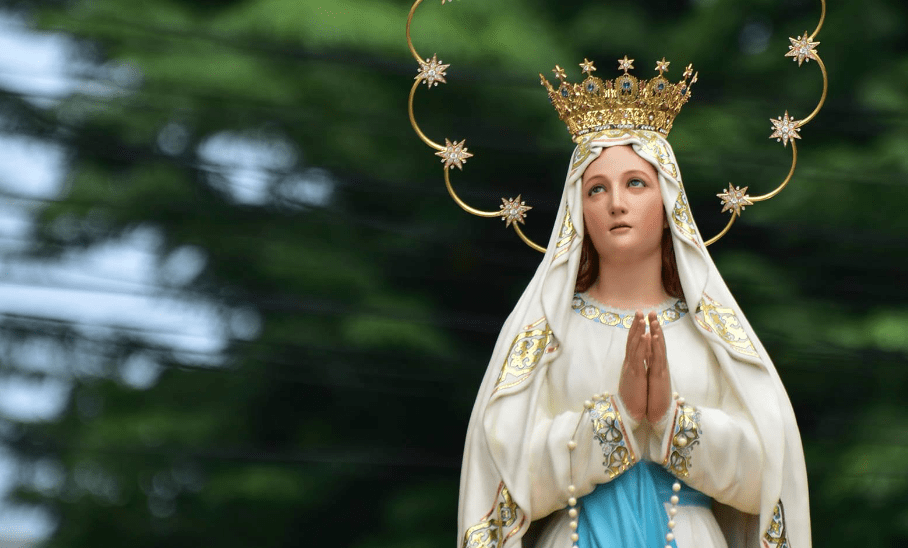
    This is manifested today in the two sacraments that we are celebrating, the Eucharist and Anointing of the Sick that bring healing and restoration to our physical body and spirit. And we are more assured today, as we celebrate the Feast of Our Lady of Lourdes, because we are given extra confidence that Mary, our Mother is there with us, praying for us and desiring for our healing and completeness.

    Therefore, as we pray and ask for the grace of healing, let us also listen and respond to the call of Jesus today to express freely the divine image in us that gives life, that inspires life and that creates life.

    As we receive God’s grace of healing, let us allow the divine image in us to flow into our relationships, into our families and friends, into our commitments and endeavors, into our work and profession and into our organization and communities so that we too will become bearers of healing. Hinaut pa.

  • Letting Go: Embracing Essential Blessings in Life

    Letting Go: Embracing Essential Blessings in Life

    February 6, 2025 – Memorial of Saint Paul Miki and Companions, Martyrs

    Click here for the readings (https://bible.usccb.org/bible/readings/020625.cfm)

    Have you experienced of having the thought of “I might need this… I might need that”? And because this can grow into a form of anxiety, this could develop to be a kind of compulsion in us. We could experience it when we are about to travel to somewhere else. Just because there are many things that we thought might be useful for us, then, we realize that we are being burdened by many things that are not useful at all. We also experience it even just by staying at home or in our own rooms and personal space.

    Indeed, things would clutter from small things to big things. Perhaps from small old toys, papers, clothes, shoes, plastics, containers and many other things. And having the thought of “I might need this… I might need that” would make us accumulate more to the point that we find it difficult to let of things even when those are not essentials.

    I also had a similar experience like this. Years ago, during my theological studies, I was sent abroad for a mission exposure. Few nights before my flight, I had my inventory on what I should bring for the one year mission experience in Indonesia. I kept looking at my things worried that I might forget something important and something that “I might need.”

    So aside from clothes, I prepared small things, vitamins and preventive medicines against malaria, books, camping and survival kit, treats and sweets for my sweet tooth and many other small things. Expectedly, my luggage was overweight and so I had to pay a few thousand pesos for the excess weight.

    However, when I was already in the mission area, there were many things that I brought but I was not able to use. I realized I had more than enough.

    And again, such a situation can also be true in other aspects of our life. One could be overburdened in his or her relationship because of the emotional baggage the person brings into that relationship. Trauma from the past, or guilt, shame, fear, anger, hatred or other insecurities could make our life more difficult and at times overwhelming and suffocating.

    Realizing this attitude which may be present in us, Jesus in the Gospel today offers us a different approach. As Jesus gathered his disciples he began to send out the Twelve, two by two.

    They were given power to cast out unclean spirits and heal the sick. Though, in their journey, Jesus instructed them “to bring nothing except a walking stick.” They were “allowed to wear sandals but not a second tunic.” This means that there were no other things to be brought by them, only the most essentials in the journey.

    And looking at it at a very human perspective, the journey sounds a quite harsh and difficult. A disciple could feel so vulnerable and insecure for not having other things in the journey. Yet, Jesus “gave them authority.” That authority is power. And that power is to bring blessing, healing and peace.

    Despite the poverty they had, the small things they possessed, the very presence of God among them and the power given to them suffice what they need.

    The same spirit and attitude of the heart has been shown by St. Paul Miki and his many companions. This Japanese Jesuit Priest together with his friends continued to bring blessing even to their persecutors until their death. Paul Miki was from an affluent family but left influence and comfort to embrace Christianity and a missionary. In the midst of Christian persecution in his own land in Japan, Paul Miki and his companions remained steadfast and committed to bring blessing to people.

    This tells us now that true power does not rest in our capacity to destroy others but in our capacity to give life, to heal, to bless and make peace even in the midst of poverty, persecutions and insecurities.

    There are two essentials now that we are invited to bring.

    First, to trust God’s generosity and power. The Lord provides the needs of His friends and this is experienced by us through the generosity of people around us. The abiding presence of God is with us. And to fully trust in God’s Providence is an act of faith. This is the reason why the twelve were to bring nothing. It was to allow themselves to become companions and friends of the people whom they were to encounter. They may have the power given by God, yet, they were not above the people or apart from the people. They were equal in status as companions and friends. They were to live among the people and be immersed in the life of the people.

    Second, to carry and give blessing, always. This makes the Kingdom of God to grow more in our hearts, homes and communities. As we carry and give blessing, the more we also receive blessing because we become more conscious of the essentials and able to let go what prevents us. Even in the midst of our poverty or persecution may we remain blessed. Hinaut pa.

  • Bitterness Deprives Us of God’s Grace

    Bitterness Deprives Us of God’s Grace

    February 5, 2025 – Memorial of Saint Agatha, Virgin and Martyr

    Click here for the readings (https://bible.usccb.org/bible/readings/020525.cfm)

    When the brain is deprived of oxygen, medical science tells us that it can lead us to loss of consciousness. And longer deprivation of oxygen as in the case of drowning can lead to more damage to the brain and even death. When we too are being deprived of essentials in our relationships like love and acceptance, it also leads us to confusion, depression and even in losing ourselves.

    In matters of faith, depriving oneself of the grace of God will lead us to hopelessness and misery in this life. Yet the Holy Scriptures teach us that God always gives life, blesses life and renews our life. God never stops that.

    In fact, this is the reason why grace overflows so that no one will be deprived of the grace of God. The first reading from Letter to the Hebrews reminds us of this. We were reminded to strive for peace with everyone because without it, we shall have troubles and bitterness in our hearts. As the grace of God overflows, the Letter also invites all Christian believers to “see to it that no one is deprived of the grace of God.”

    This tells us that our participation has an effect in making God’s grace to truly overflow and be experienced by all. However, one can actually deprive oneself or others of the grace of God when the heart refuses God’s grace.

    Yet, why would a person refuse to welcome and accept something that is so wonderful like the grace of God? Is this even possible? Indeed, this is very possible that a person will refuse to accept God’s grace because of a heart hardened by jealousy, false judgment, bitterness and hatred. This is a heart seeks no peace.

    This is what we have heard in today’s Gospel. As Jesus went home, he was welcomed with bitterness and hatred by his own neighbors. Jesus did many miracles in other places but was questioned and judged by the people who knew him. Their thoughts were merely based on the familiar background of Jesus of being a carpenter, being a son of Mary, being a brother to his cousins.  Outside of these, they failed to see that there was more in the life of Jesus. The people failed to see the overflowing grace in the life of Jesus. As a result, the people took offence at him.

    They felt offended because they could not accept the opportunity of being graced by the life of Jesus who was only ordinary for them. This is how a bitter and hateful heart affects our relationship with others. All Jesus could do was to heal few sick people. And it was not that Jesus did not want to do any miracle because of their bitterness towards him. Jesus just couldn’t because the people did not cooperate with the grace of God. The bitterness in their hearts made them refuse and be deprived of God’s grace.

    Indeed, God can only work when we allow God to work miracles. The lack of faith of the people is a way of refusal of God’s grace. This tells us that God, though all-powerful, does not impose the Divine power on us. God would rather invite us to allow Him to work miracles for us.

    Besides, the people expressed their non-cooperation with the grace of God through their lack of faith. And Mark tells us that Jesus was amazed of their lack of faith. It was just amazing for the Lord because the people have witnessed how the grace of Jesus’ life could do for them yet they still refused. The lack of faith in them was even reinforced because their hearts were filled with jealousy, false judgment, bitterness and hatred.

    Yet, as the Letter to the Hebrews calls us, “see to it that no one is deprived of the grace of God.” This is the call for us today. Let us not deprive ourselves of the grace of God or deprive others. Let God’s grace overflow then, through us and through the gift of persons of one another, like St. Agatha whose feast we celebrate today.

    St. Agatha though was subjected to suffering because of a sexual desire of a Roman governor, grew more in her faith in God. In the midst of torture, even when her breast was torn off and later was burned alive, the grace of God flowed through her. Her commitment to Christ and through her martyrdom, she became a channel of miracles of healing.

    And so, with St. Agatha’s intercession, let not our hearts nurture bitterness, hatred, jealousy and false judgment on others in order not to deprive ourselves or others of the grace of God. Let us rather nurture an attitude that welcomes the grace of God through the gift of our persons. And we can do this by striving for peace. Hinaut pa.