Category: Sunday Homlies

  • The Candle of our Relentless Hope

    The Candle of our Relentless Hope

    November 29, 2020 – First Sunday of Advent

    Click here for the readings (https://bible.usccb.org/bible/readings/112920.cfm)

    Homily

    Advent is a season of “Joyful Waiting.” It is a joyful hope that lifts our spirits. With this first Sunday of Advent, we also begin the new year in our Church’s (Liturgical) Calendar. However, I cannot help but recall the past year. As the new year Liturgical year started in December 2019, we already have experienced frightening calamities. Earthquakes terrified particularly the Central and Southern Mindanao. Quakes continued for weeks that left thousands of people traumatized and terrified. Then, Taal erupted and brought great damages in its neighboring provinces. Then, Covid-19 came and brought fear to us until now. And just recently, typhoons hit our country that greatly affected our brothers and sisters in the Northern Philippines.

    From all of these, we saw images in the news and in social media sites how millions of people were waiting to be rescued. Until now, all of us are waiting to be rescued. The typhoon Rolly and Ulysses particularly caused people to climb to their roofs because of the floods. Those frightening situations left our brothers and sisters at the mercy of rescuers.

    We could just imagine, that if we too are in their situation, it would be very difficult not to give in to despair. There was so much hopelessness that we have experienced. Is there something to wait joyfully then? Is there something to wait joyfully now?

    On a personal level, many individuals also struggle to live because of personal and deep-seated issues. Many young people have succumbed to depression that led to suicidal attempts and ultimately led to the end of their lives. Many are desperate because of their addictions, because of broken and abusive relationships where they are trapped. Many felt hopeless because of their guilt and shame, believing that they cannot be forgiven.

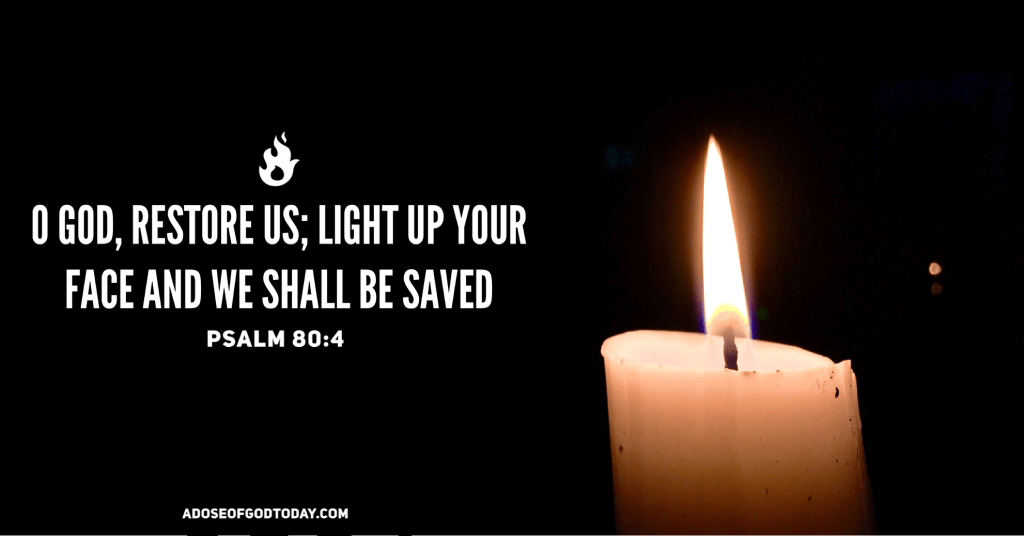
    In one way or another, we are all waiting to be rescued. What the Psalm has proclaimed today, is echoing into our hearts, “Let us see your face, O Lord, and we shall be saved.” Thus, despite the frightening, terrifying experiences we have, despite our desperation, we long and we cry deep within that God may show His face to us, so that we will be saved from so much despair and suffering. This Psalm really expressed this hope. This was written during the time of destruction and captivity of Israel. People became miserable and desperate because their enemies brought darkness into their lives.

    Yet, their hope for salvation was relentless. In the same way, Prophet Isaiah, in our first reading also expressed this persistent hope for salvation in the midst so much misery. In his desperation, he even sounded to blame God saying, “Why do you let us wander, O Lord? Return for the sake of your servants.” With the people, Isaiah conveyed the feeling of being abandoned by the Lord because of the guilt that they were carrying.

    Isaiah expressed the shame and guilt of the people’s stubborn heart, rejecting and killing God’s prophets. Their leaders and the participation of the people of a systemic corruption of life, made Isaiah to proclaim, “you have hidden your face from us, O LORD, and have delivered us up to our guilt.” Isaiah knew this very well. It was indeed very easy to fall into hopelessness and in total misery.
    However, Isaiah also expressed in behalf of the people, and in behalf of all of us today, he said, “Yet, O Lord, you are our Father.” In the midst of hopelessness, Isaiah recognized God and affirmed his confidence to God, our Father, who will never ever abandon us. This, indeed, is a relentless hope.

    In the same way, Paul expressed in his first letter to the Corinthians, his gratitude for the grace of God bestowed on the people, and also reminded them that “God is faithful.” Yes, God is faithful and cannot deny us and will not break the promise to be with us.

    God continues to be present with us in every moment of our life. God blesses us with His presence even in our most difficult and desperate moments. This is what keeps us now to remain hopeful. And the first candle that we lighted on this First Sunday of Advent reminds us of this hope. Indeed, the candle is called a “candle of hope.” However, today this surely has become a “candle of our relentless hope.”

    This relentless hope keeps us alive and keeps us burning in our desire to be rescued by the Lord in whatever difficult and misery we are experiencing today. Hence, as Jesus told his disciples, Jesus also says to us today, “Be watchful! Be alert!” Jesus wants us to be always watchful, alert and attentive to his constant revelations for us and attentive to his silent revelations in us. To be watchful and alert is not a mere warning of the dangers that may come, it is also an invitation to have a heightened awareness of God’s presence in our life and in the lives of others.

    We are a people who long to see the face of God, who long to feel His loving and comforting presence in our life. Yet, let us also realize that though we long for God, God longs for us all the more. Jesus would surely come and rescue us where we are at this very moment.

    Thus, on this first day of Advent, we are all invited to relentlessly hope as we remain watchful of God’s presence in our life and through the life of our brothers and sisters. Hinaut pa.

  • King for us & with us.

    King for us & with us.

    November 22, 2020 – Solemnity of Our Lord Jesus, King of the Universe

    Click here for the readings (https://bible.usccb.org/bible/readings/112220.cfm)

    Homily

    If you google the word: “Cristo Roto or Broken Christ” in the net, you will be led into a place in Aguascalientes, Mexico where there stood a massive 25 meters bronze statue of Christ above the city dam. Considered to be the 10th largest statue of Jesus in the world, what makes it special is that it is broken. An image of Crucified Jesus stand suspended without a cross, with a missing right arm and a snapped off leg. It was based on the story told about Fr. Ramon Cue who found a broken and desecrated crucifix in an antique shop, and bought it in view of restoring it for his parish. Once home however while in prayer before the broken Christ, Christ himself pleads to the priest that it to be left broken & not restored, so that it could stir in the priest & in his parishioners the need to both ‘see’ & ‘serve’ the broken Christ’s in their midst. Known now as Santuario del Cristo Roto (Santuary of the Broken Christ), the massive Broken Christ statue is a famous religious pilgrim and devotion site, and a popular stop for Mexican migrants crossing the US, where faithful considered it as a savior of the lost causes.

    Today is the Solemnity of Christ the King. Consider the image of Christ the King. Usually the image shows us all the symbol & promptings of honor and glory depicted proper & usual for a king (crown, thrown, orb, scepter & robe). But notice, what is most peculiar in the usual image of Cristo Rey are His exposed swelling inflamed heart & His barefoot. These peculiarities somehow highlight the distinction of Christ’s kingship from the usual human kings. Barefooted-king symbolizes Christ as a humble Shepherd king who is on-the-go, in-touch, and grounded in His people’s lives. Exposed swelling inflamed heart symbolizes Christ as the loving Lord King who is hands-on, feel with, empathizing, all-out, compassionate & merciful to us His people. Above all, both His open heart & exposed feet are reminders that our Lord & King Jesus Christ is a Broken, Suffered, Wounded yet Victorious & Glorious Servant King-Shepherd who still needs & longs for our praise & loving service with Him in our Father’s kingdom. A glorious King, indeed yet remains a broken Christ so that we may see & serve Him in our midst, in our day to day lives & thus, continue His work & contact-presence with us in life. A forever kingly yet still broken Christ in our midst.

    The kingship of Christ reminds us that, FOR US, God is our Shepherd king. For our sake, He choose to be our Shepherd King. Through our readings today, we recognize that like a good shepherd, Yahweh HIMSELF tends us His flock: a hands-on God-king who look after, tend, rescue, pasture, give rest, seek, bring back and heal us His people for the sake of  our salvation, fulfilled fully  (no more, no less) through the witness & shepherding of our Lord Jesus Christ. And on the day of Reckoning, Jesus will account & segregate the worthy from the unworthy (sheep among the goats) of eternal life with our Father.

    And the kingship of Christ reminds us as well that ALONG WITH US, God is our family or rather we are His family & His son Jesus is our brother who is mostly with the least of our family. In our gospel today, both the worthy & unworthy ask the Lord “When did we see you…?” His response is Ubi Caritas: loving service to others – “whatsoever you do to the least, that you do unto me”. In other word, Jesus is the “me in the least of our brothers/our family” – the broken Christ in our midst who needs our loving service. And how we treat Him in the least of us is the standard measurement of us to be worthy or unworthy of being & living with Yahweh, our Father.

    Christ’s kingship is thus expressed at its best & should be seen and served as our Lord Jesus, the Shepherd King FOR us, and the broken Christ WITH US, especially in the least of us in our midst.

    The solemnity of Christ the King marks the end of our liturgical year. Like in the airport’s pre-departure area, as we bid farewell to the pandemic year that has been & a prepare for the next year’s promise & challenges in our spiritual travel-journey, perhaps we ask ourselves:

    • How have I experienced God’s shepherding in my life this year? In what ways Jesus have tended, rescued, pastured, protected & healed me this year? How the Lord Jesus is for me & with me this year?
    • How did I participate & contribute in His shepherding of me & us all? What have I have done for Him? How have I been with Him, an obedient & faithful sheep OR a dumb-ass & hard-headed goat? What have I done to the least of my brothers? Have I been His frontliners who do something for those who are need at this time OR have I been a KAREN, a proud entitled jerk who complains a lot & carelessly put others lives at risk for undermining protocols & breaking guidelines? Have I recognized, “see & serve” Him in my life & in our midst?

    As we have a closer look of our life & mission as His flock & people, reimagine our being & living with God, and make some resolutions to do better in life & faith anew, may the lyrics of songs below inspire & guide us to be worthy of Our Christ the King in our midst. Amen.

    I MAY NEVER PASS THIS WAY AGAIN (Perry Como (1958))

    I’ll give my hand to those who cannot see, 
    The sunshine or the fallin’ rain.

    I’ll sing my song to cheer the weary along, 
    For I may never pass this way again!

    I’ll share my faith with every troubled heart, So I shall not have lived in vain.

    I’ll give my hand, I’ll sing my song, 
    I’ll share my faith, because I know, 
    That the time is now to fulfill each vow, 
    For I may never pass this way again!

    PAG-AALAY NG PUSO (Nemy Que, SJ)

    Minsan lamang ako daraan sa daigdig na ito.
    Kaya anuman ang mabuting maa’ring gawin ko ngayon.  O anumang kabutihan ang maari kong ipadama? Itulot ninyong magawa ko ngayon ang mga bagay na ‘to.

    Nawa’y h’wag ko ‘tong ipagliban o ipagwalang-bahala,
    Sapagkat ‘di na ‘ko muling daraan sa ganitong mga landas

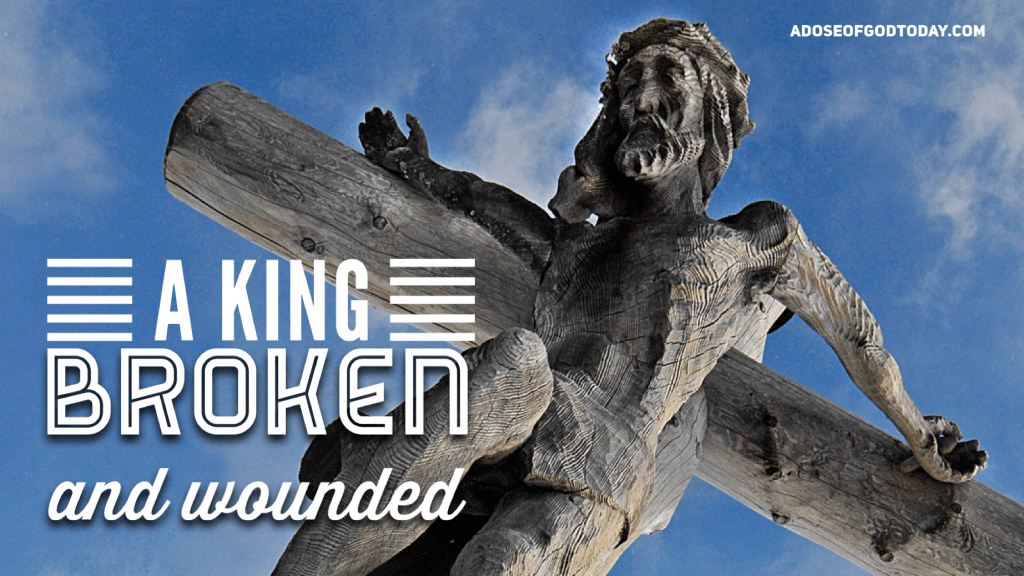
  • A King Among Us, Broken and Wounded

    A King Among Us, Broken and Wounded

    November 22, 2020 – Solemnity of Our Lord Jesus, King of the Universe

    Click here for the readings (https://bible.usccb.org/bible/readings/112220.cfm)

    Homily

    How would you imagine a king? Being influenced by fairy tales, anime and movies, I would imagine a king who wears a golden crown, covered in a golden robe, sitting on a golden throne and living in a golden palace. A king is a powerful man who has thousands of armies, who conquered many nations and defeated countless enemies through bloody wars. He is untouchable – commoners, slaves and servants cannot talk to him directly. His throne is too far from the ordinary people.

    This is not far from how we imagine Jesus Christ our King. Influenced by the western culture we also imagine Christ the king who wears a golden crown, wrapped in a golden robe and sits on a golden throne. This image for me, seems to be a very distant king. A king who does not know the daily affairs of his people. A king who merely shows greatness, triumph and wealth.

    However, our readings today portray a different image of Christ the King. There was no mention of wealth, no gold and silver, no armies and weapons. Let us closely look the readings today.

    The first reading from the Book of Prophet Ezekiel has a very interesting background. The political and religious leaders who were supposed to guide and care for the people became irresponsible. They became corrupt and abusive. They were chosen by God to lead his people and uphold justice and promote peace. However, they turned into men who only hungered for power and wealth. The poor were exploited and the needy were abandoned. Hence, God became so upset with what they had done to the people. And so, God promised that he will be the one to personally care for his people as a Good Shepherd would do to his sheep.

    This gives us the image of a God who builds personal connection or relationship with his people. God searches for us when we are lost. God gives us rest and brings us to a safe and abundant place. He looks after us because each of us is so dear to Him.

    This promise of a faithful God gives us the assurance that God indeed is there for us all the time. For this reason, our psalm captured beautifully the feeling of being taken cared by God Himself – “The Lord is my Shepherd, there is nothing I shall want.” Yes, this is an attitude of a person who has become confident in God’s promise. Indeed, in God everything shall be fine, in him, all shall be well.

    This is what St. Paul has told us in his letter to the Corinthians “that God is everything to each of us.” It only means that God is there for us and accompanies us in our brokenness and difficulties. Yes, this Solemnity of Jesus Christ, King of the Universe reminds us now that our King, our God is not far from us. He is not sitting on a golden throne or wrapped in a golden robe or guarded by a concrete golden palace or protected by security agents and royal guards. Our King is here with us, walking with us in our brokenness and woundedness. Our King has even identified himself to be among us and one of us, wounded and broken.

    The Gospel tells us about this. The King in the parable identifies himself with those people who are hungry and thirsty, who are naked, who are homeless, who are imprisoned, who are sick. Indeed, Jesus identifies himself with those who are broken and wounded.

    Let us not forget that the King-Servant who builds relationship with us, who shows concern and love to us also expects response from us. Jesus wants us to show to others especially to the least of our brothers and sisters the concern, mercy and love that we experienced from God.

    The best way of expressing our gratitude to Christ, of our reverence and love for him is in making our faith concrete through the “corporal works of mercy” by feeding the hungry, drink to the thirsty, clothing the naked, comforting the sick, welcoming the stranger, visiting the imprisoned – the very people to whom our King identifies himself.

    This is the invitation for us on today. It is in our ordinary life, in every day affairs of our life that we are called to respond to Christ the King of the Universe who has called us. The corporal works of mercy can be expressed through our common and ordinary dealings with members of our family, our friends, co-workers and even strangers we meet on the road especially when we are confronted with all their brokenness, wounds and needs.

    Christ the King rather chooses to be identified with a sick old man abandoned by his family, or a rejected and broken-hearted daughter or son who succumbed to drug or alcohol addiction, or to a person physically, mentally and sexually abused, or to a person affected fatally by the financial crisis brought by the pandemic, or to a physically and mentally drained medical front-liner, or to an infected person of Covid-19, a grieving family because of the death of a loved one, or to a family being displaced because of the recent disasters, or a person deprived of voice and freedom or to a friend who suffers depression, or a classmate who is being bullied.

    Christ calls us to see and encounter him through these people. Expand now our image of Christ the King. Rather than imagining him with gold and jewels, let us encounter the Lord among our needy brothers and sisters. Thus, take time to reach out to those who need our help, in ways that we can do. Hopefully, that encounter and the experience of reaching out to the needy, will bring us into the experience of encountering Christ through others. Hinaut pa.

  • Where your heart is and should be.

    Where your heart is and should be.

    November 15, 2020 – 33rd Sunday in Ordinary Time

    Click here for the readings (https://bible.usccb.org/bible/readings/111520.cfm)

    Homily

    As we are about to end the year and prepare for another year ahead, during these coming weeks, it is opportune time for us to review the year has been & about to end – especially as we are forced to deal & adjust with the life-threatening pandemic infection, and consider our life’s endtime or endgame as well. Yes, it is but timely & important for us to be once again in touch & in tune with meaning & purpose of our being and living life then-now-ahead, and above all, for us Christians to  have a closer look & be in sync once again & anew about our views, attitude, & beliefs towards God’s kingdom – our life-eternal with God.

    We have just heard about the all-too familiar Parable of the Talents. The master entrusted some investments to his servants – each according to his ability. As accounting day arrives, those who did well to make the most of his investment were entrusted with more investments & responsibilities, but those who failed to maximize his investments were deprived of further investments & responsibilities. Such a simple business principle. You reap what you sow. Same as in computer language, it is called GIGO (Garbage IN, Garbage Out).

    But somehow life-lessons learned here in our gospel today may also teach us more about the Kingdom of God – our life being and living with God.

    First, God’s kingdom is all about our DYNAMIC and CREATIVE life with God – never should be a static and typical life. Like dance, life with God is the marriage partnership between God and man. For Him to grant us His blessing of Creation and Redemption, God needs a Partner. God needs us to be His partners. He needs our contribution and participation in the dance and marriage of Life and salvation.

    And somehow this is how our partnership with God works: God provides us with the necessary materials or ingredients. He endowed & entrusted each one of us with unique talents, capabilities in attitude, skills and knowledge and opportunities in life (each according to his capacity). But for us to Participate in the Re-Creation, i.e for creating once again our life and our world, and for us to continue God’s work of Redemption, it is up to you – to each and everyone of us to take risk, develop, make the most use of, invest and contribute such GIFTs and talents.

    Second, God’s kingdom also works in a different grading system. Usually using our grading system, we rate the individual student’s capacity against our own standards. Against our accepted standard, we rate them as poor – good – very good – excellent. We grade them with numbers or letters (60 – 75 – 80 – 98 or A – B – F). But in His Kingdom, in His ways or His eyes, God works with a different standard. He sees our basic goodness, our unique potentialities (each according to our capacity). He gives each of us 100%, or excellent or straight A by his own standards & our unique capacity. But like the servants in the Gospel, it is up to us remain at 100%, or settle for less… OR to take risk, strive more to be than 100%. It is not a matter of striving for 100% grade, but a matter of taking a venture to make the most use of our full potentials.

    For instance, making a school project, like -baking a cake or assembling a radio. In school, we are given the opportunity to create those things. Our parents provide us with the necessary materials or ingredients or instruments. Our teachers give us a chance to cook a cake or assemble a radio.  They facilitate and guide us in creating or producing the project. But to the last analysis, it is you who will make the project. It is up to your discretion and creativity to make your cake taste like cake or better than mom’s cake, or to make your radio makes sounds and sounds good. And as we all know; others would settle for less. But others would explore, experiment, and take risks to be more creative and to learn more. Therefore, in doing a project, it is a joint venture, a partnership between your parents, your teacher, and yourself.

    And lastly, our life with God is mirrored in the state of our life here on earth & the state of our life then in heaven later. It is lived on how we make the most of & be responsible for His investments with us in life, & how poor/right & good/bad our marriage partnership with him. In other words, God’s kingdom is how we treasure God in our hearts.

    Marriage, Venture, Treasure – are just but keywords to remind us at this time to consider that God’s kingdom is where our heart is and should be.

    Now consider this….

    In a dream, a rich man found himself at the heaven’s door with two angels. The angels said: “Welcome Home, Sir”. He was brought inside a posh five-starred hotel, where he was also welcomed by his former staff, friends, family & colleagues who have gone before him. Glad to be in heaven meeting again his people, he was then led to his room at 175th floor. Coming down from the elevator, he and the angels passed through several VIP rooms. But eventually, he was led into a storage room near the staircase with only a cushion bed on the floor. Shocked with what he got, he complained: “That’s it?  Only this pathetic room?”. But an angel replied: “Well, that’s only we can do & set up for you from the few materials & resources you have sent here.”

    Remember Jesus advices us: “Do not store up treasures for yourselves on earth… but store up for yourselves treasures in heaven” (Mt. 6:19-20)

    Set our hearts, Lord towards Your Kingdom at all times so that we may not lost our ways & not lose Your ways but rather live our lives here now on earth more directed and meaningful, and thus fully enjoy our being with You now and forever. Amen.

  • A Paralyzing Fear

    A Paralyzing Fear

    Advertisements

    November 15, 2020 – 33rd Sunday in Ordinary Time

    Click here for the readings (https://bible.usccb.org/bible/readings/111520.cfm)

    Homily

    I had a conversation among students and we were talking about self-confidence and talents. There was a good number among them who expressed that they were struggling because of low self-esteem. Most of them too tended to compare themselves a lot with others. They recognized more what was lacking in them and what others have. Such comparison seemed to become a habit that anything can become a subject of comparison and telling the self that he/she lacks and is unfortunate.

    As I let them talk about their experiences, most of them also expressed that it started at home. Their parents tend to compare them with their sibling, or cousin or neighbor or a classmate who seemed to be so much better, brighter and more talented than them. The constant nagging and comparing of their parents have made and molded their consciousness that they were less intelligent and less talented.

    Thus, when we tend to compare more ourselves from others, we also become harsher towards ourselves. By identifying what we don’t have and what others have would only make us more miserable in life. We become more miserable because we will not be contented with what we have. Moreover, we will become indifferent to our own talents and capacities, resources and potentials. This will develop then, into fear, into a paralyzing fear that prevents us to be fruitful, joyful and living life to the fullest.

    Now, this brings me into our Gospel today. Jesus tells us this wonderful story of the parable of the talents. There were three people being given talents from their master. The talents, here were the amount of money gifted to the three. And so the master, gave the talents according to the ability of each one. To the first, he gave five talents. To the second, he gave two talents. And the last one was given one talent.

    However, we were told that the third man was a fearful person. Unlike the two, he did not take the risk of investing the talent given to him because we was afraid of failure. He chose not to do anything because fear seemed to paralyze him.

    He must have pitied himself because he only received one talent unlike the two who had more. He must have compared himself a lot with them. Deep inside, he must be furious and angry why he only received one. It must have been so unfair for him. In his insecurity, he retreated to hide, to low self-esteem, to fear but bitter towards the gifts and blessings of others.

    These thoughts must have occupied his mind and heart to the point that he couldn’t do anything because fear crept it. He feared his master. He was afraid to fail. Yet, that fear in him did not also save him. The talent that he was hiding because of fear, was taken away from him. He lost it and lost the opportunity given to him to be fruitful in his own way. He lost the opportunity to enjoy that talent and to enjoy life.

    Moreover, this attitude is only one possible extreme reaction towards the talents, gifts, and potentials we have. Another possible reaction is its opposite and that is to accumulate what we believe to have been lacking in us and ignoring what we are actually capable of. When we tend to amass things that we were deprived of, we will also tend to be corrupt and abusive. Then, we begin to show arrogance, exercise power and control over others whom we think are lesser than us.

    We can be this person. We can be that man who was anxious and fearful, insecure and bitter. We can also be that person who will become self-entitled and corrupt but deep within, fearful and insecure.

    This is not what God wants us to be. God wants us to trust Him who has blessed us with gifts, talents and people. Trusting God means being faithful to the gifts that we have received which may include our intellectual and physical abilities, our ministry, roles and responsibilities in our community  and even our relationships as a parent, as a spouse, as a sibling or as a child. These are the areas where we are invited by the Lord to invest our heart and our life.

    The Lord gifted us, each according to our abilities. God is confident with our potentials. God knows very much what we are capable of. Yet, let us also remember, that we don’t have to make big and spectacular things to just seek praise and recognition from others. The Book of Proverbs in our first reading today tells us how a simple wife does her duties with grace and kindness. In that way, she developed her gifts as a wife and as a person by also reaching out to others and extending kindness to the needy.

    This is God’s invitation for us – to trust God who trusted us first, to trust his generosity and to be faithful to the many gifts and talents we have received from him. We are called to recognize and embrace what we have, to be grateful for those and invest time and effort. God wants us also to commit ourselves to those things.

    I would like now to leave three reminders for today.

    First, do not compare yourself to others. It will not help you. You will only become more miserable. Rather, begin to acknowledge what you have now – talents or abilities, roles or responsibilities and relationships. Identify also those areas where you think you are still weak and so need more investment from you, perhaps, you need more time, more attention, more practice, more focus, more presence and more confidence. When we are able to accept them and nurture them, then, we shall surely witness God’s wonder in making us productive and flourishing.

    Second, parents, please stop comparing your child to another. It does not help. Instead, discover their gifts and encourage them to develop them. But avoid pampering them to the point that they couldn’t do anything without you.

    Third, never be afraid of failure. If we fail, it could be painful and shameful but go on. It is not the end of your world. Never let fear prevent or paralyze you. Conquer fear by becoming more grateful to God who first loved us and also the first one to have confidence in us. Hinaut pa.