Category: Season of Lent

  • Heart’s point of view

    Heart’s point of view

    March 19, 2023 – Fourth Sunday of Lent

    Click here for the readings (https://bible.usccb.org/bible/readings/031923.cfm)

    It was told once that a prisoner happened to  escape prison by digging a hole underground. And it also happened that he came out into a  playground few distances away from the prison. And in his great joy, before a group of playing kids, he shouted at the top of his voice, “Yesssss. I’m free. I’m free”. Then a little girl approached him and said with confidence, “Oh, mister that’s nothing, I’m four”.

    Here is a prisoner, after long years of imprisonment, deprived of his freedom, now got a chance to be free: to do what he wants to do – to be what he wants to be. He finally now gains his freedom. However, here is a little girl, who witnessed the event differently because of her limited awareness. She is not concerned about his freedom at all, but only her being four years old.

    We could say the same thing with our gospel today. Here, a great miracle has happened. A man born-blind has been healed of blindness. He can now see. After years in darkness, he can now see the light and become conscious of life – of everything. However, despite of this great event, people still refuse to see, refuse to accept the reality that a miracle has happened.  They refuse to admit that life – creation has dawned upon them. In the midst of life & creation, their reaction is rejection – refusal to see. They don’t want to see and accept that the blind man can now see. They deny his sight and awareness and prefer he remains sightless and cursed blind man, same way as the girl is more concerned about her age than the prisoner’s freedom.

    Freed from of his blindness, the man also viewed his healing differently. He said, “I don’t know if he is a sinner; I only know that I was blind and now I can see”. He doesn’t care of sinfulness or whether he or Jesus is a sinner, all he cares about is that he was blind and now gains sight through Jesus. For a blind man to gain sight is everything, just as for a prisoner his freedom and for a little girl her four years of age.

    For the blind man, it is his redemption from cursed life of darkness. But for the Pharisees and people, it is a violation of Sabbath. Life has been created, God’s glory has been revealed, a man born-blind can now see… but all they can think of is the regulation about the Sabbath. They still refuse to see and believe in God’s glory and power revealed through Jesus.

    Our readings today teach a number of lessons.

     First, whatever happens in our lives whether it is a creation or reaction depends on how we see (phonetically sound as letter “C”) it. Whether things are C-reation or reaC-tion depends on how you C it. How we create life or how we react to life depends on how we view and see things. And most of the time, our own ponte vista – our point of views of reality hinder us to see a much wider perspective of things. Our limited biases and prejudices can block or blind us to see a much wider picture of life or even to view life in the eyes of faith, based on how God sees it.

    Our readings today then are all about awareness, about how limited and how limiting our perspectives can be, about how we can be blinded by our own biases and prejudices.

    Our readings remind us also that God’s perspective is different from us and much wider than our own view. He judges life not on appearances but by our hearts. Like in our gospel today, Jesus sees the blindness of the man differently, not as a sin or curse but as an opportunity for God’s grace to reveal and create life. For Jesus, the healing of the blind man is not as commonly perceived as curse but as God’s glory being revealed. He said, ‘so that works of God might be displayed in him’. For Jesus, the blind man is not a sinner but a saint, because God’s works and graces are made known through the blind gaining his sight. Through his healing, Jesus makes people aware of God’s blessings in our midst – that it is He whom we believe.

    Lastly, we are called to widen our perspective of life, and try to see things, not only from our own eyes but also in the eyes of faith. As Christian, we are called today to go beyond our biases and prejudices, our own view of reality, and try to widen our perspective and try to see from God’s perspective, i.e. to be aware of God’s blessing, graces, miracles in our midst. We are invited to be like the blind man who after gaining his sight, now searches for his faith. Like him, we are to see not only physically but also spiritually. We are invited to change from blindness to sight toward faith, from being a cursed sinner to a staunch believer and loyal follower of Christ.

    During this Lenten season, may God free us from darkness of sins, teach us to go beyond our perspective, and enlighten us to be creative, not reactive to the life-miracles He offers everyday. Amen.

  • Satisfying our Thirst

    Satisfying our Thirst

    March 12, 2022 – Third Sunday of Lent

    Click here for the readings (https://bible.usccb.org/bible/readings/031223.cfm)

    Kyle (not his real name) seemed to be so kind and warmhearted around his friends. He would always be there when someone would be in need of help. He was always filled with smiles. He was generous of his resources and time. Yet, he also tended to just please everyone around but very afraid of any conflict and tension. As a result, his pleasing personality would turn to become submissive to his friends and family members.

    Deep within, Kyle was filled with insecurities and fear of being left alone and abandoned by people whom he valued. Kyle, at a very young age was abandoned by his mother and left by his father at the care of their relatives. Kyle grew up believing that he has to earn the love of people around him so that he would never be lonely and alone again. This was the reason why Kyle would do anything, overly pleasing his friends, earn their approval and acceptance and as much as possible cling on them. However, his goodness and kindness, his very person was easily abused by opportunists.

    Kyle actually experienced a deep longing of love and acceptance because of an emptiness in his heart caused by that deprivation in the past. This is, indeed, a form of thirst, emotionally and spiritually. His ways, beliefs, attitudes and relationships followed the pattern of “people-pleasing” because he was in search of fulfillment, to quench that emptiness within. Yet, because he did not know at that time, what and why he was doing such things, he too experienced more hurts and pains.

    Like Kyle, we too might have our own thirsts and ways of quenching those thirsts for love and acceptance, for healing and reconciliation, for independence and freedom, for justice and peace. And so, on this Third Sunday of Lent, this is something I want to expound and share with you, as the readings evoked the symbolism of water and the need to be fulfilled and satisfied by the Living Water.

    Hence, in the Book of Exodus, the people became thirsty while they were in the desert. They became desperate. They began to complain and become bitter of their situation. They also began to blame Moses and God for bringing them out of Egypt. Moses had become desperate too and afraid of what the people might do to him. Moses pleaded with God.

    However, despite the ingratitude of the people to God for saving them from slavery in Egypt, the Lord responded generously to them. Striking the rock implied trust in God. The rock is hard and empty of water but out of that emptiness, God brings forth abundance, life and assurance of God’s love. There was flowing water. In the words of St. Paul in his letter to the Romans, he said, “the love of God has been poured out into our hearts.”

    In the Gospel, the Samaritan Woman, who experienced deep thirst in her soul, had a dialogue with Jesus. This was something that was forbidden at that time. But then, this was the initiative of Jesus to meet the woman “where she was at that moment.” This tells us that God meets us where we are too. She had been with different men, and with this, people around her must have condemned and judged her.

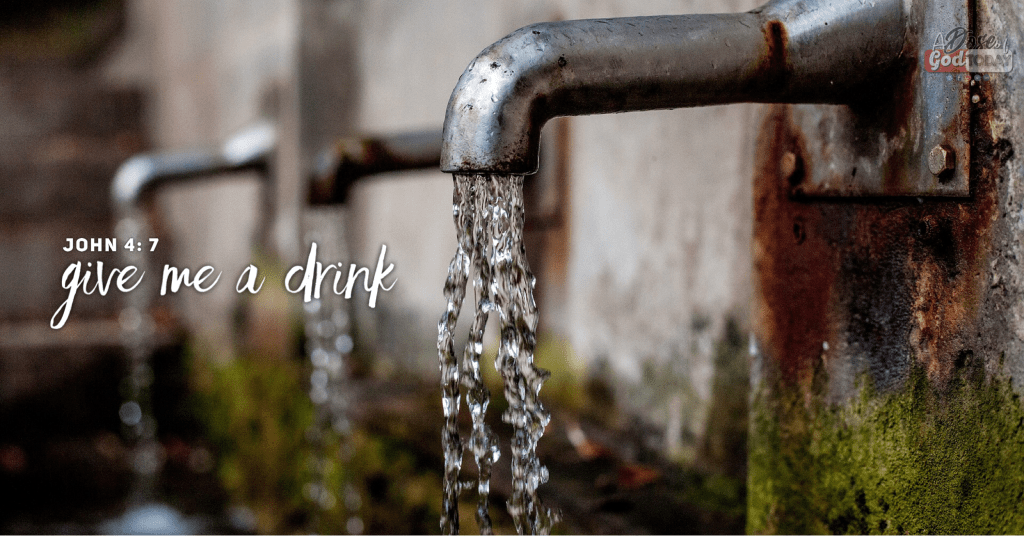
    Give me a drink,” was an invitation of Jesus to allow him to dialogue with her and to know her deepest longing in her heart. Jesus wanted her to allow God to feel her thirst for love and acceptance. The woman was indeed thirsty for such love and acceptance.

    This encounter with Jesus allowed her to look deeper into her life, into her many experiences of thirsts for love, for acceptance, for true friendship, for true and lasting intimacy with people whom she loved and those who loved her.

    Her dialogue with Jesus turned her bitterness, desperation and sadness into hope and joy. At the end, the words of Jesus, “Give me a drink,” had become her words too, she said, “Give me this water, so that I may not be thirsty again or have to keep coming here to draw water.”Such statement is very deep. This does not only mean to the water itself, but to the deepest thirst and longing of the woman. What she was asking was freedom and comfort from her sadness, desperation, and bitterness from those negative or traumatic experiences in her life that have made her constantly seek what was only temporary.Hence, she realized and found that the “Living Water” is in Jesus, in a person, in God who showed true compassion to her, lasting friendship with her and acceptance of her painful and sinful life.

    This is the invitation for us also on this Third Sunday of Lent. Jesus invites us to dialogue with him, because it is in dialoguing with God, is expressing our heart to God and listening to God that we begin to dig deeper into our own well, to recognize the dryness and thirst that we experience in life. Moreover, this will allow us to discover the abundance of God’s love and forgiveness for us.

    When we begin to recognize and own fears and failures, sinfulness and weaknesses that we also ask God to fill us, to love us, to forgive us, to give us peace and freedom, to give us life.

    We are not called to bury ourselves in fear and anxiety, or in shame and guilt when difficulties come in our life, or to turn towards bitterness and complaints when our struggles become confusing and overwhelming. Like Moses and the Samaritan Woman, let us turn towards God who shall direct us to that Living Water, to life itself, to our life’s contentment and joy with Jesus.

    As an exercise for this week, I invite you also to find time of at least 10 to 15 minutes every day, spend those moments in silence. You do not have to say your memorized prayers, but just stay in silence and be comfortable with that. Allow ourselves for self-examination and self-listening and to dialogue, to express to God what is in our heart, to listen to what God would like to tell us, and to allow the Lord to satisfy our thirst. Kabay pa.

    Guide Questions:

                How have you experienced “thirst” or deep longing in your life? How did you seek to be satisfied?

                In searching to be satisfied, how have you encountered and dialogued with Jesus, the true living water in your life?

  • Meeting Jesus

    Meeting Jesus

    March 12, 2023 – Third Sunday of Lent

    Click here for the readings (https://bible.usccb.org/bible/readings/031223.cfm)

    Common rural village people teach us a simple wisdom: “If and when the well runs dry, dig deeper. (Kon ang atabay mahubsan, palawoman: Pag ang balon natuyo, hukayin ng malalim.) If we reflect on this deeper, these practical words tell us more about waters or wells but also offers meaning and wisdom about life, relationships, and even faith in God.

    We do know how important water is in our life. Water is our basic human need and our life-giving source itself. Our physical body as well as our world is mostly composed of water. Life without water is no life at all. Because of our need for water, wells and springs are also important in life as sources of life-giving water.  Unlike now in urban cities where it is enjoyed conveniently at home with tap water on the faucet, usually in rural villages, people have to go and gather in wells and springs just in order get and have water.

    In and through wells and springs, we get access to natural water that offers life not only to individuals but to the whole community, as well. Water from the wells and springs bring us together before God’s life-giving water and with one another.

    Usually wells and springs of the village is the best place to meet people in the village. Whenever I am on mission in rural areas, I usually go to the wells or springs in the village for meeting and integrating with people. Not only there where I could clean myself and drink water – satisfy my need, there I could also come to experience and know the people’s lives and faith more.  Simply put, water wells and springs bring about meeting, encounter, well-being, relationship, community, and communion. For us then, to have an access to and get in touch into God’s life-giving water, we must also go and gather together before God’s wells and springs.

    In life we also do experience dryness. Like wellsprings atabay, there are moments in our lives that we feel dry and thirsty in life and in our relationships with God, others and even oneself. There are periods in our life that like the Israelites, we grumble before the Lord about our life-miseries, challenges, and problems, doubting “Is the really Lord with us or not?” Yes, we do have moments of spiritual & personal dryness in our relationship with ourselves, others & God in life.

    However, experiences of dryness in life and in our relationships could be an invitation and opportunity to go and be connected with God himself, the source of life. In our experiences of life’s dryness and thirst, As the saying goes “If & when the well runs dry, dig deeper” “Kon ang atabay mahubsan, palawoman. Pag ang balon natuyo, hukayin ng malalim.  Thirst for God’s love and/or Dryness in our life and relationships could also be the opportunity to dig deeper, which is, the right time and place to examine our life and relationship, be in touch with our realities and ideals, at the same time deepen our relationships and commitments. In other words, dryness in life are moments of encounters or meeting points where we can experience for ourselves our relationship and commitment with others and with God.

    The gospel we have just heard is an account of the meeting of Jesus with the Samaritan woman at Jacob’s well. This is one of the most touching encounters in the gospels which pictures God’s love and human conversion : a story of God reaching out to us and Us reaching back to God through the person of Jesus.

    At Jacob’s well, Jesus expressed God’s thirst for our faith and love for Him as well as offered us God’s life-giving or love-giving life. At Jacob’s well, the Samaritan woman became in touch with her own dryness and thirst, her need for God’s eternal life at the same time quenched her thirst in her encounter-meeting with Jesus. As she met Jesus at Jacob’s well, the Samaritan woman began to know and accept herself deeply (from being a Samaritan, descendant of Jacob, a divorcee to a believer) as well as she began to know and accept Jesus deeply (from a Jew, Sir, Prophet, Christ). At the Jacob’s well, Jesus recognized and satisfied the woman’s need for God’s love, and the woman recognized and fulfilled Jesus’ need for our faith in Him. 

    In dryness and abundance of water, there may be a lot of positive things will happen at wellsprings of life. Usually at the wellsprings of our life we experience, renew, and deepen our life-commitments and relationships with one another and our faith in God through Jesus. 

    The season of Lent is also the wellsprings of our Christian life. It is the appropriate place and time to once again in encounter and experience God’s life-giving saving act through the Paschal Mystery of Jesus Christ.

    So again, If and when the well runs dry, don’t look and no need to dig for another well. Just dig your own wellspring deeper and be in touch and be quench once again with your original life-giving water.

    We pray then that the Lord may grant us the grace to know you deeply, love you more dearly and follow you closely during this another new Lenten Season of our Christian faith & life. Amen.

  • A Journey towards Transformation

    A Journey towards Transformation

    March 5, 2023 – Second Sunday of Lent

    Click here for the readings (https://bible.usccb.org/bible/readings/030523.cfm)

    Life is a journey. It is never meant to be static. As simple as the flow of the traffic, it goes forward until one reaches the desired destination. When life becomes stagnant, this is where we also find life uninteresting, depressing and devoid of life itself. Thus, our life also entails taking risks to move forward and being able to embrace the possibilities of what lies ahead despite its uncertainties.

    This is how we realize that taking risks to enter into new relationships, new places, new perspectives, new ways or methodologies could bring more life in us and even help us to be a better version of ourselves. This is something that I want to expound on this Second Sunday of Lent. The readings we have today have a lot more to say for each of us in this Season of Lent. And so allow me to journey with you through the readings.

    The Book of Genesis tells us of the call of Abram. He was called by the Lord to journey to a land he did not know, only God knows. This already tells us that this particular journey was filled with uncertainties and unfamiliarity. Abram was asked to leave and go out from his comforts, from the usual and from the familiar to him as he was to leave his family and homeland. Everything will be left behind.

    Yet, amidst uncertainties, God promised, “I will bless you!” Abram will be a blessing and all communities of the earth shall find blessing in him. This was how Abram went as the Lord directed him. Abram trusted the Lord and took the risk. Abram also grew in faith and became more familiar with God’s voice speaking in his heart.

    Abram’s life was a journey with the Lord but despite the risk of being uncertain, it formed Abram to grow as a person, as a man of faith. This was how Abram became a blessing to all.

    The Second Letter of Paul to Timothy reminds us also that even though we might experience fear and become anxious in life, yet, there is comfort and assurance given to us. Paul tells us that our journey is towards a “Holy Life.” We are saved and called for this. This is God’s desire for us and so God gives us spiritual strength. Therefore, we cannot rely on our own abilities and convictions alone. As we take risks in this life, we rely on the grace of God. We trust God’s presence to direct and inspire us.

    Moreover, the Gospel of Matthew beautifully proclaimed to us this journey towards that holy life. We were told that Jesus took Peter, James and John to a high mountain. It was a journey taken by the three with Jesus. The three disciples, like Abram, didn’t know what will happen there but because they trusted the Lord and had already built a close relationship with him, then, they went ahead.

    That high mountain is a symbol of being close to the Divine presence. This was where Jesus was “transfigured.” This means that Jesus’ appearance was completely changed, signifying his glory that was never seen before. This was a glimpse of that holy and glorious life. Yet, the transfiguration of Jesus was more than physical.

    That is why, the presence of Moses and Elijah pointed to something more. These two were the figures of the Law and the Prophets of the whole Hebrew Scriptures. They were conversing with the transfigured Jesus. This means that Jesus is the embodiment or the living fulfillment of the Law and of the Prophets. Hence, in journeying with Jesus, we shall find in him the fullness of life, healing and freedom.

    However, we are warned not to be like Peter at that time of this event. Peter who had a glimpse of the glory of Jesus wanted to stay. It was so glorious that he wanted to behold longer. Peter only listened to his desires and impulses. This is the danger of becoming static and stagnant in life when we let ourselves be overwhelmed by the events in our life, or by our emotions or by anything that prevents us to move forward and discover more.

    Yet, the Lord God never meant that life must be stagnant. That’s why when Peter was still speaking, a bright cloud overshadowed the three of them. This was God’s presence with a declaration saying, “This is my beloved Son, with whom I am well pleased, LISTEN TO HIM.” Yes, to listen to Jesus – this was the response to Peter and to all of us who merely listened to what we want and like to believe based only on our personal preferences and fancies.

    Another interesting and moving event here was that action of Jesus after that voice from heaven. The three were very much afraid of what just happened but “Jesus came and touched them.” This was the real presence of a friend who brings comfort and assurance when we too become afraid in life.

    From there, they came down from the mountain. This expresses that the journey continues and that is to bring change and blessing into our homes, groups, organizations, workplaces and communities. And from these readings today, I leave you three invitations.

    First, consciously make this Season of Lent a journey towards our transformation and not just as a mere devotional ritual to be practice yearly. So, seek the Sacrament of Reconciliation and faithfully do fasting and abstinence.

    Second, be more attentive of God’s presence in this Eucharist and even in the ordinary events of our life. Thus, it is important that we give time to be silent and to pray by becoming more familiar with God’s presence.

    Third, listen to Jesus. The Lord speaks in our hearts. So, read and reflect with your Holy Bible, if you can, attend Lenten Recollections and Retreats.

    As we embrace these invitations, may we be transformed to become blessings to everyone as we allow ourselves to be a gift to people whom we will encounter in this life. Kabay pa.

  • God’s AGENDA First

    God’s AGENDA First

    March 5, 2023 – Second Sunday of Lent

    Click here for the readings (https://bible.usccb.org/bible/readings/030523.cfm)

    Coming back from the desert, a holy man was once asked to describe his experience of God. People asked him, “Tell us, how does God look like? How do we recognize God?” But the holy man was so confused, for how can he express to them his experience of God from his heart. Is it possible to articulate to them his God experience in few words? So, he decided to teach them a simple prayer to describe his God experience in the desert, knowing also that this prayer is limited and incomplete. He hoped however that through this simple prayer, people may become more open to experience God for themselves. People then accepted such prayer readily, made it sacred and holy devotion, teach and impose it on others, and preach it to other nations. Some even gave up their lives to spread devotion to this Prayer to other people.

    However, concerned about what happened, the holy man eventually regretted his actions because many things have been done already to his simple yet incomplete prayer, except to help people experience and encounter God for themselves. He realized eventually that it would have been better if he did not speak at all but stayed silent, than give people a few words of prayer. 

    True enough, we do aspire to know and experience God. Like the people in our story, through prayer, we hope to encounter God’s presence in our lives, since prayer is all about our meeting with God. Prayer is our chance to experience God in our own lives. Meaning, prayer is not only our spoken-words and actions-done to express our needs, wants and desires for God, but moreso, prayer is our way & chance for God to reveal, make himself known, and be experienced by us. 

    Our readings today describe to us what Prayer really is. In our first reading, we come to learn that by listening to God’s will, Abram in prayer received God’s promise of salvation. In our gospel, by accompanying Jesus in prayer, the disciples witnessed and experienced God’s presence & glory.

    Meaning, in prayer we come to experience God, and it is our encounter with Him. Our experience of God (what happens) then matters most than the methods and words we used in prayer. Words and the manner of praying are just then but helps or avenues towards experiencing God through prayer.

    But usually while praying, we become more concerned about the Hows (methods) – on what is the righteous thing to do or say for us to experience God, and like Martha, on what do we have to do or say before the Lord. Remember, however: What God say to us is more important that what we say to Him.” What God wants from us and for us is more important than what we want from Him. What God does to us is more important than what we do to Him.

    In others words, God’s presence and glory is more important than our presence and glory. Simply put, while praying, God’s agenda and business are more important than our own agenda and business.

    Like for instance, while praying the rosary, we do find ourselves at times tired and sleepy or sleeping. And then we find ourselves guilty for losing track or not completing our rosary. Consider perhaps that God is more concerned with our tired souls than completing our rosary. While praying, God is more concern about taking care of our tired and weary souls than we finishing off our rosary. OR at times, while we are praying the Lord’s prayer, we distracted and bothered with the word: “Forgive us our sins, as we forgive those who sinned against us” because we are reminded of people who have hurt and pained us, as well as of people we have hurt and pained. Consider perhaps that those hurtful memories are the very agenda and business God wants us to address at that very moment to be eventually forgiven and healed.    

    Prayer and praying usually lead us into quiet and silence of our heart, eventually for us to become more open to God’s agenda and business as well as God’s presence. Abram in our first reading and the disciples during the Lord’s transfiguration experienced God’s glory and became sensitive to God’s will because they prayed in silence and open enough to be changed by God’s agenda and business for them.

    This Lenten Season, the Holy Church calls us to pray. And in the many ways and words we pray, be reminded that these prayers are just ways and means, but great help and aid for us to experience for ourselves God’s presence and will for us these days. Through our silent prayerful listening anew to God’s word & agenda for us these days is our sure path into our redemption towards God’s glory. In response to our Father’s call to Listen to His beloved Son, through our prayer in silent listening, may we be more open and sensitive to experience God’s presence and revelations – greater and better things God in store for us in life after pandemic. Amen.