Category: Season of Lent

  • God is in our midst

    God is in our midst

    March 19, 2020 – Solemnity of St. Joseph, Husband of Mary

    Click here for the readings (http://www.usccb.org/bible/readings/031920.cfm)

    Homily

    When life becomes confusing, messy and overwhelming, how do I react? When a relationship is intrigued by anger or hatred or contempt over a misunderstood situation, am I easily driven by my feelings or do I withdraw from the situation and hide? 

    Today, on this Solemnity of St. Joseph, Husband of Mary, the Gospel presents to us an attitude that portrays wisdom and compassion and above all an attitude that seeks guidance from God. Joseph’s relationship with Mary was intrigued with a suspicion of scandalous betrayal and unfaithfulness.  Within the period of engagement between them, Mary got pregnant. The people in their village knew that Joseph was not the father. Joseph himself was confident that Mary’s child in her womb was not his. Joseph knew that the Jewish law would find Mary guilty of adultery.  This is an act punishable by shame and death. Their law mandated Joseph to divorce Mary.

    In a small village like Nazareth, gossip seemed to be faster than lightning. Surely, every person in their village knew that Mary was pregnant. If we would imagine Joseph, certainly, he too was hurt. He might have felt being betrayed. Joseph was most likely in darkness at that moment, confused and overwhelmed by the situation.

    But then, Joseph showed a non-reactive attitude. Instead of condemning Mary immediately, he showed compassion by divorcing her silently and avoiding to put Mary into disgrace and bullying from others. This particularly, pleased God. Joseph was a good man, righteous and thoughtful. We expect Joseph to have been really hurt by this scandal yet what Joseph showed towards Mary was mercy rather than revenge and love rather than hate and not withdrawal in the midst of his own disappointment, confusion and fear. 

    This has become the way for God to reveal the divine plan. That is why, God revealed to Joseph in the night of dreaming and pondering. Through that revelation, Joseph’s view of Mary and her pregnancy and even of himself became larger and brighter. Joseph began to see the overwhelming and scandalous situation of Mary’s pregnancy through the eyes of faith rather than his fear and disappointment; through God’s love rather than anger and hate.

    Joseph saw and felt that what has been revealed to him was truly scandalous because God revealed Himself to him, because God has become man there in the womb of Mary. It was scandalous because we thought that God is up there or out there in the heavens only, a place that no person can reach. But then, Mary got pregnant. 

    This is what blows our mind now, because through that unexpected pregnancy, God tells us the He is intimately present with us; he tells us that humanity can become pregnant with God.

    After the revelation to Joseph, he understood that Mary’s pregnancy was a statement of God’s faithfulness and commitment to us. God commits himself to be our God; He commits himself to choose us as His people. For this reason, Joseph was told to name the baby, “Jesus, because he will save his people from their sins.

    This is God’s assurance to us now that he is present and he lives in the midst of our lives, in the midst of our pain, of our failures, of our disappointments, hurts and fears and even in the midst of an overwhelming situation as we are experiencing it today amidst the Covid-19 that brought panic and fears in our global community. Jesus is in our midst in order to bring us His mercy, his love and his friendship, and the assurance of his presence and of his healing power. Hinaut pa. 

    May, Joseph, the Husband of Mary, pray for us.

    Jom Baring, CSsR

  • To respond in love is confidence in God

    To respond in love is confidence in God

    March 18, 2020 – Wednesday 3rd Week of Lent

    Click here for the readings (http://www.usccb.org/bible/readings/031820.cfm)

    Homily

    When someone presents to you laws or rules and regulations? How would you feel? Isn’t it restricting and limiting? 

    This kind of feeling might have been more present these days as “community quarantine” has been imposed and gatherings of people have been suspended and discouraged by the Civil and Church authorities as precautionary measures against the virus covid-19.

    When I was also younger (in high school and college), I would also always look at rules and regulations as something that put limitations to what I can do. Most of these are stated like, “you shall not,” or “don’t.” These rules and regulations were reinforced by strict parents and teachers at schools. Thus, I was taught indirectly to be fearful because if ever I will disobey any of those, then, there will be a consequence, a corresponding punishment. 

    This made me an obedient yet fearful boy. I followed every rule, and so was never been late in school and had only one absent in my entire high school and that was when I got sick seriously. I was obedient to the rules and regulations, to teachers and other persons of authority because of fear. Only later that I realized that I was relating in a very unhealthy way. I felt so unfree because of my fear of breaking laws and to the authorities who will execute punishments.

    Yet, this is not the right attitude. Rules and regulations, or even Church laws are originally designed to make us freer as we relate with one another, they protect us rather than harm us. We only feel them restrictive to our freedom and self-expression when we also do not have the right attitude in responding to laws or rules and regulations.

    Our Gospel today has reminded us of that right attitude towards laws. Jesus himself has told us that he has come not to abolish the Jewish law and the teachings of the prophets but rather to fulfill them. Hence, it is in fulfilling the law or commandment of God that we will find joy and peace, security and life. 

    So how, what kind of attitude then? We will find it in Jesus’ relationship with his Father in heaven. Jesus has a complete trust to the Father. He never doubted his intimacy with the Father and the Father’s love for him. He is indeed secured in the Father’s love. This has been manifested and was evident when Jesus was on the cross, in pain and was about to die. Despite his confusions and questions in his own suffering, he trusted the Father as he offered his life.

    This is the invitation for us now. We are reminded by Jesus to take confidence in God’s tremendous love and affection for us. It is only by being confident that we also learn to follow God’s commands because we know that we respond in love and not in fear.

    Hopefully, this will make us become Christians who are free and who live not in the fear of being punished or being limited by many restrictions and “don’ts” but in the confidence of being loved and cherished by God. Hinaut pa.

    Jom Baring, CSsR

  • Forgiving without a limit

    Forgiving without a limit

    March 17, 2020 – Tuesday 3rd Week of Lent

    Click here for the readings (http://www.usccb.org/bible/readings/031720.cfm)

    Homily

    Peter asked Jesus about how many times he should forgive. For the Jews a righteous man should forgive those who have hurt them for 4 times. But then Peter exceeded that and made it to seven. He thought he has more than enough. However, Jesus responded to him that not just seven times but seventy seven times. The number actually does not matter. What Jesus is saying is that, forgiveness has no limit.

    Why is that? Why forgive without limit?

    It is even so difficult to forgive even once especially when the person who have hurt us is someone we love and someone we trust. Most of our painful experiences are sometimes rooted from our relationships especially when we are betrayed or abused or deceived by our own friends or family members. 

    The pain and suffering that come from those broken relationships create deep wounds in us. And will forgiveness be possible then? Yes, forgiveness will always be a call for all of us. 

    Forgiveness is not really for the person who have hurt us but rather it is all about us. The pain that we endure will lead us to feelings of anger, hatred and bitterness.  When we linger to these they will lead us to a heart that seeks only revenge. This will become our tendency from our belief that by hurting the person back, our anger and hatred will be satisfied. But then we are all wrong because anger and hatred will never be satisfied by violence. Violence will only make us angrier, hateful and bitter person. The more we linger to our pain, anger and hate; they become a cycle that will never end. 

    We will only create our own cycle of violence, revenge, anger and hatred. We will become prisoner of our own pain. All of these will only control our lives, our thoughts and actions towards others. We will never be free because we will try to avoid those who have hurt us and avoid occasions of meeting them. We will begin to become suspicious to our other relationships. We will be afraid of trusting others, of loving others again and even ourselves. We are afraid because we linger to that pain thinking that other people might do it again to us. And so, the cycle never ends.

    Unless, we find forgiveness in our hearts that begins with accepting and embracing those painful experiences and go on with life, then, we will not be free. 

    Remember, forgiveness will make us free. It will not erase the scar of betrayal or of abuse or of deceit in our life but we will be able to stand up, to wipe our tears and go on with life.

    Forgiveness then is not about telling the person, that what he/she did was okay and pretend as if nothing happens. No! Forgiveness is to heal our wounded heart that will make us say to the person, “I forgive you not because of who you are but because of who I am” as the Dalai Lama said. It means that I choose to be free and at peace. I choose love and not anger and hatred. 

    This is what Jesus is saying to us now and he wants us to forgive many times because a single unforgiveness will only make us prisoner of our own pain and hatred. Jesus wants us to be free and not prisoners of anger, hatred, and bitterness or of violence.

    In this way, we may always find reconciliation with God and with those who have hurt us so that in return, we too shall also be forgiven by those we have hurt in one way or in many ways. Hinaut pa.

    Jom Baring, CSsR

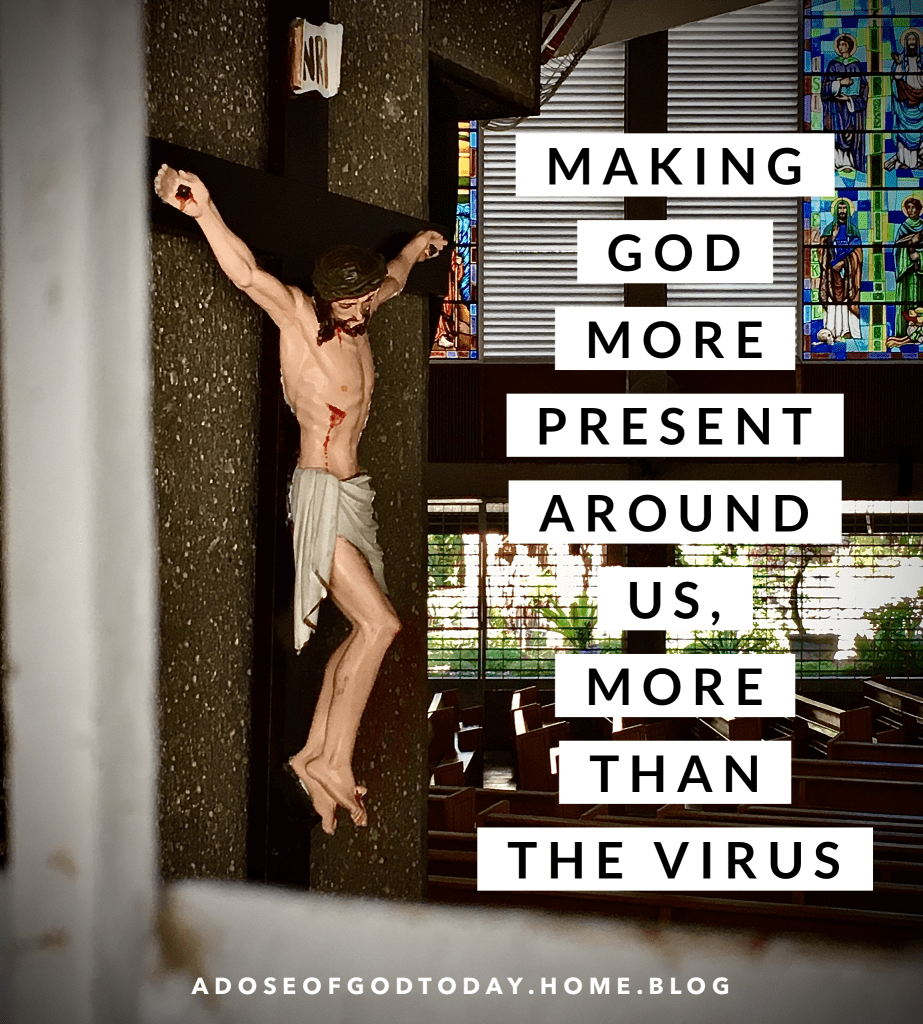
  • Making God more present around us, more than the virus

    Making God more present around us, more than the virus

    March 16, 2020 – Monday 3rd Week of Lent

    Click here for the readings (http://www.usccb.org/bible/readings/031620.cfm)

    Homily

    Why would the people reject Jesus? Why was it too difficult for them to accept him?

    People at that time became aggressive and even violent towards Jesus particularly because of the attitude that Jesus was showing to them. The Jews at that time believed that the Messiah was only for the Jews. Indeed, the people believed that God only belonged to them, as if, God cannot be God to others but only to them.

    However, Jesus showed a different image of God. He presented to them a Messiah that welcomes everybody, the sinners and the righteous, the sick and the healthy, the poor and the rich, the gentiles and Jews, believers and non-believers of God. 

    This is what we find in the story of Naaman, the Syrian Army Commander who was healed from his leprosy. Despite his unbelief at the beginning, but when he submitted himself to the advice of Elisha, Naaman became a witness and a recipient of God’s goodness and healing power. This has moved Naaman, a foreigner, to recognize God through Elisha.

    This tells us now that God initiates to approach those who are even non-believers, even those who are doubting and confused. And God initiates to approach, to call through people whom God has chosen as witnesses and instruments of God’s presence and power.

    This is fully expressed through the person of Jesus, yet, the people whom God has chosen as God’s people, the Jews, denied and rejected God-self in Jesus. They couldn’t accept because they wanted to monopolize God. This is where the people at that time failed to recognize God who was just around them.

    For us today, we too are called to recognize God who is just around us. God has chosen witnesses, prophets and instruments to bring His presence and power to all. And this is where we can find the two invitations for us today.

    First, open our eyes to see and recognize how God works in our life. Be more sensitive also of God’s presence working in the life of others because God brings his grace to us through people around us. Like Naaman, we are invited to be welcoming of God’s instruments who could just be our family member, a friend, a colleague or even a stranger.

    Second, allow Jesus to make us His instruments. Like Elisha, be more welcoming of those who seek help from us. Indeed, God calls us in our own capacity to be an instrument of healing and of God’s grace. We may be moved to make ourselves available for God and for others out of gratitude to God.

    Thus, in a concrete way, and as we are now facing a difficult situation because of the pandemic Covid-19 virus, not just for our country but for the whole church and the global community, be instruments and witnesses not of indifference and selfishness but of goodness and charity, of healing and mercy for others. Reports of hoarding some medical supplies or even of food, and provoking panic to others, do not help our community. These attitudes would just deprive others and worsen the situation. We may be moved, then, to respond to those who are in need in whatever capacity we have. In this way, we truly make God ever more present around us, more than the virus. Hinaut pa.

    Jom Baring, CSsR

  • If and when the well runs dry, dig deeper

    If and when the well runs dry, dig deeper

    March 15, 2020 – Third Sunday of Lent

    Click here for the readings (http://www.usccb.org/bible/readings/031520.cfm)

    Homily

    Common rural village people teach us simple words of wisdom: “If and when the well runs dry, dig deeper. (Kon ang atabay mahubsan, palawoman: Pag ang balon natuyo, hukaying malalim.) If we reflect on it deeper, these practical words tell us more about waters or wells but also offers meaning and wisdom about life, relationships, and even faith in God. 

    We do know how important water is in our life. Water is our basic human need and our life-giving source itself. Our physical body as well as our world is mostly composed of water. Life without water is no life at all. Because of our need for water, wells and springs are also important in life as sources of life-giving water.  Unlike now in urban cities where it is enjoyed conveniently at home, usually in rural villages, people go and gather together in wells and spring to get and have water. In and through wells and springs, we get access to natural water that offers life not only to individuals but to community, as well. Water in the wells and springs brings us together before God’s life-giving water and with one another. 

    I find villages’ wells and spring as the best place to meet people in the village. Whenever I am on mission in rural areas, I usually go to the wells or springs in the village for meeting and integrating with people. Not only there where I could clean myself and drink water – satisfy my need, there I could also come to experience and know the people’s lives and faith more.  Simply put, water wells and springs bring about meeting, encounter, well-being, relationship, community, and communion. For us then, to have an access to and get in touch into God’s life-giving water, we must go and gather together before God’s wells and springs. 

    In life we also do experience dryness. Like wellsprings atabay, there are moments in our lives that we feel dry, thirsty in life and in our relationships with God, others and even oneself. There are periods in our life that like the Israelites, we grumble before the Lord about our life-miseries, challenges and problems, doubting “Is the really Lord with us or not?”  

    However, experiences of dryness in life and in our relationships could be an invitation and opportunity to go to and be connected with God himself, the source of life. As we experiences of life’s dryness and thirst, As the saying goes “If the well runs dry, dig deeper” “Kon ang atabay mahubsan, palawoman. Pag ang balon natuyo, hukaying malalim.  Thirst for God’s love and/or Dryness in our life and relationships could also be the opportunity to dig deeper, i.e. the right time and place to examine our life and relationship, be in touch with our realities and ideals, at the same time deepen our relationships and commitments. In other words, dryness in life are moments of encounters or meeting points where we can experience for ourselves our relationship and commitment with others and with God. 

    The gospel we have just heard is an account of Jesus’ meeting of Samaritan woman at Jacob’s well. This is one of the most touching encounters in the gospels which pictures God’s love and human conversion – a story of God reaching out to us and us reaching back to God through the person of Jesus. At Jacob’s well, Jesus expressed God’s thirst for our faith and love for Him as well as offered us God’s life-giving or love-giving life.

    At Jacob’s well, the Samaritan woman became in touch with her own dryness and thirst, her need for God’s eternal life at the same time quenched her thirst in her encounter with Jesus. As she met Jesus at Jacob’s well, the Samaritan woman began to know and accept herself deeply (from being a Samaritan, descendant of Jacob, a divorcee to a believer) as well as she began to know and accept Jesus deeply (from a Jew, Sir, Prophet, Christ). At the Jacob’s well, Jesus recognized and satisfied the woman’s need for God’s love, and the woman recognized and fulfilled Jesus’ need for our faith in Him.  

    In dryness and abundance of water, there are a lot of positive things happens at wellsprings of life. Usually at the wellsprings of our life we experience, renew and deepen our life-commitments and relationships with one another and our faith in God through Jesus.  The season of Lent is also the wellsprings of our Christian life. It is the appropriate place and time to once again in encounter and experience God’s life-giving saving act through the Paschal Mystery of Jesus Christ. 

    So again, If and when the well runs dry, don’t look and dig for another hole. Just dig your hole deeper and be in touch and be quench once again with your first life-giving water. 

    Amidst today’s challenges of Corona Virus pandemic, Lord, grant us the grace to know you deeply, love you more dearly and follow you closely during this Lenten Season. Hinaut pa unta. Siya Nawa. Amen.

    Shared by Fr. Mar Masangcay, CSsR