An Advent Reflection by Mabie Gonzales. Mabie is the Assistant Over-All Goal Animator of RYM-Iloilo (Redemptorist Youth Ministry) and a Youth Mission Volunteer.
Advent is a “Season of Joyful Waiting, a Season of Hope.” This is what the song, “O Come, O Come Emmanuel” beautifully describes to us. This season prepares us for Christmas.
Well, have you realized that while we wait for Christmas to come, there is a different aura during December?
People tend to be more generous, more smiling, more concerned and more loving. In every place, we see decorations around, we hear joyful music, we hear glad greetings. Advent indeed, prepares us for that wonderful day on Christmas. And it is because of Advent, of this time of preparation and of joyful waiting that makes our heart flutter and be full of excitement. Advent is not only the season in which we prepare for Christmas but it is also the season of loving and hoping. Tonight, let us allow ourselves to be embraced by these two Filipino words – NAGMAHAL AT UMASA.
For you, what does loving and hoping mean? And how do these two go?
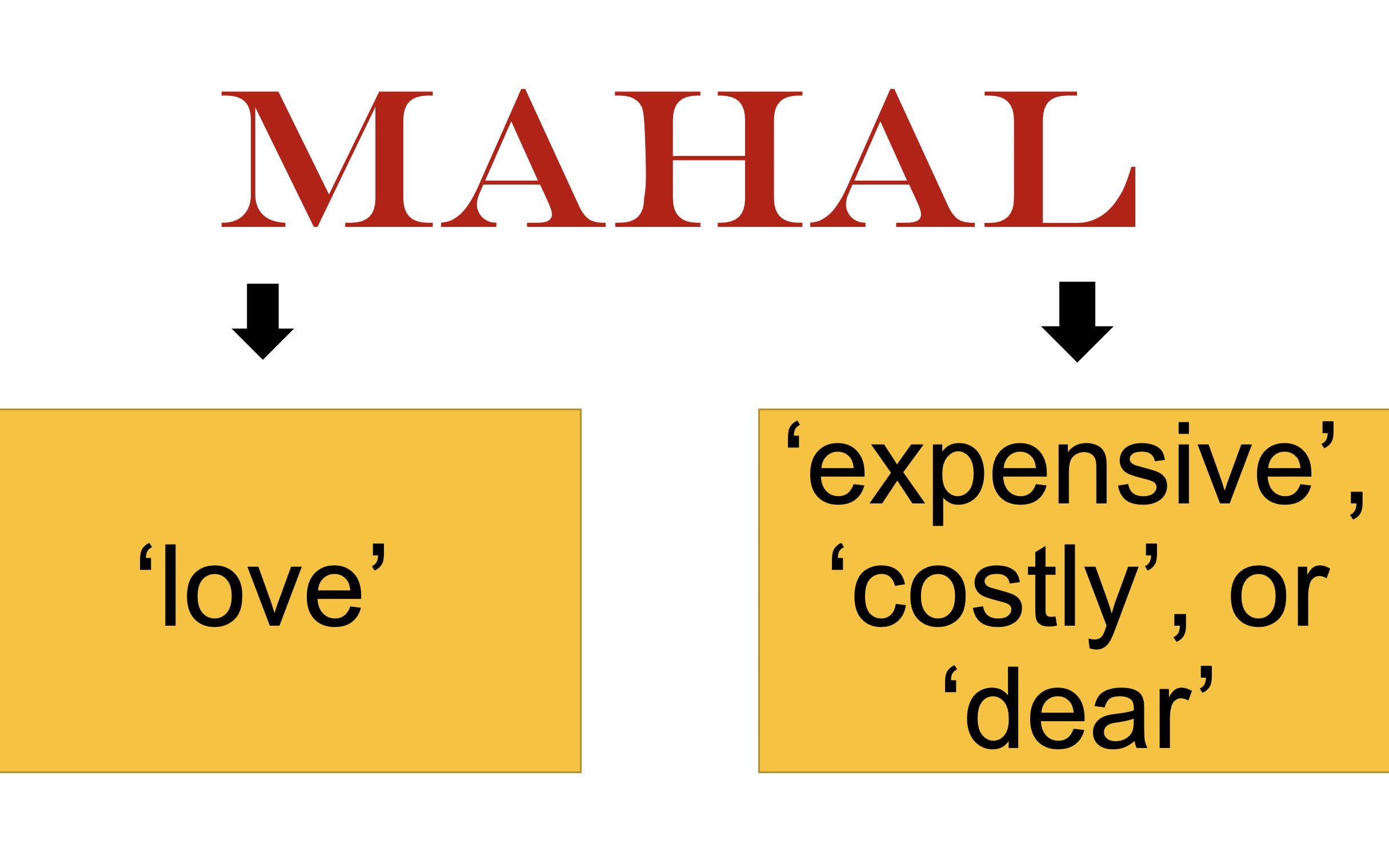
According to the Oxford Languages Dictionary, Love is an intense feeling of deep affection while Hope is a feeling of expectation and desire for a certain thing to happen. Now, the word MAHAL has two meanings. The Tagalog word mahal as a noun means ‘love’ but as an adjective it means ‘expensive’ or ‘costly’ or ‘dear.’
Mahal ang tunay na nagmamahal. It is expensive to truly love. What does this mean? Why is it expensive to love? Financially speaking, we will think that it is expensive because you’ll think of what to give during, month-saries, anniversaries, birthdays, Christmas, and other occasions. This expensiveness of love doesn’t end there. Aside from the money that we spend, we also spend our time, effort, our presence, service, energy, commitment, and any other acts of love.
In my previous relationship, I have experienced giving and receiving gifts. I would even spend my money to buy that person something for a midnight snack, would make my time free for us to be able to see each other. I would sacrifice some time just for us to be together. As time passed by, I would still receive some gifts, but unfortunately the time and presence of that person slowly faded away. At first, I was in denial, letting myself think that that person was just busy, has his own life and I was just part of it. YES, gifts do really make me happy but when I think of it, gifts are just nothing compared to the presence and time that I seek from that person.
I can easily buy gifts, but how can I buy that person’s time and presence? It made me think that time and presence of that person is more expensive than tangible gifts.
We measure the value of an item usually based on how much we paid for it. Some common things that we see are cheap because we can find them anywhere. But the cheaper it is, the cheaper the quality. Yet, we tend to find things that are great in value. Thus, we determine that the more expensive is more valuable.
Love is expensive, indeed, because it is one value that we humans have. It is expensive because each and everyone of us desires it, but only few are interested and invest with true love. Love is not just all about the gifts we receive and give, but it also requires that willingness to experience all the emotions and give all our life. And that made love expensive.
Now, from the experience that I have, it made me also think that God’s love for us is not cheap. God’s love is expensive. How? It cost the Almighty God Himself to show us what Love is. God’s love for me is unconditional and infinite. He saved me from that relationship. He picked me up when I was really down. He showered me with love through the people around me, my friends, family, and co-youth. The time, effort, and the life of people around me are expressions of love that God has given me. And these are all expensive.
As we love expensively, we sometimes lose what we have, lose our life, lose ourselves. This is how the Lord expressed his love for us as well. Jesus emptied himself, to become human like us and becoming vulnerable and powerless, yet, the Lord continues to hope and still hoping that we will fully embrace him, welcome him and be with him.
As a youth, what are the things that you hope for? Ano ang inaasahan mo? I asked some of my friends and the most common answers are first, freedom. Freedom to choose, speak, stand and think on their own, and some would live on their own – to be independent. Second, good or high grades. Pressured or not, youth hope for high grades in order to achieve with honors or with high honors. Some hope for this because they want to make their parents proud and some would just like themselves to excel. Third, the youth hope to become physically and mentally healthy. Youth hope for this because, we want to live forever young.
Personally, those are also my hopes but in addition, at this moment, I am hoping for healing, good relationships in the future, more wisdom and success in my Teachers’ board review. Healing from what? Healing from traumas, heartaches, and pressures. If this healing would be successful, it could lead to good and healthy relationships, not just migo-miga, jowa-jowa relationships but also relationships with our family, friends, co-youth, classmates.
I am currently in a review to take the March 2023 License Examination for Teachers, I am hoping that I will pass the exam and by God’s grace, TOP the exam. Walang masamang mangarap, walang masamang umasa.
Hoping is a sign of life, a part of a person. You are not truly living if you are not hoping. The virtue of hope challenges us and empowers us to be determined, resolute, intentional, purposive, and steadfast. Hope is not wishful thinking or just passive waiting. It means that whatever we hope for we have an intention, we live a life with a purpose. We live hopeful lives. A person who lives knowing that there is hope in every challenge, has been shaped by the setbacks or disappointments – yet that person chose to get back in order to be a model of hope for others.
In this time of advent, as we wait for Christmas, we can express our hope through these three points that I have.
Give time and attention. If you want to give hope to others, listen to them just like God who listened and waited for us to come to Him. If you think you can’t help, just listen to them. The fact that you offer and give them your time and attention, would make them feel that there is hope in life.
Offer Help. Do a random act of kindness. For example, you can help your parents plan on what you can help for the preparation of Christmas. You can help with the house decorations or for your meal plan. Another is that you can give help to street-dwellers by giving them food or even asking them what kind of help they need.
Be hopeful yourself. Remember, we cannot give what we do not have. Show people that you’re negative then they too will think negative but when you show them hope, joy and even love, they too would feel the same. If you want others to become hopeful, be a person full of hope. Work hard and be a source of sunshine and hope for others.
In this season of advent, we are invited to join in God’s patient love by reaching out to those who have wounded us in the past, by giving ourselves to those who do not reciprocate our love and by caring for those who have not cared for us. In Advent, we are called to remember that this is how God has loved us. Let us also take time to remember at this time that God is both the light at the end of a long tunnel and our faithful companion who will never desert or abandon us.
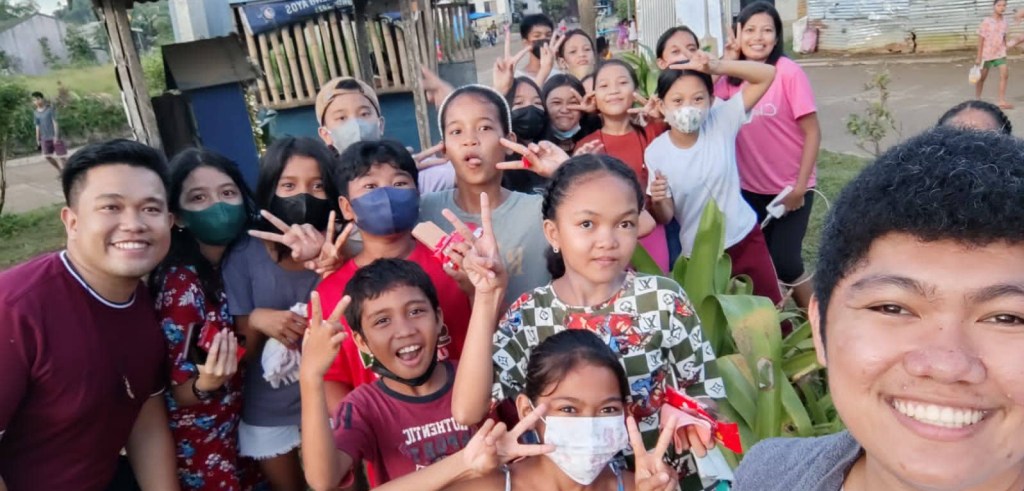
To all the youth, I have a challenge for you. Take time to sprinkle love and hope and in order for this to happen, I challenge you to become bearers of Love and Hope to the world. Hangga’t tayo ay nabubuhay tayo ay patuloy na magmamahal at umaasa.
Rizza Mae O. Malalay,an RYM-Youth Minister, RYM Key Representative to FNYO, and a Missionera.
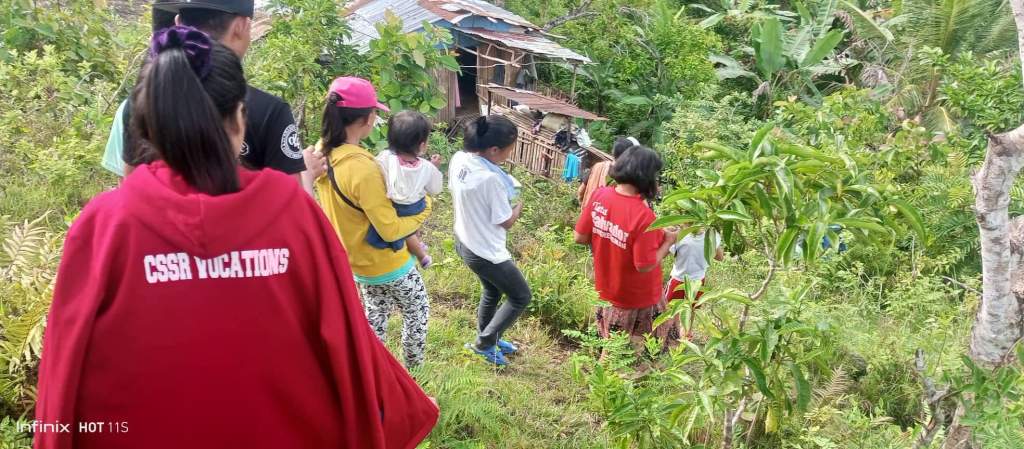
This is a reflection by Rizza Mae after the recent online National Conference of Youth Ministers 2022and her Mission Experiences in Tacloban and Oslob, Cebu.
In one of our recollections with the Eastern Visayan Redemptorist Mission Team, we were asked to reflect upon “What is God trying to say to you now?” I shared within the group that I do not usually listen to God. Aside from I do not understand His ways, it was also really hard for me to identify His voice. So, thinking about it again, “Am I now, ready to listen?”
I joined the National Conference of Youth Ministers for three consecutive Saturdays online. It was so challenging for me because at the same time I was in Oslob helping the Cebu Redemptorist Urban Mission Team in their mission engagement there, in the most possible way that I could.
photo from CBCP-ECYFacebook Page
We rushed there after our mission engagement in Tacloban city. I said that it was challenging because there was no mobile signal in the area. But they have Piso Wi-Fis and Wi-Fi routers though the internet would fluctuate. I was anxious during the Conference because we had activities in between. It was too hard for me to put my focus in the meeting but then I have realized that certain things happened for a reason. I can choose to not attend the NCYM for so many reasons or attend the NCYM despite all the challenges that I have encountered. However, I chose the latter. Right at that moment it occurred to me that God wanted me to learn to turn my challenges into opportunities. That this will definitely help me grow as a youth minister.
In our calling to be a Synodal Church, in participation, in communion and in mission. I have seen that though a lot of people are with us walking in synodality, there are still more people who are left behind. After the NCYM 2022, I have reflected that me as a youth minister, should;
*Live and share my faith.
The easiest way to make people believe in you is on how you live your life. In one of our synchronous workshops that I was in, the facilitator talked about that the Basic Ecclesial Community (BEC) is being considered by many especially young people as a mere activity and not as a way of life, which I totally agree. Looking back, asking myself if I am really doing something? Am I living and sharing my faith? After leaving the mission area, it warms my heart hearing that the youth continues to serve the church, not just them but the community also is continuing what we have started. If we experience God and see God in others, then we should allow others also to experience God in us.
*Reach-out and build relationship.
I figured out that we can reach out and not build relationship. However, we cannot build relationship without reaching out. I understand that the Youth in our church, they come and go. But, deep in me I cannot understand why they would go. Of course aside from those who have valid reasons for leaving. I had encountered young ones who left the ministry and changed their religion. I had also conservations with youth members who told me that they described their leaders as flying and they were crawling. This is a description of having youth leaders who do not know what to do and so members have to figuratively crawl in order to make the ministry alive. It saddened me to hear all of those because as youth ministers we are called to become God’s instruments of helping the young to grow according to God’s purpose, that we are all in one mission and God is alive in us. If we would only always reach out and build relationship with everyone, I do believe that it would be easier for us to bring Christ in the lives of the so many young people today.
*Have a listening heart
For me as a youth minister I should listen to understand and not listen to respond. It is true that the younger generation now is quite different from mine as a millennial, so I am called to listen more. I have my own biases and I easily judged the younger generation. I can sense that every time we will plan-out an activity, they become more concerned if the senior members would approved it or not or Father will be okay with it or not. They tend to be more anxious to the point that they do not want to do more because of fear of being rejected. It feels like I also somehow kill their creativity to create new things, to explore, to learn, to dream and to learn new concepts or point of view because I myself would limit them. I should be the one to encourage them to serve and to make them realize that their unique contributions are welcomed by the Christian Community.
Indeed, I will really find it hard to listen if I am not willing to listen. And it is hard for me to identify God’s voice if I am disturbed. In life, I realized that at some point I need pauses and breaks to understand what God is trying to say to me. God definitely resides in us and we can only hear Him by listening through our hearts.
I pray that I may not harden my heart if I hear God’s voice and may I continue finding comfort in His love as a young person and as a youth minister.
As I was recuperating from allergic rhinitis, I asked myself: “What is this telling me?” I then realized that I was in the verge of breaking down, feeling burnt out and overwhelmed with work. Dealing with difficult personalities, ever increasing demands, tight deadlines left me feeling worried and drained. Hence, I needed to acknowledge that I was indeed tired, and in need to take a PAUSE and claim my rest.
To those who are struggling at work, let me share my personal coping strategies which you can also employ to reduce stress in your workplace.
Identify a trusted person whom you can vent out. Someone who is a good listener; not to “fix” your problem or concern but help you let your negative emotions off your chest. This may be a family member, a close friend or an office mate. God will surely send someone to be your sounding board.
Pause, Pray and Let go of Chaos. Prayer has been my favorite coping strategy. During times of unrest, fear, anger or sadness, prayer has been my strongest weapon. It calms me down after asking God to bless me with INNER PEACE. After all, our best self – best work emerges when we are at peace. When we perform our work out of anger, sense of urgency or fear, we will not accomplish them any sooner or better. Furthermore, God is gracious and faithful to everyone – to all of us. I have experienced HIS/HER loving care and sustaining grace for the past 51 years of my life. With this, I am sure God will be with me for the rest of my life. All I have to do is to nourish my friendship with Jesus through prayer.
Listen to your body. When you are not yourself, something is not right. Our ailments have a lot to tell us. So, stop if you are tired. Go to the toilet if you need to. Eat when you are hungry. Get a drink when you are thirsty. Plan your breaks. At times, due to my sense of urgency, I tend to ignore my physiological needs – sitting for hours just to get my task done. This is causing me some back pains and Urinary Tract Infection (UTI). Therefore, I need to RELAX. Take one task at a time, one day at a time.
Learn to FORGIVE yourself and others who are causing you some heart aches at work. This is easier said than done but it is possible. It is so difficult to deal with various personalities in the work place. I myself have been belittled and harassed in one way or another. Yet, I decided to forgive these people for my own peace and sanity. I have learned to forgive myself first and learn from my own mistakes and failures.
Create a balanced life. Never neglect any aspect of it. Lest you will be overworked. Schedule some form of relaxation with your family and friends. This will help you maintain your physical and emotional well-being.
Learn to say no – establish healthy boundaries. Take only what you can chew. Do not over-commit yourself.
I hope and pray that my personal way of coping with stress will be of help to you. Stay tuned for more reflections and practical tips. Do anything to take good care of yourself for you matter.
Miss Baby Rose is also a Volunteer Pastoral Counselor at St. Clement’s Pastoral Care and Counseling Ministry of St. Clement’s Church, Our Mother of Perpetual Help Parish, Lapaz, Iloilo City.
The XXVI General Chapter of the Redemptorists recently concluded its deliberations on October 7, 2022 after it convened on September 11 in Rome. Three statements were given during and after the Chapter which should make us Filipino Redemptorists reflect on where we are today and the challenges we face in the future which we should face squarely during our incoming Provincial Chapters.
First was that of Pope Francis. On the first of October, Pope Francis addressed the delegates and he offered to them these words of inspiration and exhortation:
“Do not be afraid to tread new paths, to dialogue with the world, in the light of your rich tradition of moral theology. Do not be afraid to get your hands dirty in the service of those most in need and of the people who do not count…
In your Constitutions there is a very fine expression, where it says that the Redemptorists are available to face any trial to bring Christ’s redemption to all. Availability. Let us not take this word for granted! It means giving oneself entirely to the mission, with all one’s heart, dies impendere pro redemptis, unto the final consequences, with a gaze fixed on Jesus.
The Church and consecrated life are living a unique historical moment, in which they have the possibility of renewing themselves to respond with creative fidelity to the mission of Christ. This renewal passes through a process of conversion of the heart and mind, of intense metanoia, and also through a change of structures. At times we need to break the old pots, inherited from our traditions, which have carried a great deal of water but have now fulfilled their purpose. And breaking our pots, full of affections, of cultural customs, of histories, is not an easy task; it is painful, but it is necessary if we want to drink the new water that comes from the wellspring of the Holy Spirit, the source of all renewal.”
After reading his statement, he had an impromptu address in which he said:
Photo from http://www.catholicnewsworld.com/
“I was struck by a phrase your group said: ‘Leave your comfort zones and go out on the mission.’ I wonder, what are the comfort zones that a congregation has, that a province has, that a community has and that each one of us has? Ask yourselves that question, because it was said that each person accommodates the vows as he pleases. And so, you can practice poverty with a bank account, you can practice chastity with a companion, and you can practice obedience by talking and deciding what you want. These are very distorted forms. But the one that always produces a distortion in the three vows is comfort. That is where the evil comes in, in trying to be comfortable, to be at ease, to live a bourgeois life, without going out, and going out on the mission…Each one of us must analyze our own temptation to be comfortable. We all have that temptation; we all face that temptation.”
From such statements, clearly Pope Francis is exhorting all of us to reflect on where we are today in terms of our mission and lifestyle and to be engaged missionaries truly immersed among “those in need and the people who do not count.”
Second was the statement of Fr. Rogerio Gomez CSsR, our new Superior General who sent this to the Union of Redemptorists of Brazil on October 12. While this statement is meant for his confreres in Brazil, it might as well be addressed to all of us Redemptorists, for in the document, he highlights the complex and challenging times in which we live and asks for courage from all of us:
“We are experiencing a phenomenon to which we must be very attentive: the erosion of democracy, the use of religion to manipulate reality and to impose fear and exclusion on the poor. This reality should make us think. We must be wise as children of light,’ says one of the excerpts from the letter.
The spread of fake news can be related to the sin against the eighth commandment: ‘Thou shalt not bear false witness!’ It is an enormous disservice to the truth.”
“How can we believe in the true God and defend weapons, persecute traditional religions, destroy Mother Nature, and not invest in public health, education, science and social policies for the benefit of the poorest and the country’s development? How can we believe in the motto ‘the truth that sets us free’ (Jn 8:32)? However, we live with the flood of lies that deceive people and create reality.
How is it possible to speak out against abortion yet advocate the death of blacks, indigenous people, homosexuals, and women, the death penalty, cover up domestic violence, reaffirm machismo, promote prejudice against northerners and minorities, and cause social mistreatment? The teaching of the Church is evident in affirming ‘the inviolability and dignity of life from conception to natural death (JPII Evangelium vitae, 2)’.”
Third is the recent letter of Fr. Gomez to all Redemptorists around the world, issued on the Feast of St. Gerard last October 16 addressed to everyone in the congregation from superiors to Council members, Secretariats to Formation Teams, professed and lay missionaries and even the formandi. In this letter he affirms the important role of the Brothers in the congregation, but is in crisis owing to lack of promotion and attention and calling on everyone to find creative ways to recruit and form Brothers to reverse the present reality of their dwindling numbers.
All these are framed within the call for the coming sexennium, namely that we all strive to be missionaries of hope in the footsteps of the Redeemer. There are many reasons why sometimes we feel discouraged owing to the sad global realities (the impact of climate change, the repercussions of the pandemic, wars and conflicts, consumerism, secularism, individualism, etc.), the national situation (return of dictatorship, unchecked corruption, patronage politics, inflation, rising prices, etc.) and even dynamics within our own congregation.
But we are supposed to be children of the light, filled with hope that God never abandons His people. However, that hope can only be nurtured if – through following in Jesus’ footsteps – we are truly able to witness to plentiful redemption which is reflected in our faithfulness to the mission of serving the most abandoned, and sharing a community life lived not in affluent comfort but following the model of Jesus and his disciples.
We pray that the Provincial Chapters that will be unfolding in our two units would lead us to the path earlier taken by St. Alphonsus, St. Clement, St. Gerard and all our confreres who through the years since we were founded followed in the Redeemer’s footsteps!
Our Loving God who has been with us since the very beginning. You are our ever faithful friend and companion in the journey. Many times, you have shown to us in concrete ways what love can do.
Because of so much love, you created us in your image and likeness. When we first sinned against you, though the paradise has been closed for us, yet, you walked with us. When we were made slaves in Egypt, you rescued us. When we grew hungry in the dessert, you provided manna for us. When we felt that our enemies made blows in every corner, you sent saviors to tell us that we are never alone.
When, we felt that you were too far from us, you have become like us except sin. You were born as an infant and grew up into a man. You walked with us, ate with us, taught us and even cried with us. You have brought hope and life in us even to the point of offering your life for us. Though you never sinned, but because of us you suffered. We were the ones who crucified you, yet, you forgave us. We were the ones who put you to death, yet, you resurrected for us – to tell us that we are never beyond redemption, that there is always hope in us, there is more in our sinfulness and weakness. You see love in us.
Indeed, you are a God who have showed us concretely what love is, now expressed through the sacraments of the Church. And so grant us Lord, the spirit to understand and embrace fully the grace that flows from the sacraments of your love, so that each of us will also become the very sacrament of your presence, of your faithfulness and love to people around us. We ask this through Christ our Lord. Amen.
Have you been in love? I am sure that you have been in love too. The first time I realized that I was in love, it made me restless until I could have a glimpse of her. I realized that my attitude towards her had changed. I suddenly became more caring and thoughtful towards her. Though that puppy love did not last as it was based on emotional and physical attraction only, but that gave me a bit of understanding how love can change a person’s behavior.
With that, how would we define love? Can we really define it? According to my Tita, Miss Meriam-Webster, she gave 9 different definitions of love. Yet, I am not personally satisfied with her definitions since most are descriptions of love. Well, she said that love is a strong affection towards another, or attraction based on sexual desire, or based on admiration, or devotion, or an assurance of affection or a concern for another, etc.
Moreover, our Christian understanding of Love is much deeper than that. It is beyond romantic love, beyond physical attraction or emotional attachment. It is more concrete than those. If you have been listening to the prayer earlier, what we have prayed described “who love is.” Notice, I did not say, “what love is,” but “who love is.” Meaning, love is a person who concretely showed to the beloved that love. Yes, love is a person, God’s self-revelation is love and made visible through Jesus. What I prayed and shared with you in that opening prayer is the story of love being revealed to us, in our human history. It’s love that creates, that liberates, gives life and gives hope.
This is what sacrament is. This is what I want to share with you, to always remember that the sacraments in our Church are concrete expressions of Love, expressions where the grace of love, of loving and of being loved made visible. Thus, Sacraments are expressions of love made visible.
You may have some knowledge about the Sacraments already, and it would be too long to share in details the theology and historical development of each sacrament. So, just let me share with you in short its background and how each sacrament is an expression of love made visible.
What are the seven sacraments?
The seven sacraments are baptism, confirmation, Eucharist, penance/ reconciliation, anointing of the sick, marriage and holy orders. They are divided into three categories: sacraments of initiation, sacraments of healing and sacraments of service.
What is a sacrament?
Before we get into the details of each sacrament, I want to reiterate one of the most important things about the sacraments — that they are means which God uses to show His grace and help us achieve salvation. The word sacrament means “a sign of the sacred,” which is fitting as they are all outwards signs from God to us.
Not only are they signs, they’re also celebrations of a continued journey and relationship with God, teachings to help live out His word and ceremonies to show devotion to Him. This means that our participation in the sacrament is our response of love to the one who loves us.
Take for example, a parent who does everything to send his/her child to school, provide basic needs and give a good life and ensuring that the parent’s presence also provides comfort and assurance to the child, and a child who out of gratitude to the parent maximizes everything given to him/her succeeds in life and makes the parent proud – is an image of sacrament.
Where did the sacraments originate? (origin?)
In the Bible, Christ gives his followers instructions on how to administer and receive each of the sacraments. This is seen through his work with the Apostles, in healing the sick, in the parables, feeding the multitude and giving his body and blood for the salvation of all and in forgiving sinners. The Church now administers these holy sacraments as instructed, in order for all to worship God and receive God’s gift of salvation.
This means that all the sacraments have a biblical origin. Though each of them have developed and has its own vast history over centuries until its present form. Hence, there might be some changes in performing the rituals, changes in languages, differences in doing it that varies from one culture and rite to another, but the very essence of each sacrament remains the same, it is the grace of LOVE MADE VISIBLE.
The Sacraments of Initiation
The three sacraments of initiation are baptism, confirmation and Eucharist.
Each is meant to strengthen our faith and forge a deeper relationship with God. Baptism frees us from original sin and making us children of God. Confirmation strengthens our faith and gives us fully the Holy Spirit. And Eucharist allows us to taste the body and blood of eternal life, be reminded of Christ’s love and sacrifice, and becoming one with the whole Church.
Sacrament of Baptism
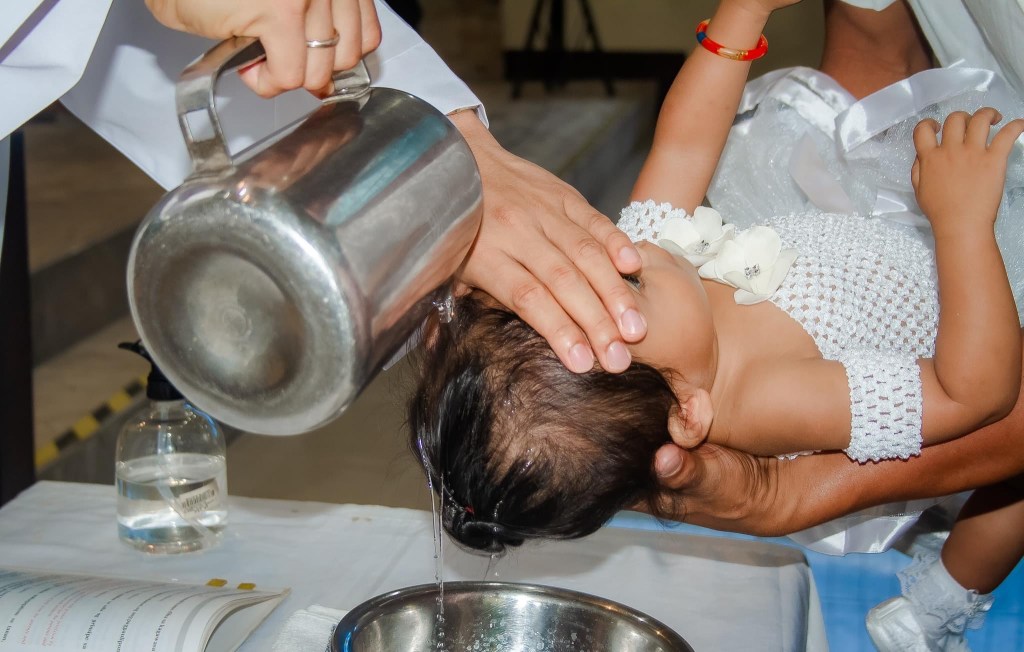
In particular, baptism is the first sacrament where we become united with Christ and with the Church – no other sacrament can be received without it. Matthew 28:19 says, “Go therefore and make disciples of all the nations, baptizing them in the name of the Father and the Son and the Holy Spirit.”
A priest performs this rite through the use of water, which is the matter, by immersion or by pouring, and while using the formula, “I baptize you in the name of the Father and of the Son and of the Holy Spirit.”
This is the first step in our relationship with God. This is the only sacrament also that can be administered by anybody as long as he has the right intention and using the matter and the formula, but only in case of emergency.
Remember also that it is in baptism that God claims us as His children. The name of God is imprinted in us. That is why, baptism gives us an “indelible mark.” Meaning, once we are baptized, the grace can never and will never be taken away from us, because we have been claimed and marked as God’s beloved.
Hence, baptism is indeed love made visible because we are being assured of God’s faithful presence in our life, as a parent, as a friend and a companion in our journey. That is why, just as we remember our birthday every year, it is also good to become aware of the day of our baptism and celebrate it, because on that day we were formally received in the Church and had been claimed as God’s child.
Sacrament of Confirmation
Peace be with you! Receive the Holy Spirit. – This is the greeting of the Risen Christ to the terrified Apostles. At Pentecost, each of the disciples of both men and women received the Holy Spirit with an image of fire resting on their head. And filled with the Holy Spirit, they begin to speak though in different languages but understood each other and by the people around them.
with Most Rev. Edwin dela Peña, MSP, DD, Prelate of the Prelature of Marawi
Indeed, this is the sacrament where the candidate receives the gift of the Holy Spirit and continues their journey with Christ. During Confirmation, the candidate is anointed on the forehead with holy chrism (oil made of olive oil mixed with some perfume or aromatic oil) by a bishop or by a priest delegated by the bishop and saying the formula, “be sealed with the gift of the Holy Spirit.”
Since baptism typically happens when we were babies, confirmation allows an older child to acknowledge that he or she still wants to continue the journey with God and grow in relationship with Him. Like the baptism, confirmation also leaves an “indelible sign” in us, meaning, it is something that cannot be repeated and will never be taken away from us.
Remember, it was the promise of Christ given to the apostles that as he was going back to the Father, he assured them that He will be sending an ADVOCATE also called as PARACLETE – the comforter, consoler or helper. In this way, the sacrament of confirmation is indeed love made visible because it is a testament that God comes to comfort us, to console us and help us. And since we have received it, be assured, be confident because the Holy Spirit is with you to give comfort, consolation and help especially when you need it the most. Thus, as a response also, be a helper to others, be the sacrament of God that gives comfort and consolation to those who are in pain, confused and suffering.
Sacrament of the Holy Eucharist
Eucharist means thanksgiving. This is when Christ’s body and blood are offered and then received by us in the form of bread and wine. Matthew 26:26-28 says, “While they were eating, Jesus took some bread, and after a blessing, He broke it and gave it to the disciples, and said, “Take, eat; this is My body.” And when He had taken a cup and given thanks, He gave it to them, saying, “Drink from it, all of you; for this is My blood of the covenant, which is poured out for many for forgiveness of sins.”
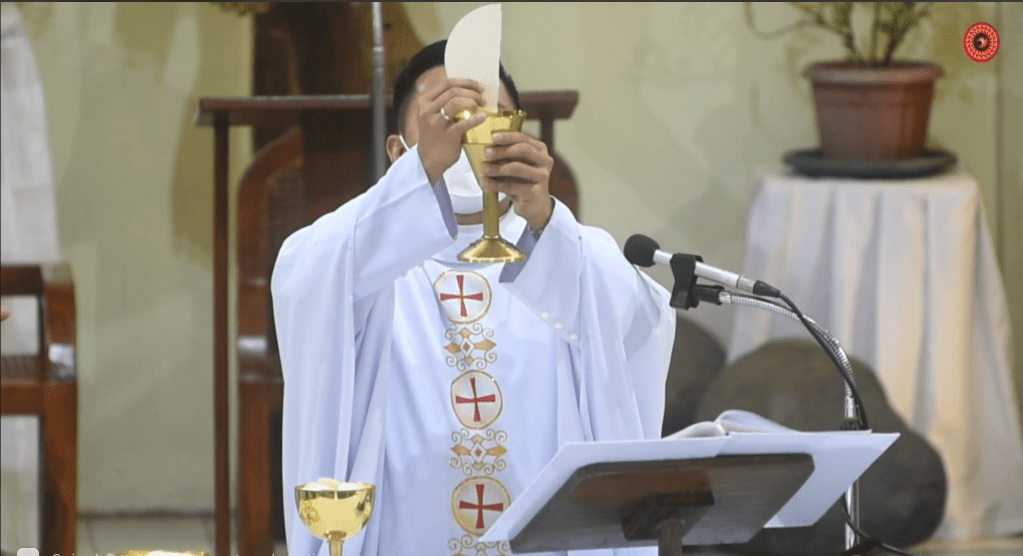
Now the priest, through the words of consecration, blesses and administers the Holy Communion during every mass to remind followers that they are one with Christ. Food and drink nourishes our bodies ‒- Christ’s blood and body being shared to us nourishes us.
Moreover, this sacrament reminds us of this wonder of being grateful and of sharing. This tells us that when we become grateful of the gifts that we have no matter how small that could be, we also become generous. Thus, the bread and wine turning into true body and blood of Jesus is not done out of “magic.” This happens really, because of the act of thanksgiving of Jesus and his willingness to share his very self to us. Jesus is grateful of the love of the Father and so he gives himself to us as his concrete action of loving us. And the Lord does it every time we celebrate the Mass. Indeed, this is love made visible.
The eucharist that we celebrate and receive calls us now towards sharing. And to be able to share the body and blood of Jesus means that we become one with him or that we actually become him, becoming the Jesus of today!
That’s why, during the consecration, before raising the chalice, the priest remembers what Jesus said, “Do this in memory of me!” I find this very powerful because this is also the only sacrament that Jesus said explicitly, do this to remember me. Every time we celebrate the eucharist, it is not just a thing of remembering a distant past, but making the memory of Jesus alive again today.
Thus, “To remember Jesus means to become part of Jesus.” To know that Jesus is with us and within each of us is to be able to find peace and serenity, satisfaction and contentment despite the troubles, problems, concerns and hungers, wants and other desires that we have. When we become more conscious of the meaning of being one with Jesus and having Jesus in us, we also become, hopefully, Jesus for others.
This is the implication when we participate in the memory of the Eucharist because the Eucharist is not supposed to stay only inside the church building. When we go out from Church, it also means that we carry in us the Eucharist, we carry in us Jesus. The Eucharist continues when we step out from the Church and go back to our homes or to your workplaces and meet people.
This is the call of the sacrament of the eucharist, “to be the Jesus today! Consciously, with gratefulness in our hearts and with generosity bring Jesus with us because he is truly in us!” express the Jesus in you, through your words and deeds as you meet people today and tomorrow, as you talk and dine with your friends and family, and as you encounter strangers and the needy on the street and in the places where you go. In this way, we also become the sacrament of God’s love made visible.
The Sacraments of Healing
The two sacraments of healing are penance/reconciliation and anointing the sick. Penance allows for spiritual healing and absolution for people who have distanced themselves from God through sin. Anointing the sick allows for both physical and spiritual healing. When one falls seriously ill, a minister anoints them and prays over them, calling on Christ for strength and the gift of healing.
The Sacrament of Penance or Confession or Reconciliation
Personally, I actually like its other name, “RECONCILIATION.” Penance focuses of the punishment of sin while reconciliation focuses on the grace received in this sacrament.
During the sacrament of reconciliation, a person confesses his/her sins to God through me (as the priest). I forgive the confessed sins through God’s mercy, and I order the penitent to live a more faithful life through the gift of absolution.
Confession is essential in cultivating and fruitfully living out the word of God. We are not perfect people, even if we try to be. Many times we fail and commit sin and that’s why it is good that we are always conscious of our sinful nature in order to counter healthily those tendencies. By acknowledging our sins, we also acknowledge our need of God. This helps us have a stronger relationship with God and better awareness of ourselves and of our needs and desires.
As a priest, I find this sacrament really powerful because as it brings healing to a soul wounded by sin, this sacrament also heals a heart wounded and bruised by painful, shameful and traumatic experiences of the past. Despite being young in the ministry, I have heard confessions that brought shocks and terrifying chills. I have heard sins confessed that I thought only in movies could happen, yet, those happened and to be able to console a penitent through God’s gift of mercy and peace, that gave me the joy of being a priest. It is not easy to sit down and listen to the sins of the people. Being in the confessional for two hours is physically and emotional draining. However, the joy and peace that I always see and feel in the person after the granting of absolution would always paint a smile on my face.
Hence, this powerful sacrament of reconciliation is indeed love made visible because God reminds us always that His mercy and gift of peace is never far from us. God through this sacrament tells us that God is always willing and waiting to embrace us. Hopefully, each of us too, who received such embrace of forgiveness becomes a witness of God to others by being compassionate to sinners like us, by forgiving those who have hurt us and embracing those who feel unworthy like us.
The Sacrament of Anointing of the Sick
This sacrament is the most misunderstood and even taken for granted by many. Before, this was called as the “Extreme Unction” meaning the “Final Anointing.” This sacrament was usually administered to those who are about to die. That’s why, even until now, people think that this sacrament of anointing of the sick is only for those who are at point of death. People refuse to receive this sacrament because of the fear of dying.
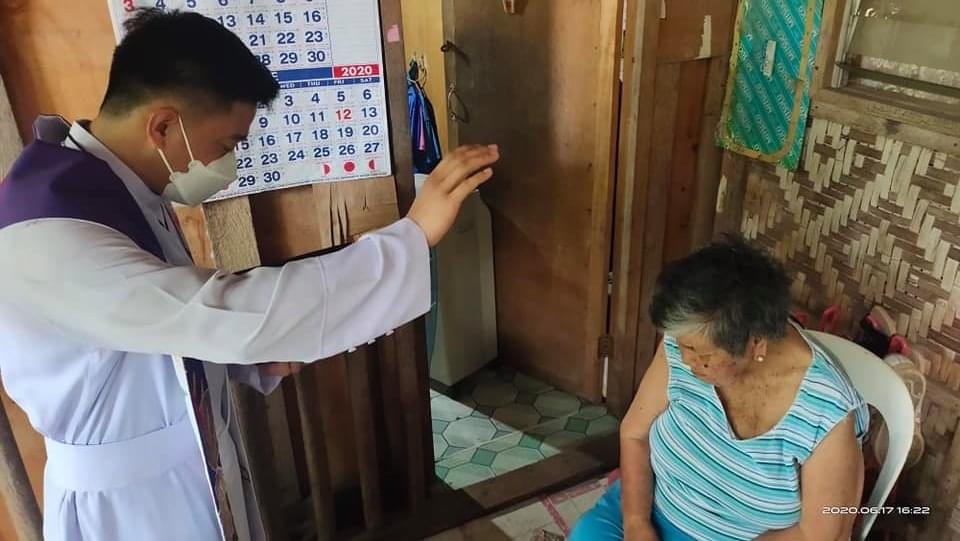
Anyhow, this sacrament now is bestowed upon those who are ill or suffering, which then are united with Christ’s passion. Anointing the forehead and hands of the person with “oil for the infirm” or “oil for the sick” while a priest is saying the words or the formula of the sacrament. (on the forehead: Through this holy anointing, may the Lord in his love and mercy, help you with the grace of the Holy Spirit. Amen; the hands: May the Lord who frees you from sin, save you and raise you up. Amen.)
This special blessing is a way to make the sick receive the strength in his body and spirit and be more connected with God in both mind and body.
In the letter of James 5:14, it says, “Is anyone among you sick? Let him call for the elders of the church, and let them pray over him, anointing him with oil in the name of the Lord.”
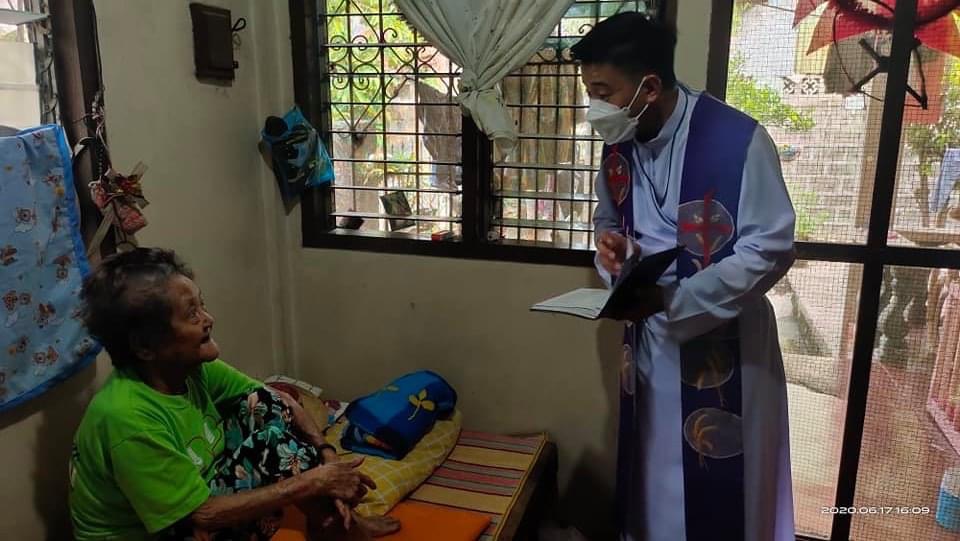
And since, people only asked for it when most of them are dying, this is the sacrament also that as a priest, I would always hold myself not to cry. Though there were times that I was not able to hold my tears and administered it with broken words in between my silent sobbing. Indeed, it is just painful and terrifying as well to witness a person who struggles for his/her last breath on earth while those who love him/her gathering around. Despite the pain, but I always feel blessed to have been part of those moments where the reality of death is being embraced.
Moreover, many times also I have witnessed how those were sick recovered after receiving the sacrament. It is a joy for me to witness that wonder and miracle of simple healing stories. Indeed, this sacrament of the anointing of the sick is love made visible because God continues to touch us to bring healing to our tired, wounded and sick body as well as our spirit. Thus, with this sacrament, this calls us too to become God’s healing touch to others. Yes, touch others to bring healing and comfort. Touch them with your presence of assurance and friendship especially those who are ill at the moment. Let them know that you remember them, that you are praying with them and for them. In this way, we too become the sacrament of love made visible.
The Sacraments of Service
Through marriage and the holy orders also called Ordination, couples and the clergy promise to serve and build up the church community.
The Sacrament ofMarriage
Marriage is a very important sacrament. Just think, without it, no one will come for baptism and confirmation. Nobody will gather to celebrate the Eucharist. And since no one is there, nobody will get sick and ask for the anointing. And most of all, no one will be ordained to the priesthood to celebrate the sacraments. 🙂
The commitment, love and union of husband and wife extends and bears fruit. This is how a wife and a husband enrich the church, and that is through procreation. The openness of the couple to God’s grace of children, makes the church more alive. Without their commitment and openness to the grace of having children, there will be no people, no community at all.
Of course, we also know that there are many couples who were not gifted with children because of some physical difficulty, yet, this does not stop them from becoming fruitful in the community. All couples are called to build up the church in ways they can.
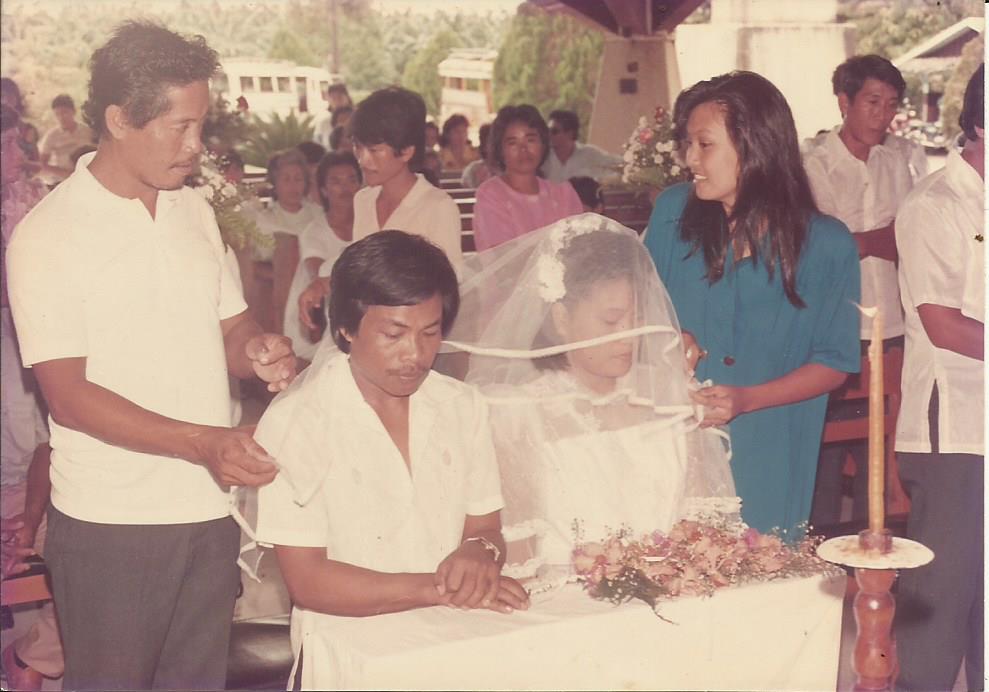
Thus, through marriage, a couple promises to help build each other up, in faith, serve each other and the church and be faithful to each other until death. Through this lifelong commitment, this also mirrors God’s faithfulness in us. Remember, our covenant with God is always in the image of marriage. As God makes a covenant with us (I AM your God and you are my people), God expresses concretely His faithful and abiding love for us.
For those who are called to this life, prepare yourself and always make yourself welcoming to God’s invitation. Faithfulness is a key element in this life. For those who are not called for this life, let those married couples around you like your parents especially as well as your friends, be your inspiration in your other relationships. They may not be perfect but let them know also that you pray for them and supportive for their lifelong commitment.
Thus, this sacrament, indeed, is love made visible in many ways. God reminds us of his faithfulness in our covenant through this sacrament. The couple mirrors the love of Christ with the Church and the Church’s response of love to Christ. Hopefully, each of us too will become sacrament of love made visible by being faithful and committed to our relationships, with our friends, families and communities.
The Sacrament of Holy Orders/Ordination
This sacrament is for those who choose and called to become a priest, bishop or deacon. This is the composition of the clergy. Through ordination, they are able to perform sacred duties and serve the church community. This is a sacrament that everyone cannot partake in, rather it is reserved to those who are called by God chosen among God’s people.
Yet, this does not mean that this kind of life is higher than being married. As married couples have their own mission and call in the Church, we priests, deacons and bishops also have our own calling and mission in the Church.
Like the baptism and confirmation, ordination also leaves an “indelible mark.” As there are three different categories among us clergy, there are also different rites for ordination for deacons, priests and bishops.
Without going deeper into these three categories, all three share a common ground and that is the gift of ordination is received through the imposition of hands and the words of the consecratory prayer that also differs from one another.
Moreover, we priests and the bishops, receive the mission and the capacity to act in the person of Christ the Head, while the deacons are empowered to serve the people of God in the ministries of the liturgy, in preaching and in charity.
Thus, through this sacrament, God reminds us too of His continuing presence in the world, in our communities and in our hearts through the gift of person whom God has called and chosen to be his image in the Church. This indeed, is a sacrament of love made visible.
For all of you who do not share in this vocation, I would like to ask you humbly to pray for me, to pray for us clergy. Pray not just for our perseverance, not just for our good health; pray that we may always be faithful as God is faithful to us, pray that our commitment is for the church and not for our personal comfort and enrichment, pray that we always find joy in this life because there are many of us who are sad and lonely.
Hopefully, you have found this empowering and life-giving.












 A DOSE OF GOD TODAY