Category: Reflection

  • NYD 2025 Reflection: OUR FOSTER HOMES

    NYD 2025 Reflection: OUR FOSTER HOMES

    A Reflection by Diovelene Francisco, Youth Coordinator

    MAOGMANG PAG-ABOT SA AMONG HARONG!—the very phrase that welcomed me in my foster family’s home in Brgy. Carolina during the NYD 2025 at Caceres, Naga city. The smiles were wide, the hugs, warm; the foods, masiram asin nakakainit nin puso (delicious and heart-warming); and the people, made me feel at home.

    Participating in this nation-wide activity for the Catholic Youth made me feel excited—looking forward for a fruitful and worthwhile experience; and at the same time anxious. I was anxious that I may find it hard to get along with other people because of my personality. I was anxious because of prior events (PAR- Personal Area of Responsibility) that left my heart heavier than the baggage I paid for. And I was anxious that I might create an awkward atmosphere between me and my foster family or my safety might be compromised. This anxiety and all its “what ifs” weighed heavy on me, until I got the chance to spend a silent hour with our Mother on our little stop over at the National Shrine of Our Mother of Perpetual Help in Baclaran. I prayed. I believed. And I walked forward though scared.

    Pilgrims were fostered. The place is new to most of us. There’s also the health risk of Mpox in some areas where the pilgrims came from. At some point, this gathering was a bit scary.  Our harong (host parish) the Our Lady of Mt. Carmel Parish, was quite far from the centro in which the major activities were held. There were only six of us pilgrims from the Prelature, yet, I felt uncertain for what would come for us in the next four days of the event. What more for those who were with a larger number of pilgrims?

    Yet, God works wonders when we persevere in prayer. I was scared, but I was hopeful. This was enough. As we arrived in Caceres and right then and there, our patience was tested. But the warm welcome from our Pueblo and foster family offered comfort and security. Since then, I felt at peace and relieved, knowing that our foster families were ready to accompany us in this youth gathering. I felt reassured from the very first day.

    My foster nanay, Mama Gina Bobis, gave us her social media account and assured us that whenever the activities are unbearable for us (me and my foster sibling, Ate Rassel), we can message her. They were reading to pick us up and drive us to their house so we can rest. If the food during the activities would not be enough or not to our liking, a message from us would make her pack home cooked food for us (but the food offered by the pueblo and harong, the organizers during the activities were more than enough. Dios mabalos!).

    This short conversation around the dinner table on our first night in our foster family ate up all the anxiety I had before coming to Naga. I was assured. I have a safe place to go when outside becomes unbearable. I have a home.

    And so, my NYD days have updates like “Na sa venue na po kami, Nanay”, “We had snacks/ lunch/ dinner po given by our Harong po.”, “Pauwi na po kami, Nanay.” And then, it wasn’t very scary anymore. I wasn’t that anxious anymore. I was happy and at peace. The kindness this family have shown us from the day we arrived was inclusive, light in atmosphere, and genuine; so does the other foster homes that catered the other participants. Our foster families made sure we never felt unwelcomed.
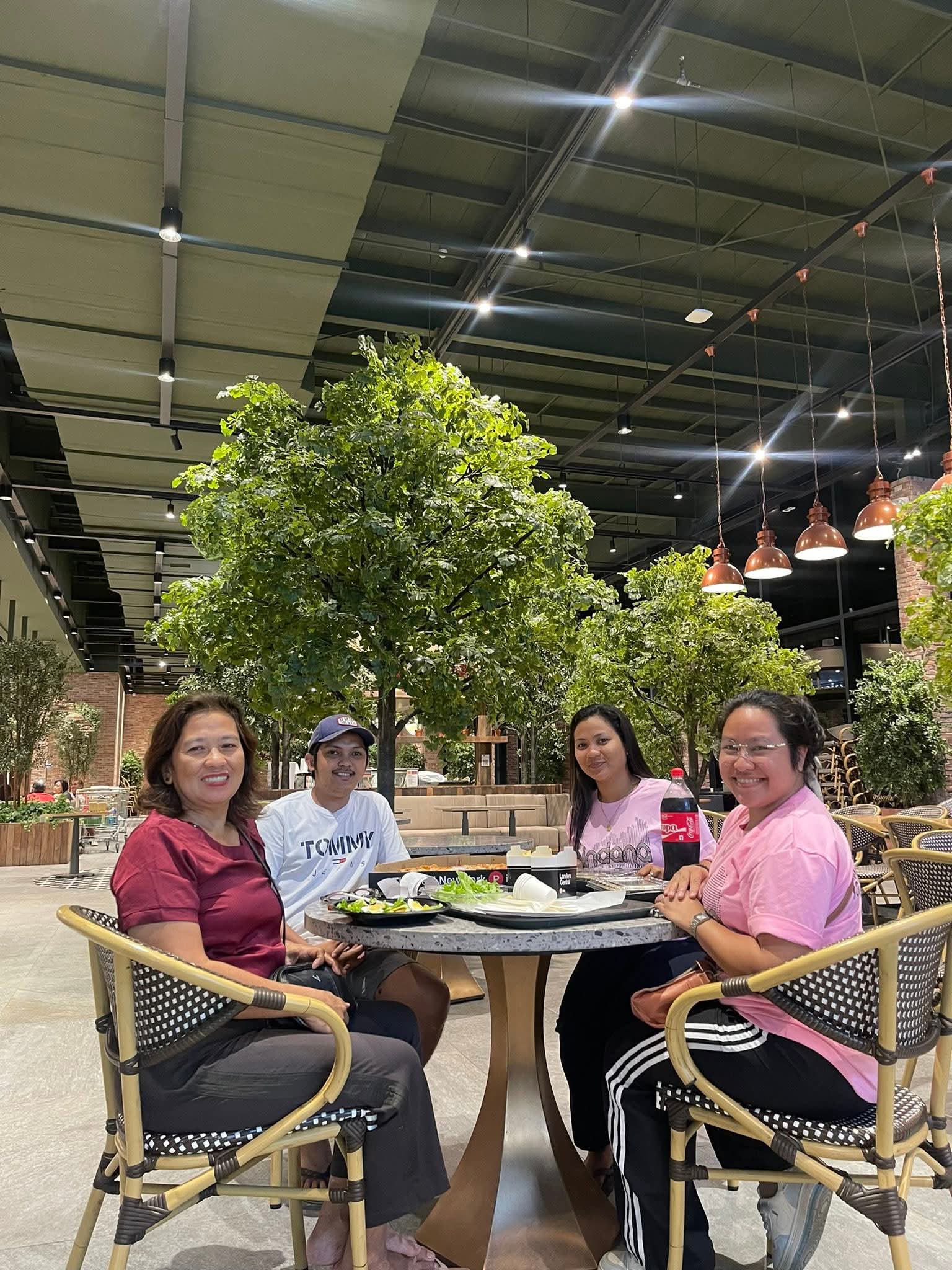
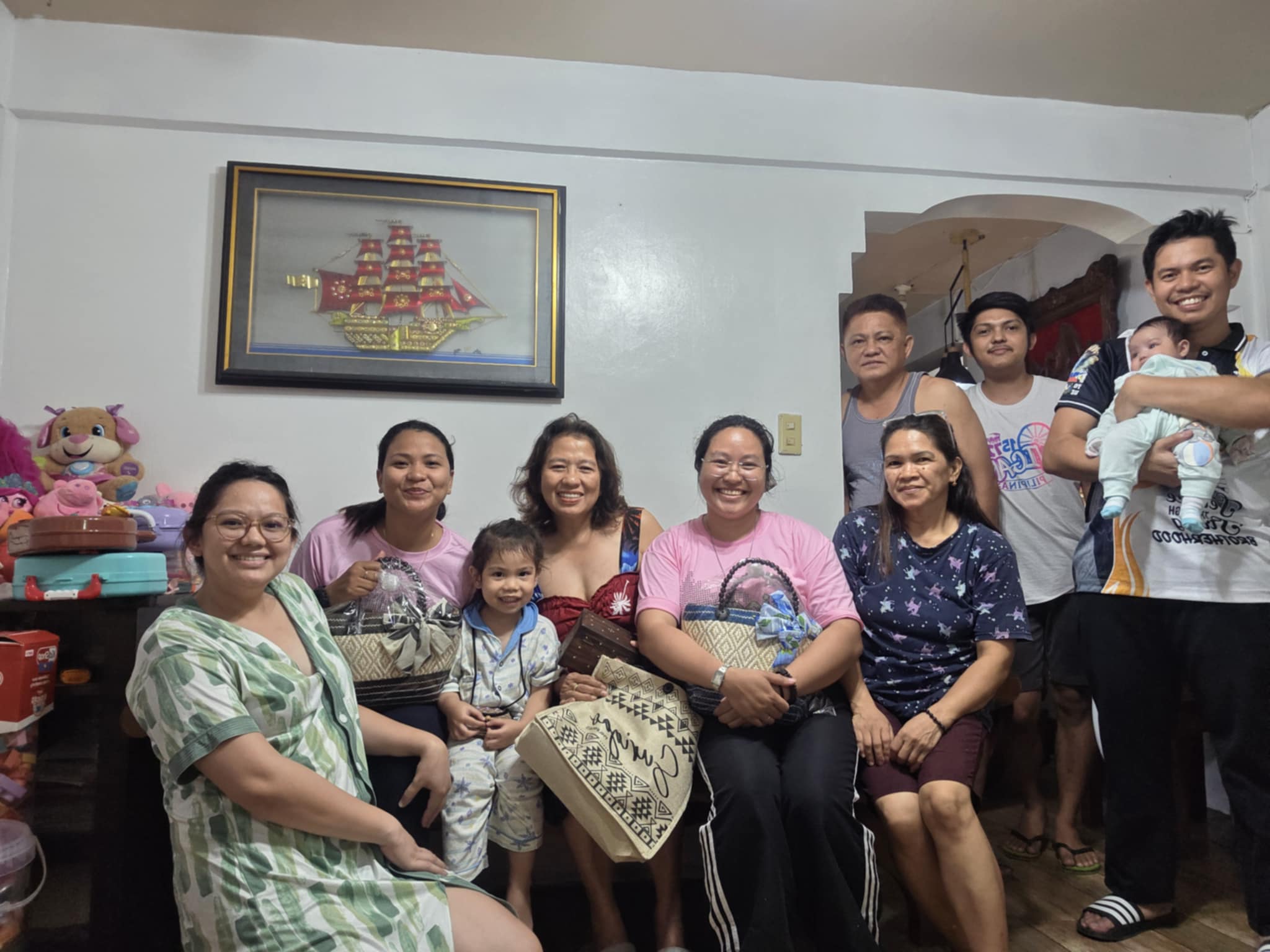
    In return, we made sure they know how grateful we are in everyday that we’ve lived with them. The mutual respect, care, and trust were shown and felt. God blessed us with these households that opened their home for us young pilgrims.

    The thought of an unfamiliar place and people could be scary, threatening our sense of security in almost all aspects. But people, like our foster families in NYD 2025 Caceres, whose hearts and hands were open to welcome us even before we’ve arrived in their doorsteps, made us felt home.

    Despite their own busy daily schedules, they accommodated us and treated us like we are family; full of consideration, understanding, prayers of safety, and genuinely happy with what we are doing. The four days we’ve spent under the roof of their home was enough to cherish the family we had in Naga for a lifetime. 

    And before we knew it, we’re already exchanging goodbyes and promises of keeping in touch and praying for each other, a bit of tearful “We’ll visit again po, Nanay. Puhon.” And a long tight hug. And that, this NYD experience was a core memory because God, once again made His presence known, through the families who opened their home for us, assured and created a safe space for us, and made our NYD 2025 Caceres experience memorable and worthwhile. Dios mabalos!

  • OUR IDOLS

    OUR IDOLS

    May 28, 2025 – Wednesday of the Sixth week of Easter

    Click here for the readings (https://bible.usccb.org/bible/readings/052825.cfm)

    To idolize someone because of their good qualities and characteristics as a person expresses our admiration. We admire a person as an affirmation. In today’s popular culture, such form of admiration would manifest in our efforts in following the person, copying how the person acts, talks and presents himself or herself in public. We too go on in becoming an avid fan.

    In fact, one of my nieces who is an avid fan of BTS, a South Korean Boy Band, collects posters, pictures, albums and music. She would spend a significant amount of her allowance to acquire some materials.

    Yet, such form of idolizing and admiring may also develop into a kind of blind loyalty and obedience. Our interest would start to negatively impact our life and relationships with others. We become aggressive and violent even in our words when we find other people not sharing the same opinion, belief or interest like ours. More so, such aggression would also manifest when we encounter people who express criticism to the person we idolize. This is a form of obsession in which we as people who idolize someone become close-minded and out of touch of our reality and the bigger picture of life.

    The readings today have something to teach us. They also challenge us in the way we live our lives today as Christians.

    In the first reading, we were told that Paul was in Athens and saw the many idols the Athenians had. The Greeks were known to have many gods and goddesses. Yet, Paul also realized how deeply religious the people were because of that expression. What touched Paul most was the shrine dedicated to the “Unknown god.” With this, Paul being a witness and apostle of the Risen Jesus had the responsibility to introduce to the Athenians the one True God.

    Paul preached to them the person of Jesus, the Son of God, who became like us, and who lived among us. For it is through Jesus that we are saved by dying on the cross and by rising from the dead. However, this is the very reason as well why many of the Athenians did not believe him, only few of them.

    Many could not accept that kind of God who died for us and was being resurrected. This was something beyond the imagination and any human explanation. What hindered them to believe was their own obsession towards their many idols, of their many gods. This was something they couldn’t give up.

    This form of “idolizing” was not a mere admiration. It was an obsession. Though this happened long time ago, yet, at present this reality is still happening. Idolatry still creeps in our culture today. We are still somehow captivated by some idols in one way or another that make God a lesser priority. This makes our Christian life and faith less significant. How does this happen?

    When a thing or a person is being loved, wanted, desired and even treasured and enjoyed “more” than God to the point that we have become obsessed, then this could be the “idol” that we worship. That could be your boyfriend or girlfriend or even your good looks. It could be the approval of other people, your attractiveness that tend to seek recognition from others. It could also be your successful career or business or work. Or could be your own passion in sports or any hobbies.

    Nonetheless, reflecting on these, they are actually not evil or bad in themselves. These things are good but they become bad when they do not serve the purpose – which is to be closer to God, by knowing him better, by being grateful to him and by being generous to others.

    In one way or another, these forms of idolatry are also forms of addictions in us. It means that we may tend to be selfish, prioritizing only our own satisfaction – as a result, we will become insecure and not free at all because we are imprisoned by our own obsessions.

    This is not what God wants us to be. God wants us to be free by knowing and loving him more and more. And so, let us remember what Jesus told us in the Gospel. “The spirit of truth will lead us; the spirit will guide us to discover God and know him better.”

    Jesus wants us to pray, to converse with God truly and that is not just to tell God what we “want.” Let us also ask God what God “wants” for us; not my own “selfish desires”, but to ask what is “God’s desire for me.”

    Let us invite the spirit of truth to enlighten us, and that is, to help us identify our actions, attitudes, belief or things that preoccupy us. This may hopefully lead us to recognize our “idols” that hinder us to know God better, to be closer to Him and that continually prevent us to be generous to others. Hinaut pa.

  • Weaving Hearts: Towards becoming a reconciling presence

    Weaving Hearts: Towards becoming a reconciling presence

    by Mark Gil I. Saverola, a seminarian of the Prelature of St.Mary in Marawi.

    Weaving is defined in the dictionary as the act or process of forming (cloth) by interlacing strands (as of yarn). In weaving, there has to be lots of threads, because obviously we cannot weave with just one thread at hand. This has been the image which dominates my consciousness as I recall the wonderful encounter I had with our young people of Marawi during the Kasing-Panaw. Weaving hearts; connecting hearts in its deepest sense; interlacing each other’s experiences of pain and happiness, failures and success, moments of brokenness and strength, and allowing the Spirit to form our hearts, making us into a wonderful creation – a reconciling presence ourselves.

    Weaving is a delicate process which requires the ability to choose the right thread. As evident in the Kasing-Panaw, weaving hearts, as wonderful as it is, also needs certain values and abilities for it to be genuine. This leads me to reflect on three characteristics of a heart that ushers genuine encounter, a kasing-kasing nga tinuod nga nagpanaw.

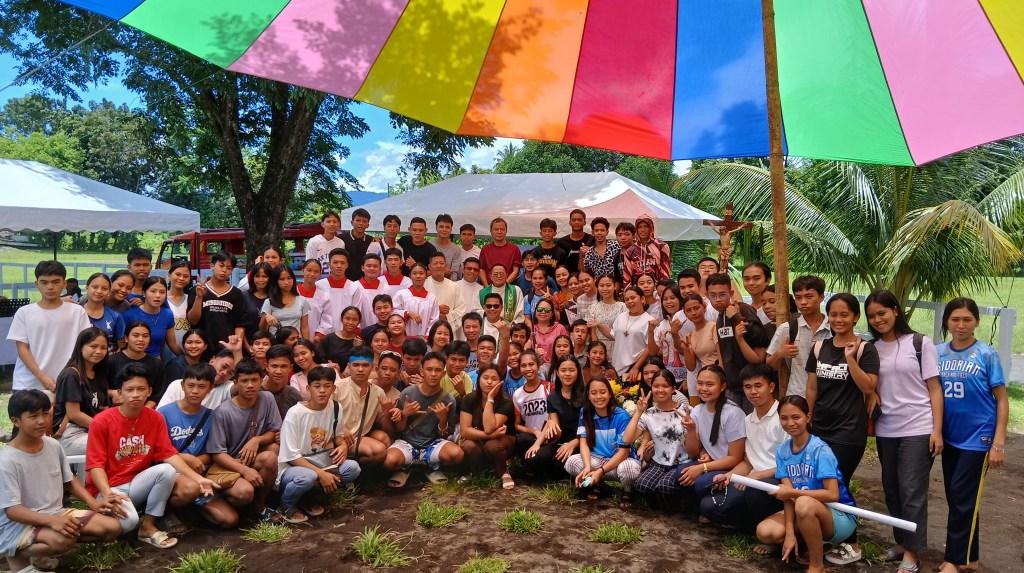
    An open heart. In our world enveloped with mistrust and suspicions, where identifying the truth from what is not is a laborious task, where passing on judgement is easier than knowing the whole truth, an open heart is an imperative. To open the heart is to be vulnerable before others. It is taking the risk of being hurt and broken. But only hearts that are open can usher genuine encounter. Our young people who were gathered in the Kasing-Panaw came from different contexts.

    They brought with them their hopes and visions, but they have also carried their burdens with them. The journey was long. The place was unfamiliar. But their hearts were open. They shared what they have deep within. They have allowed the other young people, the activities, and the environment to be part of their hearts. In the Kasing-Panaw, their struggles and burdens did not vanish, their fears were not gone, but their encounters made them face their challenges and accept their burdens with new enthusiasm.

    Their hearts became bigger, their soul enriched. Their vision is that of hope. A hope which springs out from their common experience of being loved. A hope ushered by an open heart.

    A listening heart. The world is filled with different noises. Some tends to define us; some makes us confused and discouraged. This context calls for a listening heart – a heart who listens not just to those that are spoken but most importantly to those that are kept deep within.

    The encounters of our young people in the Kasing-Panaw allowed them to listen not just to what they wanted to hear but also to the realities that young people are facing – challenges in the family, their mental health, their studies, and even challenges in terms of dialogue. These are not so pleasant to hear but they listened. Their hearts listened, with patience, with sincerity, with deep love. And in that listening heart, creativity was born. Evident in their enthusiasm, our young people found creative ways to face the challenges around them.

    In our world so much influenced with individualism and division they build friendships. In the different challenges they are facing they find inspiration in other peoples sacred stories. In the face of liminality, they were empowered by the creativity of love.

    A discerning heart. As good choice is important in weaving cloth, so as to in weaving hearts. Our choice of words, our way of relating, our perspective – these matter in our encounters with others. The energy of the young people to take on different challenges and their ability to adapt to certain situations exhibit a wonderful characteristic of a discerning heart, that is maturity.

    In the duration of the Kasing-Panaw, our young people joyfully participated in all our activities. They accepted without hesitations their foster family assignments even if they will be separated from their friends. Truly, as their hearts are discerning, there’s depth in their thoughts and actions.

    The entire Kasing-Panaw is a wonderful experience of weaving of hearts. Our experiences, hopes, visions, and even our struggles and pains are threads which were carefully and contentiously interwoven by the Spirit to form this wonderful masterpiece – The Young People of Marawi, pilgrims of hope, reconciling presence in our time.

    The Kasing-Panaw has indeed inspired us to be agents of dialogue but it also challenges us to touch the hearts that still need to be opened, the hearts that still need to learn how to truly listen, the hearts that still need to appreciate and practice discernment. This is not a light burden to bear. But it is noble task to fulfill. As what Bishop Tudtud said, it is “a plan of hundred years”[1]. And so the weaving of hearts continues… until all hearts are formed into becoming a reconciling presence.


    [1] Fr. Sebastiano D’Ambra, PIME, “Message of Silsilah Dialogue Movement”, Tatay Bido @ 25 in memoriam (2012): 76.

  • The Youth as Reconciling Presence

    The Youth as Reconciling Presence

    An article by Richly Allin King B. Vildosola, a Grade 12 student, and Youth Leader

    As I reflect on “The Youth as Reconciling Presence,” as this was highlighted in the recent Kasing-Panaw,[1] I realized that in every situation we have to look deeply for us to understand clearly, because it is easy for us to judge a person, a thing, and even a group or organization without looking on its purpose and goals. As a young person, I realized that I am called to be a bearer of hope and reconciliation, so that in all trials, difficulties, pains, and struggles, then I can be the one who would always seek for guidance, hope, healing and peace.

    Another thing, as a young person, I also realized that I need guidance, just like my co-youth as well. This will help me to good and healthy relationships with others despite the differences in cultures and traditions. Through the guidance from other people, then, this will certainly help me in making good and right decisions in the way I relate with people around me.

    Thus, there are at least two important points that I want to highlight in our role as young people in the Prelature of Marawi in promoting and becoming a reconciling presence.

    First, “as young people, we are the emergent leaders of tomorrow and crucial actors in our church as well as in the society today.” This gives the importance of the youth who are also called as a leader and  vital actors of society and church in promoting peace and reconciliation. This also means that we, as young people, should be responsible in everything that we do because this will reflect on the things that we are capable enough.

    Hence, I have indeed realized, that I am an emergent leader of tomorrow because of the skills, talents, as well as the potentials that I have. It is my call to use my voice and presence to empower my co-youth to also become more realistic and grounded.

    Second, “as young people, we are Agents of Reconciliation, with unique qualities and perspectives.” We as the Youth of today, are often perceived as the future generation, possess unique qualities that can actually serve as the catalysts for Reconciliation. We as young people, with our empathy, fresh perspectives and adaptability hold immense potential to bridge the gap caused by conflicts and biases between cultures and faith traditions. We this, we can contribute to create a kinder, just and more unbiassed world. By addressing the present challenges and embracing the opportunities for empowering Youth, our community can harness the unique qualities of our youth so that we can build and create a future where reconciliation is not just a dream but also a hope and a reality.      

    In conclusion, this moves me to always remember that we are indeed the future leaders of our nation, society, and even church. This begins now by applying all the good behaviors that can lead us achieve a peaceful and face society for all.

    However, we are just humans too, we commit mistakes but the most important is to learn from our past mistakes so that reconciliation will still be possible for us. By learning from our past experiences, this will hopefully make us more active bearer of hope and reconciliation in our small communities. Indeed,  I believe that “We, The Youth, as Future Leaders of Tomorrow” can also be “The Bearers of Hope for Reconciliation and Peace.


    [1]The Kasing-Panaw was a Youth Gathering of the Prelature of Marawi held on August 24-26, 2024 at San Isidro Labrador Parish, Balabagan, Lanao del Sur.

  • NCYM 2024: In my point of view

    NCYM 2024: In my point of view

    A Reflection by Diovelene Francisco, Youth Coordinator

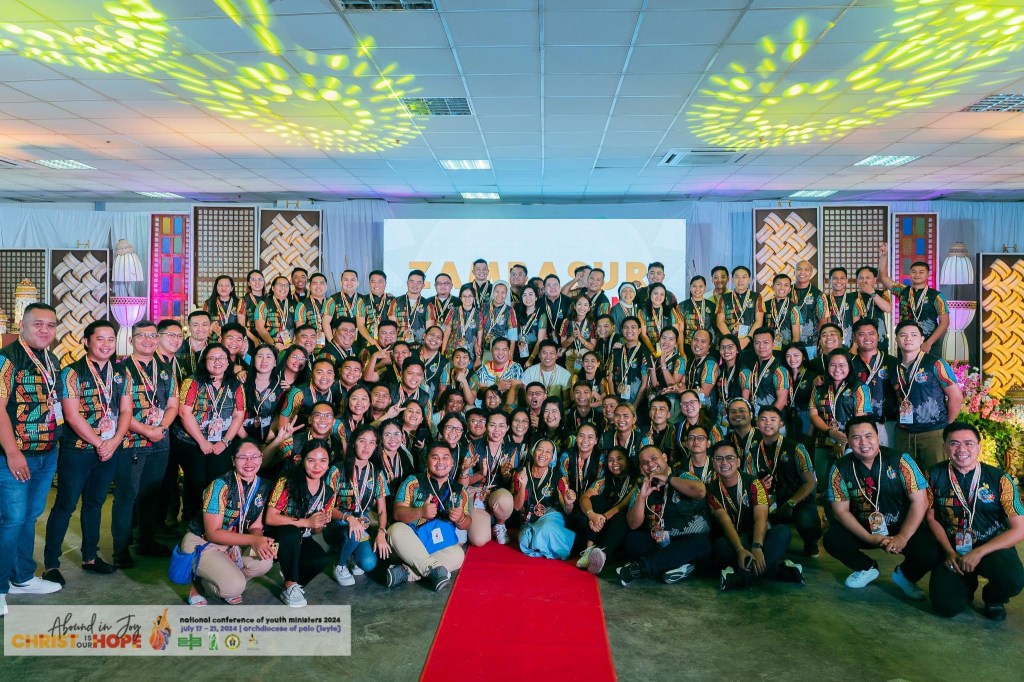
    It was on the 17th of July, 2024 that we arrived at St. John the Evangelist School of Theology Academic building inside the Seminary Compound. At that moment, the learnings, encounters and opportunities opened up for us and the participant-youth leaders of the National Conference for Youth Ministers hosted by the archdiocese of Palo. NCYM: “Abound in Joy: Christ is our Hope”, is the theme where the whole event surrounded. On the very first day, hope flowed as we met youth ministers from different dioceses all over the Philippines, from Northern Luzon to Sulu, one by one, we got to encounter youth that are as excited as I was; and just like that, our NCYM journey started.


    There are a lot of realizations this event has graced me.

    First; the grace of God through hope and patience. Day two of the NCYM was blessed with a Holy Eucharist where in God touched my heart as the homily gave emphasis on how the Lord carries us in every step of our lives, that revenge, grace, and justice is His, and we only need to be patient and hopeful.

    But how are we really embodying these graces? Are we only hopeful and patient to the ones we love? Do we offer a listening ear to the ones we find hard to even look at, more so, listen to? Do we include everyone, reaching out to the peripheries, especially as a youth leader?

    These are some of the points in the homily, that was also reflected in the talks during the event, making it not just an encounter of our co-youth ministers, but an encounter of ourselves.

    This also challenged me to reflect, re-evaluate, and listen; what can I do? What can I impart in this synodality of the church, in my way of reaching out to everyone, and in offering a safe, hopeful, and including space.

    Second, how do we rejoice in hope despite the personal challenges that we face? How do we practice a joyful attitude, a hopeful attitude, when things do not go as we expect them to be?

    One of the plenary speakers shared, that in times of things going far from what we have planned, we either begin to blame others, the joy is replaced by anxiety, frustration, and anger. Then, we, most of the time become reactive, we react negatively in a negative situation.

    This posted a challenge to us, participants, in being proactive in times of negative circumstances, practicing a good attitude in a not-so-good situation, then, we may see the grace of that certain situation.

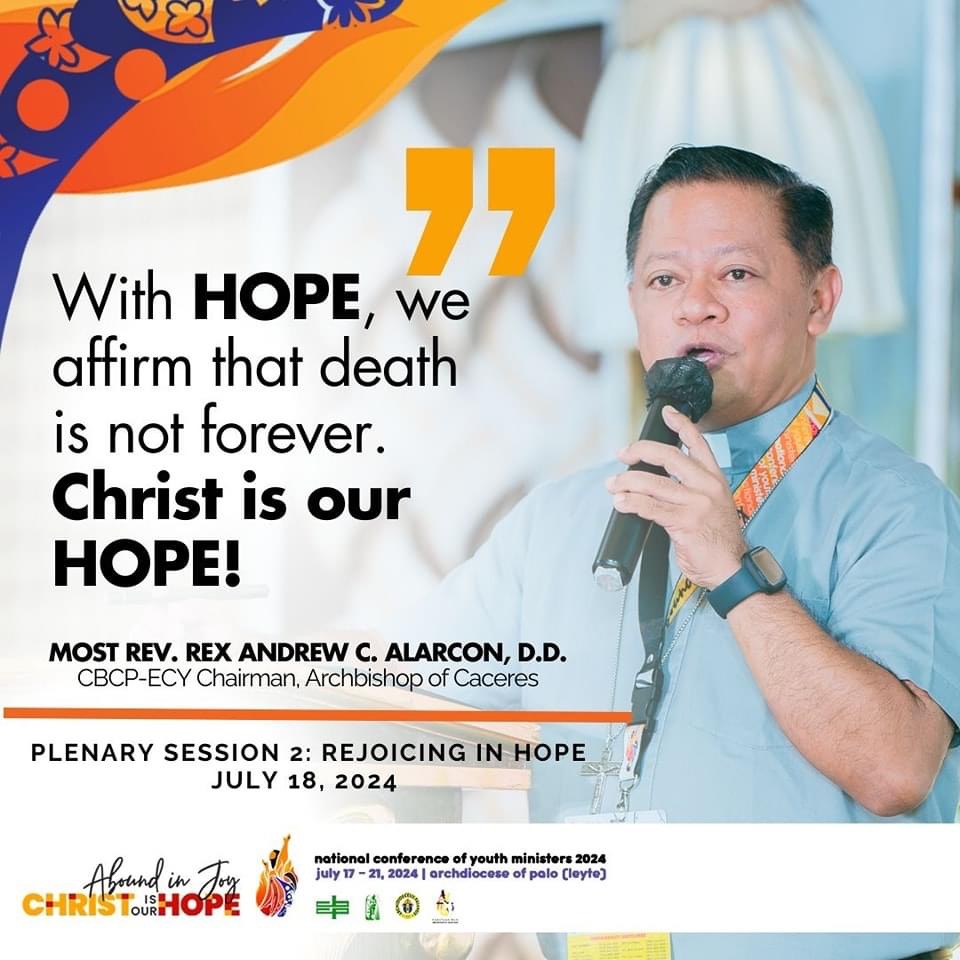
    Bishop Rex, in this talk, left us with a saying to ponder, it goes “When we resist and we grasp, we become disturbed, so, we have to accept and let go.” And so, as youth ministers, we face circumstances that frustrate us, draw negative reactions from us. Thus, we are challenged to look for the circles that we have to prioritize; the circle of concerns – which are the things that is beyond our control, beyond our influence. We have to loosen, then, our grip to this circle, and the circle of influence – the things that we can change.

    As youth ministers and servant leaders, we tend to do things as we see best, forgetting this is a ministry and not a one-man team performing in a business market, and so we have to learn how to listen, never stop learning from other ministers, connect with the people, accept the inevitable plot twists in our lives and help ourselves and the people around us find purpose in this synodal journey.

    Third, I was enlightened in a topic: health and wellness – in a more spiritual perspective. An issue-based workshop was part of the event where in participants were grouped in their chosen topics and focused on it for an hour. I was in this group, and to my surprise, we didn’t discuss the topic on a conventional scientific approach, its more of spiritual, and what’s truly surprising was the realization, that when you look at and treat your body, the way you look at Christ, the way you revere and give value to our God, then, taking care and loving yourself is way easier and fulfilling than pressuring yourself to achieve the societal beauty standard.

    The health and wellness should not only talk about the body, physically, but should also include our mental state, and spiritual state. Our speaker for this issue-based talk closed his sharing by saying “Do not be contented with just looking good, be good.”

    He gave an emphasis on “be good”, you as a person, the being, seeing yourself as good is equal to treating yourself good by eating good, doing what makes you feel good physically and mentally, and radiating that goodness to others.

    The being, the self, wholeness of a person reflecting the good, is our new view of health and wellness, a new challenge of relearning what’s traditional “looking good” to the appreciation of different beauty in physical, spiritual, and mental aspect, and that what is inside you, in your heart and mind, shines in your face, outside, physically.

    A spiritual challenge in honoring one’s body as we honor Christ, and creating a beauty that radiates, for true goodness diffuses.

    Lastly, as this event culminates, we are challenged to bring a wider and clearer view of the ministry and the church, the needs of the young people and how we can include them in our synodal journey.

    We are challenged, as youth leaders, to include everyone, to reach out to the peripheries, to invite them and make a space where they will feel safe and welcomed, if not, bring the ministry to them, join them, sit on the ground with them.

    The very essence of the NCYM journey, for me, is to inspire our young people to be someone who’ll be the bridge of the traditional and the modern, to reshape our ministry to be more inclusive, to become a safe space, and to embody Christ as we offer our company in this synodal journey, this all, by starting to be good on ourselves, as the saying goes; “you cannot pour from an empty cup”.

    My NCYM experience summarizes in one of the speakers words saying “We will always carry the weight, but by grace, we are able to carry”. It is in God’s grace that we are able to attend the National Conference for Youth Ministers. It is by God’s grace that we are able to learn, understand, and experience, and it is by God’s grace that we are send off for the mission.