Category: Reflection

  • MISA DE AGUINALDO 2020

    MISA DE AGUINALDO 2020

    The Aguinaldo Masses are in honor of the Blessed Virgin Mary, to be celebrated nine (9) days before Christmas for the perseverance of the nation in faith. In the spirit of the season, one may lawfully use in these Masses the Weekday Lectionary. The GLORIA is sung in these Masses and white vestment is used even on Sunday. (-from the ORDO)

    Below are prepared Liturgical guide that contains the readings and prayers proper for each day of the Misa de Aguinaldo. Feel free to download and share these resources. May our celebration of the Misa de Aguinaldo truly prepare us to celebrate the big feast on Christmas Day, the birth of our Savior, the Emmanuel, Jesus.

    So that each day, may also have a focus, I have designed an over-all theme for the Misa de Aguinaldo and particular theme for each day. The theme of the 500 Years of Christianity in the Philippines, GIFTED TO GIVE, is the over-all theme. From this theme comes the inspiration for each day.

    There is also a prepared short introduction for each reading that will be useful for further reflection and connection with the theme.

    Each file is in PDF form. Click the link to download it.

    December 16 : Recognizing our gift and the gifts around us

    Is 56:1-3a,6-8 – Foreigners came to believe in God. Through their encounter with the people of God, they too have recognized God’s presence in them. God’s people became a gift to those foreigners leading them to worship God and give thanks to God.
     
    Psalm 67:2-3,5,7-8 – The Psalm recognizes God’s authority over all the nations. In this, even those who did not belong to the chosen people of God, they too were blessed because God created everything. This is a confidence in God who gathers everyone, without exception.
     
    John 5:33-36 – Jesus recognized the role of his cousin, John the Baptist. John’s life and his presence was a testimony to the truth. He was a burning and true shining lamp for people to see and recognize the true light. John led people to Jesus. John’s life was a gift to people around him. Moreover, more than John the Baptist, the works of Jesus, were the very gifts also of God to us that point us to Jesus, the greatest gift we have.

    December 17 : The Gift of our Family and healing of our Family History

    Genesis 49:2,8-10 – Jacob called his sons and bestowed the blessing to Judah. The blessing also contains the prophecy of the rise of a King, in the person of David, the very lineage of Jesus claimed in the Gospel of Matthew.

    Matthew 1:1-17 – The Gospel recounts the family tree of Jesus with 42 generations divided into three, that makes it 14. 14 is the equivalent of two 7. Seven is a perfect number in Jewish belief. And the repeated use of 7 means that God works in the human family of Jesus in an absolutely perfect way. The family tree though not perfect but with traces of sins and unfaithfulness, God works within human family to bring healing and life.
    December 18 : The Gift of promise being fulfilled: A call to fulfill our commitment

    Jeremiah 23:5-8 –  God proclaims his promise to save his people and give them security.

    Psalm 72 – God’s promise is fulfilled as the people lived in justice and peace. The faithfulness of God in the covenant is shown on how God rescues the poor and saves and afflicted.

    Matthew 1:18-25 – The scandalous pregnancy of Mary must have brought Joseph to confusion. Yet, because of his commitment to Mary and to God, he fulfilled his promise to protect her and the baby. Joseph embraced the Lord’s will because of his confidence in God who is with us.

    December 19 : To be surprised with God’s gifts to us

    Judges 13:2-7, 24-25 – The birth of Samson was a gift filled with surprises to Manoah and his barren wife.

    Psalm 71: 3-4, 5-6, 16-17 – It is a song that expresses the hope for strength from God. It also expresses the spirit that completely puts trust in God and recognizes God even before birth.

    Luke 1:5-25 – The announcement of the Birth of John the Baptist caught Zechariah off guard. He was too surprised that he could not believe it. Thus, he argued with the angel and in consequence was made mute because of his unbelief to God’s surprising gift to him.

    December 20 : The Gift of Salvation fulfilled through our participation

    2 Sm 7:1-5, 8b-12, 14a, 16 – The Prophet proclaims the very hope and joyful expectation of the fulfillment of God’s promise. This covenant rests now in that relationship with God as a father.

    Ps 89:2-3, 4-5, 27, 29 The people at that time endured a great amount of suffering. In their anguish and fear, they recalled the covenant with God and recognized the “everlasting kindness of God.” God is faithful indeed, and God is our father.

    Rom 16:25-27 – Paul reminds the Romans of God as the source of strength. And calls obedience to faith through Jesus.

    Lk 1:26-38 – The words of Mary to the Angel Gabriel, “Let it be done to me according to your word,” was a statement of faith and also a statement of love. As God fulfills the promise, God also asks us to participate in the divine plan.

    December 21 : The Gift of Presence

    Song 2:8-14 – The Beloved has been visited by the lover. Such imagery portrays the excitement of being graced by the presence of the lover to the one being loved. This proclaims the hope of a new day as God comes, the lover, to his people, the beloved. The presence of the lover invites the beloved to arise from sadness and embrace life.

    Psalm 33:2-3,11-12, 20-21 – This recalls the hope and the longing for God. The people waits for God’s coming whose presence is the strength of the people. In that anticipation, joy can be felt, thus, a calling to rejoice and sing praises to God.

    Lk 1:39-45 – Knowing that Elizabeth needed help in her pregnancy, Mary came to visit her cousin. That visit revealed how a mere presence of a person brings joy to another. Moreover, what makes this visit more wonderful was the presence of God in the life of Mary. The baby in her womb was God’s presence being gifted to Elizabeth and to her child in the womb who leaped for joy.

    December 22 : Gratitude to the Gifts of the Lord

    1 Sam 1:24-28 – Hannah had been into humiliation and shame because of being infertile. She could not bear a son which gave her so much anguish. Being the second wife of Elkanah, Hannah was always humiliated by Peninnah, the first wife. Yet, through the prophet Eli, Hannah’s prayers were answered. She bore a son, Samuel. Because of her gratitude to God’s blessing and saving her for humiliation, she dedicated her son to God. In fact, because of this offering, Hannah had been blessed also to have 5 more children after Samuel.

    1 Sam 2:1,4-5,6-7,8abc – This expressed the experiences of the people and particularly of Hannah in the first reading. God comes to rescue his people who were oppressed, humiliated and broken. The response, “My heart exults in the Lord my savior,” expressed that deep gratitude to God who is not indifferent to the suffering of the people.

    Luke 1:46-56 – The song Mary, like the Psalm, expresses also that deep gratitude to the Lord. God is indeed great for he has done many great things even to the lowly ones. This recalls and recognizes the action of God where the powerful, the arrogant and the corrupt are brought to shame while the lowly, the poor and the hungry are raised and satisfied. Thus, Mary’s song as indeed a song of gratitude to God.

    December 23 : God is gracious and fills us with gifts

    Malachi 3:1-4, 23-24 – In the prophecy from the Book of Malachi, the herald shall lead and gather the people to see God. He will be like a refiner’s fire who will teach and correct the wrong of the people. In this way, this herald will lead the people to repentance to fully welcome the Lord. The birth of this person is not by accident but planned well by God. The life of this person is the message of God to make the people prepare themselves for God’s coming. This is God’s promise which is to be first fulfilled through the participation of humanity, through us.

    Psalm 25:4-5ab,8-9,10-14 – The author of the Psalm expressed the desire to be taught by the Lord and to be led to the truth. This is the role of the herald in the first reading and the herald in the Gospel of Luke who teaches, leads and gathers the people to recognize God’s graciousness.

    Luke 1:57-66 – The name John literally means, God is Gracious. The birth of John the Baptist is a testimony of God’s graciousness not just to the old couple, Zechariah and Elizabeth but to the whole humanity. The couple is an image of the people who longed to be taught and to be led to God. As John was a gift to his parents, John also points to God’s graciousness who is about to come in its fullness.

    December 24 : Unboxing the Gift

    2 Sm 7:1-5, 8b-12, 14a, 16 – The Prophet proclaims the gift to be given to David. David who thought that he should build a house for God, was promised by the Lord to be given a house that will last forever.  This is the covenant so dear to the people because God is a father.

    Ps 89:2-3, 4-5, 27, 29 – Because of the suffering endured by the people of this time, they longed to that promise of God who shall show an everlasting kindness. What kept them hopeful was their confidence in God’s faithfulness because God is our Father.

    Luke 1:67-79 – Zechariah recalls the covenant of God and the fulfillment of the promise of a mighty Savior. In his song, he also recounts how his eyes have seen clearly that promise being unfolded through the birth of his son John. John will go before the Lord to prepare his way, to give knowledge of salvation by the forgiveness of sins. John is, indeed, unboxing the gift.

    Go back

    Your message has been sent

    Warning
    Warning
    Please rate our website(required)

    Warning
    Warning
    Warning.

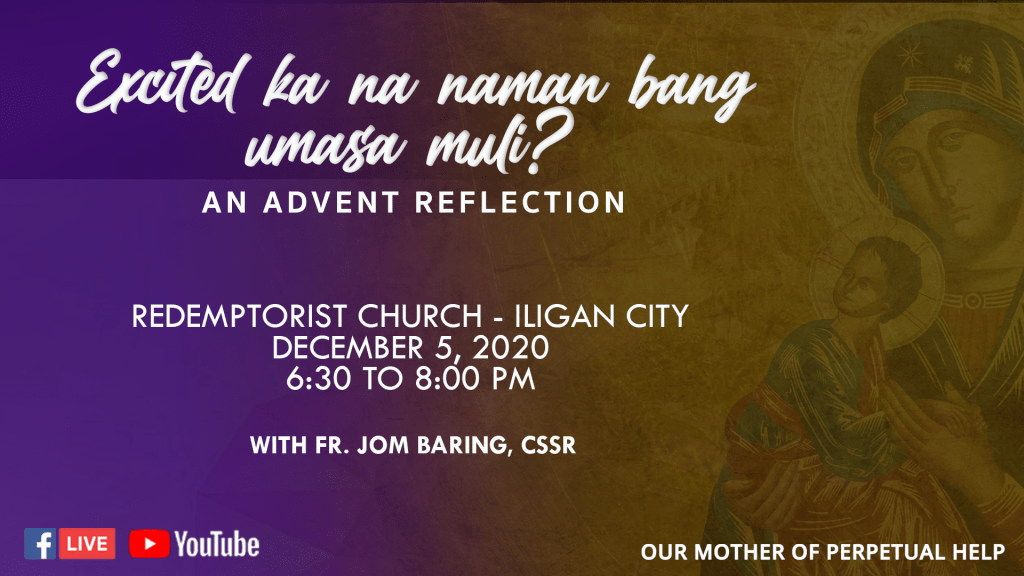
  • EXCITED KA NA NAMAN BANG UMASA MULI?

    EXCITED KA NA NAMAN BANG UMASA MULI?

    This Advent Reflection invites us to dwell deeper on the importance of our presence and of God’s presence in our life and in the life of others. The excitement to hope again calls us to hold on to hope, to be hopeful and to be the hope for others.

    Below is a link of the reflection.

  • WHICH VALUE SYSTEM DO WE FOLLOW?

    WHICH VALUE SYSTEM DO WE FOLLOW?

    Advertisements

    June 8, 2020 – Monday of the 10th Week in Ordinary Time

    Click here for the readings (http://www.usccb.org/bible/readings/060820.cfm)

    (This article is not a usual weekday homily as one may find this too long. This was first used as a recollection material given to a group Redemptorist Seminarians.)

    As we live our Christian vocation and commit ourselves to Jesus, the Redeemer, we encounter both joys and sorrows in our life. We also encounter temptations and challenges as disciples of Jesus. The world that we live in, the environment that we are situated with both provides challenges and opportunities for growth in our commitment to God and to our Christian Faith. 

    It would be very good then to make ourselves aware of the dynamics present in our world and in particular, in our small environment. It would be advantage to examine and be made aware of the “value systems of the modern world” that offers easy and comfortable alternative for us in living our Religious and missionary vocation and Christian Vocation in general.

    But then, we should also ask honestly ourselves, will these value systems bring me closer to myself, to my neighbors and to God? Or will they only lead me farther?

    These are the Value Systems of the Modern World.

    1. Happy are the rich and powerful, those who possess plenty because they can have whatever they want and do things instantly.
    2. Happy are the popular and pompous because they all have the praises and attention of everyone now.
    3. Happy are those who do not care of other people’s suffering for they will not be affected by such trouble.
    4. Happy are those who only stay in their own comfort zones and do not dare to give them up for they feel secured there.
    5. Happy are the aggressive; for they will get anything they want, no matter what.
    6. Happy are the proud and the arrogant because inferior people will bow on them.
    7. Happy are the bullies and haters because they will have a lot of fun over other people’s pain and weaknesses.
    8. Happy are those who do not speak up and stand up for justice, who choose not to see and hear oppression and injustice for their lives will be out of trouble and there will be no persecution from the powerful.

    These value systems are, indeed, attractive and tempting because they promise security but false security. They seemingly promise comfort and happiness for a moment but nothing for tomorrow. These values keep us away from becoming true disciples of Jesus. These are rather values of an UNBELIEVER, a secular person who rejects God’s goodness and the beauty and wonder of his/her neighbor.

    Advertisements

    Let me share with you THIS REFLECTION ON the Sermon on the Mount by Sharla Guenther

    We use the word bless a lot but perhaps we don’t know what it really means.

    If someone sneezes we usually hear someone say, “bless you!”  It is not completely clear why we say that but the word ‘bless’ is a positive word.

    Jesus had been walking with his disciples always teaching and talking with them.  More and more people would see Jesus and follow him because they could sense there was something special about him.  The way he spoke and what he spoke about captured everyone’s attention.

    This was one of those days when people had been following and Jesus decided to stop on a hillside with his disciples and taught those who wanted to listen.

    Jesus made ten points in the first part of his sermon known as the beatitudes.  All except one of these points start with the word blessed.  So we should probably figure out what the word means before we continue.

    To be blessed is to be more than happy.  

    Life does not always go our way, or the way we plan and expect it to be. Because of this, it does not make us happy. However, being blessed is being full of joy on the inside even if things are not perfect. Being blessed is to be grateful in life even if there are also things or aspect in our life that may seem to be lacking. 

    Thus, to be blessed is a deeper joy because we know, as believers, that the spirit of God lives in us.

    Now let us see each one the Beatitudes and the invitations for us.

    1. Blessed are those who are poor in spirit for theirs is the kingdom of heaven.  Being poor in spirit means that we are not attached to all the stuff that we have.  That you understand that God has given you all the great things or blessings and we should be very thankful and even willing to give them up or share them with others.  All our things on earth do not matter because we cannot take them with us to heaven, which will be more amazing than we can imagine.
      • To be poor in spirit also means to become confident in the providence of God, in his grace upon us. It invites us then to grow in that confidence but at the same time also to embrace the feeling of our insecurity. Hence, it is okay to feel inadequate, to feel our poverty, to feel our emptiness and lacking in something. Remember, it is when we are empty that God can also fill us. God will not be able to fill us up when we are already full of many things.
      • Chairman Cha in a K-Drama entitled Clean with Passion For Now, said, “To fill up, you must be empty and in order to grab, you must let go.”
    2. Blessed are those who mourn, for they shall be comforted.  Mourning is when we are really sad. Perhaps you have cried because you got hurt or someone you knew died, but this is different from that.  This is being very upset about those people who have not heard about God or being upset about the sin in our life.  We might not think about these things very much yet but as we get closer to God this will bother us and that’s okay.  God promises to comfort us when we need it.
      • To mourn and be sorrowful of our personal sins is not about ‘being guilty.’ Guilt only leads us away from the mercy of God and from the chance of renewing our life. Guilt makes us imprisoned of our own failures and sins. To mourn is to be truly sorry of our sins with the intention to be transformed by God. To mourn accepts God’s forgiveness and allowing ourselves to be led and transformed by God in the way God want’s us to be.
    3. Blessed are the meek for they shall inherit the earth.  Being meek is being patient and gentle, not easily angered and not thinking of ourselves too highly.  A bad example of this in the Bible was the Pharisees.  They would make sure people knew that they were fasting and praying and seemed proud about what they were doing for God.  Except God is looking for us to do these things without putting on a show for others but doing it just for God, not for approval from others.
      • This is an invitation for us to grow in humility, to seek God’s favor and not our own favor, to seek God’s glory and not our personal glory. Our person, our talents, intelligence and many gifts are not instruments to merely boast oneself but ways for us to recognize better our God, the giver of gifts. Thus, be mindful when we will tend to draw attention and recognition from others, when we become conscious of our self-image that we also become arrogant and worst will refuse to be corrected or criticized by our friends. 
    4. Blessed are they who hunger and thirst for righteousness: for they shall be filled.  Being righteous is impossible on our own.  Can we always do the right for God?  No, and God knows that.  We can do our best to do the right thing and if we don’t, we can always ask forgiveness and be renewed.  The verse not only asks us to try to be righteous but to hunger and thirst for it.  Have you ever been really hungry and thirsty?  To be truly hungry and thirsty you might have to go without food or water for more than a day or two. God wants us to need and feel like we’re starving for righteousness and He will fill us up with it.
      • This invites not to remain passive in our baptismal vows but to live our vows pro-actively. It means that we are called to exercise righteousness with full consciousness. Yet, let us also remember that at times we may fall asleep, but then, be always aware of your attitudes so that you will also be able to wake up again. In other words, make it your heart’s desire to live your Christian life with honesty, sincerity and gratitude.
    5. Blessed are the merciful: for they shall obtain mercy.  To have mercy is to be loving and kind to others.  This does not mean just being loving and kind to your family and friends but also to those whom you might not know and even those you don’t like. Those who are ready to forgive the offense of others, shall be forgiven. The merciful tastes the forgiveness of sins and innumerable blessings of this life.
      • This invites us to always exercise mercy as the hallmark of our Christian vocation in the way we relate with ourselves, with our family and friends and enemies. This calls us more when we are ask to show mercy to those who have offended us or who have sinned against us.
    6. Blessed are the pure in heart: for they shall see God.  Being pure is like having a clean heart.  Like the heart inside of us, it pumps blood and keeps us alive and if something is wrong with our heart, we won’t work right.  Jesus is talking about the place where we think and make decisions, why we do things, and our thoughts.  If we keep our mind, thoughts and decisions full of good, God says we’ll understand Him more as we see Him better in all things and in every people we meet. This is a call for sincerity in our words, deeds and piety.
      • This invites us now to examine our intentions and motivations. What is really in my heart now? What is it that keeps me going? Or what is it that prevents me from accepting myself fully and welcoming God in my life? Or what is it that keeps me bothering now, which disturbs me a lot? Hopefully, in treating those questions, they too will lead us in purifying our intentions so that we too shall see God clearly, ever working in our lives.
    7. Blessed are the peacemakers: for they shall be called the children of God.  The simplest way to explain this is someone who makes peace.  Helping others to get along would be a big part of it.  The second part of this beatitude says: then you will be called the children of God.  Being God’s child would mean that you truly are a part of God’s family and that you’re starting to be more like Him; just like when we are with our parents. This is an assurance that God is indeed our Father for God is a God of peace.
      • This invites us too to seek peace in our hearts and minds, peace in ourselves. If we do not have peace, then, how can we become peacemakers? What we can only give is that something we have at present. Thus, seek peace, let God give you that peace so that in return then, you too will be able to make peace with others and inspire others for peace.
    8. Blessed are they who are persecuted for righteousness’ sake: for theirs is the kingdom of heaven.  God knows that being who He wants us to be is not the way the world acts.  By doing the opposite of the world we will be made fun of or worst, because people don’t understand why we don’t do things only for ourselves.  By living a life that does things for others confuses the way the world thinks.  A lot of people in the world want beauty, money, fame and attention and don’t care about others as long as they get what they want.  This is opposite to the life God wants us to lead.  Doing the right thing isn’t easy but God wants us to know that the kingdom of heaven is waiting for us if we can get through the tough times in this life.
      • It invites us now to always seek God’s desire for us, God’s desire for me. God’s desire may not be popular. God’s desire for us may be different from what others desire for us or from our own desire. Always seek that and be ready to let go of other desires because it is in following God’s desire that we shall also find the fulfillment. But remember this, in seeking and following God’s desire, others may not like it or we may not like it too, we might be facing oppositions from our friends and family and even our very selves. 

    God calls us to be different than the rest of the world.

    The beatitudes end by saying that we should rejoice and be glad because by following these we will receive great treasures in heaven.

    God promises that we will be blessed when we follow these teachings but it won’t be easy.  We all are still figuring out how to do these things, but don’t be discouraged.  God calls us to be different than the rest of the world.

    Keep in mind that the beatitudes are impossible to do without God’s help.  He wants to help us and to become a big part of decisions you make and in all that you do. Give to God, then, that opportunity to work in you and through you.

    Advertisements

    Remember, Jesus didn’t give us these beatitudes and then wants us to fail.  He wants to give us something to aim for.  He wants us to do our best and give us a life full of blessings not just for tomorrow in heaven but even today.

    For a deeper reflection, let this contemporary interpretation on the Beatitudes challenge and lead us closer to the Lord.

    Jesus’ Beatitudes Today

    1. Blessed are you who recognize your need of God because you will give yourself to the providence of God’s love to direct your life.
    2. Blessed are you who feels sorrow for your sins against God and your brothers and sisters and to repent, because you will find true comfort from God’s loving forgiveness.
    3. Blessed are you who choose not to live by your selfish tendencies but will give yourself to God because you will find and have the important things in your life.
    4. Blessed are you when you truly desire to please God and not others or yourself alone because that deepest desire of yours will be fulfilled.
    5. Blessed are you who love, care, serve others, heal the wounded and comfort the sorrowful because you too will surely be shown mercy.
    6. Blessed are you as you dedicate your life sincerely in doing the will of God because in that pursuit you will have a deeper understanding of being God’s beloved.
    7. Blessed are you who strive to promote peace and reconciliation because you yourself will become a witness and instrument of God.
    8. Blessed are you when you stand for what is right, just and true even in the midst of accusations, insults and persecutions because you will have an everlasting joy with God.

    Jom Baring, CSsR

  • MOTHER’S DAY

    MOTHER’S DAY

    Advertisements

    The Angel Gabriel greeted Mary, “Hail, full of grace! The Lord is with you! (Luke 1:28)” Reflecting upon it, we find that the greeting is so deep. It is a statement from God that Mary is certainly favored and that God is delighted with Mary. Mary is, indeed, filled with GOD!

    A clip from Redemptorist Community in Davao singing a song for Mary, Our Mother of Perpetual Help.

    This is entirely connected to the mission that Mary received at this moment of the annunciation. The mission of Mary was to be part of the story of salvation. Mary has a big role here, and that is, to be the Mother of the Redeemer of the World, who will bring peace and mercy. With Mary’s open heart, pure conscience, deep faith and love in God, she accepted the call from God and prompted her to declare, “Behold, I am God’s servant. Let it be done to me according to your word! (Luke 1:38)” She owned this statement and kept it in her heart despite her confusions and anxieties. However, it was Mary’s leap of faith that made her confident before the Lord.

    As revealed to us in the bible, the role of Mary did not stop at the delivery of the child Jesus into the world. Mary was constantly with Jesus, as Jesus also was always with her. This relationship has allowed us to recognize and venerate Mary that she is without sin from her conception. In this way, Jesus shared Mary to us to be our mother who gives us the perfect example of being human. And in this relationship with Mary, we discover more, as church, our relationship with her. 

    We have experienced in many ways the love of a mother through Mary. And that was how we affirm this grace in Mary’s life. 

    In fact, the words of Jesus on the cross to her, “Woman, here is your son,(John 19:26)” and to the disciple whom he loved, “Here is your mother, (John 19:27)” reveal how we have been gifted through the person of Mary, as OUR MOTHER.

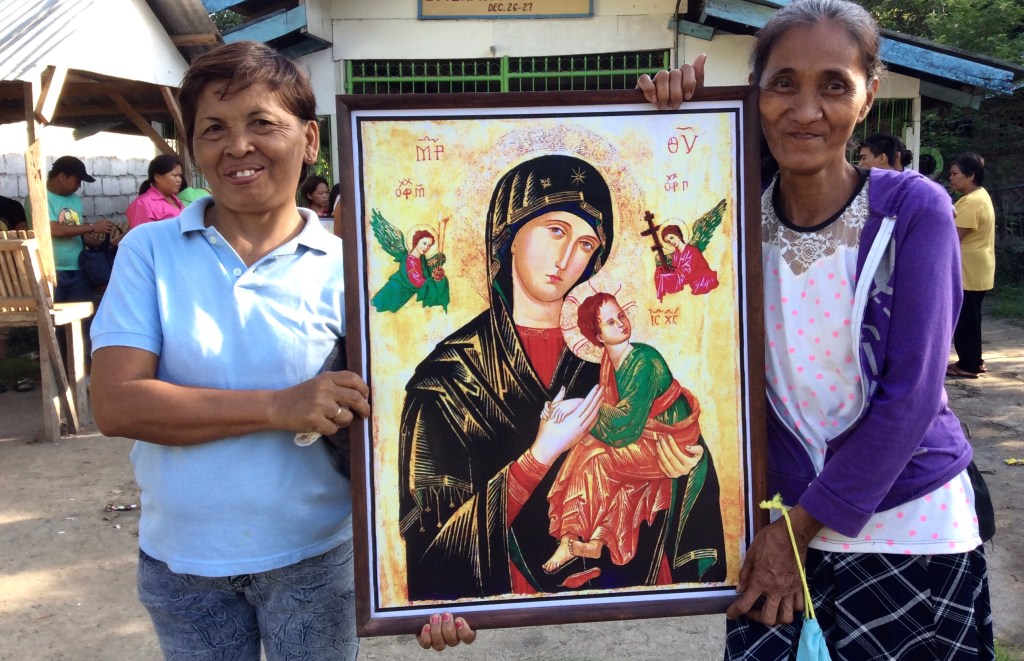
    An image of Our Mother of Perpetual Help carried by two mothers from Hagonoy, Davao del Sur, Philippines.

    Consequently, we desire to offer prayers through our novenas and rosaries, even flowers, candles and material gifts before the image of Mary because we have felt the love of a mother. We kneel before her image to express our pains, struggles, confusions and doubts as well as our joys, dreams and hopes in life. This has become the expression of our affection towards her. And Mary, our mother has also expressed her affection and love towards us in many ways both individually and as a community.

    Advertisements

    Mother Mary’s whole life knew only love. There is no bitterness in the heart of Mary; no scars of fear or hate, only love. That is why, Mary would always choose to love which she always does. This love of Mary makes her affectionately close to us. Thus, we should neither fear nor hesitate to be close to her.

    As we celebrate Mother’s Day today, we express our affection to Mary, our heavenly Mama, our Nanay. We remember too our earthly mother and all those who have become a mother to us in one way or in many ways.

    Let us always welcome her in our life because it also means to receive Jesus in our lives for she will bring us closer to Jesus. Let us express then our deep gratitude to God because of this wonderful gift given to us through the person of Mary, Our Mother of Perpetual Help. 

    On this day, we express our deep gratitude to God for the gift of mothers, for my very own mama, and all the mothers in the world. Certainly, having a mother is one of the most beautiful and wonderful experiences in this world. The world, indeed, is so blessed to have mothers!

    With Mary, our Mother, let us say a prayer for our own mothers.

    Our Loving God, you have not just given us life in this world but you have let us experience the love of a mother.

    Each of us is being carried in the womb for many months. Our mother has to carry us each day as we also grow slowly in her tummy. Through our mother, we first experience the beating of our heart. And the very first heart that we heard is also of our mother’s.

    Through this, You have let us experience how close You are to us and how special our mothers to You. We thank you God for this wonderful gift to us.

    Our Loving God, who is both Mother and Father to us and to the world, we humbly ask now Your blessing for our mothers. Grant safety and protection for them, wisdom and understanding, faith and charity.

    We pray for our pregnant mothers that they may always find joy and consolation in the baby within their wombs. Grant them safe delivery.

    We pray for our sick and aging mothers that they may find strength and confidence in You and in their children and friends around them.

    We pray for the significant women in our lives who became our mothers through their love, kindness and generosity showed to us. Grant them peace and fulfillment of their hearts’ desires.

    We also pray for those mothers who have passed from this life, welcome them all in Your presence that they may experience Your eternal comfort and joy.

    All these prayers we ask through Your Son and our Lord, Jesus and through the intercession of Mary, our Mother. Amen.

    Happy Mother’s Day!

    Jom Baring, CSsR

    Join 2,860 other subscribers
  • Total surrender to God and putting our life in Him

    Total surrender to God and putting our life in Him

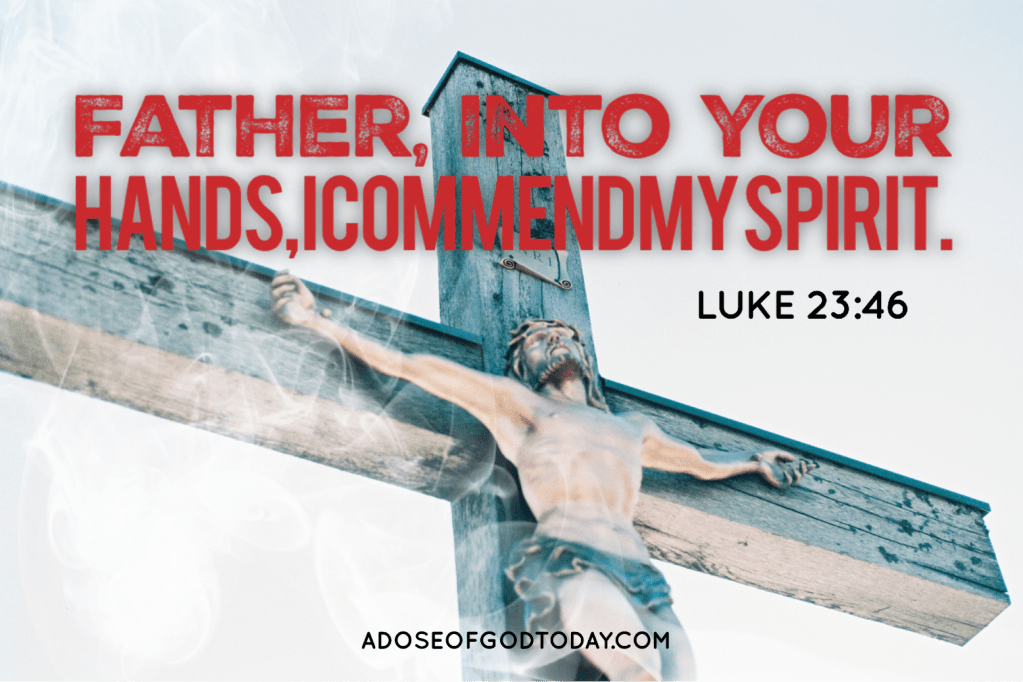
    “Father, into thy hands, I commend my spirit.” (Luke 23:46)

    The Seventh of the Seven Last Words of Jesus on the Cross.

    Shared by Bro. Froilem Bonn Barreto, CSsR, on Good Friday, Siete Palabras

    When I was informed to be the seventh sharer for this Siete Palabras, I asked myself silently, why me? What will I say since it is going to be live-streamed on Facebook. However, my formator told me that the seventh, which is “Father, into thy hands, I commend my spirit,” fits me well. Trusting in the support that was given to me by my formator, I accepted this task to courageously speak in front of you about my reflection and to share something about my life. 

    One of the most challenging and difficult times in our life is when we get into an experience where seemingly life does not allow us to breathe, and when life seems so unfair. When this thing happens, it does not meet our expectations. It does not let us see the beauty of life. This experience only brings us pain and misery instead of joy and comfort. 

    Like the rest of you, I too, have my own share of life’s ups and downs. I joined the seminary right after I graduated from high school. I enjoyed my seminary formation. However, as the old saying goes, “life is not a bed of roses.” 

    It was in 2002 when my life started to change. I was then a fresh graduate from college, working as a faculty member in a college institution when my mom passed away. She died of cancer at the age of 43. With my mom’s untimely death, things changed. Her death would mean missing a lot of things: her, waking us up early in the morning and cooking our meals. For me, I would surely miss her putting a hand towel on my back when I would sleep because I sweat a lot. 

    I believe that the words of Jesus “Father, into your hands, I commend my spirit,” invite us to re-examine our relationship with God. 

    I was not done yet in grieving over my mom’s death when another unpleasant surprise beset my family. In December of 2006, while on a mission exposure, around 2 a.m.,  I received a phone call. A  woman on the other line was crying, and it took her a while until she was able to tell me the reason for her call – my aunt said that my father died of cardiac arrest. I was speechless. I did not know how to react. The first thing that I thought was my siblings. What I remembered then was that I caught myself picking and packing up my stuff because I wanted to go home. With my parents’ death, life will never be the same. 

    Growing up without my parents was a life filled with uncertainties. It felt like groping in the dark. I was anxious most of the time but I pretended to be strong. As the eldest in the brood of six, I was forced to take up a responsibility that was too heavy for me. I left the seminary and embraced anxieties and the responsibility to become a mother and a father not only to my siblings but myself as well. 

    It was difficult growing up without those people who are supposed to be there for their children. I was faced with a whole lot of concerns and issues ranging from personal, psycho-emotional, financial, and a lot more. And so, I braced myself. I worked hard from being a faculty member to being a customer service representative to being a resto-bar singer. On my rest days, I sang at weddings and other occasions just to augment the salary that I was receiving from the company. 

    But often, I caught myself complaining to God. In my moments of solitude, I kept on telling myself, had only my parents lived, we would never have experienced this kind of life. This particular experience created in me a feeling of resentment towards God.

    In my prayer, I questioned him, “What kind of God are you?”, “What have we done, Lord, to deserve this?” Is the offering of my life to follow you not enough that in exchange, you are treating me like this? It is unfair! 

    In other words, I blamed God. I blamed him for everything. I was at the brink of losing my faith. I stopped going to church. And, what I disliked the most during those times was when people would come to us and comfort us by saying, “God has a purpose for doing this” and “God has a reason for everything.” Such insensitive comments! 

    I would react by saying, “kindly stop over spiritualizing things.” But like any other telenovelas, the story continues, the drama anthology continues. In 2006, a sister of mine, closest to me, was diagnosed with lupus, an autoimmune disease that has no cure at all. A health condition that is slowly killing her. She has been in and out of the hospital. She has two lovely and adorable kids. And thinking about her health condition bothers me a lot. In my prayer, I asked God, “Lord, please don’t allow her children to experience what we have experienced growing up without a mother.” I even shared this with my formator in one of our colloquiums. I expressed to him my fears and anxieties over the things that are beyond my control. 

    My dear brothers and sisters, Jesus’ last words are very powerful and compelling, I asked myself, why despite his agony, the humiliation he experienced, and unbearable pain on the cross, Jesus never blamed his Father. He instead uttered these words like a perfect prayer from the depths of his heart “Father into your hands, I commend my spirit.” 

    Into your hands, I commend my spirit” is part of the psalm traditionally believed to be written by David and prayed by devout Jews. No wonder Jesus himself uttered these words before he breathed his last.  It is a prayer of complete surrender, a prayer of unwavering trust to his Father. Jesus entrusted himself to his Father. “Father, into your hands, I commed my spirit” speak of a deep level of intimacy of Jesus with his Father. This line demonstrates what it is to be in a relationship with God. We see here that trust is such an essential element in a relationship. It is where a relationship should be anchored. We can only entrust something when we trust the other. There can be no genuine relationship when trust is absent. Trust brings a relationship to a deeper level and we see this concretely in the life of Jesus. No amount of pain, humiliation, and persecution prevented him from fulfilling his mission. This is because Jesus trusted his Father wholeheartedly.

    Oftentimes, when we are faced with problems and difficulties, when we are carrying heavy crosses, our human tendency is that we lose track of our faith. We rely much on our human capacities and strengths. We become too focused on our suffering and pain, on what we can do to the extent that our energies are depleted, and we become exhausted. We start to complain, self-pity, regret, become anxious about what the future holds, and perhaps blame others, or even blame God. Jesus has given us a glorious example of total surrendering to God. 

    I believe that the words of Jesus “Father, into your hands, I commend my spirit,” invite us to re-examine our relationship with God. 

    Do we trust God wholeheartedly? It is so easy to say I believe in God, and I trust in Him when everything that happens is favorable to us. The real test of faith is when life offers us exactly the opposite, “Do we still manage to say, Yes Lord, I trust in you?

    Trusting God does not remove our pains and suffering but transforms the meaning of these things in our life. Our faith and trust in God will sustain us as we go through this life, like Jesus whose trust in God sustained him in and through his sufferings even up to death, his death on the cross. 

    We continue to ask for the grace of God to strengthen our faith, to trust in His words, “come to me, all who labor and are heavily laden, and I will give you  rest. .. for my   yoke is easy, and my burden light.” God is indeed faithful to His promises. 

    Let me end this sharing with a song that speaks about total surrender to God and putting our life in Him. Let this be my prayer for you and your prayer for me as we continue this journey called life. 

    Click here for the full video (https://www.facebook.com/OMPHRedemptoristDavao/videos/2986892808037601/)