Category: Reflection

  • CONTINUING CHALLENGE TO RENEW THE CHURCH

    CONTINUING CHALLENGE TO RENEW THE CHURCH

    A REVIEW: A VISION OF A CHURCH RENEWED, Living The Ecclesiology of Vatican II and PCP II

    Fr. Amado L. Picardal  CSsR, Claretian Publications, Foundation Inc., 2022

    Amidst the disturbing news that the highly esteemed Holy Father, Pope Francis’s health is deteriorating (most of his photos these days show him seated in a wheelchair and needs to be lifted up), there are all kinds of speculations as to the consequences if he decides to resign.

                First, there is the question who can then be elected in the papal conclave where cardinals all over the world gather in Rome to elect his successor. Luis Cardinal Tagle has been named as one possibility along with a few others.  Only time will tell, however, who the next Pope will be and if he will be continuing the reforms that Pope Francis has earnestly pushed despite objections from the Roman Curia. Or following – the usual pendulum that takes place with social institutions –  the movement will be to return  to the conservative mindset of an institutional Church characterized by the likes of St. John Paul II.

                Since he got elected on March 13, 2013 – almost a decade ago – replacing Pope Benedict XVI who resigned from the papacy,  Pope Francis has opened the windows of the Vatican so that the Church can co-exist with the complexities of the post-modern world. He has issued some of the most important pastoral documents to come out of the Vatican from the Apostolic Exhortation of  Evangelii Gaudium to Laudato Si! to Fratelli Tutti.

                There was even a rumor earlier that he was set to convene Vatican III in the hope that all the recommendations that were approved by Vatican II can be more seriously pursued by Local Churches especially those who have remained indifferent to the concerns of Vatican II. As it proved to be far too controversial to organize, Pope Francis shifted two years ago to convening a Synod on Synodality.

                In order to facilitate the active participation of the laity – including those who are not practicing Catholics or even those who may feel completely alienated from the institutional Church – all Local Churches (BECs, parishes and dioceses) across the globe were tasked to hold local consultations on the theme “Journey with the Church in the Contemporary Times.”  This Synodality asks the question – what does God expect of the Church in the 21st century?  A ten-minute report was to be submitted by BECS/parishes to their Diocese and all dioceses around the world are to submit to the Vatican their 10-minute summary report.

                October 2021 to April 2022 was the allotted period for the Diocesan Phase. A second continental phase began in September 2022 until March 2023. And finally, the third or the universal phase will begin with the XVI Ordinary General Assembly of the Synod of Bishops on the theme “For the Synodal Church: Communion, Participation and Mission” to be held in the Vatican in October 2023. An Apostolic Exhortation will then be issued by the Pope. The question remains: can Pope Francis hold on to his Chair until then to preside over this Assembly?

                Meanwhile, organizers for the 17th Mindanao Sulu Pastoral Conference (MSPC) on the theme – THE GIFT OF FAITH AND NEW EVANGELIZATION AS A SYNODAL CHURCH – are gearing up for the Conference to be held from November 7 to 11,  2022 at the Chali Beach Resort & Conference Center, Cugman, Cagayan de Oro.  Once more the delegates will again assess where the Local Churches are in their quest towards their continuing renewal. Once more the focus will be what is happening at the level of the grassroots Church, namely the hundreds of BECs spread across Mindanao.

                Now comes, Fr. Amado L. Picardal’s continuing effort to provide the Philippine Church with a textbook on understanding its ecclesiological in these contemporary times. As the author writes in the book’s Prologue: “Ecclesiology is the discipline that reflects in a systematic manner the self-understanding of the Church in the light of faith. It seeks to answer the question about the Church’s identity, nature and mission. It is  a theological reflection on the mystery of the Church which is distinct from Church history. While it is possible to study the history of the Church even without faith, Ecclesiology requires a faith-perspective. It is the work of a believer for the sake of the community of believers.”

                The author contends that this book does not promote new and radical ideas about the Church. What he intended to do was “to explicate the vision of a renewed Church espoused in Vatican II and received by PCP II and explore its meaning and implication in the Philippine context.”  The writing of this book goes back to when the author was doing his dissertation – An Ecclesiological Perspective – with the Pontifical Gregorian University in Rome way back in 1995. Most of what appears in this book is the product of his research and the updating and revisions he has made through the years.

                There are 11 Chapters in this book, covering 377 pages. Before presenting again his thoughts of BECs, the first chapters involve an explanation of the ecclesiological models of the Church (Church as Communion, Institution, Herald, Sacrament and Servant); the Church as People of God (Prophetic, Priestly and Kingly People) and The Church of the Poor. After the  Chapter on the BECs, the remaining Chapters include an explanation of the Family as a Domestic Church, the Church in Dialogue (with the world, Inter-religious Dialogue, with the poor) and a Renewed Clearly in a Renewed Church.

                Across the pages of this book are quotes from the Decrees of Vatican II,  various apostolic exhortations issued by the Popes and CBCP statements. At the end of each Chapter there is a long list of citations, a testament to the persistence of the author to do rigorous research before writing the manuscript. Concrete examples of pastoral practices cover all corners of Mindanao and the rest of the world.

                There are, however, Church workers – especially in Mindanao who were witnesses to the glory days of the Mindanao-Sulu Conference – who could not help but compare how the Local Churches and BECs were in the 1970s-80s compared to how they function during the contemporary period. Then most of the bishops, clergy and religious – and a growing number of lay leaders – were actively collaborating to make their BECS truly kingly and prophetic. As a result, a number of lay leaders and priests and religious got red-tagged by the military, consequently a number of them were arrested, imprisoned and even killed.

                Today one can hardly hear of any single story of a BEC or a lay leader being harassed by the military in the same manner that indigenous communities opposing mining and other development projects have been subjected to. What is this indicating? That the State has become more tolerant of a militant Church or the fact is that the militant Church has disappeared to give way to a conservative model interested only in providing spiritual care to the faithful? For gone are the days when BECs were in the forefront of struggles for justice and peace and the integrity of creation!

                Towards the end of this book, the author contends that: “The pre-Vatican II model of the Church appears to still persist in the mind of many… There is still a gap between the vision and the reality. There are still some dioceses and parishes where Vatican II and PCP II vision of the renewed Church has not yet been fully implemented. For the new generation, Vatican II seems to be ancient history and the documents remain unread, gathering dust in the libraries.”

                The book offers some suggestions to pursue the project of a renewed Church, but it will require a pro-active commitment on the part of all – from bishops down to the BEC leaders – to break the  impasse that seems to make the members of the Church complacent and apathetic to the social and ecological issues that are only worsening. The economy is in shambles and poverty levels are again on the upsurge. Indigenous communities remain at the periphery with little assistance from the State.

    While there is peace in Mindanao for the moment, there are still conflicts that cause the eruption of violence. Corruption remains well entrenched in the State agencies demanding good governance practices. Our place in the planet remains precarious as mining, logging, expansion of plantations and inefficient waste management combine to worsen climate change.

                For the BECs to once more become fully alive and contributing to the transformation of our society, we need to double our efforts at renewing the Church. Otherwise, the future may not be too bright for Roman Catholicism in this country if and when the general population think of the Church as irrelevant in responding to the challenges of a complex society today and the days still to come!

  • WRITING MINDANAO, RIGHTING MINDANAO – ONCE MORE WITH FEELING!

    WRITING MINDANAO, RIGHTING MINDANAO – ONCE MORE WITH FEELING!

    A SOJOURNER’S VIEW by Karl M. Gaspar CSsR

    It was the best of times, it was the worst of times, it was the age of wisdom, it was the age of foolishness, it was the epoch of belief, it was the epoch of incredulity, it was the season of light, it was the season of darkness, it was the spring of hope, it was the winter of despair.”  Many of us know that these are lines from perhaps one of the most known books of all time, A Tale of Two Cities, by Charles Dickens. It is said that in this book, Dickens referred to an age of radical opposites taking place across the English Channel, in France and the United Kingdom respectively, during the French revolution more than two hundred years ago between 1787 and 1799.

    But these contrasts and comparisons we might be able to appropriate for our very own times here in our own troubled country in the post-pandemic, post-May 2022 election period and as we faced an unknown future where everything from an economic collapse (along the lines of Sri Lanka and Pakistan)  to a political turmoil to an ecological disasters with more destructive calamities can take place. It certainly can bring a season of darkness and a winter of despair. But for those who hold on to the adage that “hope springs eternal,!” this very same context could also provide us with a season of light and a spring of hope!  Who is to tell what the future brings?

    But the more pessimistic among us might see the glass half empty and fear the worst that is still to come!  A recent post appearing in social media following the Marcos Junior’s selection of the presumptive Vice-President Sara Duterte as Secretary of Education led to speculations about revising history books and getting rid of those considered critical of the Marcos martial law  regime. It would amount of what could be considered book-burning, not in its literal sense but to make sure these are kept locked and not be read by any schoolchildren anymore! As Ray Bradbury – the author of Fahrenheit 451, a science-fiction novel – wrote:  “You don’t have to burn books to destroy a culture. Just get people to stop reading them.

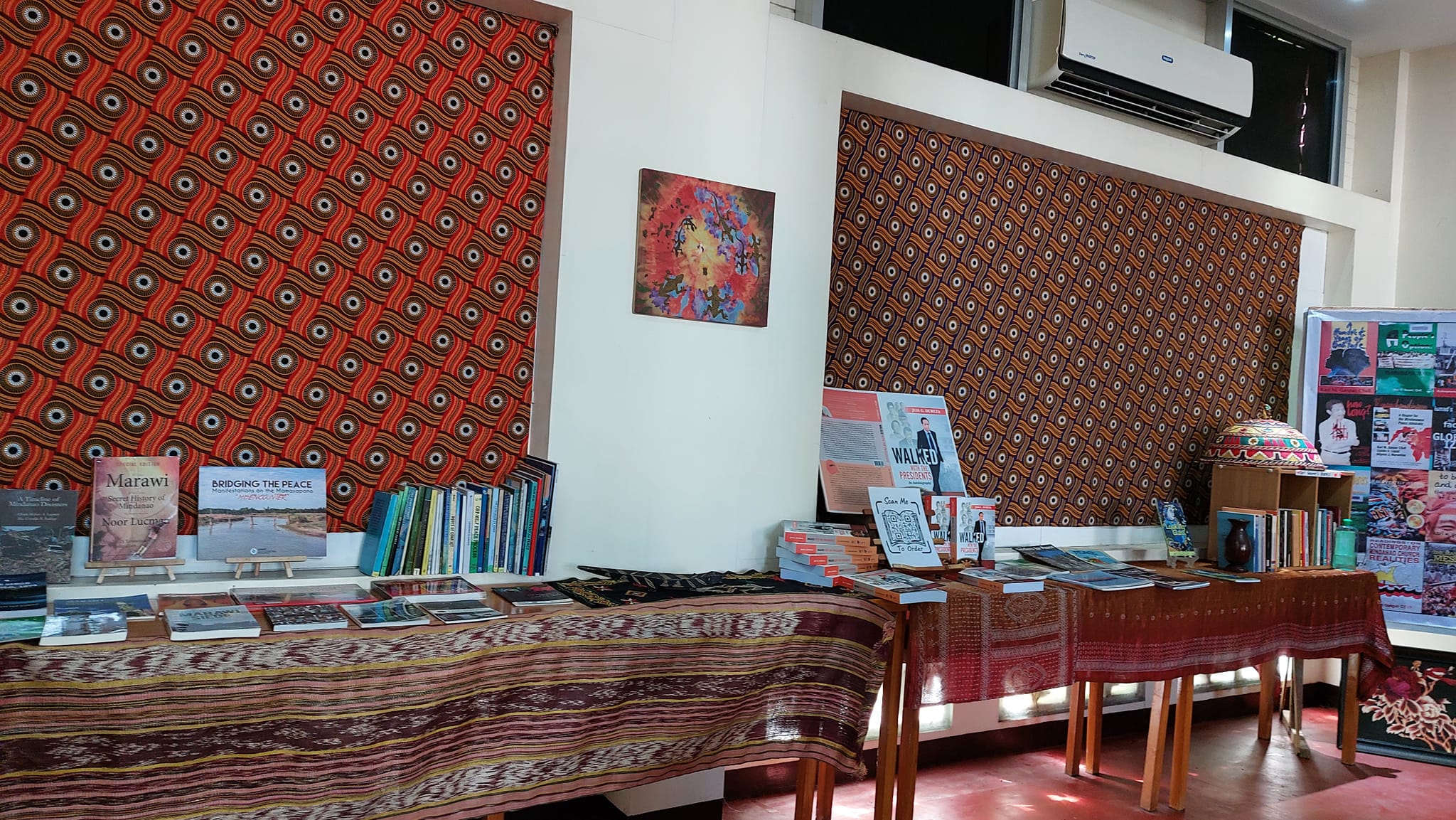
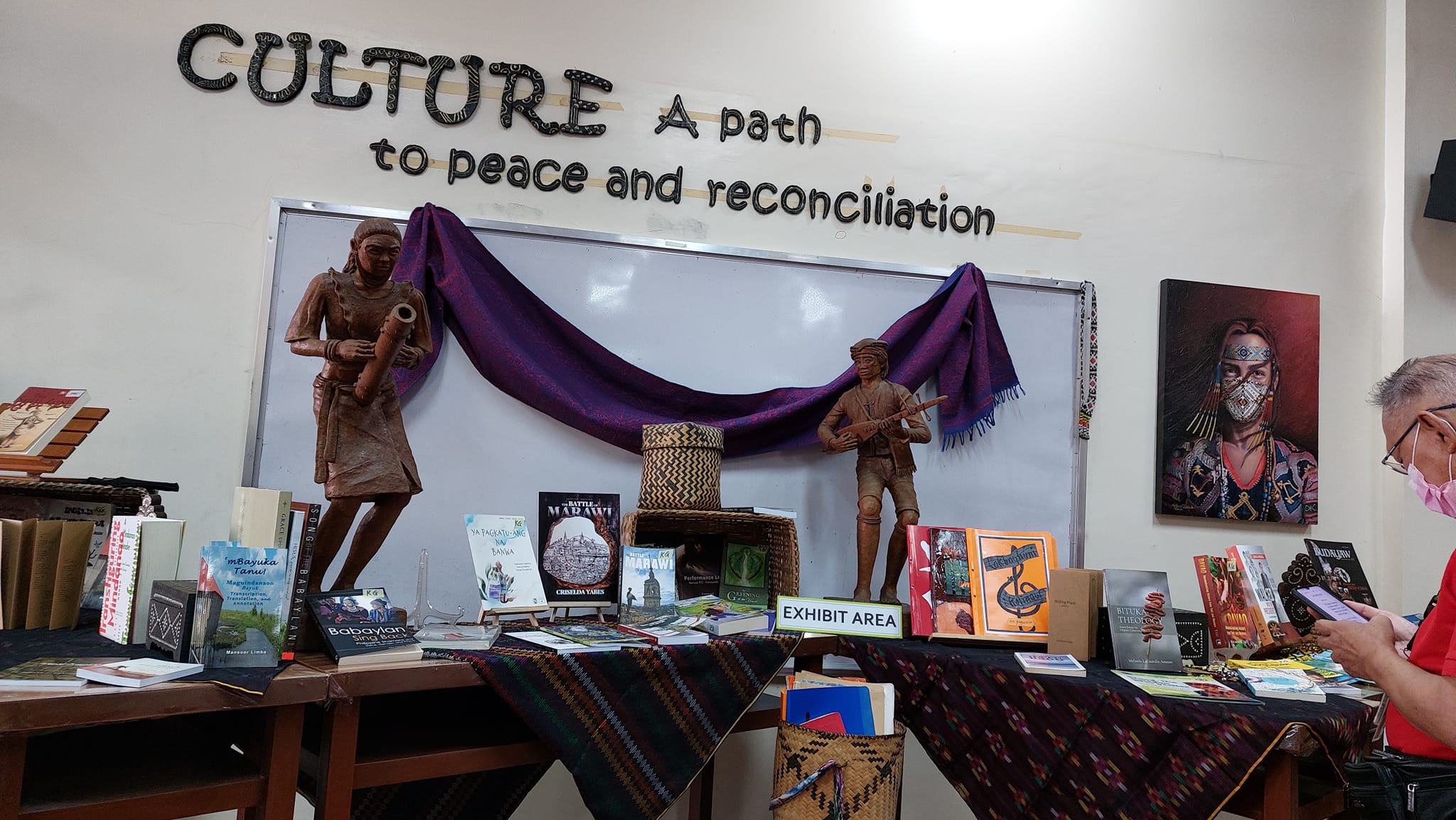
    Bro. Karl signing a book during the Book Festival. Photo by Leila Rispens-Noel Facebook Account.

    As an immediate response to this fear, a thousand academics across the Republic made a brave stand reported by the Philippine Inquirer on May 20, 2022 which read:

    “More than 1,000 scholars and educators based in the Philippines and abroad have issued an online manifesto calling for the defense of historical truth and academic freedom, as they expressed concern over escalating attempts to revise narratives about the martial law years and erase ‘traumatic personal and collective memories of plunder and human rights violation’ under the Marcos dictatorship.”

    Book-burning! Could it happen in this Republic considered by political scientists as a weak State constantly facing the threat of authoritarian rule? Well, this does not only take place in novels like those in Bradbury. Through history, book-burning has taken place when those who hold power fear the impact of critical minds that arise as people read. These took place as far back as the time of the Chinese Emperor Shih Huang Ti,  in 213 BCE, up to the mid-20th century e.g. during the World War II period.

    The defining moment of book burning was in 1933 in Berlin, when the Nazi forces burned tens of thousands of books, from the works of Sigmund Freud to those of Jack London. As Matthew Fishburn wrote in Burning Books:  “Along with the Nazi ideology that there existed a superior race of people came the idea that there was one true cultural and ideological canon; that which didn’t fit was consigned to the fire.”

    For the moment, however, let’s put aside our fears and face the future with a bit of optimism for, indeed, who knows the coming years will again allow us to have a glimpse of another cycle of our historical narrative. 

    What impressed me most in these past electoral exercise was how the youth of the land responded to the challenge of the moment.  Many of us elders have naturally been disappointed at how the youth of the land have shown no interest at all in regard to socio-political issues impacting on the majority of the masa. But these rallies showed another face of the youth of the land; here they were re-activated by the spirit of nationalism. Like us when we were the youth of the land, they now showed a promise that they would pick up where their elders left off the social movement in the 80s-90s.

    And it made me realize that indeed, history repeats itself again. Just like the youth of the social movement that gave rise to the likes of Hermano Pule Gregorio del Pilar, the La Solidaridad clique led by Jose Rizal and the Katipuneros led by Bonifacio, to the youth of the guerilla movement during the resistance against Japanese imperialism, and the youth resisting the Marcos dictatorial rule and now the youth of the 2020s are advancing into another stage of dissent and resistance. I have been filled with a tremendous sense of hope and pride watching all these young people at these rallies.

    There may be dark clouds in the horizon, but somehow light manages to find a crack and it is the youth of the land today that provides an opening. So we could be in for the best of times if this youthful generation like their elders through our historical cycles find the strength, courage and energy to lead the dissent and resistance movement.

    As for us – who I guess are mostly their elders –  are gathered here together at this five-day event which is our own modest way of expressing what were encapsulated in the words of the Irish poet Dylan Thomas: “Do not go gentle into that good night. Rage, rage against the dying of the light.” And who – but authors, writers and journalists – are the human beings who are best at raging so they can challenge the citizenry towards constructive action for the common good.

    In the next week (June 13-17, 2022), we celebrate the best that have been offered by Mindanawon authors along with non-Mindanawon authors interested to write about Mindanao.  In many of their works, their writing (WRITE)  has also led to the righting (RIGHT) of Mindanao. There was a time when Mindanao was written from a colonial  lens even as some of these – like the ethnographic studies done during the American period – tried to capture the reality on the ground.

    But viewed from biased and even discriminatory optics, the early writings about Mindanao tended to highlight that which today have been debunked. In the exhibit, you can see examples of these. This was to be expected if the authors were foreigners (with tendencies towards racism and ethnocentrism) or Filipinos from imperial Manila – who monopolized publications for a long while – who relied on secondary data with very little triangulation enriched by immersion among Mindanao’s peripheries.

    However, in the past few decades as there have been more non-Mindanawon authors who have abandoned their colonial/neo-colonial gaze and as more Mindanawons began to get involved in publications, a shift has taken place. Thus beyond the w-r-i-t-e, there has now been a movement among Mindanawon writers to r-i-g-h-t Mindanao, through advocacies for justice and peace, respect for human rights and  civil liberties, solidarity for the downtrodden especially Lumads and for a] advancing ecological concerns.

    One can find this out by goggling the available data on Mindanao Bibliiographies and there have been a few. Perhaps the first Mindanao-Sulu Bibliography was that W.E. Retana’s in 1894. It would take a long while before another one appeared, namely Alfredo Tiamzon’s Mindanao-Sulu Bibliography published in Davao City in 1970.  In the following decades, there were more attempts at compiling a more comprehensive Mindanawon Bibliography, the last one being convened by the Technical Working Group (TWG) just before the onset of the pandemic. This hopes to produce a RoadMap asserting  the importance of Mindanao histories and studies. .

    Why history? Because, in the words of the philosopher George Santaya – “Those who do not remember the past are condemned to repeat it.” And the novelist Maya Angelou posits that “the more you know of your history, the more liberated you are.”  History is of course the telling of stories of the past with the view of parceling lessons to guide us for the future. There is no question that stories are powerful.

    The author Jeff Goins wrote: “I believe in the power of story. Story is where we came from. Story is where we’re going. Story is what connects us and binds us to each other. It is in the story of humanity, amongst love and fear and failure, that we make meaning of our lives. Story is what defines us and sets us apart. It’s what allows us to connect with each other to truly know and be known.

    Stories is what brought to reality the Second Mindanao Week Festival. And privileged are we that during these rare occasions we can gather together with authors, writers and journalists – they who can conscientize, educate, inform, agitate, mobilize,  entertain and humor us through thick and thin!  They whose witness to truth and actual practice in peace-building and promoting justice and development make possible a society that will not allow stupidity, idiocy and ignorance to dominate over our knowledge and information production.

    For otherwise, we will all be living in a world of lies, corruption and power manipulation that could bring us back to the Dark Ages!  It is their presence in our midst  that help to provide us with the possibilities that despite a winter of despair we can still look forward to a spring of hope! 

    (This article was first addressed during the Mindanao Book Festival II at the Redemptorist Community in Davao City as part of the 50th anniversary of Our Mother of Perpetual Help Parish, in collaboration with the MindaNews Media Cooperative Center/Institute of Journalism, SATMI and of the Parish. The exhibit is until Friday, June 17.)

  • Serve Ta: On Being an OMPH Parishioner-Redemptorist

    Serve Ta: On Being an OMPH Parishioner-Redemptorist

    (This article was first published in the BULAWANONG GASA: OMPH Parish Golden Jubilee 1972-2022 coffee table book.)

    At 52, on my 29th year as Redemptorist Missionary & on my 25th year as ordained priest, I have much to be thankful of the many graces God has shared me all throughout these years. Along the vocation & privilege of serving our Lord as Redemptorist missionary priest, I am humbly given a chance to witness how the Lord has continually worked His wonders in us through us, His followers.

    In 1996, being its first ordinand, I have been part of the birthing & have witnessed the growing years of Redemptorist Cebu Province. To revive the stagnant mission-efforts in Negros Oriental region, as a young priest, I have organized Dumaguete Redemptorist Mission Team doing mission around Negros Oriental & Siquijor Island, that somehow awaken missionary dynamism within Dumaguete Diocese, which has paved a way for collaborations with the local church’s BEC ministry, organization & formation endeavors, and the missionary formation of Redemptorist postulants-then, whom some of them are now promising Redemptorist missionary priests & brother .

    While studying in Leuven, Belgium, I have been involved with various Filipino Catholic communities in Belgium, Netherlands & Germany during weekends & breaks. After gaining my licentiate & some stints with teaching at SATMI, as our collaborative effort with other units & explorative initiative for migrant ministry, I found myself in Gwangju in South Korea, ministering to our OFWs & all English-speaking migrants as spiritual director for all Filipino Catholic Communities in the Archdiocese.

    Journeying with our Lord, humbly grateful I am indeed, to have witnessed & been part of God’s wonders being revealed & God’s miracles being offered to all us now & always.

    Be as it may be, all of these graces I take great credit not only on my missionary experiences & journey as Redemptorist missionary priest, but on my growing & formative years as parishioner of Our Mother Perpetual Help-Bajada.

    Yes, I am a Redemptorist for life & I am also a parishioner of OMPH-Bajada in life. Since as a kid until adulthood, I have grown under the tutelage of Redemptorists and of the OMPH Bajada Parish all my life. And now happens to be also the Only REDEMPTORIST so-far whose family is originally from our OMPH parish.

    Daily gazing at the backdrop of the great Mt. Apo, I remember, growing as a kid in Buhangin, I cannot help but wonder about the world beyond out there. From a protective and less-involved but regular church-goer family (of seafarer father), world-out-there, life-beyond family & school was made known to me with a simple invitation: “SERVE Ta”.

    At a young age of eight, me & my classmate buddies found ourselves serving Sunday masses as Knights of the Altar – or altar boys in our parish church. There, we come not only to learn how to serve, participate, & understand sacraments, but also were able to meet and grow with other kids & people from other BEC communities. Through these experiences, we were initiated to our Catholic religion & church life, most especially to parish life – a life beyond family, schools, & neighborhood. Since then, the words “Serve ta” became part of our vocabulary as we grew in age & maturity as parishioner and as Christians.

    As OMPH Bajada parish has grown & evolved these years, for us parishioners who have been part of the parish ever since before and even until we have branched out into other parishes and countries, the challenges & responses to the invitation of “SERVE ta” has always been part of the language-vocabulary of our parish church life within our BECs & families in whatever capacities & talents.   

    As Parishioners, we are also grateful to the Redemptorist charism and for the witness of Redemptorists we have journeyed with, here in Davao, as we have been formed & grown in the spirit of involvement, voluntarism, and charitable service for our dear parish. Through the Redemptorist we have come to know, love & serve our Lord & our Church. In our parish, we also come to experience Redemptorists as missionaries. They are dear & close to us but they are transitory – never permanent. Redemptorists come and go. Some left but most, still remains. Same way as part of our parish is now apart from us, as they are now a new parish, Redemptorists as well as us OMPH parishioners as we are, evolves not only for our good but moreso for the better version of our faith-life in Christ.

    However & Whatever might be in store for us now & for the near the future, the challenge for us OMPH parishioners here at home & abroad,  & for me – specifically as OMPH parishioner Redemptorist, remains still and always: “SERVE Ta”.

    Proficiat. 축하합니다Congratulations to OMPH Bajada Parish on our Golden Anniversary    

  •  My ASSIGNMENT AS DAVAO PARISH PRIEST:  “Galloping Around the Barrios” 2002-2004

     My ASSIGNMENT AS DAVAO PARISH PRIEST:  “Galloping Around the Barrios” 2002-2004

    After having been unexpectedly and abruptly transferred to join the mission team in Tacloban, I was given another unexpected and sudden assignment as parish-priest of our parish in Davao. Again this was a change in venue and type of apostolate I was totally unprepared for. On top of this, it happened in the middle of the triennium (the usual three-year term).

    God must have smiled when He let our Council approve this assignment. Their decision was a response to a request made by Fr. Sean Purcell, then parish- priest of Davao. As Fr. Purcell put it:  he had been parish priest for 23 years and he was now 60 years of age. So, he wanted a change to a more restful and reflective assignment. He then suggested that in his place be assigned a “younger man that we could let loose to gallop around the barrios.”

    The “younger man’s” appointment “to gallop around the barrios” did not materialize. Instead the Council appointed me, one senior to Fr. Purcell in age by three years and in ordination by two years. My galloping around the barrios as the new parish priest of our Davao parish lasted two years (2002-2004) when I was again abruptly given another short-term appointment.

    Now at 71 years of age, I was appointed parish priest for the first time. At that time our Bajada (Davao) parish was a sprawling territory covering some 62 small chapel communities, spread out from the national highway in front of the church to the rural communities into interior villages from behind the church. Challenging as the task ahead might have seemed to me after Archbishop Capalla officially installed me as pastor of our Bajada parish, I started in my old age to learn to be parish-priest by doing. 

    Fortunately, by this time the struggle for “liberating” the parishioners of Buhangin area from their eviction the agitation for relocation had become a thing of the past. This is a story that is told in another article “The Buhangin Story”.

    When I started taking over the care of our Davao parish, I faced many challenges, but at the same time I was blessed inherited many blessings. I  had no full-time parish assistant. All the other priests in the community were engaged in formation or teaching  work in the Davao Studentate (Redemptorist Major Seminary). However, one of the formation teachers was officially assigned as my part-time assistant. The other priests on the teaching staff generously helped with the sacramental and liturgical services in the busy parish church. 

    It was a blessing that I had a good team of full-time lay parish workers. One or other of them would accompany and assist me as I made the rounds of the small chapel communities, driving the ADVENTURE ,  the reliable all-purpose parish vehicle.

    I was also blessed in having inherited a very active parish, thanks to the creative and tireless efforts of the previous parish priests and their parish collaborators.  The parish was noted for its liturgical celebrations and social concerns ministry. Evangelization and catechetical activities kept the parish workers on their feet most of the time.

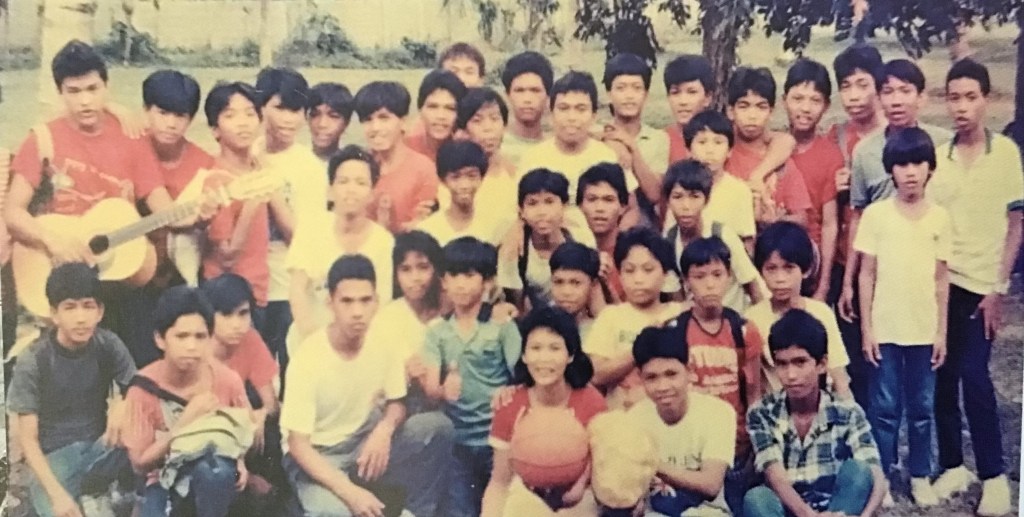
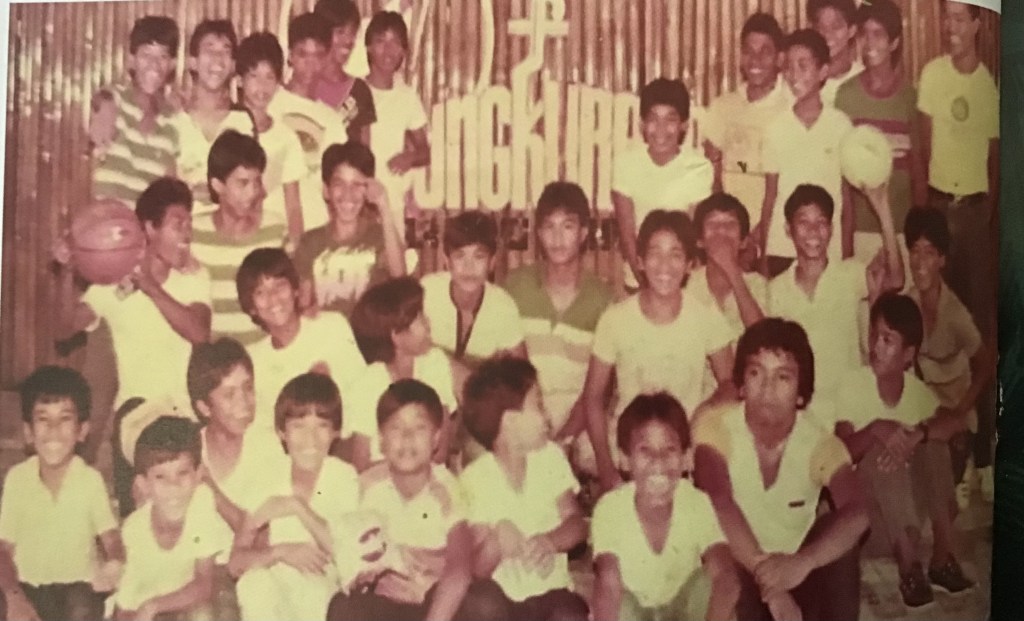
    The youth in particular were actively involved in parish life. They participated fully in National Youth Day celebrations and held parish Alphonsian Pilgrimage gatherings. Contests among the BEC youth groups included “Cheer-dance” and talent competitions.

    The youth revealed their talent in a special way in colorful and reflective liturgical celebrations of Christmas and Holy Week. These celebrations are memorialized in album pictorials of the Nativity and Passion plays.

    With all these activities to animate and accompany, this ageing parish priest was not given a chance to grow old! It did not take me long to not only adjust to but even to get to love my uncharted journey as parish priest in my twilight years.

    But just as I was getting to feel at home in my assignment as parish priest of our Davao parish, I was shaken out of my comfort zone by a new appointment.  A phone call from Archbishop Capalla informed me that the Apostolic Nuncio was in the archbishop’s residence and wanted to speak to me. His Excellency, the Apostolic Nuncio, Archbishop Antonio Franco, after getting me to sit down in front of him, broke the news of my new appointment as gently as he could, saying, “I have come to ask you a favor in behalf of the Holy See.  The bishop of Iligan is resigning officially for ill-health and they are asking to take care of the diocese as its Apostolic Administrator until a new bishop is assigned. It was the last “favor” I would have dreamed of being asked no matter how gently.

    Thus ended without a formal goodbye my short two-year term as parish priest of our Davao parish. I  had to rush my entrance to Iligan as the outgoing bishop said he had no more jurisdictional power once I had been formally appointed as administrator of his diocese. So, in the evening the following day, I took the night bus to Iligan arriving there at dawn to begin my life in the uncharted life in the unknown.

    Thank God for the Tacloban hiatus, even though it was only for two short years. One never knows what lies ahead.

  • OMPH DAVAO PARISH GIFTED WITH BULAWANONG GASA

    OMPH DAVAO PARISH GIFTED WITH BULAWANONG GASA

    Fifty years ago in June of 1972, the Our Mother of Perpetual Help parish under the administration of the Redemptorist Missionaries was founded. These were the circumstances leading to this historic event (as quoted in the 50th anniversary commemorative publication).

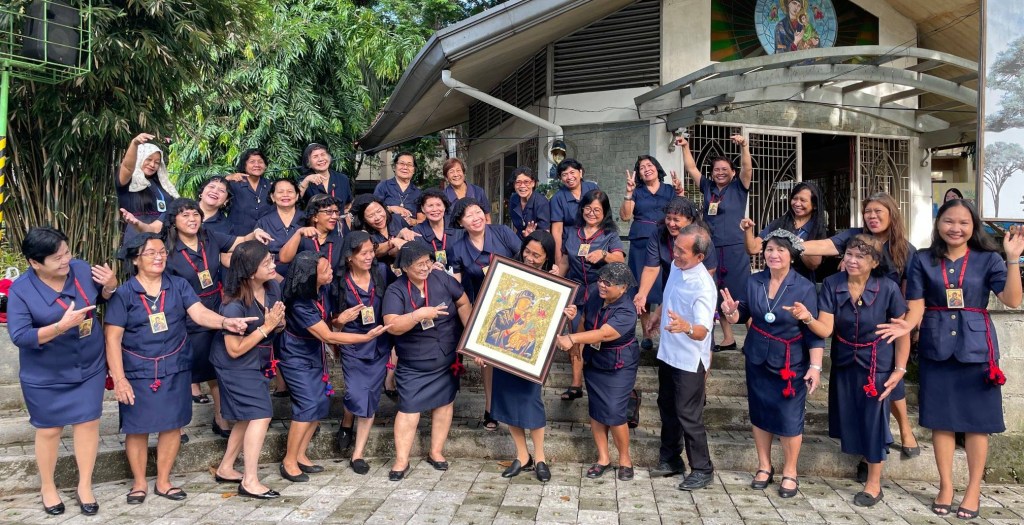
    Devotees of Our Mother of Perpetual Help

    “ It was not until the early 1970s when the idea of a Redemptorist parish in Davao again surfaced. In May 1971 this offer was made formally by the Archdiocese in writing.  On September 2, 1971 during the visit of the Vice-Provincial, Fr. Mahoney, the community (composed of Fr. Sean. Magnier as Superior, met to discuss whether a parish should be established. Some questions that arose included: Would accepting a parish be for the good of the Local Church? Would it so reduce their missionary effort as to render it ineffective? Furthermore it was to be considered that conducting missions was the  priority apostolate. At that time,  the parish of about 25,000 was being cared for by one priest.

    The community members were in a deadlock and could not reach consensus. It was then left to the Vice-Provincial and the members of his Council to make the decision and they approved the establishment of a parish. A meeting was then held at the Archbishop’s residence and among those who attended were Archbishop Antonio Mabutas, Fr. Maurice Leveille PM, other PMEs and Blessed Sacrament Fathers and Fr. Magnier and Fr. Pierse. One task at hand was to set the boundaries between the areas left with the Assumption Parish under the Blessed Sacrament Fathers and the new parish under the Redemptorists. A date was then scheduled for the date of the parish foundation which was to be a week after Easter of 1972. Officially, however, the foundation of the OMPH parish in Davao was inaugurated on July 27, 1972 with Fr. Dominic McKenna CSsR as parish priest.  When it was first established, the parish covered the areas of Callawa, Mandug, Tigatto and Buhangin.”

    Bulawanong Gasa (A Golden Gift) was decided by the Davao Redemptorist Mission Community (DRMC) as the theme for the 50th anniversary celebrations when the members met a  year ago to prepare for this event. This theme became the title of the commemorative publication which recently got published and distributed to the different CSsR units and foundations, and are not available to the parishioners and churchgoers.

    Various activities were planned and some of them have already been accomplished through the past few months. There were mass confirmations, baptisms and first Holy Communion rituals involving all of the 35 GKKs across the parish. Just these past week-ends, more than a hundred volunteers (from the DRMC members to parish staff to GKK leaders and youth) volunteered to be facilitators and resource persons for the 50th year parish missions held in the different seven zones. These missions were mainly skills training for the spotted new leaders as well as existing alagads of the GKKs.

    On Pentecost Sunday, the Care for the Earth parish ministry conducted an Organic Market in the church grounds, in collaboration with the Paglaum Ecological Network which is affiliated with Sustainble Davao Movement. Through this network, the parish ministry is linked to other parishes, Catholic schools, NGOs and other ecological groups based in Davao City. They will be hosting the novena Mass on Sunday, June 12 where hundreds of trees would be distributed so parishioners and churchgoers can be actively involved in making sure the city have more trees. On the same day, a group of volunteer ophthalmologists and optometrists will provide free eye consultation to poor households of the parish.

    The nine-day novena from June 10 to June 18 will be live-streamed for both the 6 AM and 5:30 PM Masses (although on Sunday it will be at 6 PM). Each Novena Mass has its theme which relate to the Province’s missiological priorities. From June 13 to 17, the St. Alphonsus Theological and Mission Institute (SATMI) in collaboration with the parish and the MindaNews Media Cooperative Center/Institute of Journalism are co-sponsoring the Second Mindanao Book Festival, a Book Fair/Exhibit that will have a launching of all Mindanao books published during the time of the pandemic on June 13 at 3 PM. All Mindanao books published through the years are then exhibited in Rooms 5-6 at SATMI.

    A concert – Halad ni Maria, featuring Fr. Bonn Barretto CSsR and the different church choirs (Sts. Catherine, St. Blaise and St. Hildegaard Choirs) along with the Kaliwat Theatre Collective backed up by a quartet under the baton of Kruz   – will take place inside the church on Friday, June 17 at 8 to 9:30 P.M. Songs to be interpreted are all in Cebuano-Bisaya used popularly in most of our missions, especially with the Redemptorist Itinerant Mission Team.The finale are songs dedicated to the Blessed Mother.

    A dawn procession will begin the fiesta day on Sunday June 19. The Pontifical Mass will be at 10 A.M. with the Archbishop, Msgr. Romulo Valles officiating and Bishop Emmanuel Cabajar CSsR as homilist. Lunch will be served by the DRMC to invited guests. From 4 PM to evening, members of the GKK will gather inside the gym for the final activity – a grand fiesta celebration!

    All Redemptorists are naturally invited to join their confreres at this 50th anniversary of the OMPH parish, especially all those who have served the parish through the years!