Not all generous people are truly grateful. Yet, grateful people are always generous. What does it mean? One’s generosity can be colored by our selfish intentions or motivated by our self-interest. Like for example, we can be generous to people in our workplace especially to the higher ups because we want them to like us, a way, of perhaps, securing a good position or promotion. Politicians can be publicly generous of their resources, time and presence particularly when election is coming up, well, because that is self-promotion. We can pamper a person we like so much, giving gifts and treats because we want the person to like us in return.
These forms of generosity or kindness are acts of selfishness that only seek to advance self-interest. In fact, Paul in his letter to the Philippians, exhorts the community and warns them of this tendency. He said, “Do nothing out of selfishness or out of vainglory… regard others as more important than yourselves, each looking out not for his own interest.”
This kind of spirit is very essential in a Christian community that exists in a worldly and self-centered society. Paul also realized that selfishness is not the way of Christians because this tendency leads to corruption of life and of faith. It is only by being a person for others, being a community for others that believers of Christ will truly grow in the faith and in their relationship with one another.
Moreover, Jesus in today’s Gospel taught a leading Pharisee on how he should express his kindness and generosity. This Pharisee must be influential and rich in that community and Jesus saw how the guests were filled with the same influential and wealthy people. Thus, Jesus challenged him to express his kindness and generosity to people who need most. This was Jesus’ call to the Pharisee to move out of selfishness and to be truly generous and not for the sake of advancing self-interest.
Hence, the Lord also invites us today to grow in our gratitude to God and to others. Only in this attitude of the heart that we shall also be able to go beyond from the tendency to look only for ourselves and own benefit. Gratitude in our heart will make us kind and generous to people who around us who need most our help and presence. This is our true expression of faith. Kabay pa.
What do I seek in life? Love and acceptance? Understanding and friendship? Comfort and contentment? Health and wealth? In seeking what matters most in our life, we could experience discouragement, rejection, failure, pain or even shame. We know that not everything we can have in life. We also know that life can be sometimes too tough and overwhelming. There are those who may just enjoy life because of the privileges they have. There are also those who at the moment of their birth, pain and struggles seemed to be never ending.
So, in seeking what really matters in our life, which may not necessarily be always material, others may resort to unhealthy and destructive ways especially when they too are not guided. Some may also be led and helped by others to come into right decisions and good discernment in life until they also discover God’s invitations for them and live a happy and holy life.
On this 31st Sunday in Ordinary Time, this is something I want to share with you through an interesting biblical person, Zacchaeus, a Chief Tax Collector, hated and despised by many Jews of his time. He is quite interesting because his very life characterizes each person’s desire to seek what matters most in our life. So, allow me to journey with you today and let us discover together how God calls us.
Zacchaeus, as described by Luke, was short in stature and a wealthy tax collector. His fellows Jews hated him for being a tax collector and someone who was affiliated with the Romans. Remember, at that time, Israel was under the a foreign invader, the Roman Empire who imposed tax on them.
However, we could also ask, how Zacchaeus, a Jew, ended to the side of the Romans, working for them as a tax collector. We could actually imagine the life of Zacchaeus. Thus, being short in height, Zacchaeus as a young boy must have been a subject of bullying. Even until now, among our friends we actually make fun of people who are short or those people who do not belong to the standard of the majority like those who are too tall or too dark, etc.
Because of the physical limitation of Zacchaeus, people looked down on him. It must have been so terrible for Zacchaeus to be bullied publicly and to be hurt emotionally. Zacchaeus must have felt the pain of rejection and disrespect towards him as a person. However, he was helpless against those playmates and other people who had bullied him.
That emotional pain in him must have created a deep emptiness also within him. Thus, being bullied and rejected, Zacchaeus was in search of respect, of acceptance and of affirmation. But then, he could not gain those by just being who he was because people disrespected him for being who he was. Zacchaeus needed a way of getting his revenge. He won’t be able to get what he wanted if he would remain helpless and meek. He needed power and wealth to make those people who have bullied and rejected him to bow down to him.
Zacchaeus grabbed the opportunity the Roman Empire could offer him. The Romans were feared, though hated by the Jews, but were forced to show their respect. People had to bow down to the powerful Romans. Thus, Zacchaeus made himself available in the service of the Romans. This was how Zacchaeus got his revenge against his fellow Jews. He became the chief tax collector and becoming one also meant becoming powerful and wealthy.
Now, Zacchaeus was above those who have bullied him. Zacchaeus could now play the bully himself. As a chief tax collector, he could get his revenge by raising the tax against those people whom he also despised. Because of this, people would now please him, affirm him, and show their respect to him because he had power over them.
Perhaps, Zacchaeus would love to see the faces of those who have abused him emotionally to beg for mercy. He could now demand what he needed and force the people to accept him and pay respect to him.
However, Zacchaeus was never peaceful. He was always restless. At the beginning, this was not what he wanted but because of those pain of rejection and emotional wound, he turned out to be corrupt and a monster in the eyes of the people.
Indeed, like Zacchaeus, to be bullied or to be rejected could create a deep emotional wound in us as well. Because of being helpless, we could not protect ourselves from people who hurt us emotionally such as bullying and rejection at school, in our neighborhood or even at home. As a result, we do not only begin to hate those people who were bullying and rejecting us, but we also hate ourselves for being who we are. We hate ourselves because of the imperfection that people find in us.
Thus, we also begin to think that if only we are not like this, then, people might accept us and love us. This consciousness begins to develop in us until we become a person whom we are not, just for the reason of being accepted, recognized, respected and loved by people around us. This is how we could be seeking what matters most in our life – that is, of being loved, being accepted, being welcomed for who we are.
Now, back to Zacchaeus, in the very depth of his heart, Zacchaeus was seeking to be accepted by the community, which he never experienced. However, he heard about this man, named Jesus. Jesus was a miracle worker, a famous preacher who healed the sick, raised the dead and forgave sinners. St. Luke described to us how Zacchaeus became curious about Jesus. This curiosity actually showed the desire of a human heart to see and encounter God. Yet, we are also confronted by the fact that it is the Lord first who tenderly seeks for us.
This is what the Book of Wisdom tells us. It says, “for you (Lord) love all things that you have made… you spare all things because they are yours, O Lord and Lover of souls… for your imperishable spirit is in all things.” Further, the author of the book tells us how the Lord will confront us of our sins and calls us back to his presence because God seeks for us and desires that we may have the fullness of life. indeed, God desires our salvation, our happiness and complete joy because God sees Himself in us, for we breathe God’s breath.
This explains to us that, indeed, the longing in our heart for God and God’s longing for us is mutual. This is what we also find in Zacchaeus, the bullied who turned to be the bully.
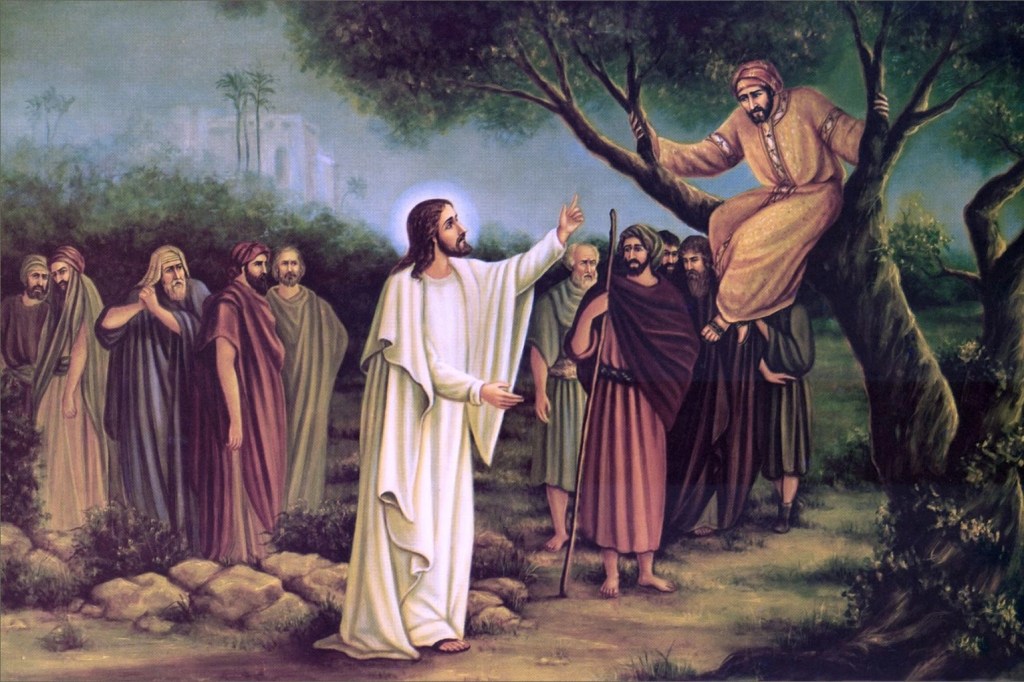
And Luke, described to us the limitations Zacchaeus had, not just his physical limitation of being a short man but also because of his hardened heart, his emotional wounds, his corrupt practices as a tax collector and insecurities. These prevented him to see clearly Jesus, when the Lord was about to pass by. But, these limitations of Zacchaeus did not discourage him to seek further the Lord. There was certainly, a deep longing in his heart. So, Zacchaeus ran ahead and climbed the sycamore tree that he may see Jesus clearly. And truly, Zacchaeus saw the Lord. And Jesus saw him and called him.
For the very first time in the life of Zacchaeus, he felt accepted and welcomed the way he was, thus, he felt being loved. Jesus addressed him with respect and with dignity without conditions and without pretensions. This encounter with Jesus, changed Zacchaeus completely because at last he was loved.
This attitude reminds us of every human heart’s desire to encounter the Lord. We are made for God. God is imprinted in our hearts as we are created in God’s image and likeness. This is what the Book of Wisdom remind us. And so, let us be conscious on that. Let us be aware that we desire and seek God.
Yet, in our desire for God, there will be things that will prevent us to see and encounter God. This is what we find in the story of Zacchaeus. Perhaps, our fear and shame of admitting that we have sinned prevent us in truly meeting the Lord. Fear causes us low self-esteem and to hide because we are afraid of being judged by others, and by the people around us. Shame also prevents us to hold God’s love in our hearts and his forgiveness because we feel that we are not worthy. Our emotional hurts from the past could also hold us back especially when they hardened our hearts to be welcoming of others like that of Zacchaeus.
Our arrogance can also prevent us in meeting the Lord. Our indifference stops us from true conversion. Let us ask then, ourselves, what are those things, addictions, or attitudes that may hinder us from truly seeking God?
Paul in his second letter to the Thessalonians, hoped, “that the name of the Lord Jesus may be glorified in us.” This means that through our very person, our thoughts, actions and works, the presence of our Lord may be revealed.
This is what Zacchaeus challenges us also. Like him, each of us has actually the capacity to overcome anything that holds us back to see God clearly. We are called to run ahead and overcome those attitudes that prevent us from seeing clearly Jesus. Let us look for a sycamore tree where we can climb over our sins and fear. Look for a friend whom you can share you own problems and struggles. Seek the guidance and direction from people who can truly help you. Come to the sacraments with a heart that truly longs for the Lord, because only then, that we are able to overcome those that prevent us from being near the Lord.
We too are reminded in the story that though our heart desires for God, but God desires more to see us, to be with us. Thus, the Lord is constantly looking and searching for us. Jesus was in fact searching for Zacchaeus, searching for a sinner, indeed, we are all the Zacchaeus in the Gospel that Jesus has been searching for. Jesus desires to be with us and that we will be reconciled to him and will be healed from our past hurts and pains. Let us allow then the Lord to search us, to find us and to heal us.
Hopefully, our encounter with Jesus will bring us also into that joy of forgiveness and assurance of love from God that we are forgiven, accepted and respected. This may hopefully lead us too to repair the damage that we have caused to others and to make amendments for our sins like Zacchaeus who promised Jesus to give to the poor half of his possessions and repay four times over those he extorted. A sign of true repentance and conversion and of a heart that has found what really matters most. Kabay pa.
A man once approached an elderly priest and asked, “Father, how come it seems that God does not speak to His people anymore? He used to speak so beautifully with such power and clarity to our prophets and apostles. But why is it that God seems no longer talk to us His people? Nagtatampo ba siya sa atin? Is he isolating Himself from us?”
For a minute the priest was just in silence, shaking his head as though he was in pain. He replied in time, “My son, it is not that God no longer speaks to us His people. Hindi sya nagtatampo sa atin. He is not isolating Himself from us. It is just that… no one these days can stoop down low enough to listen to Him. No one… can stoop down…low enough… to listen to Him these days.
At times, we also find ourselves like that man sharing the same question: “Why and how come God no longer speaks to us His people?” As we go through our lives doing our daily affairs, we do feel and experience at times the silence and absence of God. Nagtutulog ba ang Dios? Is God asleep? Nagtatampo ba ang Dios? Is God sulky? Is He isolating or distancing Himself from us?
Zaccheus in our gospel today must have felt and experienced the same silence and absence of God in his life. While doing his usual work of collecting and counting money in the treasury, Zaccheus must have asked the same question about God no longer speaking to His people. He must have also wondered about the silence and absence of God in our lives.
To the extent, that when he heard that Jesus is passing by, he decided to close his office, climbed up a tree, hoping to have a glimpse of Jesus, whom he must have heard of as godly person. Actually, he doesn’t want to be involved. He only wanted to “observe” Jesus and the crowd. So, while waiting for Jesus on the tree, perhaps he must be back then thinking about his favorite topic: his work, his money collections, his usual affairs & concerns.
As he passed by the tree, Jesus saw Zaccheus and asked him to “come down and hurry for I must stay in your house today”. Somehow Zaccheus got more than what he bargained for. All he wanted was just a glimpse to observe Jesus. Now, he got an audience and a home visit from Jesus. And, what is required of him is just to come down from the tree, invite Jesus in to his house, and take part in the life and mission of Jesus.
So how come and why God is no longer speaking to us His people? Why do we at times felt and experience the absence and silence of God?
Perhaps because, like Zaccheus, we become so concerned and comfortable about our day-to-day worldly affairs of being and striving to be always at the top of things and people. Like Zaccheus, perhaps we also don’t want to get involve and participate. We rather observe than serve the Lord and others. And like Zaccheus, we rather remain “at the top of all things” in our comfort zones, being labelled and stereotyped by others, – instead of being recognized as not only as Abraham’s descendant but more so as God’s children. So, why God no longer speaking? Perhaps it is because we are no longer stooping or kneeling down low enough to listen to Him.
The invitation of Jesus to Zaccheus: “To come down and hurry for I must stay in your house today” is a wake-up call also for us today: “to stoop down low enough to listen to Him”. For us then to experience the presence, voice, and lambing of God, instead of his absence, silence and tampo, we must learn to humbly listen to Him through His son Jesus Christ & be involve in His affairs.
This is a reminder that in life at times, we become too-far, too-high, too-much, too-numb, too-away, too-distant from God that we cannot anymore see, hear, feel, and experience Him. It is like our phones might be fully-charged but we have weak signal and out of coverage.
However, rest assured, like Jesus, God is always reaching-out to us, wanting to be in contact with us whatever happens, “for the Son of Man has come to seek and to save what was lost”. All we have to do & required of us is to come down from our pedestals & comfort zones, invite Jesus into our lives and eventually participate in His ever-present life & mission in our lives. In other words, Stoop Down… Low Enough… to Listen to Him.
Perhaps we may ask ourselves: “when was the last time I stoop or knelling down low enough to listen to Him?”
We learn last Sunday the most simple and very effective prayer of the tax collector: “O God, be merciful to me, a sinner” or simply the Jesus prayer: “Lord, have mercy”. May we also learn today from the prayer of prophet Samuel: “Speak, Lord, your servant is listening”.
Before Our Father, may we find ourselves listening in humility & poverty, so that God can contact-trace & reach-out to us for the better of us always.
Simon and Jude are two interesting characters among the chosen twelve apostles of Jesus. These two, Simon and Jude proved that their encounter with Jesus changed their entire life. Their ordinary life became extra-ordinarily wonderful though challenging.
Simon who was called “Zealot,” believed strongly in the importance of following the Jewish law. In his search and endeavor to become righteous and to stand for what is right and just, he encountered Jesus and realized that the Lord is the very fulfillment of what he was trying to follow and hoping for. Jude or Judas the son of James, also known as Thaddeus, is patron saint of desperate people, of those who feel that there is no one else to turn to. Jude earned this because of his witness to Jesus that despite his fears and inconsistencies, he allowed the Lord to transform him.
These two apostles must have been part of the many people who followed Jesus and wanting to learn from him, and be touched by the life of Jesus. These two, like many of those people longed for the presence of God to fulfill the desires of their hearts. This desire reveals to us of the human longing to be connected, be supported and be healed by God.
This longing is what Paul also trying to tell us in his letter to the Ephesians, he said, “you are no longer strangers or sojourners but fellow citizens with the holy ones and members of the household of God.” Paul expressed here the intimacy and closeness shared by people like Simon and Jude with God.
This intimacy and closeness with God is what Jesus also showed to us in today’s Gospel. Luke recounts that as Jesus called his disciples and from them chose Twelve Apostles, Jesus spent a night in prayer to God. Jesus commune with his Father in heaven.
Prayer, indeed, is a foundation of our relationship with God. Having a capacity and time to spend in prayer to God would allow us to see and recognize God’s heart and mind in the things that we want to pursue and to do. Jesus expressed this for he chose the twelve not just out of random, but Jesus must have built relationship with them, knew them by heart, and made them his very close friends. Thus, as Jesus spend a night in prayer to God, he also wants us to learn from him.
In prayer, let us allow the Lord to touch us and to encounter him just as Simon and Jude encountered the Lord. In prayer, let us allow ourselves to consciously spend a time with God to express to the Lord our thoughts and also to listen to Him. In prayer, let us also allow the Lord to shape and purify our decisions and actions. And in prayer, we may grow more intimate with Jesus, day by day. Kabay pa.
Are you carrying some burdens now which affect your family life? Struggling on how to move forward after an emotional breakdown? Overwhelmed by stress and your negative emotions because of the demands and pressures on you? Confused and troubled on how to remain a good and honest Christian in the midst of corruption and dishonest transactions at work?
These can be only some situations where we are in at the moment and finding ourselves entangled by one or more struggles. And experiencing challenges in our life, where do we draw strength? Where do we get wisdom and understanding? Where do we get inspiration and guidance so that we remain steadfast in our faith, attain a healthy way of life and maintain our healthy relationships with people?
St. Paul calls and reminds us today, “to pray at every opportunity in the Spirit” because in this way then, we will be able to “draw strength from the Lord and from His mighty power.” When Paul wrote his letter to the Christians in the city of Ephesus who were also in the middle of struggles in their faith, he was himself in the prison. Paul was already persecuted at this time and was chained by his captors. And so Paul was writing from his own experience of drawing strength from the Lord. Despite being chained, Paul’s mind, heart and spirit drew strength from the Lord through prayer.
Hence, Paul reminds us to draw strength from the Lord because of the many ordeals that we may face. Paul mentioned of the “tactics of the Devil” which may offer us the “easy way out or shortcuts of doing things”. There will be “struggles from the evil spirits” that will bring us into darkness and deeper into hopelessness.
In order to face such challenges, Paul offers us ways on how we could draw strength from the Lord. Paul mentioned at least five ways.
First, to stand fast in truth. This means that we are called to be careful with lies and deception that may sound true to us. That is why, always seek the truth, always seek Jesus.
Second, on righteousness. This calls us to be morally upright in our relationships, in our work and ordinary dealings with others. This calls us further to uphold honesty, fairness, and respect for the rights of others.
Third, readiness for the Gospel of peace. We are to promote understanding and harmony in our homes and communities, workplaces and organizations, hence, by being able to accept and welcome others. This calls us to preach, live and create a community that nurtures the Gospel of peace and not indifference and division, not violence and hatred.
Fourth, to hold our faith in God. There could be other alternatives in facing one’s trial that we may have. Others may succumbed to addictive behaviors, to depression or to guilt or to something or someone else that one could thought to be a source of comfort and strength. However, these will only bring us deeper into darkness and hopelessness. Thus, faith in God, and holding on to it, as Paul tells us, will bring us always into the light and true source of strength. We may not always understand God’s way and God’s wisdom especially when we are in the midst of pain and trauma, yet, faith in God is already our assurance.
Fifth, the Word of God. The Holy Bible is a gift given to us. The Lord reveals his Divine presence and the Divine plan of salvation written in the Holy Scriptures to remind us of God’s faithfulness. Thus, we are called to meditate on the word of God that we may discover further God’s desire for us and God’s invitation for us to grow.
Therefore, make the Lord as our rock, as the very foundation of our person, of our family, relationships, work and every endeavor in our life, as our Responsorial Psalm invites us today. In fact, even Jesus himself showed this to us as Luke described it to us in the Gospel.
Jesus indeed, faced a great ordeal in his ministry. There were influential and powerful people who were against him, who rejected him and wanted to kill him. This was the warning he received from some of the Pharisees who asked him to leave their area. They must have showed some concern to Jesus for telling him about the insecurities and evil plan of Herod to kill him.
However, nothing can disturb, neither can stop nor discourage Jesus. His very person and identity, his ministry and mission are all founded in the constant love and faithfulness of his Father in Heaven. Such confidence in Jesus grew and developed more through his devotion to prayer as Jesus would always find time to commune with his Father in heaven.
And so, we too are all called and invited today to take the example of Paul’s commitment “to pray at every opportunity” and to grow more like Jesus who is secured in the love and faithfulness of the Father. Kabay pa.






 A DOSE OF GOD TODAY