Category: Ordinary Time

  • NO ONE SHOULD BE DEPRIVED OF THE GRACE OF GOD

    NO ONE SHOULD BE DEPRIVED OF THE GRACE OF GOD

    February 1, 2023 – Wednesday of the Fourth Week in Ordinary Time

    Click here for the readings (https://bible.usccb.org/bible/readings/020123.cfm)

    God gives life, blesses life and renews our life. God never stops that. This is the reason why grace overflows so that no one will be deprived of the grace of God. The Letter to the Hebrew reminds us of this. It calls us to strive for peace with everyone because without peace what we shall have are troubles and bitterness in our hearts. As the grace of God overflows, the Letter also invites all Christian believers to “see to it that no one is deprived of the grace of God.”

    This means that our participation has an effect in making God’s grace to truly overflow and be experienced by all. Certainly, one can deprive oneself or others of the grace of God when the heart refuses God’s grace. Yet, why would a person refuse to welcome and accept something that is so wonderful like the grace of God? Is this even possible? Yes, this is very possible that a person will refuse to accept God’s grace because of a heart hardened by jealousy, false judgment, bitterness and hatred.

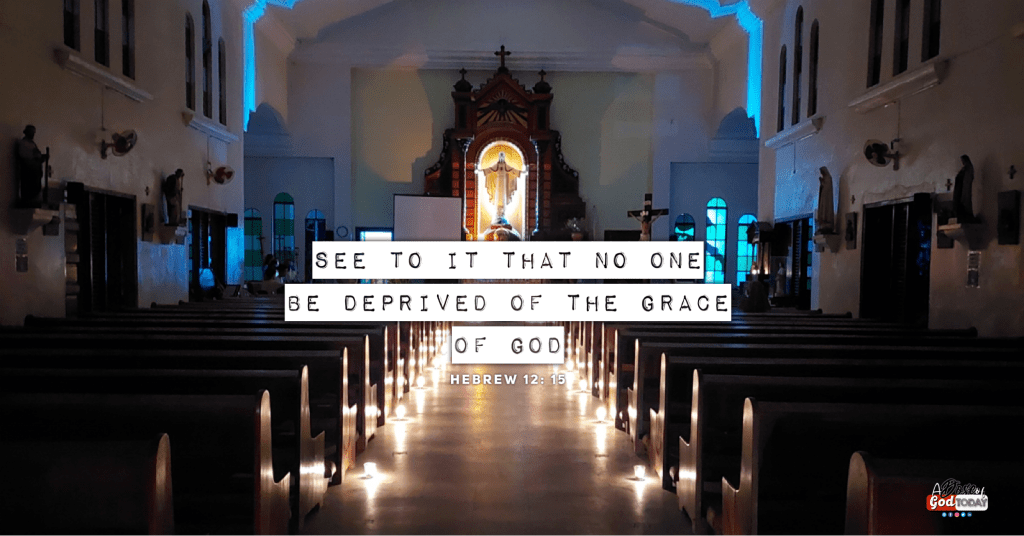
    As the grace of God overflows, the Letter also invites all Christian believers to “see to it that no one is deprived of the grace of God.”

    Let us take for example today’s Gospel story. Jesus who went home was welcomed with bitterness and hatred by his own neighbors. Jesus who did many miracles in other places was questioned and judged by the people. Their thoughts were merely based on the familiar background of Jesus of being a carpenter, being a son of Mary, being a brother to his cousins.  Outside of these, they failed to see that there was more in the person of Jesus. They failed to see the grace in the life of Jesus. As a result, the people took offense at him.
    They felt offended because they could not accept the opportunity of being graced by the person of Jesus who seemed to be only ordinary for them. This is how a bitter and hateful heart affects our relationship with others. All Jesus could do was to heal few sick people. It was not that Jesus did not want to do any miracle for them because of their bitter attitude towards him. Jesus just couldn’t because the people did not cooperate with the grace of God. They deprived themselves of the grace of God.

    Indeed, God can only work when we allow God to work miracles. The lack of faith of the people is a refusal of God’s grace. This tells us that God, though all-powerful, does not impose His power on us. God would rather invite us to allow Him to work miracles with us.

    Besides, the people expressed their non-cooperation with the grace of God through their lack of faith. This made Jesus to be amazed. It was just amazing for the Lord because the people have seen how the grace of Jesus’ life could do for them yet they still refused. The lack of faith in them was even reinforced because their hearts were filled with jealousy, false judgment, bitterness and hatred.

    And as the Letter to the Hebrews calls us, “see to it that no one is deprived of the grace of God.” This is the call for us today. Let us not deprive ourselves of the grace of God or deprive others. Let God’s grace overflow then, through us and through the gift of persons of one another.

    Instead of nurturing bitterness, hatred, jealousy and false judgment in our hearts, let us rather nurture an attitude that welcomes the grace of God through the gift of our persons. Kabay pa.

  • Being Blessed from God’s Perspective     

    Being Blessed from God’s Perspective     

    January 29, 2023 – Fourth Sunday in Ordinary Time

    Click here for the readings (https://bible.usccb.org/bible/readings/012923.cfm)

    How do we understand being Blessed? We usually think of a life that is blessed on the level of having material wealth, success, prosperity – like having a good family, a prosperous business, a successful career or a good paying job, or having a good health. We also believe that being blessed has something to do with having power and influence that a person possesses, with privileges and perks that we enjoy.

    Thus, as it was in the ancient times and until today, poverty is never a blessing, being in sorrow and in grief is never a blessing. Being powerless and oppressed, being sick, being rejected and persecuted is never a blessing. If we are experiencing such life, we consider ourselves to be cursed, weak and insignificant.

    However, the readings this Sunday are quite opposite from the standard of being blessed that we usually believe. Our human understanding of being blessed is different from God. Indeed, there is a need for us to understand being blessed and our life as Christians from Jesus’ perspective.

    The Gospel of Matthew gave us that perspective of Jesus that the Lord wants us to recognize and to learn. Matthew tells us that Jesus saw the crowds. Not just a crowd but crowds of people composed of groups of poor and rich, Pharisees, Sadducees and common Jews, sick and old, men, women, children, beggars, merchants, pickpockets and spectators, his own disciples and others who followed him faithfully.

    And Jesus saw the many realities of the people of his time. What he saw was not just limited with what can be seen from the outside. Jesus saw and realized the anguish of the people and the cause of their miseries perpetrated by those who took advantage of the weak and powerless. Jesus saw and realized how the social evils of greed, hatred, and indifference contributed to the senseless sufferings of the people. Jesus saw and realized how the people felt abandoned, in need of mercy and love, in search of justice and salvation, longing for a blessed life.

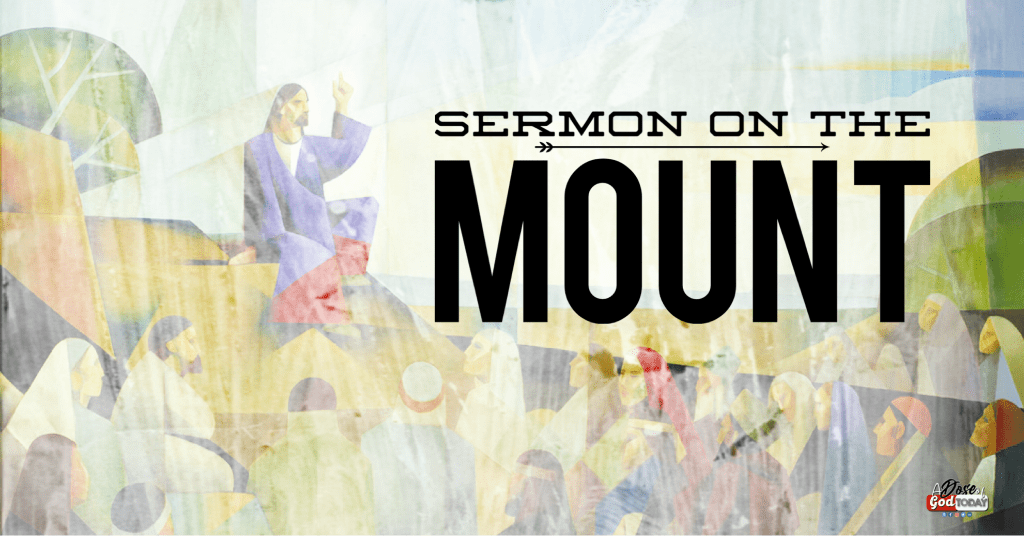
    This prompted Jesus to express what he saw and what was in the heart of God for His people. Jesus began to teach while sitting on a mountain which gave him the perspective of the Father. This Sermon on the Mount, as this is commonly called, is indeed quite symbolic. From this symbolism of Jesus teaching from the mount, the Lord evokes a different perspective of being blessed. Not anymore from our human perspective and standard, but from God’s eyes.

    In God’s perspective, the blessed ones are those who are poor, who are mourning and sick, the humble and unassuming, the powerless and merciful, those who are contented in life and those who are persecuted. But why? It is because in their poverty and difficulty, in their powerlessness and nothingness that they also realize their dependence and need of God. Indeed, such insecurities in life bring us to understand that we are so small in this world and we are in need of God’s grace. That is why, Jesus addressed these Beatitudes to the people, assuring them of his presence and assuring them of a blessed life in the Kingdom of Heaven. Though the Kingdom is to be fully manifested later, yet, being blessed is already experienced in the here and now.

    Thus, the very presence of God in our life is what makes us “blessed.” Since God favors those who are weak, poor, suffering, the sick and struggling in life, they are the ones who are blessed because they understand their dependence and need of God. God comes to us when we are ready to accept God in our life and to let God be our God there in our poverty and weaknesses.

    This is what Prophet Zephaniah reminds us in the first reading to seek the Lord which can only be possible through a humble heart that recognizes God’s presence and power. An arrogant and self-satisfied heart will never acknowledge God and thus, can be very vicious to people around.

    “God comes to us when we are ready to accept God in our life and to let God be our God there in our poverty and weaknesses.”

    Moreover, Paul in his first letter to the Corinthians expressed powerfully the wisdom and favor of God. He says to us, “God chose the foolish of the world to shame the wise, and God chose the weak of the world to shame the strong, and God chose the lowly and despised of the world, those who count for nothing, to reduce to nothing those who are something.”

    This indeed is a warning to those who in the standard of the world are blessed such as the self-satisfied and self-absorbed, the corruption-driven-rich, the powerful, the popular and the influential. Why? It is because the danger lies in the attitude of the heart that becomes independent from God, a heart that rejects God’s mercy and love. In fact, the Lord warns us when we tend to accumulate more wealth for ourselves at the expense of the poor, or when we gather fame and influence at the expense of others.

    Such attitude of the heart is filled with arrogance and self-centeredness that has no need of God. True enough, when we are so filled with ourselves and too satisfied of what we have gained and achieved, we don’t need God anymore. Our successes and we, ourselves, have become ‘gods.’ This leads us to worship our achievements, wealth, our power and ourselves. But then, all of these will corrupt us because we will never be satisfied. We will thirst and hunger for more wealth, recognition and fame which will also lead to our own destruction and those who are around us and those blocking our way to gain for more.

    Thus, through these Beatitudes, God invites us to claim that we are blessed and can bless others even when we are poor and insecure, in grief and in search for justice, in need of mercy and in showing mercy.

    This also calls us that as we understand being blessed in God’s perspective, then, the material wealth that we have gained, the influence and fame that we have received and the successes that we have achieved are signs of God’s grace and generosity. When we have these, may it lead us to humble ourselves and to recognize that these are gifts and we ought to share them to others. Thus, if you have received much, share the blessing to those who are in need. If you are enjoying success in life, share the experience with those who failed. If you have power and influence over others, then, use them to liberate the oppressed and to work for justice. If you have been shown mercy despite your sins, then, let that mercy flow in your relationships by becoming merciful to others. It is in this way that the Kingdom of Heaven will truly be present among us, and that we ourselves will not just be blessed but will also be a blessing to our community. Kabay pa.

  • Price of Faith

    Price of Faith

    January 29, 2023 – 4th Sunday in Ordinary Time

    Click here for the readings (https://bible.usccb.org/bible/readings/012923.cfm)

    A story once told about a beggar who owns nothing but his tin rice bowl to beg. He is particularly ashamed of begging that he would just bow his head & cannot even look at the eyes of others. But poverty & hunger usually force him to bully others for some money & food to survive. Like any beggars, he hopes to be free from his situation & dreams of becoming rich & wealthy someday. But he knows that his dreams of better living is just wishful thinking for he owns nothing except his old and dirty tin rice bowl – which he just inherited from his poor grandparents. Yes, he considers himself useless, hopeless, & helpless. A nobody & nothing at all, who even blames God & his family for his sufferings & poverty in life.

    Now while begging for some left-overs and coins in the market, one day a merchant approached him and asked to have a good look at his rice bowl. After examining his rice bowl, the merchant told him, “You idiot, you don’t have to beg. You should not beg at all because you are a rich person. Do you know that this rice bowl of yours is precious? This rice bowl is made of priceless gold. Just have this rice bowl clean and sell it to the highest bidder, you will be the wealthiest man in this town. You know what? If only I have money, I’ll buy it for 80 million dollars.” But the beggar just laughs off and would not believe what he heard from the merchant. He would not believe that his rice bowl is made of gold. That is why, until now, he continues to beg for alms from others… using his priceless golden rice bowl.

    There are times in our lives that we become like that beggar. The Good news of Christmas and the whole Christian life simply proclaims to us how blessed we are for God has already offered us His life and his salvation through his son, Jesus Christ.

    However, often at times we missed it, because we fail and even refuse to recognize the blessings, to the point that we do not accept the importance of the graces God has given us. It so happens that we are not contented with, and we even feel ashamed of God’s presents. Pre-occupied with our own selves, our own concerns, biases, and expectations, mostly we are blinded from the value and sacredness of God’s graces and blessings given us. 

    This is what our readings are trying to tell us today. It wishes to remind us, especially Jesus in our gospel today, that we should be awake and be aware that people who are poor, humble, helpless, weak, oppressed, and most abandoned find favor in God’s eyes. Because of their deep faith and need for God, and their acknowledgement of Jesus, as God’s gift, they are blessed and worthy of God’s kingdom.

    In our gospel today, we hear the Beatitudes. Jesus announced how blessed already we are – not for being poor, humble, helpless, mourning, weak and abandoned, but because God finds favor in us. We are blessed then because of God’s gift of our faith in Jesus, and not because of our poverty, humility, weakness, persecution, and abandonment. As our world prefers wealth, popularity, power, & prestige, we are reminded that God rather chooses & favors people of great faith and trust in His Son, our Lord Jesus Christ.   

    Here, Jesus encourages us to recognize and have confidence on the value of our Christian faith in life. God has already given us our Christian faith – our way of life and salvation. We must not downgrade it but instead, recognize and value its importance into our lives today. Jesus reminds us that Blessed are we and those who welcomes and follows Him for God has already endowed us with enough faith to redeem us & live our lives meaningful now & always.

    Remember his first message proclaimed: “Repent for the Kingdom of God is at hand” that is – Change your ways… not because of our sins and mistakes but because God’s grace is here with us now. In other words, “Behave for God’s grace is Here with You”. And Now Jesus is telling us the Beatitude – proclaiming how blessed and lucky we are  -not only because we behave well, but also because God finds favor on us who have faith & trust in His son & have welcome Him into our life.

    Through the Beatitudes, Jesus is somehow proclaiming to us how Blessed and Fortunate we are who owns and treasure our golden rice bowl of faith for we are already in God’s favor. In other words, Worthy, Blessed and Fortunate are we who willingly welcome, value, and believe in Jesus, God-given gift of salvation to us, for God’s kingdom is already & always upon us. Priceless then is our Christian faith in Jesus for God finds favors in us, who believes & trusts in Him.

    Perhaps we consider these days on how maximize of own rice-bowl of faith. Do we make use of our faith just to beg… OR to honor & value Him who offers & presents us God’s favor?

    We pray then that we must learn how to see, recognize, accept, and treasure our God-given Christian faith now & always.

  • Better Anew

    Better Anew

    January 22, 2023 – Third Sunday in Ordinary Time

    Click here for the readings (https://bible.usccb.org/bible/readings/012223.cfm)

    If and when given another chance in life, would you do it again or would you do it anew? Would you live life as before or much better than before?  Surely, if and when given another chance in life, we would hope for life anew than life again, we would aspire to live life much better than before rather than as it was before. We know however that for this hope and aspiration to fulfill, we must change our old ways and try to live life differently as before.

    The first call of Jesus is the call to repentance. Jesus began his public mission with an invitation: “Repent for the Kingdom of Heaven is at hand.” His preaching begins by calling on all people to repent and embrace the Good News of God’s kingdom. It is easy for us to understand that this call to repentance is directed toward sinners. Even Jesus himself had difficulties to communicate this call to good people than with sinners. Why? Because the hardest people of all to change their ways are the good people. They simply don’t see any need of conversion. They only think that as sick people need healing; only sinners need repentance. But actually the call to repentance is a call for everyone, an invitation for all, good or bad you may be.

    For what does repentance mean?

    To repent means to feel dissatisfied with oneself and longing for something better with one you have right now. There must be a sense of something is wrong, or at least something is lacking or missing in one’s life – A feeling of discontent with what is happening with one’s life.  To repent is not only to be sorry for what we have done but also what we have failed to do for our lives. Usually repentance begins in the realization that we are not what we could or should be; or we are not what we choose to be and supposed to be. Repentance then is borne out our longing for a much better life than as it is now.

    To repent would also demand openness, honesty, and above all courage with oneself – Courage to put on end to self-deception, and courage to confront painful self-reality. Surely, it takes a lot of courage for a person to line up for confession, admitting one’s guilt, asking forgiveness, and resolving to change. And sometimes, it is easy to be sorry for one’s sins than to admit mistake, saying: “I sorry, but…”. It is more difficulty to admit one’s mistake or shortcoming, “ I am wrong..” than to ask forgiveness, “I am sorry”. Repentance then is to take responsibility for your own being wrong, unwell and lacking.

    To repent is to make a decision to conversion that is to change oneself. And to make such decision is not an easy task, for it entails a lot of responsibilities. Human as we are, we do tend to pass the bucket to others. As much as possible, we tend to escape from making a stance or commitment. We rather blame others for the faults, which we should have been ours to make. However, whatever your decision today, whether to choose life or death, to help or exploit oneself or others, to do good or evil deeds, to accept responsibility or blame others, mirrors your very own identity, your conviction and commitment as human persons. As the saying goes, “Kon gusto mo ng pagbabago sa buhay, umpisahan mo sa sarili mo. If you long for change and a better life, begin with oneself. Conversion, Renewal or Redemption starts with oneself.

    In as much as it is a heavy task to take or a rough road to travel, repentance is a very positive experience. True, to repent is to admit that all is not well with oneself and to change oneself. But to repent is also to discover something new and wonderful about oneself. It means opening up and acquiring new vision, seeing wider perspective, opening up others options and possibilities, challenging one’s values, not being tied up with biases and prejudices and seeing things anew. In other words, it opens up the way to a new life – to the kingdom of heaven at hand. Repentance could be an exciting and joyful adventure to follow Jesus.

    This is what repentance did to the apostles when they responded to Jesus’ call for repentance. Inasmuch as it staggered them from their old convictions, confronted themselves, left their nets and followed him, it offered them also a new heaven and a new earth, the Kingdom of God – a new hope in life.

    Remember: Faith requires repentance, because to repent is to change our ways, our lifestyle and be converted towards the Lord’s way. To change is to grow. To grow is to live life to its fullness. And to live life is to believe in the Lord’s offer of eternal life.

    By the way, in life we don’t live once. We die once in life. We live life everyday. So we are given everyday always a chance to live life anew and not just again, better than just same as before.

    As the Lord lives with us and we live with Him, may His offer of God’s kingdom dwelling in us be responded by our genuine conversion and repentance as well as by our discipleship. Amen.

  • What gives you hope?

    What gives you hope?

    November 24, 2022 – Thursday of the 34th Week in Ordinary Time

    Click here for the readings (https://bible.usccb.org/bible/readings/112422.cfm)

    It’s gloomy and depressing, filled with death and destruction. Chaos is overwhelming and seems to be there is nowhere to go but a horrifying end. These are the images that we could imagine as the Book of Revelations and the Gospel of Luke describe today the end of time, the time of punishment and wrathful judgment, a time of horror and deadly calamities.

    John, in his visions, foretold the end of a great ancient nations of Babylon, who indeed, was once the superpower of the world. Babylon conquered many nations and peoples, plundered and exhausted their wealth. However, Babylon will end. It will be destroyed. Luke spoke as well of the end and destruction of Jerusalem, a great city, whose temple was adorned with gold and precious stones. The city will also be destroyed and its people will be scattered. Indeed, these happened and what history tells us. Babylon is nowhere to be found again. Jerusalem and its temple was destroyed. And those Christians during the time of Luke, witnessed this. With these images of death and punishments, horror and chaos, where shall we draw courage to hold on to faith? What shall give us hope, then?

    Though John and Luke began with those terrifying events and scenarios yet, both also gave a glimpse of hope and salvation. John, in his vision again said, “Blessed are those who have been called to the wedding feast of the Lamb.” This is the prayer that the priest pronounces as we are about the receive the Body of Christ in the Sacrament of the Holy Eucharist. The Lord destroys evil and all those that corrupts life, yet, God through Christ, welcomes us into his presence. This is salvation!

    Luke, further, reminds us in the Gospel, “stand erect and raise your heads because your redemption is at hand.” Again, the Lord shall judge and bring to an end what is evil and all those who rejected God and claimed to be god. The Lord shall come to rescue His people and bring them to safety and peace. This is hope!

    Indeed, as the readings today seemed to be dark and terrifying, yet, the Lord gives us hope that the end is something not to be afraid of. The Lord in his faithfulness remains for us and with us.

    This is the spirit that St. Andrew Dung-Lac and his companions showed us, whose memorial we also celebrate today. This Vietnamese priest and all those who together with him never gave up that hope to be taken away from them. Even in the midst of evil, persecution and death, they remained steadfast in their faith because they truly believed in God’s faithfulness.

    Let this give us courage. Let this inspire in us, hope. Even when we are facing so much difficulties in our life, in our relationships and in reaching out our dreams in life, may we find comfort in the presence of God who abides in us. When we are persecuted, hated and misunderstood, may we find courage and hope in the Lord who promised not leave us alone. Kabay pa.