Category: Ordinary Time

  • GRACE IN OUR SCARS

    GRACE IN OUR SCARS

    April 13, 2023 – Thursday within the Octave of Easter

    Click here for the readings (https://bible.usccb.org/bible/readings/041323.cfm)

    What scars do you have in your body? And what scars do you have in your heart? What are the stories behind your scars? We both have physical and emotional scars. The physical scars in our bodies are perhaps because of accidents that happened to us in the past. Or other surgical operations that people went through. On one hand, our emotional scars cannot be seen but hidden within our memories which may be evident in the way we relate with others, or in the way we look at our life and the world, or in the way we express ourselves.

    Indeed, every scar would remind us of pain or even of joy. Some scars may become insignificant through time. Other scars especially the big and serious ones may remain bothersome to us even though the pains were gone. The trauma that we have been through in the past could sometimes still shaken us at present or even has shaped us to become who we are today.

    Emotional scars compared to the physical ones carry more weight and longer time to reconcile and heal. The stories behind our emotional scars can also sometimes bring back old memories of pain and sadness. Yet, it is also possible that those scars we have, whether physical and emotional, can become signs of victory, of growth, of wonder, of beauty and even of grace.

    Such possibility of turning our scars into grace is what has been told to us in today’s Gospel. Jesus appeared before his disciples. He greeted them with peace because their hearts were filled with fear and troubles. The very thought of the death of Jesus brought so much sadness and fear into the hearts of the disciples. Because of this, they could not believe that Jesus is alive and in front of them.

    In their disbelief, Jesus invited them, to look at his hands and feet. Jesus said, “touch me and see.” Jesus wanted the disciples to touch and see that indeed he bore the scars from the wounds he endured at his crucifixion. To touch and see the scars of Jesus, those signs of wounds and of his death, means to be able to behold the grace of God.

    This tells us that the resurrection of Jesus has made those scars, now, as signs of victory, of wonder and of grace. Those scars remind us that Jesus went through suffering and he knows very much the feeling of being in pain, being humiliated, being abused and being maltreated. Those scars revealed the cruelty of sin and evil, of human hatred and indifference. Yet, beyond those scars also is the grace of God that brings new life and new hope for all.

    Thus, as the disciples were invited by Jesus to touch and see the scars in his body, the Lord also calls us to look at our own scars. We do have our own scars. Do not deny or hide in forgetfulness those scars in us. The very scars we have, can become opportunities where God shall bring graces to us. Through our own scars, we shall also find healing and life, transformation and hope.

    Hiding in forgetfulness and denying that we are scarred and broken will not help us. These attitudes will only bring us into more fear and sadness. Our heart will remain fearful and troubled like the disciples who were in hiding.

    As we allow the Lord to work wonders in us and make his grace be revealed through our own scars, may we also experience today the grace of new life through his resurrection. Hinaut pa.


  • God is a Loving Parent

    God is a Loving Parent

    March 22, 2023 – Wednesday of the Fourth Week of Lent

    Click here for the readings (https://bible.usccb.org/bible/readings/032223.cfm)

    Each of us has a father. Biologically, we need a father and a mother for a child is only born out of a male and female. As we grow up, we have different experiences with our parents and with our fathers especially. Not all of us have experienced a very good father who spends enough time to be with us, who will support us constantly as a child.

    Some of us even may have painful memories particularly when we talk about experiences with our fathers. Others might have actually experienced being abandoned by their father that caused them pain. Others might have fathers who were always away because of work that made a deep longing of their father’s presence. Others might have experienced also with a father who was abusive and irresponsible giving them deep emotional wound.

    Unconsciously, our experiences with our father has a connection on how we relate with God whom we believe as a Father to us. If we have a very good experience with our biological father, then, it might be easy for us to believe in a loving and merciful Father in heaven. However, if we have painful and traumatic experiences with our biological father then, sometimes that create doubts and hesitations to truly believe in God the Father who is loving and forgiving.

    Personally, though my father was indeed responsible, he too was quite strict when I was growing up. That experience of mine was carried on as I related with God. I too believed that God was like my father who was very strict. I should always be a good boy or else I will be punished. This means that our own experiences especially our negative and painful experiences with our fathers can sometimes prevent us to recognize God’s true character as a father to us.

    It is good for us, then, to reflect on the readings today as they reveal God’s true character as a parent to us.

    The Book of Isaiah tells us about a God who is so passionate about us. Isaiah tells us that God is like a parent who brings comfort to us, who is there to flatten the mountains so that life won’t be too difficult for us. Isaiah uses the image of a mother who carries her baby in the womb. A mother is always connected with her baby. However, a mother may forget about her baby but God will never forget us. God remembers us because God always carries us.

    This confidence to a loving and passionate God is expressed in today’s Gospel. Jesus tells us about how he loves his Father so much. Jesus shows his affection to the Father who will never leave him alone. This expression of Jesus is just a confirmation of that passion of God the Father to Jesus.

    Thus, this is the invitation for us today as revealed in the scriptures. Though we might have painful experiences with our own Fathers or mothers or with those who became our parents in the absence of our biological parents, the readings call us to be confident in God as a loving parent to us.

    Just like Jesus, let us take confidence in God who is both a Loving Father and Mother to us, who promised to be with us, who will never leave us and will always be there for us. This is how God is so passionate to you and to me. We may come to believe in this.

    When we ourselves are parents or standing as a foster parent to a child, may our parenting be an image of God’s unconditional love to that child and to our whole family. Kabay pa.

  • Meeting Jesus

    Meeting Jesus

    March 12, 2023 – Third Sunday of Lent

    Click here for the readings (https://bible.usccb.org/bible/readings/031223.cfm)

    Common rural village people teach us a simple wisdom: “If and when the well runs dry, dig deeper. (Kon ang atabay mahubsan, palawoman: Pag ang balon natuyo, hukayin ng malalim.) If we reflect on this deeper, these practical words tell us more about waters or wells but also offers meaning and wisdom about life, relationships, and even faith in God.

    We do know how important water is in our life. Water is our basic human need and our life-giving source itself. Our physical body as well as our world is mostly composed of water. Life without water is no life at all. Because of our need for water, wells and springs are also important in life as sources of life-giving water.  Unlike now in urban cities where it is enjoyed conveniently at home with tap water on the faucet, usually in rural villages, people have to go and gather in wells and springs just in order get and have water.

    In and through wells and springs, we get access to natural water that offers life not only to individuals but to the whole community, as well. Water from the wells and springs bring us together before God’s life-giving water and with one another.

    Usually wells and springs of the village is the best place to meet people in the village. Whenever I am on mission in rural areas, I usually go to the wells or springs in the village for meeting and integrating with people. Not only there where I could clean myself and drink water – satisfy my need, there I could also come to experience and know the people’s lives and faith more.  Simply put, water wells and springs bring about meeting, encounter, well-being, relationship, community, and communion. For us then, to have an access to and get in touch into God’s life-giving water, we must also go and gather together before God’s wells and springs.

    In life we also do experience dryness. Like wellsprings atabay, there are moments in our lives that we feel dry and thirsty in life and in our relationships with God, others and even oneself. There are periods in our life that like the Israelites, we grumble before the Lord about our life-miseries, challenges, and problems, doubting “Is the really Lord with us or not?” Yes, we do have moments of spiritual & personal dryness in our relationship with ourselves, others & God in life.

    However, experiences of dryness in life and in our relationships could be an invitation and opportunity to go and be connected with God himself, the source of life. In our experiences of life’s dryness and thirst, As the saying goes “If & when the well runs dry, dig deeper” “Kon ang atabay mahubsan, palawoman. Pag ang balon natuyo, hukayin ng malalim.  Thirst for God’s love and/or Dryness in our life and relationships could also be the opportunity to dig deeper, which is, the right time and place to examine our life and relationship, be in touch with our realities and ideals, at the same time deepen our relationships and commitments. In other words, dryness in life are moments of encounters or meeting points where we can experience for ourselves our relationship and commitment with others and with God.

    The gospel we have just heard is an account of the meeting of Jesus with the Samaritan woman at Jacob’s well. This is one of the most touching encounters in the gospels which pictures God’s love and human conversion : a story of God reaching out to us and Us reaching back to God through the person of Jesus.

    At Jacob’s well, Jesus expressed God’s thirst for our faith and love for Him as well as offered us God’s life-giving or love-giving life. At Jacob’s well, the Samaritan woman became in touch with her own dryness and thirst, her need for God’s eternal life at the same time quenched her thirst in her encounter-meeting with Jesus. As she met Jesus at Jacob’s well, the Samaritan woman began to know and accept herself deeply (from being a Samaritan, descendant of Jacob, a divorcee to a believer) as well as she began to know and accept Jesus deeply (from a Jew, Sir, Prophet, Christ). At the Jacob’s well, Jesus recognized and satisfied the woman’s need for God’s love, and the woman recognized and fulfilled Jesus’ need for our faith in Him. 

    In dryness and abundance of water, there may be a lot of positive things will happen at wellsprings of life. Usually at the wellsprings of our life we experience, renew, and deepen our life-commitments and relationships with one another and our faith in God through Jesus. 

    The season of Lent is also the wellsprings of our Christian life. It is the appropriate place and time to once again in encounter and experience God’s life-giving saving act through the Paschal Mystery of Jesus Christ.

    So again, If and when the well runs dry, don’t look and no need to dig for another well. Just dig your own wellspring deeper and be in touch and be quench once again with your original life-giving water.

    We pray then that the Lord may grant us the grace to know you deeply, love you more dearly and follow you closely during this another new Lenten Season of our Christian faith & life. Amen.

  • SEEK LOVE, SEEK PEACE

    SEEK LOVE, SEEK PEACE

    February 19, 2023 – Seventh Sunday Ordinary Time

    Click here for the readings (https://bible.usccb.org/bible/readings/021923.cfm)

    As my niece was growing up, it was also the time that we directly and indirectly taught her ways of behaving and of different attitudes, which may be good or bad. Unconsciously, there were many things and ways that we taught to the child that were not really good. For instance, when she would misstep and fall, she would cry because of pain. Our immediate response is to comfort the child and tell her, “hapaka ang salug aron makabalos ka” (hit the floor so that you may have your revenge).Then, this would somehow bring comfort to her as if hitting back would take away the pain.

    A situation like this can easily be taken for granted since this looks and sounds normal to us. However, what we are not aware of is that we are actually introducing a very unhealthy attitude to the child. In fact, this kind of situation would only teach children the “culture of revenge” and the “culture of hate.” It is a form of teaching a child not to be comfortable with pain but to take comfort with vengeance. Hence, this is an unconscious way of teaching hatred to a young heart. Yet, is this the attitude and way of life that Jesus is teaching us as his disciples now?

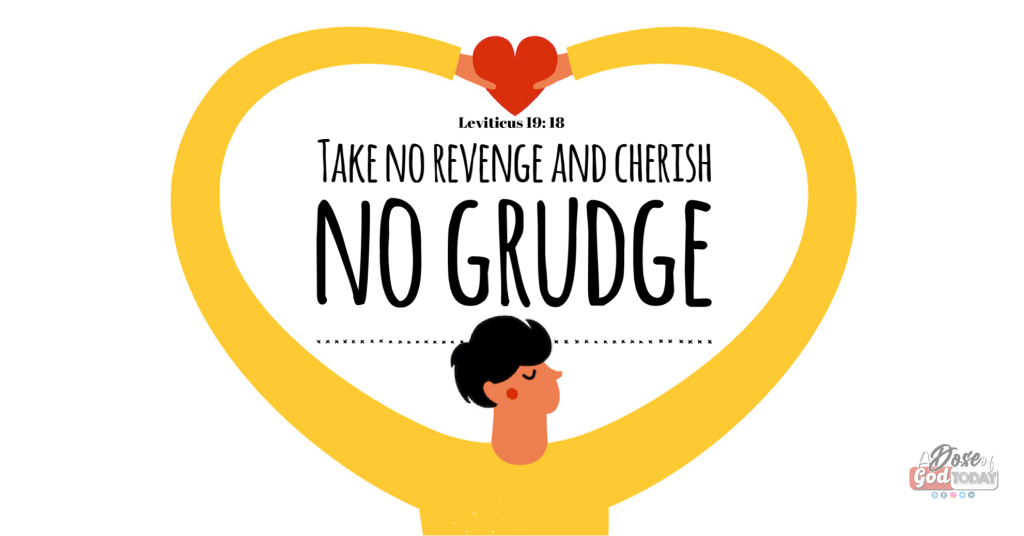
    Well, we have heard from the Book of Leviticus what the Lord said to the Israelites, “You shall not bear hatred for your brother or sister in your heart… Take no revenge and cherish no grudge against any of your people. You shall love your neighbor as yourself.” The Lord God commanded this because this is how the Lord shows his heart and compassion to the people despite their unfaithfulness and sins. Moreover, the Psalm today also expressed God’s nature, “The Lord is kind and merciful.”

    This nature and attitude of God is the call for all of us Christian believers. Jesus also tells us, “be perfect, just as your heavenly Father is perfect.” This perfection, which is much better translated as completeness or wholeness, that Jesus said, is meant to love all, not just loving those who are close to us but also those whom we do not like, those who caused us pain and shame, those who betrayed us and those whom we hate and those who have hatred against us.

    Indeed, it is also true that this sounds impossible to do especially if we would follow what Jesus said, “when someone strikes you on your right cheek, turn the other one as well.” This really sounds ridiculous and outrageous not just to us now but also to people who listened to Jesus at that time. We can possibly ask, “How can I love someone who betrayed me? How can I love the person who abused us, physically, materially, emotionally o sexually?

    Let us remember that it is certainly true that there may be people who caused pain to us and even unrepairable damage to us, but then, let us also be honest that we too, may have caused pain and damage to others in one way or another, or in many ways which we may not be totally aware of.

    So, what is this message of Jesus really all about? Love and peace, not hatred, not vengeance, not violence. This is what Jesus revealed to us. This is the very experience of Jesus with his Father in heaven as well. Indeed, the Lord God is not a violent Father. The Lord God cares for all sinners and righteous alike. And that God’s power rests in unconditional love and not in bringing us to damnation and eternal death because the Lord is slow to anger and does not hate.

    From this realization of God’s nature and attitude towards us, we are called to grow and become more like Jesus – in the sense, that we become “a complete person or a whole person” as Psychology says. Being a complete and whole person means a person who is healed through forgiveness, love and peace, who does not nurture grudges and not being controlled by anger or hatred.

    Indeed, we are called to get rid of that culture of hate, revenge and violence because healing, reconciliation and peace are not possible when we linger on these attitudes.

    This challenges us now that in our relationships, as we may face the possibilities of being hurt, let us also do our best not to keep feeding our hearts with hate and the thirst for revenge and violence. Let us also consciously teach our children of the culture of forgiveness and not the culture of hatred. Kabay pa.

  • All-Ready LOVE

    All-Ready LOVE

    February 19, 2023 – Seventh Sunday in Ordinary Time

    Click here for the readings (https://bible.usccb.org/bible/readings/021923.cfm)

    In the comedy film Evan Almighty, God said to Evan Baxter: “If you want to change the world, build an ARK.” Only later after the fuss of exactly building a big ark that Evan Baxter realized that an ark simply means: one single act of random kindness at a time, i.e. one single ARK (act of random kindness) at a time.

    Days after Valentine’s Day, with all the decorations around us, we could say that until now, love is still in the air or we still got valentines’ day hang-overs upon us. Valentine’s Day is the day we honor and celebrate LOVE as we experience it in Life.

    Human as we are, we know how it is to love and be loved by others. We celebrate Valentine’s Day because we live life with love, in love and out of love. We know that Life without love is worthless. Though it’s a constant challenge, living life then with love, in love and out of love make life more meaningful.

    In our gospel today, while preaching to His disciples His Sermon on the Mount, we get a glimpse of Jesus’ take on our experience of love in life. Here He invites us that in our loving, we must “love our enemies, go another mile, offer your cloak and other cheek as well and be perfect as our Father”. Surely, we are already familiar with these words, which are nice words to listen. But easily falls into deaf-ears and slogans because they are difficult to practice. The kind of love Jesus is asking us here are very unusual and demanding, and even Stupid Love, as Salbakuta (Filipino rap-band) would say.

    Jesus knows already that human as we are, we are loved and loving people. But now he requires us to go beyond with our human ways of loving and follow His and God’s way of loving, i.e. Christian Love: To love one another AS (like, same as) He and the Father has loved us. 

    But why is Christian Love, the love Jesus requires of us, is difficult and demanding in our experience of love in life? What makes LOVING AS JESUS LOVES, unusual, hard, and tough, and even stupid?

    Though we live life with love, in love and out of love, human as we are, we do have the tendency to place love at the distance both in place and time. We place love at the distance in time, because we are more willing to postpone doing good than do bad things right away. Easy for us to delay faith, hope and love but attend readily to fear, greed and anger. Why only during Valentine’s Day you remember and celebrate that you are loving and loved, and that you need love in life?  Yes, we do tend to postpone love, but we also know in our experience of love that love is for Now or Never.

    We also tend to place love at the distance in place. We rather love others from a distance and at a distance. Why is it that we have more virtual friends in Facebook and others social media than our actual intimate personal friends? Why is it that we are more open, chatty, and relax in Facebook and messengers but silent and awkward face to face with others? This is because we are afraid to love because love makes us vulnerable, exposed, and weak before others. However, if we are afraid to love then it is not Love but Fear.

    In other words, though we tend to distance from love, Love really is Here and Now, not There and Later.  

    For Jesus then, Christian love, to love and be loved like His and the Father’s, is Here and Now – not there and later, not at a distance and from a distance. Love for Jesus then is and should be an All-READY LOVE – an ARK, act of random kindness. This is the kind of Love Jesus requires us to live and practice in life in the here & now. If we want to change our world with Love, we must change our love into Christian love by building our love into ARK – by living in one simple Act of Random Kindness at a time.

    Unusual, difficult, tough, and stupid it maybe, Loving others same AS (like) Jesus and the Father love us in the here & now, & not there & later, leads us to our redemption towards God’s presence in our lives.

    May we be known as Christians, by our love here & now.  Amen.