Category: Ordinary Time

  • Building Life on what Lasts

    Building Life on what Lasts

    November 25, 2025 – Tuesday of the 34th Week in Ordinary Time

    Click here for the readings (https://bible.usccb.org/bible/readings/112525.cfm)

    Tomas loved collecting shiny things. He had always new gadgets, loud toys, and flashy decorations. His small house sparkled with many things, but nothing he owned actually ever lasted. One day, his old neighbor Nanay Cita invited him for snacks. He saw how her house was plain. Yet, something was different. It was rather filled with laughter, stories, and warmth from her family members and other neighbors. Tomas realized that her joy came not from flashy material things, but from people and moments lovingly shared.

    Recently, when a typhoon hit and flooded their community, his many shiny items broke and gone. While he felt devastated, Nanay Cita and other neighbors came to help and brought hope to others. This was how Tomas finally understood that what truly lasts are relationships, kindness and simple joys.

    Today, in our first reading, Prophet Daniel interpreted the vision of King Nebuchadnezzar. It was a dream of a great statue made of different materials. Yet, all of which eventually crumbled when struck by a small stone. Daniel told us that this stone represented the Kingdom of God. It seemed small and humble. Though it was unnoticed by the world, it was the only thing that lasts forever. Indeed, kingdoms rise and fall, powers come and go, but the Kingdom of God stands firm through all ages.

    Jesus, in today’s Gospel, echoed this truth. While the disciples admired the beauty of the Temple, Jesus reminded them of an important lesson. Even the most impressive earthly things will one day pass away. What endures, Jesus said, is not the expensive stones of the Temple. What lasts is the steadfast trust of those who remain faithful. They stay committed in the midst of trials, challenges, and uncertainties in life.

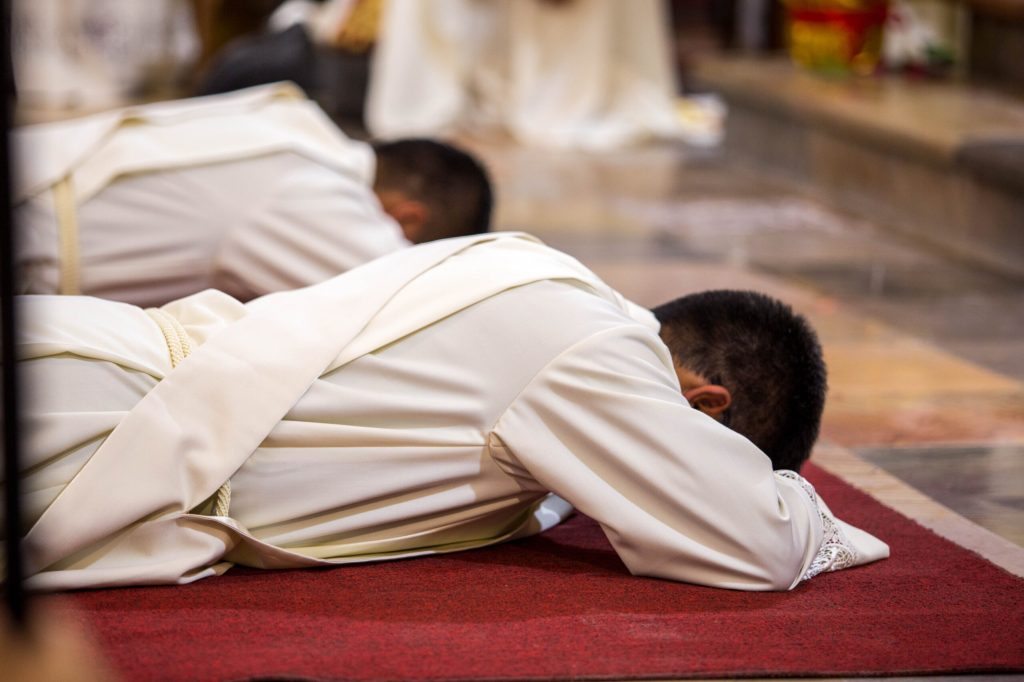
    Today these readings also speak deeply to my heart as I celebrate my 8th Anniversary of Priesthood. As I look back, I see many moments of weakness. There were many moments of unworthiness. I felt pains and hurts. There were times when I felt like that fragile statue in the king’s dream. It was easily shaken and easily broken.

    And yet, by the grace of God, I remain and still finding joy. Not because of my strength, not because of my abilities and potentials but because of God’s faithfulness. The stone that never crumbles is the unwavering goodness of God to me and to everyone whom I have encountered in my journey as a priest. This has been the foundation of my priesthood.

    If there is anything my eight years have taught me, it is this – God uses weak instruments. He chooses broken vessels. He works through imperfect servants so that His glory and not ours, may shine and bring life. This is what I witnessed, every time I felt tired, God renewed me. Every time I felt unworthy, God reminded me that the call is His, not mine. Every time I doubted, God remained faithful.

    I realized that certainly, this is not just my story. It is the story of every believer who tries, fails, rises and hopes again, and continues to walk with God.

    In fact, the world tells us that we must be strong. We must be impressive. We must be powerful like the mighty statue in the vision of the King Nebuchadnezzar. However, God tells us, Just stand on the Rock. Stand on Me.” This is an invitation to find God as our true strength, our refuge and our security.

    Now, as we near the end of the liturgical year, these readings invite us to reflect: What in our lives is temporary, and what truly lasts? Are we building a kingdom that will one day crumble? Or do we place our trust in the Kingdom of God that cannot be shaken?

    Today, I thank God for eight years of priesthood, not as a journey of perfection, but a journey of God’s unwavering mercy. I ask you to continue praying for me. Please pray that I remain faithful to the Kingdom of God that lasts forever. May I always find joy in my ministry and bring life to others.

    May the Lord strengthen all of us to trust not in the passing things of this world, but in the enduring goodness of God.  I leave you now two simple and practical takeaways.

    First, build your life on what lasts. Spend more time each day on prayer, kindness, forgiveness, and love. These are the things that remain.

    Second, trust God even in your weaknesses. Whenever you feel unworthy or discouraged, whisper a simple prayer, “Lord, You are my strength. I stand on You.” Hinaut pa.

  • The Time of Fulfillment

    The Time of Fulfillment

    November 16, 2025 – 33rd Sunday in Ordinary Time          

    Click here for the readings (https://bible.usccb.org/bible/readings/111625.cfm)

    How would the end of time look like? Last October, the devastating earthquake shocked many in Cebu. We have seen in the news how our brothers and sisters were trying to survive after their houses crumbled in few minutes. The aftershocks were terrifying. The scarcity of food and water became their next horror. But thanks to many generous donors, hundreds of individuals and groups rushed to bring aid to those who were affected by the earthquake.

    However, just few weeks ago, two typhoons came, Tino and Uwan. The catastrophe of both were horrifying. Cebu was struck again. Our brothers and sisters hoped to survive the super typhoon Uwan in many parts of the Visayas and Luzon. Thousands were helpless waiting for rescue at their rooftops. Many also perished and were drowned by the raging waters.

    Few days ago, +Nanay Mamai, one of the elders in our Catholic Community in Marawi died. She was one of the Christians who were hostage during Marawi Siege together with the late Fr. Chito Suganob. Yet, during her funeral wake, her nephew, +Dodong, who was her constant companion during our Sunday Mass, also died of heart attack.

    Suffering, pain, sudden deaths – these are the recurring scenarios that indeed, terrify us. Thus, many of us would perhaps express fear of the end of time and imagine the destruction of the world. There will be calamities and unimaginable tragedies.

    With all these suffering, pain and death around us, the readings on this 33rd Sunday in Ordinary Time though seemed to have the same horrifying images, invite us to look and hold on to hope, to a sure hope founded in our faith in Jesus.

    The first reading from the Book of Prophet Malachi prophesied about the destruction of the evildoers. In the Gospel of Luke, Jesus described the signs that will come like the powerful earthquakes, famines, plagues, wars, and persecutions.

    However, does the end of time really mean to be terrifying and horrifying?

    To answer this question let us see closely the prophecy of Prophet Malachi and the words of Jesus in the Gospel of Luke. Let us, then, discover God’s invitation for us on this Sunday.

    The prophecy was addressed to all the Israelite who have returned from exile. However, at their return the prophet saw how the leaders had become corrupt, abusive and indifferent to the plight of the common people.

    Those words of destruction and death were meant for those who continually reject God and oppressed His people. Yet, the prophecy is also a hopeful promise to end the evil institution and the end of corruption and death.

    For those who remained faithful in their friendship with God, the words of Malachi meant comfort and strength. For to them, the Lord will come to bring healing. This will be the most wonderful and joyful time.

    In the Gospel of Luke, Jesus warns us of those who pretended like “gods.” Jesus warns us not to follow them because they only lead us to death, not to life. Jesus reminds us of the suffering in life that may come. Yet, he comforts us not to be terrified and not to be afraid. Jesus has promised to be with us always. He will never leave us alone. Jesus will walk with us and accompany us.

    At the fullness of time, Jesus will be with us in person with his power and glory. When he comes, Jesus will gather His people who believed in him and trusted him even in difficult times. His coming will be the end of the corrupt and the murderers. It will be a destruction of the powerful and arrogant, the ruthless and the violent.

    Now, the beautiful and hopeful message lies here.  The message of comfort and strength, of joy and peace is for us who are waiting patiently for the end of time. Indeed, Jesus tells us to be watchful, to prepare our hearts, for the “coming of the Son of Man” is both a future promise and a present reality.

    This is what St. Paul tells us who believe in Jesus that the end of time is not something that we should be afraid. It is not a terrifying event but it will be the most joyful moment of our life. Meeting the Lord is a moment of fulfillment of all our hopes, desires and dreams.

    Yet, it will be the destruction to what is evil. It will be the most terrifying moment for those who continually reject God and for those who pretend and act like a god.

    With all of these, what can we do then, as we patiently wait for the second coming of Jesus? God in His generosity and love prepares us daily for that wonderful moment of our life. God prepares us by making Himself felt daily and in every moment and event in our life. Jesus reveals himself in us and through us.

    Jesus’ words will not pass away, his promises will never fade. God is faithful and He is ever present with us. That is why, it is very important that we become discerning and welcoming of Jesus’ presence being revealed in us and around us.

    How shall we proceed then? There are four practical takeaways for us this Sunday.

    Be watchful. Start each day with a moment of quiet, asking God for strength and guidance. 

    Persevere. Face trials with courage, remembering that they refine and deepen your faith. 

    Serve. Look for ways to love your neighbor especially those most in need and bring light into their lives. 

    Hope. When you feel overwhelmed, turn to Scripture and prayer to renew your trust in God’s promises.

    As we are about to end the liturgical calendar and begin the Season of Advent in few weeks’ time, let us make this week more wonderful and exciting.

    Let us intensify our “Wi-Fi connection” with God, by making our prayer frequent and sincere. Hopefully, this will lead each of us to see and feel the face of God among ourselves and even among those people who are not familiar to us and events that may be surprising and strange for us.

    We hope that we too will grow in our faith and become more excited in the end of time where we will certainly meet the Lord, who is the fulfillment of all our dreams and hopes. Hinaut pa.

  • Looking at Ourselves Closely

    Looking at Ourselves Closely

    October 26, 2025 – 30th Sunday in Ordinary Time

    Click here for the readings (https://bible.usccb.org/bible/readings/102625.cfm)

    Pigeonholing, labeling or putting a person into a box” – these are expressions that tell us how we have arrived into a conclusion about a person. It is usually in a negative sense and sometimes demeaning and insulting. We experience this when people around us only see and recognize the mistake or failure or sin that we have committed. Our friends, neighbors, colleagues or even family members could believe that we are hopeless and beyond redemption.

    It is devastating to be judged by people around. Such labels make us feel less human. They make us feel undeserving of love and existence. This is because of insulting, demeaning, and degrading labels applied to us. It is as if there is nothing more in us except our sins and failures in life.

    We can also be the one who points our judging finger. We do this because of the mistakes and failures of others in their life. We could also assume as the righteous individual who try scrutinize people, searching for their faults and failures. We could be that mean person. Our main intention is to bring other people down. We shame and gossip about their weaknesses to hide our own sins. And indeed, this happens in our circle of friends, communities and our workplaces.

    I had this classmate who seemed to be always untidy. He was always late and worst would fail in his tests. Yet, when we moved up to the next grade, something surprised us about him. Though he still looked untidy and came late for class, but, his exams got better results. Every time he passed a test, there was malice in our minds. We suspected him to be have been cheating.

    Our classroom adviser could not even believe that he had the potential. Some of us even felt bad whenever he got a higher score than those who usually got high scores.

    We judged him that he did not have the capacity. We judged him of his past behavior and failures. As a result, we failed to recognize that he had actually the capacity. We refused to believe in him because we felt insecure of his capacities and potentials.

    Our expressions like, “Bogo man na siya! Tanga man na siya! Burikat na siya! Kawatan na siya!” – somehow express our insecurity behind our self-righteous words.

    The Gospel of Luke this very Sunday conveys this conscience-disturbing message to us as a Christian Community. Jesus reminds us at the end of the Gospel today, “for whoever exalts himself will be humbled, and the one who humbles himself will be exalted.”

     To become self-righteous blinds us. Thinking highly too much of ourselves prevents us from asking God to show his mercy upon us. Why? because we already think that we do not need God’s mercy.

    Thus, the self-righteous attitude of the Pharisee is basically a denial of God. It was a rejection of God’s mercy because we feel that we do not need God. This attitude leads us to build invisible thick walls that separate us from others.

    We might still have that idea of condemning our brothers and sisters who were considered terrible sinners.

    On this Sunday, Jesus invites us to look closely at ourselves – to examine better our intentions, thoughts and actions. By this awareness it may lead us to recognize as well our failures and sins.

    This was what the Tax Collector showed to us. This was  also the reason why he could not look up to heaven. When he saw himself, he felt disgusted for the sins and failures he had done against God and his neighbors. He must have cheated and stolen a lot of money.

    However, looking at himself, he realized his need of mercy and the need to be converted. That same realization will hopefully lead us to also join the tax collector in praying, “O God, be merciful to me, a sinner.”

    Such prayer and humility reaches the heart of God. The Book of Sirach in the first reading tells us that “the prayer of the lowly pierces the clouds; it does not rest till it reaches its goal.”

    God, our Just Judge, will come to our rescue and show us his mercy when we also begin to honestly acknowledge our sins and failures. The God of Justice listens to our petitions especially when the Lord also finds the poverty in our heart. This means that our heart is empty of any self-righteousness, of any self-satisfaction and self-justification.

    As the Lord defends us and shows us mercy, we are called to be more understanding to those who failed and sinned. Not in the sense of condoning and tolerating such failures and sins. It is important that as we exercise understanding, we also need to confront each other of our mistakes and failures. We are invited to be merciful rather than to be condemning.

    Thus, to both the righteous and the sinners, God does not condemn. God rather desires our healing, reconciliation and fullness of life for all.

    This calls us to see more in the person of our brothers and sisters, to stop our harsh judgments and condemnation. We are called to stop our gossiping, image shaming, name-calling and bullying that only destroy the person of our brother or sister. Such ways of destroying a person is not God’s ways. It is of the devil.

    Today, I would like to invite you – to embrace a family member, a relative, a friend or a neighbor whom we know have sinned against us and those whom we have wronged because of our words and actions. This way, reconciliation and peace begins in us making us witnesses of God’s mercy and forgiveness. Hinaut pa.

  • CHAT with God

    CHAT with God

    October 26, 2025 – 30th Sunday in Ordinary Time

    Click here for the readings (https://bible.usccb.org/bible/readings/102625.cfm)

    A story once told about two robbers were caught stealing. While trying to evade the chasing police and dogs, one of them said to the other: “Pray”. But the other snapped back in reply: “I don’t know how to pray”. Then, the first one persisted on: “Just pray any prayers you know, anyway, your God will listen”. The second wondered: “Any prayer will do?” The first pushed: “Ya, any prayer will do”. So the second prayed the only prayer he knows, this way: “Bless us, O Lord, for these thy gifts, which we are about to receive from your goodness through Christ’s our Lord. Amen”.

    Here, they are. Chased by the dogs and police. About to be apprehended and punished for stealing. And the only prayer, one could think of is the formula-Prayer before Meal. Well, nice words, but surely not the right & appropriate prayer for that very moment.

    Prayer is our Chat with God – our exchange of words with God. Praying then is more than just mumbling words from subscribed formula or – prayer-format, because it is the opportunity for us to be who we are before God’s presence and to express our hearts’ desires to our Father. Better then for us, in praying before God – to say what we mean, and mean what we say, than just reciting formulas which we don’t really mean and thus does not say who we really are and what we really mean before God. Meaning, pray your heart’s desire before the Lord in you own words.

    Somehow this is what Jesus is teaching us today about prayer. For the past Sundays, we have reflecting on our experience of prayer in our faith life. So far, we come to appreciate that prayer is our PISTIS – our expression of deep trust to our Lord, our loving response to bless others since we have been blessed & our LAMBING – our loving requests to our Father.

    And today, through the parable of the Pharisee and the tax collector, Jesus teaches us that in prayer, God listens to us. God hears our cries and satisfies our heart’s desires. What is required of us in praying, however, is our real selves humbly longing for Him – saying what we mean and meaning what we say to Him. Unlike the Pharisee, we should pray not for what we have done and what we have been doing, but pray instead in humility for what we need before God and for what God can do for us. Prayer is not our exhortations and exaltation of ourselves – of what we have done for God, but rather our humble supplication before God’s presence, crying for help – for what He can do to us better & further in life.

    We also hear in our gospel today, the simple humble prayer of the tax collector: “O God, be merciful to me, a sinner”. This is the simple prayer-words that God as well as Jesus approves, for these words profoundly express who we humbly are before God, and what we mean, say, and desire from Him.

    “Lord, Have Mercy on me a sinner”. Perhaps the simplest yet most effective prayer words in our Christian life are these words: “Lord, Have Mercy on us” “Ginoo, kaluy-i kami”, “Panginoon, Maawa ka sa amin”. (In Korean) Junim, Jabirul Bepusoso.” These words, (traditionally also known as “Jesus prayer”) are not only prayed by the tax-collector in our gospel today, but also in the Scripture, as cried out in prayer by the ten lepers, the blind Lazarus, and others. These people were all healed, forgiven, and redeemed for they have prayed to Jesus: “Lord, Have Mercy.”

    To pray then the Jesus prayer: “Lord, have mercy on me” means and says a lot. It reveals our very identity of who-I-am or who-we-are before God.

    First, it is a Cry for God’s Help, that is, it is our way of saying: “I need God’s help”. To cry for help today is considered as weakness and dependence. To pray then for God’s mercy is to rely not on our own but to depend on God’s strength and power. Second, it is a declaration of faith, i.e. our way of saying: “I believe in God’s will and I trust in God’s way”.

    In our world of distrust and unbelief, and toppled with individualism, to pray for God’s mercy is to believe and trust in an-other greater authority/power than ourselves. And lastly, to pray, “Lord, have mercy” is our humble obedience to God, i.e. it is our way of saying: “Lord, I rest my case. I now listen to you. It’s now, not mine, but Your will be done. Bahala na. Hinaut pa unta. Kabay pa. Siya Nawa.” This means that finally, after all has been said and done, prayer leads us into total respect, trust and reverence to divine will & providence as well as peaceful silence before God’s presence.

    Remember then that God rejects the prayer of self-righteous persons, but listens to the prayer of sinners who are aware of their inner poverty. God hears the prayer of the humble who are aware of how poor they are before God for “the Lord hears the cry of the poor.”

    Perhaps we ask ourselves now, when was the last time we utter those words: “Lord, Have Mercy on Us” Panginoon, Maawa ka sa Amin; Ginoo, Kaluy-I kami; “Junim, chabirul bepusoso”? Did we say what we mean? Did we mean what we say? Are we saying those words, as a cry for His Help in our lives, as declaration of our faith and trust in Him, and as our humble obedience to His plans and will for our lives?….. OR we said those words, like any prescribed formula-prayer inappropriately and without meaning it? Before God then, to pray the simple words of Jesus prayer, said with meaning and humility – is but enough and appropriate at all times.

    Whatsoever then happened, is happening and will happen at every moments of our lives, we own up our humble poverty before Him, and pray with full consent and intent the Jesus prayer: – “Lord, have mercy on Us sinners.”

    Siya nawa. Hinaut pa unta. Kabay pa. Amen.

  • THE WONDER AND POWER OF PRAYING WITH OTHERS

    THE WONDER AND POWER OF PRAYING WITH OTHERS

    October 19, 2025 – 29th Sunday in Ordinary Time

    Click here for the readings (https://bible.usccb.org/bible/readings/101925.cfm)

    Being with young people in the ministry, allowed me to witness and observe their difficulties as they try to live the faith. My generation, the millennial and even those who are younger than me, usually express the difficulty of consistency in praying.

    Despite the busy environment of the cities, the many distractions brought about by our gadgets, the internet and the need to socialize with others, young people also desire to have deeper grounding. This means that there is a deep desire among the young to connect with God – to be one with Him.

    Yet, the circumstances and particular situations that they are in would sometimes prevent them to be consistent in relating with God through prayer. There are also the personal struggles young people face, or problems in their relationships with their family and friends and demands from work or their studies.

    Thus, prayer is believed to be time-consuming and demanding. At times, it can be tiring. To pray can even be lonely especially when we feel alone and feel that nobody understands us.

    This Rosary Month, every night, our young people in the chaplaincy are visiting homes. And to the families who were visited, surely, you can attest to this. Sometimes they were many, sometimes few. Sometimes they were on time, sometimes late.

    Though I observe from a distance, what touched me deeply is the very presence of our young people. These students must have surely felt tired and exhausted from their academic demands. Yet, they would still make time. Sometimes after the family rosary, they would look broken and annoyed after being scolded and nagged by some elders during the Family Rosary.

    Yet, despite all these, they remained. Constantly reminding and inviting others to join in praying the rosary. Keeping the faith despite many odds.

    We may not realize, yet, prayer indeed moves us. Prayer helps us endure hardships and demands. Prayer gives us strength not to dwell on our weakness but to rely on the grace of God to work in us and with us.

    I find this a moving experience. Again, this reminds me that prayer changes people not just those who are praying but also those who are affected by the prayer in one way or another. What I find more interesting also is by witnessing how powerful prayer can be when we too are with others.

    This reminds me of the readings we have today. In the first reading, Moses raised up his hand in prayer to God. Moses prayed for Israel because an enemy waged war against them. The Book of Exodus recalls how Moses in the long run grew tired. Whenever he let his hands rest, the enemy, Amalek had the advantage of the battle.

    Yet, what is more interesting was the presence of Aaron and Hur. Seeing Moses growing tired in praying, the two helped him by supporting both hands of Moses. Through their support, Moses’ hands remained steady till sunset.

    This tells us that we find more strength in praying with others. When we too are with others even though we feel tired and lonely, the very presence of our dear friends and loved ones could uplift us and inspire us.

    The presence of Aaron and Hur reminded Moses that he was not alone in asking favor from God. Moses became persistent and consistent in praying because Aaron and Hur also joined with him.

    This story may sound primitive but there is wisdom behind here. We find it there the power of praying with our friends. Surely, praying can be tiring as Moses experienced it. It is also time-consuming. It can be emotionally exhausting especially when we are internally and externally troubled. Yet, praying with our friends is different. The company and the assurance that we are not alone, gives us hope.

    Jesus, in the Gospel, reminds us also of the need to pray always and never to give up. The parable of the persistent widow captures that message of Jesus. Moreover, Jesus also emphasized that character of God who pays attention to us and to our prayers. The dishonest judge who gave in to that persistent widow just highlighted the compassionate Father that we have. Indeed, God is most willing to listen to our prayers and grant the deepest desires of our hearts.

    Indeed, the parable is an invitation for all of us to realize the need to pray always without becoming weary or exhausted. But how do we not grow weary? Well, this is where we find the importance and significance of our friends, of our community.

    As this was addressed by Jesus to all the disciples, it is to be understood that prayer becomes our strength, source of comfort and growth in faith. Prayer also becomes our way of life as a community of disciples of Jesus. St. Paul reminds us of this in his 2nd Letter to Timothy, “be persistent whether it is convenient or inconvenient” – since to pray is also a means of proclaiming the Word of God.

    Now, these are the invitations for us today as well as your take-aways

    First, Pray with our friends. Do not be shy or hesitate to ask your friends to pray with you. Even if you are in a public place, pray with your friends. Even if that is through a simple meal that you share at Jollibee or Minute Burger or at a carenderia in ComCent, pray with your friends. Pray with your friends not just during bad and difficult times but also during celebrations and in times of gratitude.

    Second, Pray with the Holy Scriptures. As we pray with our friends, maximize also the gift of the Holy Bible because praying with the Holy Scriptures allows us to discover God’s wisdom and invitations. Maximize it because as St. Paul reminds us, “All Scripture is inspired by God.

    Third, Pray to confront, to encourage and to embrace. Praying with others is not just about mumbling words or repeating memorized prayers. To pray also becomes our way of confronting ourselves of our sins and failures, to encourage one another through our presence and to embrace each one with love and affection despite our limitations and differences.

    In this way, we allow our faith to grow together as friends and as a community of believers. Hinaut pa.