
December 24, 2025 – 9th Day of Misa de Aguinaldo
Click here for the readings (https://bible.usccb.org/bible/readings/122425.cfm)
As people, we are very familiar with silence. There is the silence we keep out of respect, the silence of endurance when life is hard, and sometimes, the silence we choose because speaking feels risky, dangerous. We have learned to endure silently during calamities and man-made disasters, economic hardships, injustice, and disappointments in our relationships. Many times, we tell ourselves, “Antos lang sa,” hoping that things will really get better in time for us. Yet, there is also a silence that weighs heavily. This silence comes from fear, frustration, or the feeling that our voice no longer matters.
On this 9th and final day of the Misa de Aguinaldo, the Word of God speaks directly to that silence. It shows us that God does not want His people to remain voiceless forever. When God acts, silence is not meant to imprison us, but to prepare us for a braver and truer voice. I invite you now that we look closely at our readings and realize God’s wonderful invitations for us.
In the First Reading from the Second Book of Samuel, King David was settled and secured. He had peace, power, and a comfortable home. Seeing this, he felt the desire to do something for God. He planned to build a house for the Lord. But God interrupted him. God reminded David that from the beginning, it was never about what David could do something for God, but about what God had already done for David. God took him from being a shepherd to becoming king. God protected him from his enemies. And now, God promises something deeper. The Lord said, “I will be a father to him.”
This promise is not about buildings or a privileged status. It is about relationship and responsibility. God assured David of the Divine presence, but that presence also carries a mission for David. To belong to God is not only to be blessed, but to live in a way that reflects who God is.
The Psalm echoes this same hope. The people proclaimed God’s steadfast love and faithfulness, not because their lives were easy, but because God remained faithful even when times were dark. In moments when leaders fail and systems collapsed, what kept the people standing was the conviction that God does not abandon His covenant. God remembers and God stays with us.
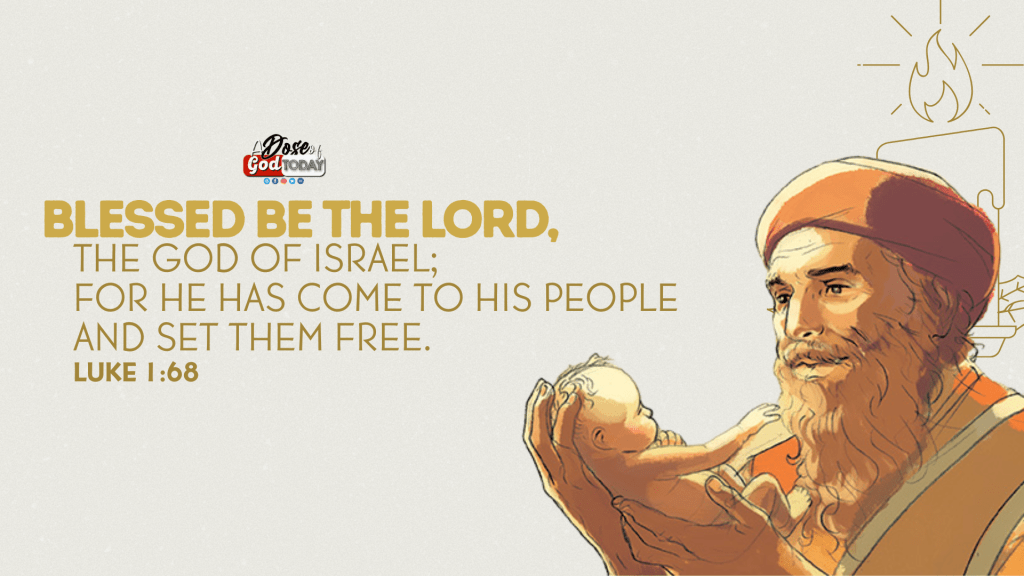
This prepares us now for the Gospel, the Song of Zechariah, often called as the Benedictus. This song is not sung in comfort. It is rather sung after a long season of silence. Zechariah had been unable to speak because he doubted God’s word. Years of disappointment had closed his heart. Perhaps he believed that God’s promises no longer applied to him. That silence, however, became a space where God slowly worked wonderfully and powerfully.
When Zechariah’s mouth was finally opened, what flowed out was not anger or self-defense, but praise and truth. He blessed the Lord, not because everything suddenly became perfect for him, but because he already saw clearly and recognized that God has visited His people, that God is fulfilling His promise, and that salvation is unfolding before his eyes.
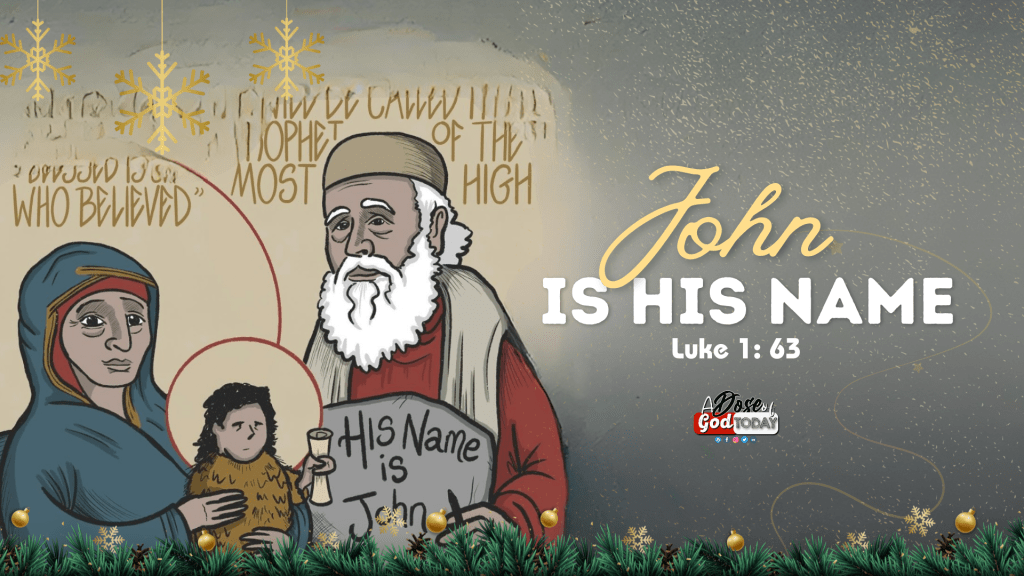
Indeed, Zechariah’s song is deeply prophetic. It speaks of God raising a mighty savior, of people being rescued from fear and terror, of hearts being turned back to God. But it also speaks of mission. Zechariah realized that his son, John, will go before the Lord to prepare His way, to give people knowledge of salvation, and to lead them out of darkness into light.
This is where the Song of Zechariah becomes painfully relevant for us today.
We live in a society, a nation wounded by massive corruption, dishonesty, and insincerity in public service. Many Filipinos have grown tired of broken promises. We have seen leaders speak beautiful words but live empty lives. We have watched truth being bent, justice delayed, and the poor always forgotten. In such a climate, it is tempting to withdraw, to just stay silent, and to say, “Wala na tayong magagawa,”– as if we can do nothing at all anymore.
However, Zechariah’s song challenges this attitude of indifference. His praise is not passive. It is rather courageous because he speaks of light shining on those who dwell in darkness. He speaks of guiding feet into the path of peace. This is not poetry at all meant to entertain us.
The Benedictus is a call to conscience.
John the Baptist, whose mission Zechariah proclaimed, will grow up to become a prophet not by pleasing people and those in power and authority, but by telling the truth. John will speak against corruption, hypocrisy, and false religiosity. His integrity will disturb the comfortable and awaken the complacent. He will remind people that preparing the way of the Lord means changing how one lives, not just how one speaks.
Today, the Church invites us also to see and situate ourselves in that very mission. We may not stand in public platforms or wear camel’s hair like John, but we are called to be prophetic in our own spaces. In our offices, schools, barangays, organizations, institutions and communities, we are called to let conscience speak. Integrity must become our language then. Honesty must be our habit. And truth must guide our choices, even when it costs us comfort or approval from others.
Like Zechariah, many of us certainly, have experienced seasons of silence. We stayed silent to survive. We stayed silent to protect ourselves. Yet, Advent reminds us that silence is not the final word. God opens our mouths. And God restores our voices. Indeed, God calls ordinary people to speak light into dark places.
This is the one theme that binds everything today that God frees our voice so that we may become witnesses of truth and hope.
As we begin Christmas this evening, welcoming Christ means more than celebrating His birth. It means allowing Jesus’ light to shape our conscience. It means refusing to normalize corruption, dishonesty, and indifference in our hearts and communities. It means choosing integrity even when it is difficult.
Zechariah taught us that when we finally trust God again, our voice becomes a blessing not only for ourselves, but for the whole community. John taught us too that preparing the way of the Lord requires courage, clarity, and faithfulness.
So, may this final dawn of the Misa de Aguinaldo awaken in us a renewed conscience and a braver voice. And so, I leave you now the two concrete takeaways.
First. Practice integrity deliberately. In one specific situation this Christmas season, choose honesty over convenience, even if no one is watching.
Second. Speak truth with charity. When silence allows wrongdoing to continue, find a respectful but firm way to stand for what is right in your family, workplace, or community.
May the God who turned Zechariah’s silence into prophecy also turn our silent endurance into courageous witness, so that our nation may slowly walk again in the path of peace. Hinaut pa.


 A DOSE OF GOD TODAY