Category: LiturgIcal Year B

  • Grow Up for Better LIFE

    Grow Up for Better LIFE

    May 9, 2021 – Sixth Sunday of Easter

    Click here for the readings (https://bible.usccb.org/bible/readings/050921.cfm)

    “They said if you love someone, you set them free. If they come back again, till the end, you are meant to be.”

    Does it ring a bell? Sounds familiar, no? That’s a line from a popular song sung by Barbara Streisand and Barry Manilow called “Some good things never last.” Such line tells us more about love. It also tells us about growing up in life.

    Because we all know, big part of life is GROWING UP. We ourselves grow up –  hopefully. And we help others to grow up as well. And surely we have seen how we and others have grown up. Growing up is really about helping oneself and others to help each other grow maturely.

    And the commandment of Jesus to love one another has a lot of thing to do with growing up. To love means to help oneself and others to grow up in life. Loving would involve giving oneself and each other a chance to GROW, i.e. a chance to stand in one’s feet, and be responsible for one another’s growth.

    Meaning, loving yourself means not only pampering and taking care of yourself but letting go of your securities and giving yourself a chance to grow. Loving someone also would also mean trusting someone enough to be on his own so that he can make a stand for his life. That’s why, in loving someone, set them free.

    This is very true in a Parent – Child relationship, especial the mother and child relationship. Because and out of his love to his children, a parent must learn how to stand back, (not to abandon or reject them) but in order to help and give the children a chance – an opportunity to stand on their own and be responsible for their own growth. Just like, a child cannot stand in his own two feet and walk, if the parent does not allow the child to stand up and walk. Mothers’ Day is thus all about honoring our mothers who loved us dearly even to the point of letting us go & grow in life.

    Experiences of standing back, letting go, saying goodbye, setting free have never been an easy part of growing up as well as loving an-other. Imagine how hard it was for you and your parent when you had your first step, your first day in school, your first jeepney ride on your own, your first camping, your first date, your first boyfriend/girlfriend, your first job, your wedding day, as well as your first child. But we all know that we have to be given a chance and to go through those experiences in order for us to grow up and learn how to live life and love life.

    This is the kind of love Jesus is trying to teach us in our gospel today. As part of his panamilit, last farewell, mi ultimo adios to his apostles, Jesus is trying to tell them that because of his love for them, he has to leave them, not to forsake them, but to give them a chance to practice the love he has taught them and to experience for themselves the Father’s love he had preached them. In other words, as he goes back to the Father, Jesus has given us the opportunity to grow in our faith and to witness and share that faith to others. His commandment of love to us is His kind of loving, that we are to be set free from our kind of loving so that we may grow in Our Father’s love. Out of love and in order for us to grow in that love, Jesus, as parent, guide, leader, good shepherd, himself has to step back, let go, say goodbye, set us free to love God for ourselves and help others love God for themselves.

    It is just like Jesus is saying to us now, “Guys, I have already taught you, guided you what to do. I have already done my part. Now is your time to do your part. Just carry out what I have told you: Love God with all your heart and love one another as yourself, same as I have loved you. By the way, don’t worry. I will never abandon you. I will be always with you in the Holy Spirit.”

    The popular song raised the question: Why good things never last? Good things never lasts… because we love as Jesus & God loves & we grow in love as well. When we love, we thus not aspire & settle only for good things but for better life with God & one another.

    As we do now our part in glorifying & serving God’s kingdom by our love as God & Jesus loves us, may we learn to say goodbye to the good normal things we had and aspire, grow & be mature enough rather for the better version of ourselves in the new normal pandemic life has challenged & in store for us now & forever.

    So Help us God, So May it Be. Amen. 

  • Pruned yet Producing

    Pruned yet Producing

    May 2, 2021 – Fifth Sunday of Easter

    Click here for the readings (https://bible.usccb.org/bible/readings/050221.cfm)

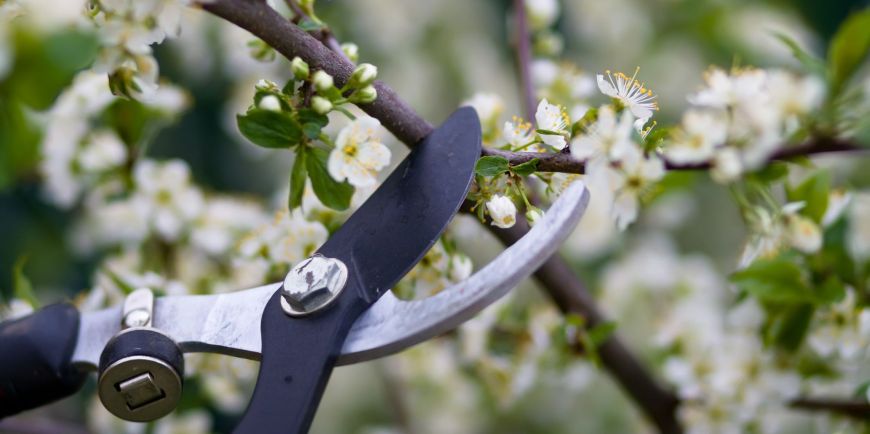
    Plant-lovers – (plantitos & plantitas) know that for a banana shrub to grow and bear much fruit, it has to go against the natural process of growth through pruning or trimming. Meaning, for new shoots to bud and sprout, and more fruits to bear, planters have to prune, i.e., cut-off dried leaves, trim, or peel off the dried skins of the banana shrub. Otherwise, we got more dried leaves and skins, but undernourished sprouting shoots and bud and in effect little or no fruit at all.

    Jesus in our gospel today describes our faith relationship with Him, akin to relationship of plant’s vine & branches. He reminds us that while He is the vine and we are His branches, “the father takes away every branch in me that does not bear fruit, and everyone that does, he prunes so that it bears more fruit.” In other words, for us to be His good disciples we must not only remain connected, loyal and steadfast in Jesus, but we also have to experience & go through pruning & trimming in life for us to bear much fruit.

    Spiritually, sometimes that is what God our Father does to us. Sometimes God prunes or trims us, make us experience suffering, sickness and trials not for its own sake but for us to grow and bear much fruits. Sometimes we do need to experience our limits so that we may be open to receive God’s abounding blessing. Why? Sometimes somehow we grow comfortable and complacent in our spiritual life that we content with our routine of personal prayers, devotions, personal salvation – trying to lead healthy spiritual life, but we fail to bear fruits of spiritual life for others. Remember: a healthy branch, plant or tree is useless – is nothing, if it does not bear flowers and fruits for others to taste and see.

    In one way or another, during these pandemic times, we are suffering now with a lot of trials, problems, restrictions, and difficulties in life. Perhaps God is pruning us now. Perhaps we are being pruned or trimmed by God not only to be healthy in our spiritual life but for us also to bear much fruit for others & for our life now. Remember, Jesus is concerned not only with the plant but also with good fruits.  He wants us His disciples not only to be healthy plants but more so to become fruit-bearing & producing plant for life & God’s Kingdom.

    So often we view religion as merely our personal relationship with God that exists as though a plant in a vacuum. Yes, we acknowledge a connection with others and the need for community, but so often we see the community merely as a support to have a healthy relationship with God.  There is something critically missing here.  Where is the fruit? The Lord wants us to build up the community by producing more and more Christians followers & believers, i.e. how we can increase the Christian population of the world, and ultimately, of heaven. Our goal in life then is to bear and produce fruit, His fruit – fruit for our lives & His Kingdom. Thus, the Lord places upon us the mission & responsibility for the growth of the kingdom of God.  He uses us to call & invite other people to Himself.

    Consider, at the end of our lives we have to stand before the Lord showing him what our lives produced.  He is not going to be interested in our bank accounts, our homes, our athletic, intellectual, or artistic accomplishments.  He is going to consider how well we loved others. He is going to count souls.   He is going to look to see if we did all we could, to bring others to Him.    Jesus is going to look for people we don’t even know, who have been strengthened in their faith by seeing & witnessing our faith.  What does the Lord want then?  He wants us through Him & with Him, to bear & produce fruits.

    If we want to do our best in bearing fruit for Him, we need to stay united to the vine, united to Christ.  We need to have His Life flowing through us – which at times needs the Father’s pruning. We received His life at baptism, but if we cut ourselves off & distance from His life by ignoring the vine, by slacking off from our worship of God, by allowing ourselves to be untended & unpruned, then we will have no fruit to bring before God’s throne.  It is not enough to say we are people of faith, to say we are Catholic.  We ought to practice our faith. We ought to stay united to the vine. We ought to bear & produce fruits for God’s kingdom in our lives.

    Being Christian, being Filipino Catholics is indeed not easy vocation & mission.  It means dedication, sacrifice, determination to live as Christ called us.  It demands being pruned by God & having to produce for the Kingdom – something to show & contribute for our lives.  But we can do this, and we will do this, as long as we are stay connected  & united to the Lord, to the vine whose life flows in us & through us.

    In this mass, we pray then that that as the Lord’s branches being pruned at this time of pandemic, we Christians may all have the spiritual courage & perseverance to remain united and connected onto Christ, our true vine, so that we may bear fruit for our life & His kingdom now & forever.

    So Help Us God, So May it Be. Amen.

  • CALLED TO BE SHEPHERD

    CALLED TO BE SHEPHERD

    April 25, 2021 – Fourth Sunday of Easter; Good Shepherd Sunday

    + Manny Cabajar, C.Ss.R., D.D.

    Click here for the readings (https://bible.usccb.org/Bible/readings/042521.cfm)

    What is the value of the priesthood in our life? St. John Vianney says, “Without the priest, the passion and death of our Lord would be of no avail. It is the priest who continues the work of redemption here on earth…The priest holds the key to the treasures of heaven…He is the steward of the Lord…Leave a parish for twenty years without a priest and they will end up worshiping the beasts there.” Pope Benedict XVI adds that without priestly ministry “there would be no Eucharist, no mission, not even the Church.”

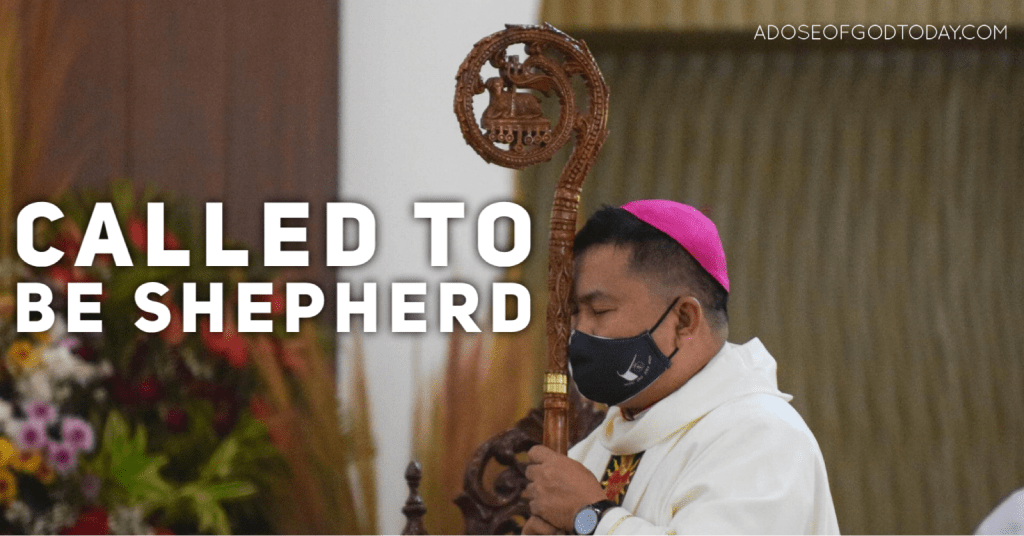
              Today we celebrate Good Shepherd Sunday and the World Day of Prayer for Vocations. We are blest and rejoice that we belong to the flock of the Good Shepherd, who continues to take care of us through the human shepherds He chooses – the bishops and priests. Through their ministry we are ensured access to the means of our salvation. God may not call us to their kind of life but He invites us to promote and to pray for priestly and religious vocations. There is a decline of young people joining the priesthood or religious life. That may partly be attributed to the materialistic and egoistic culture that regards material comfort and luxury as the way to happiness. But maybe it is also because we have not prayed enough to the Lord to send more laborers to the harvest.

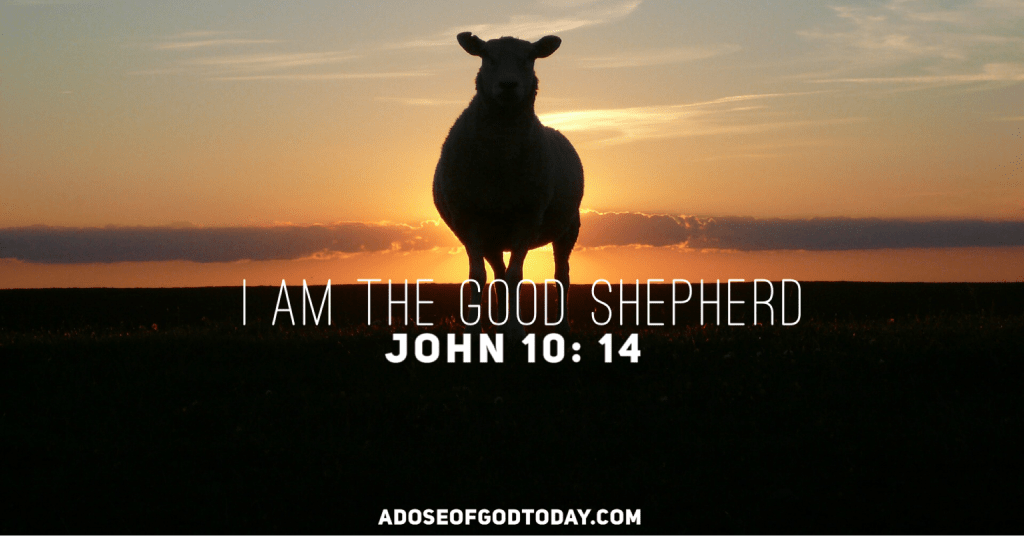
     As we intensify our prayer for more vocations, let us also pray for good and true leadership among those responsible for tending the flock. Jesus sets himself as their model through the image of the Good Shepherd who takes care of His flock. He knows and leads His sheep to green pastures; He seeks out the lost sheep. If needed, He is ready to die for His sheep. The happy priest is one who is not interested in having or getting more, but rather in self-emptying in the service of his flock. The happy priest is one who intimately knows the Good Shepherd and shares his experience of Him with the flock under his care.


    Lord of the Harvest, we pray in a special way for our priests, deacons, seminarians and religious women and men. We beseech You, O Lord, to grant them the grace of fidelity to their vocation. We also ask You to bless their families who continually show great generosity through their spiritual and material support for those who try to listen to Your call and follow You. Amen.

              Brothers and sisters may you have a prayerful and restful Sunday!

  • “Feel Ko? Feel Mo?”

    “Feel Ko? Feel Mo?”

    April 25, 2021 – Fourth Sunday of Easter

    Click here for the readings (https://bible.usccb.org/Bible/readings/042521.cfm)

    Once while giving a graduation speech, the late-Philippine lady senator Miriam Santiago made a joke. She said… Beside the swimming pool, two girls are having this following conversation. G1 said to G2: Know what? you are going to float (Alam mo. Lulutang ka). G2 to G1: Why? Is it because I’m slim, light & sexy? (Bakit? Dahil ba, magaan, slim at sexy ako? G1 replied: No, it’s because you are Plastic (Dahil plastic ka). Funny & rude it maybe, but it tells a lot.

    How do we distinguish a GOOD parent, teacher, friend, politician, leader, mentor or coach from a BAD one? How do we know if that person is real, true, authentic, deep, honest & trustworthy? How do we know that person is fake, shallow, liar & unreliable?

    Nowadays it is normal for us to suspect things simply because it is not easy to know whether it is real or fake. Because it is difficult to detect the authentic from artificial or plastic, the durable from disposable, nowadays we do tend to be suspicious of things & even of one another. Same way with our relationships with others, we rather suspect, doubt, and distrust one another, than believe and trust others because it is more challenging to distinguish who are real or fake, honest or deceitful, smart or shrewd.

    Jesus in our gospel today introduced and made Himself known to us as The Good Shepherd who knows His sheep and His sheep knows Him, and who will lay down His life for His sheep. As Jesus distinguished Himself from a Hired Worker who work for pay and no concern for the sheep, He reminds us here that as OUR good shepherd He is a hands-on and committed caretaker/caregiver of His sheep who maintains a personal intimate relation with His sheep, and will commit His life to live and work with His fold in life.

    Be reminded the risen Lord reveals Himself in FLESH. In last Sunday gospel, as the risen Lord reveals Himself in the midst of the disciples, he showed and asked them to touch and see His wounded hands and feet. Thus, the risen Lord reveals Himself not as ghost but in flesh and bones with wounds. This is very significant because how we witness/recognize the Lord in our life is easily clouded by how we want Him to reveal to us. In other words, “We do not see things as they are, we see them as WE are.” Like, there are Christians who would like to see the risen Lord as “Jesus without a cross”. Jesus here is the risen Lord – without wounds and cross – who reveals to us in full transfiguration and perfect glory who will save our day and provide us success and wealth in life. He is a CEO Jesus of the prosperity gospel who is enjoying and sharing the luxury and pleasure of the so-called “Good” life with all His followers. There are also Christians who would like to see the risen Lord as “Cross without Jesus”. Jesus here is the risen Lord not in flesh but in spirit – a ghost. Here Jesus is believed to be not anymore in this world but in another spiritual realm waiting & welcoming us to the next life, but remain at a distance from our daily life-struggles.

    However we like to see our risen Lord in our lives now – whether as “Jesus without a cross” or “Cross without Jesus”, the fact remains that, the risen Lord has made Himself known to us as “Jesus with a Cross” – a risen Lord in wounded flesh and bones who struggles and sacrifices painfully yet victoriously in life. The risen Lord then is a seasoned/experienced life-hero who, by letting us touch and see His wounds in Life – not His glorified body or His spirit, is now willing to shepherd, coach and journey us in life. In other words, the risen Lord is Our Good Shepherd because He is hand-on and committed in making known Himself and in journeying with us in our day-to-day humanity and struggles with joys, pains, and wounds of life.   

    We Christians proclaim that our risen Lord Jesus Christ is OUR good shepherd. We believe that He is our Shepherd, who knows and loves us personally. We also believe that we know Him personally for we know His voice.

    Particularly For us Filipino Catholic, we do have special or unique take in knowing our Good Shepherd. We know Him not only because Kilala natin siya but because Dama natin siya. Culturally sense-feeling perceptions are important to us. Like,… I may know you, but I may not feel you. I may feel you though I may not know you. (Kilala kita, pero di kita ramdam. Ramdam kita kahit di kita kilala). This is how we distinguish real from fake & how we discern good & bad.

    Same way as we Filipinos have this natural felt-instinct & sense to distinguish the real from fake, to discern the good from evil, we also come to be familiar with & know more the shepherd’s voice through our gut-sense and feelings. We do come to know the risen Lord as our true Good Shepherd in life not only by our volition, consent & reasonings, but most of all through our sense & feeling perception (damdamin at kalooban). By our sense-perception & feeling-gut insights, we come to know the risen Lord with us – in person & in flesh. Knowing the Shepherd is thus not only for us an intellectual or cognitive familiarity but more so a deep felt-sense knowledge and insight of His presence, love & blessing.

    We pray then that the Easter Season this year be our moment to enhance and improve our special felt-sense of knowing our True & Good Shepherd, so that we may not be gone astray from His fold but rather have a much deeper relationship with Him, and be always attuned with His will & plan for us now, especially during these pandemic times.

    So Help Us, God. So May it Be. Amen.

  • Friendship over a Meal

    Friendship over a Meal

    April 18, 2021 – Third Sunday of Easter

    Click here for the readings (https://bible.usccb.org/bible/readings/041821.cfm)

    “Have you anything to eat?” Jesus asked his disciples. It was a very ordinary question from Jesus yet, this question brought the disciples into a deeper realization of themselves and a deeper encounter with the Risen Jesus in a meal, in a form of sharing food.

    In many cultures, a shared meal plays a vital role. Sometimes important decisions in the family happen over a meal because that will be a time where family members are gathered. It is also true with our friends, we gather, remember past experiences and share stories over a meal and drinks.

    It is when we are able to sit down and share the meal with one another that we come into terms, make decisions, connect with one another and become more intimate with our family members and friends. Indeed, it is over our shared meal that we come to understand each other.

    This is what we find in the Gospel. It was through that ordinary meal shared by the disciples with Jesus that the disciples were able to realize that it was the Lord. It was through this simple meal with Jesus that they have been commissioned to preach repentance and forgiveness of sins to all nations.

    It started with two disciples who were talking about Jesus who appeared to them. Yet, even though the Lord has revealed to them, these two disciples were still doubtful. They have recognized the Lord in the breaking of the bread but then, after that revelation, they seemed not so convinced yet.

    That is why, when Jesus appeared to them once again, the two were terrified and couldn’t believe that they were seeing Jesus. Because of their disbelief, Jesus has to give and assure them with peace! “Peace be with you!” is Jesus’ repeated gift to the disciples after his resurrection.

    After the death of Jesus, the disciples were filled with fear, disgust and shame for themselves. They all ran away and hid themselves while their master was beaten and crucified. Judas Iscariot betrayed the Lord, Peter denied Jesus three times and the rest of them were nowhere to be found. They might have blamed themselves for what happened to Jesus. They might have considered themselves failures and worthless because of what happened. They might have thought that what they did to their master was beyond forgiveness and mercy from God.

    The disciples must have believed that they failed Jesus. Consequently, they couldn’t believe Mary Magdalene’s testimony that the Lord is alive. That feeling of being a failure is also the reason why these two disciples still doubted and were terrified upon seeing Jesus once again. They couldn’t believe that they were forgiven, that they have been accepted and loved by Jesus.

    Despite what they did, Jesus has forgiven them and the resurrection of Jesus is God’s action of forgiveness. But because the disciples found it hard to believe God’s forgiveness, Jesus made the effort to let them understand that they have been forgiven. Jesus has to do it repeatedly to assure his disciples. Thus, Jesus did not just appear to them once but several times and each time he reveals himself to them, Jesus gives his peace – the peace of forgiveness, of mercy and of being loved. This is what Peter proclaimed to the Jews in the Acts of the Apostles and also what has been proclaimed in the First letter of JohnGod’s peace of forgiveness.

    This peace was concretely showed by Jesus in the breaking of the bread, in the shared meal with his disciples – which was in a very ordinary way of eating with friends. This is how eating with friends becomes symbolic in the Bible because Jesus made this event as an occasion where he reveals himself to his friends. At the same time, eating with friends becomes an occasion also for his disciples to lay down their fears, shame and doubts but to be accepting and open to God’s revelation to them.

    This is the hope expressed to us by our Psalm today, “Lord, let you face shine on us.” Like the disciples, we too, shall glimpse God’s face when we learn to accept God’s invitation to sit down and dine with Him.

    These are the invitations for us today.

    First, Jesus says to you and to me, “Peace be with you,” because Jesus is with us. We might have been so burdened right now because of something wrong we did, Jesus says to us, “Peace – because I am with you!” Jesus assures us that peace has come upon us because he is alive and we are forgiven.

    Second, Jesus invites us to dine with him, to sit down with him so that we will be able to recognize him in our life. The Eucharist is Jesus’ invitation for all of us so that like the disciples our minds will be opened too and will be able to understand his message for us.

    Third, like the disciples, we are called to become his witnesses to others, to be his preachers of forgiveness especially to people around us. Thus, each of us is also called by Jesus to dine with our friends, to eat with those who have hurt us, who have caused us disappointment and pain and show to them that they have been forgiven just as Jesus forgives us. Hinaut pa.