The Season of Advent is characterized by an element of surprise. This means that God’s coming is a big surprise for us. We do not expect that God who is almighty and all-powerful will come to visit us and to humble Himself in order to reveal himself to us.
This is what our Gospel tells to us today. Elizabeth was surprised by the visit of her cousin Mary. But more than that, Elizabeth and the baby in her womb were more surprised of what Mary carried in her womb. They were surprised because God had visited them. This prompted baby John to leap with joy because God has come through Mary.
The feast of Our Lady of Guadalupe is also a manifestation on how God has visited us in history. Moreover, this visit of God through Mary to San Juan Diego is an expression of God’s loving concern for his oppressed people particularly in Latin America. God’s visit then, is a revelation that God is on the side of the poor and the oppressed, of the weak and powerless.
On this Season of Advent and on this feast of Our Lady of Guadalupe, we are invited to allow God to surprise us. Thus, never lose the sense of being surprised. This means that we are challenged to put down our judgments and biases, indifferences and suspicions, thus, to be less and less guarded, that may prevent God from surprising us – and that may stop us too from welcoming God.
God surprises all the more when we begin to embrace our own failures and sins, and when we begin to accept that we are vulnerable and weak. And when God comes to surprise us, may it lead us to leap with joy. And hopefully, that experience will also move us to also surprise others with our own kindness and generosity. Hinaut pa.
What burdens are you carrying now? What makes you worry at the moment? What are those that you are most afraid of? These questions are surely relevant to us. They tell us about our dispositions and even would tell us about what we are hoping for. We hope to be liberated from our burdens, to be free from worries and anxieties. And usually we want them to disappear immediately.
A survey from blaze.com reveals the top reasons most people pray to God. The first two reasons according to the survey are (first) family and friends and (second) personal problems and difficulties. These two concerns are very much related. In fact, these two reasons reveal our burdens, worries and fears at the moment.
Thus, we ask God to help us in our problems and concerns. But, there is a danger around here. There is a temptation in us to think of a God who does magic and who can take away all those concerns that burden us.
Contrary to what we usually think of God, our readings today reveal the true character of God. God does not offer us magic what God offers us rather, is his gentle, empowering and understanding kind of friendship.
This is what the first reading reveals to us. The Book of Prophet Isaiah tells us of the everlasting God who does not grow tired or weary. God would even give us strength and life. Isaiah proclaimed this to the Hebrew people at that time when they had become hopeless because of the suffering they endured while at their exile in a foreign land. They displayed weariness and boredom because of the long wait of the coming of the Messiah. Isaiah reminded them of this God who never forgets for his knowledge is without limit. God is hope because God renews our strength.
This is what Matthew proclaimed in the Gospel. Jesus said, “Come to me all you who are tired and lonely!” Jesus invites us to come to him and to welcome him in our life that we may be liberated from our burdens and sins, to be free from worries and anxieties.
Jesus tells us that God does not terrorize us with his power nor subjects us with his influence nor does magic to remove all our difficulties at once. Jesus gives us a humble invitation to come to him as our friend – a true friend who is gentle, humble and compassionate, willing to walk with us.
Thus, when we come to Jesus and trust him to be our friend, then he offers us his yoke. At the time of Jesus, the yoke was put on the necks of two animals to plow the field for planting. There were usually two cows so that the weight becomes lighter and the plowing easier and faster. The yoke that Jesus speaks about is from this image. That yoke symbolizes the Gospel that we receive today – and that Gospel is Jesus the Lord himself.
In this way that Jesus offers himself as our friend who is with us. He is not promising us to remove all troubles in life at once, as his life was also filled with pain and suffering. He tells us today that though life may be filled with problems, worries and anxieties, fears and self-doubt, failures and insecurities, with shame and guilt, yet, we will never be alone in our struggle for he renews and strengthens us.
Jesus invites us to carry those troubles with him, to pull our burdens with him, to share our trials with him, to draw strength from him and to allow him to help us. In truth, the Lord does not do good things for us, but rather, he does great things with us. He does not do miracle for us but he does it with us.
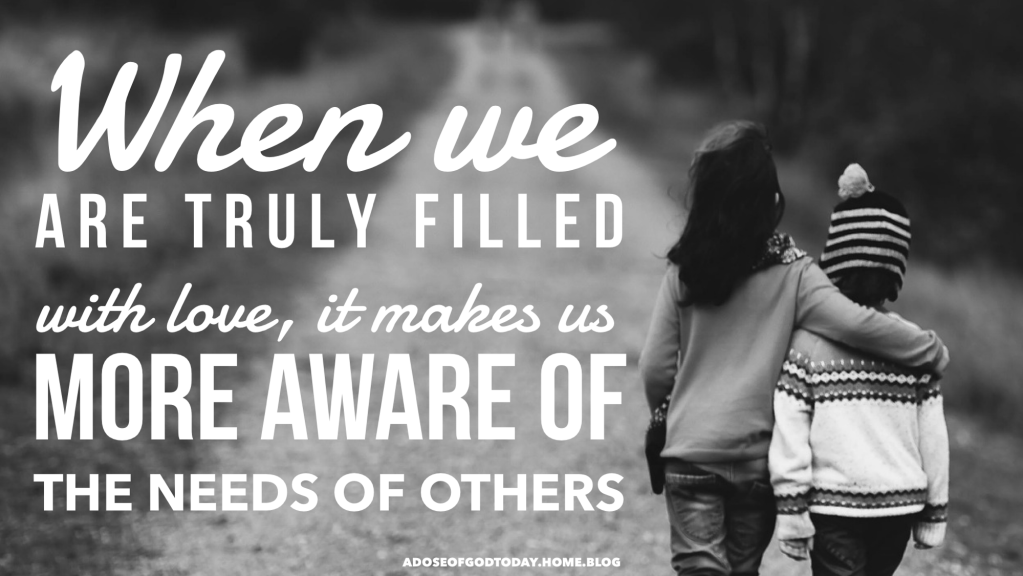
Remember also, our experience with Jesus as our gentle and compassionate friend is not meant to be for us alone. Each of us who have experienced that friendship is called to be a friend to others. Yes, in return that experience with the Lord will allow us to become willing and generous friends – ready to cheer up a friend filled with doubts, ready to give comfort to a friend suffering from grief and sorrow, who has a listening heart to a friend who needs someone to talk to, so that we too will become God’s instrument of brining freedom and inner peace to our overburdened brothers and sisters in this Season of Advent and Christmas. Ok lang? Sana all.
A friend came to me and shared how she finds her life in darkness. She finds failures in everything she did and she has – her job, her boyfriend, her family, her friends and including herself. She felt confused and hopeless. Her life seems miserable and so she feels unhappy and bitter.
Listening to her, I asked her how she handles all of these. Although she feels that she is in darkness and not happy, she continues to believe in God. She persisted to hope that God would bring her into a life filled with joy, where everything shall also fall into its place.
However, what helped her more was when she began to recognize her own failures and sins. She herself took for granted the many good things she has in her life and was ungrateful. This was the reason why she was bitter and negative at everything. There was a deep emptiness in her heart that she was trying to satisfy but could not. This was the reason too why she found her life miserable and joyless. But recognizing and owning these attitudes completely changed the way she sees things and relate with herself, with people and with God.
As she repented and came closer to God, there is more hope and more joy that she finds. She begins to see more her God and not herself alone, and to see more brightness rather than misery and darkness.
Herself reminds me of the prophecy of Isaiah in the first reading and of the Gospel from Matthew that we have heard. Let us explore briefly the scriptures today and discover how God invites us on this second Sunday of Advent.
The prophecy of Isaiah was announced to the people who were both faithful and unfaithful to the covenant with God. This was a message of hope preached to them that despite the suffering brought about by their unfaithfulness, God remains faithful. The promise of the birth of a child will bring order, peace and harmony to their seemingly dark lives under exile.
As this is a message of hope, the prophecy is also a call to repentance, an act of recognizing the coming of the Messiah and coming closer to Him. It is through the recognition of sin that leads to asking forgiveness and turning away from the sinful way of life back to God, that hope becomes alive. This leads to restoration, forgiveness, prosperity, peace, harmony and joy with God. Indeed, Isaiah proclaimed a joyful hope for the people through the birth of a child who will be with us.
Hence, joy is promised to us when we allow God to be with us, to transform us and allow him to be our God. And it begins with repentance and in recognizing that we need God. This means that when we begin to be less self-centered, less arrogant and less greedy, the more we come closer to God. And the more we come closer to God, the more we recognize Him too, not just in our life but also in the life of those who are next to us. Thus, what is being “zoomed in” is God and not ourselves; what is being maximized is grace rather than sin, forgiveness rather than guilt, love rather than hate.
So, how do we allow God to come to us and transform us as what has been told by Isaiah? John invites today to “prepare the way of the Lord and make his paths straight.” This is where we can find the preaching of John about “hope.” John proclaimed “hope” as he reminded the people that salvation is possible, that peace and freedom from sin is possible. This hope dawns on us when we start recognizing our sinfulness rather than the sins of others. Hope becomes alive when we humble ourselves before God to accept that we are in need of mercy.
Hence, preparing God’s way to our heart means to take away anything that prevents us from allowing God to come closer to us.
We may reflect today, what are my un-confessed sins that need repentance? What are my selfish tendencies that keep me away from others and from God?
Hopefully, this Season of Advent may truly become a preparation for us to encounter God daily and to celebrate with joy the birth of Jesus on Christmas day, as we make ourselves more available to God and for others. As a shoot will sprout from a stump, we may allow God also to grow in our hearts, allowing him to occupy more space in our life. Ok lang? Sana all.
Homily shared by Fr. Mar Masangcay, CSsR (a Filipino Redemptorist Missionary based in South Korea)
“Repent and Believe the Gospel”, when was the last time we heard those words? We usually hear those familiar words during Ash Wednesday, when we receive the ashes to mark the beginning of our Lenten observance. This call for repentance and faith is the first challenge Jesus posts us when He preached to us God’s kingdom. All His life has been dedicated to preach to us the Good News that God’s kingdom and Word is upon us. And the first response expected of us is “to repent and believe the Gospel”, i.e. repentance and faith.
Once again, we hear the same call to repentance and faith as forewarned by John the Baptist in today’s gospel. “Repent for the Kingdom is at hand”. Same message and challenge is presented us: Since the Lord at hand is coming, Repent and Believe in Him then.
But what does repentance and faith means? What does it mean to repent and believe in the Gospel? What does it require? What do we have to do?
To repent and believe, first, we should realize that “there is something wrong here” i.e. something is missing or lacking, or something out of sync or tune “yabag” happening in one’s life. If and when nothing wrong in one’s life, there is nothing to repent, change, and believe in. Second, we realize and admit that “I am the one who is wrong here”, perhaps the main source of it, and that no point of blaming others. Third, we admit that “I need to change and I need help” recognizing God’s mercy and the assistance of others. Fourth, we make a resolution that “I want and choose to be better than before”. And lastly, we commit to someone and something good and better in life, i.e. we declare “I believe in God”.
The challenge of repentance and faith requires then the realization that “There is something wrong”, the admission that “I am wrong”, the recognition that “I need help and need to change”, the resolution that “I want and choose to be better”, and the declaration that “I believe in God”.
It is like a special person is going to surprise you for a visit you in your house. You realize how messy your house is, and start to worry how to welcome your special guest. Then you admit that it is not only your house but moreso yourself is at mess. Then you try to do something and ask for help. In doing so, you resolve to make your house and yourself better because you now believe that your special guest look up to you and will make your life meaningful and better.
Repentance and faith always reminds me of Peter and Judas Iscariot. Both of them are apostles of Jesus, even the most beloved and trusted disciples (leader-treasurer), and have sinned against the Lord (denied-betrayed). What is the difference between them? Judas killed himself. He did not wait for the risen Lord. He did not give the Lord a chance to love and forgive him again. While Peter waited for the risen Lord. And thus gave the Lord a chance to love and forgive him again and anew. To repent and believe in the Gospel, then is our way of giving the Lord the chance to love and forgive us again and anew. It is all about giving God as well as yourself and others another chance in life.
The sacrament of reconciliation – popularly known as confession is our Catholic faith and church way of expressing our repentance and faith. During this Advent Season, we are encourage to go to confession as our way of repentance and faith to God so that the Lord have a chance to love and forgive us again and anew. So, go to confession these days.
Last Sunday, on the first Sunday of Advent, we are challenged to “Stay Awake and Be Prepared for He is coming”, today we are challenged to “Repent for the Kingdom of God is at hand”.
As we once again prepare to the Lord’s coming into our lives, may we always “repent and believe in the Gospel” so that His kingdom of love and forgiveness have a chance to be with us always.
According to a survey, approximately, a child of about 3 to 5 years old, asks 300 questions a day with with an average of 1 question every 2 minutes. J These questions come from their curiosity. They marvel at everything and are amazed with everything and everyone. This makes a child welcoming to the many surprises that come.
The innocence of children, their simplicity and humility make them receptive to the many wonders that surround them.
Thus, children easily recognize what is beautiful, good, amazing and surprising even with simple things. They easily get excited in a simple toy. They are delighted in a simple gift. They respond with pleasure to a simple smile.
These qualities are without aggression and arrogance but rather filled with humility and openness. It is just interesting how the Book of Isaiah also described the coming of the Messiah. He proclaimed that a shoot shall sprout from the stump of Jesse. He is filled with the Spirit of wisdom and understanding. He shall be a just and kind judge and brings peace.
And as a shoot silently comes out from its branch and so is God. This tells us that God’s unfolding and revelations are done in silence. That is why, when God reveals himself, it is always simple, humble and even ordinary. God does not reveal himself in extravagance and mere popularity that only shows aggression and arrogance.
In the Gospel, Jesus reminds us how the Father reveals the mystery of salvation, of His gift of healing and peace to the children. Of course, God reveals His mystery to all but only the children and the childlike are blessed to receive God’s blessing, simply because of the qualities of being welcoming and humble.
Jesus warned us adults of our tendency to claim that we already know everything. Yes, when we become adults we tend to claim our independence. We ceased to be curious because we become over confident to what we have achieved.
Jesus criticized the attitude of those people during His time who claimed to be the “masters of the world.” The knowledge that they have gained in many years of experiences prevented them to learn new things. They have become arrogant and unwelcoming. Thus, these attitudes blocked them to receive God’s revelations and invitations.
We have to be careful then, when we begin to be arrogant with our own success, when we feel superior of what we have become and over-confident of what we have accumulated. These attitudes might prevent us from recognizing the many wonders that God reveals and to His invitations for us.
We are reminded today on this first week of Advent, to re-learn our previous qualities when we were children, and to re-learn those qualities through the children around us. These include our openness to the many wonders around us and to be receptive to the many gifts that are being offered to us.
Take time then to ask questions, to be surprised even with ordinary things, to be delighted even with simple greetings of smiles around you. Take time to stop and say hello to a friend. You may also take time to witness a sunrise or sunset or even while sipping your coffee and eating your meal. Hopefully, by re-learning the qualities of a child we may also discover more and more how God unfolds His advent, the coming of His presence in us and His blessings for us. Hinaut pa.