Evil seems stronger that good. Darkness seems stronger than light. Lies seem stronger than truth. This can be discouraging and frustrating when such things happen in our life and in our society.
Take for example when ordinary citizens would do their best to earn a living yet powerful political and government officers would suck out the national treasury. Leaders living in comfort and luxury while ordinary citizens living in poverty and suffering from poor social services. Take for example of murders and killings perpetrated by those with money as their power while families of victims being threatened and justice being deprived.
Yet, in every age and generation, God chooses prophets among us who take courage and the risk to speak God’s desires for us. These are the prophets who make a stand even when their lives are threatened and find joy even when persecuted.
Today’s feast of the Passion of St. John the Baptist somehow portrays such painful reality. John who prepared the way of the Lord, led people to repentance and proclaimed God’s salvation was beheaded cruelly. John, who died a martyr’s death, paid this price by having the courage to pinpoint the wrong and immorality of those in power.
Herod who coveted his brother’s wife, Herodias, though liked to listen to John, did not change his ways. Herod was rather submerged into corruption and immorality. Herodias despised John so much for challenging their relationship. Her daughter, who was indifferent towards the situation acted on impulse and without right judgment.
John was fully aware of the risks but he did as the Lord commanded him to do. John’s life echoed what was written in the Book of Jeremiah, “Gird your loins; stand up and tell them all that I command you.” The voice of John the Baptist became a beacon of light despite the seemingly powerful darkness. He became a hope in the midst of hopeless and corrupt leaders.
He was beheaded, yet, the spirit of John the Baptist and his voice continued to echo. Hence, his passion does tell us now of God’s power to defeat evil with good, to turn darkness into light, and to correct lies with the truth.
With his life and his passion, John is now an inspiration for us Christians. The faith that we have received, is our light that shall guide and inspire our conscience. The light of our faith motivates our hearts to love more and to seek what is true and good. The light of our faith brings encouragement and strength in times when we are being tried or threatened. This light of our faith makes us sing and proclaim God’s salvation and freedom for us.
And so we pray, “Lord, increase my faith in you. Empower my heart and mind that I may be your own prophet in my own family, group of friends and community. Inspire in me the desire to seek the light, what is good and true.” Hinaut pa.
Being constantly aware of God’s presence in our life can be very challenging. With all the many things, issues, and concerns that fill our mind and heart, we may forget, take things for granted or become indifferent.
This is our reality with our human relationships. We may be living under the same roof, yet, we too could become forgetful of the presence of our loved ones. Husband and wives may become cold towards each other. Parents may become more focused with their work believing it is the only most important at the expense of a quality time with their children. Among friends, personal issues and selfish tendencies may lead us to only make ourselves always at the center without minding the presence of our friends.
Such forgetfulness, our tendency to take things for granted and indifference may remove us from the grace of God. We become distanced and unmindful of God’s presence and of people around us.
Hence, the Responsorial Psalm invites us to pray, “Fill us with your love, O Lord, and we will sing for joy!” To be filled with love so that we may “gain the wisdom of heart” that is constantly mindful of God’s presence.
St. Augustine, a famous Saint of the Church, was once forgetful of the presence of God. He took many things for granted and was indifferent to many. He was a lost soul, wandering in life. He tried to fill himself with what the world can offer him, yet, he was not fulfilled. And so his restless heart was in searched of what could give him peace and fill him with constant love.
Augustine was later found by the Lord and converted to Christ. His study of the Holy Bible made him realize so much about life. It triggered a desire and a deep longing from his heart. Augustine’s famous words from his Confessions remind us, “My heart is restless until it find rests in You.”
St. Paul in his Letter to the Thessalonians echoed the same call and challenge to the people, “increase and abound in love for one another and for all.” Paul reminded the people that as they wait for the second coming of the Lord, not to forget the presence of each one. Each member of the community will only be more conscious of God’s coming when each one also is mindful and loving towards each other. This is the very life of the Christian community founded in the redeeming love of Christ.
In fact, Jesus in today’s Gospel calls us too, “Stay awake! For you do not know on which day your Lord will come.” Indeed, the Lord may come in a surprise and in ordinary ways we do not expect. Yet, when our heart is filled with other things rather than our desire and longing of His presence, then, we may forget, take it for granted or become indifferent.
And so we hope that our heart may indeed be filled with love. In that love, may we be more confident and assured that we have the support and affection of our loved ones, our family members and friends, and of the Lord whose love is constant.
We pray, “Lord, fill my heart with your love. Make my heart ever mindful of your loving presence. When I become cold, distant and indifferent – disturb, call and challenge me to come closer to you and find peace in your love.” Hinaut pa.
How do you treat others? What kind of attitude do you show to your friends and strangers alike? Does your faith influence your ways and attitudes in relating with others?
St. Paul in his first letter to the Thessalonians expressed his gentleness, kindness as well as his thoughtfulness and affection towards the Christian Community in Thessalonica. Paul wrote this letter not to boast himself of what he had done, but an expression of Paul’s faith and conviction as an apostle.
“God is witness.” This is what Paul declared as he manifested that there was no intention to be praised or to become greedy in their relationship with the people. In fact, Paul expressed the joy and generosity in his heart as he too declared, “With such affection for you, we were determined to share with you not only the Gospel of God, but our very selves as well, so dearly beloved had you become to us.”
This tells us that sharing of the self is an expression of the Christian Faith. When we become a gift to people around us, we too proclaim Christ in us.
Yet, when the self also turns to be corrupt and self-absorbed, entitled and plunderous, the self becomes toxic and a curse to people around us.
Jesus pointed this out in our Gospel today. The words of Jesus were quite strong in criticizing such kind of persons. “Woe to you, scribes and Pharisees, you hypocrites.” Jesus said this twice in the Gospel verses today showing the severity of the selfishness and greedy hearts of these people.
“Plunder and self-indulgence” made such persons to be numbed at the realities of suffering of the people around them. They were concerned only on how they will become more comfortable and advance their self-interest. The self turns inward. It does not know how to share and so it is removed from what joy and love truly are.
Such kind of self and attitudes of the heart make us treat others harshly and sometimes violently. We could treat others indifferently especially when we don’t get or receive anything from them.
Having such contrasting attitudes of the self, calls us now towards the transformation of ourselves. Like Paul, who at first was also filled with bitterness and hatred was transformed by the grace of Christ.
We ask today that grace that our heart and person may also be transformed. Knowing that the Lord has searched us and knew us, as the Responsorial Psalm proclaims, may we be more daring and courageous enough to ask the grace of the Lord.
And so we pray, “Lord, make my heart as well as my words and actions gentle, kind and generous. Through your grace, may I become a gift to my friends and community as an expression of my faith in You.” Hinaut pa.
I have been tasked with responding to the three lectures delivered by our distinguished theologians and professors from the St. Alphonsus Theological Mission Institute (SATMI) in Davao City during today’s Theological Forum. I would like to express my heartfelt gratitude for the wisdom and insights they so generously shared with us.
Reflection and Sharing: Courage as Defiant Hope in Context
After listening to the profound insights shared by our esteemed speakers, my reflection seeks to offer a tangible and lived context to the three theological lectures. Rather than a linear summary, I present five short movements—each a facet of my journey as a woman, a Marian devotee, a counselor, and a believer shaped by illness and grace.
Theological Grounding: Courage as Defiant Hope I begin with the lens of feminist theology, drawing from Rosemary Radford Ruether’s reflections on courage—not as mere resilience, but as defiant hope rooted in justice and compassion. As a woman navigating both ecclesial and academic spaces, I find her voice a necessary companion in interpreting courage beyond sentimentality.
Personal Devotion and Formation: A Marian Journey My spiritual formation is inseparable from my devotion to Iloy sa Gihapon nga Panabang. This Marian path has been my compass, especially in moments of uncertainty. Her quiet strength and maternal presence have shaped my understanding of courage as surrender, not passivity.
Faith in Action: Continuing the Mission Inspired by Fr. Victorino Cueto’s concept of debo(mis)yon, and deepened by Sir Neil John Capidos’ sharing, I reflect on how mission must transcend ritual. In my work as a guidance counselor and volunteer, I strive to embody a devotion that heals, accompanies, and liberates.
A Test of Faith: Courage in Illness Illness has been both a crucible and a classroom. In my own journey through physical suffering, I have encountered courage not as triumph, but as trust. It is here that theology meets flesh—where hope becomes incarnate in weakness.
Conclusion: A Courage That Accompanies Ultimately, courage is not a solitary virtue. It is communal, Marian, and missional. It walks with others, listens deeply, and dares to hope even when the path is unclear. This reflection is my humble offering—a testimony to the grace that sustains and the courage that defies despair.
I. Theological Grounding:
The reflections on courage by American feminist theologian Rosemary Radford Ruether offer a profound and timely meditation on the nature of moral strength in the face of adversity. Her characterization of courage as “the capacity and power of the will that makes a person strive for what is good” invites us to reconsider courage not as a mere act of boldness, but as a deeply ethical commitment—one sustained by hope and anchored in faith.
Ruether’s framing of courage as a “defiant hope” resonates powerfully in contexts where individuals or communities face systemic injustice, marginalization, or spiritual trials. This hope is neither passive nor naïve; it is active, persevering, and relentless. It refuses to be extinguished by opposition, precisely because it is rooted in a vision of truth and justice that transcends immediate circumstances.
What is particularly compelling is the paradox she presents: Christian courage as a form of power that emerges from the powerless. In a world that often equates power with control, status, or aggression, Ruether’s theology reminds us that true courage may arise from surrender—specifically, a surrendering trust in God. This trust does not diminish agency; rather, it transforms it. It empowers individuals to act not out of fear or pride, but out of a deep conviction that their actions are aligned with divine purpose.
Moreover, the distinction between courage and rashness is crucial. Courage, as a virtue, is not impulsive or self-serving. It is tempered by discernment and guided by a moral compass. In this sense, courage becomes a spiritual discipline—one that requires humility, patience, and unwavering faith.
As a licensed educator with specialization in guidance and counseling, and values education, and a registered guidance counselor, I find this understanding of courage especially meaningful. It affirms the quiet yet resolute strength of those who choose to stand for what is right, even when doing so is unpopular or difficult. It honors the courage of students who speak truth, of communities who resist oppression, and of individuals who remain faithful in the face of uncertainty.
Ultimately, Ruether’s insights call us to embody a courage that is both prophetic and pastoral—a courage that speaks truth to power and nurtures hope in others. It is a courage that does not seek recognition, but seeks righteousness. And in doing so, it becomes a living testament to the transformative power of faith.
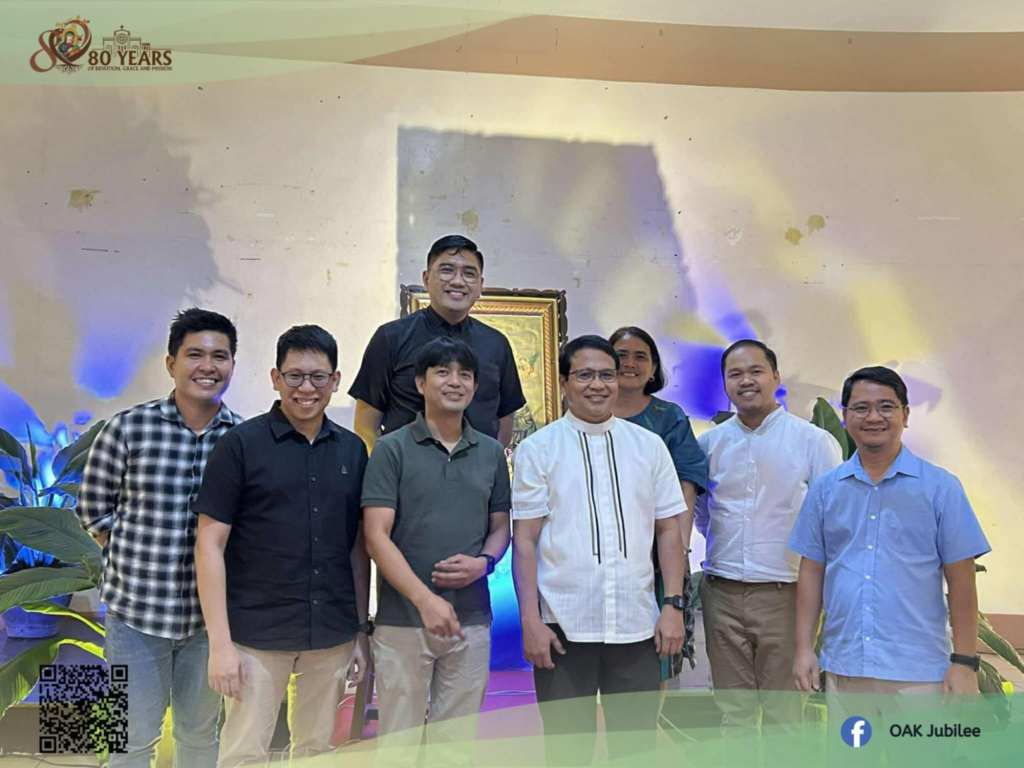
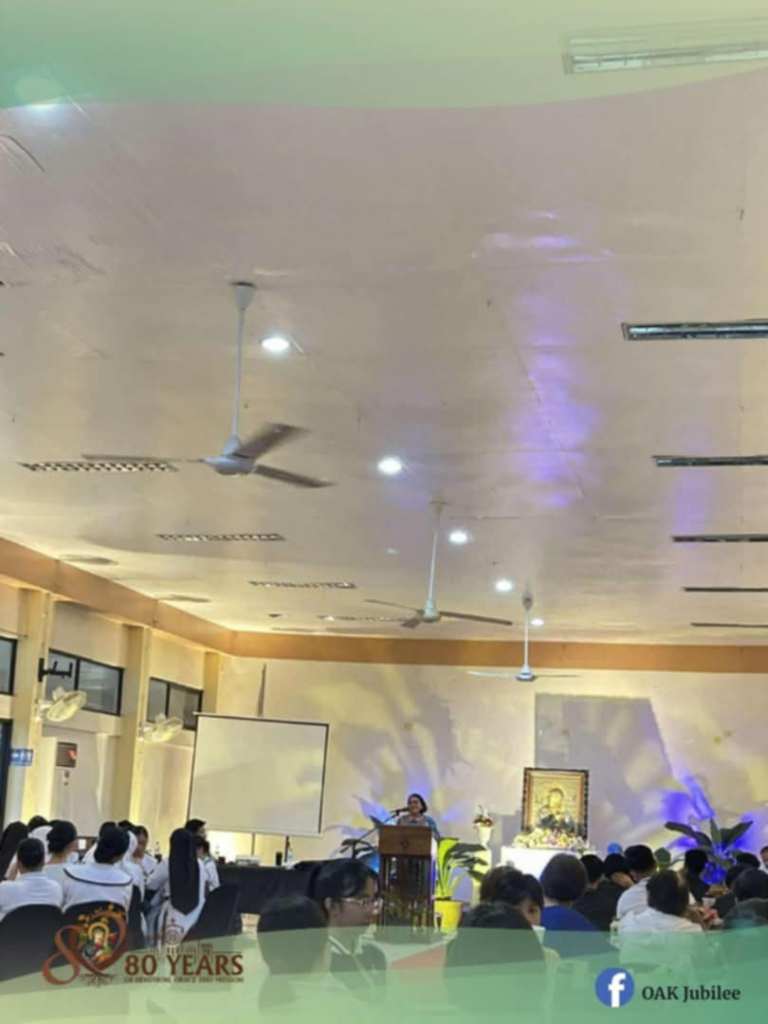
photos credit to OAK JUBILEE pagephotos credit to OAK JUBILEE pagephotos credit to OAK JUBILEE page
II. Personal Devotion and Formation: A Marian Journey
I would like to provide tangible context to the lectures of Rev. Fr. Edilberto Cepe, CSsR, Sir Neil John Capidos and Sir Danilo Agustin by highlighting my devotion to Our Mother of Perpetual Help—our (my personal) Iloy sa Gihapon nga Panabang—and how she has played a significant role in my personal and professional life.
My late mother, a Grade 1 teacher and alumna of Iloilo Normal School (now West Visayas State University), introduced our family to the novena of Our Mother of Perpetual Help in the 1950s. From grade school, I memorized the novena and learned to pray the rosary. Every Wednesday, we recited the novena and sang its hymns—a tradition that continues to this day.
It was providential that our UP High School graduation Mass was held at St. Clement’s Church, with Fr. Patrick Sugrue, CSsR, as presider. Mama Mary, ang aton Iloy sang Gihapon nga Panabang, became my refuge, my companion, my shock absorber, my mother who assures me that “this too shall pass” and “kaya ko ni”, just like my biological mother who loves me unconditionally, during difficult times at UP.
After earning my BA Psychology degree at UP Visayas in Miag-ao in 1992, I was invited by a Redemptorist priest, Fr. Claro Conde, C.Ss.R. to join the Vocation Team. I served for 15 years—seven at St. Clement’s and eight at the Regional Vocation Office and St. Alphonsus Seminary in Cebu City. These experiences deepened my devotion to Mama Mary and allowed me to live simply and joyfully in mission areas like Kulaman, South Cotabato.
These formative years shaped my character and values—what Sir Neil John refers to as the “ethics of being.” I agree with his assertion that a virtuous character grows from formation received from parents, mentors, and community, shaped by historical and cultural events, and most profoundly, permeated by divine grace.
My journey with the Redemptorists exemplifies this. I owe much to my pious mother and conscientious father, whose example laid the foundation for a life of virtue. Remaining open to God’s grace has allowed me to experience His favor through Mama Mary’s intercession.
III. Faith in Action: Continuing the Mission
Even after resigning from the Redemptorists, I continued to serve. I worked at the University of San Agustin and at both the Pototan and Main Campuses of West Visayas State University, while remaining actively involved with the Redemptorists through various commissions and as co-founder of the St. Clement’s Pastoral Care and Counseling Ministry with Fr. Bong Puzon, C.Ss.R as our Spiritual Director.
Why do I do this? In silent reflection, I realized that God was allowing me to continue serving the poor and emotionally burdened—without charge. This is my way of concretizing my faith in action, as Sir Danilo Agustin puts it. Despite my academic responsibilities, I travel from Guimbal to St. Clement’s every Sunday to volunteer as a counselor. I find joy in serving freely.
In counseling, I witness how faith and spirituality help clients cope with life’s challenges. One woman shared how Mama Mary became an instrument of her healing. Many others attribute their recovery to divine intervention. I see myself simply as an instrument of God’s healing. The courage to be healed and the courage to embrace freedom—these, too, are gifts that faith teaches us.
IV. A Test of Faith: Courage in Illness
My faith was tested when I was diagnosed with multiple gynecological conditions: including Gravida Zero Abnormal Uterine Bleeding, Endometrial Polyp, Leiomyoma, Ovarian New Growth (Right), and a probable Serous Cystadenoma in November last year, leading to two surgeries. I underwent an ultrasound and CA 125 test for ovarian cancer. My colleagues called me courageous and strong, noting my peace despite the challenge. Though I sometimes feared for my life, I remained calm and hopeful.
My solid foundation in faith never wavered. I saw the experience as sharing in God’s paschal mystery. Like Mary, I surrendered everything to a loving God, trusting without full understanding. I hoped for healing so I could continue serving—and true enough, I am recovering well.
Two days after my discharge from St. Paul’s Hospital, I found myself reviewing the manuscript of six graduate students—each one a candidate for graduation. It felt miraculous, almost surreal, that I was not only able to complete the reviews but also attend their hooding and commencement ceremonies. My body was still healing, yet grace carried me.
Two months after undergoing a Total Abdominal Hysterectomy with Bilateral Salpingo-Oophorectomy (TAHBSO), I was reinstated at work. Almost immediately, I was called to accompany a student diagnosed with major depression. Her journey was steeped in prayer and faith—an echo of my own. In our session last Tuesday, she spoke of renewed hope for recovery. Her words were not just therapeutic milestones; they were sacred affirmations of God’s intervention and the quiet power of accompaniment.
In her courage, I saw my own. In her healing, I glimpsed the mercy that had sustained me. Illness, I’ve come to believe, is not only a test of faith—it is also a revelation of God’s fidelity.
V. CONCLUSION
My reactions and reflections are grounded in my devotion to Our Mother of Perpetual Help, in my faith and courage to trust in the goodness of God, and in my desire to be available and life-giving—in many ways—as an educator, a guidance counselor, and simply as a fellow human being with a heart and compassion for those who are burdened.
I pray that in our desire to draw closer to Jesus, Mama Mary’s Son, we may be inspired by her example. Personally, I wish that she continues to shower me with her maternal protection, care, and love, so that I may remain a living witness to God’s faithfulness, manifested to us in the very person of Jesus, as Fr. Bert puts it.
In the words of Fr. Bert Cepe, C.Ss.R: “Let us then entrust ourselves to Mary, the Mother of Hope and Witness of Faith, so that in our own lives we too may say with her: ‘The Almighty has done great things for me, and holy is His name.’”
I would like to express my sincere gratitude to Fr. Julius Martin Malacas, C.Ss.R., for the opportunity to share my journey—my story. Truthfully, I felt hesitant at first (nahuya ako tani), but I have come to believe that faith must be loud when it speaks of grace. It must be shared, especially when it reveals how deeply blessed we are by God through the intercession of Iloy sang sa Gihapon nga Panabang. I owe it to the Redemptorists and to my parents—both educators—for sowing the seed of faith in me and nurturing it throughout my life.
Thank you very much to each and everyone who has listened, accompanied, and prayed with me. May our courage continue to be defiant hope—for ourselves, for others, and for the mission entrusted to us.
“The Lord be with you” and we normally nowadays reply: “And with your spirit”, – where decades ago we used to reply: “And also with you.” As Christians, we usually use these words of greetings as our recognition & faith of God’s presence in our midst & in one another. But what does it mean?
A priest once celebrated Eucharist in his own parish church. As he was about to greet these words to the people, he was not able to broadcast, because there is something wrong with the microphone’s connections. While tapping its cord, he eventually regains contact. But unfortunately, instead of the usual “the Lord Be with you”, he loudly broadcasts to the people: “There is something wrong with the microphone”. And the people reply: “And with your spirit”.
Funny story it might be, but it is also telling us something – that sometimes we need to hear the words differently for us to fully appreciate and understand its meaning.
This is what Jesus is also doing when he said the disturbing message in our gospel today, “I have come to set the earth on fire and I wish it were already blazing; I have come not to establish peace but division.” For the apostles and for us to fully understand the value and consequences of discipleship – of following Him, Jesus has to present us the Good News differently – somewhat off and disturbing so that we may fathom the height, width and depth of its meaning.
For instance, “The Lord be with … And also with you” usual greeting. Surely we are familiar with those words. But come to think of it, though mistakenly said, but somehow it is not totally false that we may also say that there is something wrong with us & with our spirit. Yes, in almost all liturgies and prayers we celebrate, we hear and speak those words. But what does it really mean?
First, It’s a great Honor and Privilege. We should feel then happy and great that the Lord is here with you and I – with us. Remember the first and primary good news of peace, love and hope ever preached are those words: “the Lord is with You”.
But do we really feel great joy and be honored hearing and speaking those words? Are we excited to hear and proclaim it? Or upon hearing and saying those words, we only say: “OK lang”, like “Ya, sounds familiar – We have heard it before, so what’s the fuss?” Like youngsters nowadays might say: “the Lord be with you? OK, fine, whatever”.
Second, It’s personal and intimate. The Lord is WITH YOU. He is with you near (up close and personal).
But do you really want Him to be nearby and near with you – OR would rather have Him far distant and away from you (who comes in handy only when needed)? Would you rather have Him as your buddy companion KASAMA, OR your usual “suking” gasoline station, (handy only when empty & needed)?
Third, It’s communal. He is not only with You but with all of Us. He dwells among us, and lives and stays with Us. He is with and in each and everyone of us (good and bad alike).
But do we want Him to be with others & respect His presence with other than ourselves – OR do we prefer that he is exclusively with you and your family or group but not with the outcasts and rejected or your competitors and enemies?
Fouth, It’s a Great Task and Responsibility. To welcome Him into our lives demands responsibility and total dedication. Meaning to accept, recognize and believe in the Good News that “the Lord is with you” is Metanoia – to be converted (to completely change your own ways and style of life and be patterned into His own faith and life).
This is the cost of welcoming and following Jesus into our lives. Christian Discipleship would cost us a lot, for life with Him will be different & never be the same again. Once you recognize & welcome Him to be with You, you cannot but change your ways & lifestyle. Perhaps that’s the reason why sometimes we don’t take those words: “the Lord be with you” seriously for we know that if we do so, there will division, tensions, disharmony and conflict within ourselves and with others, due to all the changes it entails following Jesus demands of us.
For those who have seen the movie Spiderman 1, its simple message is “Great power comes with great responsibility”. In the same way, to believe in & follow Jesus Christ – the Lord with us is a Great personal and communal Power, Honor and Privilege but also comes with Great Responsibility.
Somehow this is what Jesus is trying to say to us when he said: “I have come to set fire on earth, and how I wish it where already blazing.” Indeed, there might be at times something wrong with us in life & spirit; both as the announcer/proclaimer (priest broadcasting: there is something wrong…) & listeners/receivers (people responding: and with your spirit) of the message.
But the good news and message remain always the same: EMMANUEL – the God with us… was with us, is with us and will always be with us – Whatever, however, whoever & whenever we might be.
We pray then that we Christians may remain be shaken & disturbed by the deeper meaning of Lord’s gospel, so that we may be more Jesus-like in being passionately responsible for the Good News of Emmanuel – God being with us.








 A DOSE OF GOD TODAY