Category: Holy Week

  • Making the Memory of Jesus ever alive in us

    Making the Memory of Jesus ever alive in us

    April 9, 2020 – Holy Thursday, Evening Mass of the Lord’s Passion

    Click here for the readings (http://cms.usccb.org/bible/readings/040920-lord-s-supper.cfm)

    Homily

    This mass and in fact every time we celebrate the mass, it is so special because it has something to do with “our memory “that has been handed down to us from the first generation of disciples of Jesus. And not just “our memory” but also of “God’s memory of us.” 

    The Eucharist, which actually means “Thanksgiving,” was made by Jesus in order to celebrate friendship. He was with his disciples to eat the Passover Meal, a ritual that remembers and reenacts the ‘passing over of the Lord’ when the blood of the lamb was applied at the door posts of the Hebrews. Because of that blood, the Lord passed over the houses of His people and stroke down the oppressive Egyptians. 

    With this celebration which Jesus made his relationship with his disciples into a new and higher form of relationship. This was Jesus’ way of being more intimate with his friends by becoming food for them and now for us.

    There are three points that I would like to invite you to reflect on. Let us see and discern then, on how Jesus calls us on this celebration of the Last Supper.

    First, “what we eat is what we become.” It is the desire of Jesus that as we receive him as our food in word and flesh (in the form of bread and wine) that we become more like him. 

    Second, it is also the desire of Jesus that as he becomes part of us, and one in us, then, hopefully, each of us will recognize his presence among ourselves – that is, by being able to recognize in my sister and brother the person of Jesus.

    Third, it is also the desire of Jesus to make him not just a mere memory of a distant past but to make him a powerful memory that transforms our present. Jesus asks us, “Do this in memory of me!” or basically means, “Always do this to remember me.”

    Here is the power of memory or of our consciousness. As humans, we always treasure our memories. We take photos or videos of events in our life to preserve those important moments.

    Our memory is also what makes us more human and even on what makes us “who we are today.” My memory of the past, is what makes me ‘who I am today’ because my very identity, culture, belief, relationships and history are all there in the treasured memories. However, if I will lose my memory, then, I will also lose myself. I will be a madman who is detached from what is in the present because of a lost memory.

    However, more than our own human memory, we are also in God’s eternal memory. Indeed, by doing what Jesus asks us, God also remembers us. Yes, God remembers us as his people whom he loves and cherishes despite our failures and unfaithfulness. God remembers us because we are part of God and God is among and with us.

    These three desires of Jesus for us bring us into his invitation today and that is to be able to serve one another through a self-sacrificing, loving and generous service. This is symbolized in the washing of the feet where it was the master himself who washed the disciples’ feet. 

    Jesus showed to us that loving entails humility, by bending down towards the level of those whom we might think as lower than us. By washing the feet of his disciples, Jesus showed that loving is not “power-over.” Jesus tells us then, that in loving we do not take control over the other, not even to exercise manipulation. Jesus shows us that loving is a form of sacrifice where we need to strip ourselves with those things that might prevent us from truly relating with others.

    Jesus removed his outer garments and had a towel on his waist. We too are invited to let go of our biases, judgments and condemnations against others, whoever they may be – a family member, relative, friend, co-worker, employee or stranger.

    Thus, by washing the feet of his disciples, Jesus empowers them and us today to become his presence in the very context where we are at this very moment. It means that if you are a parent, husband or wife, a son or daughter, you are called to exercise such love and service in your family. Are you a professional or student? Then you too are called to love and serve others within your environment. Are you exercising authority or a leader in a company or community? Then, you too are called to become Jesus’ presence in your own sphere of influence.

    The very situation we are in now can be a wonderful opportunity for us to serve and love others. Thus, we commend and express also our gratitude to the many medical frontliners who have given their lives for others. There are already many doctors, nurses and other medical staff who lost their lives from fighting the virus. The many sacrifices of these people make the presence of Jesus alive in our community.

    Hopefully, by becoming the presence of Jesus to one another, then, we too shall be able to fulfill also the call of Jesus in his Last Supper, “Do this in memory of me.” In this way, we make Jesus ever alive in us by allowing the grace of Eucharist to transform us including our thoughts, words and actions, the very sign that God is with us because He himself always remembers us. Hinaut pa.

    Jom Baring, CSsR

  • THE HOLY EUCHARIST

    THE HOLY EUCHARIST

    April 9, 2020 – Holy Thursday, Evening Mass of the Lord’s Supper

    Click here for the readings (http://cms.usccb.org/bible/readings/040920-lord-s-supper.cfm)

    Homily

    Typically, around four in the afternoon, I usually go to the kitchen. I customarily look and eat for a little bowl of rice as well as any dish left from our lunch. Yet, in this time of quarantine due to COVID 19, we have limited stocks. And, we rarely have leftover from lunch. It is quite a struggle for me, as I would feel hungry.  : )

    Nowadays, it is common to see in the news people cueing long lines just to buy food. Others are waiting to receive food packs from the ration. If not, they would go to their barangay halls and would ask their officials for it. Hence, this limitation to have sufficient food makes us realize its importance. Food is life, right?

    This situation also happens in our Eucharist. Our churches don’t have public masses due to COVID 19, a lot of people now realize its importance. A number of them crave for it, especially in this time of Holy Week. Recently, I become aware that some of my friends would set their notifications to know the schedules for our live streaming masses. (Kaya, wag na nating hintayin na tuluyang mawala pa para malaman mo na mahalaga pala. #hugot.) 

    Indeed, the Eucharist is food. It is our food for our soul. That is why, among the seven major sacraments, it is the only one that we celebrate daily. It is for the reason that it is the source of our Christian life. It energizes our mind and spirit. (So, Eucharist is lifer, diba?)

    Tonight we celebrate the Holy Thursday Evening Mass of the Lord’s Supper. At this moment, we commemorate the mystery of the institution of the Eucharist.  We don’t only remember the tradition of the new Passover of Jesus, but we also make it a present reality. It is because, in the Eucharist, Jesus himself becomes the sacrificial Lamb. It is his own body and blood being offered for our salvation. Jesus also becomes the bread, as we have heard in the Second Reading, from the first letter of Paul to the Corinthians. He clearly said, “This is my body that is for you. Do this in remembrance of me.” 

    True enough, the Eucharist is Jesus Christ himself. So, every time we take the Eucharist, we received the source of life and grace. Every time we take the Eucharist, we received the source of our growth in faith, hope, and charity. Every time we take the Eucharist, we share the divinity of Christ Jesus, who humbled himself to share in our humanity. So, you and I become one with Jesus. We are in communion with Him.

    Yet, we don’t just stop there receiving Him. In today’s gospel, as Jesus instituted the Eucharist, He also instituted priesthood together His commandment of service and love. We have heard how Jesus humbled himself and washed the feet of the disciples. This act serves as a reminder for us to love and to serve one another, as he said: “I have given you a model to follow so that as I have done for you, you should also do.” 

    My brothers and sisters, we are commissioned by Jesus to become priests and servants for His people in His kingdom. By our baptism, we shared the office of the priesthood of Christ. It means you and I are called to pray, to serve, and to pastor others. In this trying times, Jesus invites us to pray for those afflicted with COVID disease that they may have hope and experience healing. We are also called to generously serve for those who are exhausted in helping others, such as medical frontliners and government workers. Further, we are called to pastor for those who have lost their faith because of suffering and of death of their loved ones.

    In this mass, we ask for the grace of becoming like Jesus, the Eucharist. We pray that we, like a little bowl of leftovers, may still become a nourishing sacrament that brings faith for those broken-hearted, brings hope for those who are sick, and brings charitable love for those living in darkness. Amen.

    Shared by Rev. Joey Valross Trillo, CSsR

  • God for 30 pieces of Silver

    God for 30 pieces of Silver

    April 8, 2020 – Holy Wednesday

    Click here for the readings (http://www.usccb.org/bible/readings/040820.cfm)

    Homily

    God only costs 30 pieces of silver!

    Do you know what that means? It means that the Lord is cheap!

    30 pieces of silver were the approximate amount to buy a slave. This amount was also equivalent to a person’s wage for five weeks based on 6 days of work at that time of Jesus.

    Today, especially for Davao Region the highest minimum wage rate is P 390.00 and multiply it by 6 days and 5 weeks, then, you have P 11, 700.00. This is the equivalent amount of the price of Jesus in today’s context.

    Thus, just for five weeks, working 6 days a week, 8 hours a day, we can buy God!

    This is both fascinating and upsetting. It is fascinating knowing that God is cheap. An ordinary person can buy God just like what Judas did. Judas sold his friend and master to the chief priests for 30 pieces of silver.

    In a way, this tells us of Jesus’ availability for us. He makes himself cheap, for a price of a slave so that we can have him, so that he can be with us. With that 30 pieces of silver, then, we have Jesus who offered his life for us.

    However, what is upsetting is the thought that we do not value that much the presence of God in our life. The chief priests valued Jesus for that amount and Judas willingly accepted that and even desired to really have that amount in his hands. This is so disturbing because for all those days that Judas had been with Jesus and the goodness and generosity shown by Jesus to him, Judas seemed not to have realized the great worth of Jesus.

    With this attitude, we may not be far. We too might have thought also that God is the least in our priorities and that God is not essential. We could have spent more time and more of our presence on other things rather than spending quality time with the Lord and with our family. We could have thought also that other people are worthless and good for nothing.

    Nevertheless, what is more striking was the price that Jesus has to pay for us. Judas might have sold Jesus for 30 pieces of Silver, but Jesus has paid for his life in order to redeem us, that we might be with him.

    Imagine, we are more expensive than God. We, mere creatures, are more costly than the Creator. This tells us how much we are being valued by God.

    That’s why when somebody tells you that you are worthless, believe Jesus, that’s not true. Jesus has paid his life for you. When someone would say that a sinner or a criminal or an offender has no value in our community, believe Jesus, that is fake news. Jesus has to suffer, has to be crucified and to die to tell us that every sinner and every creature on earth is special and expensive. God has to pay it himself.

    Hence, on this Holy Wednesday, there are three invitations I would like you to dwell deeper.

    First, God is so cheap. As God is everywhere, recognize God always. It won’t take you long to recognize God in the presence of your loved ones, with your friends, with strangers, and with all the things that are around you.

    Second, each person worth the life of Jesus. Never allow others also to put you down, to tag you as valueless and worthless. Stop thinking too of this idea, because each of us is so valuable to Jesus. And never believe also that there are people or even just one person that has no value.

    Third, recognize also the value, the importance of the gift of presence of people around you. Recognize also the many gifts that you are enjoying, the gifts of nature, the gifts of material things.

    Hopefully, with these realizations then the more we become grateful to Jesus and generous of ourselves to others. Hinaut pa.

    Jom Baring, CSsR

  • Do not let Satan grab us away from the Lord

    Do not let Satan grab us away from the Lord

    April 7, 2020 – Holy Tuesday

    Click here for the readings (http://www.usccb.org/bible/readings/040720.cfm)

    Homily

    The Gospel today is very sad. A student and a friend turned bitter. Judas, one of the disciples of Jesus became bitter and his heart was filled with darkness.

    What happened with Judas, really? Why did he betray Jesus who only showed goodness to him?

    The Gospel says that “Satan entered into him,” meaning, Judas was controlled by Satan. But, does Satan can just overpower a person? Of course not, not unless we allow Satan to control us. 

    Let us see the attitudes of Judas. Judas seemed to have been filled with complaints and bitterness. He would seek what was for him, what he could benefit or what he could gain. Judas would think of himself. He became entitled and even demanding. Yet, he was also pretentious in front of others. Remember how he expressed his disgust over an oil poured into the feet of Jesus for anointing. He was as if concerned that the poor can benefit from that, but not. He was only concerned of the amount of money that he could get out of that oil if sold and given to him because he was the treasurer of the group. Thus, Judas was gradually eaten by his selfishness. This turned him to be corrupt and deceiving.

    These attitudes creeping in his heart became the entry points for Satan. Those were welcoming attitudes for Satan, the deceiver. Satan, indeed, deceived Judas.

    Consequently, as Satan entered into him, Judas was not anymore in control of himself. He lost himself or perhaps has lost his mind. This was symbolized by the words in the Gospel, “it was night.” It means, Judas succumbed into darkness. He gave in to the false hopes and false promises of comfort, of wealth or influence. 

    However, despite these actions of Judas, Jesus never gave up on Judas. That’s why, never in the Gospel that we heard Jesus condemning this person. 

    With this scenario on this Holy Tuesday, these are the invitations for us.

    First, be careful of the attitudes of our heart that conjures Satan most particularly of selfishness that creeps into our soul.

    Second, we are not the center of everything. It is Jesus.

    Third, do not succumb to darkness. Do not yield to our habitual sins that may lead us farther from God. Always seek the light. Seek God even if we stumble every now and then. 

    In this way, hopefully, then what we will allow is God to be the master of our life and not Satan who will only grab us away from the presence of God. Hinaut pa.

    Jom Baring, CSsR

  • To be grateful this Holy Week

    To be grateful this Holy Week

    April 6, 2020 – Monday of the Holy Week

    Click here for the readings (http://www.usccb.org/bible/readings/040620.cfm)

    Homily

    Jesus was in the house of his friends, who were Lazarus, and his sisters, Mary and Martha. These three siblings invited Jesus for a celebration. They were celebrating to thank Jesus. Jesus raised Lazarus from the dead. As an act of thanksgiving, Lazarus invited Jesus for this celebration. It was in this way that Lazarus expressed his gratitude to Jesus. Meanwhile, his sisters, Martha  expressed her gratitude to Jesus by making sure that there was food and drinks for Jesus and his disciples. It was Martha’s way of thanking Jesus. And also, Mary, who was so fond of Jesus, expressed her gratefulness as well as her affection by anointing the feet of Jesus with an expensive perfume. She spent that only for Jesus because she loved Jesus.

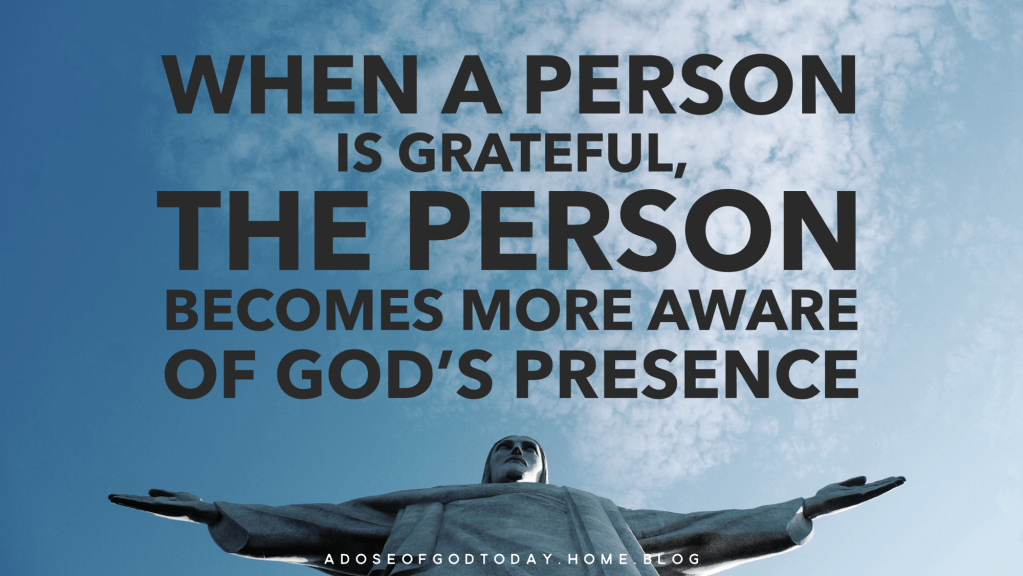
    Thus, when a person grows to be grateful, the person also becomes more aware of the presence of God, the giver of blessings and gifts. Lazarus, Mary and Martha were people who have grown to be grateful to God that is why they also became more conscious of Jesus’ presence.

    However, when we become ungrateful we also take for granted the giver of gifts, and thus, the presence of God in our life. This is what we find in the person of Judas. Judas, who betrayed Jesus, was an example of a person who was ungrateful. He had been with Jesus for the past three years but then he was not fully aware of who Jesus was. He physically encountered Jesus but then his ungrateful heart prevented him to recognize God in the person of Jesus.

    This is the reason why Judas reacted so much when Mary poured expensive oil at Jesus’ feet. Judas reacted harshly! Judas was so bitter! He was not upset about the celebration or about the food and the drinks. You know why? Because he benefited from those. But, he complained about Mary because it was only for Jesus, nothing for him! Judas was not able to benefit from that perfume. That was the reason why he demanded that it should be sold. Judas was the treasurer of the group and if that perfume was sold, Judas will surely keep the money for himself and not for the poor. Because Judas was ungrateful, he was also corrupt.

    This will also happen to us when we remain ungrateful and when we refuse to recognize that everything we have is a gift. When we become ungrateful persons, we also become self-entitled. We become demanding in our relationships. We become critical of those people around us. We are easily threatened when we are not praised and recognized. Yet, we will become stingy of our time and energy and ungenerous of our resources and presence to those who are asking for our help. And most of all, we become indifferent to people around us and indifferent to God, the source of all blessings.

    Thus, God calls us today to be more grateful of the gifts and blessings that we have received each day, no matter how small would that be. But if we have received so much also, be more thankful and be more generous too. Remember, a grateful person is a person who goes forward, because when we are grateful we also become contented of the present, whatever there is. We also become reconciled with the past, whatever that was. And we become hopeful and positive of the future, whatever there will be. Hinaut pa.

    Jom Baring, CSsR