Category: Saints

  • Walk with Graciousness

    Walk with Graciousness

    June 23, 2022 – Solemnity of the Nativity of Saint John the Baptist

    Click here for the readings (https://bible.usccb.org/bible/readings/062322-day.cfm)

    Today we celebrate the birth of John the Baptist a very important figure in the New Testament. This is the reason why the Church celebrates with great dignity his birth. How significant was he then? The Lord promised to send a Messiah who will come to us in order to save us. But before the Messiah will come, a person shall be sent first to serve as a herald who will prepare God’s people for the coming of the Messiah. This herald will not only announce the coming of the Messiah but he too will lead the people to recognize who the Messiah is.

    In the prophecy of the Book of Isaiah, this person shall be a light of the nations because he will teach, lead and gather the people to see God.

    We have heard in the first reading how Isaiah described God calling his herald even before his birth. This herald has been named and appointed by God to lead his people. This is God’s promise to be first fulfilled through the participation of humanity, through us.

    Thus, the birth of John was announced to an old couple, Zechariah and Elizabeth who were believed to be barren and cursed. However, to the surprise of this old couple an angel announced that they will have a son.  Elizabeth welcomed the message from God, but her husband, because it was too much to believe could not accept God’s gift. That is why, Zechariah was silenced by God. He only recovered his voice when his son was born. It was when he gave the name John to his son that the Lord opened his mouth again because the Lord is gracious. Yes, the name John or Johannes means the Lord is gracious.

    The birth of John is God’s manifestation that He is indeed gracious and faithful despite our unbelief and doubts. God continues to reveal himself to us even though we refuse to believe.
    This was the role of John and that was to bring people again to believe that God has never abandoned us. God remembers and God is here with us. This brings us now into the theme of this fourth day of our Novena in honor of Our Mother of Perpetual Help (Feast to be celebrated on June 29 in Iloilo City): Mary walks! And yes, as Mary walks, God also walks. God walks because God remembers His people.

    Hence, when Mary heard the news from Angel Gabriel that Elizabeth was pregnant, Mary walked the road to the hill country of Judea in order to visit and help Elizabeth. Mary’s participation in the life of John the Baptist tells us how the Lord also walks with us in this life as Mary walks carrying Jesus in her womb.

    What does this tell us now? What is God’s invitation for us now? As John was born, God also reveals his graciousness in us. And as Mary walks to help Elizabeth in giving birth to John, Mary’s presence in the birth of John also tells us of a loving presence that is ready to accompany and to be there for us in times of our needs and sorrows, and also in times of our victory and joys.

    Thus, there are at least two invitations for us now on this Nativity of John the Baptist and 4th day of our Novena in honor Our Mother of Perpetual Help.

    First, to be gracious. As God reveals his graciousness through the birth of John, let us also be gracious and be kind to people around us. Expressing our graciousness or kindness to all reveals our heart that is grounded in love and filled with gratitude because God has truly worked wonders in our life.

    Second, we can also show our graciousness by allowing ourselves to walk with others. Life will surely be more colorful and uplifting despite the challenges we have, when we walk with friends.  When we allow others to walk with us and ourselves by being generous to walk with others too, it expresses not just our concern for one another but to be in solidarity with each one. And this is what Mary showed as she walked with graciousness in her heart. Kabay pa.

  • LEARN TO WAIT. LEARN TO DISCERN.

    LEARN TO WAIT. LEARN TO DISCERN.

    March 19, 2022 – Solemnity of St. Joseph, the Husband of Mary

    Click here for the readings (https://bible.usccb.org/bible/readings/031922.cfm)

    As it happens in small villages, Mary must have been subjected to gossips and fake news. Mary was judged without further investigation. The eyes and fingers of the people around her must have pointed and branded her to be a shame. In their eyes, the promise of the engagement was broken.

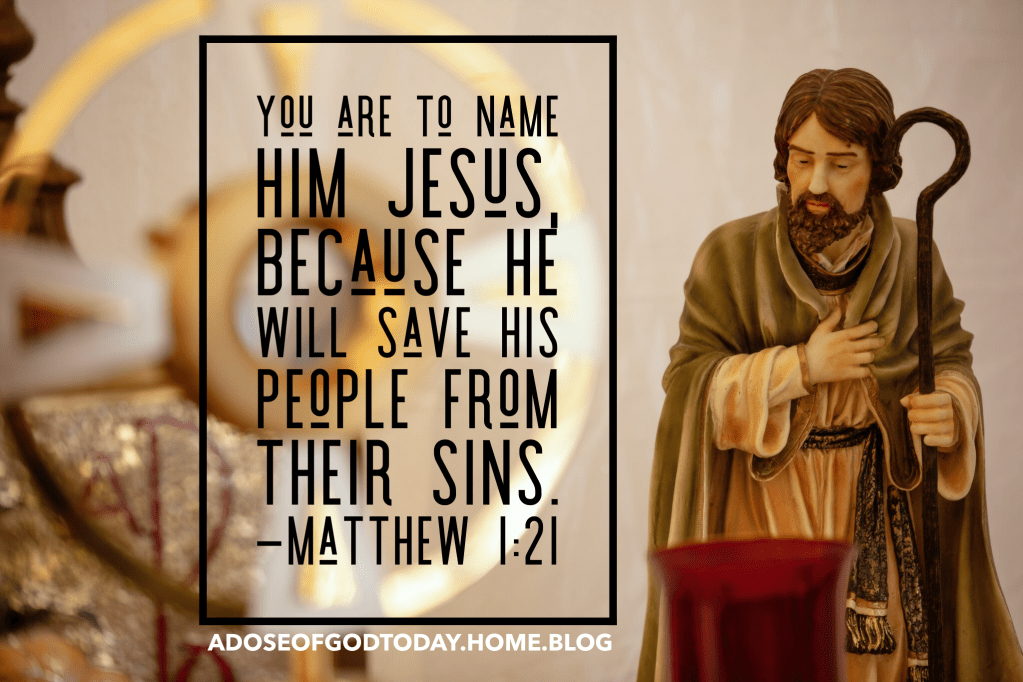
    Joseph also must have been confused and must have been very hurt. However, Joseph’s response was not out of anger or bitterness. In the heart of Joseph, he wanted to save Mary by divorcing her quietly. Joseph must have thought that Mary was in another relationship. To divorce her quietly will allow Mary to be engaged with the man who fathered the baby in her womb.

    This difficult situation in Joseph became the way for God to reveal the divine plan to this gentle and thoughtful man. God must have been “waiting” for the proper time when to reveal to Joseph the divine plan. Thus, when everything was in its place and when Joseph was ready enough, an angel revealed to Joseph the mind of God.

     How did this happen? It was when Joseph was asleep. As Joseph was asleep, God also worked wonders through him. Being asleep in the presence of God is putting all our trust and confidence in the power of God to change and to transform us. To fall asleep in God’s presence is a way of exercising patience. If it was not an act of patience, Joseph would have been eaten by his anxiety. He will not be able to sleep just like us when we are overwhelmed by our concerns and problems.

    Thus, as soon as Joseph awoke from his deep dream, he realized the fulfillment of what he was hoping for and the hope of all humanity, the joy of all. Joseph began to see the scandalous situation of Mary’s pregnancy through the eyes of faith and God’s love rather than on suspicion and disappointment.

    Joseph understood that Mary’s pregnancy was a statement of God’s faithfulness and commitment to us. This is God’s assurance to us now that he is present and he lives in the midst of our lives, in the midst of our pain, of our failures, hurts and fears in order to bring to us His mercy, love and friendship.

    This became the foundation of Joseph’s “patience” as he also faced more trials in his life as the husband of Mary and father to the young Jesus. Joseph proved that to be patient is to be able to listen, wait and discern God’s invitations for him.

    From here, St. Joseph tells us of two invitations.

    First. Learn to wait. This calls us to accept the reality that not everything is under our control. We have to wait then and trust the process that we are going through. May it be the process of towards our healing, towards the realization of our dreams, towards our growth as a person or towards understanding. This calls us also to grow in our confidence in God who promised to be with us and to journey with us in the most trying and even terrifying moments of our life.

    Second. Learn to discern. This is to be able to see life us God sees it; to be able to understand our reality as what God wants it to be understood. Therefore, this is not about “what I think” (or our personal opinion and personal understanding of things which can be very subjective and colored by our biases) but to be able to believe in God’s presence, thus, guiding us to know God’s desire for us. Hinaut pa.

  • ON TAKING RISKS AND NOT LOSING HOPE

    ON TAKING RISKS AND NOT LOSING HOPE

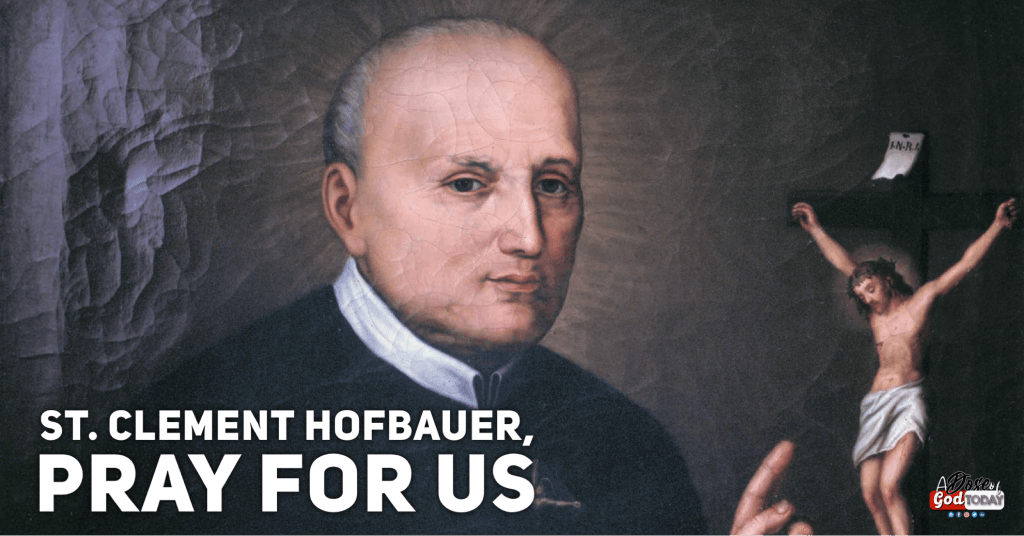
    March 15, 2020 – Feast of St. Clement Maria Hofbauer, CSsR

    Have you failed recently? Is life too difficult these days? Are you confused, depressed and sad of what is happening with your family, studies, work and your entire life now?

                Do not lose hope. Keep the positivity. Keep dreaming!

                Despite failures and difficulties, God has always something good and wonderful prepared for us that we may not yet aware of as of this moment. Life could be difficult these days for you, but never lose hope. Never be afraid of taking risk in trusting your loved ones, your friends, the Church and God especially.

                Today March 15, we, in the Redemptorist Family throughout the whole world, celebrates the Feast of St. Clement Maria Hofbauer. He is considered as the Second Founder of the Redemptorist Family because he took the risk and never lost his hope despite the many challenges and difficulties he faced. It was because of him that the Redemptorists are now present in more than 70 countries around the globe.

                St. Clement was born in Moravia, which is now in Czech Republic. He met “major, major” challenges in his life. At an early age, war had torn his childhood. His father died when he was seven. His mother was poor. As a young man, he had to work and study at the same time to reach his dream.  This is an experience of many working-students today.

                He dreamed of becoming a priest but it seemed that it was just so difficult. Moreover, he pursued his studies by becoming a baker and other works. Yet, as he applied to the local seminary, he was refused. However, this did not discourage him. He became a hermit at the beginning. A hermit is a person who lives alone in a remote place, dedicating life into prayer and penance.

                But, with his friend, Thaddeus Hubl, they journeyed to Rome to find a seminary who might welcome them. There in Rome, they found the Redemptorist Missionaries and expressed their desire, but still, though they had been accepted yet they experienced discrimination because they were not Italians. Again with His friend, Thaddeus, after their ordination, they volunteered and took the risk of doing missions outside Italy. They went to Warsaw, Poland, an action that was unimaginable by the Redemptorists at that time.

                St. Clement was indeed a risk taker and a believer of hope in God’s providence and generosity. In Poland, he revived a dying Church, founded an orphanage and helped victims of war. All these had been his childhood experiences. He lost his father at an early age and was displaced many times because of war. The difficulties of the past made him ready for this kind of challenges.

                However, he and his co-Redemptorists were expelled from Poland when another war broke out. They had to flee until they reached Vienna. Despite the difficulties, Clement did not lose hope. In fact, he made those difficult moments as opportunities to serve God and serve the people around them, whom he loved.

                In Vienna, he met and changed the lives of many young people, intellectuals and academicians. His presence and experiences in life became an inspiration to many. This was because he too was a witness of constant hoping amidst difficulties and challenges in life. He learned how to listen and dialogue with different kinds of people and won their hearts for the sake of Christ.

                In those times, he found God most near to him. And in those difficult times he allowed God to transform him, becoming a person for others by loving and serving, and not in complaining, bitterness and being depressed.

                So, chillax guys! St. Clement did it and so, we can! Continue to dream. Take the risk of trusting God and in not losing hope. All struggles of today shall bear good and wonderful fruits tomorrow. St. Clements has proven that to us!

  • Here the will of God is done, as God wills, as long as God wills

    Here the will of God is done, as God wills, as long as God wills

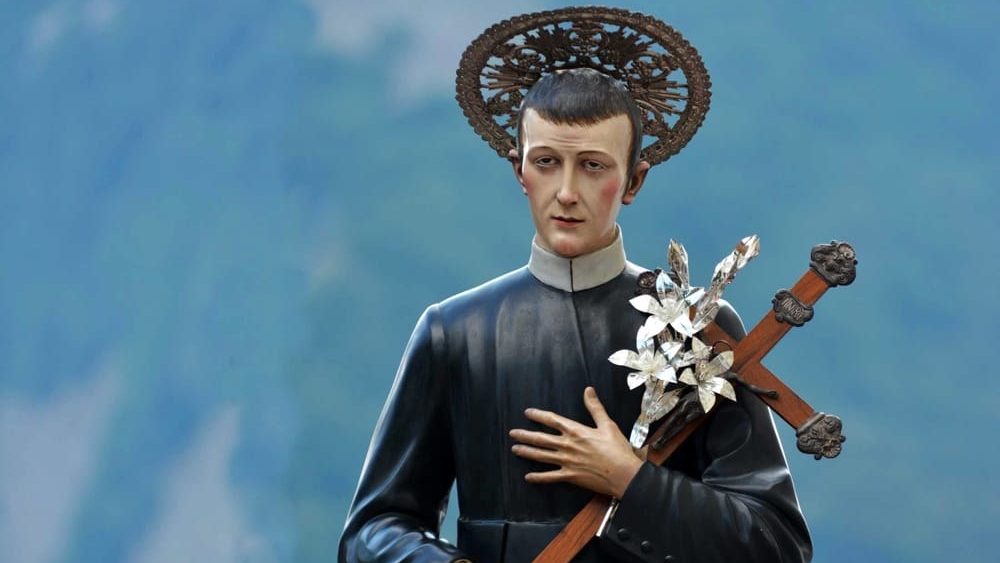
    October 16, 2021 – Feast of St. Gerard Majella, Redemptorist Saint

    “Here the will of God is done, as God wills, as long as God wills.”

    These are St. Gerard’s words of wisdom to us, and to himself. Until now, on the door of his room in Deliceto, Italy where he was formed as Redemptorist & in Materdomini, where he was assigned until his death, Gerard placed a sign with these words: “Here the will of God is done, as God wills, as long as God wills” to remind others & himself who he is, & what his life is all about. 

    Somehow these words reflect the content, the means & the purpose of his life, as Christian. “Here God’s will is done”… His life is all about doing God’s will. “As God wills”… and he does God’s will, by means & through God’s ways, & none other. “As long as God wills”…  and he does God’s will in God’s design & purposes. Somehow this is Gerard’s way of proclaiming that, as God’s will for us, our Lord Jesus Christ is His Way, His Truth & His Life.

    His words of wisdom are based on his lived experience of faith and life, & not just product of inspirations from prayers & contemplation. As frail child, Gerard experienced a lot of bullying & rejections. While working as apprentice tailor, many times he was rejected entrance to seminary & religious life. Not until that he became involved with Redemptorists on mission in their town in Muro Lucano that he was able to join the Redemptorist, though not without the recommendation: “I am sending you a useless brother.” As young Redemptorist, Gerard had bouts of mistreatments, even from his fellow Redemptorists. Like, Alphonsus disciplined Gerard for being humbly silent about a false accusation made against. His deep empathy & remarkable apostolic zeal of counselling & taking care of the poor people have also garnered jealousy & hatred among his very own confreres. And in a highly feudal society & clericalized church of his time, he ran into conflict with his superiors & brother priests vis-à-vis the witness & practice of religious life.

    Despite these odds, all along what sustained Gerard are these words to himself: “Here the will of God is done, as God wills, as long as God wills.” Like St. Paul, Gerard deeply believed that Jesus Christ made him His own, and thus Gerard made Christ his Own. Same way, as Jesus also said in our gospel: “the Father will honor whoever serves me”, Gerard served & followed the Lord, and in life has been favored with many spiritual gifts, among which were prophecy, reading people’s heart & miracles. And now honored in the church as our Saint & patron of expectant mothers.

    Like Gerard, may our Christian faith & life always be attuned with God’s will, so that we may enjoy God’s plentiful redemption now and always. Amen.

  • THE CALL TO MISSION

    August 1, 2021 – Feast of St. Alphonsus Ma. de Liguori

                                                                                                 + Manny Cabajar, C.Ss.R. D.D. – Bishop Emeritus of Pagadian

    Can you recall occasions in your life, which you can call moments of discernment or conviction or moments of decision? Alphonsus had that experience. With clarity and finality, he decided to respond to the Father’s call to mission.

                Alphonsus belonged to a rich nobility in Naples, in Southern Italy. He was a very gifted musician, painter and sculptor. At the age of 16 he was already a doctor of both canon and civil law. As a young, brilliant and successful lawyer in 17th century Naples, he was handling an important case for the Duke of Tuscany. But most likely because the judge was influenced, the judgment went against him. It was shocking. For three days, he would not eat nor leave his room. Then he began to visit the Hospital of the incurables, the equivalent of our AIDS patients today. There he had an inspiration. He heard the Lord say to him, “leave the world and give yourself to me.” He interpreted this as telling him to leave the social class to which he belonged and to become a pastoral priest. He called his experience a vision – a moment of clarity and decision when he knew exactly what God wanted him to do and felt ready and willing to do it.

    While praying and meditating in the cave of Scala he noticed the poor goatherds in the hills and had compassion for them. Not only were they marginalized by society, they were also neglected by the Church. Thereafter, he decided to spend his whole life preaching the Word of God to the most abandoned poor. He founded the Congregation of the Most Holy Redeemer, whose members are more popularly known as the Redemptorists. Drawing inspiration from Alphonsus the Redemptorists try to preach the Word of God to the poor, especially the most abandoned and try to go where many in the Church would not want to go.

                What motivated Alphonsus in his self-sacrificing life? It was no other than the son of a carpenter who also experienced a moment of decisive action when, at about 30 years old, he emerged from his hidden struggle to be his authentic self. Looking around him the carpenter’s son saw a culture of egotism in the pursuit of power, wealth and prestige often at the expense of the poor. It was a culture deeply steeped in sin. Searching for a model to follow he could only find his cousin, John, who was a simple and honest man but a fearless preacher proclaiming a message of powerlessness, simplicity, and humility and demanding of others and of himself to let go of all that was false and inauthentic. So, he went all the way from Galilee to Judea and lined up with sinners to be baptized by John at the river Jordan. His baptism was significant as it was a moment of definite decision, a radical option to accept the call to mission. It signified that a new time has begun in which God would reach out to the poor in a new way through a carpenter’s son. Jesus was His name.

                In lining up for baptism like a sinner, Jesus set aside all exemption. He lined up before someone who would be beheaded for his convictions. Jesus would also die for his convictions. That was a horrific decision and commitment to a non-violent struggle that will win salvation for all. But it had its consolation. God manifested His presence in a form of a dove and a voice was heard, “This is my beloved son in whom I am well pleased.” The human Jesus needed that affirmation. God so loved the world that he sent his only begotten Son who would reverse the conventional way of doing things. Instead of using power to destroy enemies, He would become poor and powerless, like his cousin, John, allowing his enemies to apparently destroy him.

                In the first 300 years of the Church’s life, baptism and ordination to a leadership role, were a very serious commitment. Leadership in the Church was a passport to martyrdom in the tradition of John and Jesus. Christianity opposed the values of the world and the human leaders espousing those values. That’s why authorities saw the Christians as a threat and wanted to silence them through cruel persecution. A huge  change took place in the 4th century when the Bishop of Rome crowned Constantine Emperor. Christianity became the official religion of the Empire. Bloody persecutions ceased. Many bishops and priests became partners of kings and princes and were given titles like “Prince-Archbishop,” “Your Grace,” “Honorary Prelate.” The Church gained power and prestige but sadly lost some of her prophetic freedom. The irony was that it now became harder to follow Jesus as a Suffering Servant.

                Today, are we not victims still of a similar situation? Don’t we see vestiges of power, prestige and wealth in the Institutional Church to which we also belong?  Don’t we see that what we criticize in the Church’s leadership also lurks in our communities and in ourselves as individuals? In our prayer, don’t we often court power, prestige or wealth for ourselves or our families? We need a serious soul-searching as community and as individuals to help us see that the challenge of our baptism is to let go of all control, of all wealth and privileged positions. Many are afraid of this challenge. To let go is not easy. But let us remember that when we face the challenge in big or small things we validate our baptismal promise!


               Can we not do that? Of course, we can. Just as the Spirit empowered Jesus at his baptism, the same Spirit empowers us and makes a dwelling place in us in a special way at baptism. We take courage from this. If we connect with the Spirit in us through prayer and meditation we can let go of all directing of God. We can open ourselves up and say, “Speak Lord my heart is listening.” Meditating and being still in the center of our being surely helps. It is when we are still at the center that we can hear our own inner wisdom blending with the wisdom of the Spirit. It is when we are still that God speaks to our hearts, telling us what he really wants us to do now.

                We find our efforts at being still and silent at prayer quite frustrating at times, but we don’t give up. We keep struggling at it because at some time we don’t expect the truth will surface from the Spirit within us, like a bubble rising to the surface of a calm sea indicating there is a diver below. Dear confreres and friends: remember this about prayer and meditation – they dispose us in decisive moments to accept our baptism and its consequences just as it disposed St. Alphonsus to hear the truth within and follow Christ in seeking and doing God’s will through preaching His word among the most abandoned poor no matter what the cost was for himself. St. Alphonsus’ constant union with God through prayer empowered him to follow the Lord with fidelity and zealously proclaim the good news of the Kingdom to the poorest of the poor. Amen.