Category: Saints

  • God is in our midst

    God is in our midst

    March 19, 2020 – Solemnity of St. Joseph, Husband of Mary

    Click here for the readings (http://www.usccb.org/bible/readings/031920.cfm)

    Homily

    When life becomes confusing, messy and overwhelming, how do I react? When a relationship is intrigued by anger or hatred or contempt over a misunderstood situation, am I easily driven by my feelings or do I withdraw from the situation and hide? 

    Today, on this Solemnity of St. Joseph, Husband of Mary, the Gospel presents to us an attitude that portrays wisdom and compassion and above all an attitude that seeks guidance from God. Joseph’s relationship with Mary was intrigued with a suspicion of scandalous betrayal and unfaithfulness.  Within the period of engagement between them, Mary got pregnant. The people in their village knew that Joseph was not the father. Joseph himself was confident that Mary’s child in her womb was not his. Joseph knew that the Jewish law would find Mary guilty of adultery.  This is an act punishable by shame and death. Their law mandated Joseph to divorce Mary.

    In a small village like Nazareth, gossip seemed to be faster than lightning. Surely, every person in their village knew that Mary was pregnant. If we would imagine Joseph, certainly, he too was hurt. He might have felt being betrayed. Joseph was most likely in darkness at that moment, confused and overwhelmed by the situation.

    But then, Joseph showed a non-reactive attitude. Instead of condemning Mary immediately, he showed compassion by divorcing her silently and avoiding to put Mary into disgrace and bullying from others. This particularly, pleased God. Joseph was a good man, righteous and thoughtful. We expect Joseph to have been really hurt by this scandal yet what Joseph showed towards Mary was mercy rather than revenge and love rather than hate and not withdrawal in the midst of his own disappointment, confusion and fear. 

    This has become the way for God to reveal the divine plan. That is why, God revealed to Joseph in the night of dreaming and pondering. Through that revelation, Joseph’s view of Mary and her pregnancy and even of himself became larger and brighter. Joseph began to see the overwhelming and scandalous situation of Mary’s pregnancy through the eyes of faith rather than his fear and disappointment; through God’s love rather than anger and hate.
    Joseph saw and felt that what has been revealed to him was truly scandalous because God revealed Himself to him, because God has become man there in the womb of Mary. It was scandalous because we thought that God is up there or out there in the heavens only, a place that no person can reach. But then, Mary got pregnant. 

    This is what blows our mind now, because through that unexpected pregnancy, God tells us the He is intimately present with us; he tells us that humanity can become pregnant with God.

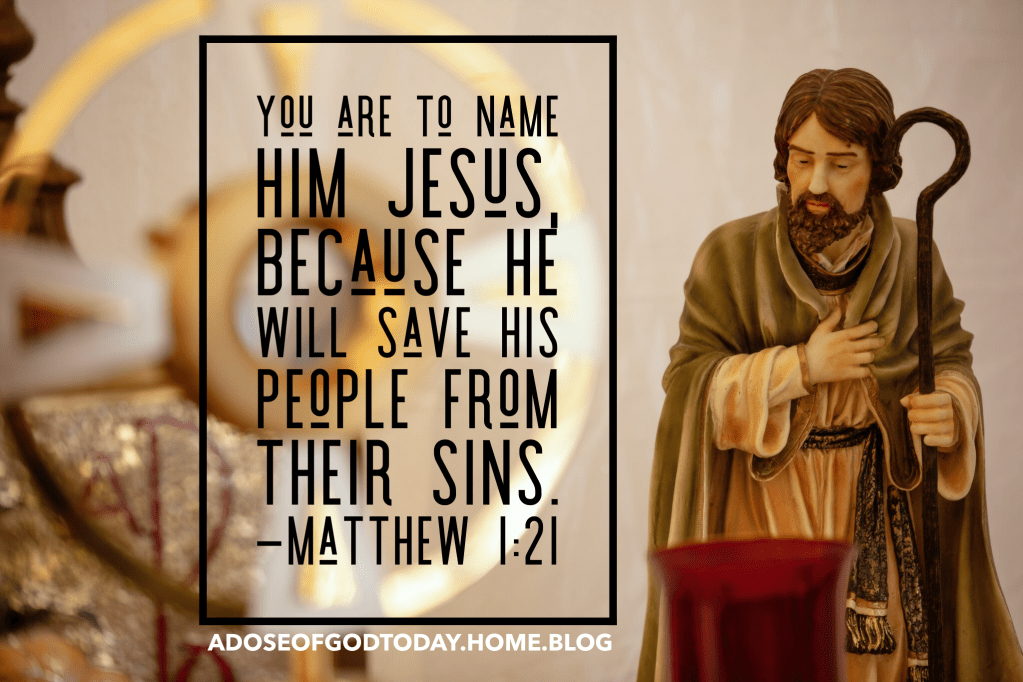
    After the revelation to Joseph, he understood that Mary’s pregnancy was a statement of God’s faithfulness and commitment to us. God commits himself to be our God; He commits himself to choose us as His people. For this reason, Joseph was told to name the baby, “Jesus, because he will save his people from their sins.

    This is God’s assurance to us now that he is present and he lives in the midst of our lives, in the midst of our pain, of our failures, of our disappointments, hurts and fears and even in the midst of an overwhelming situation as we are experiencing it today amidst the Covid-19 that brought panic and fears in our global community. Jesus is in our midst in order to bring us His mercy, his love and his friendship, and the assurance of his presence and of his healing power. Hinaut pa. 

    May, Joseph, the Husband of Mary, pray for us.

    Jom Baring, CSsR

  • God bless you

    God bless you

    January 1, 2020 – Solemnity of Mary, the Mother of God

    Click here for the readings http://www.usccb.org/bible/readings/010120.cfm

    Reflection by Fr. Mar Masangcay, CSsR

    God bless. God bless you.

    In our world today of texting, almost everyday we read, hear and say those words: God bless, God bless you. But what does it mean? How do we understand it?

    Sometimes we use those words to express what we really refer to mean as “May God bless you”. With this, we imply that it is God who is to give you blessings at the same time we hope that God will grant you the blessings you need or expect from him. 

    Truly, it is really God who grants us his blessings, but we must not forget that his blessings are given to us but also through us. When Jesus gave his blessings to the people our gospel, he does not only assure them of God’s blessing but preach to them that God’s glory and blessing may be revealed through them. The poor, hungry, weeping, hated, rejected, insulted are fortunate not only they receive but make manifest God’s blessings and graces. Meaning, God grants everyone his blessings by making you, me, us and others not only receivers but also sharer and giver of blessings. In as much as God is the author of our blessings, by our words and actions, we can also agents of God’s blessings to others. 

    Our readings today are all about blessings. St. Paul describes how blessed we are for thru Jesus we have now come to acknowledge God as Abba, our Father. And in our gospel today, Mary recognizes not only how blessed she is and we are through her child Jesus, but she cherishes all these graces as she “kept all these things, reflecting on them in her heart. And lastly in the first reading, the Lord teaches us how to bless others. Meaning, we should be grateful for we are blessed, and should cherished, savor, and ponder our blessings in our hearts at the same we must learn how to give and share our blessings to others. Blessings are ours to joyfully receive and celebrate, at the same time blessings are ours to share with others. As we begin a new year in our life with the Lord. We must then be a sacrament of God’s, an instrument and sharer of God’s blessings to others by our good words and deeds.

    Here, we must also never forget that God’s blessings are not only “yet to come” but are “here and now”. It is not only a promise but a reality. It is His gift to us now, not only the reward that we expect and need from him, for what we receive from Him is more than just what we need and expect from Him. Usually it comes as a surprised Gift which is beyond our expectations. As a text message I received this morning say: 

    God’s blessings may come as a surprise and how much we receive depends on how much our heart can believe. May you be blessed beyond what you expect.

    Another year of Blessing has begun. We greet each other not only with a Happy New Year but a Blessed Year ahead. May God bless me. God bless You. God bless us. Nawa’y pagpalain kayo at tayo ng Panginoong Dios.

  • God blesses you as God blesses me

    Solemnity of Mary, Mother of God: January 1, 2020

    Click here for the readings http://www.usccb.org/bible/readings/010120.cfm

    Homily

    Can you please look at the persons near you and say to that person, “God bless you!” The words “TO BLESS AND BLESSING” are mentioned in the Old Testament 552 times and 65 times in the New Testament. From the very beginning God blessed all his creatures. This is an evidence that God has blessed every day and every moment of our lives.

    As we gathered today, we thank the Lord for the many blessings we have received. We also celebrate January 1 and begin a new year, we are filled with hope, new aspirations, and resolutions for the new year that has come that it may be favorable and bring more blessings to us. 

    For many centuries our Church designated the 1st day of the year with the Solemnity of Mary, the Mother of God. Today’s solemnity invites us to capture the real hope and the great blessing that has come upon us, to each of us.

    The Book of Numbers reminds us of God’s blessing being invoked upon his people. Moses is told by the Lord to convey to Aaron and his sons that the Lord blesses and protects them. This is God’s promise that shall never be forgotten.

    God never forgets his promises. God is always true to his words. God’s great blessing is manifested in the birth of the Son of Mary. He is the promised savior of the world who brings peace in our hearts and homes. His name is Jesus, which means “Yahweh Saves.”

    This blessing is brought to us through Mary. Her “Yes” to God makes it possible for us despite her many hardships. Mary from Nazareth knows no riches or privileges in her lifetime. Nobody has ever lived, suffered and died in greater simplicity, marked by a strong and simple faith. And amidst of these, she is the Theotokos¸ the mother and bearer of God to the world and to each of us.

    What is also interesting in our Gospel is that, this great blessing was first received by people who were not so important in the Jewish society. They were at the lowest class, deprived of social recognition and poor. They were the shepherds yet have been blessed with the revelation from an angel. That revelation gave them the joy to knock every door in Bethlehem until they found the baby with Mary and Joseph. They have captured in their hearts the hope of salvation for they have seen the face of God

    With joy, the shepherds brought the blessing to others they met on the road. They became preachers and witnesses of God’s blessing.

    It is only rightful also that as we hope for more blessings to come to us in this New Year, let this Solemnity of Mary’s motherhood be a reminder to each of us. God has already blessed us with good things and plenty. Count them!

    As Mary is able to bring Jesus to us and the shepherd able to preach the blessing that they have received, we too are called to bring Jesus to others. To bring blessing and not curse. To hope for blessing not just for ourselves but especially for those who are most needy, to those whom we dislike and our enemies. So that in the days to come and in this whole year of 2020, we may always become a blessing to everyone. Hinaut pa. 

    Jom Baring, CSsR

  • When God was a refugee

    When God was a refugee

    December 28, 2019 – Feast of the Holy Innocents, martyrs

    Click here for the readings http://www.usccb.org/bible/readings/122819.cfm

    Homily

    King Herod was hungry for power. When he heard the news that there will be a new-born king, he was threatened. In his hunger for power, he did not want anyone to share in what he enjoyed. In fact, Herod murdered his own children so that no one will take the power and riches from him. Hence, how much more if the one who is to reign is a baby? Herod was indeed frightened and threatened.

    God reveals Himself not to the rich and the powerful, not to politicians and famous personalities of our society, but, to simple and poor people – because the rich and powerful, the famous and the “big shots” do not need God. They believed that they themselves are “gods.” This is the attitude of Herod and the reason why he felt threatened upon hearing the news of the new-born king.

    Sadly, because of so much insecurities and the corrupted heart of Herod, he would do whatever he can in order to eliminate that baby who threatened his power, wealth and comfort. What had been sacrificed were the lives of many innocent baby boys. They were murdered right before the eyes of their mothers and fathers. There was no mercy! It was just evil!

    Today’s feast of the Holy Innocents reminds us of all the innocent people who have died and who are dying because of the cruelty and oppression of others. The Gospel also tells us that Joseph through the instruction of the angel brought baby Jesus and Mary to Egypt. Egypt was a common place for Jewish refugees and people who seek safety. Egypt had become an important place in the life of Jesus as it had become a safe place for him. This tells us, that even God became a refugee because of the people who rejected him.

    Thus, there are two invitations that I would like you to remember today. 

    First, let us be aware of our insecurities and of our tendency to be threatened by the goodness of others. Being aware of these, allows us to come to the light as the first letter of John tells us. It is by coming closer to God that we also come to light, therefore, making ourselves exposed to God. This will lead us to recognize our own insecurities and tendency to be abusive, corrupt and insecure. 

    Second, as Egypt had been a safe haven for Baby Jesus, allow ourselves also to be the “Egypt” for others – that we become a safe haven for people who need help, love, care and protection. This will not be easy as it will be demanding us of our time, presence and resources. However, let us also remember, in some ways, we have taken refuge to others, friends and family members when we needed help. It would also be good to return the goodness that we have received to others.

    In this way, we may be able to make Christmas a memorable and holy day. Hinaut pa.

    Jom Baring, CSsR

  • He saw and believed

    He saw and believed

    December 27, 2019 – Friday – Feast of St. John, Apostle and Evangelist

    Click here for the readings http://www.usccb.org/bible/readings/122719.cfm

    Homily

    It is just fitting for us to celebrate the feast of St. John the Evangelist soon after Christmas Day. The opening lines of his gospel sum up in a few words what we are celebrating at Christmas, he wrote and ‘the Word became flesh and dwelt among us.’

    This, the last of the four gospels to be written, is based on the eyewitness testimony of the favoured one described as the Beloved Disciple of Jesus. This could give us the impression that Jesus loved this disciple more than all the other disciples. But other texts in the gospels suggest that Jesus loved and loves all his disciples equally. He said to them all as a group, and indeed says to us also, ‘As the Father has loved me, so I have loved you.’ Yes, we are all Jesus’ beloved disciples.

    What distinguishes John from the other disciple is that he received and responded to the love of Jesus more fully than all the others did. As we have heard in the gospels, John, the youngest of them all was the only male disciple who was present at the foot of the cross; he remained faithful when others had shown themselves to be unfaithful; he remained fearless when others ran away and hid because of fear.

    John’s faithful love brought him to the empty tomb faster than Peter; and because of this, it made John to understand the empty tomb and recognize God’s power because, ‘he saw and believed.’  

    Yes, John saw the empty tomb and believed that Jesus was raised from the dead even in the midst of fear, doubts and confusion. He is the disciple who encourages all of us to give ourselves wholeheartedly in love to Jesus as he has given himself fully to us.

    Each of us has seen and experienced God’s love and generosity in our own lives. I would like to invite you to be more aware of those moments, of those experiences so that they may lead us to Jesus. Let us truly believe, then, in Him who has come to us to live with us. Let us also come to him, to come closer to God in this season of Christmas. Hinaut pa.

    Jom Baring, CSsR