Category: Saints

  • Signs and Symptoms not of Covid-19 but of God

    Signs and Symptoms not of Covid-19 but of God

    Advertisements

    June 27, 2020 – Feast of Our Mother of Perpetual Help

    Readings: Isaiah 7:10-17; Revelation 12:1-6,10; John 19:25-27

    Homily

    As the Corona Virus 2019 stole the spotlight, the medical experts warned us of the signs and symptoms of the virus. Accordingly, the virus can cause a range of symptoms to a person from mild illness to pneumonia. Its most common symptoms, they said, are fever, tiredness and dry cough. Others may also show aches and pains, nasal congestion, runny nose or sore throat.

    We are made aware of it and thus, when we begin to have these signs and symptoms then we are advised to seek medical help. It is, definitely, important to be aware of these because through this first step then, we can save lives, not just our life but also of those who are dear to us.

    Moreover, looking at it from a distance, this pandemic is in itself a sign that no matter how much we have achieved in life, or no matter how much power and wealth we have accumulated, we are vulnerable. This pandemic also is a sign that tells us how competent or ignorant, sincere or corrupt, and organized or messy our leaders can be. This pandemic also is a sign given to us how individuals and communities have reached out to those in need.

    With all these signs and symptoms that the Corona Virus Pandemic has brought to us, this allows me to dwell deeper into the feast we celebrate today, the Feast of Mary, Our Mother of Perpetual Help.

    Our first reading is very interesting because it tells us about signs. Usually, we would ask signs from God, but, in this story of Ahaz, King of Judah, it was the Lord who asked a man to ask for a sign. Ahaz’s story seemed to be very good because he did not ask a sign from God. He refused to ask a sign. However, his refusal to ask a sign from God was actually a refusal to believe in God.
    What really happened? Ahaz sold himself to another god, to the King of Assyria. He sold himself because he thought that this foreign power, Assyria will only be the one who can grant immediate protection and salvation for him and his kingdom. Instead of asking wisdom from the Lord on how to lead his people, Ahaz went to the Assyrians and pleased them. The kingdom of Judah at that time was under the threat of two other kingdoms, Syria and Israel. Instead of trusting the Lord to protect and save him, he went to another god, to whom he thought was his savior.

    However, history tells us that as Assyria defeated the enemies of Ahaz, he became a puppet of the King of Assyria. Not only that, the Assyrians imposed heavy taxes to the people and blasphemed the Temple of the Lord by introducing the Assyrian gods.

    This is the reason why it was the Lord himself who offered Ahaz to ask for a sign so that he may believe that God will bring salvation. Yet, even though Ahaz refused, God still promised a sign of salvation. This sign is through a virgin who will conceive a son. This son will be called Emmanuel, meaning, God is with us.

    This is the sign that even in the midst of our own disbelief, doubts and even refusal to believe, God remains with us. God remains our God and continues to be for us and with us. This is a sign of God’s faithfulness in us despite our unfaithfulness. This is a sign of God’s generosity despite our ingratitude. And this is what we celebrate today on this feast of Our Mother of Perpetual Help. The Virgin who is carrying the son, the Emmanuel in her arms, is the great sign that God showed to us.

    There again on the cross, as the Gospel of John tells us, the son showed us his greatest sign of love and faithfulness. The son has come to be with us and on the cross he stretched out his hand for the sake of all. The son, indeed, comes to help us perpetually.

    Jesus is in fact the true perpetual help. Mary is instrumental because through her, God’s sign has been brought to us. She allowed herself to be God’s instrument of help and compassion, to be the mother of the Perpetual Help.

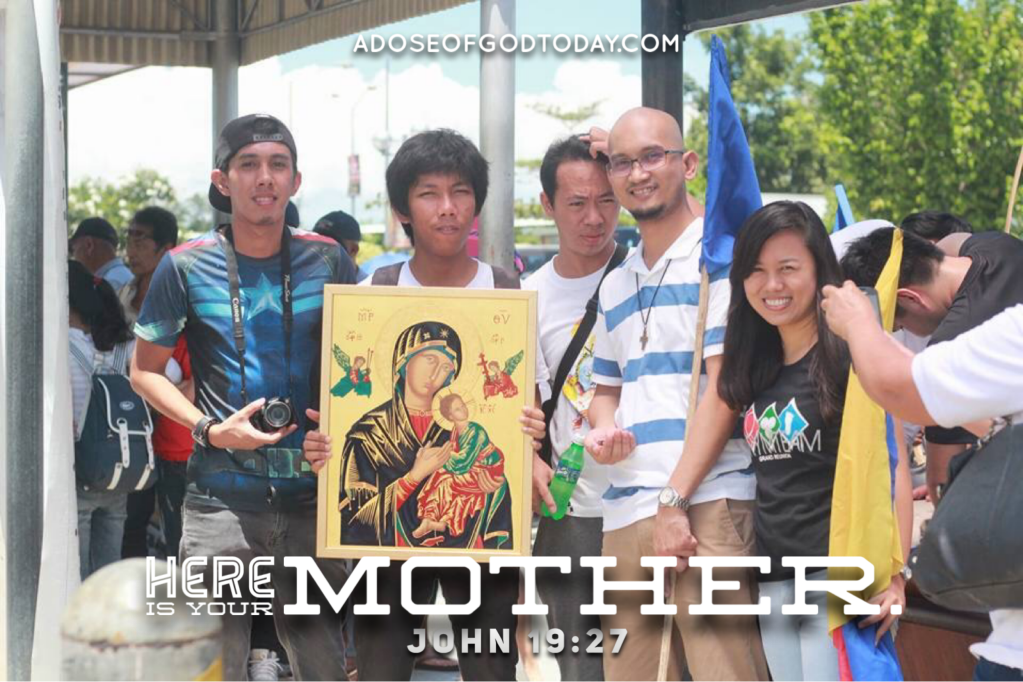
    Even when Jesus was about to die, he assured us to have a mother, that we will not be orphaned and alone. Mary’s presence became the sign of God’s presence among us by becoming our mother.

    This is the reason why we, the Church, would always seek guidance and inspiration from Mary because we feel the identity of being a child to her. The intercession of Mary as a mother, becomes a bridge of faith. It is to lead us to her risen Son, Jesus Christ.

    Thus, this feast that we celebrate does not actually point to Mary. This feast points to the greatest sign, the perpetual help, and who is Jesus himself.

    What is it to you and to me now, to us, who are devoted to Our Mother of Perpetual Help? How shall we express our act of thanksgiving for all the graces and blessings received?

    This feast invites us that each of us and that our community becomes a sign of God’s help and love, compassion and faithfulness. This means that we let our devotion transform our life. It means that our devotion should not only remain a mere devotional practice but must also flow into our actions and words, into our decisions and choices in life.

    Our devotion, then, is call to mission. It is mission because we are sent to become signs and symptoms of God’s goodness. I invite you then this time, to discern for yourself on how you could be a sign and symptom of God’s help and compassion to people around you.

    VIVA MARIA! VIVA HESUS!

    Jom Baring, CSsR

  • God is always gracious even when we are not

    God is always gracious even when we are not

    Advertisements

    June 24, 2020 – Solemnity of the Nativity of St. John the Baptist

    7th Day of Novena to Our Mother of Perpetual Help

    Click here for the readings (http://www.usccb.org/bible/readings/062420-day.cfm)

    Have you been in a point in your life when everything seemed to be so devastating?

    Though you recognized that there are blessings but then, life for you appeared to be so unfair. Because of the difficult circumstances in our life, these could lead us to believe that we are in total misery. Perhaps because of the many failures you had in life that it becomes difficult to see any hope. Possibly because of the misfortunes that happened with your relationships, with your job or business that you also seemed to believe that God has completely forgotten about you. The unfavorable turn of events in your family or your other relationships could have led you this moment to believe that you have been deprived of happiness.

    Such experiences and belief may lead us to become cold towards God’s graciousness in us. As a result, we may become dismissive of God’s invitations and graces intended for our growth and participation in God’s plan for us and for our community.

    This has been the case of this man, Zechariah. In fact, there were many interesting events surrounding the life of this priest of the temple. The Gospel told us that Zechariah became mute, he could not speak after the angel revealed to him that God’s graciousness was upon him. Zechariah did not believe and dismissed God’s grace that he and his wife will have a son.

    What led Zechariah to become like this was the failures and shame he experienced in his life, as a man, as a husband, and as a priest of the temple. We knew that Zechariah and Elizabeth had no son until they were very old. With those many years of being childless they endured the shame of having no child.

    Their culture and faith believed that a childless couple was cursed and punished by God for the sins they committed or committed by their ancestors. Yet, Zechariah knew that he and his wife did not deserve such curse and punishment. Zechariah must have prayed a lot to God to give them a child. Yet, for those many years of praying, heaven seemed to be so silent. God was seemed to be so far away from him.

    Interestingly, God had not revealed anything to His chosen people for the past 400 years. God’s last revelation through a prophet was in the Book of Malachi. And for that long period of waiting, Zechariah also must have become too tired from waiting.

    This looked natural to a person who believed that God had already forgotten him. Zechariah, therefore, performed his duties in the temple mechanically. His heart too had grown tired and indifferent. This was the reason why he couldn’t believe the words of the angel. Instead of listening and welcoming God’s grace, he rather argued and rejected it as nonsense.

    That’s why Zechariah was deprived of his voice and hearing. It was God’s way of telling Zechariah that he ought to be more conscious of God’s presence and of God’s graciousness expressed in many ways.

    Indeed, the birth of John was the greatest sign for Zechariah and Elizabeth that indeed God did not forget them. The birth of this child led Zechariah to affirm that God is gracious. In fact, the name John means God is gracious.

    In that graciousness of God, he made John as the very instrument to bring people back to God, and to lead people closer to God. This had been the experience of Zechariah. God never left him. It was Zechariah who gradually distanced himself from the Lord. Thus, through the birth of John, this son was bringing back his father back to God. John was the herald, the announcer who guided people to the Lord.

    This is what we have heard in the first reading. In the prophecy of the Book of Isaiah, this person shall be a light of the nations because he will teach, lead and gather the people to see God. The birth of this person is not by accident but planned well by God.

    Isaiah described God calling his herald even before his birth. This herald has been named and appointed by God to lead his people. This is God’s promise to be first fulfilled through the participation of humanity, through us.

    The birth of John then, is God’s manifestation that He is indeed gracious and faithful despite our unbelief and doubts. God continues to reveal himself to us even though we refuse to believe or when we become indifferent.

    This was the role of John and that was to bring people again to believe that God has never abandoned us. God remembers us and with us. This made John a great and important prophet because he reminded the people about God, made people recognize God and brought them close to God. Yet, because of this role of John, he paid it with his life. He was martyred, beheaded actually, because of this cause to make people recognize God.

    Advertisements

    On this 7th day also of our Novena-Mass in honor of Mary, Our Mother of Perpetual Help, we remember in a special way those who are greatly suffering and stricken by wars and conflicts caused by issues of racism and imperialism. Many of our brothers and sisters have been displaced, died and in dire state because of war and conflicts.

    Hopefully, through our devotion to Mary and through the invitation of God on this Solemnity of John the Baptist, each of us also will become instruments of God’s graciousness. In the way we live our life, perform our duties and express our faith, we may be able to lead people back and close to God and to discover a life filled with peace and love with God and with each other.

    Thus, even if our situation is far from those who are victims of wars and conflicts, at least in our own sphere of influence we shall also do our part to become an instrument of peace and people who lead others to the Lord.

    Meaning, you as parents, you are in the best position to lead your children to God. You are there to prepare the way of the Lord in the hearts of your children. Teachers, educators and persons who are in authority, you too are in the position to influence your students, mentees and subjects to discover God in your authority. As friends or co-workers, we too are in the position to let those people around us to realize that God is in us. Through us, people around us may discover and be led closer to the Lord.

    This, indeed, will be our best way of expressing our devotion to Mary and gratitude to God for He is gracious to us. Hinaut pa. Viva Maria! Viva Hesus!

    Jom Baring, CSsR

  • Keeping God in our Heart

    Keeping God in our Heart

    Advertisements

    June 20, 2020 – Saturday, Immaculate Heart of the Blessed Virgin Mary

    Click here for the readings (http://www.usccb.org/bible/readings/060820.cfm)

    What is it that you consider as the dearest for you? Or who is it that you consider as the closest to your heart?

    Yesterday, we celebrate the Solemnity of the Sacred Heart of Jesus and today, the feast of the Immaculate Heart of Mary, his mother. The Sacred Heart of Jesus reminds us that God is indeed loving and forging, compassionate and merciful. And in that heart, we are the closest to God. We are God’s dearest people.

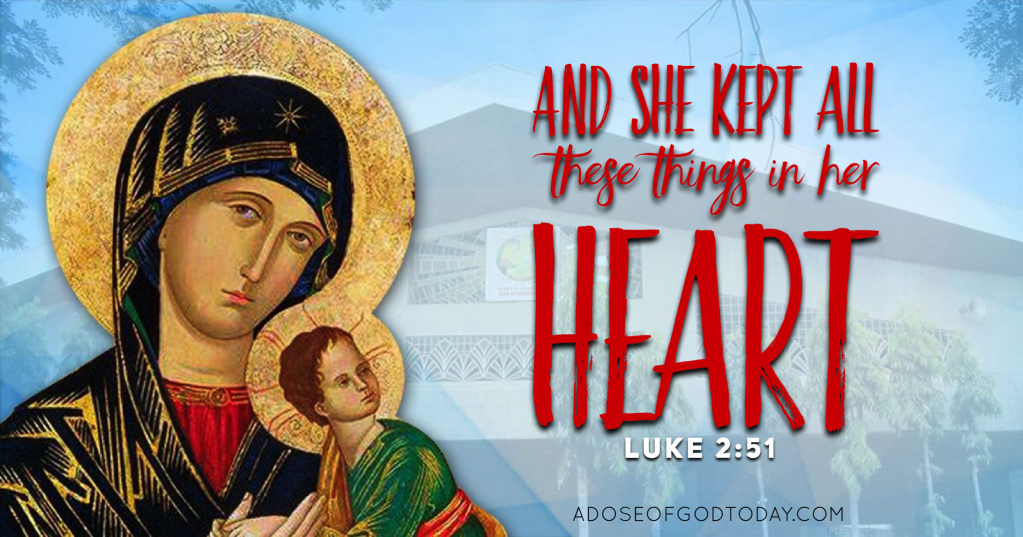
    In this feast, the Gospel of Luke tells us who is the dearest and closest in the heart of Mary. This is where we could also find the strength of Mary. Just look at the image of Our Mother of Perpetual Help. Her son Jesus carried by her left arm also rests on her chest where her heart is.

    Mary had been confused and afraid at the annunciation of the Angel. At that moment she too must have felt overwhelmed at God’s unfolding in her life. The events surrounding the birth of her son must have made her more confused at the amazement and joy she experienced. There were many events there that must be beyond her expectation.

    In today’s Gospel, we were told how the young boy Jesus spent his days in the temple sitting among the teachers. But the words of the young boy Jesus, “Why were you looking for me? Did you not know that I must be in my Father’s house?” has left Mary and Joseph baffled. They must have felt the pain of the seemingly indifferent words of Jesus after their days of anxious finding of him. Those words were difficult to understand at that time.

    However, just like at the annunciation, at the visitation of the Shepherds in the manger and now here, she kept all these things in her heart.

    With all the complexities, strangeness and difficulty to understand the situation, Mary has kept the Lord close to her heart. She kept all those revelations from the Lord close to her heart that she may be able to understand them in the way God desires them to be understood.

    This was how Mary would always find wisdom and strength because with the many events that happened in her life, she might not be able to bear them all. Mary will surely remained confused, afraid and unable to decide and do anything if she chose to distance herself from the Lord by reacting out of impulse or mere emotions.

    Keeping all those things in her heart” really means that she tried to understand how God was uncovering and revealing to her the plan of salvation. Mary realized that God reveals Himself every day. Mary did not want to miss all of them. Consequently, she sought the best way of understanding them by not reacting to every event through mere emotion or just out of compulsion.

    Hence, Mary did not react out of anger or even disappointment in front of the young Jesus. Though she did not understand his words, but she must have felt that there was something deeper in there. God must be behind it. Thus, in her confusion, she kept all those things in her heart, to ponder them, to seek wisdom and understanding in the way God wants her to understand them.

    But most of all, Mary was able to do that because within her heart, God is there already. She has welcomed the Lord and allowed the Lord to be always in her heart. This led her into that kind of understanding from God’s perspective and so she responded to every invitation of God for her, willingly and lovingly.

    This is how we find Mary’s presence captivating in our Christian faith because her very life is an example of a perfect communion with God. This how we also find comfort in her, as a mother, because her human heart is touched by God’s heart.

    Advertisements

    Today’s feast, God’s invitation for us also is to grow in that area, that like Mary, our heart too will be more welcoming to the Lord and to allow the Lord to be in our heart. This is an invitation to make God as the closest and dearest in our heart. It is in this way that we shall also find understating, wisdom and strength in the many infoldings of events that happen to us everyday.

    In particular, these days of the pandemic has made us feel uncertain of the coming days and anxious of the present. Many of us felt insecure materially, emotionally and perhaps also spiritually by now. However, do not waiver, do not remain stunned by these difficult days, remain vigilant instead by pondering and keeping all the things in our hearts.

    May I invite you then, as we find our ways on how to live and adjust ourselves with the “New Normal” set aside a time to ponder, to listen deeper and carefully to the many events and circumstances happening in our life now. As we allow God to be closer to our heart and seek the Divine wisdom, we may also become more welcoming of the presence of others, more connected with people around us as Mary is to us. Hinaut pa.

    Jomil Baring, CSsR

  • To Become Persons of Encouragement

    To Become Persons of Encouragement

    Advertisements

    June 11, 2020 – Feast of St. Barnabas, Apostle

    Click here for the readings (http://www.usccb.org/bible/readings/061120.cfm)

    People who encourage others would always bring support and growth because encouragement nurtures confidence and hope. Parents who would give generous encouragements to their growing children would find children to be happier and lively. Teachers who would also express words of encouragements to their students would find them animated to perform well in their studies. 

    This is also true among employers or corporate heads. A supervisor or manager who is generous in expressing encouragement to his/her workmates or colleagues or employees would surely find people around him or her to work confidently and competitively in a healthy way. Thus, a person who is being looked up by many as a leader and expresses words and actions that unite people, that heal division and reconcile differences, creates a space that bring people to work together. However, when a leader or any authority figure becomes vicious in his or her speech or acts unfaithfully from his or her duties, promises and words, then, he or she promotes unwarranted conflicts and stress to people.

    Moreover, when words of encouragements are expressed whether at home, at school or at work, they lessen unnecessary stress, avoid unnecessary conflicts and rather promote self-confidence, trust and hope. 

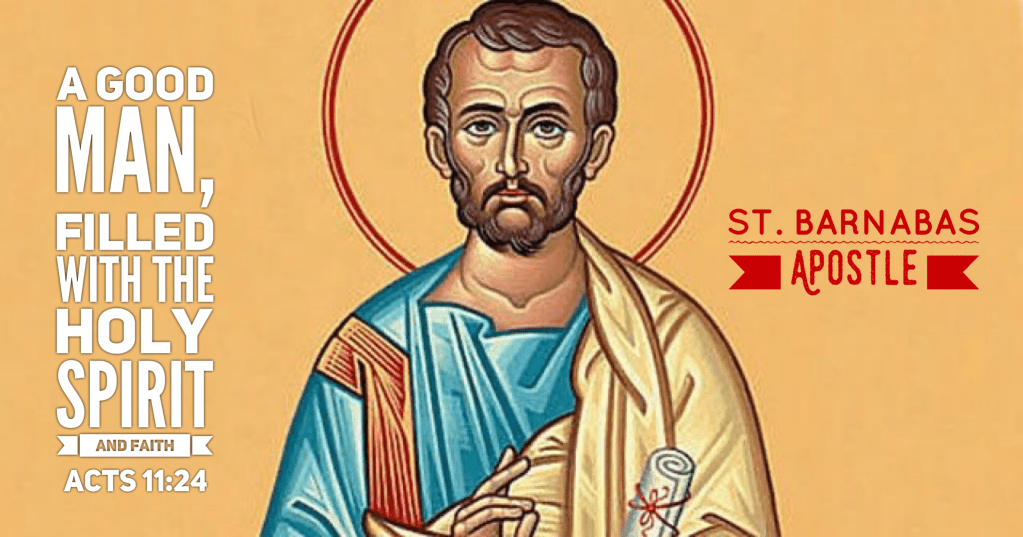
    This attitude of encouraging others had been shown to us through the person whose feast we celebrate today. St. Barnabas, an apostle, was a man of encouragement. During his lifetime, in his ministry, he never forgot to encourage people around him. In fact, it was through his encouragements, together with St. Paul, that they helped and nurtured the early Church to grow and to mature. It was in the Church of Antioch, through Barnabas too, that the Church realized that indeed, it is Catholic or universal in its nature. In Antioch, Jews and Gentiles lived together. Despite the differences in culture, language, and history, the Church became one in faith but so dynamic and vibrant in living together as Christians. 

    It was in Antioch also, that we, believers of Jesus, were first known as “Christians.” Thanks to that attitude of Barnabas because his encouragements to the first Christians made them confident in living together and become reconciled with one another. In fact, the name Barnabas means, “the son of encouragement.”

    The Acts of the Apostles reminds us of the attitude of Barnabas that he was “a good man, filled with the Holy Spirit and faith (Acts 11:24).” This tells us that when we welcome and allow the Holy Spirit to satisfy us, then, we also become discerning on how the Holy Spirit works in the life of those people around us. Certainly, we become familiar to the movements of the Spirit and become welcoming to God’s invitations for us.

    This calls us now to become welcoming of others. We shall surely see more opportunities of growth and rooms for developments for ourselves and for those people around us. Accordingly, we see more value in expressing encouragement rather than in blurting out destructive criticisms that may only damage one’s self-confidence and the hope to redeem oneself after a failure. We also see more value in expressing encouragement rather than in making threats that would incite violence and indifference toward others.

    Thus, on this feast of Barnabas, each of us is being reminded and called to be more welcoming of the Holy Spirit in our life so that our hearts and minds will be filled with wisdom, understanding and compassion particularly in these trying times where this pandemic has caused so much stress and anxiety in our life. 

    We may  become then, persons of encouragements that promote growth, confidence, trust and hope in our own context; whether at home, at work, or wherever we are called to be. Hinaut pa.

    Jom Baring, CSsR

  • The Word of God nourishes and challenges us at the same time

    The Word of God nourishes and challenges us at the same time

    Advertisements

    June 5, 2020 – Friday 9th Week in Ordinary Time; Memorial of St. Boniface

    Click here for the readings (http://www.usccb.org/bible/readings/060520.cfm)

    The Holy Scriptures or the Bible is of great importance and gift to our Christian faith. The Second Letter of Paul to Timothy tells us that the scriptures will give us wisdom that leads to salvation, through faith is Christ Jesus. This means that by knowing and developing a relationship with Jesus brings us to freedom being experienced as individuals and as a community, as a church.

    Paul reminds us too that “all scripture is inspired by God.” As this is inspired by God, the Bible teaches us how God reveals the Divine Plan of Salvation. Hence, God in his great love for us has become man like us to feel what we feel, that God may be in solidarity with us.

    Moreover, the scriptures also refute error and corrects us. It means that the bible is not merely a passive literary work of some people, but it confronts us of what is wrong with us, of what is unjust and oppressive, of what is sinful. The scriptures then, bring us to be closer to God’s presence and to understand better the wisdom of God working in our life.

    Consequently, the scriptures serve as our guide to follow closely the Lord in our life. This is what Paul shared with Timothy. Following the Lord gives us peace and confidence in what we do yet this will also bring us challenges and difficulties as Paul experienced persecution from people who rejected Jesus.

    Paul was inspired by the Lord and committed his life to God. This was how Paul’s heart was captured by God. Paul’s heart gladdened at the revelation of Jesus to him which made Paul to be converted. This is what we have heard from the Gospel today, “many people came to Jesus and listened to him gladly.”

    That gladness came from that revelation of God, of God speaking to us. As Jesus spoke to Paul, Paul could not keep silent then. This was how Paul turned from being a brutal persecutor to a life-giving apostle of the Lord.

    Today, the Lord invites us that as we celebrate the Liturgy of the Word, let us also listen gladly to the Lord.

    Thus, let us allow the Lord to speak to us, to nourish us and at the same time to teach, correct and challenge us. Let the Lord confront us of our passivity and indifference towards others, of our sin and guilt, to confront us when we only settle to what is only comfortable and beneficial for us and to confront our hearts and conscience when we choose to keep our eyes blind from an unjust system.

    In this way, we may become Christians who like St Paul and St Boniface who were martyred because of what they preached, to also become a light and inspiration in this time of pandemic where our religious freedom is also being tested. Hinaut pa.         

    Jom Baring, CSsR