Category: Saints

  • To Ask Anything in the Name of Jesus

    To Ask Anything in the Name of Jesus

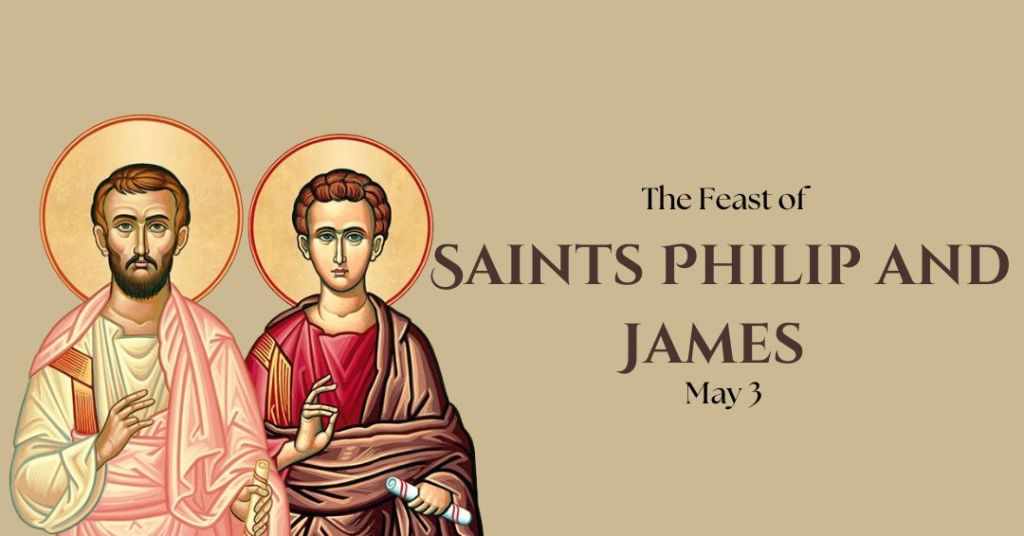
    May 3, 2025 – Feast of Sts. James and Philip

    Click here for the readings (https://bible.usccb.org/bible/readings/050325.cfm)

    When you come to church, when you pray, and beg the Lord – what do you ask? What attitude do we have in asking the Lord for grace? What inner desires do we foster as we beg the Lord?

    On this feast day of Sts. James and Philip, Jesus tells us, “if you ask anything in my name, I will do it.” But, what does it mean anything? And what does it mean to ask in Jesus’ name?

    Does Jesus mean that we can just ask anything we want? Does it mean that I can also ask Jesus to give me a lifetime premium subscription on Netflix with an unlimited supply of popcorn and bottomless four-season juice drink? Or can I also ask Jesus to make me Summa Cum Laude this coming graduation? Is this the kind of prayer that Jesus invites us?

    Today, Jesus tells us to ask “in his name.” The beauty lies in the prayer that considers the desire of God for us. It means that in our prayer we do not forget Jesus. We do not forget Jesus’s desire for us and his will for us.

    This tells us of our relationship with Jesus. This should not be understood as a mere limitation with the options we have in asking. Instead, “asking in his name” widens our perspective in asking grace from the Lord.

    This invites us to a deeper awareness of Jesus’ heart, of Jesus’ desires and of Jesus’ plans for us. It is certain that what Jesus desires for us is always good, always for our growth, always for our freedom.

    Therefore, to ask in Jesus’ name is to allow letting go on what we only want. We let go also of our own preferences which may be influenced by our selfish desires, guilt, sin and evil.

    Instead of praying – “this is what I want and wish Lord,” ask and pray rather first in this way, “what is your desire for me Lord?”

    Only then that we will be able to get away from our selfish tendencies and intentions because we shift our focus from ourselves to God. We begin to shift from praying that comes only from personal wants to praying in his name.

    This is now our prayer and our desire that in asking grace from the Lord, we may also grow more in our knowledge of Jesus. Know Jesus not just on our head level but also of the heart.

    Through the intercession of St. Philip and St. James, may we dare to encounter the Lord among our brothers and sister; to encounter the Lord in our human experiences; and to encounter him in our daily struggles in life. Hinaut pa.

  • Seeing from the Eyes of Faith and Compassion

    Seeing from the Eyes of Faith and Compassion

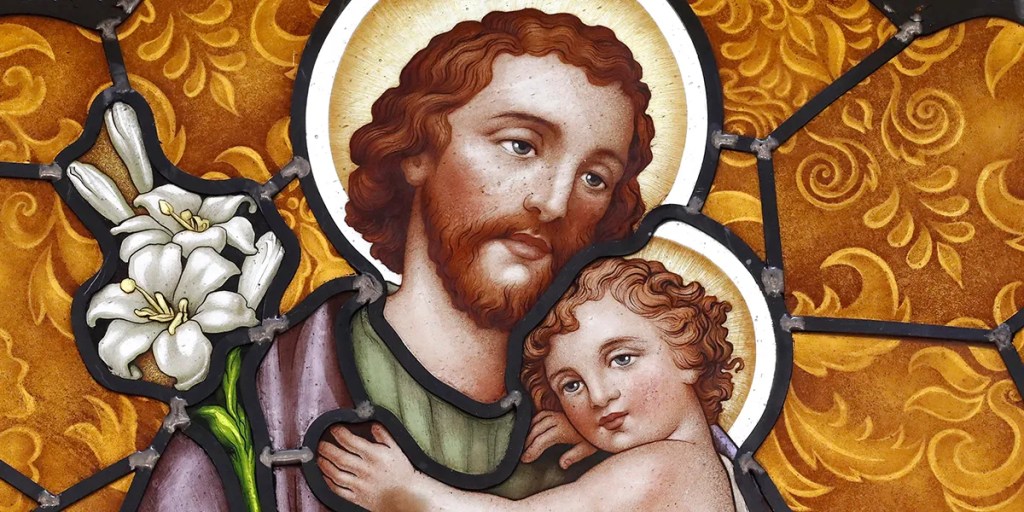
    March 19, 2025 – Solemnity of St. Joseph, Husband of Mary

    Click here for the readings (https://bible.usccb.org/bible/readings/031925.cfm)

    When life becomes confusing, messy and overwhelming, how do we react? When our relationship is intrigued by anger or hatred or contempt over a misunderstood situation, are we easily driven by negative emotions and withdraw from the situation and hide? When we believe that our relationship is at the verge of collapse because of unresolved issues, how do we respond?

    These situations that we may find in our relationships are also invitations for us to be more discerning. Allowing the Lord to have significant space in our relationships would help us to be more objective and to look at the current issues from the perspective of faith and compassion. This is what I would like to propose today as our point of reflection on this Solemnity of St. Joseph, Husband of Mary.

     The Gospel of Matthew presents to us the attitudes that portray faith and compassion.  Above all, we also realize an attitude that seeks guidance from God’s wisdom.

    Joseph’s relationship with Mary was intrigued with a suspicion of scandalous betrayal and unfaithfulness.  Joseph knew that even though, Mary and himself were still at the period of engagement, but then, Mary was already pregnant. Having this kind of situation, it was also clear for the people in their village that Joseph was not the father.

    Joseph himself was confident that Mary’s child in her womb was not his. Joseph knew that the Jewish law would find Mary guilty of adultery.  This was punishable by shame and death. Their law mandated Joseph to divorce Mary.

    In a small village like Nazareth, gossip was surely faster than lightning. Certainly, every person in their village would know that Mary was pregnant though they have not yet lived together. If we would imagine Joseph, he too must have been hurt. He might have felt being betrayed. Joseph was most likely in darkness at that moment, confused and overwhelmed by the intriguing situation.

    Yet, Joseph showed a non-reactive attitude. He did not allow his emotions to overwhelm him. In fact, the Gospel described him as a righteous man. Hence, instead of condemning Mary instantly, he showed compassion by divorcing her silently. He did that so that Mary will not be disgraced and bullied by others.

    This was how Joseph treated this difficult situation from the perspective of faith and compassion. He neither not wanted Mary to suffer nor the baby in her womb. It was his faith and compassion that moved him to protect Mary despite his confusion.

    This pleased the Lord. Joseph was indeed a good man, righteous and thoughtful. This became the way for God to reveal the divine plan. And God made the revelation to Joseph in the night of dreaming and pondering. Through that revelation, Joseph’s view of Mary and her pregnancy and even of himself became larger and brighter. Joseph began to see the overwhelming and scandalous situation of Mary’s pregnancy through the eyes of faith. Thus, fear and disappointment, anger and hatred were indeed irrelevant and even destructive.

    Joseph saw and felt the true scandal in what was revealed to him. God revealed Himself to Joseph. God has become man there in the womb of Mary. It was scandalous because we thought that God is only up there or out there in the heavens. We believed it was a place that no person can reach. Yet, Mary got pregnant.

    This unexpected pregnancy of Mary tells us that God is intimately present with us.

    Joseph received a revelation. He then understood that Mary’s pregnancy was a statement of God’s faithfulness. It was also a testament to His commitment to us. God commits himself to be our God. God commits to choose us as God’s people. And so, Joseph was told to name the baby, “Jesus, because he will save his people from their sins.” This was how Joseph was also called to participate in God’s loving plan for all of us. Joseph was to protect, cherish, and love Mary and Jesus. And Joseph embraced this.

    This is God’s assurance to us now. The Lord, indeed, is present. He lives in the midst of our lives, in the midst of our pain and our failures. He is there in our disappointments, hurts, and fears. He is even present in overwhelming situations we are in. Like St. Joseph, let also be more discerning and to see life’s situations from the perspective of faith. Hinaut pa.    

  • Filled with Grace and Power

    Filled with Grace and Power

    December 26, 2024 – Thursday, Feast of St Stephen, First Martyr

    Click here for the readings (https://bible.usccb.org/bible/readings/122624.cfm)

    Christmas is a joyful season. The music, decorations, the variety of food and the many gatherings during this season give the festive and joyous atmosphere. Yet, the liturgy today, just a day after the birth of Jesus reminds us how faith and commitment to the Word-made-flesh will make us a contradiction to many.

    Indeed, yesterday we celebrated the joyful birthday of a child and today we celebrate the cruel death of an innocent man. In some ways, the birth of Jesus led to the death of Stephen, one of the first deacons of the church and the first Martyr. Stephen was put to death because of his faith in Jesus, declaring him to be the glorious Son of Man standing at the right hand of God.

    St. Luke describes Stephen dying with two prayers on his lips. First, a prayer of surrender, “Lord, Jesus, receive my spirit.” Second, a prayer of petition for his executioners, “Lord, do not hold this sin against them.

    When Jesus was dying on the cross, he had two similar prayers on his lips as well, a prayer of surrender, “Father, into your hands I commend my spirit” and a prayer of petition for his executioners, “Father, forgive them for they know not what they are doing.” We can see that Jesus prays to the Father while Stephen prays to the risen Lord.

    Mary’s child is now the risen Lord and can be prayed to as we would pray to God. In the church, we often pray to the Father through Jesus, but we are also invited to pray directly to Jesus. Stephen died as Jesus died because he was “filled with the Holy Spirit.”

    We have been given the gift of the same Holy Spirit, and it is the Spirit who empowers us both to live like Jesus and to die like Jesus. On this feast of Saint Stephen, we pray for a fresh outpouring of that Spirit into our lives in this Season of Christmas that we may also be filled with grace and power like him. Hinaut pa.

  • SEEKING OUR HAPPINESS AND FULFILLMENT

    SEEKING OUR HAPPINESS AND FULFILLMENT

    August 1, 2023 – Solemnity of St. Alphonsus Maria de Liguori

    Readings

    From the Book of Prophet Isaiah (61:1-3)

    The spirit of the Lord is upon me; because the Lord has anointed me;

    He has sent me to bring good news to the oppressed, to bind up the broken hearted, to proclaim liberty to the captives, and release to the prisoners;

    To proclaim the year of the Lord’s favor, and the day of vengeance of our God;

    To comfort all who mourn; to provide for those who mourn in Zion –

    To give them a garland instead of ashes, the oil of gladness instead of mourning,

    The mantle of praise instead of a faint spirit.

    They will be called oaks of righteousness, the planting of the Lord, to display his glory.

    Responsorial Psalm : Forever I will sing the goodness of the Lord.

    From the Gospel of Matthew (9:35-10:1)

    Then Jesus went about all the cities and villages, teaching in their synagogues, and proclaiming the good news of the kingdom, and curing every disease and every sickness.

    When he saw the crowds, he had compassion for them, because they were harassed and helpless, like sheep without shepherd.

    Then he said to his disciples,

    “The harvest is plentiful, but he laborers are few;

    Therefore ask the Lord of the harvest to send out laborers into his harvest.”

    Then Jesus summoned his twelve disciples and gave them authority over unclean spirits, to cast them out, and to cure every disease and every sickness.

    Who would not want to be happy? Who would not want a fulfilled life? To be happy and to have a fulfilled life is everyone pursuit in life. This is the very reason why we dream, aspire things for our life and others, hope for a better and comfortable life.

    And in our search for happiness, we also realize that there can be actually many reasons to make us happy from small things to the big and great things. We may also do many things just to make ourselves happy or make other people happy. We can also actually make our life busy in pursuing happiness. This is not just true among adults or old people but even among the young generation. Yet, in making ourselves busy to find happiness we might also lose the opportunity to be really happy. The question now, is on the quality and endurance of our happiness.

    There are many young people today, who entertain themselves with a lot of things. Many are drawn towards online or mobile games to experience a surge of happiness in winning a game. Others would also keep their eyes on the screen to watch Korean TV Series and be entertained with the Korean Idols. Others make themselves busy on everyday TikToks and selfies to be uploaded on Facebook and Instagram.

    Though these are forms of short-term happiness but they can also lead us to what would really make truly happy and fulfilled. However, in our sear, we may be prevented by many things as well especially when expectations from our families and friends are different from what we truly desire. People around us may have something in mind for us, believing that what they think is better for us. Yet, this is not always the case. That is why, there would be individuals whose lives become miserable because they have to follow the desires from others for them.

    This reminds me of the life of Alphonsus whose feast we celebrate today. That is why, I also wonder of the kind of life Alphonsus had when he was young and what led him to affirm his vocation by giving his life for the poor and the most abandoned.

    Alphonsus came from an aristocratic family in Naples, Italy. As the eldest in the family, his father had so much expectations from him. We were told in his biography that an early age he had books on his hands instead of toys. He must have been deprived of playing with other children because as an aristocrat, he needed to receive instructions from various teachers. He was an exceptional boy who even finished his studies in both civil and ecclesiastical laws at the age of 16. In his twenties, he was already a known lawyer in Naples. Not just that, he also excelled in arts and music and authored many books.

    With all these things on him, I am very sure that Alphonsus had felt so much pressure from the family and particularly from his father. His father expected him to succeed and follow him as what had been practiced in their family. His relatives and the whole clan had surely expected him also to follow the footsteps of his father as an aristocrat. This was the reason why at an early age he was expected to follow whatever was told to him. Alphonsus was very careful to follow everything and not to commit any mistakes.

    At that time, any mistake will not go unpunished. We could imagine how Alphonsus had to endure the corporal punishments and the shame, every time he would commit a mistake or a failure. This kind of upbringing had actually a deep influence on the spiritual life of Alphonsus. He was a very scrupulous man. Alphonsus was very afraid of hell and of eternal damnation. He was very careful not to sin and not to commit any mistake because he believed that God would not be able to forgive him.

    Being scrupulous prevented him to be free from shame. He was always haunted by guilt too. Now, we understand how family pressures and his severe upbringing affected his relationship with God. In his lifetime, he struggled to believe that God could forgive him. No matter how small was the mistake or the sin he committed, he would go anxious and worried. Somehow, Alphonsus struggled to find what truly makes him happy and what would truly fulfill his life.

    However, there was something in Alphonsus that really desired for freedom, to be free from pressures, from shame and guilt, and from that severe childhood upbringing. Deep within, Alphonsus desired to express what he really wanted. He searched ways were he could truly express his true self without any pressure or expectation from others. Alphonsus was searching to what would really give meaning and true happiness in his life. This was the reason why he excelled in many things but most importantly with his encounter with the common people.

    It was with the patients at the House of Incurables, the prostitutes of Naples, the men and women in the marketplace and later on with the people in a remote area of Scala, that he found himself, and found God more alive, where he found happiness and fulfillment of this life.

    This was the beginning of the continual conversion of Alphonsus. By becoming more in touched with his struggles and questions, he too became more aware of God’s desire for him more than the pressures of the people’s desire around him. Hence, Alphonsus gave up his profession and his status as an aristocrat by becoming a poor priest. With this decision, it greatly upset and broke the heart of his father to the point of disowning Alphonsus as his son.

    However, God’s desire for Alphonsus cannot be prevented by anybody. God has so much plan for Alphonsus. And for Alphonsus, he willingly sought God’s desire and he found it among the people. This was where Alphonsus also found how good God is to him. He realized how God loved him so much despite his imperfections and weaknesses.

    Our Psalm today proclaims to us, “Forever I will sing the goodness of the Lord.” Alphonsus was indeed singing the Lord’s goodness not just expressed in his paintings, music and writings but also in his person, in the way he related with people. This happiness and fulfillment in Alphonsus touched many men and women including his father. Later on, his father discovered also how God worked in the life of his son and that God had a bigger and better plan for Alphonsus than him.

    Despite the deprivation Alphonsus had and the strict upbringing in his childhood, he did not become a bitter person but rather, his negative experiences allowed him to become understanding and generous to those who were deprived with many things in their life. Consequently, Alphonsus affirmed that the spirit of the Lord is upon him because the Lord anointed him and chose him.

    Today, on this blessed feast day of Alphonsus, the Lord is inviting each of us to continually seek our own happiness and fulfillment , and in our search, we may also be continually converted into God’s heart. Let our search leads us deeper and intimately into God.

    Let us allow the Lord then, to unfold before us his desires for us by being open and welcoming to his invitations to change and to be converted in his ways and thinking. May our encounter with people allow us to affirm God’s desire for us whatever that may be in bringing happiness, joy and peace not just to ourselves but also to people around us. Hinaut pa.

  • We too can bring others closer to Jesus

    We too can bring others closer to Jesus

    November 30, 2022 – Wednesday Feast of St. Andrew, Apostle

    Click here for the readings (https://bible.usccb.org/bible/readings/113022.cfm)

    Who was that significant person who brought you closer to the Church and closer to Jesus? I am sure, each of us here has a particular person or people who became significant in our faith journey. Others could have their grandparents who were the very instruments for them to grow in their Catholic faith. Or perhaps a relative, a parent, a sibling or a friend, or an intimate friend who inspired us to come to Church and encounter God.

    Indeed, the celebration of our Vicariate Youth Day with its theme, “Pamatan-on: Padayon sa Misyon Kaupod si Maria,” is an expression of that experience of being inspired and motivated to come closer to the Lord. Certainly, this is a good reason to thank them for being an instrument for us in our journey of faith. So, I want you now to close your eyes and imagine that person to be in front of you and in silence, say to that person your words of gratitude for being an instrument of God for you. Say, your “THANK YOU.”

    As we express our gratitude to the people who have become significant in our journey of faith, let us be reminded as well of the feast that as a Church, we celebrate today. This is the Feast of St. Andrew, one of the original 12 apostles. So, allow me now to explore a bit this person of St. Andrew, how he has become significant to our church and on how the Lord invites us today as young people.

    You know, we know very little of St. Andrew. According to our tradition, Andrew became the first bishop in the community of Constantinople until he was martyred through crucifixion on an X-shape cross. The gospels tell us also that he was the brother of Peter. They were from Bethsaida, a town near the Sea of Galilee. In John’s gospel, we were told that Andrew was a disciple of John the Baptist at first. In the same gospel, we found that Andrew had actually brought Peter to Jesus, telling his brother, “We have found the Messiah!” In the other gospels, it was Andrew who called the attention of Jesus about the boy with 5 loaves and 2 fish. Again, it was Andrew who told Jesus that there were some Greeks who wanted to see and meet Jesus.

    From here, we can sense that Andrew was actually an apostle with a typical role. Unlike his brother, Peter, he was not able to witness the transfiguration of Jesus at Mt. Tabor. Andrew was not part of Jesus’ inner circle composed of Peter and the 2 brothers, James and John. He was in fact an ordinary guy, an ordinary apostle of Jesus.

    However, Andrew had a remarkable faith in Jesus. Remember, his brother Peter doubted and even denied Jesus three times. But for Andrew, he was the first one to realize that Jesus was truly the Messiah. In his conviction, he joyfully shared what he found to his brother. He himself became an evangelist, a preacher of the good news to his own brother. Moreover, he brought others to Jesus like the boy and those Greeks. Andrew became a bridge between Jesus and other people. Thus, Andrew became the significant person for many people to encounter and to know Jesus more.

    This is what St. Paul told us in the first reading. As there is a need but there is also beauty in sharing one’s faith in Jesus to others. And we can preach Jesus by making our faith be manifested through words and actions so that what we preach will be heard by many. Paul’s letter to the Romans would help us ponder our own call to be a kind of apostle or bearer of the good news to others like St. Andrew.

    This reminds us now of our theme in this VYD, “Pamatan-on: Padayon sa Misyon kaupod kay Maria.” Mary, is indeed, another significant person in our journey of faith. This celebration of the gift of the young people in our Vicariate of St. Peter calls us to mission by preaching Jesus through our words and actions with Mary.

    Now, we usually think that preaching is only proper to bishops, priests, and deacons. Definitely, public preaching of the gospel in liturgical occasions like what I am doing now is proper to me as a priest and not to you as lay persons. But it does not mean that you cannot preach the Gospel or share Jesus anymore to others. As young Christians, we share the prophetic role of Jesus by virtue of our baptism. It means that each of us has both the responsibility and the privilege to be God’s messenger to others, and this makes us young missionaries.

    The Gospel tells us how we are being called as young missionaries today. To each of us, Jesus says, “COME, FOLLOW ME, AND I WILL MAKE YOU FISH FOR PEOPLE! I WILL MAKE YOU MY OWN APOSTLE!” This can surely be materialized when we preach with joy by our own example. But how? These are few examples.

    First, when we are happy with what we are doing and when we are honest in our relationships and dealings with others – we preach the person of Jesus.

    Second, when we are sensitive to others and volunteer to help without any selfish motivations whenever someone needs a helping hand – then, we preach the person of Jesus.

    Third, when we become joyful givers to those who have less;  when we become more understanding and compassionate with those who are experiencing difficulties in their life; then, we preach the person of Jesus.

    Fourth, when people around us feel the deep expression of our faith as we pray in the church, in our homes or with others… then, we preach the person of Jesus.

    Fifth, when we are able to stand and fight for justice, when we are able to confront what is evil and unjust in our institutions and society, when we choose life not violence and death, then, we preach the person of Jesus.

    Friends, people will see these things and will recognize that we are Christians. Then like St. Andrew and our Mother Mary, we will be able to bring other people closer to Jesus, by becoming bearers of the Good News through our very life. Kabay pa.