Category: Feasts

  • Bless Me, Father

    January 16, 2022 – Feast of the Sto. Niño

    Once, after Mass, I saw a child sitting alone on the Church floor worried and crying. I approached her and asked: “Oh, what happened? Why are you all alone and crying?” She replied: “Father, I thought it was your hand that I reached to get your blessing, but it was the hand of another child. I was not able then to receive your “Amen” – your blessing”. Cute as it is, I was so touch of her reply because she only aspires to get my hand for blessing but failed. So, I told her then, “Don’t worry, Inday. I am here now. You can have my hands for blessings”. After wiping her tears, she took my hands and happily pulled it to touch her forehead for blessings. And she was so happy to hold my hands to walk with me. And more so happy and proud, when I carry her up until her parents took her, at the envy of other kids.

    In most churches in the Philippines, especially in Redemptorist Churches, it is unavoidable that children and young people would approach us, priest, and ask our hands for a blessing after the mass. Different types of children, (big-small, active-weak, shy-gregarious) would gather around the priest with only one desire, that is to receive “Father’s blessings”, while asking: “Bless me, Father”. And I am sure they were not (or just) forced by their parents to do so, because for children, to be blessed or to be touched in their foreheads by the priest is a great, meaningful, and wonderful experience and affirmation. One simple act or gesture of the priest can be a meaning experience and can bring joy not only to the children but also to their parents, because they are affirmed and appreciated for their child.

    Even we ourselves, when we were kids, we really enjoy when somebody affirmed and gave us attention, especially by the priest.

    I could still remember and never forget of the joy I experienced when the priest gave me attention and affirmation. It was my first confession. I was so small and weak then when I fearfully approached a big Irish Redemptorist priest smiling, had me sit in his lap and piously listen to my first confession.  Because of that even in my childhood years, I am so happy and courageous to receive the blessing of the priest, see and talk to them because they know me and I know them. We are friends and they are human as I am. I feel like and I consider myself as KASALI, KABARKADA, KABERKS, KAPUSO, AT KAPAMILYA nila Father. One with Father and with the Church, Part of the group, friends, family and church. Even now as a priest, I would really appreciate when I am blessed and prayed over by my brother priests, by elders and by my loved ones.

    Like the little children, especially for us Filipinos we also need attention, affirmation, and blessing. Because for us, to receive blessing is not only a gesture of our respect and reverence but an expression of affirmation, attention, love, and support from somebody we love and respect for all our endeavors in life so far. When our elders or leaders touch our foreheads to give us their blessings, it is an affirmation, a positive stroking for us that would mean, “I am ok. I am good and am doing fine in life”. That is why I really don’t mind and even love to bless or partake God’s blessing to people (both young and old), as a priest.

    Our gospel today reminds that God has blessed us with His child Jesus. God gave us His continuing blessing by sharing us His Son Jesus into our lives. And since God’s blessing comes to us a child, like us, Jesus also needs our blessing – needs our acceptance, attention, and responsibility. Same way as Mary & Joseph parent the child Jesus into their lives, in response we also need to welcome and take care Jesus and our children and young generation in our lives today. In other words, like children, as we need God’s blessing and care, we should bless others same way as God blessed and blessing us. If you are happy to receive God’s blessings, why are you sad and slow to give and share God’s blessing to others?

    Today, the whole Philippine Church celebrates the feast of the Sto. Niño.  We particularly honor today the child Jesus, who became part of our humanity and history. We, Filipino Christians, have high regards for the Sto. Nino.  We do love and respect the Sto. Nino for we Filipinos came to know our Lord Jesus Christ first in our history through the image of Sto. Nino, as a Child Jesus.  

    Our gospel reminds us also that the child Jesus has grown in obedience and God’s favor, and did not remain a child. He has grown up and has made a stance or an option in life for the God’s kingdom and our salvation. As the child Jesus grew up, like many of us, he has asserted his independence as a person, to the extent of leaving behind his family to take up his mission of proclaiming God’s kingdom to all people.  Eventually, he made a stance for life, which we all know has gained him disciples as well as enemies, and which has led to his death on the cross as well as to our redemption.

    Again, we are reminded today that the child Jesus, our Sto. Nino, the Prince of Peace, became a Grown, Independent, Mature and Responsible Person who made a decision for his own life, to the extent of going against and disobeying the accepted norm of his time, in order to share and partake God’s blessings to us now and always. In response for such blessing, we in return should also bless Jesus and our children and youth of today by becoming mature faithful Christians – taking care and responsibility for their growth and mission in life. As we honor today Holy Child Jesus, the Sto. Nino & as we take responsibility for one another during these pandemic times & on our 500th year of Filipino Christianity, may we continue to accept Jesus to be part of our lives, and so involve & share Him and all God’s children to others, and thus fully enjoy continuing God’s blessings with us all the days of our lives. Amen.

  • Parenting 101

    Parenting 101

    Decemember 26, 2021 – Feast of the Holy Family

    In our Wednesday novena to Our Mother of Perpetual Help, one intention we pray is that we may learn to adapt to our growing children. Parenthood, as we all know, is not only about raising children but also adjusting to our growing children. Thus, to parent a child is more than just caring for the growth of the children; it is also learning in the process, as children grow in maturity and age.

    Being Redemptorist missionary involved in parish, retreat, missions, and migrant ministry for many years, I became aware of the difficulties of parenthood. Difficult it is to adapt with life-changes, how much more adapting to growing children. In confessions and counseling sessions with faithful people, I become conscious of the hurts & pains suffered by both parents and children in their difficulties with parenthood. Parents hurt by their children’s disobedience, i.e., going against their will; children blaming their parents for their misfortunes in life. Sipmply because of our limitations in parenthood. Parenthood indeed is not an easy task, & rightly so that we pray to OMPH that we may learn from our experiences of adapting to the growth of our growing children.

    Today, we honor the Holy Family, the family who parent the child Jesus. Our gospel tells us that like any other family, the Holy Family also experienced the difficulties of parenthood. As parent, Joseph and Mary followed the proper traditions of raising the child Jesus. They did their best. But as we all know, they also experience how Jesus became disobedient to them, going against their will.

    Surely parents here could resonate with the hurts, pains, and anxieties they experience when children start to grow up and be on their own. Like my mother would even say, when we, her children started to have our live our own, “Kung puede palang ibalik sa tiyan.” (If I could only bring you back in my womb…) It is the same way with the experience of a hen that raises ducks as her chicks. When the duck-chicks, which by nature a swimmer, start to swim and float on a fond, the mother hen – because she cannot swim would be extremely worried and anxious that her chicks-ducks might get drowned. This is also what and how Joseph and Mary experienced parenting Jesus. When the child Jesus began to grow up in age & maturity, his parents also experienced the difficulties of parenthood.

    However, the Holy Family’s experience might teach us more about parenting and parenthood, especially in terms of adapting to our growing children.

    First, Parenthood is a whole family matter – not only of parents but also of children. To parent a family is not only about the husband-and-wife tandem in raising their children but it is more on the dynamic teamwork between parents and children. If it was difficult for Mary and Joseph to raise and adjust with Jesus, it was also difficult for Jesus to grow up in his own family. In as much as being parent is difficult, we also know that growing up maturely (to be on our own) is difficult. If Jesus only obey his parents’ will, I wonder would we able to benefit from and share with the salvation God has given us through Jesus, who did not remain a child of Mary and Joseph but become our Christ, our Savior? As the parent adjust, children also adjust.

    Second, Parenthood is also about trusting in God’s way of parenting us – of raising and forming us His children. Inasmuch as we are tasked to parent our little ones – raising and adapting to their growth, we must never forget that ultimately God is our Father, our ultimate parent; and we are all His children. If we do want the best for our children, God also knows, wants, and does what is best for each one of us. God knows what was best for us when we were children, surely, he knows what is best for us when we become mature adult parent to His little ones. If we do want our children to obey us, we also are to obey God our father who knows best & better than what we want. So, trust and have faith in God’s will, in God’s way of parenting us.

    To parent a child is to work together then with one another as family of parent and children as well as to work with and in deep faith and trust of God’s way of parenting us.

    Christmas challenges us Christian to be responsible parents of Jesus in our lives today. Parenting our growing children is also our way of being responsible to the child and adult Jesus – God’s word made flesh, into our very lives now, according to God’s will & not our own ways.

    As we celebrate the feast of the Holy Family, we pray that the Holy Family will continue to inspire all Christian families and communities in parenting our growing children for God’s glory, not ours. Amen.

  • Here the will of God is done, as God wills, as long as God wills

    Here the will of God is done, as God wills, as long as God wills

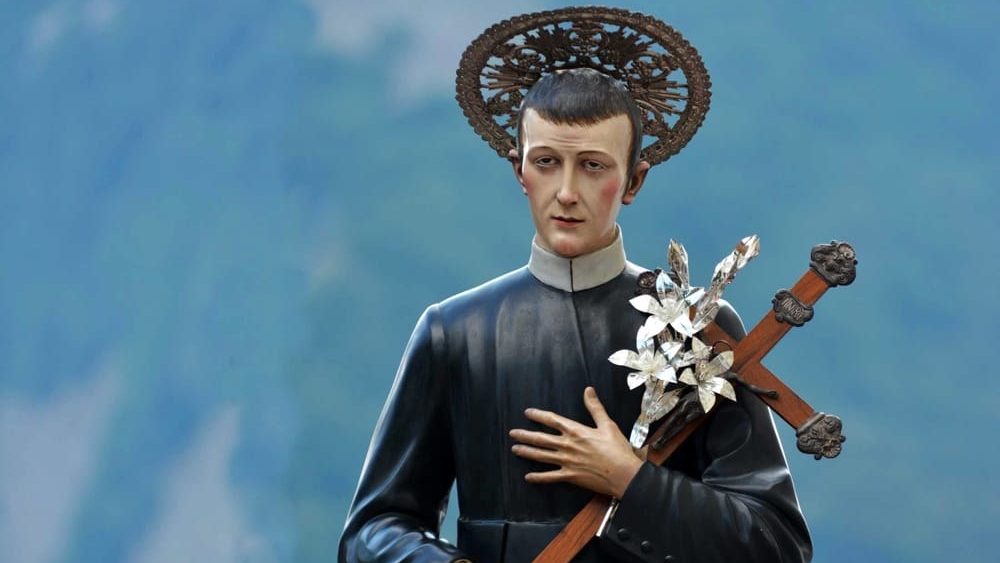
    October 16, 2021 – Feast of St. Gerard Majella, Redemptorist Saint

    “Here the will of God is done, as God wills, as long as God wills.”

    These are St. Gerard’s words of wisdom to us, and to himself. Until now, on the door of his room in Deliceto, Italy where he was formed as Redemptorist & in Materdomini, where he was assigned until his death, Gerard placed a sign with these words: “Here the will of God is done, as God wills, as long as God wills” to remind others & himself who he is, & what his life is all about. 

    Somehow these words reflect the content, the means & the purpose of his life, as Christian. “Here God’s will is done”… His life is all about doing God’s will. “As God wills”… and he does God’s will, by means & through God’s ways, & none other. “As long as God wills”…  and he does God’s will in God’s design & purposes. Somehow this is Gerard’s way of proclaiming that, as God’s will for us, our Lord Jesus Christ is His Way, His Truth & His Life.

    His words of wisdom are based on his lived experience of faith and life, & not just product of inspirations from prayers & contemplation. As frail child, Gerard experienced a lot of bullying & rejections. While working as apprentice tailor, many times he was rejected entrance to seminary & religious life. Not until that he became involved with Redemptorists on mission in their town in Muro Lucano that he was able to join the Redemptorist, though not without the recommendation: “I am sending you a useless brother.” As young Redemptorist, Gerard had bouts of mistreatments, even from his fellow Redemptorists. Like, Alphonsus disciplined Gerard for being humbly silent about a false accusation made against. His deep empathy & remarkable apostolic zeal of counselling & taking care of the poor people have also garnered jealousy & hatred among his very own confreres. And in a highly feudal society & clericalized church of his time, he ran into conflict with his superiors & brother priests vis-à-vis the witness & practice of religious life.

    Despite these odds, all along what sustained Gerard are these words to himself: “Here the will of God is done, as God wills, as long as God wills.” Like St. Paul, Gerard deeply believed that Jesus Christ made him His own, and thus Gerard made Christ his Own. Same way, as Jesus also said in our gospel: “the Father will honor whoever serves me”, Gerard served & followed the Lord, and in life has been favored with many spiritual gifts, among which were prophecy, reading people’s heart & miracles. And now honored in the church as our Saint & patron of expectant mothers.

    Like Gerard, may our Christian faith & life always be attuned with God’s will, so that we may enjoy God’s plentiful redemption now and always. Amen.

  • THE CALL TO MISSION

    August 1, 2021 – Feast of St. Alphonsus Ma. de Liguori

                                                                                                 + Manny Cabajar, C.Ss.R. D.D. – Bishop Emeritus of Pagadian

    Can you recall occasions in your life, which you can call moments of discernment or conviction or moments of decision? Alphonsus had that experience. With clarity and finality, he decided to respond to the Father’s call to mission.

                Alphonsus belonged to a rich nobility in Naples, in Southern Italy. He was a very gifted musician, painter and sculptor. At the age of 16 he was already a doctor of both canon and civil law. As a young, brilliant and successful lawyer in 17th century Naples, he was handling an important case for the Duke of Tuscany. But most likely because the judge was influenced, the judgment went against him. It was shocking. For three days, he would not eat nor leave his room. Then he began to visit the Hospital of the incurables, the equivalent of our AIDS patients today. There he had an inspiration. He heard the Lord say to him, “leave the world and give yourself to me.” He interpreted this as telling him to leave the social class to which he belonged and to become a pastoral priest. He called his experience a vision – a moment of clarity and decision when he knew exactly what God wanted him to do and felt ready and willing to do it.

    While praying and meditating in the cave of Scala he noticed the poor goatherds in the hills and had compassion for them. Not only were they marginalized by society, they were also neglected by the Church. Thereafter, he decided to spend his whole life preaching the Word of God to the most abandoned poor. He founded the Congregation of the Most Holy Redeemer, whose members are more popularly known as the Redemptorists. Drawing inspiration from Alphonsus the Redemptorists try to preach the Word of God to the poor, especially the most abandoned and try to go where many in the Church would not want to go.

                What motivated Alphonsus in his self-sacrificing life? It was no other than the son of a carpenter who also experienced a moment of decisive action when, at about 30 years old, he emerged from his hidden struggle to be his authentic self. Looking around him the carpenter’s son saw a culture of egotism in the pursuit of power, wealth and prestige often at the expense of the poor. It was a culture deeply steeped in sin. Searching for a model to follow he could only find his cousin, John, who was a simple and honest man but a fearless preacher proclaiming a message of powerlessness, simplicity, and humility and demanding of others and of himself to let go of all that was false and inauthentic. So, he went all the way from Galilee to Judea and lined up with sinners to be baptized by John at the river Jordan. His baptism was significant as it was a moment of definite decision, a radical option to accept the call to mission. It signified that a new time has begun in which God would reach out to the poor in a new way through a carpenter’s son. Jesus was His name.

                In lining up for baptism like a sinner, Jesus set aside all exemption. He lined up before someone who would be beheaded for his convictions. Jesus would also die for his convictions. That was a horrific decision and commitment to a non-violent struggle that will win salvation for all. But it had its consolation. God manifested His presence in a form of a dove and a voice was heard, “This is my beloved son in whom I am well pleased.” The human Jesus needed that affirmation. God so loved the world that he sent his only begotten Son who would reverse the conventional way of doing things. Instead of using power to destroy enemies, He would become poor and powerless, like his cousin, John, allowing his enemies to apparently destroy him.

                In the first 300 years of the Church’s life, baptism and ordination to a leadership role, were a very serious commitment. Leadership in the Church was a passport to martyrdom in the tradition of John and Jesus. Christianity opposed the values of the world and the human leaders espousing those values. That’s why authorities saw the Christians as a threat and wanted to silence them through cruel persecution. A huge  change took place in the 4th century when the Bishop of Rome crowned Constantine Emperor. Christianity became the official religion of the Empire. Bloody persecutions ceased. Many bishops and priests became partners of kings and princes and were given titles like “Prince-Archbishop,” “Your Grace,” “Honorary Prelate.” The Church gained power and prestige but sadly lost some of her prophetic freedom. The irony was that it now became harder to follow Jesus as a Suffering Servant.

                Today, are we not victims still of a similar situation? Don’t we see vestiges of power, prestige and wealth in the Institutional Church to which we also belong?  Don’t we see that what we criticize in the Church’s leadership also lurks in our communities and in ourselves as individuals? In our prayer, don’t we often court power, prestige or wealth for ourselves or our families? We need a serious soul-searching as community and as individuals to help us see that the challenge of our baptism is to let go of all control, of all wealth and privileged positions. Many are afraid of this challenge. To let go is not easy. But let us remember that when we face the challenge in big or small things we validate our baptismal promise!


               Can we not do that? Of course, we can. Just as the Spirit empowered Jesus at his baptism, the same Spirit empowers us and makes a dwelling place in us in a special way at baptism. We take courage from this. If we connect with the Spirit in us through prayer and meditation we can let go of all directing of God. We can open ourselves up and say, “Speak Lord my heart is listening.” Meditating and being still in the center of our being surely helps. It is when we are still at the center that we can hear our own inner wisdom blending with the wisdom of the Spirit. It is when we are still that God speaks to our hearts, telling us what he really wants us to do now.

                We find our efforts at being still and silent at prayer quite frustrating at times, but we don’t give up. We keep struggling at it because at some time we don’t expect the truth will surface from the Spirit within us, like a bubble rising to the surface of a calm sea indicating there is a diver below. Dear confreres and friends: remember this about prayer and meditation – they dispose us in decisive moments to accept our baptism and its consequences just as it disposed St. Alphonsus to hear the truth within and follow Christ in seeking and doing God’s will through preaching His word among the most abandoned poor no matter what the cost was for himself. St. Alphonsus’ constant union with God through prayer empowered him to follow the Lord with fidelity and zealously proclaim the good news of the Kingdom to the poorest of the poor. Amen. 

  • Enough

    Enough

    August 1, 2021 – 18th Sunday in Ordinary Time

    Click here for the readings (https://bible.usccb.org/bible/readings/080121.cfm)

    It could happen that once in a while some wayward beggars would come to us & ask for some “bahaw” or left-over food to eat. Once I gave some enough food for a day to a beggar. As he received the food, he asked: “Walay kape ug saging man lang?” (How about some coffee & fruits for extra?). Though this irritated me, it also made me think: “If I’m going to give, why not give all – the full package deal with all the extras? Why only give enough for the day? Why not for the whole week?

    But as we all know, human as we are, we are not easily contented. Hard for us to be fully satisfied. We want more. We need more than we already have. Like that wayward beggar, we want some extra: extra rice, sauce, toppings, privileges, discount, bonus, payment and others, but effortless & easily, if possible, quickly. So, when is the limited resources that I have now, enough for me? When is the less that I have, enough for me to share with others who are in need? So, when is enough is enough?

    Somehow at the very heart of our readings today is the question about ENOUGH.

    In Exodus, we hear that after escaping slavery from Egypt, the people of Israel found themselves free but hungry in the desert. They needed food for the journey & they grumbly complained about their predicament. To the point of blaming Moses &  even preferring to be slave again in Egypt but nourished, rather than free but starving in the wilderness. Yahweh heard their cries & addressed their needs. God rained down bread from heaven for them, and they only have to gather enough bread for their daily portion.  Great! But they also asked: “What’s this?”. And perhaps may also have asked: “only this, fine flakes?” It might be from heaven, but why only biscuits/flakes? Why not pizza or burger? No extra drinks? And why gather only enough for the day? Why not save & reserve for tomorrow?

    In the same way in our gospel today, after they were fed and have their fill at the multiplication of loaves, the people followed Jesus because they want more. They never had enough. They need more extra from Jesus. In their mind, they would think: “Since you, Jesus have already fed us, what more can You offer us? What shall we do to have what You can give us? Do we need to work for food?

    Over and beyond our human need for survival & God’s saving act is the question of our Faith and Trust in God. The manna from heaven and the miracle of feeding thousands of people is not about the Gift, but about our faith in the Giver. What matter most then is not having enough or more than enough Food and blessings to receive, but more so about us believing & trusting in God’s way of taking care of us. It is all about having enough faith & trust in God’s work of giving us life to its fullness.   

    Through the manna from heaven, Yahweh gave the people enough manna provision for the day – not  pizza for the whole week, because as Yahweh said, “I will test them, to see whether they follow my instructions or not”. The graces before us now then is a test in our faith with God rather than rescue operation to satisfy our immediate & urgent needs. In the same way, there is more to the miracle of Jesus than just the feeding of the multitude. It is a challenge for the people-then & us-now, as Jesus said: to “BELIEVE in the one God sent”. In the same way as God sent manna from Heaven, God sent us His son, Jesus not just to satisfy our cravings, our needs & hunger for more, but more so to offer us fullness & meaningful life. Here, Jesus clearly proclaiming to us now: “I am the bread of life; whoever comes to me will never hunger, and whoever believes in me will never thirst.”

    Simply put: In life , Jesus is Enough for Us. He is all that we need in life, nothing more, nothing less. Only required of us now is to accept Him, as God-sent  bread of Life, and believe His life & witness as God’s work of salvation, is enough and more than enough for us, and for all.

    This is what St. Alphonsus de Liguori, the founder of the Redemptorists whom we also honor today believes. For St. Alphonsus, “With Him, there is fullness of redemption” – with Jesus, we got & have abundance grace & blessing. In other words, Jesus is enough & more than enough for us. And Jesus & all his offer of graces are given for all and not only for the few. All has a share in God’s blessing of Redemption – and this is what St. Alphonsus and we Redemptorists, & all of us Christian, believe & proclaim to all people in the world, most especially to the poor, neglected & most abandoned: Jesus, the bread of Life is enough for us & for all.

    When Jesus taught us to pray “Give us each day our daily bread”, he doesn’t want us just to express our needs, since the Father knows already what we need. But he wants us to express our faith in God that we believe and abide with whatever the Father wills for us. Thus, when all is said and done, it was not the manna that sustained the Israelites in the desert, it was not the bread and fishes in the Jesus’ time, it was not our daily bread that sustains us today. What sustained them and us today is our faith and trust in God.

    No matter how difficult life may be, for those who trust in God, and live a day at a time, rest assured, God’s blessing of manna from heaven falls everyday with Jesus always with us. Lord, our bread of life, Your Love & your grace is Enough for us. Continue to nourish & give us life especially now during these trying times of pandemic. Amen.