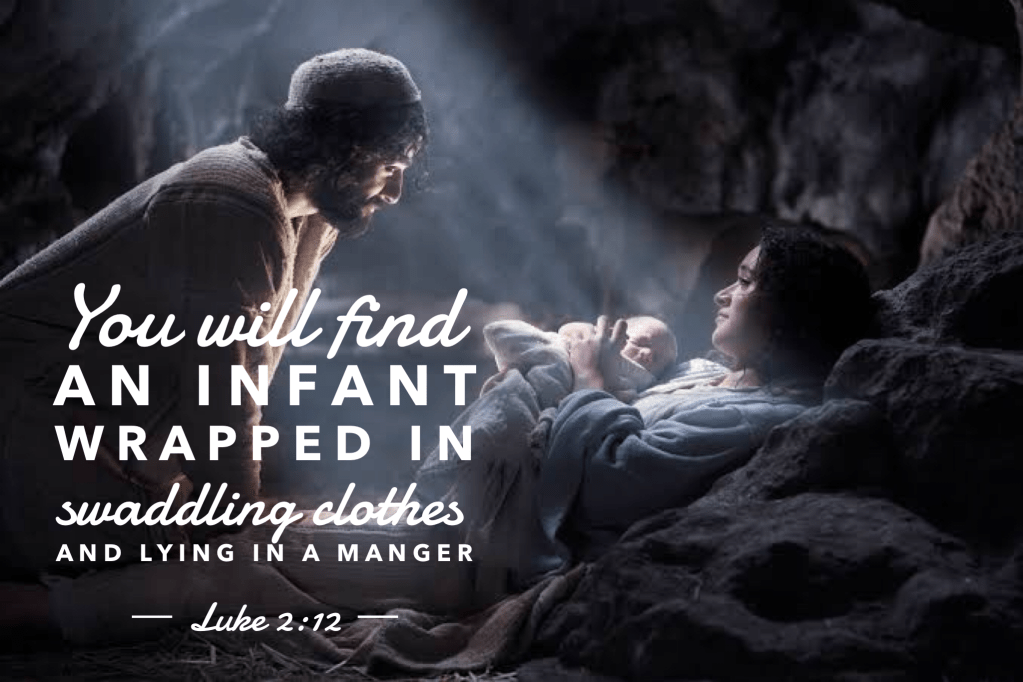
The Season of Advent is characterized by an element of surprise. This means that God’s coming is a big surprise for us. We do not expect that God who is almighty and all-powerful will come to visit us and to humble Himself in order to reveal himself to us.
This is what our Gospel tells to us today. Elizabeth was surprised by the visit of her cousin Mary. But more than that, Elizabeth and the baby in her womb were more surprised of what Mary carried in her womb. They were surprised because God had visited them. This prompted baby John to leap with joy because God has come through Mary.
The feast of Our Lady of Guadalupe is also a manifestation on how God has visited us in history. Moreover, this visit of God through Mary to San Juan Diego is an expression of God’s loving concern for his oppressed people particularly in Latin America. God’s visit then, is a revelation that God is on the side of the poor and the oppressed, of the weak and powerless.
On this Season of Advent and on this feast of Our Lady of Guadalupe, we are invited to allow God to surprise us. Thus, never lose the sense of being surprised. This means that we are challenged to put down our judgments and biases, indifferences and suspicions, thus, to be less and less guarded, that may prevent God from surprising us – and that may stop us too from welcoming God.
God surprises all the more when we begin to embrace our own failures and sins, and when we begin to accept that we are vulnerable and weak. And when God comes to surprise us, may it lead us to leap with joy. And hopefully, that experience will also move us to also surprise others with our own kindness and generosity. Hinaut pa.
A reading from the Letter of Paul to the Romans (10:9-18)
Brothers and sisters: If you confess with your mouth that Jesus is Lord and believe in your heart that God raised him from the dead, you will be saved. For one believes with the heart and so is justified, and one confesses with the mouth and so is saved. The Scripture says, No one who believes in him will be put to shame. There is no distinction between Jew and Greek; the same Lord is Lord of all, enriching all who call upon him. For everyone who calls on the name of the Lord will be saved.
But how can they call on him in whom they have not believed? And how can they believe in him of whom they have not heard? And how can they hear without someone to preach? And how can people preach unless they are sent? As it is written, How beautiful are the feet of those who bring the good news! But not everyone has heeded the good news; for Isaiah says, Lord, who has believed what was heard from us? Thus faith comes from what is heard, and what is heard comes through the word of Christ. But I ask, did they not hear? Certainly they did; for Their voice has gone forth to all the earth, and their words to the ends of the world.
A reading from the Holy Gospel according to Matthew (4:18-22)
As Jesus was walking by the Sea of Galilee, he saw two brothers, Simon who is called Peter, and his brother Andrew, casting a net into the sea; they were fishermen. He said to them, “Come after me, and I will make you fishers of men.” At once they left their nets and followed him. He walked along from there and saw two other brothers, James, the son of Zebedee, and his brother John. They were in a boat, with their father Zebedee, mending their nets. He called them, and immediately they left their boat and their father and followed him.
Homily
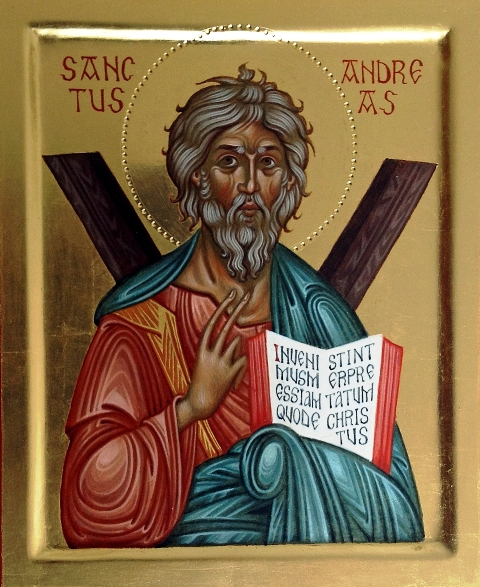
We celebrate today the Feast of St. Andrew, one of the original 12 apostles. We know very little of him. According to our tradition, Andrew became the first bishop in the community of Constantinople until he was martyred through crucifixion on an X-shape cross. The gospels tell us also that he was the brother of Peter. They were from Bethsaida, a town near the Sea of Galilee. In John’s gospel, we were told that Andrew was a disciple of John the Baptist at first.
In the same gospel, we found that Andrew had actually brought Peter to Jesus, telling his brother, “We have found the Messiah!” In the other gospels, it was Andrew who called the attention of Jesus about the boy with 5 loaves and 2 fish. Again, it was Andrew who told Jesus that there were some Greeks who wanted to see Jesus.
From here, we can sense that Andrew was actually an apostle with a typical role. Unlike Peter, he was not able to witness the transfiguration of Jesus at Mt. Tabor. Andrew was not part of Jesus’ inner circle composed of Peter and the 2 brothers, James and John.
He was in fact an ordinary guy, an ordinary apostle of Jesus. However, Andrew had a remarkable faith in Jesus.
Remember, his brother Peter doubted and even denied Jesus three times. But for Andrew, he was the first one to realize that Jesus was truly the Messiah. In his conviction, he joyfully shared what he found to his brother. He himself became an evangelist, a preacher of the good news to his own brother. Moreover, he brought others to Jesus like the boy and those Greeks. He became a bridge between Jesus and other people.
This is what St. Paul has told us in the first reading. As there is a need and but also beauty in sharing one’s faith in Jesus to others. His letter to the Romans would help us ponder our own call to be a kind of apostle or bearer of the good news to others like St. Andrew.
We usually think that preaching is only proper to bishops, priests, and deacons. Indeed, public preaching of the gospel in liturgical occasions like what I am doing now is proper to me as a priest and not to you as lay persons. But it does not mean that you cannot preach the Gospel or share Jesus anymore to others. As Christians, we share the prophetic role of Jesus by virtue of our baptism. It means that all of us have both the responsibility and the privilege to be God’s messenger to others.
The Gospel tells us how we are being called individually. To each of us, Jesus is saying, “COME, FOLLOW ME, AND I WILL MAKE YOU FISH FOR PEOPLE! I WILL MAKE YOU MY OWN APOSTLE!” This can surely be materialized when we preach with joy by our own example.
Thus, when we are happy with what we are doing and when we are honest in our relationships and dealings with others; and when we are sensitive to others and volunteer to help whenever someone needs a helping hand; when we become joyful givers to those who have less; when we become more understanding and compassionate with those who are experiencing more difficulty in their life; and when people around us feel the deep expression of our faith as we pray in the church, in our homes or with others…then people will see these things and will recognize that we are Christians. Then like St. Andrew, we will be able to bring other people closer to Jesus, by becoming bearers of the Good News through our very life. Hinaut pa.
A reading from the Holy Gospel according to Luke (23:35-43)
The rulers sneered at Jesus and said, “He saved others, let him save himself if he is the chosen one, the Christ of God.” Even the soldiers jeered at him. As they approached to offer him wine they called out, “If you are King of the Jews, save yourself.” Above him there was an inscription that read, “This is the King of the Jews.”
Now one of the criminals hanging there reviled Jesus, saying, “Are you not the Christ? Save yourself and us.” The other, however, rebuking him, said in reply, “Have you no fear of God, for you are subject to the same condemnation? And indeed, we have been condemned justly, for the sentence we received corresponds to our crimes, but this man has done nothing criminal.” Then he said, “Jesus, remember me when you come into your kingdom.” He replied to him, “Amen, I say to you, today you will be with me in Paradise.”
Homily
How would you imagine a king?
Being influenced by cartoons, anime and movies, I would imagine a king who wears a golden crown, covered in a golden robe, sitting on a golden throne and living in a golden palace. A king is a powerful man who has thousands of armies, who conquered many nations and defeated countless enemies through bloody wars. He is untouchable – and commoners, slaves and servants cannot talk to him directly. His throne is too far from the ordinary people.
This is not far from how we imagine Jesus Christ our King. Influenced by the western culture we also imagine Christ the king who wears a golden crown, wrapped in a golden robe and sits on a golden throne. This image, for me, seems to be a distant king who does not know the daily affairs of his people. A king who merely shows greatness, triumph and wealth.
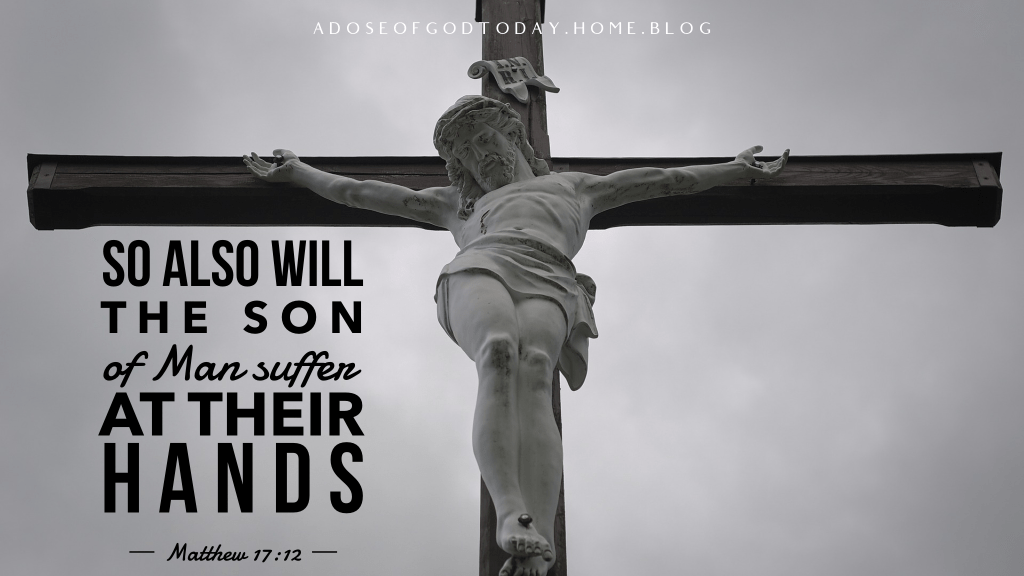
However, the Gospel that we have heard today speaks nothing of this kind of king. What we have is a vulnerable king, powerless and crucified on the cross. This is Jesus’ statement that he is not an earthly king who only shows grandeur, control and domination over his subjects. He is a king who became like us, who lived with us and journeyed with us in every story of our life especially in those difficult and dark moments.
He is not an unreachable king sitting there on the high throne but he is a God-with-us (Emmanuel). He is a king who knows us and our deepest secrets and desires. But he is a king who does not control and imposes himself on us. He only calls and invites us to come to him.
Jesus’ determination to call us and to gather us brought him into that situation. Despite the danger and of the suffering he would endure, as king, he is always ready to take the risk to offer his life for our sake, that we may experience freedom and healing. We find his invitation through the three different people in the Gospel and their individual response to Jesus. So, let us look at them.
First, the people like the Jewish authorities and the soldiers. They refused to recognize Jesus as King and Messiah because he was a threat to them, a threat to their comfort, and threat to their earthly power. It was a decision they have made despite the invitations of Jesus for them to believe in Him.
Second, one of the criminals who insulted Jesus. He was actually confused and did not make any stand. He was lukewarm. He neither condemned Jesus nor accepted him as Lord, King and Redeemer. Despite the closeness of God in him on the cross, he did not recognize God in Jesus because he was still full of himself. He was unrepentant.
Third was the other man on the cross. He was the one who recognized God in Jesus and decided to accept Jesus as his Lord. This made him say, “Jesus, remember me when you come into your kingdom.” Being powerless on that cross, he was able to recognize the face of the Lord, his king. This person felt a God who has accompanied him in his suffering and even towards death. Through his very suffering, he found God to be so close to him.
This tells us now of a king who is close to us. Jesus is not a king who is distant from our sufferings and fears but a king who patiently and lovingly walks with us. God, indeed, meets us where we are and he is ready to bend down in order to encounter us there in the saddest and darkest part of our life.
Yet, let us also remember that Jesus requires our participation. To every person Jesus met, he gave them the chance to recognize him but the hardness of their hearts and because of their arrogance, they refused to see Jesus. But with this other man on the cross, owning his sins and failures in life brought him into that realization that he was in need of God. Meaning, when we humbly recognize our weaknesses and sins we also recognize God’s love for us. This becomes, then, an opportunity for God to transform our life.
Thus, on this great feast of Christ our King, let us also own and recognize our failures and sins. This calls us not to be afraid because Christ will never condemn us to death. He already took it upon himself for us. What he wants is that we will enjoy his presence in paradise.
And as Jesus identified himself with the suffering, with the dying, with the condemned, let us also expand our image of Christ the King. Let us encounter and recognize Jesus through the sick old person abandoned by his family, or those who have been affected by calamities, or a rejected and broken daughter or son who succumbed to drug and alcohol addiction, or to an abused spouse, or to a street family who are displaced or to a friend who suffers depression, or a classmate who is being bullied. Take time to meet those who might need our help in ways that we can do. And hopefully, that encounter will bring us into the experience of meeting Christ the King through others. Hinuat pa.
Reflection shared by Fr. Mar Masangcay, CSsR (Filipino Missionary in South Korea)
In a rather busy and crowded bus terminal in Manila, a PWD (person with disability) foreigner was found trying to find his way, hoping to catch his bus. While sitting and waiting for his bus, a young OFW (overseas Filipino worker) saw and sensed the PWD foreigner’s confusion, came and approached the foreigner, and said, “May I have of some assistance, Sir?” “O, Thanks. I’ve been trying to find my way, hoping I would not miss my 9am bus to Baguio”. The OFW replied, “No worry, Sir. I’m on the same trip. We could come together.” Gladly the foreigner sat with him, waiting for their bus. As the bus arrived, the OFW helped the PWD to his seat, and then bids farewell to find his own seat. Suddenly the PWD said to the OFW, “Many thanks, Man. Are you Jesus?”
Christmas proclaims in the gospel of St. John: “The word became flesh and live with us. He was in the world and the world came to be through Him…But the world did not know Him … and his people did not accept Him.” Although Christianity is universal, world-wide, international and multicultural, we cannot deny that our Lord Jesus Christ, we believe in, is still unknown and unaccepted in the world. Others may have heard and seen about Jesus from others, but most of us have not meet and experienced Jesus personally. And most of us are, even in faith still longing and searching for Jesus intimately. In others words, in our disabilities and being foreigner/migrant to discover God’s life, we are still finding our ways to wander “Are you Jesus? Is this Jesus?” – hoping to catch a glimpse of God through Jesus, God’s word who lives with us in our daily lives.
On this last Sunday of liturgical year, today we honor Christ the King. We celebrate the Kingship of Jesus Christ, confirming of His reign, presence and rule in our lives today. However, His Kingship is best portrayed to us, not Him in some precious throne and with pearly crown, but Him hanging on a cross wearing a crown of thorns and among criminals.
As our gospel today shows us, while even on the hour of his death, Our Lord and King Jesus still speaking and sharing words of hope and compassion to all those who come near Him. His reign, presence and rule in our life is thus best revealed to us by His continuing sharing and spreading of God’s good News of love, mercy, hope, compassion & faith to our world in the story of His life, mission, suffering, death, resurrection and glory.
Meaning, whenever and everytime we experience in our life love, kindness, mercy, compassion, kindness hope and faith, shown by us both as receiver – like the PWD, and as giver – like the OFW, God’s grace – along with the kingship of Jesus, is with us and in our midst. As a church song proclaims, “they will know we are Christians by our love”. By our experience of love and of loving in life, we and others may come to know that “we are of Christ”, “we are of Jesus”. Thus, God’s word and kingdom is with us; and our Lord and King Jesus life, mission, and reign live with us, as we still always experience in life love, hope, compassion and faith.
Now, to always discover the Emmanuel, God amongst us, and also to be “of Jesus, of Christ” personally in our life and world today, as PCP II suggests, the challenge for us Catholics, especially Filipino Catholics, is to retell (tell again & again) the Jesus story to ourselves so that we can tell him to others. In other words, Kilalalin natin muli at lagi si Jesus sa ating sarili, upang atin siyang maipakilala sa mundo.
Preach and proclaim Jesus to yourself so that you can share Him to others. Be personal with Jesus so that in you and through you, He can and will also be personal to others. In other words, Represent Jesus (present him again) to oneself, so that He will be also present to others who are longing for Him in life.
Lord, even in our faith, we also are wandering “are you or is this Jesus?” – still longing and searching to discover you in our lives. As you have revealed to us, may our experience of love and loving you and others in life, allow us to retell your story, and let others tell your story to ourselves, so that we can tell and share You, as well as to “be Jesus” to others who also searching and wanting to be near and personal with you. Amen.
November 21, 2019 – Feast of the Presentation of the Blessed Virgin Mary
Today, we celebrate the feast of the Presentation of Mary to the Temple. This feast is not found in the bible but in a scripture called the Protoevangelium of James. So, it means that this feast actually, has no historical basis. However, why do we celebrate it? Why is it important for the Church?
Even though this is not an historical event, but this feast itself is spiritually and theologically important for the Church. In that scripture, the Protoevangelium of James, it was described that the parents of Mary, who were Saints Joachim and Anne offered their daughter, Mary, to God in the Temple at the age of 3 years old.
The action of Joachim and Anne was an expression of their gratefulness to the Lord. This old couple offered back to God the very gift that they have received from God.
It was in this way that Mary had been consecrated to God for the purpose that God transforms the life of Mary. Hence, this feast of Mary tells us how God consecrates a life that is fully offered to Him. This tells us too, how God can make a simple offering to become so wonderful and beautiful.
This feast prepares us for the Immaculate Conception of Mary and of the great mystery that we will celebrate on Christmas day, the birth of Jesus. Thus, through the act of sacrifice of the Joachim and Anne and the act of faith of Mary’s “yes” to the Lord; God in return blessed not just Joachim and Anne and Mary, but, each of us, through the birth of Jesus.
This is the message for us today. We are called to offer back to God all that we have.
As husband and wife, offer back to God your marriage life, making God the very center of your marriage.
As a family, offer to God your very relationships including your joys even your sacrifices and pains.
As a professional, offer to God your work, your passion, your talents and even your insecurities and failures.
As a young person, offer to God your dreams and hopes and even your fears and anxieties of the future.
As an old person, offer to God your good old days, the days that you have spent on this earth with your loved ones including the good and bad experiences and even your illness and uncertainties in life.
In offering to God what we have, it also calls us to be confident in God, to trust him fully. God promises us that when we are able to offer what we have to Him; He will surely bless them and transform them beyond our expectation. God will certainly bring forth life, healing, reconciliation and wonderful and beautiful things through us and among us. Hinaut pa.