Category: Feasts

  • Bridging the Gap

    Bridging the Gap

    November 30, 2020 – Feast of St Andrew, Apostle

    Click here for the readings (https://bible.usccb.org/bible/readings/113020.cfm)

    Homily

    We celebrate today the Feast of St. Andrew, one of the original 12 apostles. We know very little of him. According to our tradition, Andrew became the first bishop in the community of Constantinople until he was martyred through crucifixion on an X-shape cross. The gospels tell us also that he was the brother of Peter. They were from Bethsaida, a town near the Sea of Galilee. In John’s Gospel, we were told that Andrew was a disciple of John the Baptist at first. In the same gospel, we found that Andrew had actually brought Peter to Jesus, telling his brother, “We have found the Messiah!” (Jn 1:35-42). It was also Andrew who called the attention of Jesus about the boy with 5 loaves and 2 fish (Jn 6:8-9). Again, it was Andrew with Philip who told Jesus that there were some Greeks who wanted to see Jesus (Jn 12:20-22).

    From here, we can sense that Andrew was actually an apostle with a typical role. Unlike Peter, he was not able to witness the transfiguration of Jesus at Mt. Tabor. Andrew was not part of Jesus’ inner circle composed of Peter and the 2 brothers, James and John. He was in fact an ordinary guy, an ordinary apostle of Jesus. However, Andrew had a remarkable faith in Jesus. Remember, his brother Peter doubted and even denied Jesus three times. But for Andrew, he was the first one to realize that Jesus was truly the Messiah. In his conviction, he joyfully shared what he found to his brother. He himself became an evangelist, a preacher of the good news to his own brother. Also, he brought others to Jesus like the boy and those Greeks. He became a bridge between Jesus and other people. He actually bridged the gap between those people and Jesus.
    This is what St. Paul has told us in the first reading. There is a need and beauty in sharing one’s faith in Jesus to others. Paul writes, “Their voice has gone forth to all the earth, and their words to the ends of the world.” His letter to the Romans helps us ponder our own call to be a kind of apostle or bearer of the good news to others like St. Andrew.

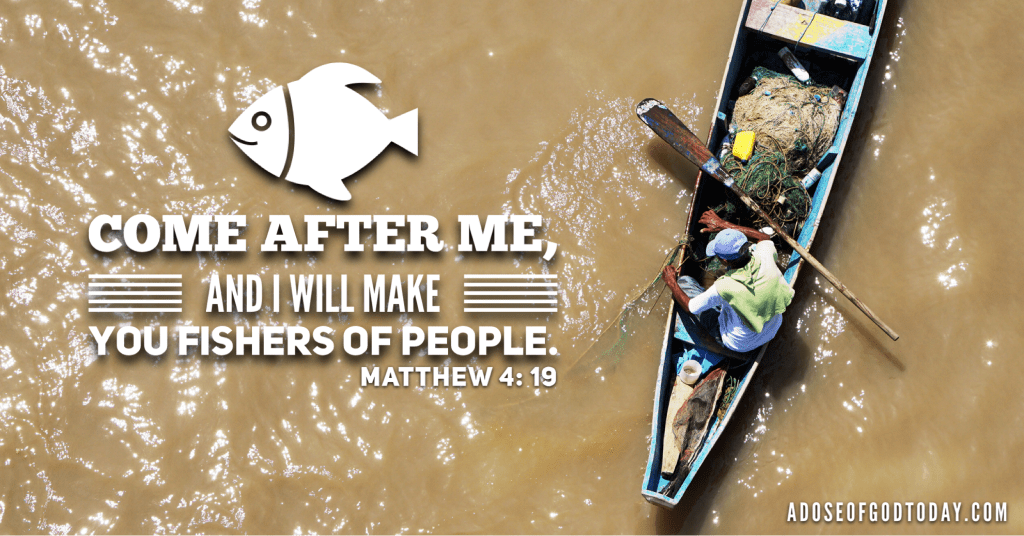
    Moreover, the Gospel tells us how we are being called individually. To each of us, Jesus says, “COME, FOLLOW ME, AND I WILL MAKE YOU FISH FOR PEOPLE! I WILL MAKE YOU MY OWN APOSTLE!” This can surely be materialized when we preach with joy by our own example.

    So, as students, when we believe in what we are studying; as workers, when we are happy with what we are doing and honest in our business and with our co-workers; and when we are sensitive to others and volunteer to help whenever someone needs a helping hand; when we become joyful givers to those who have less;  when we are more understanding and compassionate with those who are experiencing more difficulty in their life; and when people feel that we believe what we pray in the church, in our homes or with others…THEN PEOPLE WILL SEE ALL THESE THINGS AND WILL RECOGNIZE THAT WE ARE CHRISTIANS.

    Like St. Andrew, we will be able to bridge the gap by bringing others closer to Jesus.  Hinaut pa.

  • King for us & with us.

    King for us & with us.

    November 22, 2020 – Solemnity of Our Lord Jesus, King of the Universe

    Click here for the readings (https://bible.usccb.org/bible/readings/112220.cfm)

    Homily

    If you google the word: “Cristo Roto or Broken Christ” in the net, you will be led into a place in Aguascalientes, Mexico where there stood a massive 25 meters bronze statue of Christ above the city dam. Considered to be the 10th largest statue of Jesus in the world, what makes it special is that it is broken. An image of Crucified Jesus stand suspended without a cross, with a missing right arm and a snapped off leg. It was based on the story told about Fr. Ramon Cue who found a broken and desecrated crucifix in an antique shop, and bought it in view of restoring it for his parish. Once home however while in prayer before the broken Christ, Christ himself pleads to the priest that it to be left broken & not restored, so that it could stir in the priest & in his parishioners the need to both ‘see’ & ‘serve’ the broken Christ’s in their midst. Known now as Santuario del Cristo Roto (Santuary of the Broken Christ), the massive Broken Christ statue is a famous religious pilgrim and devotion site, and a popular stop for Mexican migrants crossing the US, where faithful considered it as a savior of the lost causes.

    Today is the Solemnity of Christ the King. Consider the image of Christ the King. Usually the image shows us all the symbol & promptings of honor and glory depicted proper & usual for a king (crown, thrown, orb, scepter & robe). But notice, what is most peculiar in the usual image of Cristo Rey are His exposed swelling inflamed heart & His barefoot. These peculiarities somehow highlight the distinction of Christ’s kingship from the usual human kings. Barefooted-king symbolizes Christ as a humble Shepherd king who is on-the-go, in-touch, and grounded in His people’s lives. Exposed swelling inflamed heart symbolizes Christ as the loving Lord King who is hands-on, feel with, empathizing, all-out, compassionate & merciful to us His people. Above all, both His open heart & exposed feet are reminders that our Lord & King Jesus Christ is a Broken, Suffered, Wounded yet Victorious & Glorious Servant King-Shepherd who still needs & longs for our praise & loving service with Him in our Father’s kingdom. A glorious King, indeed yet remains a broken Christ so that we may see & serve Him in our midst, in our day to day lives & thus, continue His work & contact-presence with us in life. A forever kingly yet still broken Christ in our midst.

    The kingship of Christ reminds us that, FOR US, God is our Shepherd king. For our sake, He choose to be our Shepherd King. Through our readings today, we recognize that like a good shepherd, Yahweh HIMSELF tends us His flock: a hands-on God-king who look after, tend, rescue, pasture, give rest, seek, bring back and heal us His people for the sake of  our salvation, fulfilled fully  (no more, no less) through the witness & shepherding of our Lord Jesus Christ. And on the day of Reckoning, Jesus will account & segregate the worthy from the unworthy (sheep among the goats) of eternal life with our Father.

    And the kingship of Christ reminds us as well that ALONG WITH US, God is our family or rather we are His family & His son Jesus is our brother who is mostly with the least of our family. In our gospel today, both the worthy & unworthy ask the Lord “When did we see you…?” His response is Ubi Caritas: loving service to others – “whatsoever you do to the least, that you do unto me”. In other word, Jesus is the “me in the least of our brothers/our family” – the broken Christ in our midst who needs our loving service. And how we treat Him in the least of us is the standard measurement of us to be worthy or unworthy of being & living with Yahweh, our Father.

    Christ’s kingship is thus expressed at its best & should be seen and served as our Lord Jesus, the Shepherd King FOR us, and the broken Christ WITH US, especially in the least of us in our midst.

    The solemnity of Christ the King marks the end of our liturgical year. Like in the airport’s pre-departure area, as we bid farewell to the pandemic year that has been & a prepare for the next year’s promise & challenges in our spiritual travel-journey, perhaps we ask ourselves:

    • How have I experienced God’s shepherding in my life this year? In what ways Jesus have tended, rescued, pastured, protected & healed me this year? How the Lord Jesus is for me & with me this year?
    • How did I participate & contribute in His shepherding of me & us all? What have I have done for Him? How have I been with Him, an obedient & faithful sheep OR a dumb-ass & hard-headed goat? What have I done to the least of my brothers? Have I been His frontliners who do something for those who are need at this time OR have I been a KAREN, a proud entitled jerk who complains a lot & carelessly put others lives at risk for undermining protocols & breaking guidelines? Have I recognized, “see & serve” Him in my life & in our midst?

    As we have a closer look of our life & mission as His flock & people, reimagine our being & living with God, and make some resolutions to do better in life & faith anew, may the lyrics of songs below inspire & guide us to be worthy of Our Christ the King in our midst. Amen.

    I MAY NEVER PASS THIS WAY AGAIN (Perry Como (1958))

    I’ll give my hand to those who cannot see, 
    The sunshine or the fallin’ rain.

    I’ll sing my song to cheer the weary along, 
    For I may never pass this way again!

    I’ll share my faith with every troubled heart, So I shall not have lived in vain.

    I’ll give my hand, I’ll sing my song, 
    I’ll share my faith, because I know, 
    That the time is now to fulfill each vow, 
    For I may never pass this way again!

    PAG-AALAY NG PUSO (Nemy Que, SJ)

    Minsan lamang ako daraan sa daigdig na ito.
    Kaya anuman ang mabuting maa’ring gawin ko ngayon.  O anumang kabutihan ang maari kong ipadama? Itulot ninyong magawa ko ngayon ang mga bagay na ‘to.

    Nawa’y h’wag ko ‘tong ipagliban o ipagwalang-bahala,
    Sapagkat ‘di na ‘ko muling daraan sa ganitong mga landas

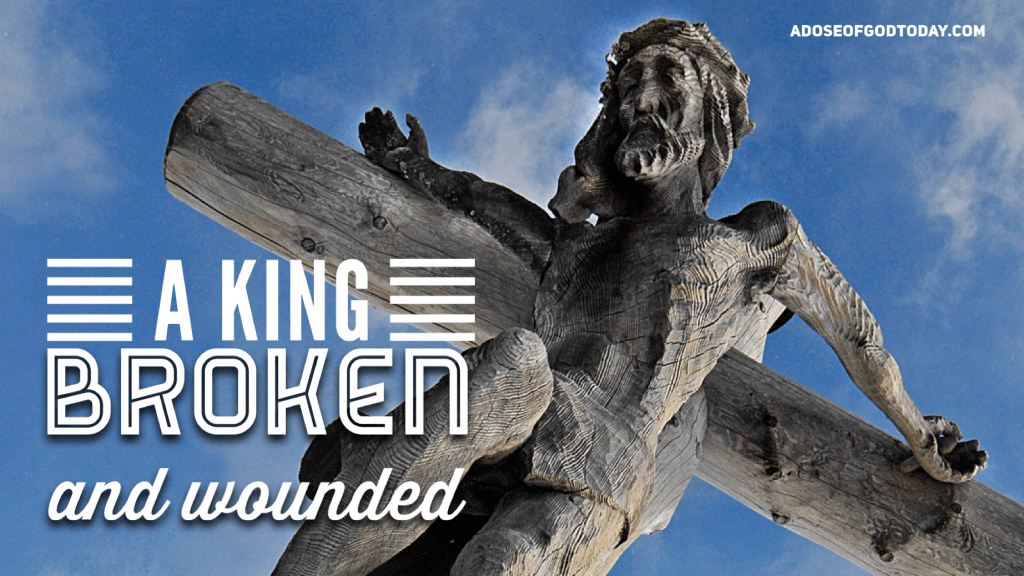
  • A King Among Us, Broken and Wounded

    A King Among Us, Broken and Wounded

    November 22, 2020 – Solemnity of Our Lord Jesus, King of the Universe

    Click here for the readings (https://bible.usccb.org/bible/readings/112220.cfm)

    Homily

    How would you imagine a king? Being influenced by fairy tales, anime and movies, I would imagine a king who wears a golden crown, covered in a golden robe, sitting on a golden throne and living in a golden palace. A king is a powerful man who has thousands of armies, who conquered many nations and defeated countless enemies through bloody wars. He is untouchable – commoners, slaves and servants cannot talk to him directly. His throne is too far from the ordinary people.

    This is not far from how we imagine Jesus Christ our King. Influenced by the western culture we also imagine Christ the king who wears a golden crown, wrapped in a golden robe and sits on a golden throne. This image for me, seems to be a very distant king. A king who does not know the daily affairs of his people. A king who merely shows greatness, triumph and wealth.

    However, our readings today portray a different image of Christ the King. There was no mention of wealth, no gold and silver, no armies and weapons. Let us closely look the readings today.

    The first reading from the Book of Prophet Ezekiel has a very interesting background. The political and religious leaders who were supposed to guide and care for the people became irresponsible. They became corrupt and abusive. They were chosen by God to lead his people and uphold justice and promote peace. However, they turned into men who only hungered for power and wealth. The poor were exploited and the needy were abandoned. Hence, God became so upset with what they had done to the people. And so, God promised that he will be the one to personally care for his people as a Good Shepherd would do to his sheep.

    This gives us the image of a God who builds personal connection or relationship with his people. God searches for us when we are lost. God gives us rest and brings us to a safe and abundant place. He looks after us because each of us is so dear to Him.

    This promise of a faithful God gives us the assurance that God indeed is there for us all the time. For this reason, our psalm captured beautifully the feeling of being taken cared by God Himself – “The Lord is my Shepherd, there is nothing I shall want.” Yes, this is an attitude of a person who has become confident in God’s promise. Indeed, in God everything shall be fine, in him, all shall be well.

    This is what St. Paul has told us in his letter to the Corinthians “that God is everything to each of us.” It only means that God is there for us and accompanies us in our brokenness and difficulties. Yes, this Solemnity of Jesus Christ, King of the Universe reminds us now that our King, our God is not far from us. He is not sitting on a golden throne or wrapped in a golden robe or guarded by a concrete golden palace or protected by security agents and royal guards. Our King is here with us, walking with us in our brokenness and woundedness. Our King has even identified himself to be among us and one of us, wounded and broken.

    The Gospel tells us about this. The King in the parable identifies himself with those people who are hungry and thirsty, who are naked, who are homeless, who are imprisoned, who are sick. Indeed, Jesus identifies himself with those who are broken and wounded.

    Let us not forget that the King-Servant who builds relationship with us, who shows concern and love to us also expects response from us. Jesus wants us to show to others especially to the least of our brothers and sisters the concern, mercy and love that we experienced from God.

    The best way of expressing our gratitude to Christ, of our reverence and love for him is in making our faith concrete through the “corporal works of mercy” by feeding the hungry, drink to the thirsty, clothing the naked, comforting the sick, welcoming the stranger, visiting the imprisoned – the very people to whom our King identifies himself.

    This is the invitation for us on today. It is in our ordinary life, in every day affairs of our life that we are called to respond to Christ the King of the Universe who has called us. The corporal works of mercy can be expressed through our common and ordinary dealings with members of our family, our friends, co-workers and even strangers we meet on the road especially when we are confronted with all their brokenness, wounds and needs.

    Christ the King rather chooses to be identified with a sick old man abandoned by his family, or a rejected and broken-hearted daughter or son who succumbed to drug or alcohol addiction, or to a person physically, mentally and sexually abused, or to a person affected fatally by the financial crisis brought by the pandemic, or to a physically and mentally drained medical front-liner, or to an infected person of Covid-19, a grieving family because of the death of a loved one, or to a family being displaced because of the recent disasters, or a person deprived of voice and freedom or to a friend who suffers depression, or a classmate who is being bullied.

    Christ calls us to see and encounter him through these people. Expand now our image of Christ the King. Rather than imagining him with gold and jewels, let us encounter the Lord among our needy brothers and sisters. Thus, take time to reach out to those who need our help, in ways that we can do. Hopefully, that encounter and the experience of reaching out to the needy, will bring us into the experience of encountering Christ through others. Hinaut pa.

  • Life and Living Life is to Give Life

    November 21, 2020 – Memorial of the Presentation of the Blessed Virgin Mary

    Click here for the readings (https://bible.usccb.org/bible/readings/112120.cfm)

    Homily

    This celebration of the Presentation of the Blessed Virgin Mary has no historical basis. This cannot be found even in the Gospel or in any letters of the New Testament. However, the Church has celebrated for more than a thousand years. There must be something so important and significant in this feast of Mary that moves us to celebrate it year after year.

    This tradition can actually be found in the unofficial scripture called as the Protoevangelium of James. Though this feast is not a historical event, but this is spiritually and theologically important for us. According to that scripture of James, the parents of Mary, Joachim and Anne offered their daughter to God in the Temple at the age of 3 years old. The action of Joachim and Anne was an expression of their gratitude to the Lord. This old couple who was given a daughter in their old age, offered back to God the very gift that they have received from God. The shame of having no child, as it was believed at that time, turned into joy at the birth of Mary.

    Certainly, this joy moved them to give. This was out of deep gratitude to the generosity and faithfulness of God in their life as husband and wife. This sacrifice and offering became the way in the consecration of the life of Mary to God. At a very young age, Mary became aware of God’s presence in her life which she first realized in the life of her parents. This tells us now how God transforms a sacrifice into something wonderful and beautiful. The life of Mary, became the beauty and the wonder that the world longed to see. Indeed, through Mary, a child was born for us, the Emmanuel. Through the life of Mary given to God, life was also given to us, through Jesus.

    This, feast then, actually prepares us to celebrate wonderfully the Solemnity of Her Immaculate Conception and the Birth of her Son, Jesus. That is why, this feast is so significant to us. What we honor after all, is God who consecrated the life of Mary and from whom we too are being blessed.

    Through this feast, we are reminded today that life is not about accumulating things or securing something for oneself. Life and living life is to be able to give life which Joachim and Anne did and which Mary did and ultimately which Jesus did to us.

    This is contrary to what the Pharisees and teachers of the law wanted to happen. They were so concerned on what they could get from others in this life. That is why, they asked a malicious question to Jesus, to trick him and embarrass him. Yet, Jesus knew their hearts. They were filled with malice and selfish desires. This attitude reflected in the very situation they presented to Jesus, of a woman marrying the seven brothers when one after another died without having any child.

    Today on this feast of Mary, as we live life day by day, be more life-giving.

    Thus, as husband and wife, give back to God your marriage life and make God the very center of your marriage so that you will be able to give life to your children and to the community around you. As a family, give to God your joys even your sacrifices and pains so that God can transform you into blessing to others.  As a professional, give to God your work, your passion and even your and failures so that God will bless you to be an inspiration to your co-workers.  As a young person and as a student, give to God your struggles, your dreams, hopes and even your fears and anxieties of the future so that you become an influencer of confidence and trust in God. As a senior citizen, offer to God your good old days, including your good and bad memories, offer your routine and even your illness and uncertainties in life so that you become a witness of God’s faithfulness and generosity. Hinaut pa.

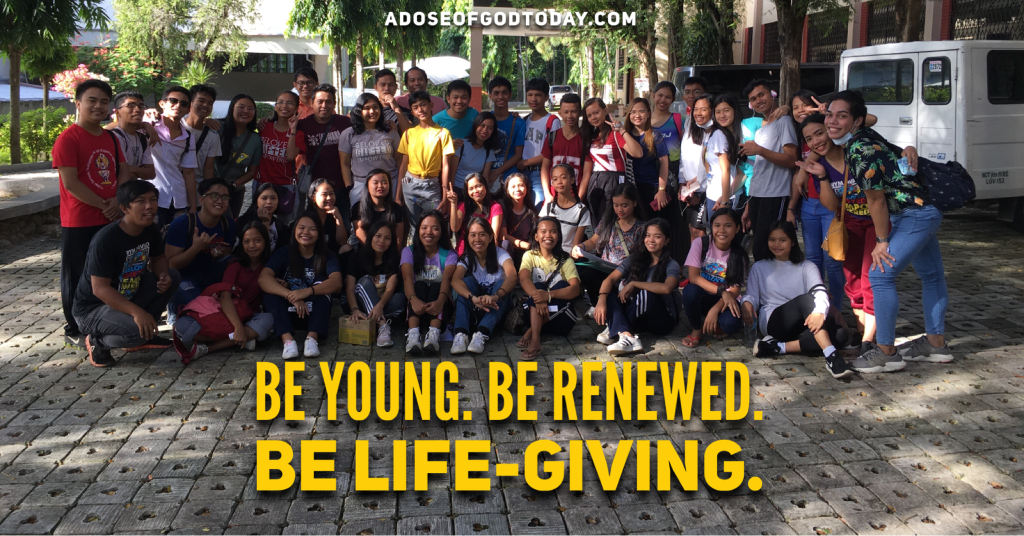
  • Be Young. Be Renewed. Be Life-Giving

    Be Young. Be Renewed. Be Life-Giving

    November 9, 2020 – Feast of the Dedication of the Lateran Basilica in Rome and Foundation Day of the Congregation of the Most Holy Redeemer

    Click here for the readings (https://bible.usccb.org/bible/readings/110920.cfm)

    Homily on RYM Day of Prayer

    Today is a joyful and wonderful day that aside from celebrating the Feast of the Dedication of the Lateran Basilica, which is the Cathedral of Pope Francis, and which is also called as the “Mother and head of all churches of Rome and the world,” we Redemptorist Missionaries are also celebrating our 288th birthday!

    On this day, St Alphonsus together with the first members of the Redemptorists, founded the Congregation in the Island of Scala, Italy in 1732. For 288 years, God’s faithfulness and generosity manifested in the life of the Congregation in many ways. This experience with God has been shared in many missions and apostolate of the Redemptorists throughout the world.

    One of the most important missions of the congregation where God’s faithfulness, generosity and abounding love being shared, is the Youth Ministry. That is why, this livestreaming mass today is dedicated to our Redemptorist Youth Ministry, who in many parts of the Philippines have gathered today to celebrate November 9 as a Day of Prayer.

    Yes, today is a Day of Prayer of the young gathered physically and virtually. This gathering is so significant because this Day of Prayer, on this wonderful day, it invites all of us to remind ourselves that we are God’s Temple and God’s holy people. Our readings today expressed this identity in us that we are indeed God’s Temple and God’s holy people.

    For us to remember this and make this Day of Prayer more wonderful and powerful for us today, I have three invitations, something that you can bring and something you can celebrate.

    First, BE YOUNG. Pope Francis reminds us that “God is Young and is always New.” This means that God really brings surprises and freshness in us because God is ever young. God will never have an expiration because God is always new. That is why, all of us who are God’s building and God’s Holy Temple as what St. Paul reminds us in his first letter to the Corinthians,  are called to be always young. Remember, we may grow old in age, however, to be “young at heart” is not limited to a particular age group. We may be young in terms of age, but when our heart is filled with anger and hatred, with bitterness and indifference, then, we have surely grown old. Moreover, to be advanced in age does not also mean that we will never be young at heart. Even when we have grown in age, a senior citizen may still be young at heart when he or she remains welcoming, warn-hearted, joyful and alert of God’s daily invitations. Let us remember the words of Pope Francis, “True youth means having a heart capable of loving, whereas everything that separates us from others makes the soul grow old.” Thus, be young and celebrate being young at heart.

    Second, BE RENEWED. As God is always new, God also brings fresh graces and fresh experiences. Our true relationship with God is always fresh, it will never be spoiled. Prophet Ezekiel tells us in the first reading that the water from the temple overflows and it reaches the barren and dry desert, and the water brings life. Salt waters also turn into fresh waters where every living creature shall live. This means that when we allow God’s love to transform us, to challenge and to call us, then God brings renewal into our dry and empty hearts. Hence, allow God today to reach our hearts to transform, challenge and call us  so that we will be renewed.

    Third, BE LIFE-GIVING. Jesus came to give us life. Jesus manifested his life-giving mission in his ministry. That’s why when there were people who suck the life of others, Jesus also expressed dismay and disappointment. This is what happened in today’s Gospel. Jesus drove out the merchants and money-changers who were sucking up the life of the poor through their scandalous and oppressive business inside the Temple area. When we turn out to be driven by our selfish desires and selfish intentions, we will also become vicious in our relationship with people around us. When we are more concerned in bloating our ego then we turn out also to become abusive and corrupt because our heart has become indifferent to God.

    However, such way of life is lonely because we will constantly be haunted by insecurity and fear. Certainly, there is no life here but sadness. Pope Francis in his latest Encyclical, Fratelli Tutti said, “go outside the self in order to find ‘a fuller existence in another.’ ” Meaning, that when we begin to think less of ourselves, to step outside our comfort zones, and outside our insecurities and fears, then, we also discover the fullness of life with the people around us. Thus, to experience truly what life is, is to be able to give life. When I commit myself fully to love another then I find joy and meaning in life. When I generously give something to someone in need, I do not only help a person but also experience the joy of helping another. Therefore, to live life joyfully and truly, is to be life-giving.

    Now, may I repeat the three invitations on this Day of Prayer and birthday of our Congregation, BE YOUNG, BE RENEWED AND BE LIFE-GIVING. Hinaut pa.

    Jom Baring, CSsR