Category: AUTHORS

  • Bringing Nothing but Blessing

    Bringing Nothing but Blessing

    Click here for the readings (https://bible.usccb.org/bible/readings/020124.cfm)

    Ten years ago I was sent abroad for a mission exposure, I was told that I got 30 kilos of baggage allowance for my flight. Few nights before my flight, I had my own inventory on what I should bring for the one year mission experience in Indonesia. I kept looking at my things worried that I might forget something important and something that “I might need.”

    Aside from clothes, I prepared small things, vitamins and preventive medicines against malaria, books, camping and survival kit, treats and sweets for my sweet tooth and many other small things. Unsurprisingly, my luggage was overweight and I had to pay a few thousand pesos for that.

    Indeed, the worries and anxiety that I might need this and that made my luggage heavy and overweight. I was also overburdened as I carried my luggage. After all, when I was in the mission area, there were many things that I brought but I was not able to use them. I realized I had more than enough.

    Such a situation may also be true in other aspects of our life. One may be overburdened in his or her relationship because of the emotional baggage the person brings. An emotional baggage such as trauma from the past, guilt, shame, fear, anger, hatred or other insecurities could make our life more difficult and at times overwhelming and suffocating.

    This is how I find today’s Gospel passage to be so meaningful and significant. Jesus sent out the Twelve, two by two. They were given power to cast out unclean spirits and heal the sick. However, in their journey, Jesus told them “to bring nothing except a walking stick.” They were “allowed to wear sandals but not a second tunic.”

    This journey sounds a bit harsh and difficult. A disciple could feel so vulnerable and insecure for not having other things in the journey. Yet, Jesus “gave them authority.” That authority is power. And that power is to bring blessing.

    Despite the poverty they had, the small things they possessed, the very presence of God among them and the power given to them suffice what they need. Moreover, such attitude to bring nothing but a walking stick was a invitation. There are two invitations here.

    1. First, to trust the generosity of God. The Lord shall provide the needs of His friends. The ever abiding presence of God is with them and to fully trust in God’s Providence is truly an act of faith. This is the realization of David at the end of his life. He learned to let go and entrust everything to God who is good and merciful. He is going the way of all flesh, as he said. God
    2. Second, to trust the generosity of the people. The reason why they were to bring nothing was to allow themselves become companions and friends of the people whom they were to encounter. They may have the power given by God to them, yet, they were not above the people or apart from the people. They were equal in status as companions and friends. They were to live among the people and be immersed in the life of the people. This is where the generosity of the people is welcomed and received with gratitude.

    Indeed, may we also learn and trust more the generosity of God and the generosity of people around us. That generosity may not be always material but also as an expression of support and understanding, warmth and affection, friendship and intimacy, care and compassion, mercy and forgiveness.

    Hence, as we move forward in whatever phase, track, or path we are in this journey of life, may we bring blessing to others. Hinaut pa.

  • Trusting God’s Strength vs Trusting a Man’s Strength

    Trusting God’s Strength vs Trusting a Man’s Strength

    Click here for the readings (https://bible.usccb.org/bible/readings/013124.cfm)

    To rely solely in our human strength, knowledge and wisdom can be so tempting especially when we want immediate results of what we desire. Becoming too proud of what we have achieved, gained and accumulated could make our heart arrogant making us adamant towards the grace and presence of God. This is the concern when we have less trust in God’s strength and put more trust and confidence to our human strength. This is the case in today’s readings.

    David was doubtful of God’s promise to aid him in a hundredfold of people. This was the reason why he ordered the census in order to be certain of his military power. However, doing so means not trusting the strength of God given to the people of Israel. Hence, David’s decision was an insult and a sin against God.

    Such action of David resulted to punishment of which he chose the third, and that was the pestilence over the city. This cost the lives of 70,000 people who died in the plague. However, David chose this because he realized the mercy of God. Though, his actions and wrong intentions directed only for his power and authority, but cost the lives of many. It was the people who suffered because of the failure of a leader.

    This doubt of David in God’s strength somehow reiterated among the neighbors of Jesus. The Lord who went home, preached and taught in his native place was received with offence and indifference.

    His own people, those whom he probability played with, worked with and his relatives doubted his capacity. They doubted his wisdom. They doubted his authority. They doubted his power. They took offense at him, as the Gospel said, because his own people, they who were very familiar with Jesus, only saw him as a son’s carpenter. He was too ordinary for them. Indeed, familiarity breeds contempt.

    As a consequence, the people did not believe despite what they have heard and seen. This was also the reason why Jesus can only cure few sick people by laying his hands on them, because of the lack of faith of many. That lack of faith prevented them to recognize God’s strength in Jesus. It prevented them too to acknowledge God’s wisdom and grace in Jesus.

    This is the invitation for us today and that is to grow more in our faith and trust in God’s strength to work in us. Though God gifted us with human wisdom, knowledge and strength may we not become too proud of what we have achieved. Rather, may we become more open and receptive of God’s power and strength even when that grace appears to be so ordinary and simple in our eyes and understanding. Hinaut pa.

  • A Touch may kill, A Touch may heal

    A Touch may kill, A Touch may heal

    Click here foe the readings (https://bible.usccb.org/bible/readings/013024.cfm)

    Human touch depending on our intention may bring death or may bring life. When our human touch is filled with malice, hatred and violence, then, it will surely bring destruction and pain to others around us. However, when touch is filled with grace, with love, affection, concern, and compassion, then, our touch may bring healing, peace, freedom and life.

    This is the case that we have heard in today’s readings. In the Second Book of Samuel, we were told of the tragic event of the death of Absalom, the son of David. Absalom led a rebellion against his father, King David. He wanted the throne for himself. Yet, his rebellion did not come out of the blue. There was already a steaming tension of hatred and violence within the house of David. His first-born son, Amnon, raped his half-sister, Tamar. Indeed, the touch of Amnon towards the beautiful Tamar, was filled with malice and lust.

    Though, the full brother of Tamar, Absalom did not also speak out, but kept quiet, leaving Tamar to suffer in silence. Yet, this became a venue for Absalom to foster hatred towards his half-brother Amnon, and also towards his father King David who turned a blind eye on this. This was the beginning of more violent actions within the house of David.

    Later, Absalom plotted to kill his half-brother and rebelled against his father. Even though, Absalom was able to get some army and territories of his father, yet, at the end, he was killed as told to us in today’s reading. With his death, David mourned over the loss of his son. Nevertheless, David’s grasped and insecurity over his throne and power led to the death of his sons and destruction of his own family.

    However, in the Gospel of Mark, we have heard different forms of touch. This time, the touch brings healing, freedom and life. There were two forms that I would like to emphasize.

    First, humanity’s touch to the Divine. This was the experience of the woman afflicted with hemorrhages for twelve years. In hope and faith she  reached out in order to touch even the cloak of Jesus. And indeed, her touch of the Divine brought her healing. Jesus affirmed her “courageous and daring faith.” She did not give in to desperation and hopelessness but to faith. This made her to touch the Divine and became a recipient of grace.

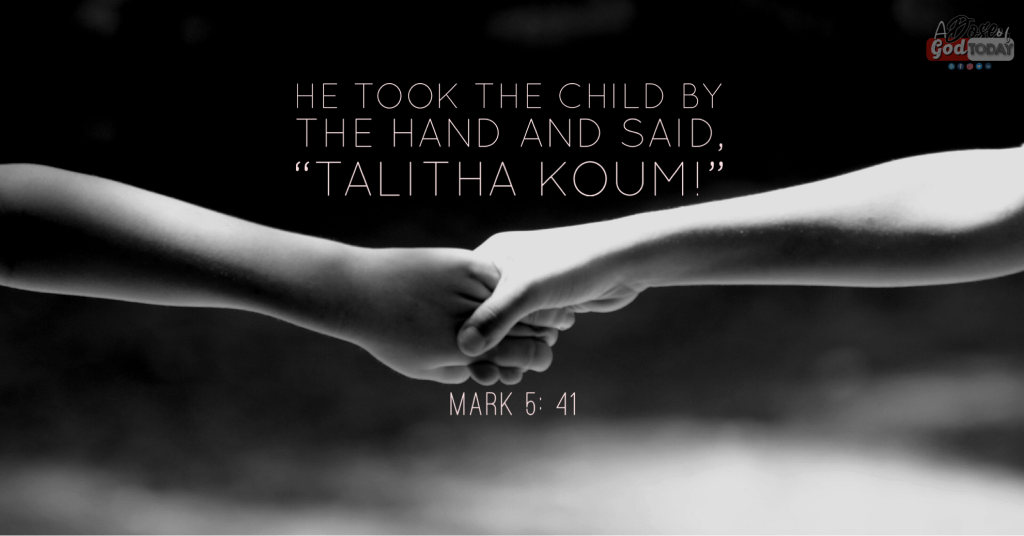
    Second, God’s touch to humanity. This was witnessed by Jairus, his wife as well as Peter, James and John. Jesus “took the child by the hand” and said to her, “Talitha koum!” At that, life was given back to the dead girl. The touch of Jesus was more powerful than death and grief transforming them into life and joy.

    This reveals to us now how our touch can actually become a channel of grace and blessing. We too are reminded that the Lord would always allow us to touch him. Let us not be ashamed or fearful in reaching out to God. The way we touch sacred and holy objects in our church is even our way of expressing it already. The sacraments we have in the church are God’s way of making us aware that we are welcome to touch the Divine and be touched by His grace.

    Let us also see and evaluate the way we touch others if this is filled with malice, insecurity, selfishness or hatred. Such intentions will only bring violence and death. Rather, let our touch be more of faith, love, concern, mercy and compassion so that we too may become channels of grace, blessing, healing and life. Hinaut pa.

  • INFLUENCER

    INFLUENCER

    Click here for the readings (https://bible.usccb.org/bible/readings/012824.cfm)

    It is once said that “Leadership is about making others better as a result of your presence and making sure that impact lasts in your absence.”

    We do all know something about leadership & authority. Many people have exercised their leadership and authority on us. In many ways, they have influenced us. And we have also exercised leadership & authority on others and in one way or another has influenced them. We do know how to be influenced by others & to influence others, as well.

    Sometimes it is even easy to tell who mostly influences other people’s lives. They will quote their parents or a teacher or someone they grew up with who have greatly influenced & lead their lives for better than worse. Yes, influences can be negative. But as soon as someone says: “As my mother always used to say…” practically what follows is surely something that influenced the life of the speaker in a positive way. We consider these leaders or authorities as the great peoples in our lives – the one who made us feel great about ourselves & helped us grow. They have in one way or another helped us form our values & principles in life, and have greatly impacted our lives to be a much better person.

    That is what real authority does. It is life-giving, growth-giving, affirmative, positive and helpful. The word itself is an indication of this. It comes from a Latin word “augere”, meaning “to make grow”. Authority then is power or influence not to lord over and control others but to help others grow. Leadership lies not on the power or control you have on others but on the influence & impact you have for others to grow. Not power to lord over others but power to influence & form others. Leadership then is all about being an influencer.

    That is why true indeed, “Leadership is about making others better as a result of your presence and making sure that impact lasts in your absence.” It is all about our influence to foster growth on others & help them become much better version of themselves, even with or without our presence.

    In our gospel today we heard that “his teaching made a deep impression on them… because he taught them with authority.” The people who listened to Jesus that day in Capernaum were struck by his authority & leadership.

    That is what happened to the people when they listened to Jesus in their synagogue. Hearing him they (even the demoniacs & possessed) began to open up & understand their own potentials & possibilities for life & growth. He gave them hope. He treated them as friends and equals. He did not talk them down, did not flatter & sweet-talk them as the scribes do. He told them instead to be true & be realistic about themselves than they had ever been before. Through the words of Jesus with authority, they realized that God calls them to greater things than they never had thought possible. They come to experience then God’s leadership in their lives.

    The same thing happens to us whenever we listen to Jesus, as God’s word for us through the Scriptures. Every time we read or listen to the Word of God, especially to the gospels, challenging it might be, we are influenced by the wisdom and message of Jesus. The words of Jesus have greatly influenced our lives that whenever it is proclaimed to us again and anew, it constantly offers us life, faith, and hope. It challenges to grow to be a much better person before God and other, and it also empowers us to do great things for others.

    Being led & influenced by Jesus in our lives do not usually make life easier, but definitely it makes life much more worthwhile! His authority, leadership, & influence do make us now do what all leaders should do: Foster growth and life in oneself & others. In other words, influenced & led by Jesus’ authority, we should also now lead & influence others, by fostering growth & making other people’s lives better.

    In this Eucharist today, may Jesus, the Word of God continue to influence and direct our lives so that we could also be a better influence in fostering growth in our church, society & nation. Amen.

  • THE CHILD IN US

    THE CHILD IN US

    Is. 9:1-6; Ps 98; Eph 1:3-6,15-18; Mk 10:13-16

    What kind of a child do we have in our heart? We may not be a child physically, but we may still ack like a child. To act like a child does not necessarily connote negative sides. Recognizing the child in us will surely make us more aware of who we are, the intentions of our heart, the kind of dream and hopes we have as well as the pain, the sadness or the trauma that we have endured.

    Hence, on this feast of the Sto. Niño, I would like to focus on the qualities of the child that may be in us, and to see how the Lord Jesus, born as a child to Mary and Joseph, invites us today.

    Psychologists and Psychiatrists have coined the term “adult children” or adults with unresolved childhood issues. This term tells us that though we may be already an adult or even in advanced age, yet, we still carry issues and problems in us that originated in our childhood. Not being able to reconcile or not able to find resolutions to the issues before may affect us greatly in the way we relate with others and with God, being shown in our patterned behaviors and attitudes.

    Dr. Charles Whitfield an American physician and psychotherapist refers to the inner child in us as the “real self.” This inner child in us may have suffered or wounded by armed conflicts which is common here in our region in Lanao, or caused by natural disasters, family problems, deprivation of basic needs like food and clothing, parental neglect and lack of affection and affirmation or by abuse (physical, verbal, emotional or sexual).

    As adult children or adults with unresolved issues we manifest childish behaviors. Being “childish” reveals our negative and selfish attitudes. A child can throw up tantrums when displeased and does not get what he/she wanted. This attitude of a child is an unconscious form of control and manipulation to get what he/she desired.

    Being childish is being selfish to get what we want no matter how unfair that would be to others. Being childish focuses on what “satisfies me” and on what “I can gain.”  To be childish prevents us to “listen” to what is more important. It also prevents us to believe and to accept other ideas because we are already convinced of our own judgments and beliefs. Thus, being childish is also characterized by being indifferent.

    Thus, because of the unresolved and unreconciled issues we have in the past, we become childish. Our inner child is trapped in that painful past, in that trauma or deprivation, hence, making us in the present to be insecure, fearful, and selfish.

    That is why, there is a need for us to find healing and reconciliation so that our inner child will be free. Only then that we become “childlike,” a quality of a child that expresses confidence, innocence, trust, faith and affection. Being childlike, we see the world through the eyes of a child, non-judgmental and free of prejudices. Being childlike, we express our hopes and dreams without being terrified of what lies ahead of us. Being childlike, we embrace and enjoy the present moment and become more contented of what we have. Being childlike, our heart is always filled with gratitude and faith.

    This is the call and reminded of Jesus to his disciples as proclaimed by the Gospel of Mark. The disciples of Jesus who at first did not like people bringing children to Jesus, as being scolded by the Lord. Jesus made a point and taught a very important lesson and that is in finding the kingdom of God among the presence of the children.

    Children, who at that time, had no legal identity. They less important in the society because they are not adults yet, thus, not fully developed persons. However, the Kingdom of God belongs to the children. This is true because of the very qualities of children, and that is of being trusting, open and dependent.

    Yet, to our hearts that have become cold, indifferent, judgmental, corrupt and selfish, the Kingdom of God becomes too far from us, not because God does not want us, but because we do not want to be with God. That is why, Jesus reminded all of us, “whoever does not accept the Kingdom of God like a child, will not enter it.” Only by having the heart of child that expresses true confidence and faith in the Father, that we shall also be able to embrace Kingdom of God already in us.

    This is the message and the call for us today as we celebrate the feast of the Sto. Niño, Jesus’ image as a child who have shown us what it is to be childlike, how it is to be childlike. Hence, there are three invitations for us today.

    BE RECONCILED WITH THE PAST. Let us not burden ourselves today with our issues when we were children. Let not what happened in the past, control or manipulate us at present. Seek resolution, reconciliation and healing so what we may be able to live in freedom and peace.

    PROTECT THE CHILDREN. Let us nurture a home, a community and a church that protects the rights of children, that nurtures the potentials of our children and encourages growth and maturity of our children. To us adults, be mindful not to cause harm, danger or abuse to children. Rather, express love and affection, affirm and recognize the worth and value of our children.

    LET US ALL BE CHILDLIKE. Let not selfishness limit our heart. Let not insecurities and negativities ruin our relationships. Let us rather re-claim and re-affirm our inner child and become trusting, dependent to God, open and embracing. Hinaut pa.