What’s the difference between Judas & Peter? We know both are trusted disciples of Jesus (Peter as the coordinator, Judas as the treasurer). Both also have failed the Lord through Peter’s denial & Judas’ betrayal. But what’s the difference between them?
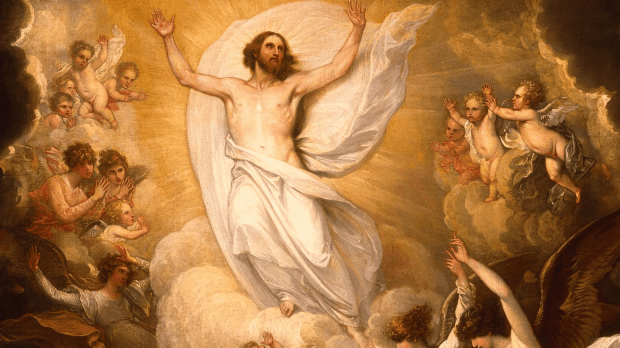
After all things happened, Judas ended and gave up his life by killing himself thus giving the risen Lord NO chance to forgive and love him again & anew. Peter however despite what happened, humbly waited until the Lord resurrection, thus giving the risen Lord the chance to forgive and love Peter again and anew.
In other words, Repentance and Faith made the difference. Unlike Judas, Peter repented and still believed in the risen Lord – which gives the Lord the chance to forgive and love Him again and anew.
The very basic message Jesus always preaches us is that: “This is the time of fulfillment. The Kingdom of God is at hand”. This is the fullest expression of God’s covenant to us – that God is already near and always here with us through His Son Jesus & the Holy Spirit.
And as response, this Gospel of God’s blessing challenges us “To Repent and Believe the Gospel”. Amid this Good news then, all we have to do, and what is required of us is to choose repentance and faith in Jesus as our response to the good news of God’s grace upon us always.
By our repentance and faith then, we allow and give God’s gospel a chance to forgive and love us again and anew, and in effect change our lives now for the better.
Remember Jesus commanded us not only to repent but “to repent and believe”. This means that as much as repentance is a choice, believing the Gospel is also a choice. Obeying the command to repent and believe then is a CHOICE. Requiring someone to repent and believe is thus useless, unless repenting and believing is their own choice.
The Gospel has already always been preached to us: “The Kingdom of God is at hand”. All we have to do now is like Peter to choose “To repent and believe the Gospel”, as we were reminded last Ash Wednesday when we received the Ashes to begin Lenten Season this year 2024.
Lord take away everything that distance us from You. Grant us everything that bring us closer to you. Detach us from ourselves to give our all to You. So Help us God. So May it Be. Amen.
Lent is all about God’s Mercy. As we begin the season of Lent today, better for us to have a good understanding of God’s mercy & forgiveness being continuously offered us.
Often, we think of Lent with dread because we often associate it with giving up something. “I have to give something up” we habitually reflect during these times. But giving up something during Lent is more than just about self-denial, self-discipline, and imposition of burden.
Giving up something, (that is, by praying, fasting, doing works of mercy) is an invitation towards God’s mercy. It is about entering & experiencing God’s mercy & forgiveness once again & anew on a much deeper & intimate level.
We observe Lenten discipline of prayer, fasting & works of mercy by giving up something so that we may be predisposed to experience once anew God’s love and mercy into our lives.
Lent, we remember is all about receiving, benefitting from & sharing with others God’s mercy rather than just giving up something through self-denial, self-discipline, or imposing burden to oneself & others.
In other words, Lent is our chance & our way to be silently, secretly, personally & closely intimate with our loving & merciful God once again & anew for we do believe that “our Father who sees in secret will repay us” with His love & mercy.
As we receive the ashes today, we are challenged to “Repent & Believe the Gospel”. This is a constant invitation for us to renew our faith-relationship with God, by changing & updating our normal ways, and be open once again to receive God’s ways & will for us now so that we may experience God’s mercy & forgiveness anew.
Lenten season then is all about experiencing God’s mercy anew along with our Lenten discipline & renewal of faith. Rather than our giving-up of something ourselves, Lent is all about our giving-in to His graces & blessings.
“Lord, Have Mercy”. Perhaps this should be our prayer these times as we do need now His mercy especially during these times of imminent-threat of war & division, natural & human disasters, poverty, sickness & others.
The Church begins today the first day of the Season of Lent. Changes in our liturgical celebrations are also applied. We now use the color purple that symbolizes sorrow for our sins and repentance. Our music becomes mellow and subdued. We don’t sing now the Gloria or the Alleluia as Gospel Acclamation. Even colorful flowers are removed from the sanctuary.
These changes in our liturgy direct all of us to look deeper into our lives, the kind of heart we have so that we may discover our own sinfulness and begin to repent. Hence, on this Ash Wednesday, the ashes that will be imparted on our forehead reminds of these two important messages. First, “to repent and believe in the Gospel.” The Lord in his mercy and compassion calls us now to come to him. God invites us not to be afraid anymore because the Lord desires to embrace us and heal us.
Second, “we are from dust and to dust we shall return.” As the Lord God made out of clay and formed the man, he also breathe the spirit into his nostrils. The was how life was given. This reminds us of the frailty of human life and the certainty of our death, yet of the beauty as well because we are one with the earth and God is our creator.
These reminders bring us now to enter fully into the Season of Lent. And welcoming this season calls us also to observe this 40-day journey faithfully and with open heart. The Church invites us now, as the Gospel of Matthew told us of the three ancient spiritual practices to guide us towards a renewed self and a transformed heart.
The first of this, is PRAYER. Lent calls us to pray more and to pray better. To give more importance to prayer and to pray daily. Now, to pray is not limited with our memorized prayers or those that we have become so familiar with like the recitation of the Rosary or our Novenas. To pray, rather, is to be more aware of God’s presence among us. To pray is to be constantly conscious of God’s spirit working in our lives. That is why, it is an invitation for us to find ourselves praying even while at work, while traveling, while eating, while encountering and meeting people.
Second, FASTING AND ABSTINENCE. To deprive ourselves from eating a full meal is an ancient spiritual practices that is also common in other religions. Fasting allows us to not just make us aware of our physical hunger but also our other different forms of hungers. Our hunger for love, for concern, for justice, for peace and to work for it. This makes us to have a focus on what lies within our heart. Abstinence, is to refrain ourselves from enjoying those things that we like and we love. By law, the Church only requires 18 years old up to 60 years old to fast on this Ash Wednesday and on Good Friday except for the sick. And starting at 14 years old and above, we are required by law to abstain from eating meat on this day and in all Fridays of lent and on Good Friday. This leads us to make ourselves free from anything that may prevent us being close to God and others.
Third is to GIVE ALMS. To be charitable or to express our generosity is an important component of this Season. Our good works or our kindness is not limited to few coins that we give to the poor, but by making actions life-giving for others. Through our generosity others may find hope and blessing.
As we begin the Season of Lent, may this 40-day spiritual journey may truly become a time of grace, of renewal and transformation of our hearts. Hinaut pa.
Leprosy is such a terrible and horrible illness in Biblical times. People would not dare touching a person who was stricken with leprosy. Because of the foul smell from the rotten flesh of a leper, one would ran away to avoid such person. The illness was gruesome that people in biblical times would separate lepers from the community. There was no cure of such illness except a miracle from heaven. Even in the past recent past, colonies of lepers were founded in order to contain them in one place.
In fact, I have been into one of the colonies of lepers here in our country. During my college days in the seminary in Cebu, every weekend we would spend time with the lepers in their ward and spend a night in the community.
Today, leprosy is curable. Lepers would not suffer the same alienation and discrimination as before anymore. The sanitariums especially build for this purpose were now converted to General Hospitals. This means that leprosy is no longer a threat to the population.
However, what remained terrible and horrible, is not anymore the leprosy of the body, but the leprosy of the heart, that continually discriminates and condemns people, that plants hatred and fosters violence, that perpetrates abuse and corruption, that is unmoved and indifferent towards the sufferings of others, and that advances personal interest at the expense of the weak and the poor.
Hence, this is what I want to share and expound on this Sunday based on the readings that have been revealed to us. Let us revisit again the readings and discover how the Lord invites us to make our hearts clean and free from the leprosy of the heart.
In the Book of Leviticus, an instruction was given on how to treat a person with leprosy. And since, leprosy is believed to be also a form of punishment and condemnation, a person shall declare himself, “Unclean! “Unclean!” This will warn the people nearby that there was a leprous in the midst and so they can be away.
This also means that leper cannot stay with his/her family and friends. They were designated outside the camp, outside the affairs of the community. They were removed from the life of the community. One could imagine then, the loneliness and condemnation they received from the community. No one will touch them not even talk to them.
There was actually a medical explanation why they were separated from the community, and that was to protect the public from such medical threat. There was no cure for such illness before. However, such treatment fostered the culture of indifference, discrimination and hostility against the sick.
These are signs of a more terrible illness, the leprosy of the heart. These culture prevailed up to the time Jesus. As the Lord preached the Kingdom of God manifested in his many miracles, Jesus also witnessed the leprosy of the heart of the people. Those who claimed to be upright, religious and clean, where the ones who treated the lepers in the worst manner. This kind of leprosy rejects the presence of God. This kind of heart knows no mercy.
The indifference of the public and the lack of concern promoted a culture that pushes away the lepers to the fringes of the society. They were on their own, unaided and condemned to misery. These were the reasons why any Jew would not dare talking, being near or worst touching a leper. They were afraid that they might be contaminated and become unclean like the lepers.
However, there was a turn of events, when Jesus was in their midst. Jesus, who healed many sick people, forgave the sinners, became a glimmer of hope of the lepers. Indeed, through Jesus, lepers found hope, healing and life. In the Gospel of Mark, Jesus showed this hope, healing and life through his four life-giving movements.
First, Jesus was moved with pity. The heart of Jesus belongs to them. His is only filled with love and compassion. No discrimination. No judgment.
Second, Jesus stretched out his hand. An action that moves out to meet the other, to encounter a person.
Third, Jesus touched him. Jesus did what was unimaginable and what was impossible, not to impress people but to express love.
And fourth, Jesus said, “I will do it. Be made clean!” This is what love and compassion can do. After that, the leper was immediately cleaned and healed. He was given hope, healing and a new life. The person was liberated.
This can only come from a heart that knows how to be moved with pity, love and compassion, a heart that knows how to love and how to bring healing and life.
However, a heart that is stricken with leprosy, it stays distant from the Lord, rejecting love and compassion. This heart is truly lonely and sad, bitter and sick.
That is why, let us listen to what Paul reminded us in his first letter to the Corinthians, he said, “Be imitators of me, as I am of Christ.” Let us strive that our heart may become like Jesus, that our heart will be free from the leprosy of indifference and hatred, of violence and bitterness.
Thus, for this Sunday, let us pray together and ask the Lord to bless our hearts, to clean and heal our hearts. I want you now to place your right hand to your heart, close your eyes and repeat after me.
“Lord Jesus fill my heart today with love and compassion. Make my heart gentle and humble. Free and heal my heart from the disease of indifference, violence, hatred, anger, resentment and bitterness.
Renew my heart today and make it like yours that I may be moved with compassion when I am confronted with those in need, that my heart may have the courage to take action and initiative to show kindness and generosity without asking anything in return.
Make my heart like yours, that I may also give hope and bring healing and life. Amen.”
“How are you? Fine! And you? OK” (Kamusta na? Ok. Ikaw? Ok lang”).
We usually say these words of greeting to express our concern for the health and well-being of others, and in recognition that all of us are & can be subject to hurts, pains, and sicknesses in life. Even the healthiest of us live with fear of accidents and diseases, which can suddenly place us on the sidelines. Nobody likes to get sick. But nobody can claim that they have never been sick in life before. Sickness cannot be denied. To get & be sick is part of our human nature. Normal for us then to ask about the health and welfare of others whom we have not seen for a while, and meet once again.
But what does it mean to be sick? Experience teaches us that to be sick is more than just an experience of physical bodily illnesses but a wide range of emotional, mental, psychological, and spiritual diseases. Whenever we get sick, we become incapacitated and limited. We feel dependent, depressed, irritable, helpless and sometimes isolated and alienated from others, and even feel abandoned by God. We know that it is difficult to get sick, especially when we are used to live our life independently and always in-control. Sickness is indeed a dreadful experience, as what was also described in our readings today.
In our gospel today, we may realize that our life-experiences of sickness, though dreadful and difficult, could also be opportunities and another new chance for growth and life.
First, sickness can be the opportunity to be converted. The leper came to Jesus. Coming to Jesus is an experience of conversion – instead of turning away from, it is a turning back and toward Jesus. Whenever we get sick, we usually cease from our usual routine, go home, and take a rest. It is in sickness that we need to have a break and be with ourselves & with our God in Jesus, as our Psalm would say: In time of trouble, I turn to you, Lord.”
Sickness can also be the opportunity to have faith and trust in God and others. The leper begged to Jesus, “If you will, you can make me clean”. It is not normal for us to be helpless and dependent on others. We rather be in-control and not needing others. But to be sick is humbling indeed for we really need to stop being independent and on your own, and have to trust on others’ love and care again. In sickness, we thus surrender ourselves and humbly ask for and rely on God’s mercy and providence through others. Though we do want to be healed ourselves, but in sickness, we learn to be humble enough to beg & ask the Lord: “If you will…” Amusingly: “Kon maayong lawas: Disco-disco; kon masakit, “Dios Ko-Dios Ko”. PagMalusog- Disco, PagMay-sakit: -Dios ko. In health: Disco, in sickness: My God”
Nevertheless, sickness can also be the opportunity to be cleansed and be healed. In sickness, we witness and experience God’s mercy, love, goodness, and miracles working in us – happening to us. That through our faith and Jesus’ concern & willing for us to heal, God’s power and love is made known to us and others. In our weakness and sickness, God through Jesus wills our healing & His power and glory are thus revealed in us.
Sickness can be opportunity to be reconciled – i.e. to makes things right- with others. Jesus asks the leper to show himself to the priest and offer himself to the Church. Through the sacrament of anointing and reconciliation, we offer ourselves back to God’s church and renew our promises & life-commitments before the Lord.
And lastly sickness can be an opportunity to proclaim our faith – to share our experience of sickness and healing. Just like the cured leper, our healing from sickness makes us express and share our faith to others.
To be sick then can be the opportunities for Christian conversion, faith, healing, reconciliation & mission.
In other words, getting and being sick can be all about “New Chances” – another chance for God through others to love and take care of us again, and another chance for us to make things right and better for us & others again & anew.
Yes, nobody wants to get sick. And we try not to get sick. But whenever we got sick, take it not as disgrace but rather as “a blessing in disguise” – an opportunity and chance for God’s glory to be revealed in Us and through Us & for us to improve & be better than before in life.
In this Eucharist, may our hearts & love be with those who are sick and suffering any illnesses at this time in their homes & at the hospitals. With Our Lady of Lourdes, in our sickness & trying times, may our prayers be also with Jesus who prays to our Father, “Take this cup of suffering away from me, However, not my will, but Your will be Done.”