When you come to church, when you pray, and beg the Lord – what do you ask? What attitude do we have in asking the Lord for grace? What inner desires do we foster as we beg the Lord?
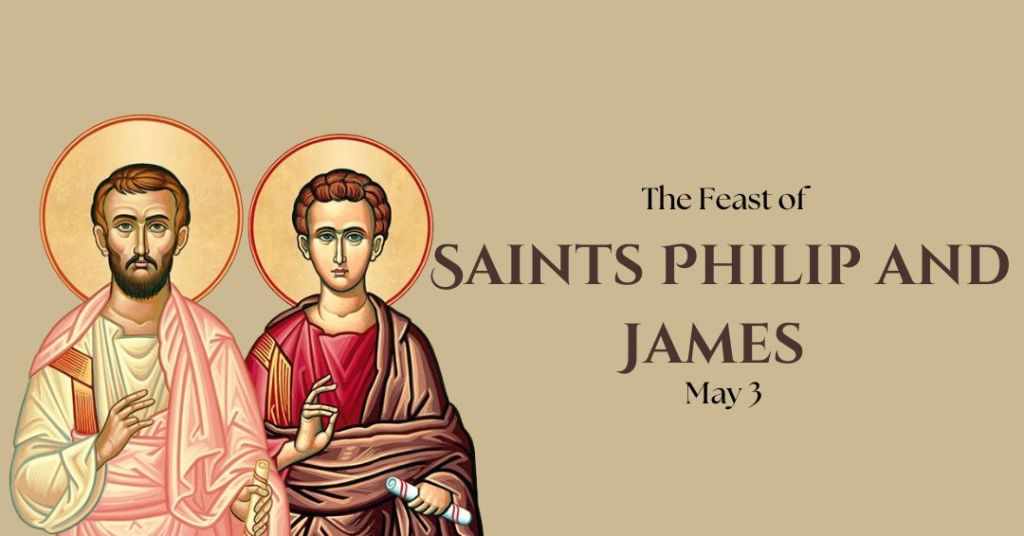
On this feast day of Sts. James and Philip, Jesus tells us, “if you ask anything in my name, I will do it.” But, what does it mean anything? And what does it mean to ask in Jesus’ name?
Does Jesus mean that we can just ask anything we want? Does it mean that I can also ask Jesus to give me a lifetime premium subscription on Netflix with an unlimited supply of popcorn and bottomless four-season juice drink? Or can I also ask Jesus to make me Summa Cum Laude this coming graduation? Is this the kind of prayer that Jesus invites us?
Today, Jesus tells us to ask “in his name.” The beauty lies in the prayer that considers the desire of God for us. It means that in our prayer we do not forget Jesus. We do not forget Jesus’s desire for us and his will for us.
This tells us of our relationship with Jesus. This should not be understood as a mere limitation with the options we have in asking. Instead, “asking in his name” widens our perspective in asking grace from the Lord.
This invites us to a deeper awareness of Jesus’ heart, of Jesus’ desires and of Jesus’ plans for us. It is certain that what Jesus desires for us is always good, always for our growth, always for our freedom.
Therefore, to ask in Jesus’ name is to allow letting go on what we only want. We let go also of our own preferences which may be influenced by our selfish desires, guilt, sin and evil.
Instead of praying – “this is what I want and wish Lord,” ask and pray rather first in this way, “what is your desire for me Lord?”
Only then that we will be able to get away from our selfish tendencies and intentions because we shift our focus from ourselves to God. We begin to shift from praying that comes only from personal wants to praying in his name.
This is now our prayer and our desire that in asking grace from the Lord, we may also grow more in our knowledge of Jesus. Know Jesus not just on our head level but also of the heart.
Through the intercession of St. Philip and St. James, may we dare to encounter the Lord among our brothers and sister; to encounter the Lord in our human experiences; and to encounter him in our daily struggles in life. Hinaut pa.
We experience hunger when we opt not to eat as what we practice when we fast. Others experience hunger not because they chose not to eat but because they don’t have something to eat. These are forms of physical hunger. Yet, we too might experience hunger for love, for acceptance, for healing, for freedom, for peace, for reconciliation, for justice.
Being aware of these forms of hunger in us and of our need to be satisfied and fulfilled, we too need to be aware of the hunger that others around us are suffering. Our Gospel would actually help us to be more conscious of such hunger and of other forms of hunger around us.
St. John told us that Jesus was aware of the needs of the people. He was not just conscious of their spiritual hunger but even their physical hunger. This consciousness of Jesus impelled him to ask Phillip, “Where can we buy enough food for them to eat?” Jesus was not simply seeing their hunger, he too felt their hunger. This urged Jesus to do something.
However, Jesus needed the participation of other people around him. Phillip could not think of anything since they did not have enough money to buy food for all.
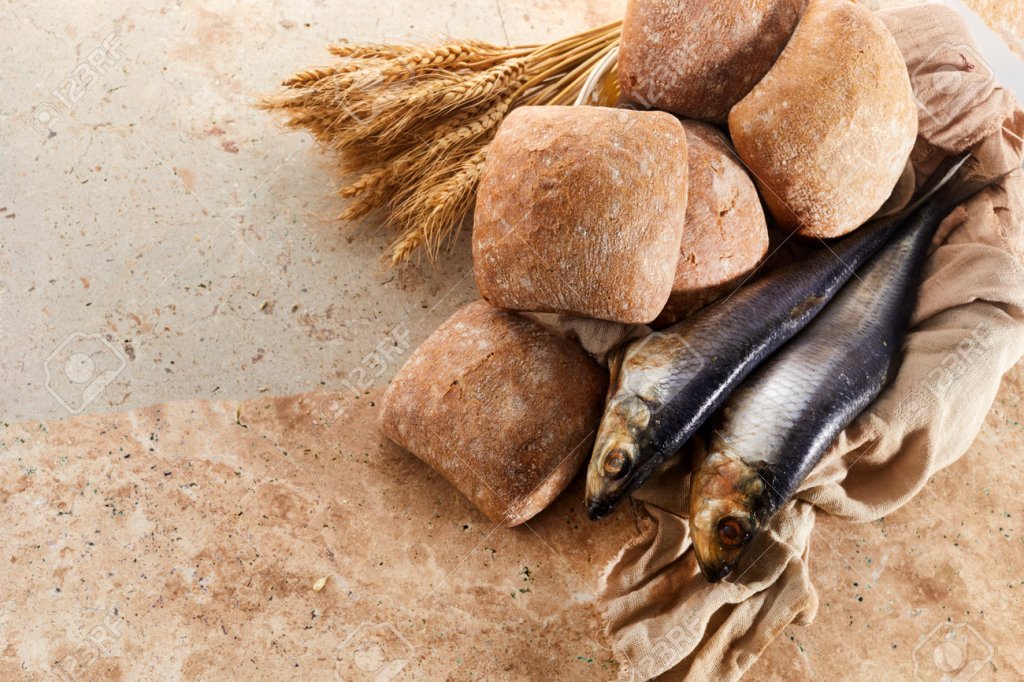
It was Andrew who brought to Jesus a boy. The boy had five barley loaves and two fish. The appearance of the boy in the story was very symbolic. He was nameless and faceless. He was just a boy with the little food that he offered to Jesus. Yet, he and his small gesture was already something.
The nameless boy and his small share was the perfect offering that Jesus needed. Out of that small act of kindness, Jesus did something which made everyone to wonder. Indeed, the Gospel tells us of the wonder when a small act of generosity makes a difference to many. That small share given became abundant.
From here, the Risen Jesus invites us too to offer sincerely the little that we have. The world’s problem on hunger is too big for us to respond yet our share is so insignificant. But remember, the five loaves and two fish of that nameless boy were insignificant compared to the five thousand men. And despite, boy did not hide what he had. He, rather, offered generously what he had to Jesus.
The boy and his action tell us now of our own vulnerabilities and insecurities. Yet, that also remind us of the power behind a generous and kind action. To give away the little that we have, makes us insecure. However, it is also through the little that we own that the Lord works wonderfully.
Giving something and feeling how vulnerable we can be also become a true response of generosity. As the Gospel of John tells us, the Lord needs our participation, our small contribution. This is how Jesus works wonders through us and through our small acts of generosity and kindness. In this way, the Lord will be able to continue to feed the various hungers around us. These many hungers involve hunger for food, for shelter, for a home and family, for friendship, for acceptance, for love and intimacy, for healing, or for a deeper relationship with God.
When I was a novice, there would be a day in a week when we would visit the city jail. In our weekly visits, as I have become comfortable making friends with the inmates, now called as, Persons Deprived of Liberty, I asked one of them who have become a close friend of mine. I asked how was he and his life inside the City Jail. Great was his dismay for the crime he did. He violated the law and so deserved to be punished. Because of this, he felt deep longing and loneliness. He had many fears but for him, he said, he had to face them because he had to pay the crime he did. He, together with the others, have been deprived of liberty because of a crime committed or suspected to have done a crime.
Peter and John, as told to us by the Acts of the Apostles, were also deprived of liberty. This was, in fact, the second time that both were brought to the prison. They were deprived of liberty because of the jealousy of some leaders at that time. They were jealous of the many good things the apostles did. They were jealous because people believed more to Peter and John rather than to them.
The Apostles preached Jesus and His resurrection from the dead. They too healed the sick. They helped the poor and the needy around them. They responded with generosity to those who needed their help. What the Apostles did were concrete expressions of what they believed and held in their hearts. Their faith in the person of the Risen Jesus became their way of life.
As both were imprisoned, surely, they too were afraid and worried on what will happen to them. However, this time, they had enough trust and faith in God. The constant invitation of Jesus, “Do not be afraid! Peace be with you!” has grown in their hearts.
These are just two kinds of physical imprisonment. One is imprisoned because of a crime committed and the other because those in authorities were just filled with jealousy and malice towards those who did good and preached the Gospel.
However, there is also another form of imprisonment which is not physical. This was the case of the authorities. The chief priest, Sadducees and Pharisees who continued to persecute the Apostles and felt jealous towards them, were truly imprisoned by their blindness and hardness of heart. They were imprisoned by their greed and envy, by their fear and doubts and by their refusal to believe in the resurrection of Jesus of Nazareth.
Thus, it was self-imprisoned caused by their own jealousy and unbelief. The Gospel portrays these kinds of people with those who preferred darkness than light, because their works were evil.
We too examine ourselves today. In what way am I also being imprisoned? Or what is it that imprisons me today? What keeps and prevents me from bring free and to be truly I am? What are those that I consider as my prison cells that suffocate and limit the person I am called to be?
Let us be more reflective and discerning of these things. Ask the grace from the Risen Christ to enlighten and to free us from our own prison cells.
Pray, that we may be able to see and recognize areas of our life where we are being imprisoned.
Pray, that we may be free and become the person and community that we are called to be, and that is to be a “light.”
Hence, believe in the Risen Christ who brings us light. Jesus was sent by the Father to redeem us and not to condemn us to death. Let us also join our prayers to Mary, Our Mother of Perpetual Help so that she may help us in recognizing better ourselves and to see the light of the face of her Son, Jesus. Hinaut pa.
The joy of Easter caught the heart of the disciples of Jesus. The community of faith truly believe in the Risen Jesus and in God’s power that defeated death and darkness, forgiven sin and shame. This is the liberating power of God’s mercy that gives freedom and peace to many hearts and minds.
This was the very life of the early Christians. Their fears, guilt and shame were all replaced with joy, concern for one another, and hope. In fact, the joy and wonder of Easter was transformed into concrete resolutions and actions in living as a Christian community.
The Acts of the Apostles showed to us Christians today how the gift of joy in the Resurrection of Christ could radically change the way we live our life. This is even manifested on how each one treated one another with fraternal concern, trust and charity. We have heard how the disciples of Jesus felt God’s assurance and security that went beyond material wealth. This was the reason why the disciples began to share generously their material wealth with those who have none and who were needy. Each member of the church had enough because each one contributed and shared.
The apostles, through the inspiration of the Holy Spirit, distributed what had been shared “to each according to need.” Selfishness and self-interest were gone. Greed and corruption have no more space. Abuse of power vanished. Indeed, as the Acts of Apostles reminded us, “the community of believers was of one heart and mind.”
This is the spirit of Easter that tells us how the Christians believed in Christ’s presence among them. Faith in the Risen Jesus when truly lived and manifested in our words and actions would transform us, our community inside and out.
However, this kind of attitude and culture of sharing and letting go of possessions did not last long. We realize that selfishness and insecurities came into the picture again. People began to advance their personal interest over the others and have taken advantage at the expense of the needy and the poor. We are indeed fickle and can be easily tempted and driven away from God and from others. Yet, despite the life that we live now as Christians of the 21st Century we are still called to re-live the way the first Christian lived out their faith.
Certainly, as a Christian community today, we are still called to live the spirit of Easter by generously sharing what we have to those who are in need. Letting go of all our material wealth at this present age would be next impossible. Yet, to joyfully give and share our resources, talents, our presence and capacities are what the Risen Jesus calls us today.
And again, we gain the courage to live out such faith in us when we too welcome and embrace the Spirit of God. This is what Jesus expressed to Nicodemus in today’s Gospel. “To be born from above” or “to be born of the Spirit” is to allow the Lord to transform us from within. A heart that is gripped with hatred or resentment, or with selfishness and greed, with shame and guilt – is not hopeless at all. God’s mercy and offer of the fullness of life bring freedom and life to us.
Let our hearts, then, be filled with the joy and wonder of Easter. Let our hearts be filled with gratitude to God who has been so good to us. And may the peace the Christ brings to us this Easter, make us joyful and generous givers in our community. Hinaut pa.
Happy Easter to all. Last Sunday we celebrated Easter Sunday. We celebrated and proclaimed our Christian faith that our Lord Jesus Christ has indeed risen into our lives.
Today we are now on the 2nd Sunday of continuing celebration of Easter season. So, how is life after Easter Sunday?
After the preparations of Lent and the celebrations of Holy Week – after Easter Sunday surely, we are back to our normal ways – back to our usual routine, schedules, activities, programs, tasks, and responsibilities. But as we go along our normal ways and live our usual lives, we also wonder how is the message of resurrection of the risen Lord make sense and become more real now in our day to day living. Yes, we believe that the Lord has risen. But how and in what ways the risen Lord has resurrected and can be resurrected into our ordinary lives today? Paano Siya naging at maging Buhay’ng-Muli sa buhay ko at natin ngayon? This is the very challenge of Easter to us Christians during this Easter season.
While reflecting on the revival of Lazarus from the dead, Pope Francis once in his homily said that each one of us has a small tomb inside our hearts – that somehow somewhere in our lives, though still alive and breathing, is dying and dead inside. Yes, somehow, we are still & get used with isolation in our small caves, even after pandemic lockdown & quarantine. Our small tombs are usually our dark secret holes and shadowy caves where we usually hide and bury our anger, hurts, pains, sufferings, failures, frustrations, anxiety, fears and addictions from ourselves and others.
And inside our small tomb, we do have the choice whether to be alone on our own, miserably struggling and grieving with the “why’s of life”… OR to invite the risen Lord to be part of our search for answers and sense for all these happenings in our lives.
For Pope Francis, we need to recognize our dying and dead self-inside, and invite the risen Lord to be our Guest inside our small tombs and allow Him to be part of our death and dying within, and be resurrected into our New Life with Him.
Brothers and sisters, the empty tomb of Easter reveals to us that the risen Lord is not in his tomb. But out here and there revealing Himself into our ordinary normal lives and offering us life and life eternal. The same way as He appeared before His disciples, the risen Lord is showing & will appear Himself to us in our ordinary lives anew with a promise of not only new normal but more so, of Life Eternal.
The mistake of Thomas in our gospel today is not so much for doubting the Lord’s resurrection but more so for being absent – he was not there when the Lord appeared the first time. Thomas at first did not recognize his own small tombs and invite the risen Lord to be part of his ordinary life. Only when he was with the other’s disciples in locked door room – present in their own tombs and allow the Lord to be part of His Life that Thomas came to recognize and believe in the risen Lord.
Meaning, the risen Lord only wishes to be invited and partake into our own isolation inside our small tombs and in our ordinary lives so that He can share to us New Life with Him. No more being alone – on your own in your own tombs. Thus, no more hiding, navel-gazing, just looking into oneself – licking wounds, brooding, and sinking in anguish & despair.
For the Easter message of Lord’s resurrection to be more real and meaningful now in our lives then, we must invite the Lord into our small tombs and allow Him to be part of our usual day to day struggle with life. The Lord is risen and has indeed resurrected again and anew in our lives now – if and when we invite Him to be part of our small tombs and our ordinary lives. He also can only resurrect and bring our death and dying back to life anew nowadays if only and whenever we invite and allow the Lord to be part and be with our normal life’s-struggles and triumphs, especially influencing and guiding us in our day-to-day decisions, as we elect & vote for our political leaders ahead.
To have a more real and meaningful celebration of Easter Season then, let the risen Lord in and allow Him to be our Guest – to be there and be part of our small tombs and our ordinary lives these days. And perhaps ask ourselves once again: What is the risen Lord offering me now here inside my tomb, inside my isolation? What is His resurrection in to me and what’s in for me? What are benefits and the purpose of letting Him be part of my life now: Healing, Peace, Mercy, Forgiveness, Hope, Mercy, Love, Release, Liberation, New Life, Holy Spirit… A chance to choose & do things right for our country…..?
Although we are back to our usual normal lives & usual ways after Easter Sunday, we also know and believe that with the risen Lord in our lives now, LIFE will & should never be the same again and as usual, but ours would now be a new normal life and better than before, IF and Whenever we invite and allow our risen Lord to be part of our small tombs and our daily ordinary lives, as our in-house guest.




 A DOSE OF GOD TODAY