Category: AUTHORS

  • SENT to Do God’s Work

    SENT to Do God’s Work

    July 6, 2025 – Fourteenth Sunday in Ordinary Time

    Click here for the readings (https://bible.usccb.org/bible/readings/070625.cfm)

    To those who are in one way or another involved with apostolic work and in church ministry, a well-known Jesuit spiritual director Thomas Green once emphasized that there is a big difference between working for God and doing God’s work. Though working for God and doing God’s work are both noble and good as well as might mean the same, the difference lies on the doer, worker, or actor of the ministry.

    Working for God is based from OUR own initiative and creativity. It is service-done designed according to our own will so that God and others will be pleased with us. God and others then, becomes a passive recipient of our good works.

    However, doing God’s work is based (not on our own but) on God’s own initiative and creativity. It is service-done, patterned according (not to our own will but) to God’s will and done in partnership and collaboration with God. Here, God is the author and actor of the good works done. We become then mere participants and instruments of God’s work as well as all will be the beneficiaries of God’s work.

    Simply put, working for God is OUR work for God, whereas Doing God’s work is GOD’s work for us & done with Us.

    Our Gospel today highlights our identity & responsibilities as missionaries of Christ. Like his disciples, as today’s Christians, we are reminded that we are authorized, empowered & commissioned to “proclaim the Kingdom of God & to heal the sick”. It is our mission then to proclaim & give witness to our faith in the world. As faithfuls & followers of Christ, we are thus God’s missionaries & ministers to the world today.

    What is more significant in our mission as Christians is the specific instruction of Jesus of “take nothing (no money bag, no sack, no sandals) for the journey” – This would mean as we are sent, go, & do our mission of Proclaiming Christ & giving witness to God’s kingdom to the world today, we are come & go as we are (blessed & broken we may be, warts & all) for what we proclaim is not ourselves but God himself.

    We are to learn to trust, practice detachment & rely on God’s will, plans & ways – not on ourselves, for God’s offer of salvation is based on His graces & blessings rather than on our human endeavors & merits.

    In other words, we are sent (not only to work for God, but) to do God’s work in the world through us. Yes, in whatever vocation & profession we are in in this life, we are on-mission to the world, but not just to work for God, but to do God’s work & mission with us, for in Christ & with us Christians, God is still on mission & at work in world for our better lives.

    On this note, we consider that our Catholic bishops exhorts during 1991 2nd Plenary Council of the Philippines, that as today’s Filipino Catholics, we “need to retell the Jesus story to ourselves so that we can tell Him to other with authority”. Meaning, it is our mission as Filipino Catholics now to tell the Jesus’ story again & again, and  anew to ourselves so that we can proclaim & minister Him to others. It is for God then, not for us to change & save the world & others. It is for us to strengthen our faith in Jesus now & so others here at home and abroad may come to know & witness Jesus in us, who believes & follows Him.

    As we do our part in God’s work, our day-to-day life in faith with Christ challenges us to be more in sync & at tune with God’s will, plan, & ways of leading & guiding us, rather than insist our own plans, will & ways for what is best for us in our lives nowadays.

    May we grow in our missionary life & be worthy of our missionary identity as Filipino Catholics.

    So Help us God. So may It be. Amen.
  • Our CHOICE to be Christian

    Our CHOICE to be Christian

    June 29, 2025 – Solemnity of Saint Peter and Paul

    Click here for the readings (https://bible.usccb.org/bible/readings/062925-Mass.cfm)

    Perhaps we may raise the questions: “How come only few people nowadays wanting to join priesthood and religious life? How come a number of people nowadays are not getting married & just opt for cohabitation (if not, getting married in the church)? How come being stay-home single for life is on the rise?” Or in other words, “how come wanting to be true disciples of Christ are dwindling in numbers?”

    Regardless of specific circumstances, perhaps this is caused by the requirements-entail of being a disciple. Yes, Jesus once said: “Whoever wishes to come after me must deny himself, take up his cross & follow me”. With this, easy for us to think & excuse ourselves readily as to how difficult self-denial, sacrifice & obedience that Christian discipleship demands of us.

    However, before we think of the requirements & demands of discipleship, we must consider that to be disciple of Jesus is first and foremost, a CHOICE. Jesus said: “Whoever wishes to come after me….” Meaning, Christian discipleship – to follow Jesus is a Choice. Demanding & difficult it may be, being disciples of our Lord Jesus Christ is never implied and enforced to us. It is our Choice & Option to be Christian & what kind of Christian we are to be.

    When he asked the disciples in our gospel today: “Who do you say I am?”, Jesus is asking them then & us now not to recite a formula or creed, or to laud the formal title or doing lip-services to Him, but Jesus is asking us to make a choice, to choose & claim Jesus as our personal Christ, and to what kind of Christian we choose to be. And for Peter to claim Jesus as Christ, he has to experience Jesus first as person as well as to decide eventually for himself that Jesus is his Christ as well as to choose himself to be a disciple of Jesus, & what kind of disciple of Jesus he choose to be.

    Meaning, by choosing Jesus as his CHRIST, Peter becomes a Christian disciple & commissioned to be the rock-based of our church & the key-holder to God’s kingdom of heaven. So also, Paul kept his faith & through him the proclamation might be completed and all the Gentiles might hear it. In other words, with & by their choice to be  follows their mission to be Christian.

    Yes, we may at times use the excuse that Jesus even said, “Many are called, but few are chosen”. But “few are chosen” because even when we are all called,  few must HAVE Chosen to be and remains to be His worthy disciple. Meaning, wanting to be true disciples of Christ are dwindling in numbers because few have chosen to be, while being called & invited. Again to know Christ & be a Christian is Our Choice. Without our choice to be, there is no clear mission & direction to be & do in faith & life.

    Nevertheless, the Lord will always continue to call us again & anew to be His disciple, however we choose & respond to Him. And it is up to us then what kind of Christian or not we choose to be.

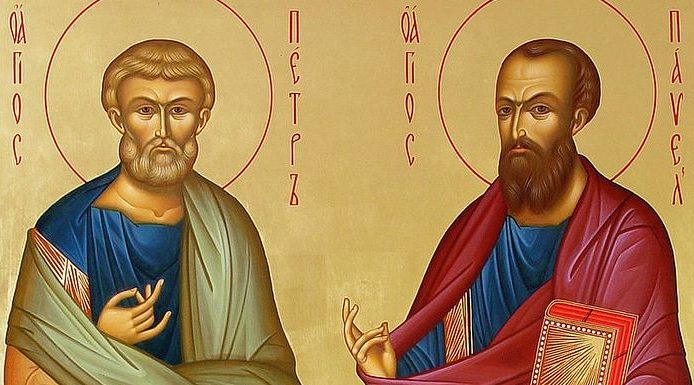
    Today we honor Peter & Paul. Two great men of our faith who personally chose Jesus to be their Christ. By their choice, they become Christians. And we come to know & choose Jesus as our Christ & be His disciples through Peter & Paul.

    In whatever life we live now, like Peter & Paul may we be worthy & true disciples to the kind of Christian life we choose to be, for we know that to choose Jesus we will be in grace. And not making any choice for Jesus & not growing as His disciples, we will be disgraced towards oblivion.

    So, by our choice we pray that may be blessed worthy to be disciples of Christ in faith & life now & always.

    So Be It. Amen

  • Sustained by His Body and Blood: A Journey of Faith and Healing

    Sustained by His Body and Blood: A Journey of Faith and Healing

    As we celebrate the Feast of Corpus Christi, I want to share how my deep faith in a loving God and my devotion to the Eucharist sustained me during the most difficult phase of my life.

    I was diagnosed with gynecological problems, which led to two surgical procedures—one minor and one major. God gave me ample time to prepare myself physically, psychologically, financially, and most of all, spiritually. The power of prayer, letting go, and letting God—being humble enough to surrender everything to a powerful God—was deeply meaningful during this time.

    During my hospitalization, I was blessed to be confined in a private hospital run by religious sisters, so I did not miss receiving the Body of Christ daily. Another blessing was having a first cousin-in-law who is a Eucharistic Minister in our parish, allowing me to receive the Eucharist every Sunday until I was well enough to attend Mass physically.

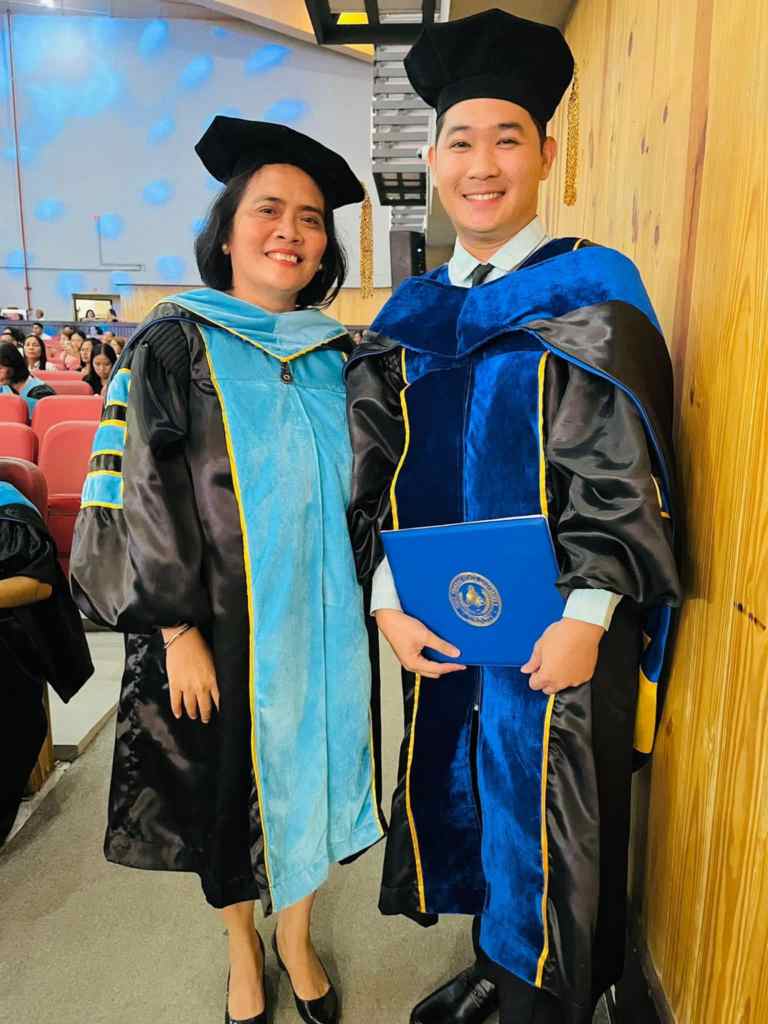
    Receiving the Body of Christ sustained me during this period of rest and recuperation. It strengthened me to read three dissertations and three theses for final defense. Just two days after my hospital discharge, I found myself reviewing their manuscripts, writing comments and suggestions for improvement.

    In the midst of pain, I was still able to fulfill my responsibility as a member of the Research Committee by attending their final defenses online. Seeing the students on stage during the hooding and graduation ceremony made my heart leap with joy. I looked up to the heavens and offered my endless gratitude to God—for blessing the efforts of these students and for giving me the good health to do my part in the completion of their degrees.

    This, to me, is life-giving—paying forward the gift of wholeness. I am sharing the generosity I received from God by being generous with my time and talent.

    I was also able to read and evaluate outputs submitted by my students in our Learning Management System during the midterm period. By God’s grace, I submitted their grades to the faculty member who handled my classes in my absence.

    Alongside these tasks, I continued to fulfill my role as Director of the St. Clement’s Pastoral Care and Counseling Ministry by managing our Facebook page, where clients request appointments. Just yesterday, I conducted an online counseling session with a client. This ministry always brings me joy and a deep sense of fulfillment.

    Because Christ in the Eucharist offered His life so we may live, I see myself as His instrument of healing and recovery for those who are broken. Because Jesus gifted me with a second life, I am inspired to give life to others—to journey with them toward wholeness and joy. Everyone deserves to live a joyful and purposeful life.

    I am deeply grateful to God for guiding me in making decisions about my health. I also thank my workplace for being so supportive during my two-month leave from teaching and other responsibilities. My colleagues took over my classes and workload. I am especially grateful to my medical team—most especially my loving OB-Gyne—my family, close friends, and all the beautiful and kind souls who stood by me during this challenging chapter of my life.

    I am slowly but surely returning to my usual routine. I am back at work at my university because God sustained me and granted me a second life. My medical condition taught me powerful lessons about self-care, letting go, setting priorities and boundaries, the power of prayer, deep faith in God and Mama Mary, and not taking things personally. Most of all, it taught me to hold on to God’s faithfulness, which is powerfully manifested in the Holy Eucharist.

    May we always make Christ the center of our lives and attend Sunday Mass regularly. And as a result, may we always find joy in sharing ourselves with others, even when life is not easy or comfortable. There is true bliss in giving life to others.

  • Eucharist-Gifted

    Eucharist-Gifted

    June 22, 2025 – Solemnity of the Most Holy Body and Blood of Christ

    Click here for the readings (https://bible.usccb.org/bible/readings/062225.cfm)

    There was once a man who desired to know the difference between heaven and hell. He went through a lot of painstaking investigation as to the distinction between heaven and hell. But in vain, because all he got were some descriptions, pictures and stories depicting about heaven and hell.

    One night in his sleep, he dreamed that he found himself in front of the Lord. The Lord asked him, “What is it that you desire?” He replied, “Lord, I like to experience the difference between heaven and hell.” So, the Lord said, “Go into that room.” So, he went into a room filled with sad, hungry, sick, weak and malnourished people. While observing around, he noticed that at the center of the room, there is a big pot of steaming delicious rice soup (arrozcaldo).

    However, he realized people could not enjoy the food because they are using spoons with long handle. He thought, “to eat your food using spoon with long handle must surely be hell.” Outside he told the Lord, “Now I know what hell is. How about heaven?” The Lord directed him to another room. Upon entering, he met happy, healthy and alive people, and he said to himself : “This must be heaven”. He also observed that at the center of the room lies a big pot of steaming hot delicious arrozcaldo, and also people were using spoons with long handle.

    Coming out from the room more confused, he then asked the Lord: “Now what’s the difference? Both are in the room with delicious food in their midst while using spoons with long handles to feed. How come people in hell are s and people in heaven are healthy?” The Lord replied, “Sadly people in hell never learned to use their spoons properly. Their long-handle spoons are meant to feed others than themselves. In heaven, people enjoys instead the food together by feeding each other and one another in kindness and communion.

    Our gospel today reminded us of the miracle of the multiplication of loaves. Although caused by Jesus, the miracle-happened is not only the multiplication of food and the feeding of multitudes but more so on the agape or communion: food-blessings shared and enjoyed by all.

    Same as today, people then must had bought their own meal for themselves to attend the big meeting and gathering. But as the people witnessed what Jesus did with the little bread kindly offered, blessed, distributed and shared with others, they were also inspired and move to offer, pray, and share in kindness the small food-baon they have with others.

    The real miracle then is the Agape-Communion, i.e. food-shared and the sharing in kindness of the food. Thus heaven be-like and miracles do happen whenever people share whatever little blessings that we have with one another & others in loving kindness.

    For the past three Sundays, we put value to the treasures the risen Lord has gifted us to sustain in our Christian daily lives. Jesus once said: “I am the Way, the Truth, and the Life”.

    Through the gift of the Holy Spirit, we come to believe and proclaim the TRUTH that our Lord Jesus is the Son of God, who makes us know and call our God as our Father, and thus we are God’s children. With the gift of the Holy Trinity, we learn the WAY to aspire for God’s love and life by glorifying our Father through the witness of the Son, and in the power of the Holy Spirit.

    As shown to us by our Lord, the gift of His Body and Blood offers us the LIFE to nourish, sustain and direct our faith-life journey toward our heaven – God’s life and glory.

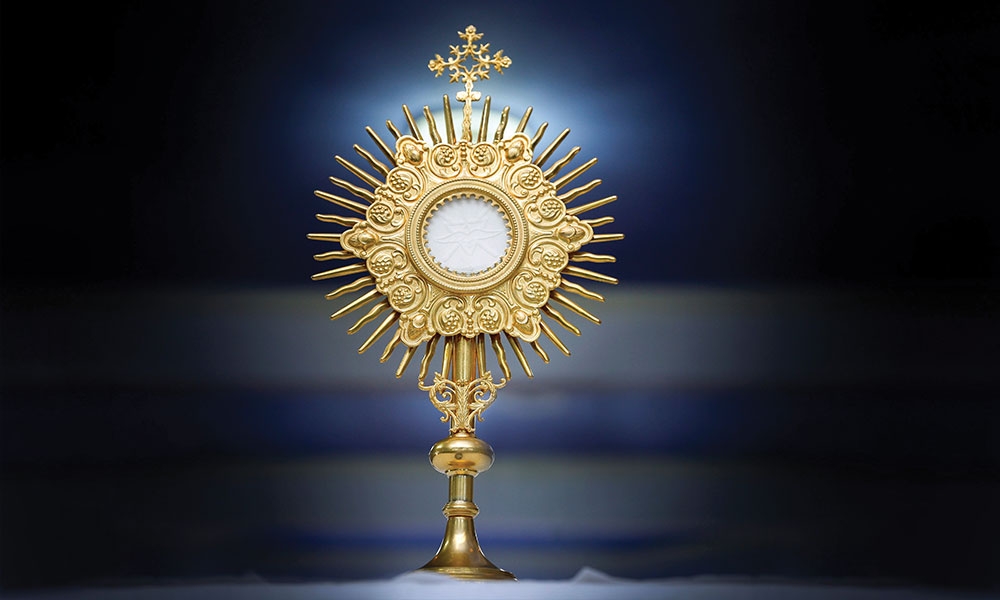
    Today the whole Church celebrates the Solemnity of Corpus Christi: the Body and Blood of Christ. This is to remind us that we are Eucharist-gifted, i.e. the Lord has given and left us the gift of Eucharist as life to live and follow as Christian.

    Our readings today reminded us that God has continually nourished us in Life. Through the Body and Blood of Christ, God offers us Jesus as our food to nourish and sustain us in daily faith-life journey. However, for miracles to happen and a taste of heaven be enjoyed in life, the Eucharist as food for our journey are meant to be shared in kindness with others and one another.

    In other words, food and graces given to us are not only meant for ourselves but must be blessed and shared in communion and kindness with others & one another in life as community of faith. The food and life God offers us through the Most Holy Eucharist then are meant to be in agape and communion with others and one another, and not to be keep only for oneself.

    We might say nowadays: “You are what you eat, and who you eat with” or “The food you eat reflects your identity and your company to keep.” Like, a vegetarian eats vegetables with vegetarians. Meat-eater parties with meat-eaters. Drinkers hangs-out with drunkards.

    In the same way, Catholics who attend and receive Eucharist regularly are spiritually healthy, happy, more kind and generous to share with others. Catholics however who rarely attend and receive Communion (as some would even prefer just to attend via live-streaming mass nowadays) tends to be spiritually weak, usually sad, stingy and selfish to share with others.

    Again for miracles to happen and for us to have a glimpse and taste of heaven in life, we must learn to properly receive our blessings by attending, taking and sharing Holy Eucharist with others and one another in community.

    As we are continually nourished by God through the Eucharist, the Life of the Body and Blood of Christ, may we be more inspired, nourished, and moved to share our faith and blessings in kindness and communion with others & one another.

    Hinaut pa unta. So May It Be. Amen.

  • How do I pray? What do I pray?  

    How do I pray? What do I pray?  

    June 19, 2025 – Thursday 11th Week in Ordinary Time

    Click here for the readings (https://bible.usccb.org/bible/readings/061925.cfm)

    (Homily on the Fourth Day of Novena for the Feast of Our Mother of Perpetual Help at St. Clement’s Church, Iloilo City)

    How do I pray? What do I pray? What are those that I usually ask from the Lord?

    Others pray spontaneously asking what they want and desire for themselves and for their loved ones. Others are more comfortable using the memorized prayers as forms of meditation and deeper reflection on the mystery of God.

    We too ask many things from the Lord. Others would even have a litany of requests and petitions. And as a form of asking God’s favor we even observe number of days of prayers. This is what we do in observing our Novenas, or the 9 days Misa de Gallo during December, believing that God would grant ones desires and prayers.

    In fact, this is what we do now as we prepare for the Feast of Mary, Our Mother of Perpetual Help, on this Fourth Day.

    Thus, it would be good to take a look in the way we do our prayers, to look at the intentions we make in our prayers. Let us also include the kind consciousness that we have in our prayers. This is something important because this will help us to evaluate our personal relationship with God and with others.

    Now, in today’s Gospel Jesus reminds his disciples of the importance of prayer and also of the importance of the kind of consciousness in their prayers.

    Jesus mentioned about the way the pagans prayed. These pagans loved to use many words in their prayers. They believed that it was in that way that they would be able to get the attention of their gods and goddesses. At the same time, pagans believed it would appease them. They believed that these gods and goddesses were unforgiving, impulsive and frightening. These pagans babbled in their prayers in order to get the favor from these difficult and terrifying deities.

    However, Jesus reminds his disciples that our God is not like that. God is not vengeful. God is not inconsistent. Our God is not terrifying. The Lord God is rather loving and forgiving. Hence, to use many words would not be necessary because God knows the desires of our heart.

    Moreover, as Jesus reminds his disciples, he also tells us now that our prayers are not meant to appease an angry and hateful god or to gain favor from a terrifying god. This also means that the content of our prayers should not be self-centered. To pray is not just to ask something for ourselves but also for others. That is why Jesus taught us his own prayer. His prayer expressed intimacy and closeness with the Father in heaven.

    This prayer starts with these two words, OUR FATHER. It did not say “My Father” and not even “Their Father.” This tells us that when we pray, we always remember others. We are always together as people, as brothers and sisters. Our relationship with God though can be personal but it is also founded in our community. That is why it starts with “OUR” because this includes you and me and everyone else.

    This prayer (Our Father/Lord’s Prayer) tells us that God is a Father. God relates to us personally. God is not somewhere out there who is so far away from us but God is here with us. God as our Father is, indeed, loving and faithful to us. This is evident at how the Lord God continually revealed the divine presence to us throughout our human history. This means also that we are invited to seek God’s will and God’s desire not just our desire. Most of the time, when we pray we only think of what we want and desire but we forget to ask, what is it that you desire for me Lord?

    It invites us also to become dependent on Him because He is generous and faithful to us. To pray, “give us this day our daily bread,” means to be more focused of today, this day not tomorrow because tomorrow has not yet come. Certainly, we can be too anxious of what will happen tomorrow that it will prevent us to see what is more important today. Thus, Jesus invites us to be more contented of today and to ask sustenance enough for today.

    Notice also that in this prayer, it recognizes our sinfulness and need to be forgiven. It is necessary that we become humble and ask God’s mercy because this is the way that we make ourselves open to God’s grace. When we remain arrogant and unrepentant of our sins, then we prevent God to transform us and prevent others to come into our life.

    And finally, we make ourselves aware that there is also the presence of the evil one around us. The evil one constantly tempts us to move away from God. The evil one wants us to cut our relationship from the Lord, thus from the grace of God.

    The evil will always try allure us to think that it is better not to pray and that we do not need God. The evil will seduce us to think that we can do everything in our power without the help of God and that we do no need to think of others but ourselves alone. Be careful then of these temptations.

    With all of these, we find Mary, Our Mother of Perpetual Help as our guide and best example. Mary showed us how such intimacy with the Lord makes us open and welcoming to the will of God. Mary showed us that to completely trust in the Lord is to make our heart full of love. Mary also showed us that by choosing the Lord, evil has no power over us.

    Being made aware of the consciousness behind the Lord’s Prayer and of Mary’s presence in our life and faith, we too shall grow in our relationship with God and with one another. We may become less self-centered and self-serving and rather become self-giving and life-giving as God desires us to be in our homes and communities. Kabay pa.