Last February 13th, Saturday, part of the celebration of the Lunar New Year, by the Chinese, was the practice of paying respects to their ancestors. This used to be called the “ancestor worship”. But those Chinese who embraced Christianity re- named it to “veneration of the ancestors”. We Catholics venerate and honor the “saints”, those who have gone ahead of us; and have now entered the Kingdom of God. We set aside November 1st, as a day for them!
Today’s feast originated from the ancient Roman practice of remembering departed family members. Part of the celebration was a formal meal. An empty chair was reserved during the meal, to represent the ancestors. This ancient Roman practice was “Christianized” after the spread and legalization of Christianity throughout the Roman Empire. This feast originated in the 4th century.
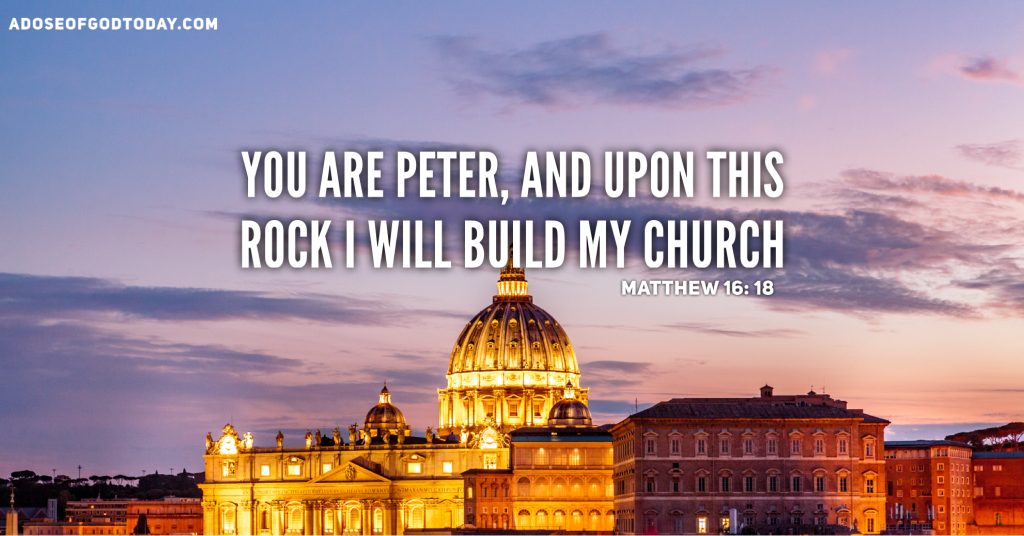
The “veneration of the chair of Peter” became an occasion for remembering the apostle Peter as “the ancestor in faith” of the Christian community in Rome. Pope Benedict XVI pointed out that this celebration highlights the “privileged sign of the love of God, the eternal Good Shepherd who wanted to gather his whole Church and lead her on the path of salvation.”
Peter was chosen by Christ to be the “shepherd of Christ’s flock” [Jn. 21: 15-17]. Jesus called Peter to be “the rock” on which Jesus’ church would be built. [Mt. 16: 18-19]. Peter, in the 1st Reading, advised the other Church elders on how to care for the “flock entrusted to their care.” [1 Pet. 5:1-4].
The chair represents the authority of St. Peter and his successors. The chair represents the unity of the Church founded on the Apostle Peter.
What’s the difference between Judas & Peter? We know both are trusted disciples of Jesus (Peter as the coordinator, Judas as the treasurer). Both also have failed the Lord through Peter’s denial & Judas’ betrayal. But what’s the difference between them?
After all things happened, Judas ended and gave up his life by killing himself thus giving the risen Lord NO chance to forgive and love him again & anew. Peter however despite what happened, humbly waited until the Lord resurrection, thus giving the risen Lord the chance to forgive and love Peter again and anew. In other words, Repentance and Faith made the difference. Unlike Judas, Peter repented and still believed in the risen Lord – which gives the Lord the chance to forgive and love Him again and anew.
The very basic message Jesus always preaches us is that: “This is the time of fulfillment. The Kingdom of God is at hand”. This is the fullest expression of God’s covenant to us – that God is already near and always here with us through His Son Jesus. And as response, this Gospel of God’s blessing challenges us “To Repent and Believe the Gospel”. Amidst this Good news then, all we have to do, and what is required of us is to choose repentance and faith in Jesus as our response to the good news of God’s grace upon us always. By our repentance and faith then, we allow and give God’s gospel a chance to forgive and love us again and anew, and in effect change our lives now for the better.
And along with God’s message, our response of repentance and faith entail a few realizations…
First, a realization that “there is something wrong here”. Repentance and faith begin to happen when we realize that our very life now is out of sync, or out of tune with God’s message. There is something wrong, missing or lacking with one’s life – that we are not what we should be and what we choose to be.
2nd, a realization that “I am wrong”. Repentance and faith occur when in all honesty, openness, and courage we admit that we our very selves here are to blame and are the very mistake and wrong.
3rd, a realization that “I need to change & help”. Only by taking responsibility for our mistakes, (not by blaming others) and by accepting God’s mercy and other’s help, Good news & good things start to happen. If you want change, begin with oneself.
4th, a realization that “I want to be…I choose to be”. Repentance and Faith require not only changes but also commitments. It is all about starting again and starting anew – giving oneself another chance in life. It is not only about leading a life away from something, but leading a life toward something better and meaningful.
5th, a realization that “I believe in God and His Good News of Jesus as God’s kingdom is here now at hand”. Repentance and Faith thrive only when, like Peter we always allow and give God’s message a chance to forgive and love us again and anew, and thus make our life better.
In sum, repentance and faith demand our realization that: “there is something wrong here, and I am the one wrong – needing change and help, choosing and wanting to be better again, and believing anew in God”.
Remember Jesus commanded us not only to repent but “to repent and believe”. This means that as much as repentance is a choice, believing the Gospel is also a choice. Obeying the command to repent and believe then is a choice. Requiring someone to repent and believe is thus useless, unless repenting and believing is their own choice.
The Gospel has already always been preached to us: “The Kingdom of God is at hand”. All we have to do now is like Peter to choose “To repent and believe the Gospel”, as we were reminded last Ash Wednesday when we received the Ashes to begin Lenten Season this year 2021.
The Gospel evangelists: Matthew, Mark, and Luke mentioned Jesus’ experience of temptation when he spent 40 days in the dessert. Mark has the shortest account, just in two sentences [Mk. 1: 12-13]! Today’s Gospel [Mk. 1: 12-15] has actually two episodes: 1) the temptation story; and b) a “summary statement” regarding Jesus’ preaching in Galilee. I will only focus on the first episode: the temptation story!
In Mark’s version there are three important words to remember: 1) the desert [wilderness]; 2) the wild beasts [animals]; and 3) the angels.
For the Jews, the word “desert/wilderness” has many associations. Moses spent 40 days of fasting in the desert for the sinfulness of the people that Yahweh asked him to bring to the Promised Land [Dt. 9:18]. Elijah made a 40-day journey through the desert of Horeb, after which, he was renewed, re-invigorated and re-energized for his mission to Israel [1 Kgs. 19:8]. The Hebrew people, after leaving Egypt, spent 40 years travelling through the desert, on their way to the Promised Land. During that journey, many times, Israel’s fidelity to the Lord was put to the test! Jesus, in today’s Gospel, spent 40 days in the desert, the battleground between him and Satan! The “desert” then, can be a place of liberation or failure; or a place of joy and a deepening of one’s commitment!
Both the “wild beasts” and the “angels” were with Jesus in the desert! Jesus had to struggle with the “wild beasts” but in that struggle, the “angels served him” [Mk. 1:3]. The angels’ caring for Jesus reveals God’s presence with Jesus in the desert!
The “wild beasts” represent the threatening and harmful presence of the evil forces, while the “angels” represent the gentle and protective presence of God and the forces of the Good!
The idea of “angels” underwent a development in the understanding of the Jews. In Genesis 3: 24, “angels” were portrayed as “prison guards” employed by God at the gate of paradise so that our first parents who were driven out would not be able to enter again! In the Book of Exodus [23:20ff] Yahweh sent an angel to the Israelites to guide, protect and lead them in their journey through the desert. God gave us the Angels to be our mentors and companions in our journey in life. In the Catholic tradition we celebrate the feast of our Guardian Angels [October 2]!
What do the “desert”, the “wild beasts” and the “angels” signify in our lives? The world outside, and our “inner world” are the battleground of the forces of evil and Satan on the one side; and the forces of goodness and of the Kingdom of God on the other. That battleground is our “desert” We stand between these two opposing forces competing for our attention, our choice; and our loyalty!
The presence of evil and of good, are both outside and inside of us! Carl Jung, a famous psychologist wrote that some time in our life we have to face and to wrestle with our own inner “demons” or “monsters” or “wild beasts”. Of course Carl Jung used these terms figuratively! Jesus too had to wrestle with his own “demons” or “monsters”. When one succeeds in that wrestling, the “demons” or “monsters” are tamed and actually become our “slaves” or “servants”. Jesus succeeded in taming those “wild beasts” outside and inside of him. Jesus defeated Satan in the desert!
The “wild beasts” within us can take the form of bitterness, cynicism, depression, hopelessness, mediocrity or compromise with the Evil One!
The invitation [temptation] of the Evil One can be enticing and tricky! Often Satan does not appear to us like the scary, repulsive, or ugly creature often depicted in horror movies. Satan can disguise himself as “an angel of light” [2 Cor. 11: 14]. These “wild beasts” can appear in sheep’s clothing to entice us to accept their harmful and fatal proposals again subtly presented as good, and gratifying! They promise instant and quick happiness and satisfaction! An example of these is the prohibited drugs! Accepting these offers in the long run will prove to be harmful, detrimental, fatal; and dehumanizing for us! We end up the real losers!
The “angels” are also present, ministering to us, as they did to Jesus in the desert. The power of the Kingdom of God is both within [Lk. 17:21] and outside us! The Holy Spirit had been poured within us at our baptism.
In your life, who or which force has a stronger influence or greater hold on you: the forces of the wild beasts; or the caring and protective power of God’s angels? Which of these forces do you usually listen to and follow?
We always understand the religious practice of “fasting” in reducing our food intake. This religious practice which already begun even in the ancient times still takes a central place in today’s Season of Lent. The Church, in fact, asks us to fast as one of our practices in this season.
Our readings today actually talk about fasting. Isaiah in the first reading, criticized the people who devoutly did the religious practice of fasting. He criticized them because those people were only concerned of the traditional practice of fasting while refusing to respond to the call that fasting entails.
According to Isaiah, when fasting remains a religious practice or tradition and does not change our heart, then, it is not true fasting. Fasting will lead us into a change of heart. This is shown in what he said,
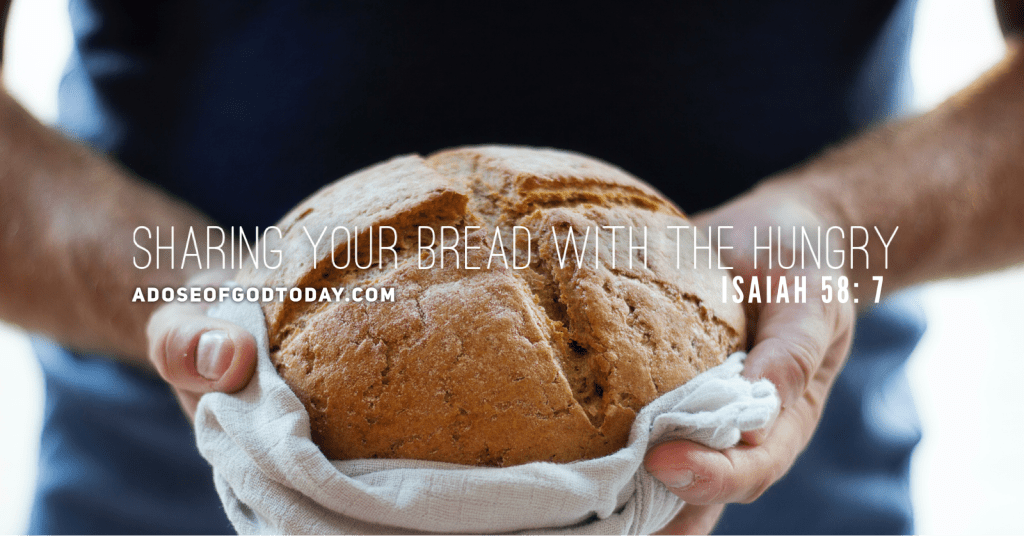
“releasing those bound unjustly, untying the thongs of the yoke; Setting free the oppressed, breaking every yoke; Sharing your bread with the hungry, sheltering the oppressed and the homeless; Clothing the naked when you see them, and not turning your back on your own.”
From what Isaiah told us, to fast in this Season of Lent is not about making ourselves slimmer or to aim in losing weight. These reasons are not what the Season of Lent is about. The call to fast and consciously choose not to eat our comfort food is a discipline that will bring us into at least four practical and significant reasons.
First, fasting from our comfort food will allow us to learn the value of giving more importance to what we really need and not just on what we want. Our wants could sometimes lead us into unhealthy habits in our diet, thus, to fast will help us confront those unhealthy habits.
Second, when we fast, we will surely feel hungry. To feel the emptiness of our stomach, will help us to value every food being prepared on our table. This should help us to be more grateful of people around us and of the grace from God.
Third, such consciousness in the emptiness of our stomach will also help us to realize the hunger that many people are suffering every day. According to Action Against Hunger, there is more than enough food produced in the world to feed the entire population of our planet, but, despite this over supply, there are 690 million people in the world who sleep without anything in their stomach.[1]
Fourth, by becoming aware of that, fasting then, leads us to respond to those who are in need. In the words of Isaiah, in fasting, we share our food with the hungry, we set those who are unjustly accused to be unburdened, we set those who oppressed to be free, we give shelter to the homeless, we cloth those who are naked. Meaning, fasting indeed entails practical responses that will allow us to become life-giving to others.
Thus, as we have just began this Season of Lent, please be more conscious also of this religious practice of fasting by also becoming more aware on how we could be more life-giving to others. But never forget to bring that consciousness into prayer. Fasting without prayer will not make us life-giving.
So, a practical example would be keeping aside the budget of your food or meal every day and give what you have kept aside to a neighbor or a friend who is in need of material or financial aid. May way all become life-giving in this season of lent. Hinaut pa.
Today’s readings highlight one of the main components of the season, which is Fasting. In our Catholic Tradition, we are taught that fasting is a spiritual exercise cum discipline as our way of repentance and penance for our sins which greatly hurt God and others. We practice this spiritual discipline to teach, train and tame not only our physical bodies but more so our interior self.
St. Paul warns us, saying: “For our struggle is not against flesh and blood, but against the rulers, against the powers, against the world forces of this darkness, against spiritual forces of wickedness in the heavenly places (Eph. 6: 12, NASB).” Through fasting, we arm and ready ourselves when forces of evil attack us day and night.
However the Lord, in the book of the Prophet Isaiah, had to correct and re-orient his people as to the kind of fast he so required: “Is fasting merely bowing down one’s head, and making use of sackcloth and ashes? Would you call that fasting, a day acceptable to Yahweh? (v. 5, CCB).”
He questioned their kind of fasting and showed his displeasure with their shallow observance of religious rituals. They acted pious and yet their attitude and lifestyle betrayed their faith in God.
But what kind of fasting that pleases God?
“To free those who are wrongly imprisoned and to stop oppressing those who work for you. Treat them fairly and give them what they earn. I want you to share your food with the hungry and to welcome poor wanderers into your homes. Give clothes to those who need them, and do not hide from relatives who need your help (vv. 6-7, NLT).”
These, brothers and sisters, are what pleased God, and is what genuine fasting all about! Lastly, let us however do all of these in secret, and the Father who sees us in secret will recompense us (Mt. 6:4). Amen.





 A DOSE OF GOD TODAY