Category: AUTHORS

  • A LOVING AND REDEEMING PRESENCE

    A LOVING AND REDEEMING PRESENCE

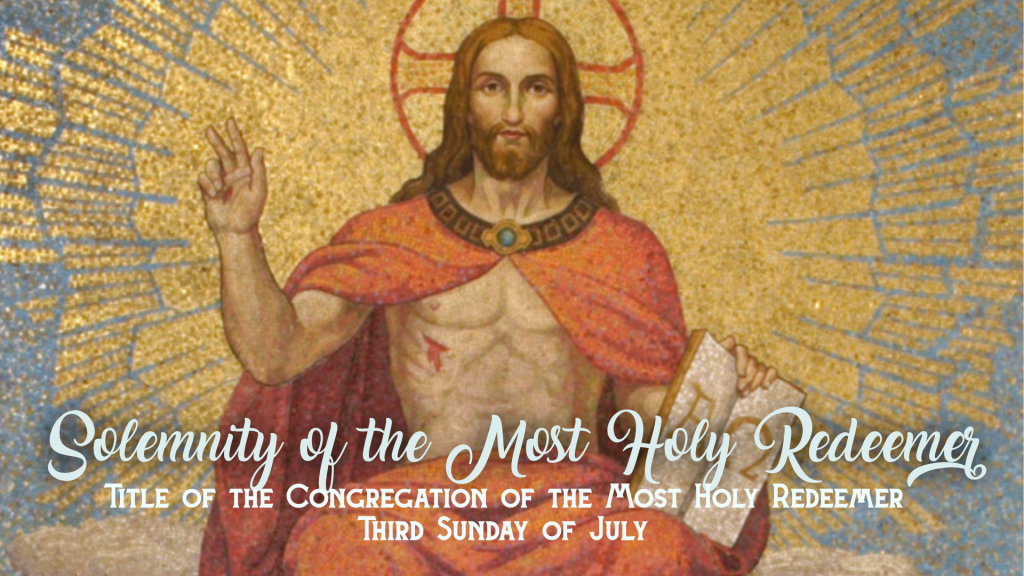
    July 18, 2021 – Solemnity of the Most Holy Redeemer

    Is 55:2b-6; Is 12:2-6; Rm 5:12-21; Jn 3:13-18,21

    How was your God-experience when you were a child?

    Certainly, each of us has our own experiences of God. Our God experiences and even image of God during our childhood would somehow paint the picture of God’s image as we grow older. Our early thoughts and ideas about God would somehow color also on how we relate with Him. Moreover, these thoughts and ideas were greatly influenced by our human experiences. How we were being brought up by our parents and adults around us will surely have an influence.

    In fact, this has been the personal experience of St. Alphonsus Ma. De Liguori, our holy founder of the Redemptorist Missionaries. As it was the culture and popular belief at that time, the young Alphonsus was introduced to a God who immediately would punish the sinner. God was believed to be too far and too high and remote. Yet, God was terrifying because God can put a person into eternal misery and damnation.
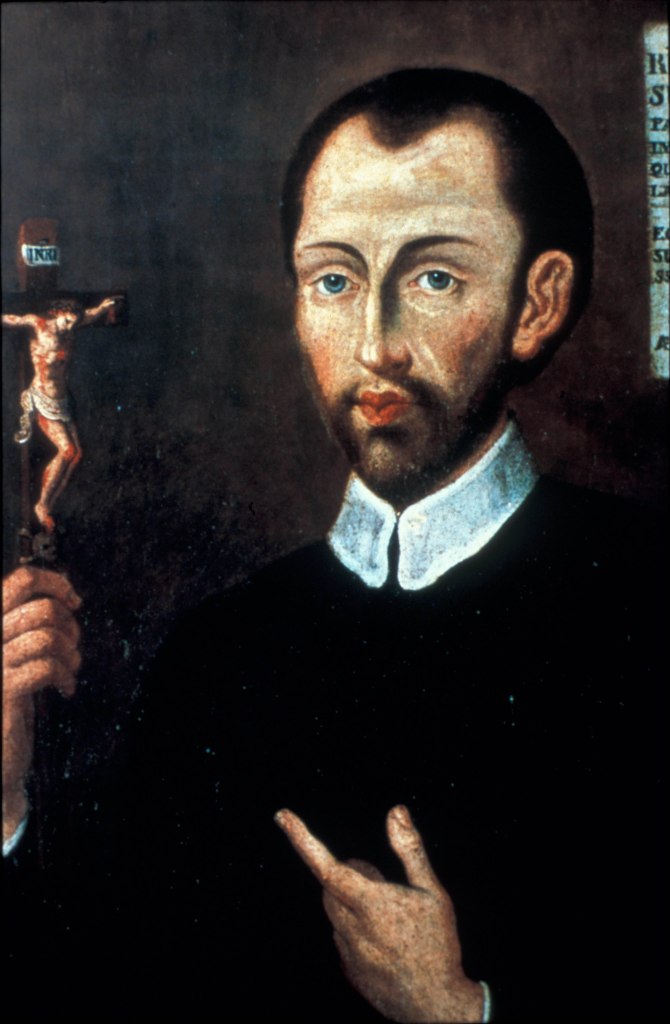
    St. Alphonsus Ma. de Liguori, Founder of the Redemptorists.

    This was in the consciousness of the young Alphonsus. Such belief in this kind of God was even reinforced because of his upbringing at home. His father who was a naval officer and a captain was a strict disciplinarian. One would just expect that Alphonsus must have been terrified by his father. If Alphonsus would commit any mistake, surely, Alphonsus would receive beatings or insults from his father.

    No wonder, Alphonsus became a scrupulous person who was overly concerned that something he thought or did might have been a sin. In modern language, Alphonsus could have suffered OCD or Obsessive Compulsive Disorder. Alphonsus was always terrified that he might have done something wrong, that he might have sinned and will be damned to the point that his guilt would haunt him.

    However, later on, slowly Alphonsus realized God’s true character. Experiences would actually tell him that God is kind and generous, loving and forgiving. Alphonsus felt this as he allowed himself to be at the service of the poor and the sick. This realization of Alphonsus was the very reason of the name of our congregation, the Congregation of the Most Holy Redeemer.

    Christ and his loving and redeeming presence and action brings out God’s true character. God does not condemn. God does not desire our death and eternal misery. God rather desires life that is free and filled with joy for us.

    This is the very message that Alphonsus preached, wrote and sang about that Jesus redeems us and liberates us from sin and death and to whatever that makes us miserable and lifeless. And this is God’s initiative because it is God’s desire.
    Our first reading and Psalm proclaimed about this. The first reading told us how Yahweh made an everlasting covenant with His chosen people. God makes the initiative to relate to us in love. Our Psalm reminds us about the faithfulness of God that we should rather not fear God but trust Him because God is our strength.

    This revelation tells us that God does not threaten us with God’s power to punish and bring us to eternal death. God rather related with us in the most personal and intimate way. This is what we affirm as we celebrate the Solemnity of the Most Holy Redeemer.

    The scriptures tell us that the God who created the world is a God who hears the cry of the poor and the entire creation. This God is neither apart nor alien to us but a God who is near and close to us. Our God is not “somewhere out there” but rather “here with us” who tirelessly journeys and lives with us from the beginning.

    Thus, despite our sinfulness, stupidity, and unfaithfulness, God never surrenders on us. St. Paul proclaimed in his letter to the Romans, “where sin increased, grace abounded all the more.”

    This is how the Gospel reminds us too that God “so loved” the world that he gave his only Son. In our pains and struggles in life, God stays with us. With Jesus, God walks and speaks to us. God even laughs with us and cries with us and to the point of suffering and dying for us.

    See, though God is almighty and all-powerful but God never threatened us with His power of control and dominance. God builds intimate friendship with us, showing care and compassion, offering healing and salvation.

    Hence, this feast of the Holy Redeemer is all about that relationship with a God who desires to be with us and to share life with Him.

    This is how we are invited to grow today – that we too will also live in friendship with others, by showing concern and love, offering healing and peace.

    We have to be watchful then, when we gain power over others and will tend to exercise control and dominance over them. With this tendency, we will be inclined to abuse the weak and that instead of building bridges, we build walls, instead of developing friendship, we promote fear. As a result, we will become indifferent to the struggles of others and intolerant to the mistakes of those who are around us. This is not what God wants us to be.

    God wants us to make friends, to show our affection and concern in the way Jesus makes us his friends so that we too shall learn to become individuals and a community with a loving and redeeming presence. Hinaut pa.

  • UPGRADING INTERRUPTIONS

    UPGRADING INTERRUPTIONS

    July 18, 2021 – 16th Sunday in Ordinary Time

    Click here for the readings (https://bible.usccb.org/bible/readings/071821.cfm)

    A lady once went to visit a friend who is a public high school teacher. As they chatted at the school canteen, however, they were continually interrupted by students who came for his friend’s advice  or opinion on something. Eventually she asked her friend, “How do you manage to get any work done with these interruptions?” Her friend replied, “At first, I resented interruptions in my work. But one day, it suddenly dawned on me that interruptions are part of my teaching work. Educating students is not so much what I teach them inside the classroom, but moreso about how much time and attention I spent them outside the classroom.”

    That teacher could have devoted her time on her lesson plans. She could have attended much of her time to her private life and not be involved with her student’s lives. But being caring and generous that she is, she made her work consists of being available to her students’ needs. No wonder she was greatly loved and respected by the students.

    We do experience interruptions in our life. Especially people who are in caring profession like teachers, priests, social workers, government and bank employees, frontliners, doctors and nurses experience lots of disturbances at work. And usually these interruptions are particularly difficult especially when the request is not of our own choosing, when we don’t feel in the mood to help, when we are forced to respond and when it causes a lot of inconveniences. In such cases, a real sacrifice is involved. Most of the time, we have to forget ourselves and set aside our feelings and present plans to address the pressing needs of others than ourselves.

    Good for us to know that Jesus himself, like us, also had to cope and contend with disturbances & interruptions in his ministry. Jesus too had his plans upset and postponed because of other people’s needs.

    In our gospel today Jesus saw the need of his apostles for rest and recreation. After sending them on a mission to proclaim the good news, to heal the sick and to cast out demons, Jesus understood his apostles’ need to recharge their energy. They had been through a lot while on mission that they need the time to eat, enjoy, & process their experiences with Jesus & the people. With this, Jesus planned to take them off to a quiet place for a break because frontliner caregiver as they are, the apostles also needed caring.

    However, as we have heard, things didn’t work out as planned. The ordinary people sabotaged their rest and recreation. And how did Jesus react? Not with annoyance but with compassion. Jesus was moved with pity for them. Inasmuch as he attended and took care of his apostles’ need for a break, out of compassion for them, Jesus also responded to the pressing needs of other people.

    Nobody likes interruptions. We know how annoying & limiting interruptions are. However, there will always be interruptions in life. They are inevitable – cannot be avoided. Be as it may. Somehow our readings today may also teach us some lessons about our experiences of interruptions in life.

    First, interruptions can be God’s way of taking care of us. The Lord said in our first reading: “I myself…take care, gather, bring back, appoint..” Meaning, What God does Himself to us are His hands-on interventions in our lives that will definitely disturbs us. As Paul said, Jesus is God’s intervention in our lives, who totally can disturbs, change & renew our lives. Jesus is God’s cure to save & help us to live our lives for the better.

    Second, interruptions can be our way of taking care of ourselves. As interruptions happen, we are moved to give more attention & value to what is important and we really need. The disciples needed to rest, recreation & recharge, and the people needs God’s healing, care, inspiration & meaning through Jesus’ words & ministry. In crisis-disturbance, we are to adjust, adapt & cope with our bare necessities. We evaluate – we put value on what we have & longs for the better than the usual.

    Third, interruptions can be our way of taking care of one another. As it caused us to be conscious of our needs, life-interruptions make us also feel the needs of others & moves our hearts to compassion to help. It challenges us to do whatever we can to contribute & fulfill our mission in life for them & for us.  Life-interruptions moves us to sympathize & empathize with one another.

    Simply put, whatever, whenever & however it happens to us then, now & in the future, these interruptions can be the chance for our intervening, disturbing & interrupting God to take care of us, & can be our opportunity to take care & be a better versions of ourselves & of one another. Interruptions call us to faith, self-care, compassion & personal mission.

    If we really come to think of it, our present experiences of Covid pandemic is & has been indeed a great interruption to our lives. Needless to say, the disturbance, crises, & challenges, Covid pandemic has done and cost in our lives nowadays. However, somehow like a major medical operation or dialysis procedure, perhaps this pandemic is God’s intervention to save from our own sickness & destruction. The interruptions we are going through might be God’s way of saving, curing & healing us from usual our toxic & abusive-lifestyle that make us sick & has brought cancerous diseases & infectious viruses to our nature, environment, physical bodies & personal lives. As we cope with the challenges of the pandemic times, we come also to see & value more the need for us to reimagine our lives, be more clear with our priorities & steadfast with our values, purpose & principles in life.  And above all, we come to realize that we need each other, we feel for one another, & we contribute what we can for a much better life ahead.

    Somehow the pandemic, virus, quarantine, immunization we are going through are God’s evasive, interrupted, inconvenient procedure for our upgrade, from corrupted & infected system to a better version of our humanity & our world. With the Lord and our compassion for one another, somehow what we are going through nowadays is God’s way of care-giving & care-taking us now & always.

    Lord, Interrupt & disturb us, once in a while (if not always), … that we may realize how sick we are,…. how we need You & one another,…. how we can help & take care of one another and…. how God is working & intervening to protect & save our lives & world now especially during these trying pandemic times. Amen.

  • GOD OFFERS US FRIENDSHIP

    GOD OFFERS US FRIENDSHIP

    July 15, 2021 – Thursday 15th Week in Ordinary Time

    Click here for the readings (https://bible.usccb.org/bible/readings/071521.cfm)

    I AM who am is God’s name given to Moses. This name reveals to us that God remains present, sees and listens to the present situation of the people. Indeed, God’s name and presence expressed God’s concern. Moses was told by the Lord, “I am concerned about you and about the way you are being treated in Egypt.

    This tells us that God is neither indifferent nor too far from us to care about us nor too high to reach. In fact, it is God who continually reaches us and desires for our liberation and salvation. This is how God shows his faithfulness in the covenant that God created with us. God never forgets. God remembers us all the time.

    This is the care and affection that we have heard from the Gospel today. Jesus offers us his friendship that gives support and company. Jesus expressed this in two points.

    First, “Come to me, all you who labor and are burdened and I will give you rest.” This tells us of God’s initiative and willingness to suffer on our behalf. Thus, dying on the cross to spare us from eternal damnation.

    Second, “Take my yoke upon you and learn from me.” This tells us of Jesus’ desire to accompany us, to be our friend to whom we can share our burdens and struggles. In this friendship, we shall find comfort and rest.

    These are also the invitations for us today – to come and welcome the Lord’s presence always and to accept his offer of friendship. As we learn Jesus’ way of loving, we may also learn to become a friend to people around us who shall also offer our presence and affection, understanding and love. Hinaut pa.

  • Hapag

    Hapag

    July 14, 2021 – Wednesday 15h Week in Ordinary Time

    Click here for the readings (https://bible.usccb.org/bible/readings/071421.cfm)

    Surely we are all now familiar of the painting called “Hapag ng Pag-asa” painted by Joey Velasco. Surely you have seen it. How could you have missed it? Like the Last Supper painting, Hapag is a painting of Jesus having meal (breaking bread) with street-children, instead of his disciples. As it grew into popularity, Joey Velasco made a documentary-video “Kanbas ng Lipunan” to revisit those street-children on the painting, listen to their stories & their reaction about the painting.

    One of them,  “Emong”, as he saw himself on the painting, somehow  said: “while nangangariton on a very hot day, We saw Jesus walking along our dirty & noisy street. Seems tired, alone weary & hungry. So, niyaya namin sya kumain. We invited Him to eat into our corner. Shared our pagpag (left-overs) with Him as He also shared us His little bread. Then we talked & shared about our stories, journey & struggles. Then, menasahe namin sya. We also laid down to rest & sleep for a while. That day was our salu-salu & we have Jesus with us.”

    Easy for us to see the painting of Jesus having salu-salo with street-children AS the Lord lovingly reaching out to us poor & needy people. Emong’s take on the painting however provides a much wider perspective. It is not only God reaching out to us, but it  also we, like the poor street-children is reaching out & responding to God, who needs also our acceptance, welcome, care & hospitality. The street-kid Emong reminds us that God’s blessings & grace of salvation work with our response & participation. God has everything to offer us always for our salvation & He do need our child-like response & participation. Great indeed to be helped by the Lord. But it is much greater when we help the Lord in His work of salvation. There is Pag-asa/HOPE whenever God & people/the Lord & us collaborate with one another.

    And In our Gospel today, Jesus particularly  praises innocence & challenges us to have an innocent childlike attitude & view about life now & here after.  Why? Because, common sense tells us that mature people tends to deduce, judge & conclude positions, while innocents tend to induce, imagine & propose possibilities. Mature people tend to critically denounce, while innocents tend to pronounce & proclaim with wander. Even in our mature & old age, we should never lose & forget our ability to be childlike – open to live & view life not only from our own perspective, but also  wandering about God’s better work, will & plans for us.

    Like Moses before the burning bush, we can only experience God’s presence in our midst, if & we start again & anew to be curious & wondering about what is going on & happening with us now along with what God is doing & offering us now. Somehow we do need at time to be palaboy, wandering aimlessly in like Moses & Emong, so that we may see, respond & contribute in the mission of Jesus Christ.

    The Lord Jesus is always reaching out to us. He has a message to tell us.  He has God’s grace to offer us now. All we need now is like Emong, the streetchildren, & Moses, to reach-out, share & do our part – taking care, responding & helping our Lord Jesus to do his mighty works & renew the face of the earth.

    Lord, like the little ones, make us see what you see in us, what you are offering us, what we can offer & help you to do you will, especially during these pandemic times. Amen.

  • Other Christs

    Other Christs

    July 11, 2021 – 15th Sunday in Ordinary Time

    Click here for the readings (https://bible.usccb.org/bible/readings/071121.cfm)

    Let me tell you first about “Fr. Jo”. Fr. Jo is a Redemptorist Missionary from Germany who is now stationed and working in a Spanish-speaking Mexican community in United States. For years, he has lived with the Mexicans in the US, that he is now well loved by the people. Though he is a German by nationality, but his ways are like that of Mexican now. To the point, people would consider him more Mexican than themselves. They would take Fr. Jo as one of their own.

    One day, in a catechism class, a religious sister intended to lecture the kids about the second person in the Holy Trinity. She started like this, “Kids, I like to introduce you to someone you should know. He is a person who loves you most. Until now, he takes care of you sincerely. He is always present whenever you need him. He is the most kind and very good person whom you should know. He has always been there whenever you need Him. I wonder, is anyone of you here already knows who he is?” Then, there was this little girl who raised her hands and said confidently, ”Sister, I already know him”. Glad that the little girl already knows about our Lord Jesus Christ, the sister asked her: ”So tell us, who this person is?” and the little girl replied: “Fr. Jo.”

    Yes, we come to know Jesus not only through stories about him in the bible, and through our parents and catechists but we usually come to see, hear, touch, feel and experience Him through the faith and life of persons or people who reveals and represents to us the person of Jesus in our midst. These significant people, like Fr. Jo are God-sent and church-sent preachers, missionaries, and evangelizers who, by the witness of their words, actions and life, they become living witnesses and representatives of Jesus, for us to know Jesus personally in our own very lives now. Since then and until now, Jesus continues to send us his missionaries and prophets for us to recognize and know Him in our lives. And reviewing our life, we could identify people who have greatly influenced our faith – maybe a priest, a family friend, the tricycle driver, your neighbor, labandera, carpenter, a relative, teacher, or some stranger you meet along the way – that through them we come to know and believe in Jesus.

    Yes, the best & most simple way for people to meet Jesus & know about Christ & Christianity is through & by means of us Christians ourselves – our Lord’s other christs – who are faithful believers, followers, and witness of Jesus to our world today.  

    We come to know Jesus in our life through Christians who comes in our way and has influenced our lives and faith. We also come to know Jesus because we let him come into our lives – because we welcome him into our lives. When Jesus sent his disciples, he advised them “stay in whatever house you are welcomed.” Meaning that we come to enjoy and share God’s grace because we welcome and allow Him into our own hearts and homes.

    Missionary life is fascinating, if not intriguing for us. In my 29 years of being Redemptorist missionary, people usually asked me how I fend for myself as I live in the mission areas. People asked me, “Where do you live? Where do you sleep? How are you in terms of food?” I reply: “I usually rely and depend on God’s generosity and the hospitality of the people in the area”. Then with the usually follow up question: “Dili ba lisod? Is it hard?” My reply is: “usually when the people know that I am a missionary, who visits them and shares my faith with them, their doors (most times, those of the poor), are always open. They willingly welcome me in their homes, sharing their food, beds, stories, life and faith, same as I share with them my life and faith, as missionary of Christ.  And honestly, as we share our faith-life experiences together, I come to witness that during my visits and conversation, people who welcome me into their lives and faith are so blessed as much as I am also with them blessed.

    I always believe that God is never absent from any place in the world. He usually reveals himself in and through the faith and life of us, his followers and believers. And usually hospitality is the first sign of God’s presence. Whenever  then we welcome someone, especially a stranger into our lives with the spirit of hospitality and faith, God’s presence and graces are always present. God’s offer of Salvation to us thus happens in the context of His visits to us. His grace and blessings thrive on our hospitality, on how we welcome Him, through today’s God-sent missionaries into our own lives now.

    Remember what Yahweh said in the book of revelation: “Listen, I stand at the door and knock; if anyone hears my voice and opens the door, I will come into his house and eat with him, and he will eat with me.” And what Jesus assured us who welcome God into our lives, “My father will love them, and we will come to them, and make our home with them.” In other words, through His representatives & witnesses, we are blessed because the Lord comes to visit us & we willingly welcome Him into our hearts & our homes.

    Through today’s Christian missionaries and prophets, especially during these pandemic times, may we be always conscious and open to welcome our Lord’s continuing “visits”, and be transformed and blessed by His offer of grace, salvation and life anew. Amen.