The Lord teaches us how to pray. Isn’t it beautiful? The Lord himself taught us how to approach the heart of God not with a lengthy prayer, but with a greater confidence to God who we also call as our Father. Hence, Jesus taught his disciples on how to truly ask the Father and to pray sincerely.
This is where we also find Jesus’ warning for the disciples not to babble in their prayers but of empty words meant to only impress people. Jesus was conscious how the pagans would use many words but merely babbling. Well, the pagans believed that they have to use a lot of words in order to appease a violent and angry god. However, our God is not violent neither angry not need to be appeased. God, as Jesus introduced to us, is our Father.
By calling God as our father, this brings us into the affection we have with God. God would surely love being called as our Father, whose only desire is for us to grow in love.
This invites us now that our prayers and other forms of devotions are not meant to impress others or to flatter or manipulate the Lord because of our long, wordy and unintelligible prayers. What the Lord wants from us is our sincere and humble hearts that recognizes God as our Father.
The Lord’s Prayer brings us, indeed, into sincerity and humility because the prayers acknowledges first God, as our Father whose “divine will” takes priority than our own. Thus, we seek and recognize the will of God for us and not our wants. This brings us to be more aware of our needs of the present moment, of today, and not to be burdened by our past or to be anxious of what is to come tomorrow.
This is very important to remember that the prayer Jesus taught allows us to be more aware of our present moment, of our needs and graces of the here and now. This will certainly make us more contented and confident in life for we shall see how God provides and works for us in the present moment.
Indeed, Jesus invites us and teaches us on how to seek God’s desires because God knows what is best for us by praying the way he prays. May this simple but powerful prayer of our Lord gives us more confidence in the presence of God dwelling among us whose only desire is the best for us. Kabay pa.
Jesus warns us about our narcissistic tendencies. We might not be aware of our tendency to draw other people’s attention to us, of winning their praise. Indeed, there is a need for us to purify our every motivation and action so that we will live free and become true generous Christians.
Jesus takes this seriously as he reminds his disciples in today’s Gospel. To follow Christ is not to seek the attention of others, or to seek praise and approval of those people around us. A disciple of the Lord does not need to put up a billboard and announce to people what he/she has done and accomplished.
The Lord is more concerned with our heart so that we don’t have to pretend to be someone else we are not. This happened to the hypocrites in the synagogues that Jesus was talking about. These people pretended to be the best person in their community. They proclaimed and told people how good and righteous they were. They did all these to seek recognition from the people. Indeed, they craved for people’s attention and approval because they too were hungry of power and control.
People who constantly seek the attention of others and their recognition ultimately manipulate others so that they will be in control and will become powerful. Yet, it also reveals how these people are so insecure on what they have and on what they don’t have.
In fact, that insecurity boiling in the heart, can make the person vicious at the event when he or she receives criticism from others. The person will surely not be able to stand to be criticized by others for he or she only thinks and believes that he/she is always right and good. Thus, the person would not accept any correction and would be rejecting to any challenge.
However, as a people who seek God, we are rather called to be more confident with Him, and with our relationship with the Lord. Our generous actions, good deeds, our prayer and religious practices must flow from that relationship. Deepening one’s relationship with God should be our primary motivation and not in boasting oneself. This relationship with God should also lead us to recognize God’s generosity and faithfulness in us despite our failures. Then, this will hopefully inspire us to respond with gratitude to God. To become a grateful person will surely make us a generous person in words and actions. This will make us closer to people around us and to God.
This is how we could also explain the glorious departure of Elijah. The prophet showed his passion and dedication to the Lord. He was not anymore after anything for himself, but for God alone. Elijah, therefore, had grown in his relationship with the Lord God, the reason why he was taken alive by the Lord to heaven.
Moreover, Jesus also invites us today to look closely at our behaviors and attitudes, practices and devotions if these are helping us to be closer and to be more like Jesus or if these are rather, moving us away from God and from others.
To remind ourselves about this, let us ask ourselves with these questions, “Who is being honored and served by my good deeds, by my generous actions and by my religious devotions? Is it myself or is it God? Do they lead me closer to God and to others or do they rather lead me away from the Lord?”
By allowing these questions to sip into our mind, may we be filled with the desire to only win the heart of God and not the praise of others. Kabay pa.
It was the best of times, it was the worst of times, it was the age of wisdom, it was the age of foolishness, it was the epoch of belief, it was the epoch of incredulity, it was the season of light, it was the season of darkness, it was the spring of hope, it was the winter of despair.” Many of us know that these are lines from perhaps one of the most known books of all time, A Tale of Two Cities, by Charles Dickens. It is said that in this book, Dickens referred to an age of radical opposites taking place across the English Channel, in France and the United Kingdom respectively, during the French revolution more than two hundred years ago between 1787 and 1799.
But these contrasts and comparisons we might be able to appropriate for our very own times here in our own troubled country in the post-pandemic, post-May 2022 election period and as we faced an unknown future where everything from an economic collapse (along the lines of Sri Lanka and Pakistan) to a political turmoil to an ecological disasters with more destructive calamities can take place. It certainly can bring a season of darkness and a winter of despair. But for those who hold on to the adage that “hope springs eternal,!” this very same context could also provide us with a season of light and a spring of hope! Who is to tell what the future brings?
But the more pessimistic among us might see the glass half empty and fear the worst that is still to come! A recent post appearing in social media following the Marcos Junior’s selection of the presumptive Vice-President Sara Duterte as Secretary of Education led to speculations about revising history books and getting rid of those considered critical of the Marcos martial law regime. It would amount of what could be considered book-burning, not in its literal sense but to make sure these are kept locked and not be read by any schoolchildren anymore! As Ray Bradbury – the author of Fahrenheit 451, a science-fiction novel – wrote: “You don’t have to burn books to destroy a culture. Just get people to stop reading them.”
Bro. Karl signing a book during the Book Festival. Photo by LeilaRispens-Noel Facebook Account.
As an immediate response to this fear, a thousand academics across the Republic made a brave stand reported by the Philippine Inquirer on May 20, 2022 which read:
“More than 1,000 scholars and educators based in the Philippines and abroad have issued an online manifesto calling for the defense of historical truth and academic freedom, as they expressed concern over escalating attempts to revise narratives about the martial law years and erase ‘traumatic personal and collective memories of plunder and human rights violation’ under the Marcos dictatorship.”
Book-burning! Could it happen in this Republic considered by political scientists as a weak State constantly facing the threat of authoritarian rule? Well, this does not only take place in novels like those in Bradbury. Through history, book-burning has taken place when those who hold power fear the impact of critical minds that arise as people read. These took place as far back as the time of the Chinese Emperor Shih Huang Ti, in 213 BCE, up to the mid-20th century e.g. during the World War II period.
The defining moment of book burning was in 1933 in Berlin, when the Nazi forces burned tens of thousands of books, from the works of Sigmund Freud to those of Jack London. As Matthew Fishburn wrote in Burning Books: “Along with the Nazi ideology that there existed a superior race of people came the idea that there was one true cultural and ideological canon; that which didn’t fit was consigned to the fire.”
For the moment, however, let’s put aside our fears and face the future with a bit of optimism for, indeed, who knows the coming years will again allow us to have a glimpse of another cycle of our historical narrative.
What impressed me most in these past electoral exercise was how the youth of the land responded to the challenge of the moment. Many of us elders have naturally been disappointed at how the youth of the land have shown no interest at all in regard to socio-political issues impacting on the majority of the masa. But these rallies showed another face of the youth of the land; here they were re-activated by the spirit of nationalism. Like us when we were the youth of the land, they now showed a promise that they would pick up where their elders left off the social movement in the 80s-90s.
And it made me realize that indeed, history repeats itself again. Just like the youth of the social movement that gave rise to the likes of Hermano Pule Gregorio del Pilar, the La Solidaridad clique led by Jose Rizal and the Katipuneros led by Bonifacio, to the youth of the guerilla movement during the resistance against Japanese imperialism, and the youth resisting the Marcos dictatorial rule and now the youth of the 2020s are advancing into another stage of dissent and resistance. I have been filled with a tremendous sense of hope and pride watching all these young people at these rallies.
There may be dark clouds in the horizon, but somehow light manages to find a crack and it is the youth of the land today that provides an opening. So we could be in for the best of times if this youthful generation like their elders through our historical cycles find the strength, courage and energy to lead the dissent and resistance movement.
As for us – who I guess are mostly their elders – are gathered here together at this five-day event which is our own modest way of expressing what were encapsulated in the words of the Irish poet Dylan Thomas: “Do not go gentle into that good night. Rage, rage against the dying of the light.” And who – but authors, writers and journalists – are the human beings who are best at raging so they can challenge the citizenry towards constructive action for the common good.
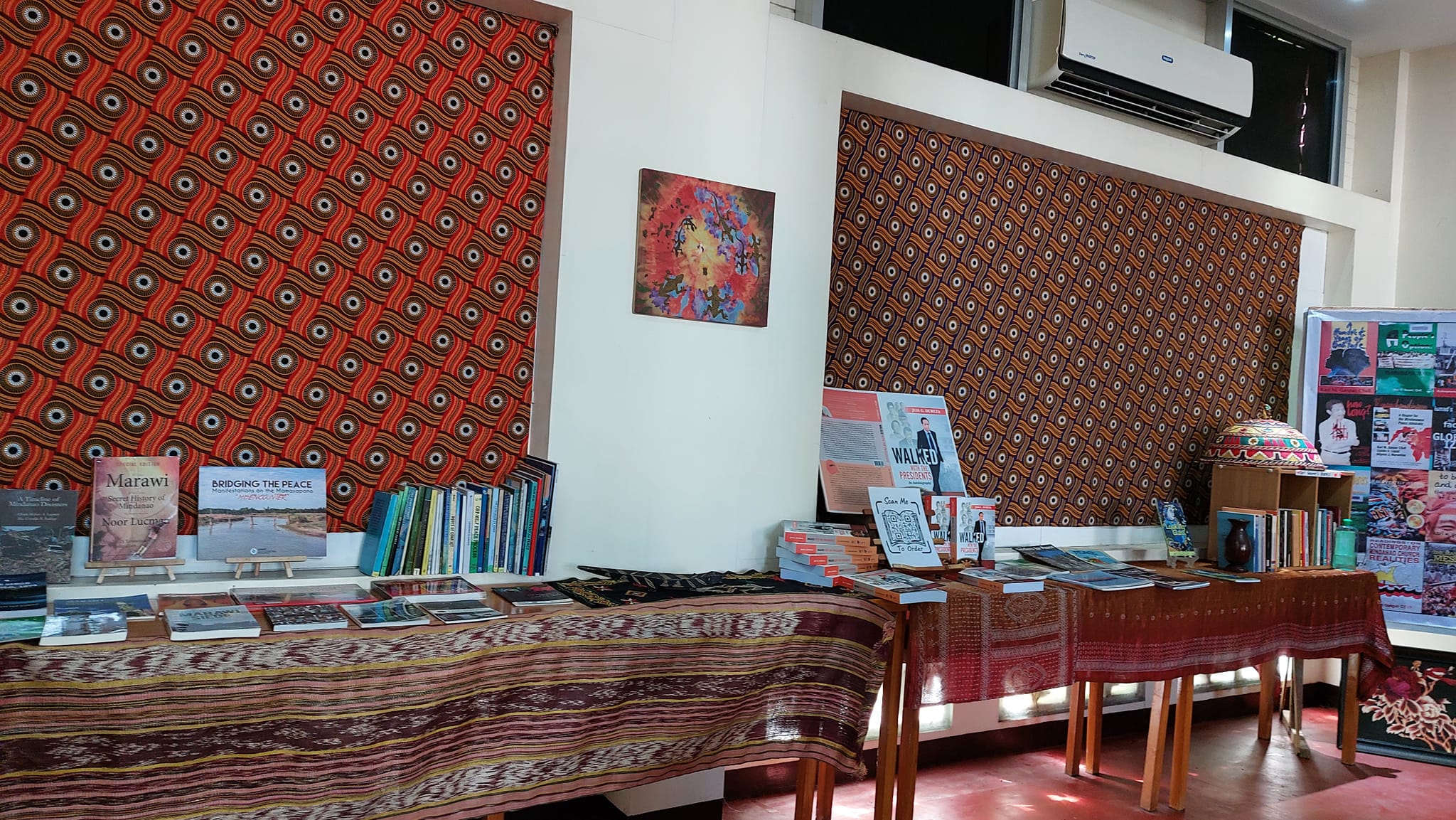
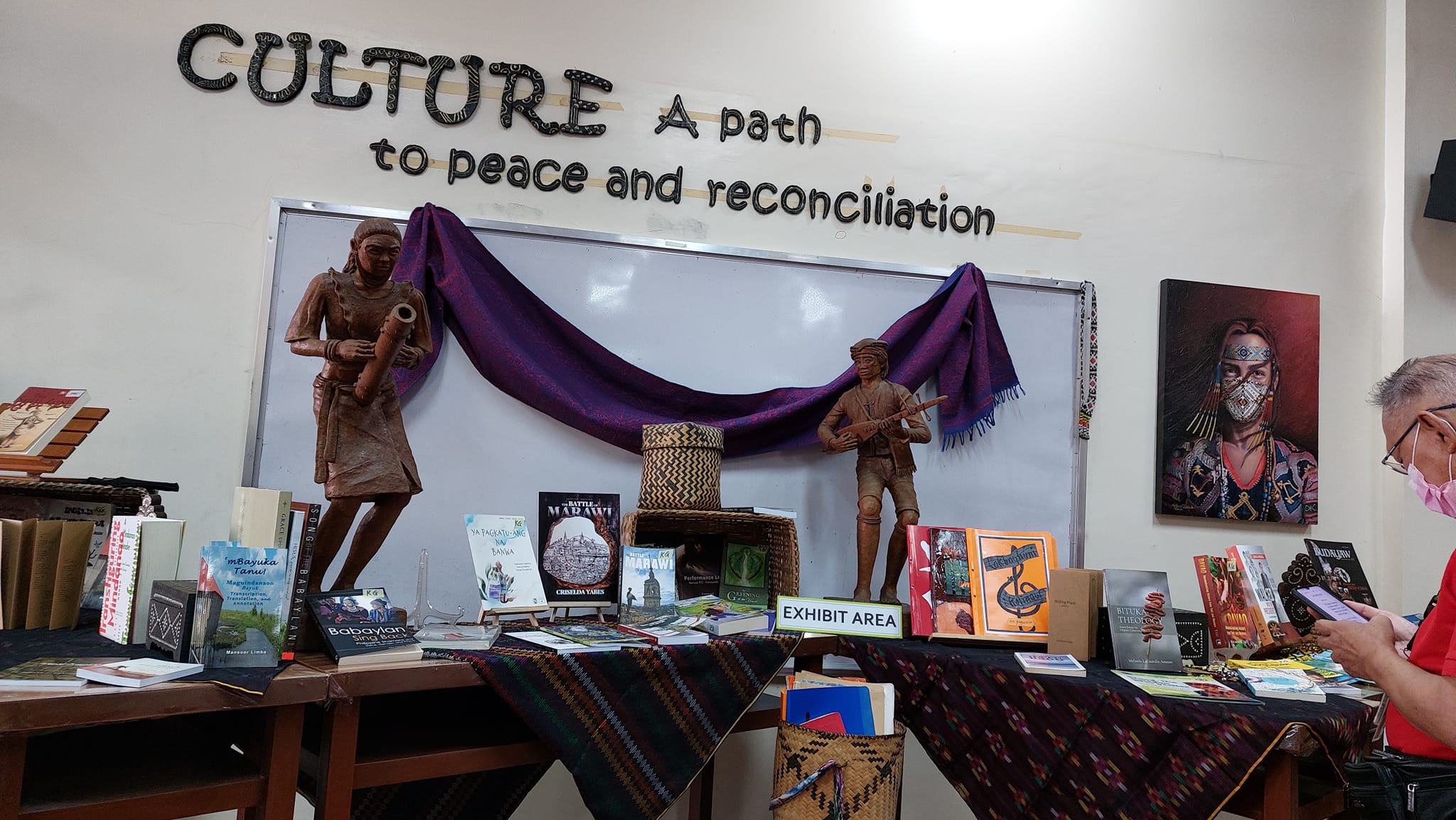
In the next week (June 13-17, 2022), we celebrate the best that have been offered by Mindanawon authors along with non-Mindanawon authors interested to write about Mindanao. In many of their works, their writing (WRITE) has also led to the righting (RIGHT) of Mindanao. There was a time when Mindanao was written from a colonial lens even as some of these – like the ethnographic studies done during the American period – tried to capture the reality on the ground.
But viewed from biased and even discriminatory optics, the early writings about Mindanao tended to highlight that which today have been debunked. In the exhibit, you can see examples of these. This was to be expected if the authors were foreigners (with tendencies towards racism and ethnocentrism) or Filipinos from imperial Manila – who monopolized publications for a long while – who relied on secondary data with very little triangulation enriched by immersion among Mindanao’s peripheries.
However, in the past few decades as there have been more non-Mindanawon authors who have abandoned their colonial/neo-colonial gaze and as more Mindanawons began to get involved in publications, a shift has taken place. Thus beyond the w-r-i-t-e, there has now been a movement among Mindanawon writers to r-i-g-h-t Mindanao, through advocacies for justice and peace, respect for human rights and civil liberties, solidarity for the downtrodden especially Lumads and for a] advancing ecological concerns.
One can find this out by goggling the available data on Mindanao Bibliiographies and there have been a few. Perhaps the first Mindanao-Sulu Bibliography was that W.E. Retana’s in 1894. It would take a long while before another one appeared, namely Alfredo Tiamzon’s Mindanao-Sulu Bibliography published in Davao City in 1970. In the following decades, there were more attempts at compiling a more comprehensive Mindanawon Bibliography, the last one being convened by the Technical Working Group (TWG) just before the onset of the pandemic. This hopes to produce a RoadMap asserting the importance of Mindanao histories and studies. .
Why history? Because, in the words of the philosopher George Santaya – “Those who do not remember the past are condemned to repeat it.” And the novelist Maya Angelou posits that “the more you know of your history, the more liberated you are.” History is of course the telling of stories of the past with the view of parceling lessons to guide us for the future. There is no question that stories are powerful.
The author Jeff Goins wrote: “I believe in the power of story. Story is where we came from. Story is where we’re going. Story is what connects us and binds us to each other. It is in the story of humanity, amongst love and fear and failure, that we make meaning of our lives. Story is what defines us and sets us apart. It’s what allows us to connect with each other to truly know and be known.”
Stories is what brought to reality the Second Mindanao Week Festival. And privileged are we that during these rare occasions we can gather together with authors, writers and journalists – they who can conscientize, educate, inform, agitate, mobilize, entertain and humor us through thick and thin! They whose witness to truth and actual practice in peace-building and promoting justice and development make possible a society that will not allow stupidity, idiocy and ignorance to dominate over our knowledge and information production.
For otherwise, we will all be living in a world of lies, corruption and power manipulation that could bring us back to the Dark Ages! It is their presence in our midst that help to provide us with the possibilities that despite a winter of despair we can still look forward to a spring of hope!
(This article was first addressed during the Mindanao Book Festival II at the Redemptorist Community in Davao City as part of the 50th anniversary of Our Mother of Perpetual Help Parish, in collaboration with the MindaNews Media Cooperative Center/Institute of Journalism, SATMI and of the Parish. The exhibit is until Friday, June 17.)
To hit back when we are hurt can sometimes be our immediate response. Even without thinking, a child may hit a playmate when he or she is hurt. Among us adults, this kind of attitude is also evident, as a simple misunderstanding would lead to endless quarrels, lawsuits and even violence. This sounds actually simple and natural yet this has big implications in our relationships.
Yet, Jesus taught his disciples to “love your enemies and pray those who persecute you.” Is it not ridiculous? Our natural response is to hit back thinking that hitting back takes away our pain and anger. However, Jesus teaches the other way around, to love our enemies and pray for those who have hurt us.
But, how could we love those who have hurt us, those who have abused us, those who betrayed us and caused us pain in our life? Our immediate response is to take our revenge. If we cannot express physical violence against them, then, we express it in our words and on how we treat others and ourselves. But most of all, we linger to hatred, to pain and anger.
We do not realize that once we let aggression, violence, hatred and anger to dominate in our hearts and minds, we become prisoners of our own pain. Then, the pain that we endure leads us to feelings of more anger, hatred and bitterness. When we linger to these they will lead us to a heart that seeks only revenge.
However, we when find love and forgiveness in our hearts that begins with accepting and embracing those painful experiences and go on with life, then, we will be free. Loving one’s enemies or those whom we hate is an expression of mercy and forgiveness that will make us free. It will not erase the scar of betrayal or abuse or pain that we endure but we will be able to stand up, to wipe our tears, go on with life and transform pain into kindness.
Thus, for us who have done wrong to others and caused damage, Jesus also calls us to humble ourselves and acknowledge our sins. Our Psalm expresses today a humble heart that fully recognizes ones sins and evil done to others. In recognizing our sins, this also entails responsibility to what we have done. Hence, this how justice and mercy shall meet.
Certainly, the Lord desires that each of us becomes free of guilt so that peace and reconciliation shall be in us. The Lord wants us to be free and not to be prisoners of anger, hatred, bitterness, guilt and violence.
Showing love then, is not about telling the person, that what he/she did was okay and pretend as if nothing happens. No! Of course not. If we have caused pain and damage, then, that really happened and there is a need for us to acknowledge and take responsibility from such action.
Love and prayer, then, bring us towards reconciliation and healing to our wounded heart so that we will be free and at peace. This means that we choose love and not anger and hatred and we choose God and not evil. Kabay pa.
It was violent, cruel, brutal and merciless. These are some of the words one could describe on what happened with Naboth the Jezreelite. He refused to give up his ancestral heritage but was falsely accused. He was treated with so much brutality, viciously framed for a crime he did not commit and murdered in daylight by the minions of Jezebel.
And no one stood for Naboth. Nobody dared to defend him. King Ahab, on the other hand, though did not commit the crime directly but played passively. He was passive because he did not want to be involved himself. Yet, he did not also choose to stop Jezebel because he knew he would be able to benefit from such corrupt and murderous act of her wife.
This tells us really that no matter how much possessions we may have or no matter how secured we can be materially, or no matter how much power and influence we may possess, it does not mean that we will be satisfied. This has been shown already by Ahab even before the murder. Ahab was disturbed and angry because he did not get what he wanted despite he did not need it. Because of that greed of Ahab through the cunning and vicious plans and actions of Jezebel, the little possession of Naboth was taken away from him including his life.
Is God then, blind to this kind of crime committed against the weak and powerless? Our Psalm proclaims to us today the prayer of a man like Naboth, “Lord, listen to my groaning.” This is an appeal to the Lord to listen to that groan filled with pain. It is a cry for help from a person who find life too much to bear because of the exploitation and abuse from others.
The author of the Psalm also recognized that indeed, the Lord is not blind or deaf to that painful groan for the Lord abhors the bloodthirsty and the deceitful. This is the very image that Jezebel gained after that murderous act, bloodthirsty and deceitful.
However, what is more puzzling in today’s invitation from the Lord for us is this, “offer no resistance to one who is evil.”
Does it mean that we become passive to the abuses committed against us, against the weak and the powerless? In the case of Naboth, it was perhaps even impossible to resist because the evil scheme against him was just too overwhelming. He was alone.
However, to offer no resistance to one who is evil has a deeper meaning. Not to resist to one who is evil, is not allowing evil to control us. Meaning, once we fight back to one who is evil it may bring us into the same position of the one who is evil. We shall tend to resort to the same violence. Hence, responding evil with evil or responding to violence with violence will only bring us into an endless cycle of evil and violence.
The wisdom of Jesus lies in the offer of peace. To offer the other cheek when someone strikes us on the right cheek, though this sounds ridiculous for many of us, is an opportunity for the one who hurt us to embrace peace and reconciliation. Peace and reconciliation is truly a difficult path. A very unpopular one. However, this is the only way to end the cycle violence and evil.
Moreover, this is not an excuse to just remain passive to the abuses and other forms of oppression. It does not mean that when your spouse physically abuse you, or a family member is sexually abusing you, or a friend or colleague is exploiting your goodness and generosity, or a powerful and influential person oppressed the weak in the society that we remain passive and indifferent. The teaching of Jesus is meant to keep violence at the minimum and not to escalate more violence towards others and ourselves. In such situations, we are called to get out from the abusive relationship, to demand justice and reparation and show mercy.
To demand justice then is to make the perpetrator take the responsibility and the consequences. To show mercy is to get rid of hatred and anger within our hearts for us to live freely by offering peace and reconciliation towards those who have wronged us.
Therefore, God invites us today to live freely by not allowing evil to control us or to have an access into our hearts by holding on to grudges, hatred, anger and selfishness. God calls us to be more satisfied with what we have and to be grateful of the blessing God gave to us so that unlike Ahab, our hearts won’t grow ungrateful and corrupt. God calls us too that in the event when an evil act is committed against us, do not give a chance to evil to have a control over us by resorting to evil also. Jesus calls us to offer peace, not violence, not anger, not hatred, and not also indifference in the face of evil and violence. Offer peace that gives and promotes life. Kabay pa.









 A DOSE OF GOD TODAY