Category: AUTHORS

  • Freedom from Attachments 

    Freedom from Attachments 

    June 26, 2022 – 13th Sunday in Ordinary Time

    Click here for the readings (https://bible.usccb.org/bible/readings/062622.cfm)

    As we grow older, we also develop fondness and attachments to few or many things, people, events and even memories of our past. This fondness and attachments could just because of our liking or comfort and pleasure. But to a deeper level, we have grown attached to it because it fills our emptiness, it satisfies our deep longing, and pampers our deepest desire.

    However, when we are not conscious of these, such attachments that we have developed could make us stagnant, uncompromising, and indifferent to the point that our attachments to things, people, belief or memories become an obsession.

    In fact, the younger generation today may have more chances to be more fixated and attached to things. Like for example, it is a common sight today of parents allowing their young children as early as 2 or 3 years old playing with smartphones, iPads or tablets to be entertained and to keep the child occupied. Perhaps because parents are multi-tasking and of the amount of workloads they have, that they cannot be always available to their small child. Thus, giving a smartphone to them would be the most convenient to do and to let these gadgets do the babysitting.

    However, when this is not regulated and parents are not mindful enough of its effect to the child, the child may also grow a deeper attachment to gadgets that when a gadget is taken away, the child could throw an endless tantrum. That deeper attachment to a gadget of a child will be intensified when physical presence of parents is deprived in the formative years of the child. Consequently, gadgets fill up that emptiness in a child and satisfy the longing from a child to his or her parents.

    Our attachments, whatever they may be – things, people or memories, that also become an obsession to us, could hamper the quality of our relationships with one another and of our freedom to be available for others and for God.

    On this 13th Sunday of Ordinary Time, our readings invite us to look at ourselves, to look at our attachments and to examine the quality of our commitment in our relationships with others and with God. Thus, allow me now to go a bit deeper into our readings today and let us see how God invites us to be free and to be more available.

    St. Paul in his letter to the Galatians acknowledges that Christ sets us free from the yoke of slavery. This yoke of slavery is our very attachments to things, to pleasure and to comfort that only satisfy oneself but indifferent to the needs of others. St. Paul further reminds us that this can be very dangerous because we will never be satisfied but rather will only go on biting and devouring one another. Though this sounds horrifying, but Paul wants to tell us that when selfishness fills our heart, then we also become corrupt and vicious in our relationship with one another. Accordingly, for St. Paul, this is not true freedom but slavery. Freedom, as St. Paul reminds us, is to be able to serve one another through love.

    This is what Jesus is trying to teach to his disciples especially when James and John suggested to him to call fire from heaven and to consume a Samaritan Village. The reaction of James and John tells us of a fixation to power and authority. As disciples of the Lord, the two could have also grown entitled who wanted to assert their power and authority to people who did not belong to their group. Yet, Jesus reprimanded them because power and authority is not about being able to punish people or to become destructive and cruel to those who are against us. Power and authority is freedom to give life, to inspire life and motivate life in the community. Thus, when we ourselves become obsessed with power and authority, we also become entitled, demanding and abusive in our relationships. And this happens in our homes, workplaces, organizations and communities. Indeed, beware that we will not be consumed by this obsession.

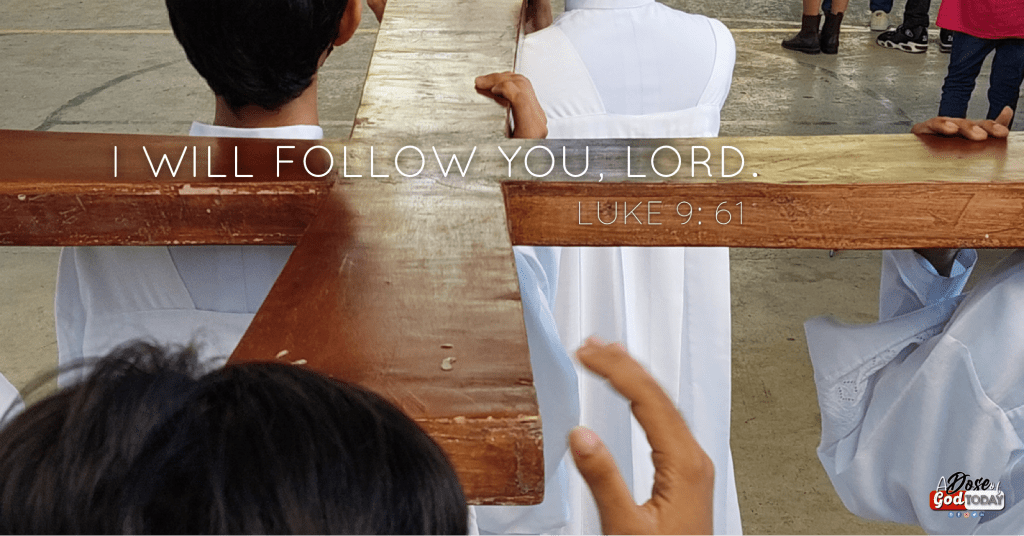
    Moreover, Jesus points us another aspect of being free and that is in following him. Many expressed that they want to follow him, yet, because of their personal attachments to comfort, to people and other things in life, they cannot fully commit to the Lord. Jesus calls us that in order to follow him whether in religious life, in married life or in friendship is to fully commit ourselves. This calls us also to detach ourselves from whatever that prevents us to be more available in our commitment.

    This is what Elisha shows us in the first reading from the First Book of Kings. Elisha who was called to follow Prophet Elijah gave up his attachments in life symbolized in slaughtering his oxen and giving it to people to eat. This was his form of giving up and detaching from what would prevent him from responding to the call of God through Elijah. Elisha made himself free so that he will be available for God and for the ministry he was called to do.

    Now, there are at least three take aways that I want you to bring home today.

    First, acknowledge our attachments, fixations and obsessions that prevent us from being free. This could be a thing, a person, a belief, an opinion or a particular unreconciled memory of our past. As we recognize them, may we come to realize and get hold to what really satisfies us, to what truly gives us life and freedom. Thus, may we always come to the point that it is Christ who sets us free, that it is God who fills our emptiness and longing in our heart, and who heals our broken hearts.

    Second, slowly but consciously detach from those attachments, fixations and obsessions. It won’t be easy to stop an old habit already engrossed in our subconscious. Thus, we also need people to accompany us and to help us in order to remind and motivate us. In case we need a professional help, then, seek that help.

    Third, humbly serve others by being physically and mentally present. St. Paul tells us that we are called for freedom, not to serve our ego, but to serve one another through love. Let this be a reminder to all us, to parents, grandparents, siblings, friends, collogues, ministers and religious that it is in a loving-service and not in controlling and manipulating others that we find true freedom and that we are able to give life. Kabay pa.
  • By CHOICE

    By CHOICE

    June 26, 2022 – 13th Sunday in Ordinary Time

    Click here for the readings (https://bible.usccb.org/bible/readings/062622.cfm)

    “How could I now tell my parents that I choose to settle down my life in marriage?” Quite a pressing concern might be for young mature couple nowadays. Somehow these words express the dilemma of young mature people are in – not only in making decision, but also of facing the implications of such decision. These words are not just about choosing one’s life-path & identity, but also of being responsible for & committed to one’s choice, either to be married, ordained, consecrated or singleton in life.

    A wise man once said: “Life is about choices. Some we regret. Some we are proud of. Some will haunt us forever… And the message is: We are what we choose to be.” True indeed, we are product not of our circumstances & conditions but rather of the choices & decisions we make with those situations. We are what & who we are, not by circumstances but by CHOICE. One wise man would even say: “Your decision today is a statement of who you are & a declaration of who you choose to be.” Your identity & responsibility then is Your choice. And your choice is your identity & responsibility. Whatever, whoever, & however you are in life is by CHOICE… -with all its consequences.

    The same can be & should be said about being Christian. To follow Jesus in life is BY Choice & not by circumstances. As he has pointed out in our gospel today, following Jesus demands our very own choice to be His disciples & to be responsible for our chosen life of discipleship for Him – however it might now be.

    Consider that as we grow in our Christian life, God calls each one of us to a more radical discipleship – a more radical following of Christ. Eventually as we go through life, each one of us, as Christian has to make a life-commitment before the Lord. We have to make a free and voluntary life decision of what kind of Christian will you be, – whether as married, ordained, professed or single-blessed person. Such decision or option is our radical way of responding to His call to follow Him. Such as in marriage, a man leaves his mother, a woman leaves her home, they will travel on the road and the two became as one. All of us have to follow in Lord’s journey back to the Father in the way of life that he has called you to be – not by force or fear, nor by mere reactions to life-challenges, but by our free choice & commitment. 

    Like Elisha in our reading today, eventually we have to make a decision to leave everything behind and make a commitment to follow the Lord’s journey-pilgrimage to our Jerusalem.  In a sense, Jesus calls us consequently to give up all our securities, to be faithful & loyal to the way of life God has called us to be, and to be free for God and His people.

    Come to think of it. In the icon of OMPH, we see Mary, Our Mother tenderly holding her frightened Child Jesus close in her heart. This is an image of Mary as Theotokos (the God-bearer) who by her Choice, Fiat, Yes – has taken the choice & responsibility of taking care God’s presence in life. Through her Choice with all its consequences, Mary becomes the first tabernacle of God’s presence in our faith-life journey.

    Same way with Mary, the Christian life we live is our (yours & mine) chosen & committed life, regardless of   whatever & however the present state or outcome maybe. Regrettable, haunting, challenging, gratifying or glorifying may your life be, remember this is the life you choose & promise to be before God & others. This is the life you choose to be before God & others. And as per advice of St. Teresa of Calcuta who said: “God called us to be faithful, not to be successful,” the Christian life we chose & are choosing in following the Lord thus demands our faithfulness rather than our successes.  

    So, Remember then, that there was once a time in your life that you choose to be the kind of Christian you are now. Indeed, your decision is a statement of who you are and a declaration of who you choose to be. Move on and don’t look back. Howsoever the journey may have been so far, trust that He is leading and guiding you in your path. In whatever & however situation you might be, pray more for faithfulness & fidelity than success – that you remain steadfast in your commitment to Him, who journey with us always on the road of life now & forever. Amen.

  • Keeping God closer to our Heart 

    Keeping God closer to our Heart 

    June 25, 2022 – Memorial of the Immaculate Heart of the Blessed Virgin Mary

    Click here for the readings (https://bible.usccb.org/bible/readings/062522.cfm)

    With all the complexities, strangeness and difficulties to understand the situation, Mary kept the Lord closer to her heart. She kept all those revelations from the Lord closer to her heart that she may be able to understand them in the way God desires them to be understood.

    This was how Mary would always find wisdom and strength because with the many events that happened in her life, she might not be able to bear them all. Mary was certainly confused, afraid and unable to decide and do anything if she chose to distance herself from the Lord by reacting out of impulse or mere emotions.

    “Keeping all those things in her heart” would mean that Mary tried to understand how God was uncovering and revealing to her the plan of salvation. Mary realized that God reveals Himself to her every day. Mary did not want to miss all of them. Thus, she sought the best way of understanding them by not reacting to every event through mere emotion or just out of compulsion.

    Mary did not react out of anger or through an emotional reaction in front of the young Jesus after losing him for three days. Though the words of the young Jesus were baffling for her, but she must have felt that there was something deeper in there. God must be behind it. In her confusion, she kept all those things in her heart, to ponder them, to seek wisdom and understanding in the way God wants her to understand them.

    Most of all, Mary was able to do that because within her heart, God is there already. She has welcomed the Lord and allowed the Lord to be always in her heart. This led her into that kind of understanding from God’s perspective and so she responded to every invitation of God for her, willingly and lovingly, because God has touched her heart.

    This is how we find Mary’s presence captivating in our Christian faith because her very life is an example of a perfect communion with God. This how we also find comfort in her, as a mother, because her human heart is touched by God’s heart. The human heart of Mary too, has given flesh to the human heart of Jesus.

    In today’s feast, God invites us to grow in this area, that like Mary, our heart too will be touched by God’s heart and to allow the Lord to be in our heart. This is an invitation to make God as the closest and dearest in our heart. It is in this way that we shall also find understating, wisdom and strength in the many unfolding of events that happen to us every day.

    As we allow God to be closer to our heart and to seek the Divine wisdom, we may also become more welcoming of others, more connected with people around us, by having a heart capable of loving, as Mary is to us. Kabay pa.

  • A HEART THAT SEEKS AND LONGS FOR US

    A HEART THAT SEEKS AND LONGS FOR US

    June 24, 2022 – Solemnity of the Sacred Heart of Jesus

    Click here for the readings (https://bible.usccb.org/bible/readings/062422.cfm)

    I remember my late grandmother when I was younger. Together with my cousins, we were gathered in the living room of our grandparent’s home for some celebration. Then, suddenly our grandmother, we called her Nanay Iyay, was looking for her eye glasses. She kept looking for the glasses until she grew tired and suspected one of us grandchildren played with it and hid it from her, as some of us really were naughty at that time. That was the automatic presumption of Nanay Iyay until she got really annoyed. And most of us were laughing at our grandmom which made her mad, until one of us told her, “Nanay, try touching your head.” And when Nanay Iyay touched her head, there she found her glasses.

    Yes, we naturally look and search for something or someone that we have lost. But how could we find something if it is not lost after all? This happened with our late Nanay Iyay who was searching for her eye glasses that was never been lost. Indeed, our search for God is useless because we tend to search God outside, instead of recognizing Him in our very life, in our very human experiences.

    On this Solemnity of the Sacred Heart of Jesus, let us discover together how God invites us today.

    In the first reading from the Book of Ezekiel and the Gospel of Luke present to us an image of God that Jesus wants to show to us today. Ezekiel affirms that it is God who searches and leads back those that have gone astray. In the parable, Jesus also tells us of the Shepherd who seeks the lost until he finds the lost sheep.

    This image of God tells us of a God who searches for the lost, the broken and the wounded. Thus, God never lost His way. In fact, it is us who will be lost. We are the sheep in the stories who are driven by our selfish desires, lost by our fears, who hid because of our shame and guilt, who retreated because of our wounded heart.

    Like the sheep, we might also wander to the other side thinking that there is security in addictions and vices, in depression and loneliness, in anger and hatred. Yet, we are wrong. The moment we step into these traps, then, we are lost. And this becomes a refusal to God’s invitation to be free and to have the fullness of life.

    Thus, Jesus leads us to God who invites us and searches for us not just once but in every opportunity in our life. Again, in the Book of Ezekiel, the prophet proclaims to us the heart of God that cares, heals and gives life. In the same way, our Responsorial Psalm beautifully captures the assurance we have with God, “The Lord is my shepherd, there is nothing I shall want.” We won’t be needing anything because God gives us the fullness of life.

    This is also what St. Paul tells in his Letter to the Romans that this fullness of life is indeed possible despite the failures or mistakes, sins and guilt that we have. Yet, it will only be possible through the grace of reconciliation that is being expressed in a love that heals the brokenhearted and that binds up the wounded.

    With all of these, the message of this feast is summed up in this– that God has a heart that seeks and longs for us and will not give up on us, no matter what, because we are always so dear to Him. Indeed, love is the language of the Sacred Heart of Jesus expressed in God’s desire to search and to find us so that we will be given with the fullness of life.

    These are at least three take aways that I want you to remember now.

    First, allow the Lord to search and find us. We can do this by always being aware of God’s presence and also by being humble enough to acknowledge our failures and guilt.

    Second, allow the Lord to lead us where he wants us to be. God only desires that we will be able to live life fully, hence, we may be able to identify what we only want from what God wants for us.

    Third, be available for others. The very heart of Jesus only means love and by being available for others, is an expression of that love. As you realize your dreams and hopes, be available for others by building friendships, by reaching out and giving life to others as the heart of Jesus has done to us. Kabay pa.

  • Walk with Graciousness

    Walk with Graciousness

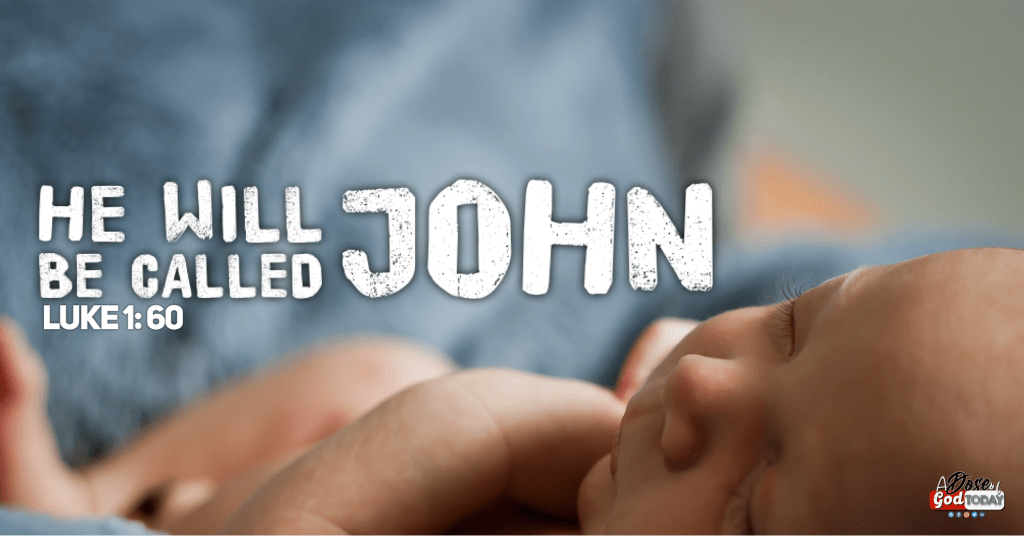
    June 23, 2022 – Solemnity of the Nativity of Saint John the Baptist

    Click here for the readings (https://bible.usccb.org/bible/readings/062322-day.cfm)

    Today we celebrate the birth of John the Baptist a very important figure in the New Testament. This is the reason why the Church celebrates with great dignity his birth. How significant was he then? The Lord promised to send a Messiah who will come to us in order to save us. But before the Messiah will come, a person shall be sent first to serve as a herald who will prepare God’s people for the coming of the Messiah. This herald will not only announce the coming of the Messiah but he too will lead the people to recognize who the Messiah is.

    In the prophecy of the Book of Isaiah, this person shall be a light of the nations because he will teach, lead and gather the people to see God.

    We have heard in the first reading how Isaiah described God calling his herald even before his birth. This herald has been named and appointed by God to lead his people. This is God’s promise to be first fulfilled through the participation of humanity, through us.

    Thus, the birth of John was announced to an old couple, Zechariah and Elizabeth who were believed to be barren and cursed. However, to the surprise of this old couple an angel announced that they will have a son.  Elizabeth welcomed the message from God, but her husband, because it was too much to believe could not accept God’s gift. That is why, Zechariah was silenced by God. He only recovered his voice when his son was born. It was when he gave the name John to his son that the Lord opened his mouth again because the Lord is gracious. Yes, the name John or Johannes means the Lord is gracious.

    The birth of John is God’s manifestation that He is indeed gracious and faithful despite our unbelief and doubts. God continues to reveal himself to us even though we refuse to believe.

    This was the role of John and that was to bring people again to believe that God has never abandoned us. God remembers and God is here with us. This brings us now into the theme of this fourth day of our Novena in honor of Our Mother of Perpetual Help (Feast to be celebrated on June 29 in Iloilo City): Mary walks! And yes, as Mary walks, God also walks. God walks because God remembers His people.

    Hence, when Mary heard the news from Angel Gabriel that Elizabeth was pregnant, Mary walked the road to the hill country of Judea in order to visit and help Elizabeth. Mary’s participation in the life of John the Baptist tells us how the Lord also walks with us in this life as Mary walks carrying Jesus in her womb.

    What does this tell us now? What is God’s invitation for us now? As John was born, God also reveals his graciousness in us. And as Mary walks to help Elizabeth in giving birth to John, Mary’s presence in the birth of John also tells us of a loving presence that is ready to accompany and to be there for us in times of our needs and sorrows, and also in times of our victory and joys.

    Thus, there are at least two invitations for us now on this Nativity of John the Baptist and 4th day of our Novena in honor Our Mother of Perpetual Help.

    First, to be gracious. As God reveals his graciousness through the birth of John, let us also be gracious and be kind to people around us. Expressing our graciousness or kindness to all reveals our heart that is grounded in love and filled with gratitude because God has truly worked wonders in our life.

    Second, we can also show our graciousness by allowing ourselves to walk with others. Life will surely be more colorful and uplifting despite the challenges we have, when we walk with friends.  When we allow others to walk with us and ourselves by being generous to walk with others too, it expresses not just our concern for one another but to be in solidarity with each one. And this is what Mary showed as she walked with graciousness in her heart. Kabay pa.