Category: Fr. Ramon Fruto, CSsR

  •  My ASSIGNMENT AS DAVAO PARISH PRIEST:  “Galloping Around the Barrios” 2002-2004

     My ASSIGNMENT AS DAVAO PARISH PRIEST:  “Galloping Around the Barrios” 2002-2004

    After having been unexpectedly and abruptly transferred to join the mission team in Tacloban, I was given another unexpected and sudden assignment as parish-priest of our parish in Davao. Again this was a change in venue and type of apostolate I was totally unprepared for. On top of this, it happened in the middle of the triennium (the usual three-year term).

    God must have smiled when He let our Council approve this assignment. Their decision was a response to a request made by Fr. Sean Purcell, then parish- priest of Davao. As Fr. Purcell put it:  he had been parish priest for 23 years and he was now 60 years of age. So, he wanted a change to a more restful and reflective assignment. He then suggested that in his place be assigned a “younger man that we could let loose to gallop around the barrios.”

    The “younger man’s” appointment “to gallop around the barrios” did not materialize. Instead the Council appointed me, one senior to Fr. Purcell in age by three years and in ordination by two years. My galloping around the barrios as the new parish priest of our Davao parish lasted two years (2002-2004) when I was again abruptly given another short-term appointment.

    Now at 71 years of age, I was appointed parish priest for the first time. At that time our Bajada (Davao) parish was a sprawling territory covering some 62 small chapel communities, spread out from the national highway in front of the church to the rural communities into interior villages from behind the church. Challenging as the task ahead might have seemed to me after Archbishop Capalla officially installed me as pastor of our Bajada parish, I started in my old age to learn to be parish-priest by doing. 

    Fortunately, by this time the struggle for “liberating” the parishioners of Buhangin area from their eviction the agitation for relocation had become a thing of the past. This is a story that is told in another article “The Buhangin Story”.

    When I started taking over the care of our Davao parish, I faced many challenges, but at the same time I was blessed inherited many blessings. I  had no full-time parish assistant. All the other priests in the community were engaged in formation or teaching  work in the Davao Studentate (Redemptorist Major Seminary). However, one of the formation teachers was officially assigned as my part-time assistant. The other priests on the teaching staff generously helped with the sacramental and liturgical services in the busy parish church. 

    It was a blessing that I had a good team of full-time lay parish workers. One or other of them would accompany and assist me as I made the rounds of the small chapel communities, driving the ADVENTURE ,  the reliable all-purpose parish vehicle.
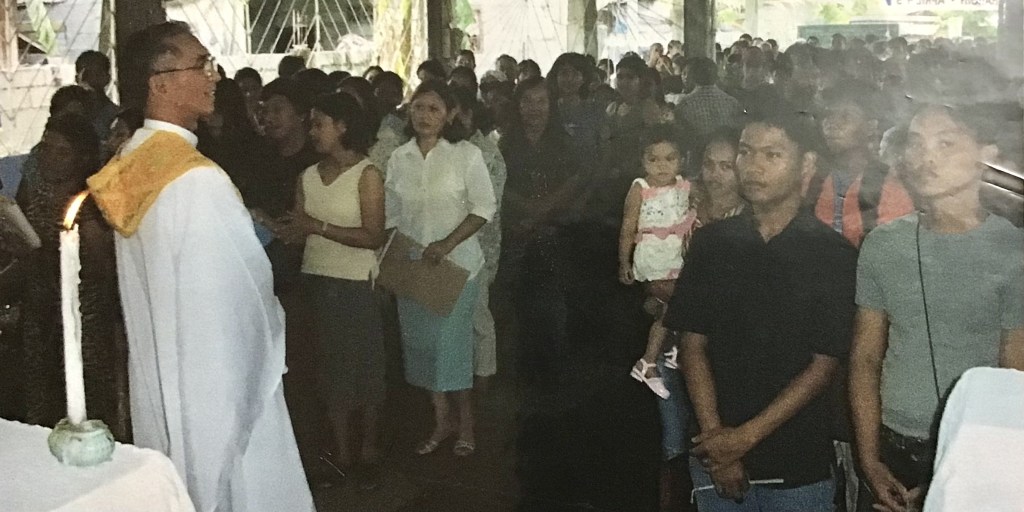
    I was also blessed in having inherited a very active parish, thanks to the creative and tireless efforts of the previous parish priests and their parish collaborators.  The parish was noted for its liturgical celebrations and social concerns ministry. Evangelization and catechetical activities kept the parish workers on their feet most of the time.

    The youth in particular were actively involved in parish life. They participated fully in National Youth Day celebrations and held parish Alphonsian Pilgrimage gatherings. Contests among the BEC youth groups included “Cheer-dance” and talent competitions.

    The youth revealed their talent in a special way in colorful and reflective liturgical celebrations of Christmas and Holy Week. These celebrations are memorialized in album pictorials of the Nativity and Passion plays.

    With all these activities to animate and accompany, this ageing parish priest was not given a chance to grow old! It did not take me long to not only adjust to but even to get to love my uncharted journey as parish priest in my twilight years.

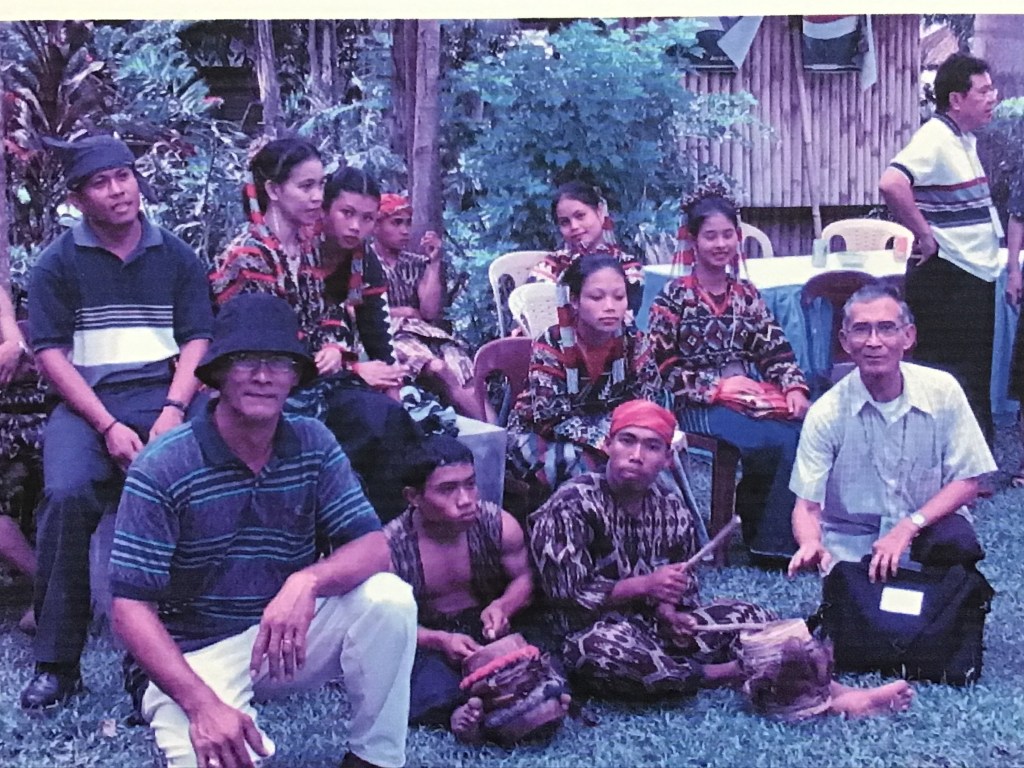
    But just as I was getting to feel at home in my assignment as parish priest of our Davao parish, I was shaken out of my comfort zone by a new appointment.  A phone call from Archbishop Capalla informed me that the Apostolic Nuncio was in the archbishop’s residence and wanted to speak to me. His Excellency, the Apostolic Nuncio, Archbishop Antonio Franco, after getting me to sit down in front of him, broke the news of my new appointment as gently as he could, saying, “I have come to ask you a favor in behalf of the Holy See.  The bishop of Iligan is resigning officially for ill-health and they are asking to take care of the diocese as its Apostolic Administrator until a new bishop is assigned. It was the last “favor” I would have dreamed of being asked no matter how gently.

    Thus ended without a formal goodbye my short two-year term as parish priest of our Davao parish. I  had to rush my entrance to Iligan as the outgoing bishop said he had no more jurisdictional power once I had been formally appointed as administrator of his diocese. So, in the evening the following day, I took the night bus to Iligan arriving there at dawn to begin my life in the uncharted life in the unknown.

    Thank God for the Tacloban hiatus, even though it was only for two short years. One never knows what lies ahead.

  • THE ASCENSION AND LEAVE-TAKING

    THE ASCENSION AND LEAVE-TAKING

    Three days that remain between the Ascension Feast and Pentecost Sunday. Before the curtain falls on the Ascension, we still linger on the drama of Jesus leave-taking, waving his last benediction before ascending to heaven. It is not difficult to imagine what the disciples must have felt then. It did not matter to them then that he had promised he would be back. What mattered now for them was that a moment ago he was standing before them and now he was gone. Their eyes followed him rising until he had disappeared behind the clouds. It took two angels from heaven to shake them from their reverie and rebuke them saying: “Men of Galilee, why do you stand here gazing up to heaven. This Jesus will come back…” The heavenly messengers reminded them to go back to Jerusalem because they had a job to do.

    As we reflect on this drama of leave-taking at the Ascension, we are led to ask how we ourselves deal with the inner pain of saying good bye. Whether we are the ones who leave or are the ones left behind, saying good bye to those we care for or who care for us will not be easy.  As air travel becomes so common, airports become scenes of touching goodbye dramas.

    As a writer, Bob Perks, shares his experience: yet I do see more than my share of airports.

    “I have great difficulties with saying goodbye….When faced with a challenge in my life I have been known to go to our local airport and watch people say goodbye. I figure nothing that is happening to me at the time could be as bad as having to say goodbye. Watching people cling to each other, crying, and holding each other in that last embrace makes me appreciate what I have even more. Seeing them finally pull apart, extending their arms until the tips of their fingers are the last to let go, is an image that stays forefront in my mind throughout the day.”

    A few faith-seasoned thoughts will help us cope with the drama of saying good bye.

    1. We have to accept in faith that we are a pilgrim people and that “we have here no lasting city but we seek the one that is to come.” (Heb 13:14).  So, we have to school ourselves to accept the separations and departures that are part of our life here on earth. At the same we have to keep our hearts strong, focused in hope for that city that is to come. In there, “God will wipe away every tear from their eyes.” (Rev. 7:17)
    2. While we are going through the pains of separation and departure, let us draw strength from the experience of Mary as the lifeless body of her son lay on her lap. She is called the Comforter of the Afflicted to help us bear our griefs with courage and peace.
    3. It will help us carry our sadness if we ourselves become instruments Christ’s comforting presence to those in need of comfort. This reminds me of an experience I had of faith sharing on a night bus in the US. As a woman fellow-passenger opened up her problems, her cheeks flooded with tears. She apologized for “baring her life with a complete stranger.” I offered her some words of comfort and faith and she calmed down. We parted ways after a short prayer on the bus. A few weeks later, I got a card from her saying she had found peace. Then she added briefly, with a remark that touched me deeply:  “I have tried as you said to become a living instrument of the presence of Christ to others.”  This she did, among other things, by giving comfort and first aid to elderly women passengers in an accident in the park where she was working as a guide and accompanying them to the hospital. To tend to them, she stayed in the hospital with them for a while, sharing her faith in Jesus with them. She also volunteered to work as teacher for the children of a poor neglected Indian tribe. Her ministry of faith and comfort provided her the peace that she had lost when she left a home where care was badly missing.

    On the human side, besides drawing strength from the wells of our faith to cope with the pains of departure and separation, we can:

    1. Draw comfort from the fact that not all our goodbye departures here on earth are permanent.  Our OFWs leave while the family left behind await their return for vacation in a couple of years. If the goodbye is made permanent by bereavement, it will be for those who remain to find comfort in their faith, as Martha the sister of the dead Lazarus was comforted by Jesus who said: “Whoever believes in me, even if he dies, will live forever and I will raise him up on the last day.”
    2. To keep alive the longing for the homecoming of the one who has left, regular communication between the one leaving and the one left behind, should be maintained. We live in an age of easy instant communication so there is no reason why the exchange of messages cannot be maintained. When this regular keeping in touch is not maintained, gradually the bonds between those who have left and those left at home is weakened, if not altogether severed.
    3. The pain of separation is assuaged by recalling the good things people separated by distance have shared in the past. This will help keep alive the hope that they can be together again sharing similar blessings.

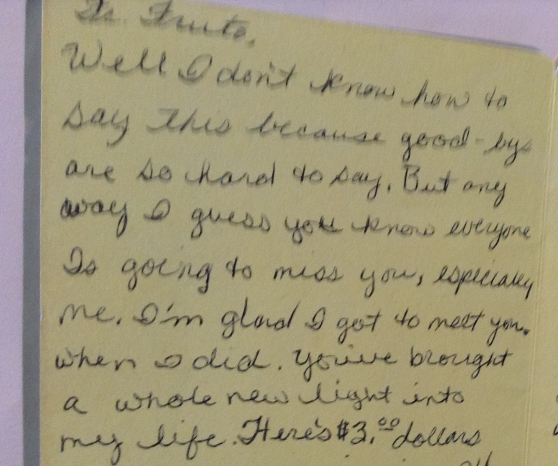
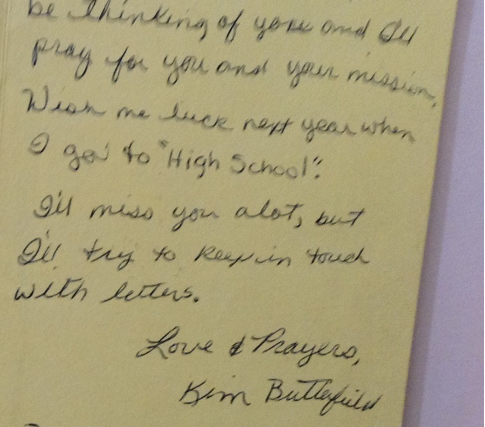
    (A personal note from a friend sent to me expressing her goodbye.)

    Here is a story shared by Bob Perks who has written above of the sad feelings that overwhelmed him when witnessing people saying goodbye to each other at airports.

                         Recently I overheard a father and daughter in their last moments together. They had announced her departure and standing near the security gate, they hugged and he said, “I love you. I wish you enough.” She in turn said, “Daddy, our life together has been more than enough. Your love is all I ever needed. I wish you enough, too, Daddy.”

                         They kissed and she left. He walked over toward the window where I was seated. Standing there I could see he wanted and needed to cry. I tried not to intrude on his privacy, but he welcomed me in by asking, “Did you ever say goodbye to someone knowing it would be forever?”

                         “Forgive me for asking, but why is this a forever goodbye?” I asked.

                         “I am old and she lives much too far away. I have challenges ahead and the reality is, the next trip back would be for my funeral,” he said.

                         “When you were saying goodbye I heard you say, “I wish you enough.” May I ask what that means?”

                         He began to smile. “That’s a wish that has been handed down from other generations. My parents used to say it to everyone.” He paused for a moment and looking up as if trying to remember it in detail, he smiled even more.” When we said ‘I wish you enough,’ we were wanting the other person to have a life filled with just enough good things to sustain them,” he continued and then turning toward me he shared the following as if he were reciting it from memory.

    “I wish you enough sun to keep your attitude bright.

    I wish you enough rain to appreciate the sun more. 

    I wish you enough happiness to keep your spirit alive.

    I wish you enough pain so that the smallest joys in life appear much bigger. 

    I wish you enough gain to satisfy your wanting. 

    I wish you enough loss to appreciate all that you possess.

    I wish enough “Hello’s” to get you through the final “Goodbye.”

    He then began to sob and walked away.

    When the Apostles left the hill of the Ascension transfixed gazing up to the clouds that had hidden their Lord,  Angels appeared reminding them that this Jesus would be coming back to them. This would have brought back to their benumbed minds the blessings of which they had had more than “enough” in the company of their Master. They returned with joy to Jerusalem where he would come to them. It did not dawn on them that he would not come in the same physical form that vanished from them at the Ascension. He would come to them in the person of the Holy Spirit. But they would deeply experience his presence fulfilling his promise “I am with you till the end of the ages.” They would go out into the world fired with Pentecostal zeal announcing the presence of their Risen Lord. This presence would mean that there is no “good bye forever” between the Lord and all who await his coming.

  • SOWING THE SEEDS OF BEC AND THE POSTULANCY PROGRAM

    SOWING THE SEEDS OF BEC AND THE POSTULANCY PROGRAM

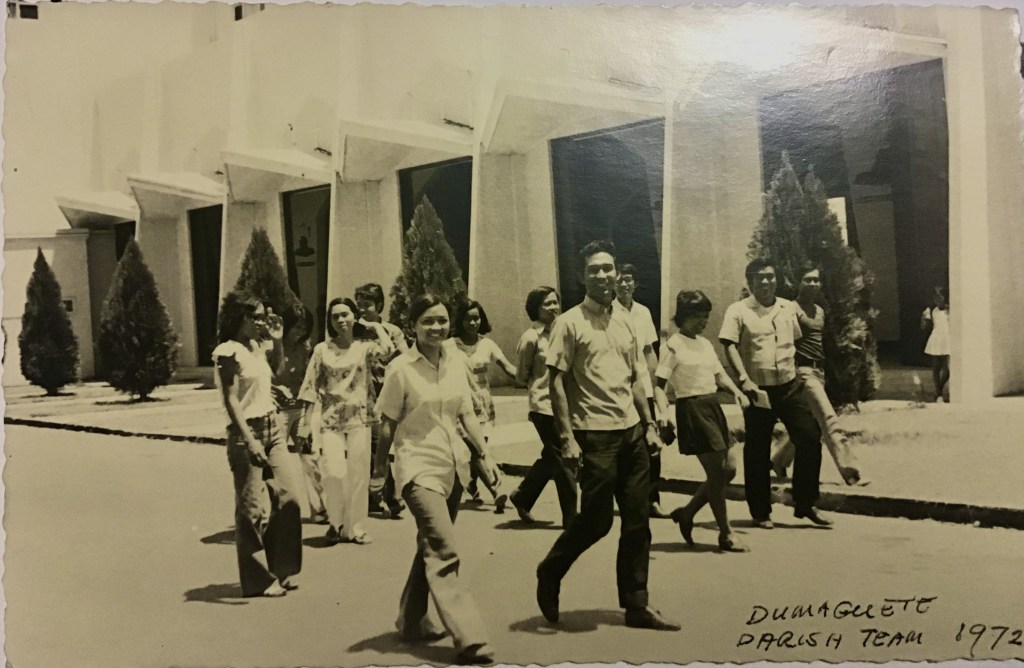
    It was in the summer of 1972 when the Ordinary Council assigned me to Dumaguete as assistant in our Perpetual Help parish after returning from  a year’s post-graduate course in Chicago. This short stint was an experience I welcomed, a change to active pastoral ministry after ten unbroken years as teacher and director in our minor seminaries in Iloilo and Cebu. The missions (Redemptorist parochial missions) was a ministry that had attracted me to the Redemptorist Congregation whose priests were popularly known as “mga Paring Misyon” although there were other foreign missionaries in the country. After just two years fully engaging in the parochial missions side by side with our Irish missionaries, I was without warning assigned to teach and then be director of our minor seminary. Teaching or directing minor seminaries was never my first love, although in time I got to adjust and even to live happily with the change. But still, any chance I got during the summer vacation,  I would go out and join the mission teams in the rural areas for direct involvement in their mission ministry.

    So when I got assigned as assistant in the parish in Dumaguete, it gave me breathing space from academic to pastoral work. While in this work I worked  with the parish team. This was a full time lay team newly recruited, the very first full-time lay team in the vice-province. (Note:  the first full-time lay collaborators team in the vice-province was here in the parish, contrary to the usual belief that it was with the missions that the first full-time lay team was organized.) When I arrived in Dumaguete, the acting parish priest, Fr. Fonso Walsh, upon my asking him what I was to do there, just said,” go with the parish team.”

    The team composed of three women and one lay man, was waiting for me and just didn’t know what to do with themselves. So, I suggested we go around the parish on a getting-to-know and getting to be known routine. We selected three pilot areas in barrio Pulantubig, which we called Zone 1, Zone 2 and Zone 3,to set up as the beginnings of small communities. At that time, the term BEC and its program in the local Church were hardly known. We started going house to house and started gathering them wherever we could gather them, since not all  these “small communities” had chapels. We started to move away from the traditional idea of just the parish priest visiting a barrio for mass and disappearing forthwith.  We spent all our waking hours visiting them in their homes, mission visitation style. When we met them in the designated meeting place, we had reflections and exercises for building up the community spirit. We had separate sessions with the youth who were more eager to be “organized”. We had no community masses until after some months, when a more cohesive spirit would have developed. The community liturgy got underway then.

    It was not ripe yet to start action for justice. That was to come later  At this time,  we focused more on developmental rather than liberational  community activities. We ourselves as Church pastoral workers were hardly touched by the challenge of the ministry for social justice.

    Limited as our knowledge and practice were to community –building and “developmental” orientation were, we continued our day-to-day pastoral ministry of house visitation and group reflections with the residents of the organized zones.

    Some five months after we started this community building work, our parish team got an unexpected boost from heaven: the entrance of three pre-novitiate candidates into our circle.

    This turn of events is a story unto itself. It happened when the vocation-director of the vice-province, Fr. Noel Bennet was looking around the vice-province for a community that would welcome these candidates into their midst until they were to enter the novitiate in a few months. Normally young men interested in becoming Redemptorist priests would be sent to our minor seminary in Cebu. But Fr. Noel felt that the three young men he had among the applicants would be too old to be sent to the minor seminary which was the formation program for mostly high school boys. The applicants Fr. Noel had on hand were either college graduates or under-graduates. The stage of formation for them would have been a “postulancy” program. But at that time, the vice-province did not have a postulancy program.

    So, Fr. Noel ended his search for a “home” for his candidates by leaving them in Dumaguete community with me as their guide or, in effect postulancy director, without being formally assigned.  I ended up being director to Jovencio (Ven) Ma, Wilfredo (Fred) Jundis and Jose (Joe) Roca. I would have them accompany me and the parish team in our community building apostolate in the three zones. At the same time, I would hold three sessions with them each week on learning about the Redemptorist life and tradition.

    We followed this informal program for more than three months. During these months, we were able to work together – the lay workers and these pre-novitiate candidates, together with the youth of the organized zones  who had become willing and active parish collaborators. The three young men, by being with us in our parish rounds day by day had developed a good rapport with the team and the parishioners. But more important was that the three pre-novitiate candidates had grown in the spirit of the Redemptorist missionaries.

    With all these active collaborators working with a team, our work proceeded fast. From the three organized zones, we had extended the community building work to four other zones: one more in Barrio Pulantubig, two in Barrio Bunao and one in Barrio Motong, these four new zones becoming Zones, 4, 5, 6, and 7. Our three pre-novitiate candidates and the parish team got eager help from the youth of the organized Zones

    Before long, the summer break would be upon us. It would be time for the three pre-novitiate candidates to start preparing for entrance to the novitiate. At the same time, I was also asked to take up a new assignment – as Prefect of Students (that is, of our major seminarians) in Davao.

    Two weeks before the summer break, we decided to hold a general mission in the seven organized zones.  The idea was to strengthen the spiritual-faith dimension of the community spirit that had been built up in the small communities in the organized zones. This would eventually be the nucleus of the BECs in the parish. The result of the ten months we had spent in building up the spirit of Christian community in the zones was an almost palpable feeling of family and community among the people, young and old, in the organized zones.

    The mission concluded with a field mass in the St. Paul’s College grounds in the morning and a program in the evening.  The youth and parents and lolas eagerly took part in it. Months after the mission, people would talk and reminisce nostalgically of those Pulantubig-Bunao-Motong days.

    Short as my assignment in Dumaguete parish was, lasting less than a year, I treasure my apostolic assignment there.

    First, even though I was no longer on a mission assignment there, I found that one can exercise a parish ministry as a mission just as those assigned on mission teams are doing. It was an experience that brought me as close to the common people as I had experienced on my mission assignments. It helped me work closely as mission partner with a lay team.

    Secondly, my Dumaguete experience re-introduced me to the formation ministry in a way different from my assignment in a minor seminary. Guiding the pre-novitiate candidates in their pre-novitiate preparation helped me give formation a missionary experience while at the same time keeping in touch with our Congregation’s spirit and tradition.

    Looking back on that assignment, I find that in those short months, we had sown the seeds of two programs; the BEC program and the postulancy program. In those days, the BEC “way of being Church”was hardly known in the local Church in the Visayas although the promoting of BEC was also starting in Mindanao and in some parts of Luzon.  On the other hand, the postulancy program would only become formally established in the then, Vice-Province of Cebu, after that Dumaguete experience.

    You never know what learning-surprises God has in store for you as you turn the next corner of your Redemptorist  journey.

  • FOUR FOR THE ROAD

    FOUR FOR THE ROAD

    Fr. Ramon Fruto, CSsR

    This is a reflection of Fr. Ramon Fruto, CSsR – He is currently based in Iloilo City and the Director of St. Clements’ Retreat House.

    Recall your ‘shrines’” was an exercise given us in a joint seminar on “elderhood” for us who belong to the senior and the golden age generations. To the outsider, this opening sentence at once asks for enlightenment. What is “elderhood” and what are the “shrines” we are asked to identify?

    “Elderhood” seems to be a more compassionate and sensitive way of saying “growing old, the same way that we are now asked to call “suspects” as “persons of interest”! Growing old used to be taken for granted and even with a sense of pride and mission accomplished. Growing old gracefully was a lesson all those who have crossed the 60-year line were expected to learn. But with today’s sensitiveness to cultures and subcultures, “growing old” is something that the “ageing” wish to varnish over the way we ageing males try to comb our hair so as to hide the balding patches of our pate and the ageing females undergo a “Dr. Belo” on their wrinkling cheeks. And so in the retreat-seminar for us ageing Redemptorists, we are asked to reflect on our answer to the reflection-question: What do you consider as your great challenge in growing into being elderly/”Elderhood”?  That is certainly a sensitive way of asking a question that could be put more brutally – and truthfully – as “What do you consider as your great problem in growing old? “ Then we would more truthfully answer: combing our hair which is no longer there, brushing our teeth which are not our own, forgetting where I placed my eye-glasses a few minutes ago, getting cantankerous at the slightest provocation, feeling forgotten and useless. Then we can talk about “growing old gracefully” and not euphemize it with “coping with elderhood”!

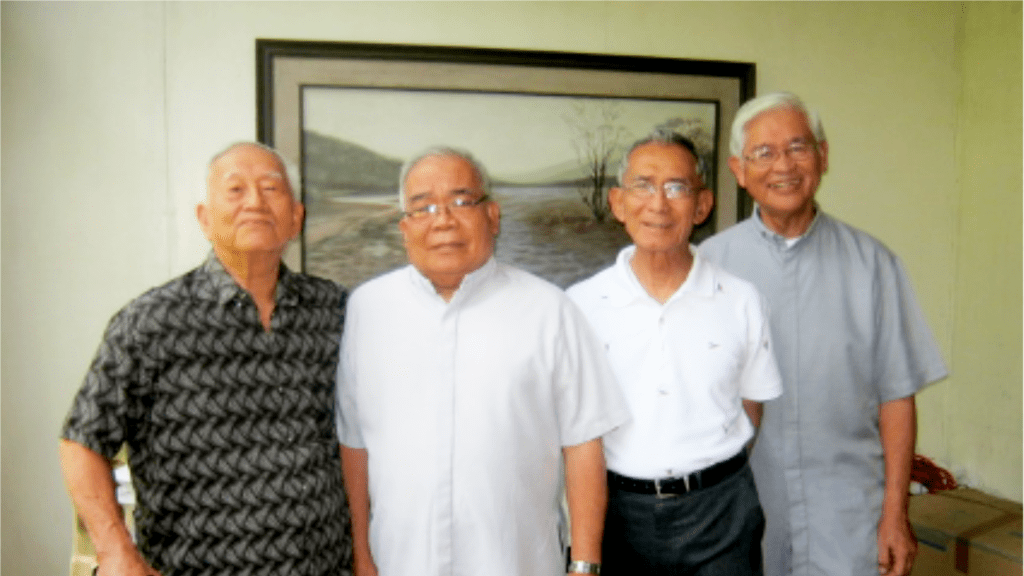
    Anyway, here are the four of us among the most elderly, if not THE most elderly among the ageing confreres of the Province. Hopefully we are able to face “growing old” with equal grace as facing the challenge of “elderhood”.  During our senior-golden agers’ seminar, one of the exercises we were given was to get in touch with the “shrines” of our life’s journey. By the “shrines” were meant experiences or events in our pilgrim journey that had an impact on our lives. The shrines varied in kind as our experiences were varied, and varied in number with the length of each one’s life’s journey. But the four of us portrayed here had one “shrine” in common: our life in Bangalore, India where the first batches of us Filipino Redemptorist vocations were sent for our studies in philosophy and theology. We made our groping way to India, the land of magic and mystery, after a novitiate in Cebu shared with the novices from the northern vice-province of Manila. To India, we winged our way not on jet airliners but on four-engined DC-6es. In the studentate in Bangalore, we lived in harmonious co-existence with Indian and Sri-lankan and Irish students. Asking for no special diet, we survived the years of Indian curry and learned to like it after getting over the initial conflagration of our palates. During our years there, we neither got to visit home nor got visitors from home. Long before the age of the internet and cell-phones, our only contact with our families was by an “air-form” letter once a month. Those of us who were ordained there were ordained without anyone representing our family. At my ordination I sent my blessing to my folks by telegram – in Latin! The only “exposure” to the outside world we were given a glimpse of was limited to the studentate house in Bangalore and the holiday house in the hills a train- and bus-ride away from Bangalore. The five-week holiday in the hills after each school year was something we all looked forward to. We took all this in stride because this was part of the life we had applied for without anyone forcing us to enter it. Processing was unknown to us, the only process we underwent was the once-a-month colloquium with our Prefect. Yet we lived in reasonable contentment, which was probably one reason we had little difficulty adjusting to different personalities and places and ministries of assignment in later life, and lasting longer in the active apostolate than expected in retirement years.

    Over the span of ten years, Cebu Vice-Province had sent to Bangalore a total of 9 newly-professed students. There was discussion among the Superiors as to where the Filipino students might be sent for their studies in philosophy and theology. There were three openings: Ireland, Australia and India. Back in 1925 a Cebuano student (John Corominas) was sent to Australia though he left after his first vows expired. In the end the decision was for India, the studentate in Bangalore then being conceived as a possible regional studentate for this part of Asia. So, with no other student before me to tell me what life in India was going to be, I was sent there alone in 1951,  before my 20th birthday, a raw, untraveled Filipino to a country I had only read about my school’s geography book as a land of mystery, of magicians and snake-charmers. When I arrived there the students stared at me as a nine-day wonder never having set eyes on this creature called a Filipino before. Later, they would share with me the questions making the rounds before I came: Does he speak English? Does he eat with chopsticks? Does he sit on his haunches? By the time the subsequent batches would arrive, they realized that we were as human as the rest of them. Despite the world’s impression of India as the home of the caste system, we felt as welcome as members of their family and in our years there, we learned to look on Bangalore as our second home.

    After my coming in 1951, Fernando Yusingco followed in 1952, Abdon Josol in 1956, the famous four (Louie Hechanova, Fil Suico, Willy Jesena, Ireneo Amantillo) in 1957, then the final batch of Juanito Caballero and Rudy Romano in 1958. The student professed after these two, Joelito Seyan, could not get a visa for India. His father was a citizen of Nationalist China and India only recognized Communist China. Consequently, Joelito was sent to Ireland, which started the sending of Filipino students to Ireland. All those sent to Bangalore reached ordination, though in later years some of them would leave the Congregation.

    The Banglore Survivors (Fr. Fil, the late-Bishop Ireneo, Fr. Ramon and Fr. Willy)

    The photograph here represents the survivors of the Bangalore “shrine” of the Filipinos. Five of the Bangalore-Filipinos have died: Fernando had left and died outside the Congregation, after doing monumental work on the missions and in community organizing among the depressed area population. Louie died as vice-provincial superior, Abdon went to his reward after years of service as a missioner, vice-provincial and provincial Superior and moral theology professor and formation director in our studentate in Davao. Rudy Romano, activist and defender of the oppressed and the poor has been unheard from since he was abducted and tortured by the intelligence agents of the martial law regime, and Juanito Caballero having left the congregation and served first as chaplain in the armed forces and later as officer in the martial law armed forces has since died.

    I asked the other three “golden agers” in the attached photo for a few words born of their reflection on the shrine of our pilgrimage that was Bangalore: Here are the gems coming from their memories:

    Bp. Amantillo (who died in 2018):  

    “To live in a country rather than your own, would make life so lonely, unappreciated and forlorn, but with the ‘ shake of the head  ‘and welcome of Tamilnadu, those glorious days, fifty years can never undo”.

    Fr. Fil Suico:

     “There is no death though eyes grow dim, there is no fear with your everlasting smile with me.”

    Fr. Willy Jesena:

    Looking back over 55 years of Redemptorist life, it is a great source of joy to me to recall the many blessings of our Holy Redeemer. I have engaged in parish mission work, retreats, parish apostolate, spiritual direction, migrant workers’ apostolate and formation work. I see thousands of faces of people who in one way or another I have served. It a great grace to be a servant of Jesus Christ for his own purpose, to touch the lives of people. I thank Mary who has always been a perpetual help and inspiration. I like to say to our seminarians: ‘Together let us face the future, and continue to accept the challenge of Jesus’ mission for the abandoned poor. Let us take the words of Pope Francis with enthusiasm: ‘Go, fear not, serve!’”

    For me:  summing up my fellow survivors’ golden journey, as we pause in prayerful reflection at this shared shrine of our Redemptorist pilgrimage, our Bangalore experience, these verses I have treasured from my high school days:

    “For yesterday was only a dream and tomorrow a vision, but today well lived  makes yesterday a dream of happiness and tomorrow a vision of hope.”

    From my pauses at my journey’s shrines, this brief reflection:

    HOPE  springs eternal in the heart that does not cease to dream.You might say that we old-timers past our golden of ordination are dreamers without end!!!