Category: Fr. Jom Baring, CSsR

  • WHEN GRUMBLING BECOMES A PATTERN

    WHEN GRUMBLING BECOMES A PATTERN

    July 21, 2021 – Wednesday 16th Week in Ordinary Time

    Click here for the readings (https://bible.usccb.org/bible/readings/072121.cfm)

    How difficult and annoying it will be to listen to a person who grumbles every now and then. It will truly be. It sucks out every positive energy and even inner joy to both, to the one who grumbles a lot and to the person who is forced to listen to a person’s endless grumbles.

    Moses and Aaron must have felt this as they listened to the many grumbles and complaints of the people. The people already complained to God because of their poverty and slavery in Egypt. When they were brought out of Egypt and were chased by Egyptians armies, they grumbled to Moses for taking them out of Egypt. When they were finally free and were in the desert, they started to complain to Moses and Aaron because there was no food. They said to Moses and Aaron that it was much better to die in Egypt but full than dying in the desert because of hunger.

    Certainly, the people must have complained also of the situation they were in. They must have grumbled for having no water, of the hot weather during the day, of the cold wind in the night, of the blisters on their feet, of the diseases they encountered on the road, of the insects and wild animals in the desert, of their neighbors and companions in that exodus.

    Indeed, there seemed to be a pattern of grumbles of the Israelites. They must have been blaming God because of the discomforts and difficulties they experienced. Yet, they completely forgot how God showed the divine power to bring a powerful nation to its knees in order to save them. God showed the might of divine justice to show to the oppressors the wrong they did to the poor. God made wonders for the people and faithfully journeyed with them as he has promised. But then, the hearts of the people were just filled with grumbles.

    We could have become like this too. When grumbling becomes our pattern, we could easily grumble of the food on our table, of the gift given to us, of the traffic caused by a motorist, of the long queue in a supermarket, of the smell of the person next to us, of the slow internet connection, of the delay of delivery of our online purchase, of the outfit of our friend, of the mistakes of our sibling or child, of the work of our colleague, of the actions of your spouse, of our recurring illness, etc. We could have endless grumblings.

    Our grumbles, like the Israelites, are not just because of what surrounds us or of our environment where we are at the moment. If the Israelites were not in the desert, they would still find something to complain about. This means, no matter how comfortable we are in life, a person can still find reasons to grumble.

    Our grumbles are rooted in our heart that has turned ungrateful. No matter how educated we are, or no matter how much money we have in the bank or influence we have in our organization or community, our heart can still be sick of grumbling because of our ingratitude and unawareness of God’s grace and tremendous presence in us.

    When this happens to us, we are truly plagued by this sickness of the heart that consumes us and brings us away from the grace of God.

    Yet, God does not want this to happen to us. God desires the ultimate fulfillment of our heart. This is the reason why God sent manna and quail for the Israelites. This act of grace from God was not meant to condone the people’s grumbling but to remind them of God’s graciousness. Later Moses kept two jars of those manna that remained fresh and free of spoil. This reminds the Israelites that God provides and God sustains us.

    This is the invitation for us today – to remind ourselves, to remember and be constantly aware of God’s graciousness and loving presence. Gratitude in our heart grows when we also learn to remember, to store God’s story with us and the many wonderful things God has done for us, in the memory of our heart.

    The Eucharist that we celebrate is an act of remembrance of Christ’s memory. As a community of faith, we make Christ ever alive in us. This means that the Eucharist is not a mere remembering of the distant past, but making Christ alive and present in this very moment, in the here and now.

    This is how we are also called to make alive our memory of God’s gracious actions in us through our actions and words that express gratitude. Let our hearts be filled with gratitude then, to free our heart from the spoil and disease of complaints and grumbles. Hinaut pa.

  • A LOVING AND REDEEMING PRESENCE

    A LOVING AND REDEEMING PRESENCE

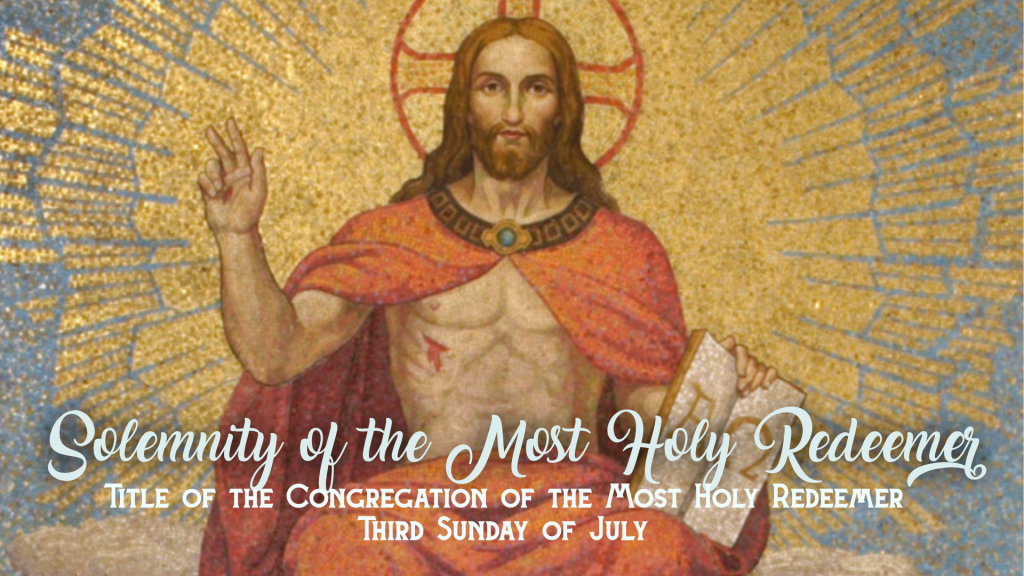
    July 18, 2021 – Solemnity of the Most Holy Redeemer

    Is 55:2b-6; Is 12:2-6; Rm 5:12-21; Jn 3:13-18,21

    How was your God-experience when you were a child?

    Certainly, each of us has our own experiences of God. Our God experiences and even image of God during our childhood would somehow paint the picture of God’s image as we grow older. Our early thoughts and ideas about God would somehow color also on how we relate with Him. Moreover, these thoughts and ideas were greatly influenced by our human experiences. How we were being brought up by our parents and adults around us will surely have an influence.

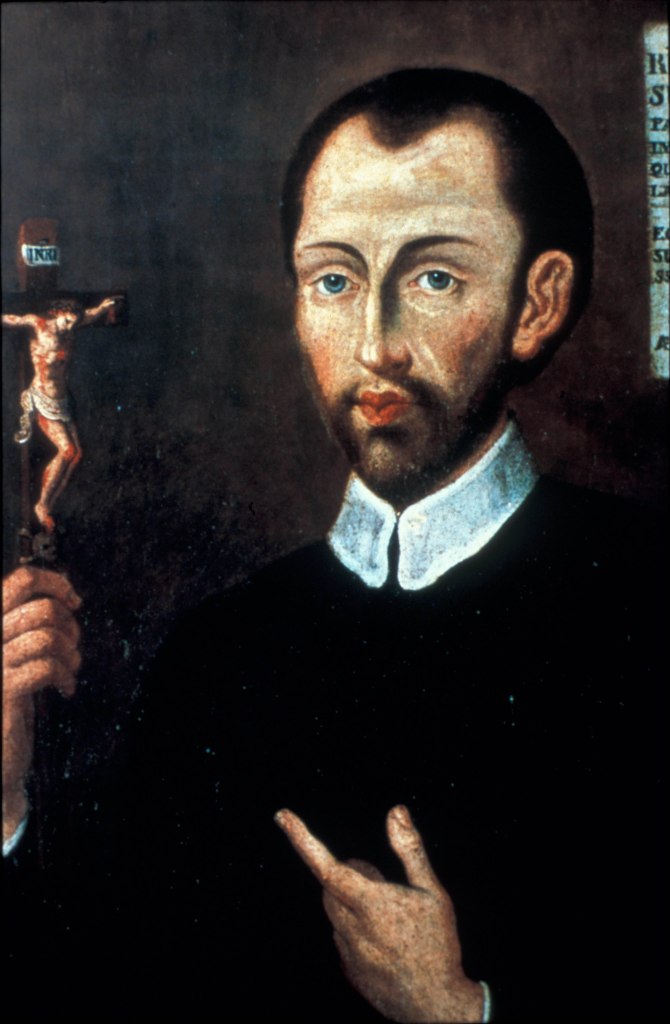
    In fact, this has been the personal experience of St. Alphonsus Ma. De Liguori, our holy founder of the Redemptorist Missionaries. As it was the culture and popular belief at that time, the young Alphonsus was introduced to a God who immediately would punish the sinner. God was believed to be too far and too high and remote. Yet, God was terrifying because God can put a person into eternal misery and damnation.

    St. Alphonsus Ma. de Liguori, Founder of the Redemptorists.

    This was in the consciousness of the young Alphonsus. Such belief in this kind of God was even reinforced because of his upbringing at home. His father who was a naval officer and a captain was a strict disciplinarian. One would just expect that Alphonsus must have been terrified by his father. If Alphonsus would commit any mistake, surely, Alphonsus would receive beatings or insults from his father.

    No wonder, Alphonsus became a scrupulous person who was overly concerned that something he thought or did might have been a sin. In modern language, Alphonsus could have suffered OCD or Obsessive Compulsive Disorder. Alphonsus was always terrified that he might have done something wrong, that he might have sinned and will be damned to the point that his guilt would haunt him.

    However, later on, slowly Alphonsus realized God’s true character. Experiences would actually tell him that God is kind and generous, loving and forgiving. Alphonsus felt this as he allowed himself to be at the service of the poor and the sick. This realization of Alphonsus was the very reason of the name of our congregation, the Congregation of the Most Holy Redeemer.

    Christ and his loving and redeeming presence and action brings out God’s true character. God does not condemn. God does not desire our death and eternal misery. God rather desires life that is free and filled with joy for us.

    This is the very message that Alphonsus preached, wrote and sang about that Jesus redeems us and liberates us from sin and death and to whatever that makes us miserable and lifeless. And this is God’s initiative because it is God’s desire.

    Our first reading and Psalm proclaimed about this. The first reading told us how Yahweh made an everlasting covenant with His chosen people. God makes the initiative to relate to us in love. Our Psalm reminds us about the faithfulness of God that we should rather not fear God but trust Him because God is our strength.

    This revelation tells us that God does not threaten us with God’s power to punish and bring us to eternal death. God rather related with us in the most personal and intimate way. This is what we affirm as we celebrate the Solemnity of the Most Holy Redeemer.

    The scriptures tell us that the God who created the world is a God who hears the cry of the poor and the entire creation. This God is neither apart nor alien to us but a God who is near and close to us. Our God is not “somewhere out there” but rather “here with us” who tirelessly journeys and lives with us from the beginning.

    Thus, despite our sinfulness, stupidity, and unfaithfulness, God never surrenders on us. St. Paul proclaimed in his letter to the Romans, “where sin increased, grace abounded all the more.”

    This is how the Gospel reminds us too that God “so loved” the world that he gave his only Son. In our pains and struggles in life, God stays with us. With Jesus, God walks and speaks to us. God even laughs with us and cries with us and to the point of suffering and dying for us.

    See, though God is almighty and all-powerful but God never threatened us with His power of control and dominance. God builds intimate friendship with us, showing care and compassion, offering healing and salvation.

    Hence, this feast of the Holy Redeemer is all about that relationship with a God who desires to be with us and to share life with Him.

    This is how we are invited to grow today – that we too will also live in friendship with others, by showing concern and love, offering healing and peace.

    We have to be watchful then, when we gain power over others and will tend to exercise control and dominance over them. With this tendency, we will be inclined to abuse the weak and that instead of building bridges, we build walls, instead of developing friendship, we promote fear. As a result, we will become indifferent to the struggles of others and intolerant to the mistakes of those who are around us. This is not what God wants us to be.

    God wants us to make friends, to show our affection and concern in the way Jesus makes us his friends so that we too shall learn to become individuals and a community with a loving and redeeming presence. Hinaut pa.

  • GOD OFFERS US FRIENDSHIP

    GOD OFFERS US FRIENDSHIP

    July 15, 2021 – Thursday 15th Week in Ordinary Time

    Click here for the readings (https://bible.usccb.org/bible/readings/071521.cfm)

    I AM who am is God’s name given to Moses. This name reveals to us that God remains present, sees and listens to the present situation of the people. Indeed, God’s name and presence expressed God’s concern. Moses was told by the Lord, “I am concerned about you and about the way you are being treated in Egypt.

    This tells us that God is neither indifferent nor too far from us to care about us nor too high to reach. In fact, it is God who continually reaches us and desires for our liberation and salvation. This is how God shows his faithfulness in the covenant that God created with us. God never forgets. God remembers us all the time.

    This is the care and affection that we have heard from the Gospel today. Jesus offers us his friendship that gives support and company. Jesus expressed this in two points.

    First, “Come to me, all you who labor and are burdened and I will give you rest.” This tells us of God’s initiative and willingness to suffer on our behalf. Thus, dying on the cross to spare us from eternal damnation.

    Second, “Take my yoke upon you and learn from me.” This tells us of Jesus’ desire to accompany us, to be our friend to whom we can share our burdens and struggles. In this friendship, we shall find comfort and rest.

    These are also the invitations for us today – to come and welcome the Lord’s presence always and to accept his offer of friendship. As we learn Jesus’ way of loving, we may also learn to become a friend to people around us who shall also offer our presence and affection, understanding and love. Hinaut pa.

  • PROPHETS IN OUR MIDST

    PROPHETS IN OUR MIDST

    July 11, 2021 – 15th Sunday in Ordinary Time

    Click here for the readings (https://bible.usccb.org/bible/readings/071121.cfm)

    Being rejected is a terrible experience. When someone you love, a friend or family member rejects you for being who you are and for what you have done, is painful. This experience creates emptiness in us and feelings of not being loved and not being accepted. This makes us feel worthless and useless, thus, traumatic. This can also be experienced in workplaces when a co-worker and/or your employer gets angry at you and shows sour attitude towards you. Or when your work has been rejected or a proposal has not been approved because of their biases with you.

    In our community, there are many forms of rejection also that sometimes we are not aware of. We could just reject those whom we think are useless. We could easily not pay attention to those who do not belong in our circle of friends. We could just dismiss a person just because of appearance, education, family background or culture.

    Moreover, there is another form of rejection also that can be traced in the Bible. This is the rejection experienced by people who spoke in behalf of God, who preached and taught what God wanted for the community. Prophets are usually rejected by people because their words and presence disturb the peace and comfort of the rich and the powerful.

    This is what our first reading from the Book of Amos told us. Amos was rejected by Amaziah, the priest of Bethel because Amos was prophesying the destruction of the Northern Kingdom of Israel. Amos prophesied this by also pointing out the reasons behind. The Northern Kingdom who enjoyed prosperity and abundance also turned out to be oppressive to the poor and the weak in their society. Thus, Amos spoke of the injustice committed by the rich and the powerful against the poor.

    Consequently, Amos irked the Amaziah who enjoyed influence and wealth from this kind of life. That is why, Amaziah wanted Amos to go back to Judah, the Southern Kingdom and do his prophesying there while earning income. For Amaziah, being a priest of the temple and being a prophet was just about earning something and enjoying privileges.

    However, being a true priest or a prophet is not about earning something or enjoying the comfort of wealth and influence. A prophet is God’s voice that penetrates the heart of every man and woman, that penetrates and disturbs the heart of the community that has become indifferent and complacent, unjust and oppressive.

    That is why, Amos who was a shepherd was called by the Lord to speak on God’s behalf and deliver God’s message. He was commanded to “Go, prophesy to my people, Israel.” Though he did not come from a family of priests or from a lineage of prophets, yet, God chose him. Being God’s prophet after all is not about what we have attained or achieved and not about an excellent family background.

    This is what the Gospel of Mark also revealed to us. Jesus sent out the twelve Apostles, two by two, whom he chose. These men where not from any family background that one would expect. Yet, Jesus saw something beyond the ordinary life of these men. This was how God worked wonders in them. And thus, Jesus gave them authority to free people burdened and oppressed by the unclean or evil spirit and to cure the sick. This means that they have been given the gift to heal and free people.

    However, they have “to take nothing” for the journey. This calls every Apostle to fully trust in God’s providence expressed through the generosity of the people around them. To take nothing for the journey will allow them to be free from any unnecessary burden whether physical, material, psychological or spiritual.

    Yet, as they proclaim peace and grant blessing to many homes, it is expected that not all will accept. Rejection is part of life of a preacher and of a prophet who proclaims what God wants to be proclaimed. People won’t easily accept God’s invitation and God’s presence.

    And the reason? God demands change or transformation of our heart and of our whole life.

    Change can be thought by many of us as a mere “disturbance” to what we have already become comfortable and familiar. But then, the danger of complacency and indifference could grip our hearts to the point that we become unmoved in from of the suffering of those around us.

    This reminds us of the life of Fr. Rudy Romano, CSsR, a Redemptorist Missionary who spoke about the crimes of injustices committed against the poor in Cebu. His voice and presence became a “disturbance” to the powerful, the rich and the privileged. Like Amos and many prophets in the Holy Scripture, he too was rejected and martyred. He was even told by his own father to only focus on his sacramental duties as a priest. But, Fr. Rudy responded to his Dad’s letter, that he won’t be a worthy priest anymore if he would follow his father’s advice.

    Fr. Rudy chose to stand with the oppressed and committed himself to speak what God wants him to speak and to live the life of a prophet as God called him to be.

    In consequence, Fr. Rudy was abducted on this day, July 11, in 1985 in Cebu City. For the past 36 years, his body was never been found. Such is the fate of a prophet yet relentless in his words and eternal is his spirit.

    The confidence and the faith that Fr. Rudy showed must have been what St. Paul spoke about in his letter to the Ephesians. Paul proclaimed that God the Father blessed us with every spiritual blessing and this was made possible because of His Son, Jesus Christ our Lord.

    These spiritual blessings must have grown in the heart of Fr. Rudy. These spiritual blessings which St. Paul proclaimed are the grace of being chosen by God, the grace to be holy and without blemish, the grace of being an adopted child of God, the gift of redemption and freedom, the gift of forgiveness of sins and the grace to share in the mystery of God.

    For us today, each of us, regardless of our background or profession or achievements and failures in life is called to be God’s prophet in the bigger picture of our society and even within our small sphere of influence like our homes, schools, workplaces or organizations.

    As a prophet shall arose in our midst, hopefully, we too shall welcome now and learn to discern the words and the presence of the prophet among us whoever he or she may be. May the prophet’s voice and life disturb our complacency and indifference.

    Let our conscience then, be guided also by our faith in God, be inspired by love and be moved by our hope to bring change and transformation into our life and in our community that will bring healing and freedom. Hinaut pa.

  • TO BE HELPED AND TO BE OF HELP

    TO BE HELPED AND TO BE OF HELP

    July 8, 2021 – Thursday 14th Week in Ordinary Time

    Click here for the readings (https://bible.usccb.org/bible/readings/070821.cfm)

    Days before the departure for our Parish Mission in Balabagan, Lanao del Sur, I made sure that all I need were in my ‘bags’. I doubled checked my things to be sure that I have not forgotten anything. My bags were full and heavy as I loaded them into our mission vehicle. When I arrived in the area, I realized that I brought a lot of useless things.

    At home and at school, I was trained to be prepared and self-sufficient. Hence, it became natural to me to make myself ready, prepared for anything to happen, and independent.

    Yet, Jesus reminded his Apostles to bring what was only most essential as they were sent to cure the illnesses of the people, to bring life and forgiveness, to bring blessing and peace to many homes.

    I find this quite harsh and truly difficult. However, there is wisdom behind the words of Jesus. Our desire to be prepared, to be independent and self-sufficient would sometimes come from our deep anxiety of what would come next.

    But what if a circumstance would not allow us to have any preparation? What if an event would surprisingly come and we have nothing to bring but go ahead with nothing? Surely, this will make us insecure and helpless.

    This reminds me of Joseph who was stripped of anything he had. He was sold as a slave to the Egyptians by his own brothers. He was seduced by the wife of his master and then, imprisoned unjustly. He was forgotten in the prison for 13 years.

    Nonetheless, Joseph remained faithful and trustful to God despite those terrible and horrible events in the life. Joseph remained calm and discerning as a person. As Joseph had nothing with him in his journey to Egypt as a slave, Joseph also did not hold any grudges and bitterness in his heart. He did not let his anger, resentment and hatred to burden and overpower him and prevent him from discovering and doing what God prepared for him. This is how Joseph found himself to be the savior of his own family and of many peoples when famine hit the world. God prepared him for this so that in Joseph, forgiveness shall be granted and life shall be given.

    Jesus invites us today also, as he urged also his disciples in the Gospel, to take what is most essential in life by having a childlike trust in the providence of God. We are called to get rid of our unnecessary baggage behind whether physical, emotional, psychological or spiritual so that we will be able to welcome the goodness of God through other people.

    This is the reason why Jesus told the Apostles not bring anything so that they too will be able to welcome the generosity of God through the generosity of the people. Joseph was also grateful for those people who helped him and especially to the Pharaoh who gave him freedom and responsibility to bring life to many peoples.

    Let us allow ourselves then, to be helped by others. In return, let us also allow ourselves to be of help to those who are in need so that through us, God’s generosity will overflow. In this way, we shall be able to bring healing, life, forgiveness and peace into our homes and communities. Hinaut pa.