Judas sold his friend and teacher. The Gospel recounts to us that one of Jesus’ close friends sold him to the chief priests. Why would Judas do that to the person who only showed kindness and generosity to him and to the people?
Judas though, was chosen to be one of the close friends of Jesus and disciples had these two attitudes that motivated him to betray the Lord and to sell him for thirty pieces of silver.
First, Judas never believed that Jesus is the Lord and the Messiah, the Son of God who is sent into the world to redeem the world and save the people from their sins and evil ways. Judas never believed in Jesus but only thought that Jesus was a mere teacher. Thus, Judas never called Jesus as Lord but only Rabbi, which means teacher.
Second, Judas did not have a close, personal and intimate relationship with Jesus. Because Judas never believed in Jesus as Lord, it also followed that Judas had never developed that close relationship with the Lord. Judas actually failed to build true friendship with Jesus and so failed to recognize God in Jesus.
These attitudes of Judas may also be present in us. When we do not believe or refuse to believe in Jesus as our Savior and Lord, who has come to love and forgive us, then, we too shall have the difficulty of not being able to build a personal relationship with God. Failure to recognize God in our life leads us to an estrange relationship with God.
This is also true with our human relationships. Failure to believe in the person, to a friend, to your beloved, to your husband, or wife or child will lead us to a distanced relationship. This failure in knowing the person and building personal and intimate relationship with the person will lead us to easily discard the person. It will be easy for us to hurt them, to cause them pain, to cheat on them, to betray them, to leave and abandon them – because after all, we are never committed in that relationship.
Thus, we are called rather now to know better the person that we are in relationship with, our friends, our beloved and all those people around us because it is in knowing them that we also come to recognize their importance and believe in them. And again, this shall also move us to commit ourselves in that relationship by developing a close and intimate relationship with others and with God.
May Our Mother of Perpetual Help guide and inspire us in our relationships and to truly believe in Jesus and to build personal and intimate relationship with him. Kabay pa.
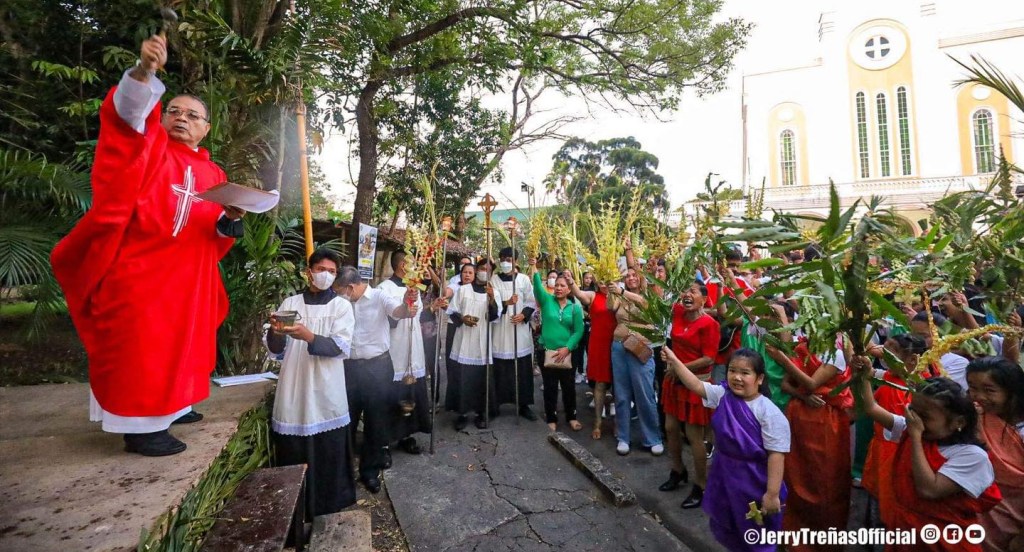
On this Palm Sunday of the Lord’s Passion, we blessed our palms to remind us of Jesus’ triumphant entry in Jerusalem, only to be handed over to death. He was arrested, tortured, abused and humiliated, carried his own cross to Calvary, crucified while onlookers waited for him to die hanging on that cross. The palms that symbolized Jesus, revered to be king, but riding on a donkey, culminated in that shameful and painful death on the cross.
Thus, as we enter the Holy Week and being reminded fn the story of the suffering and death of Jesus, there are three invitations that I would like to share with you today. These three invitations will hopefully guide us in our journey in life with Jesus.
First, REMEMBERING. To remember a painful memory is not easy. When we do this even with our painful memories in the past, of the trauma, shame and guilt that happened to us, we feel discomfort. Some may even try to escape to forget that painful memory. Yet, this is what we do now as we remember, recall and recover the story of Jesus who after preaching to the people the Kingdom of God and making difference into lives of the distressed, the sick, the lonely, the sinners and abandoned, was being betrayed by his own disciple, denied by a friend, and left alone on the cross.
In our remembering, we honor the pain, the shame and the guilt that surround in the story of Jesus as well as in our own stories. As Jesus struggled to find meaning in his suffering as expressed in his words, “My God, my God, why have you abandoned me?” let us also find meaning and God’s presence in our own painful and shameful stories.
Despite the pain and the seemingly absentee-God as we face our own suffering as individuals and as a people, let us also allow the Spirit to bring us further in this journey. This is the second invitation.
The second is RECONNECTING. In remembering the passion and death of Jesus it also allows us to remember our own stories, we may realize how far we gone away from our painful past. In our attempt to forget, cover and bury what was shameful and filled with guilt, we could have pretend as if nothing was wrong or nothing happened.
We let the words of Prophet Isaiah be our prayer, “Morning after morning, he opens my ear that I may hear,” so that we may be able to listen well to the voice of God speaking within us and through our human experiences. As we reconnect with the past, we also reconnect with our emotions that may still be overwhelming for us. We reconnect with ourselves and find our re-connection with God who has been with us all along even in our darkest moments in life.
Photo from JerryTreñasOfficial Facebook
In reconnecting, we bring our heart and mind into prayer, into contemplation even when we are faced with difficult life experiences and situations that may be challenging to comprehend. In prayer and contemplation, we give ourselves to God just as Jesus gave up his spirit to the Father. This is where we are called to grow in our confidence and faith in the Lord who promised to be with us always and who shall never ever leave our side. And this confidence brings us into the third invitation.
The third is RESPONDING. Jesus even at his death proved that God’s power of love and mercy outdone human sin and death. Even in death, Jesus responded to bring life and freedom. The Gospel described that “the veil in the sanctuary of the Temple was torn into two from top to bottom. The earth quaked, rocks were split, tombs were opened, and the bodies of many saints who had fallen asleep were raised.” This was how the death of Jesus made the heaven opened for all and brought hope to the dead.
Hence, as we remember and reconnect, let our heart be filled with God’s presence to empower us by finding healing and freedom, life and renewal. This only means that we won’t allow any painful or shameful memory to dampen our spirit into hiding and pretensions. Do not settle to seek temporary comforts but rather go beyond and seek the Lord. The Lord desires our reconciliation and healing and so let us embrace that grace offered by the Lord to us, as Jesus gave up his spirit for us.
To respond then, is to be able to get out beyond ourselves and become life-giving, spirit-inspiring and heart-renewing. Kabay pa.
Who among us here who have not yet felt or experienced disappointment? Or a failure or a heartbreak? Well, definitely, most of us have these experiences in one way or another. There might be some of us who have also experienced being humiliated, oppressed or abused. Or perhaps who are ill at the moment, or in trouble at work, perhaps lost a job, failure in business or failure in a relationship or having an overwhelming family problem, or who are in great sorrow for losing a loved one.
These realities cause a person to suffer and make our day turn into darkness, our bright tomorrow into hopelessness and our life bitter and horrible. This was the case of Nanay Celia whom I met in Cebu City when I was in the college seminary. She suffered and died of breast cancer. But before she died I had a deep conversation with her. She shared that her husband left her for another woman. When she got sick and she was completely abandoned. She was all alone. She began to be angry with everything and everyone. She got angry with God and cursed God for such suffering she endured. Life was so bitter. She wanted to end everything because she was hopeless.
Yet, not until a group of missionary sisters found her in her house. She was brought to the sisters’ institution. It was in that institution that I met her. She knew that she was about to die but before she died, something changed. The darkness of being abandoned turned into light. Her hopeless life turned into a life filled with hope. Her anger, disappointment and loneliness were all gone because she found love, acceptance and forgiveness through the sisters.
This story is not far from our readings today that concretely portray to us these human realities of failure, disappointment, heartbreak, doubts, and even of being helpless and hopeless. This was how the people of Israel felt at the time of Prophet Ezekiel. The Hebrews were exiled. They were in a land they did not know, where there was no Temple and no God. As a people they were humiliated by their foreign captors. They had no identity and were doubtful of God’s presence in their life.
The same expression was presented to us in the psalms. “Out of the depths I cry to you, O Lord: Lord, hear my voice!” It is a lament of a person who is in great misery, who felt that God seemed to be deaf of his/her pleas, who felt of a God who seemed so indifferent to his horrible situation.
This is what we find also in the Gospel. Martha and Mary, the sisters of Lazarus, were in great misery. They were inconsolable and heartbroken over the death of their brother. That is why Martha, in her sorrow said to Jesus, “Lord, if you had been here, my brother would not have died…” It was a statement of disappointment and even of anger. It was actually a statement of blaming God for not doing anything.
But our readings also today reveal something very important to us. The Book of the Prophet Ezekiel conveys God’s promise of salvation where the Lord shall open the graves and shall have them rise as a people and will be restored to their homeland, Israel. This is entirely connected to our psalm that says, “With the Lord, there is mercy and fullness of redemption.” It means that God is indeed faithful to his promise, he is faithful to the covenant. God will never betray us. The Lord will never abandon us because God is forever with us and for us.
These characteristics of God are most evident in our Gospel. Jesus reveals to us, not just to Martha and Mary but also to you and to me today, that God is never indifferent to our misery, to our feelings. Jesus reveals to us that he is a loving God and a merciful God. He is a God who feels like us who also feels lonely, feels afraid and even worried, anxious and sad. Yes, in the Gospel Jesus was described twice to have been perturbed. He was distressed and troubled because something happened to his dear friend Lazarus. And when he saw the dead Lazarus lying on the grave, (what happened to Jesus?), Jesus wept! He cried like us. He feels sad and in grief like you and me.
What does that mean now? It means that our God is not a God who is so far away who cannot hear our cries or deaf to our prayers. God is not indifferent to our suffering, to our questions and doubts. God understands how it is to lose a loved one, or even to be humiliated, to be lonely and alone. God cries with us when we too are in deep trouble.
This shows, then, the immensity and the greatness of God’s love for you and me. Jesus prayed to the Father to bring Lazarus back to life. Jesus cried out in a loud voice, “Lazarus, come out!” What do these words mean to us now? Jesus also wants us to come out from our own graves. That we too will be healed from our own experiences of pain, bitterness, hopelessness and loneliness where we too seemed to be lifeless in many ways, as expressed in our relationships with others. Coming out from our own graves also means being freed from our own selfishness, arrogance and sins that come in many forms.
We will only be able to come out from our own graves and lifeless situations when we become like the sister of Lazarus, Martha. Jesus asked her, “Do you believe that I can bring your brother back to life?” Mary indeed believed. Each of us is being asked by Jesus, “Do you believe in me? That I am the resurrection and the life?” It is only when we come to realize and believe in the goodness and love of God that God also works wonders in us.
It is only when we come to believe that God is the author of life that we will also value more our life and the lives of others. It is only when we come to believe that God is the God of our life, that we also see the many good things we enjoy in this life despite the many difficulties and hardships we encounter. When we truly believe that God is the resurrection and the life, that we begin to become true Christians who see light in the midst of darkness, who find joy in the midst of sorrow, who capture a smile in the midst of pain, who embrace hope in the midst of impossibility, who find healing in the midst of so much sickness and who find life in death. Kabay pa.
Each of us has a father. Biologically, we need a father and a mother for a child is only born out of a male and female. As we grow up, we have different experiences with our parents and with our fathers especially. Not all of us have experienced a very good father who spends enough time to be with us, who will support us constantly as a child.
Some of us even may have painful memories particularly when we talk about experiences with our fathers. Others might have actually experienced being abandoned by their father that caused them pain. Others might have fathers who were always away because of work that made a deep longing of their father’s presence. Others might have experienced also with a father who was abusive and irresponsible giving them deep emotional wound.
Unconsciously, our experiences with our father has a connection on how we relate with God whom we believe as a Father to us. If we have a very good experience with our biological father, then, it might be easy for us to believe in a loving and merciful Father in heaven. However, if we have painful and traumatic experiences with our biological father then, sometimes that create doubts and hesitations to truly believe in God the Father who is loving and forgiving.
Personally, though my father was indeed responsible, he too was quite strict when I was growing up. That experience of mine was carried on as I related with God. I too believed that God was like my father who was very strict. I should always be a good boy or else I will be punished. This means that our own experiences especially our negative and painful experiences with our fathers can sometimes prevent us to recognize God’s true character as a father to us.
It is good for us, then, to reflect on the readings today as they reveal God’s true character as a parent to us.
The Book of Isaiah tells us about a God who is so passionate about us. Isaiah tells us that God is like a parent who brings comfort to us, who is there to flatten the mountains so that life won’t be too difficult for us. Isaiah uses the image of a mother who carries her baby in the womb. A mother is always connected with her baby. However, a mother may forget about her baby but God will never forget us. God remembers us because God always carries us.
This confidence to a loving and passionate God is expressed in today’s Gospel. Jesus tells us about how he loves his Father so much. Jesus shows his affection to the Father who will never leave him alone. This expression of Jesus is just a confirmation of that passion of God the Father to Jesus.
Thus, this is the invitation for us today as revealed in the scriptures. Though we might have painful experiences with our own Fathers or mothers or with those who became our parents in the absence of our biological parents, the readings call us to be confident in God as a loving parent to us.
Just like Jesus, let us take confidence in God who is both a Loving Father and Mother to us, who promised to be with us, who will never leave us and will always be there for us. This is how God is so passionate to you and to me. We may come to believe in this.
When we ourselves are parents or standing as a foster parent to a child, may our parenting be an image of God’s unconditional love to that child and to our whole family. Kabay pa.
Kyle (not his real name) seemed to be so kind and warmhearted around his friends. He would always be there when someone would be in need of help. He was always filled with smiles. He was generous of his resources and time. Yet, he also tended to just please everyone around but very afraid of any conflict and tension. As a result, his pleasing personality would turn to become submissive to his friends and family members.
Deep within, Kyle was filled with insecurities and fear of being left alone and abandoned by people whom he valued. Kyle, at a very young age was abandoned by his mother and left by his father at the care of their relatives. Kyle grew up believing that he has to earn the love of people around him so that he would never be lonely and alone again. This was the reason why Kyle would do anything, overly pleasing his friends, earn their approval and acceptance and as much as possible cling on them. However, his goodness and kindness, his very person was easily abused by opportunists.
Kyle actually experienced a deep longing of love and acceptance because of an emptiness in his heart caused by that deprivation in the past. This is, indeed, a form of thirst, emotionally and spiritually. His ways, beliefs, attitudes and relationships followed the pattern of “people-pleasing” because he was in search of fulfillment, to quench that emptiness within. Yet, because he did not know at that time, what and why he was doing such things, he too experienced more hurts and pains.
Like Kyle, we too might have our own thirsts and ways of quenching those thirsts for love and acceptance, for healing and reconciliation, for independence and freedom, for justice and peace. And so, on this Third Sunday of Lent, this is something I want to expound and share with you, as the readings evoked the symbolism of water and the need to be fulfilled and satisfied by the Living Water.
Hence, in the Book of Exodus, the people became thirsty while they were in the desert. They became desperate. They began to complain and become bitter of their situation. They also began to blame Moses and God for bringing them out of Egypt. Moses had become desperate too and afraid of what the people might do to him. Moses pleaded with God.
However, despite the ingratitude of the people to God for saving them from slavery in Egypt, the Lord responded generously to them. Striking the rock implied trust in God. The rock is hard and empty of water but out of that emptiness, God brings forth abundance, life and assurance of God’s love. There was flowing water. In the words of St. Paul in his letter to the Romans, he said, “the love of God has been poured out into our hearts.”
In the Gospel, the Samaritan Woman, who experienced deep thirst in her soul, had a dialogue with Jesus. This was something that was forbidden at that time. But then, this was the initiative of Jesus to meet the woman “where she was at that moment.” This tells us that God meets us where we are too. She had been with different men, and with this, people around her must have condemned and judged her.
“Give me a drink,” was an invitation of Jesus to allow him to dialogue with her and to know her deepest longing in her heart. Jesus wanted her to allow God to feel her thirst for love and acceptance. The woman was indeed thirsty for such love and acceptance.
This encounter with Jesus allowed her to look deeper into her life, into her many experiences of thirsts for love, for acceptance, for true friendship, for true and lasting intimacy with people whom she loved and those who loved her.
Her dialogue with Jesus turned her bitterness, desperation and sadness into hope and joy. At the end, the words of Jesus, “Give me a drink,” had become her words too, she said, “Give me this water, so that I may not be thirsty again or have to keep coming here to draw water.”Such statement is very deep. This does not only mean to the water itself, but to the deepest thirst and longing of the woman. What she was asking was freedom and comfort from her sadness, desperation, and bitterness from those negative or traumatic experiences in her life that have made her constantly seek what was only temporary.Hence, she realized and found that the “Living Water” is in Jesus, in a person, in God who showed true compassion to her, lasting friendship with her and acceptance of her painful and sinful life.
This is the invitation for us also on this Third Sunday of Lent. Jesus invites us to dialogue with him, because it is in dialoguing with God, is expressing our heart to God and listening to God that we begin to dig deeper into our own well, to recognize the dryness and thirst that we experience in life. Moreover, this will allow us to discover the abundance of God’s love and forgiveness for us.
When we begin to recognize and own fears and failures, sinfulness and weaknesses that we also ask God to fill us, to love us, to forgive us, to give us peace and freedom, to give us life.
We are not called to bury ourselves in fear and anxiety, or in shame and guilt when difficulties come in our life, or to turn towards bitterness and complaints when our struggles become confusing and overwhelming. Like Moses and the Samaritan Woman, let us turn towards God who shall direct us to that Living Water, to life itself, to our life’s contentment and joy with Jesus.
As an exercise for this week, I invite you also to find time of at least 10 to 15 minutes every day, spend those moments in silence. You do not have to say your memorized prayers, but just stay in silence and be comfortable with that. Allow ourselves for self-examination and self-listening and to dialogue, to express to God what is in our heart, to listen to what God would like to tell us, and to allow the Lord to satisfy our thirst. Kabay pa.
Guide Questions:
How have you experienced “thirst” or deep longing in your life? How did you seek to be satisfied?
In searching to be satisfied, how have you encountered and dialogued with Jesus, the true living water in your life?






 A DOSE OF GOD TODAY