Category: Fr. Jom Baring, CSsR

  • THE GATE OF THE SHEEP

    THE GATE OF THE SHEEP

    April 30, 2023 – Fourth Sunday of Easter

    Click here for the readings (https://bible.usccb.org/bible/readings/043023.cfm)

    Parents are the first shepherds of children at home. As shepherds, they take care of their children, and make sure that home is welcoming and nurturing. Parents secure that the basic needs of human intimacy and love, of physical, mental and spiritual aspects of children are provided. Parents lead children by example through their words and deeds.

    However, what if our parents are irresponsible? When a father turns out to be alcoholic, abusive and immature or a mother turns out to be distant, self-obsessed and cruel in her words, then, it will not be surprising if children will also turn out to be like them, lost and unproductive, broken and resentful.

    This can also be true in a wider picture. When our leaders, whether in our Church or State, will turn out to be unreliable, corrupt, abusive and self-absorbed, then, our community will surely be in a mess. That is why, there is really a need to learn and to practice what Jesus calls us to be.

    Each of us, certainly, has the responsibility of taking care of others. As we celebrate the 4th Sunday of Easter, we also celebrate this as Good Shepherd Sunday. And so, let us take a deeper look on how God invites us today.

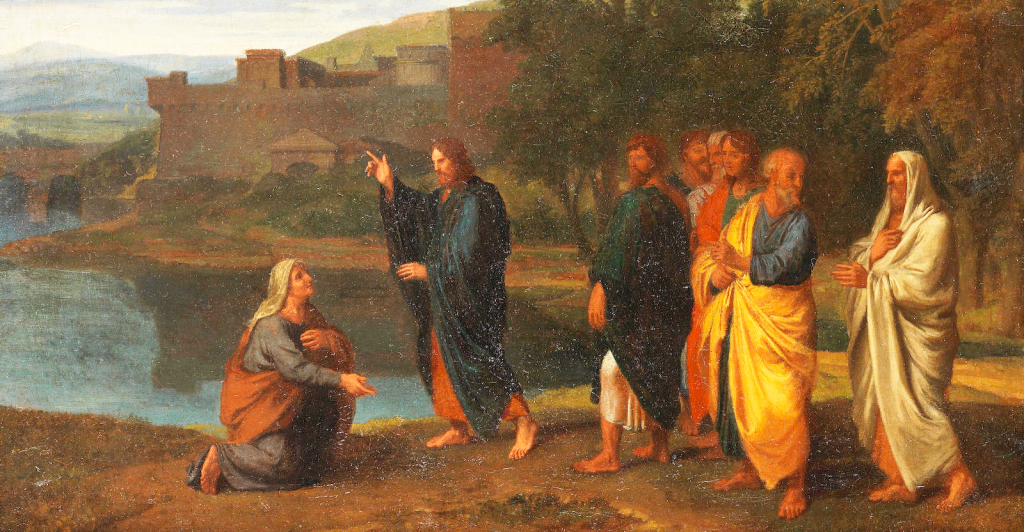
    The image of God as a shepherd is a recurring theme in the bible. In fact, the Psalm today captures very well this image, “The Lord is my Shepherd; there is nothing I shall want.”  Jesus used this image to portray himself as the Good Shepherd who is willing to give his life for the sake of his sheep, who makes sure that the flock is taken cared and well provided. The Good Shepherd cares, protects and provides for the sheep as he himself proclaimed, “I am the gate the gate for the sheep.”

    In Biblical times, sheep were very important to the lives of the people because sheep provide both food and clothing. Since the sheep needed grass, the shepherd would always look for green pastures. Because of this, the shepherd and his sheep were always on a journey in search for green pastures and water. The shepherd will provide shelter and protection for his sheep – 24/7. Consequently, the shepherd would develop a close relationship with his sheep to the point of becoming familiar to each of them, giving them names and calling them by name. The sheep in return would also become familiar with their shepherd. They would recognize his voice and follow him wherever he may lead them. In a way, trust and confidence is built up in this kind of relationship.

    From this point, I would like to highlight the two relationships where we are invited to reflect and to grow and mature. First is the relationship of the Shepherd to the sheep. Second is the relationship between the sheep with their shepherd.

    As persons who exercise responsibility over others God invites us to learn from the relationship the shepherd has with his sheep. The shepherd takes time to know his sheep; he spends quality time with them. The shepherd develops a rapport with his sheep allowing himself to be in the midst of his sheep. He is neither distant nor indifferent, but close and involved to every sheep. The shepherd responds to the needs of his sheep.

    Thus, Jesus invites us that like him we too shall develop a consciousness of serving, of taking care of others, of becoming instruments of God’s care and compassion to His people. As parents, as leaders in our community, organization or in your field of work, or as priests and religious, we are called to learn from the Good shepherd.

    And remember, this is power which is an ability to influence, to create and transform. This power is ought to be expressed through love, so that, power transforms into service and giving of oneself. Jesus, our Good Shepherd, tells us that being a person with power as an authority figure or leader is not about controlling others or manipulating others, but rather, having the capacity to serve and love without pretension, without manipulation and that does not count the cost.

    The second relationship that I am emphasizing is between the sheep with their shepherd. Today, we might not like the idea of being called as sheep. Sheep are known to be stupid and submissive animals. Yet, we, human beings are cultured, intelligent, and sophisticated because of our reason. But then, do these qualities in us really make us totally different from the attitudes of the sheep?

    Is it not that we also tend to be unmindful and unconscious of many things in life except for our personal desires and wants, except with those that will give us comfort and pleasure? Yes, we might tend to be more focused of the green pastures that we have at this moment but careless of what surrounds us.

    We might be full of ourselves, of what others can give us and of what is only beneficial to us without minding the needs of others, meaning, egocentric. Like the sheep, we might not be conscious also of the vicious and greedy wolf in our midst and saying nothing about it. We might find ourselves dumb and stupid for not recognizing, not speaking out, and not standing up against to what is unjust and evil in our community. Like the sheep, we might also wander to the other side thinking that there is more security in vices, in depression and loneliness. So, we stray away from the comfort of our brothers and sisters.

    Thus, we too need a Shepherd who will lead us, who will show us the way, to inspire us and to motivate us. We are called, then, to also develop a close relationship with our shepherd, to put our trust and confidence to our shepherd, whoever he/she may be – our parents, leaders in the community, the pastors in our parish, or teachers and mentors.

    Indeed, we are called to trust and to grow in faith and confidence in Jesus, who is our Good Shepherd who laid down his life for us. Jesus is in our midst, hopefully, we too shall spend more time with him in prayer so that we become familiar of his voice and attuned to his ways. In this way, we may be able to follow him with joy and confidence. Kabay pa.

  • HEARTS in LOCKDOWNS

    HEARTS in LOCKDOWNS

    April 16, 2023 – Second Sunday of Easter

    Click here for the readings (https://bible.usccb.org/bible/readings/041623.cfm)

    I remember when we first experienced “LOCKDOWN” here in the City in 2020 due to the spread of Covid-19, the first Sunday was so depressing. I walked around the empty Church ground and looked at an empty Church. I was very sad and afraid of what will happen in the coming days when lockdown was imposed. Since, then, as the virus made more infections, we experienced the same face of lockdowns, with its different names, from GCQ, to MGCQ, ECQ to MECQ. Our movement was limited and the more it brought anxiety to many.

    Those lockdowns were imposed as a defensive mechanism that the government believed and medical experts developed to minimize the infections. We followed and believed that those lockdowns were necessary to protect, save and even give life. Yet, I pray that we will never go back to that experience again.

    Remembering those lockdowns, it evoked to me now a different kind of lockdown. This is  the self-imposed lockdown that can be life-threatening and life-depressing.

    This is similar to the situation of the disciples,  who embraced a self-imposed lockdown as told by the Gospel on this Second Sunday of Easter. The disciples gathered in one place and locked themselves in because of fear. They were afraid that what happened to Jesus, may also happen to them. Certainly, this was a defensive mechanism of a heart that was hurt and bruised. It is a form of withdrawal from others and from God because of “fear.”

    In a way, experiencing pain in our relationships also makes us more defensive the next time we relate with others. We become defensive and even withdrawn with others because we fear of being hurt again, of being rejected again, of being bullied again. And so, we develop a defense mechanism to the point of making ourselves isolated from others. Thus, we “lockdown” ourselves from any possible pain or hurt, because we are afraid of what others can do to us. We will tend not to invest emotionally in a relationship, or refusing to give oneself for others, becoming mediocre and complacent and to just stay at the comfort zone but remaining fearful.

    However, fear makes our heart unbelieving. This happened to the disciples who refused to believe what Mary Magdalene proclaimed to them, that Jesus has been raised from the dead. They couldn’t believe her because they were too afraid.

    Yet, what was more interesting in the Gospel was on how Jesus appeared in their midst even though they made sure that the doors were locked. Jesus appeared to them and brought peace to the hearts of these fearful disciples.

    We also find Thomas who was not there at that time of Jesus’ appearance, still holding on to his fears and doubts. Although all the other disciples have testified that they have seen the Lord, Thomas couldn’t accept it. He couldn’t believe, and because of that, his heart was more locked than the door and the walls of his heart have thickened to the point that he did not want any more to listen to what others were saying. Thomas personally lockdown his heart.

    That is why, Thomas, set a condition before he would believe that Jesus is alive. He said, “unless I will see and touch him, I will not believe.” Because of so much fear and doubts, Thomas insisted that condition in order to protect himself.

    Just as Jesus met the other disciples in their own hiding place and so he did it also to Thomas. Jesus appeared once again and asked Thomas to touch his wounds so that he may believe. Jesus submitted to the condition of Thomas.

    This is what the Gospel is telling us today – the Lord meets us wherever we are and he takes us seriously in all our fears, anxieties and doubts. When God meets us in our own hiding places and closed doors, He brings us peace to our troubled hearts. This is an assurance that in God’s presence we find peace and without Him we will always be disturbed and insecure.

    This is the mystery of the Divine Mercy which we celebrate on this Second Sunday of Easter, the God of Mercy who brings peace into our troubled and fearful hearts, and who pierces through our lockdown-and-walled-hearts.

    In God’s Mercy, Jesus indeed meets us  where we are at the moment especially when we decide to retreat to self-centeredness, to our old bad habits and addictions, to our unhealthy defensive mechanisms and self-imposed lockdowns of mediocrity and indifference towards other people, and into our angry and irritable response to people around us. God meets us there and he wants us to know that He is with us and He brings us peace.

    It is when we recognize God in those moments that Jesus invites us to touch his wounds just like Thomas. Being aware of the wounds and touching the wounds of Jesus means that Jesus feels our own pain and suffering, our fears and anxieties, questions and doubts. Hopefully, that experience will lead us to proclaim like Thomas, “My Lord and my God.” This is again an assurance to us that our God is alive and at work in our lives.

    I would like to invite you now to be aware and to recognize those attitudes, cultures, beliefs and experiences that continue to lock us away from others and from God. Be aware of those that are holding us back from fully relating to others and from freely expressing goodness, and those that make us withdrawn and indifferent to people around us.

    May our encounter with the risen Christ, the image of the Divine Mercy make our locked and defensive hearts to open up as He brings us peace and sends us to others. This may move us to go out to touch the lives of others. Hinaut pa.

  • Guest-inside our Tombs

    Guest-inside our Tombs

    April 16, 2023 – Second Sunday of Easter (Sunday of Divine Mercy)

    Click here for the readings (https://bible.usccb.org/bible/readings/041623.cfm)

    Happy Easter to all. Last Sunday we celebrated Easter Sunday. We celebrated and proclaimed our Christian faith that our Lord Jesus Christ has indeed risen into our lives. Today we are now on the 2nd Sunday of continuing celebration of Easter season. So, how is life after Easter Sunday?

    After the preparations of Lent and the celebrations of Holy Week – after Easter Sunday surely, we are back to our normal ways – back to our usual routine, schedules, activities, programs, tasks, and responsibilities. But as we go along our normal ways and live our usual lives, we also wonder how is the message of resurrection of the risen Lord make sense and become more real now in our day to day living.

    Yes, we believe that the Lord has risen. But how and in what ways the risen Lord has resurrected and can be resurrected into our ordinary lives today? Paano Siya naging at maging Buhay’ng-Muli sa Buhay ko at natin ngayon? This is the very challenge of Easter to us Christians during this Easter season.

    While reflecting on the revival of Lazarus from the dead, Pope Francis once in his homily said that each one of us has a small tomb inside our hearts – that somehow somewhere in our lives, though still alive and breathing, is dying and dead inside. Yes, somehow, we are still & get used with isolations in our small caves, even after pandemic lockdowns & quarantine. Our small tombs are usually our dark secret holes and shadowy caves where we usually hide and bury our anger, hurts, pains, sufferings, failures, frustrations, anxiety, fears and addictions from ourselves and others.

    And inside our small tomb, we do have the choice whether to be alone on our own, miserably struggling and grieving with the “why’s of life”… OR to invite the risen Lord to be part of our search for answers and sense for all these happenings in our lives. For Pope Francis, we need to recognize our dying and dead self-inside, and invite the risen Lord to be our Guest inside our small tombs and allow Him to be part of our death and dying within, and be resurrected into our New Life with Him.

    Brothers and sisters, the empty tomb of Easter reveals to us that the risen Lord is not in his tomb, but out here and there revealing himself into our ordinary normal lives and offering us life and life eternal. The same way as He appeared before His disciples, the risen Lord is showing & will appear Himself to us in our ordinary lives anew with a promise of not only new normal but more so, of life eternal.  

    The mistake of Thomas in our gospel today is not so much for doubting the Lord’s resurrection but more so for being absent – he was not there when the Lord appeared the first time. Thomas at first did not recognize his own small tombs and invite the risen Lord to be part of his ordinary life. Only when he was with the other’s disciples in locked door room – present in their own tombs and allow the Lord to be part of His life that Thomas came to recognize and believe in the risen Lord.

    Meaning, the risen Lord only wishes to be invited and partake into our own isolation inside our small tombs and in our ordinary lives so that He can share to us New Life with Him. No more being alone – on your own in your own tombs. Thus, no more hiding, navel-gazing, just looking into oneself – licking wounds, brooding, and sinking in anguish.

    For the Easter message of Lord’s resurrection to be more real and meaningful now in our lives then, we must invite the Lord into our small tombs and allow His to be part of our usual day to day struggle with life. The Lord is risen and has indeed resurrected again and anew in our lives now – if and when we invite Him to be part of our small tombs and our ordinary lives. He also can only resurrect and bring our death and dying back to life anew if only and whenever we invite and allow the Lord to be part and be with our normal life’s-struggles and triumphs.

    To have a more real and meaningful celebration of Easter Season then, Let the risen Lord in and allow Him to be our Guest – to be there and be part of our small tombs and our ordinary lives these days. And perhaps ask ourselves once again: What is the risen Lord offering me now here inside my tomb, inside my isolation? What is it in to me and what’s in for me? What are benefits and the purpose of letting Him be part of my life now: Healing, Peace, Mercy, Forgiveness, Hope, Mercy, Love, Release, Liberation, New Life, Holy Spirit…..?

    Although we are back to our usual normal lives after Easter Sunday, we also know and believe that with the risen Lord in our lives now, life will never be the same again and as usual, but ours would now be a new normal life and better than before, IF and Whenever we invite and allow our risen Lord to be part of our small tombs and our daily ordinary lives. Siya Nawa. Hinaut pa unta. Kabay pa. Amen.

  • The Lord Confronts our Unbelief and Hardness of Heart

    The Lord Confronts our Unbelief and Hardness of Heart

    April 15, 2023 – Saturday in the Octave of Easter

    Click here for the readings (https://bible.usccb.org/bible/readings/041523.cfm)

    They could not believe it. They could not accept what has been reported by Mary Magdalene. They would not even accept the testimony of the two disciples who went to Emmaus and reported that the Lord appeared to them. The eleven disciples, who were the closest circle of Jesus, did not believe because their hearts were hardened.

    We could just imagine the very dispositions and attitudes of the eleven disciples. They must have been filled with guilt and shame for fleeing away and hiding when Jesus, their Lord and Teacher, was arrested, tortured and killed. Peter denied Jesus who previously said he won’t. The very experience and those days were just disheartening. They too must have felt that there was no more hope for them. Their courage was gone. Their spirits dampened.

    The terrible death of Jesus, killed in the most shameful and painful way, was beyond their expectation. Yet, it happened. The Lord told them that he would suffer and die and be raised on the third day, yet, they were all unprepared for that. They clearly did not understand what Jesus was teaching them at that time. And when Jesus was raised and appeared to other disciples, their minds and hearts were closed because they were too afraid. And they stayed in their grief and sorrow, nursing their fear and shame.

    However, the Lord appeared to them all and confronted them. As the Gospel of Mark told us, “Jesus appeared to them and rebuked them for their unbelief and hardness of heart.” Yes, the Lord confronted and challenged them by rebuking them. It was the Lord’s way of making them wake up and move forward. They have been staying in that disposition and attitude that was already unhealthy and unhelpful for them and for others.

    We too could find ourselves having such kind of disposition and attitude. When we are staying too much in our grief and sorrow, when we are already nurturing our own emotional wounds, and feeding our fears with our anxiety, then, such disposition of the heart and mind will only make us more submerged into fear and anxiety or into sin and darkness.

    Indeed, it is okay to grieve. It is okay to be afraid after a painful experience. It is okay to feel down and discouraged after a failure. It is okay to feel lonely and alone. It is okay to be sad and not feeling okay. However, when we are already staying too much in these human emotions and even reinforcing these emotions with our unhealthy coping and nursing them. Then, that is not okay. It is not alright because such attitudes would only lead us farther from others or even farther from our true selves and farther from the grace of God.

    We are rather called to confront ourselves, confront our friends and allow the Lord to confront us when we are going in that state just as Jesus rebuked the disciples whose hearts were hardened. This is the invitation for us today and that is to allow the grace of the resurrection to give us hope, courage and new way of looking at things and looking at our life. We move forward and move on, knowing that the grace of God is with us, and that the presence of Jesus assures us that there is life, that there is hope.

    As we allow the Lord to confront us, may our hearts be filled with confidence and gratitude to proclaim and share to our friends, families and communities the goodness that the Lord has done to us. Hinaut pa.

  • FINDING MEANING AND JOY

    FINDING MEANING AND JOY

    April 14, 2023 – Friday in the Octave of Easter

    Click here for the readings (https://bible.usccb.org/bible/readings/041423.cfm)

    Do you also escape when you go through difficulties? Do you also hide and retreat when you experience failures and disappointments? Do you go back to your old and unhealthy coping or attitudes when you feel sad, angry, or broken hearted? These are some of our possible reactions when we face these realities in life because we don’t know what to do and where to go. This had been the situation of the disciples. Their hearts were filled with pain, disappointment, with frustrations and doubts.

    The arrest of Jesus, his suffering and his death were so shameful and terrifying that they also hid themselves for fear of the Jews. Because of these negative experiences, they believed that they have failed the Lord, and so they themselves were failures.

    Their immediate response was to go back their old self, to retreat and not to confront anymore what they were going through. Because they believed that they were failures, they succumbed to the temptation to go back to their old ways and that was to fish. They have been called from being fishermen to become fishers of people, yet, having a painful and horrible experience, they retreated, they were giving up.

    However, all night they caught nothing. The “night” in the Gospel is very symbolic because it reveals to us that the disciples were in darkness and they couldn’t find light. They were hopeless. They wanted to give up. But, at dawn a stranger appeared on the shore and said, “cast the net over the right side of the boat and you will find something.” And they did, they trusted that stranger and to their surprise, when they pulled the net they could barely pull it back because there were plenty of fish.

    Then, the “beloved disciple” recognized that it was the Lord Jesus. Jesus is alive and there waiting on the shore. This tells us too that once we have become intimate with Jesus, our heart will always desire for Jesus.

    This inspired Peter to respond immediately and to come near to Jesus. Again, this was symbolically done. Peter let go again of his boat, that is, his old self. He jumped confidently into the sea of his past failures and frustrations because he knew that Jesus was waiting for him.

    This reminds us that we might come to the point in our life when we feel hopeless and helpless because we have failed, because the situation is just too difficult, family problems are just depressing, our poverty is overwhelming, or our relationship with others have failed – and then, our immediate reaction is to retreat, to hide in our own failures and pain, to dwell so much on our problems, to go back to our old and bad habits, becoming fearful, anxious and mediocre – which means going into the darkness of depression, of sin rather into the light of hope and life.

    Yet, Jesus calls us to we find meaning and joy even in the midst of pain, of failures and difficulties. Hence, the Risen Lord invites us today.

    First, when we meet failures and difficulties, do not go back to the old unhealthy ways and old habits, which could only be our emotional reactions. Rather, pray and ask the Spirit of the Lord to give us courage and patience to confront what we are going through.

    Second, as we face them, never think that you can do everything alone. The journey is lighter when we are with somebody whom we can trust, whom we can share our story. Find and build lasting friendship, build a deeper family relationship, invest in your relationships. When we are told to cast our net, to change the course of our boat and to change our life – go for it and trust the Lord because it might be in that direction that we will find the abundance of love and life.

    Third, be always aware of God’s presence. Just like the beloved disciple let us always be intimate with Jesus. It is when we become more familiar with Jesus that we also become aware of his presence in everyone. Hinaut pa.