Category: Fr. Jom Baring, CSsR

  • Listening Is Better Than Explaining

    Listening Is Better Than Explaining

    January 19, 2026 – Monday of the Second Week in Ordinary Time

    Click here for the readings (https://bible.usccb.org/bible/readings/011926.cfm)

    Most of us want a life that feels safe and predictable. We follow routines, hold on to habits, and protect traditions because they give us a sense of control. We know what to expect, and that feels comforting. But slowly, without noticing it, what once helped us can begin to trap us. We start doing things not because they give life, but simply because “this is how it has always been.”

    In the Gospel of Mark, Jesus uses simple images: old cloth, new cloth; old wineskins, new wine. He is not attacking tradition. He is pointing out something deeper. When God is doing something new, old containers may no longer be able to hold it. New wine needs fresh wineskins, not because the old ones are bad, but because they have become rigid.

    The same struggle appears clearly in the First Reading from the First Book of Samuel. King Saul follows God’s command only halfway. He defeats the enemy, but keeps what he personally considers useful. When confronted by the prophet Samuel, Saul explains himself, even claiming he did it “for God.” Samuel’s response is sharp and unforgettable, “Obedience is better than sacrifice.” Indeed, God is not impressed by religious excuses. What the Lord desires is a listening heart.

    This makes us realize that God desires obedience that flows from a listening and open heart, not from rigid practices that protect our comfort.

    Saul thought sacrifice could cover disobedience. The people questioning Jesus thought fasting defined holiness. In both cases, the problem is the same. People believed and were more attached to their way of doing things than to what God was actually asking of them at that moment.

    This is where the message becomes very close to our daily life. Sometimes we are like Saul. We obey, but only up to the point where it does not disturb us too much. We pray, but avoid forgiveness. We serve, but refuse correction. We keep traditions, but resist change when God asks us to grow.

    Jesus does not come to destroy what is old. He comes to fulfill it. But fulfillment always involves change. New wine stretches us. It questions habits that no longer give life. It exposes excuses that sound religious but hide fear.

    God’s invitations often feel uncomfortable because they ask us to listen more deeply and let go of control. But this discomfort is not meant to break us. It is meant to renew us. Like fresh wineskins, we are called to remain flexible, humble, and attentive to God’s voice.

    The real question is not, “Am I doing religious things?” The real question is, “Am I truly listening to God today?” As Samuel reminds us, God prefers a heart that listens over hands that perform rituals.

    When we allow God to surprise us, we discover that His call, though challenging, always leads to life, healing, and deeper freedom. With that, I leave you two takeaways for today.

    First, pause and listen before acting. Ask daily, “Lord, what are You asking of me now, not yesterday?”

    Second, let go of one habit that no longer gives life. Replace it with one concrete act of obedience, however small, but begin today. Hinaut pa.

  • When God Chooses to Be Small    

    When God Chooses to Be Small    

    January 18, 2026 – Sunday, Feast of the Sto. Niño

    Is 9:1-6; Eph 1:3-6, 15-18; Mt 18:1-5,10

    Every year, around the Feast of the Sto. Niño, I remember a simple scene I once witnessed during a Sunday Mass. A young mother was struggling with her toddler who was restless, noisy, and clearly bored. Trying to control the child, she whispered, though loud enough for others to hear, “Behave. Stop it. Father will get angry. Look, he’s watching you.” The child suddenly froze, his eyes wide with fear, clutching his mother’s arm.

    I gently smiled at the boy and said, “That’s not true. I’m not angry. You can move, it’s okay.” Slowly, the fear left his face.

    That small moment stayed with me. Because without realizing it, many of us grow up learning to associate God, the Church, and faith with fear rather than love. We are taught to be quiet, to behave, to obey, but often through fear. In fact, a friend shared with me as well how she felt uncomfortable at first to bring their baby to the Church. She’s afraid that the grown-ups might stare harshly to her and her toddler when the boy would make some noise in the Church.

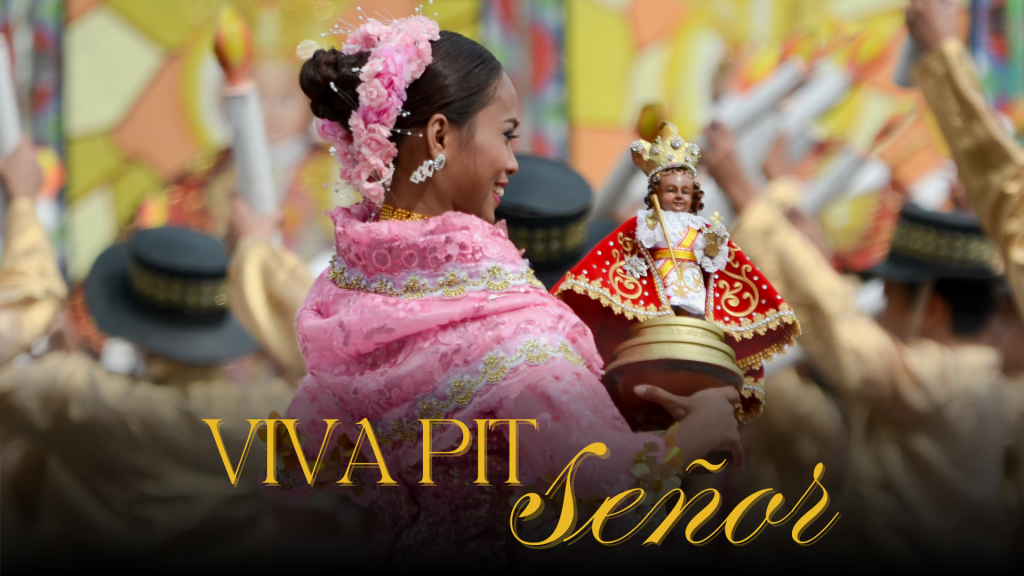
    And yet today, on the Feast of the Sto. Niño, God reminds us of something deeply important: God chose not to come to us as someone to be feared, but as a child to be loved.

    This is the heart of today’s feast. God chooses to be small so that no one will be afraid to come close.

    In the first reading from Isaiah, we hear a message spoken to a people who were living in darkness. This darkness was caused by suffering, injustice, violence, and fear. And into that darkness, the prophet proclaimed hope: “The people who walked in darkness have seen a great light.” But how does that light come? It comes not through power, not through force, and certainly not through fear. Isaiah said clearly: “For a child is born to us, a son is given us.”

    This is God’s surprising way. When the world expects strength, God gives a child. When the world uses violence, God responds with gentleness. When hearts are burdened by sin, guilt, and pain, God offers light, forgiveness, and peace. The Sto. Niño is God’s answer to our wounded world.

    Saint Paul, in his letter to the Ephesians, deepened this message. He told us that we have been chosen and blessed by God in Christ even before we deserved it. God did not wait for us to be perfect. God chose us out of love. And Paul prayed that our hearts may be enlightened, that we may truly see the hope to which we are called.

    This is important. Many people today live with wounded hearts. Families are burdened by poverty, stress, anger, and fear. Children grow up not always feeling safe, sometimes even in their own homes. During the pandemic, studies showed a rise in violence against children, abuse, and deep emotional distress. Many suffered quietly, unseen and unheard.

    And this is where today’s Gospel becomes very concrete and very challenging.

    In the Gospel of Matthew, Jesus himself brought a child in the midst of the disciples. Why? Because in that culture, children were considered unimportant, a disturbance, and a waste of time. They had no status, no voice, and no power.

    Moreover, in Mark’s Gospel Jesus also said, “Let the children come to me. Do not prevent them.” And more than that, Jesus embraced them blessed them and placed them at the center.

    This is not just a sweet scene. It is a strong message of the Lord for all his disciples. Jesus rejects a culture that ignores, silences, or hurts the small and the weak. He tells us clearly that if we want to understand God, we must look at a child. If we want to enter the Kingdom, we must learn the humility, trust, and openness of a child.

    This is why the Sto. Niño is so powerful for us Filipinos. The image of the Child Jesus reminds us that God stands with the weak, the forgotten, and the wounded. God condemns attitudes that reject, ignore, or abuse the small especially children.

    And we must be honest. Sometimes, even without intending it, we hurt children with our words, our anger, our indifference, or our silence. Sometimes, we use fear instead of love. Sometimes, we choose convenience over protection. And Jesus is very clear that this must not be so.

    Yet, today’s feast is not meant to condemn us. It is meant to call us back to light, to mercy, to hope.

    The world may be darkened by violence, corruption, abuse, torn by war and indifference. Our hearts may carry pain, guilt, and brokenness. But God still chooses to be born among us. God still chooses to come as a child. God still chooses to bring light.

    So what does this feast invite us to do as ordinary Christians? There are four takeaways you can bring at home.

    First, learn again how to see God not as someone who frightens, but as someone who embraces us. Remember, faith grows not through fear, but through love. Let us teach our children that God is safe, merciful, and close to us.

    Second, let us become protectors of the small and the weak. This is not optional. It is a Gospel demand for us. Every child deserves safety, dignity, and love. Every decision we make, you as parents, leaders, neighbors, and community members, must be measured by this question, “Does this protect and nurture life, especially the most vulnerable?”

    Third, never use fear to represent God. Use patience, understanding, and love. The Sto. Niño teaches us that God draws near gently.

    Fourth, be a light for a child today. Do this through listening, protecting, correcting with love, or simply being present. Indeed, small acts matter as well.

    Thus, today God reminds us that greatness is not found in power, but in love. Not in control, but in care. Not in fear, but in trust. May the Sto. Niño dispel the darkness in our hearts and teach us again how to live as children of light. Hinaut pa.

  • Baptized to Become the Compassion of Christ

    Baptized to Become the Compassion of Christ

    January 11, 2025 – Feast of the Baptism of the Lord

    Click here for here for the readings (https://bible.usccb.org/bible/readings/011126.cfm)

    On this Feast of the Baptism of the Lord, we are invited not simply to recall a moment in the life of Jesus, but to look deeply and honestly at our own lives as baptized Filipinos. This feast quietly yet firmly asks us: What has our baptism truly done to us, and what is it asking of us today?

    The Philippines remains one of the most religious countries in the world. According to data from the Philippine Statistics Authority, nearly 79 percent of Filipinos still identify as Roman Catholic.[1] Prayer, devotion to saints, novenas, and religious fiestas continue to shape our culture. At the same time, recent surveys reveal a growing tension beneath the surface. A Social Weather Stations survey reported that while about seven out of ten Filipinos[2] say they pray daily, far fewer attend Mass regularly, especially among the younger generation. Many still believe, but many also struggle to connect faith with daily decisions, social issues, and moral responsibility. Faith is present, but often fragile, routine, or confined to our rituals.

    Thus, this reality invites us to examine ourselves. Have we really grown in our faith? Have we deepened our relationship with God and with one another? But, let us remember, our faith cannot be reduced to kneeling and standing, holding a rosary, or faithfully reciting novenas though these are also important practices.

    As sociologist Dr. Jayeel Cornelio has observed, many Filipinos today are searching for something “more” from their faith.[3] This “more” is not about abandoning Catholic tradition, but about longing for a faith that transforms life, confronts injustice, heals wounds, and gives direction amid uncertainty. This “more” is precisely what the Feast of the Baptism of the Lord places before us.

    To discern this “more,” let us allow the Word of God proclaimed to us on this Sunday to guide us.

    In the first reading from the Prophet Isaiah, we hear about the Servant of the Lord. This Servant is chosen, beloved, and pleasing to God. God’s Spirit rests upon him. But what defines this Servant most clearly is not power or dominance, but compassion. He brings justice not through violence or force, but through gentleness. Isaiah tells us that a bruised reed he shall not break, and a smoldering wick he shall not quench. This Servant does not crush the weak; instead, he protects what is fragile, restores hope to the weary, and lifts those bowed down by suffering. He opens blind eyes and frees prisoners living in darkness. God’s justice, as Isaiah presents it, heals and restores before it confronts and corrects.

    The Psalm continues this vision in a quiet but powerful way: “The Lord will bless his people with peace.” This peace is not simply the absence of conflict. It is the peace that flows from living in God’s presence, from recognizing that God is active in creation and present in every human life. When we truly acknowledge God’s presence in everything and everyone, respect and reverence naturally follow. Peace then becomes something we embody and share, not just something we pray for.

    This promise finds its fulfillment in the Acts of the Apostles. Peter proclaims that the Servant spoken of by Isaiah is Jesus of Nazareth. He is anointed with the Holy Spirit and power, and His life is marked by a simple yet profound description: He went about doing good and healing those oppressed by the devil. These words summarize the entire mission of Jesus. He restores dignity, heals brokenness, and brings hope to those crushed by sin, fear, and injustice. This is how God chooses to be revealed and not through domination, but through mercy.

    All of this reaches its deepest meaning in today’s Gospel, the Baptism of the Lord. Jesus enters the waters of the Jordan, not because He needs repentance, but because He chooses full solidarity with humanity. His immersion in the water is an act of complete trust in the Father. As the Psalm proclaims, the voice of the Lord is over the waters, and Jesus allows Himself to be embraced by the Father’s will.

    As He rises from the water, the Spirit descends like a dove. This moment reveals that God is not distant or unreachable. God’s Spirit rests upon Jesus and remains with Him. Then comes the voice from heaven: “You are my beloved Son, with you I am well pleased.” These words echo Isaiah’s prophecy and confirm Jesus as the beloved Servant. He is sent to bring healing, justice, and peace.

    This feast today speaks directly to our own baptism as well. In baptism, we too are claimed as beloved. We too have received the Spirit. We too are sent. This is where we discover the “more” that many Filipinos are longing for in their faith. Baptism does not make us passive believers. Rather, it calls us to become active disciples of Jesus.

    We are reminded first that we are deeply loved. This truth alone has the power to heal many wounds, fears, and insecurities. In a society facing economic pressures, environmental threats, and growing inequality, our identity as beloved children of God becomes our deepest strength. We are also reminded that God’s presence is not far away. The Spirit of God dwells among us, in our families, workplaces, classrooms, and communities. We do not need to search only in the clouds to find God. We too are invited to recognize the Lord here and now.

    Our baptism also carries a clear responsibility. We are called to bring justice and peace, not through anger or force, but through compassion and gentleness. Isaiah reminds us that true justice protects the weak and restores hope.

    To live our baptism is to participate in the ministry of Jesus and that is to open our eyes blinded by greed, pride, and indifference, and to free hearts imprisoned by hatred, guilt, and sin.

    As we look ahead to 2026, Filipinos face serious challenges. We have economic uncertainty, the worsening effects of climate change on vulnerable communities, and a growing temptation to reduce faith to mere ritual. The Feast of the Baptism of the Lord calls us back to the heart of discipleship. The “more” in our faith is “to make Jesus more present in our actions, more present in our words, and more present in our homes and communities.

    Let me leave you with two simple reminders to carry with you now:

    First. Live your baptism daily. Let love, honesty, and compassion shape your choices.

    Second. Be Christ where you are. In your family, your work, and your community, allow others to encounter Jesus through you.

    May the grace of our baptism continue to renew us, strengthen us, and send us forth as bearers of God’s peace. Hinaut pa.


    [1] https://www.bworldonline.com/the-nation/2023/02/22/506351/catholics-make-up-nearly-79-of-philippine-population/

    [2] https://www.pna.gov.ph/articles/1195717

    [3] See https://www.ucanews.com/news/young-filipinos-keep-the-faith-but-shun-conventional-piety/97562

  • Faith That Shows Up

    Faith That Shows Up

    January 5, 2025 – Monday after Epiphany; Memorial of St. John Neumann, CSsR

    Click here for the readings (https://bible.usccb.org/bible/readings/010526.cfm)

    When a community faces a problem like sickness, conflict, calamities or poverty, we find it necessary to ask for help. And so, we look for someone we can trust, someone who will not just talk, but will actually show up and do something. Thus, we value presence and value people who serve quietly, without drawing attention to themselves. This simple experience opens our hearts to the message of today’s readings and of the life of Saint John Neumann, a Redemptorist Bishop in the United States, whose feast we celebrate today.

    The Word of God today invites us to live our Christian faith that is true, discerning, and expressed in concrete service.

    In the first reading from the First Letter of John, we hear a strong reminder that our relationship with God is not only about words or feelings. When our hearts are aligned with God’s will, there is confidence and peace within us. But Saint John also warns us that not every spirit comes from God. Not every voice that sounds religious or inspiring is truly leading us to Christ. That is why discernment is important and necessary. The test is clear and simple, we can ask, “Does it confess Jesus Christ, truly God who came among us?”

    Remember, true faith always leads us closer to Christ and to love our neighbor expressed in concrete actions.

    Now, this message is very relevant to us today. We live in a time when many voices compete for our attention. There are all sorts of teachings in the social media, as well as opinions, and trends that promise happiness and success, but can also slowly pull us away from prayer, from the Church, and from compassion for others. Saint John reminds us that real faith produces real love, and real love is shown through obedience and service.

    The Gospel continues this invitation. Jesus begins His ministry by proclaiming repentance and by bringing healing. He does not stay in one place. He goes from town to town, teaching, curing the sick, and restoring hope. People follow Him not only because of His words, but because they experience God’s mercy through Him. Jesus reveals a God who is not distant, but close to human suffering.

    This is where the life of Saint John Neumann becomes a living Gospel for us. He was a Redemptorist priest who left his homeland to serve immigrants in America. He became a bishop not for honor, but for mission. Despite being physically weak and often misunderstood, he worked tirelessly. He gave his life and ministry in building schools, organizing parishes, visiting the poor, and strengthening the faith of ordinary people. He lived simply, prayed deeply, and served generously. He did not seek recognition. He only wanted people to know Christ and experience God’s love.

    Saint John Neumann teaches us that holiness is not about doing extraordinary things, but about doing ordinary things with great love and faithfulness. His life shows us what it means to discern rightly and to respond generously to God’s call.

    As Christians today, we are invited to live the same spirit. Faith must not remain inside the church. It must be carried into our homes, workplaces, and communities. As Jesus calls us, we are to bring healing. Like Saint John Neumann, we are called to serve quietly, faithfully, and consistently.

    So as we honor Saint John Neumann today, receive these two simple invitations.

    First, examine the voices you listen to. This means that you choose what leads you closer to Christ, to prayer, and to the love of neighbors.

    Second, commit one concrete act of service this week. Do it quietly and sincerely, trusting that God works powerfully through humble hearts. Hinaut pa.

  • Following the Star That Truly Matters

    Following the Star That Truly Matters

    January 4, 2025 – Epiphany of the Lord

    Click here for the readings (https://bible.usccb.org/bible/readings/010426.cfm)

    What is it that drives you these days? What keeps you awake at night, and what makes you get up each morning and continue? Many of us could also be searching for someone, for something, or for a situation that we hope will finally make us happy. We look for contentment that will quite down our restlessness, for success that will ease our worries, or for love that will fill the emptiness we sometimes carry in silence. This search is very human. It is also very real.

    Each of us, in one way or another, is indeed on a journey. We take risks for what we hope will give meaning to our lives. We leave familiar places, sacrifice time with family, work long hours, and invest our energy in relationships and dreams. But we also know that every journey has its trials. We face failures, disappointments, wrong turns, and moments of deep uncertainty.

    This is where today’s feast, the Epiphany of the Lord, gently meets and calls us. Epiphany means manifestation because God makes Himself known to us. The Gospel tells us of the Magi or wise men, seekers, who followed a star. They were not kings in the political sense. They were probably scholars, observers of the heavens, men who knew how to read signs. They had a common desire and that was to find the truth behind the light they had seen. That star was not only a guide, it was also an invitation for them to behold and to encounter.

    They risked the long road, crossed unfamiliar territories, and faced uncertainty. And yes, they asked questions. They even made mistakes, stopping first at the palace of Herod, assuming that a king must be found among the powerful. Yet, in the end, the journey led them not to a throne but to a child.

    Isaiah speaks of this moment, “Rise up in splendor, Jerusalem! Your light has come.” Thus, the light of God is not meant for one people alone. It is meant to draw all nations towards the glory of God.

    Psalm 72 echoes this hope that justice and peace may flourish and that rulers may serve, not oppress. And Saint Paul, in his letter to the Ephesians, reminds us that this mystery has now been revealed for in Christ, all are included, all are invited, all are heirs.

    This makes us realize that the heart of Epiphany is not really the Magi. The Epiphany is not about the Three Kings. It is the Epiphany of the child Jesus they have encountered.

    Hence, God chooses to reveal Himself not in strength but in vulnerability of a baby. Not in wealth but in poverty and simplicity. Not in the center of power but in a simple home, with Mary and Joseph, in a place easily overlooked by many. This is the great surprise of God.

    Yet, this was also the reason why Herod was troubled. He was shaken not by an army, not by a rebellion, but by a baby. Remember, power that is built on fear always feels threatened by truth and compassion. Corruption always trembles before humility and honesty. Herod represented all forms of leadership that cling to control and self-preservation. Jesus, even as an infant, already exposed this kind of power.

    For us Filipinos in 2026, this feast also speaks clearly to us. Many families continue to struggle with rising prices, unstable work, and the painful choice of leaving loved ones behind to work abroad. Our young people are searching for direction in a noisy digital world, often pressured to succeed quickly, to look perfect, and to keep up. We also face fatigue from political disappointments, from social divisions, from disasters that test our resilience again and again. In all this, we too are searching for a star.

    Yet, Epiphany reminds us that God is not absent from these struggles. However, we must learn where to look. God may not be found where influence is loud or where promises are grand. God is often revealed in the quiet faith of ordinary families, in honest work done with integrity, in compassion shown to the weak, and in courage that refuses to be silent before injustice.

    Let us remember that the Magi were wise not simply because they searched and were knowledgeable, but because they discerned. They listened. They allowed themselves to be led, even when the path was unclear. And when they found the child, they offered their gifts. Gold, frankincense, and myrrh were not random. They were acts of recognition and surrender.

    Gold was offered because Jesus is a true king. Frankincense was offered because  Jesus is a priest and divine. And Myrrh, an embalming oil, was offered because as a prophet and savior, Jesus will suffer and die.

    Today, the Lord also invites us to do the same. To seek Him above all. To discern where He is truly present. And to offer not just things, but our lives.

    Hence, I leave you now your three takeaways for this week.

    First. Choose your star carefully. Ask yourself honestly, “What is guiding my decisions right now? Success alone? Fear? Approval? Or the quiet call of God that leads to truth and life?

    Second. Look for God where He usually hides. Pay attention to the poor, the weak, the unnoticed. God often reveals Himself there, and He waits for us to respond with humility and compassion.

    Third. Pray with openness and courage. Set aside time each day to speak honestly with the Lord. Ask for discernment. Ask for light. And ask for the grace to follow, even when the road leads somewhere unexpected.

    May this Epiphany help us follow the star that truly matters and may it always lead us to Christ. Hinaut pa.