A surprise that is made especially to someone we love, has the very intention to bring joy. This makes our heart filled with affection and love. And this kind of surprise is what the Season of Advent is also characterized.
Indeed, God comes to visit us is a big surprise. Imagine, God who is almighty and all-powerful comes and humbles Himself in order to reveal God’s Divine presence to humanity, in human form.
This is what our Gospel tells to us today. Elizabeth was surprised by the visit of her cousin Mary. More than that, Elizabeth and the baby in her womb were more surprised of what Mary carried in her womb. They were surprised because God visited them. This prompted baby John to leap with joy because God has come through Mary.
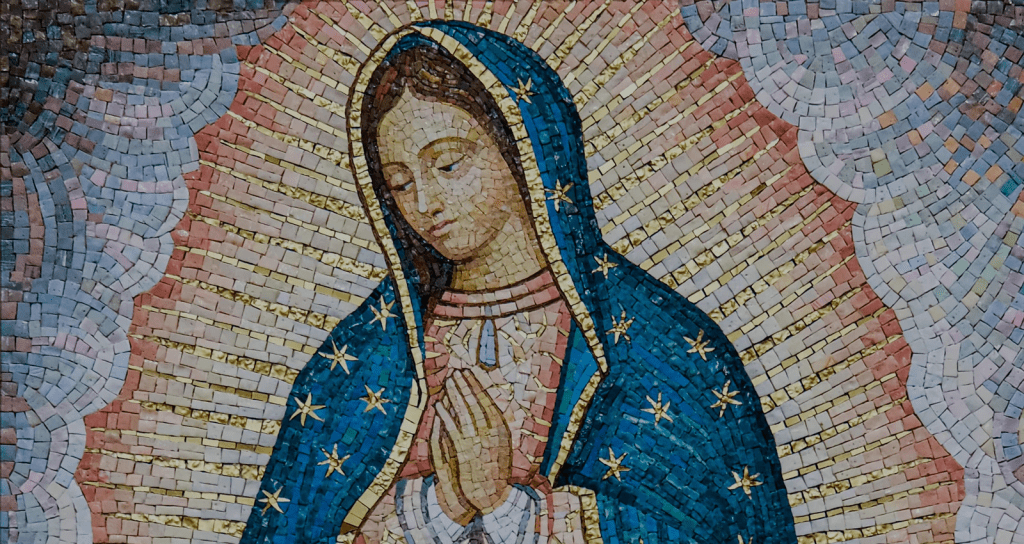
The feast of Our Lady of Guadalupe is also a manifestation on how God has visited us in our history. This visit of God through Mary to San Juan Diego is an expression of God’s loving concern for his oppressed people particularly in Latin America. God’s visit then, is a revelation that God is on the side of the poor and the oppressed, of the weak and powerless, the vulnerable and the insignificant.
Both on this Season of Advent and feast of Our Lady of Guadalupe, we are invited to allow God to surprise us. God calls us to be open and welcoming of His presence and of his surprise like Elizabeth and San Juan Diego.
Thus, never lose the sense of being surprised. This means that we are challenged to put down our judgments and biases, indifferences and suspicions, our anxieties and fears.
God surprises us all the more when we begin to embrace our own failures and sins, and when we begin to accept that we are vulnerable and weak. And when God comes to surprise us, may it lead us to leap with joy. In hope, that experience will also move us to also surprise others with our own kindness and generosity.
Certainly, God calls us to be sensitive enough to his presence in us particularly when life gets dark and difficult, when we are in the middle of fear and stress because in those vulnerable moments, God is closer to us. And this is hope for a delightful surprise. This is what the Season of Advent is all about. Hinaut pa.
Why do we feel more at ease, comfortable and open to a friend in sharing and disclosing our most sensitive stories? What would be the reason that we find comfort after sharing our burdens and struggles to a friend? Yet, we feel more distressed when we keep things alone in our heart.
Such comfort that we experience from the presence of a friend whom we can truly trust, gives us the assurance that we are not alone in life. Even though, our friend may not understand fully what we are going through, but the mere presence of someone whom we know cares about us can appease our troubled hearts.
It is from this human experience of closeness and friendship that we too are invited today. Jesus, in the Gospel of Matthew, said to the multitude of people, “Come to me, all you who labor and are burdened, and I will give you rest.” This is an invitation from the Lord that we come to him so that we may be free from the burden of guilt, shame and sin, from our anxieties and worries.
Yet, this invitation of God is not to be understood in a magical way because there might be a tendency in us to demand God to take away immediately the burdens we carry. This happened to the people at the time of Prophet Isaiah. The people who were in exile grew weary and hopeless because of their long wait of the Messiah. However, the Lord does not offer us magic to make our struggles disappear at once.
In fact, the Lord God offers us the gentle, empowering and compassionate friendship. This is what Jesus said, “Take my yoke upon you and learn from me, for I am meek and humble of heart.” The yoke that symbolizes the burden we carry, is to be carried with Jesus. The Lord wants us to understand that we carry those burdens together and learn his kind of friendship. This is the friendship that the Lord invites us.
Moreover, Jesus also assures us, “for my yoke is easy and my burden light.” This means that when we are with our friend, burdens become lighter. Life, though might be difficult for us at the moment, but, when our friend sits beside us, we feel assured that we are not alone.
This is how we shall experience strength and courage as Isaiah reminds us, “they that hope in the LORD will renew their strength.”
Hence, as we continue to prepare our hearts this Christmas and allow the Lord to be our dearest friend, in return, let us also be a true friend to our friends. As the Lord comforts us with his friendship, let us also offer and give a comforting presence to our friends. Let not our grudge, jealousy and insecurity ruin our friendship. Avoid gossips and intrigues that will only ruin the reputation and image of our friend.
As we offer, build long and healthy friendship, may this relationship be a mirror of God’s compassionate, gentle and empowering friendship with us. Hinaut pa.
How do we live our life as Christians today? How Christian are we, really? These are questions that invite us to re-examine the attitudes of our hearts in the way we live our baptism and prepare ourselves for the coming Christmas. Let us explore, then, the challenges and invitations that our readings bring to us today.
In the first reading, Prophet Isaiah told us about the promised Messiah. His prophecy was situated when the Hebrew people were exiled in Babylon, hoping for God’s mercy. They believed that their exile was a punishment to their unfaithfulness to God. However, they longed for a wrong Messiah.
Their misconception about the Messiah was influenced by what their eyes can only see. They only saw the powerful kings from other nations. Those kings were powerful because they had thousands of armies enough to kill and defeat all enemies. Thus, the people had thought that their Messiah should be like them who power and might come from military power to wage war and violence. Indeed, one should fear this God because this is an angry God.
However, this very image of God of the people is somehow opposite to what Isaiah told us. “Comfort, give comfort to my people…” These were the first words in the first reading. This tells us that God comes to comfort us because the Lord God hears our cries and that the Lord God is not a stranger to our difficulties and suffering.
This comfort did not mean, “revenge” or a “bloody war” towards our enemies and people we hate. This comfort from God means that God comes to us, that God is with us and God comes with power of love and compassion like a shepherd who feeds his flock and seeks out the lost sheep and rejoices when the lost is found.
This is what Jesus pictured out for his disciples to understand the love and compassion of God. Certainly, the Lord is like a shepherd searching for his sheep. This shepherd gives importance to every sheep under his care.
This tells us, that our baptism is also patterned in the identity of the Messiah. We are called to give comfort to each other especially in times of pain and sorrow. We too are called to take care of each other, showing concern especially to those who are in difficult situations and those who are feeling lost.
Isaiah tells us as well to prepare the way of the Lord because it is in welcoming God into our lives and hearts that we are transformed by God’s loving embrace and presence. This may lead us to comfort each one, to care for each other, and to practice concretely our Christian faith through our concern and generosity. Hinaut pa.
According to (Artificial Intelligence) AI Overview, we, human persons, generally speaking, can easily notice and recognize the negatives in our surrounding and people around us rather than the positive. There is a so called “psychological phenomenon” among us called “negativity bias.”
As psychology teaches us, this concept called negativity bias causes amplified emotional responses to the negative and painful events compared to positive and joyful events even despite having equal magnitude.[1] No wonder, we can easily react when there is something wrong, ugly or painful that we see or experience. We also feel more troubled and distressed when we have negative and painful experiences. We tend to linger on those and find ourselves difficult to move forward.
However, having such orientation could greatly affect the way we look at things, look at life and look at ourselves. Our relationships even in the way we make decisions in life can be hampered because of such negativity. Yet, there is also a need for us to develop a sense of positivity and finding balance in our life. To be able to recognize what is good, wonderful and beautiful will add more courage and hope in our life.
On this Solemnity of the Immaculate Conception of Mary, we are reminded and challenged to see and recognize the good, wonderful and beautiful that God made for Mary and for all of us. Indeed, this is what we have heard in the Gospel. “Hail, full of grace!” these were the words of Angel Gabriel to the young lady, Mary of Nazareth.
That being full of grace of Mary offers us now a different perspective in the way we look at our life and the world. This is in contrast to what happened in the Book of Genesis in which man and woman sinned against God.
The fear, shame and guilt that they felt move them back to hide from God. They who first enjoyed the presence of God in paradise where the very first ones to have received the fullness of grace, that was ORIGINAL GRACE in itself. Yet, their desire to “become like god” broke that wonderful grace of intimacy with God.
That led the man and woman to blame each other without claiming their responsibility. This is where we find the ORIGINAL SIN, a concept from St. Augustine. In this concept, human beings are born with that hereditary sin as a consequence of the sin of the first man and woman. It is understood that we have the natural inclination to do bad things, to sin against God and to hurt one another. Nevertheless, to focus only on this negativity of the past will also cloud our faith and relationship with fear, guilt and shame.
Yet, let us not forget that before ORIGINAL SIN entered, there was first the ORIGINAL GRACE of God for humanity. This original grace, despite what happened after that, has been preserved in the life of Mary, the favored one of God. God chose her because Mary is most willing to embrace and accept the very presence of God in her heart, in her whole life. This made Mary, indeed, to be full of grace.
In fact, St. Paul in his Letter to the Ephesians also reminds us that we are blessed “with every spiritual blessing in the heavens… to be holy and without blemish before him.” This is the grace that has been given to the whole humanity, “for in him (Christ) we were also chosen, destine in accord with the purpose of the One.”
As we celebrate this feast, we remind ourselves of this ORIGINAL GRACE, of our first inclination to do good things, of our origin in being filled with the grace of God like Mary.
And so, what we are called to be and to do today, is to allow also the Lord to fill us with His grace. Like Mary, our Mother, may we be more open to God’s invitations for us, to be more willing to participate in bringing and filling grace in our hearts, homes and communities. Hinaut pa.
A friend came to me and shared how she finds her life in darkness at the moment. She finds failures in everything she did and she has. These failures include her job, her boyfriend, her family, her friends and herself. She felt confused and hopeless. Her life seems miserable and so she feels unhappy and bitter.
Yet, these situations in her life are spaces for my friend to see life, to experience life and live life where there is always a possibility of failures, of being hurt and of hurting others and also of the certainty of being embraced by a faithful and constant love, by a healing and renewing love of the Lord.
Listening to her, I asked her how she handles all of these. Although she feels that she is in darkness and not happy, yet, she continues to believe in God. She persisted to hope that God would bring her into a life filled with joy, where everything shall also fall into its place.
Herself reminds me of the prophecy of Baruch and of Paul as he wrote a letter to the Philippians. Let us explore briefly the scriptures today and discover how God invites us on this second Sunday of Advent.
The prophecy of Baruch was preached when the Jewish people were exiled in Babylon, where they were maltreated and made into slaves. This exile was a result of their unfaithfulness to God. Their unfaithfulness brought them, consequently, farther from Yahweh. Thus, their life in Babylon was completely a misery. In that land, they were shamed and oppressed. The people were in darkness. Yet, they have realized their sins and unfaithfulness to God. The people began to repent and listened to the prophets.
The recognition of sin led them to ask forgiveness, to turn from their sinful life back to God. This was how Baruch proclaimed his prophecy that at last, the exile shall end. The people shall reclaim their dignity, as they shall come home to Jerusalem. They will be restored, forgiven and given new life filled with abundance, prosperity and joy with God. Indeed, Baruch proclaimed a joyful hope for the people, that their suffering shall end and that darkness shall be conquered by light, and that their shame and guilt will be taken away through God’s mercy.
Moreover, Paul wrote his letter to the Philippians while he was chained in a prison cell in Ephesus. The life of Paul at this time was in darkness. His ministry to preach the Gospel and commitment to Jesus brought him into prison.
Paul remembered his friendship with the people and was grateful of that friendship. Even with much difficulty, Paul recognized the gifts and generosity of the Philippians. The Philippians themselves served as hope for Paul that the Gospel shall be shared to all. Yet, what was interesting was the way Paul wrote the letter. There was no trace of bitterness or dismay. His letter, rather, expressed joy and hope. Paul teaches us in his letter that it is possible to remain hopeful and joyful even when life gets very dark.
Both Baruch and Paul expressed hope and joy in times of so much struggles and darkness. What they have expressed reflected also in today’s Gospel. This is proclaimed to us through the life of John the Baptist.
Joy is promised to us when we allow God to be with us, to transform us and allow him to be our God. It means that when we begin to be less self-centered, less arrogant and less greedy, the more we come closer to God. And the more we come closer to God, the more we recognize Him too, not just in our life but also in the life of those who are next to us. Thus, what is being “zoomed in” is God and not ourselves; what is being maximized is grace rather than sin, forgiveness rather than guilt, love rather than hate.
So, how do we allow God to come to us and transform us? John invites today to “prepare the way of the Lord and make his paths straight.” This is where we can find the preaching of John about “hope.” John proclaimed “hope” as he reminded the people that salvation is possible, that peace and freedom from sin is possible.
This hope dawns on us when we start recognizing our sinfulness rather than the sins of others. Hope becomes alive when we humble ourselves before God to accept that we are in need of mercy. And this hope brings us to peace, in which the second candle of advent reminds of peace.
Hence, preparing God’s way to our heart means to take away anything that prevents us from allowing God to come closer to us. We may reflect today, what are my un-confessed sins that need repentance? What are my selfish tendencies that keep me away from others and from God?
Hopefully, our season of advent may truly become a preparation for us to encounter God daily and to celebrate with joy the birth of Jesus on Christmas day. Hinaut pa.





 A DOSE OF GOD TODAY