Category: Fr. Jom Baring, CSsR

  • Letting Go: Embracing Essential Blessings in Life

    Letting Go: Embracing Essential Blessings in Life

    February 6, 2025 – Memorial of Saint Paul Miki and Companions, Martyrs

    Click here for the readings (https://bible.usccb.org/bible/readings/020625.cfm)

    Have you experienced of having the thought of “I might need this… I might need that”? And because this can grow into a form of anxiety, this could develop to be a kind of compulsion in us. We could experience it when we are about to travel to somewhere else. Just because there are many things that we thought might be useful for us, then, we realize that we are being burdened by many things that are not useful at all. We also experience it even just by staying at home or in our own rooms and personal space.

    Indeed, things would clutter from small things to big things. Perhaps from small old toys, papers, clothes, shoes, plastics, containers and many other things. And having the thought of “I might need this… I might need that” would make us accumulate more to the point that we find it difficult to let of things even when those are not essentials.

    I also had a similar experience like this. Years ago, during my theological studies, I was sent abroad for a mission exposure. Few nights before my flight, I had my inventory on what I should bring for the one year mission experience in Indonesia. I kept looking at my things worried that I might forget something important and something that “I might need.”

    So aside from clothes, I prepared small things, vitamins and preventive medicines against malaria, books, camping and survival kit, treats and sweets for my sweet tooth and many other small things. Expectedly, my luggage was overweight and so I had to pay a few thousand pesos for the excess weight.

    However, when I was already in the mission area, there were many things that I brought but I was not able to use. I realized I had more than enough.

    And again, such a situation can also be true in other aspects of our life. One could be overburdened in his or her relationship because of the emotional baggage the person brings into that relationship. Trauma from the past, or guilt, shame, fear, anger, hatred or other insecurities could make our life more difficult and at times overwhelming and suffocating.

    Realizing this attitude which may be present in us, Jesus in the Gospel today offers us a different approach. As Jesus gathered his disciples he began to send out the Twelve, two by two.

    They were given power to cast out unclean spirits and heal the sick. Though, in their journey, Jesus instructed them “to bring nothing except a walking stick.” They were “allowed to wear sandals but not a second tunic.” This means that there were no other things to be brought by them, only the most essentials in the journey.

    And looking at it at a very human perspective, the journey sounds a quite harsh and difficult. A disciple could feel so vulnerable and insecure for not having other things in the journey. Yet, Jesus “gave them authority.” That authority is power. And that power is to bring blessing, healing and peace.

    Despite the poverty they had, the small things they possessed, the very presence of God among them and the power given to them suffice what they need.
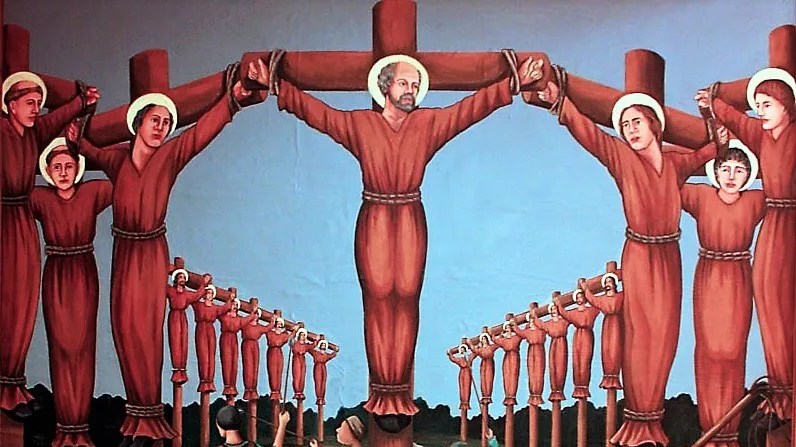
    The same spirit and attitude of the heart has been shown by St. Paul Miki and his many companions. This Japanese Jesuit Priest together with his friends continued to bring blessing even to their persecutors until their death. Paul Miki was from an affluent family but left influence and comfort to embrace Christianity and a missionary. In the midst of Christian persecution in his own land in Japan, Paul Miki and his companions remained steadfast and committed to bring blessing to people.

    This tells us now that true power does not rest in our capacity to destroy others but in our capacity to give life, to heal, to bless and make peace even in the midst of poverty, persecutions and insecurities.

    There are two essentials now that we are invited to bring.

    First, to trust God’s generosity and power. The Lord provides the needs of His friends and this is experienced by us through the generosity of people around us. The abiding presence of God is with us. And to fully trust in God’s Providence is an act of faith. This is the reason why the twelve were to bring nothing. It was to allow themselves to become companions and friends of the people whom they were to encounter. They may have the power given by God, yet, they were not above the people or apart from the people. They were equal in status as companions and friends. They were to live among the people and be immersed in the life of the people.

    Second, to carry and give blessing, always. This makes the Kingdom of God to grow more in our hearts, homes and communities. As we carry and give blessing, the more we also receive blessing because we become more conscious of the essentials and able to let go what prevents us. Even in the midst of our poverty or persecution may we remain blessed. Hinaut pa.
  • Bitterness Deprives Us of God’s Grace

    Bitterness Deprives Us of God’s Grace

    February 5, 2025 – Memorial of Saint Agatha, Virgin and Martyr

    Click here for the readings (https://bible.usccb.org/bible/readings/020525.cfm)

    When the brain is deprived of oxygen, medical science tells us that it can lead us to loss of consciousness. And longer deprivation of oxygen as in the case of drowning can lead to more damage to the brain and even death. When we too are being deprived of essentials in our relationships like love and acceptance, it also leads us to confusion, depression and even in losing ourselves.

    In matters of faith, depriving oneself of the grace of God will lead us to hopelessness and misery in this life. Yet the Holy Scriptures teach us that God always gives life, blesses life and renews our life. God never stops that.

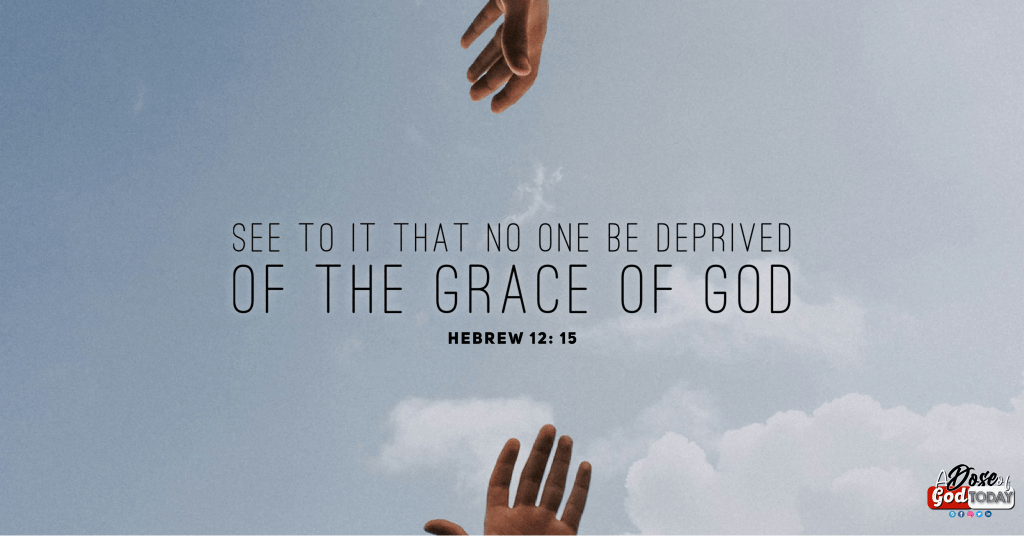
    In fact, this is the reason why grace overflows so that no one will be deprived of the grace of God. The first reading from Letter to the Hebrews reminds us of this. We were reminded to strive for peace with everyone because without it, we shall have troubles and bitterness in our hearts. As the grace of God overflows, the Letter also invites all Christian believers to “see to it that no one is deprived of the grace of God.”

    This tells us that our participation has an effect in making God’s grace to truly overflow and be experienced by all. However, one can actually deprive oneself or others of the grace of God when the heart refuses God’s grace.

    Yet, why would a person refuse to welcome and accept something that is so wonderful like the grace of God? Is this even possible? Indeed, this is very possible that a person will refuse to accept God’s grace because of a heart hardened by jealousy, false judgment, bitterness and hatred. This is a heart seeks no peace.

    This is what we have heard in today’s Gospel. As Jesus went home, he was welcomed with bitterness and hatred by his own neighbors. Jesus did many miracles in other places but was questioned and judged by the people who knew him. Their thoughts were merely based on the familiar background of Jesus of being a carpenter, being a son of Mary, being a brother to his cousins.  Outside of these, they failed to see that there was more in the life of Jesus. The people failed to see the overflowing grace in the life of Jesus. As a result, the people took offence at him.

    They felt offended because they could not accept the opportunity of being graced by the life of Jesus who was only ordinary for them. This is how a bitter and hateful heart affects our relationship with others. All Jesus could do was to heal few sick people. And it was not that Jesus did not want to do any miracle because of their bitterness towards him. Jesus just couldn’t because the people did not cooperate with the grace of God. The bitterness in their hearts made them refuse and be deprived of God’s grace.

    Indeed, God can only work when we allow God to work miracles. The lack of faith of the people is a way of refusal of God’s grace. This tells us that God, though all-powerful, does not impose the Divine power on us. God would rather invite us to allow Him to work miracles for us.

    Besides, the people expressed their non-cooperation with the grace of God through their lack of faith. And Mark tells us that Jesus was amazed of their lack of faith. It was just amazing for the Lord because the people have witnessed how the grace of Jesus’ life could do for them yet they still refused. The lack of faith in them was even reinforced because their hearts were filled with jealousy, false judgment, bitterness and hatred.

    Yet, as the Letter to the Hebrews calls us, “see to it that no one is deprived of the grace of God.” This is the call for us today. Let us not deprive ourselves of the grace of God or deprive others. Let God’s grace overflow then, through us and through the gift of persons of one another, like St. Agatha whose feast we celebrate today.

    St. Agatha though was subjected to suffering because of a sexual desire of a Roman governor, grew more in her faith in God. In the midst of torture, even when her breast was torn off and later was burned alive, the grace of God flowed through her. Her commitment to Christ and through her martyrdom, she became a channel of miracles of healing.

    And so, with St. Agatha’s intercession, let not our hearts nurture bitterness, hatred, jealousy and false judgment on others in order not to deprive ourselves or others of the grace of God. Let us rather nurture an attitude that welcomes the grace of God through the gift of our persons. And we can do this by striving for peace. Hinaut pa.

  • Embracing Faith Amidst Life’s Storms

    Embracing Faith Amidst Life’s Storms

    February 1, 2025 – Saturday Third Week in Ordinary Time

    Click here for the readings (https://bible.usccb.org/bible/readings/020125.cfm)

    Faith is the realization of what is hoped for and the evidence of things not seen.” This is what the Letter to the Hebrews reminds us as it recalled the faith of Abraham. Despite the many trials and seemingly impossible things to happen in the life of Abraham and his wife, Sarah, they remained steadfast in their faith in God. Abraham took the risk to trust in God and so his faith grew and matured.

    Indeed, it was through his faith that what he hoped for, was being realized. Even though, he did not know where would God lead him, yet, he continued to believe. And so, the Lord blessed him and made him the father of many nations.

    However, in today’s Gospel, we too are reminded of our human tendency to doubt and be paralyzed by fear. “Why are you so afraid, you of little faith?” This was the questions of Jesus to his disciples when they woke him up. They were terrified by the storm that was sweeping their boat.

    Certainly, they were afraid that their boat might be destroyed and they would be drowned and die. However, there was a very interesting part of this Gospel story.

    While the storm was sweeping the boat and the disciples were terrified by it, Jesus was fast asleep on a cushion. Jesus was there in the boat with his disciples but sleeping. It seemed that Jesus was not so concerned with the storm. He was confident that they would arrive at their destination safe and sound.

    The Gospel today tells us of these two important lessons on faith.

    First, the forgetfulness of the disciples that Jesus was with them brought them tremendous fear and anxiety.  They forgot that Jesus was in the boat and that their Lord was with them on that journey. And so, they seemed to lost their faith that Jesus was with them.

    Consequently, they have actually taken for granted the very presence of Jesus in their life. This is an invitation for the disciples to always recognize the presence of Jesus.

    And so for us today, this is an invitation to recognize Jesus in our journey. The Lord is not distant. He is to be found and He is journeying with us. Have faith in this.

    Thus, when we are not aware of God’s presence in us, it brings us fear, anxiety and uncertainty. When we become fearful, anxious and uncertain, then, we will be paralyzed mentally and spiritually. It will be very difficult for us to move on and to find opportunities of growth because we will tend to focus on the storm rather on Jesus who is with us.

    Second, because of this terrifying situation of the disciples, it became an opportunity for Jesus to reveal Himself as Lord and Savior. At this revelation Jesus assured his disciples that his presence brings comfort and peace, calmness and confidence. At the same time, the Lord’s presence also is confronting. Jesus confronts the doubts and the little faith of his disciples. This is the reason why it was not only the wind and the sea that calmed down but also the terrified and anxious hearts of the disciples.

    This tells us now that the presence of Jesus brings assurance and confidence in us. The disciples calmed down and found peace because at last, they have recognized the presence of Jesus who was there in that boat.

    Therefore, have faith and recognize the comforting and peaceful presence of Jesus in our life. Let us also allow Jesus to confront us especially our doubts and fears, and even our selfish, unkind and ungenerous actions and words. By being able to recognize Jesus and confront ourselves then we shall certainly find peace and calmness, confidence and assurance in Jesus. Hinaut pa.

  • Filled with Grace and Power

    Filled with Grace and Power

    December 26, 2024 – Thursday, Feast of St Stephen, First Martyr

    Click here for the readings (https://bible.usccb.org/bible/readings/122624.cfm)

    Christmas is a joyful season. The music, decorations, the variety of food and the many gatherings during this season give the festive and joyous atmosphere. Yet, the liturgy today, just a day after the birth of Jesus reminds us how faith and commitment to the Word-made-flesh will make us a contradiction to many.

    Indeed, yesterday we celebrated the joyful birthday of a child and today we celebrate the cruel death of an innocent man. In some ways, the birth of Jesus led to the death of Stephen, one of the first deacons of the church and the first Martyr. Stephen was put to death because of his faith in Jesus, declaring him to be the glorious Son of Man standing at the right hand of God.

    St. Luke describes Stephen dying with two prayers on his lips. First, a prayer of surrender, “Lord, Jesus, receive my spirit.” Second, a prayer of petition for his executioners, “Lord, do not hold this sin against them.

    When Jesus was dying on the cross, he had two similar prayers on his lips as well, a prayer of surrender, “Father, into your hands I commend my spirit” and a prayer of petition for his executioners, “Father, forgive them for they know not what they are doing.” We can see that Jesus prays to the Father while Stephen prays to the risen Lord.

    Mary’s child is now the risen Lord and can be prayed to as we would pray to God. In the church, we often pray to the Father through Jesus, but we are also invited to pray directly to Jesus. Stephen died as Jesus died because he was “filled with the Holy Spirit.”

    We have been given the gift of the same Holy Spirit, and it is the Spirit who empowers us both to live like Jesus and to die like Jesus. On this feast of Saint Stephen, we pray for a fresh outpouring of that Spirit into our lives in this Season of Christmas that we may also be filled with grace and power like him. Hinaut pa.

  • Unboxing God’s Wonderful Gifts

    Unboxing God’s Wonderful Gifts

    December 24, 2024 – Ninth Day of Misa de Aguinaldo

    Click here for the readings (https://bible.usccb.org/bible/readings/122424.cfm)

    Our traumatic experiences, sad and painful events that happened in our life could be our heavy reasons to retreat into sadness and desperation. Sometimes, we could not help it because what had occurred to us was just too much to bear, and too overwhelming. Such experiences can be likened to darkness where every gleam of the light of joy and comfort was deprived from us.

    In fact, the bombing that had happened a year ago, of which many of you were survivors of that horrible and evil act, could have made you traumatized and to ask the Lord for a reason why it happened to our community. Others are still carrying the shadow of fear and anxiety, for the possibility that it might happen again.

    However, there are many of us also who despite those painful, traumatic and heartbreaking experiences in life, they persisted to hope again and too see something beyond the darkness that had befallen into their life. This is how realize how hope becomes a powerful movement towards transformation within us.

    And for us to have a better understanding on this and a better realization on the wonder of seeing beyond darkness and hoping beyond pain and sadness, let us rediscover God’s invitation for us today and see how the three gifts of presence, of light and of life were slowly being unboxed in today’s readings.

    In the Second Book of Samuel, the prophet proclaimed the gift of presence to be given to David. David who thought that he should build a house for God, was promised by the Lord rather to be given a house that will last forever. David was reminded that it is God who builds a strong house for us. This is the covenant so dear to the people because God will be a father.

    Likewise, the Psalm also expressed a similar hope. Because of the suffering endured by the people of this time, they longed to that promise of God who shall show an everlasting kindness. What kept them hopeful was their confidence in God’s faithfulness because God is our Father. This confidence in God as Father, is the gift of the presence of God being unboxed slowly throughout the history of Israel and of the story of our salvation.

    In the Gospel of Luke, what has been proclaimed to us today is the Song of Zechariah. Yet, remember, before he was able to sing this, Zechariah was muted by God. Because of his unbelief of God’s gift to him, Zechariah was silenced. He did not listen and believe in God’s revelation.

    Remember again, Zechariah’s unbelieving response was a bitter reaction to God. Zechariah must have believed that God had forgotten him and abandoned him. The shame that he endured for being childless for many years must have brought him to hopelessness. He forgot that God was faithful and a father to him.

    Yet, despite this reaction of Zechariah towards the gift of God, John was given to him and to his wife. The birth of John, was a gift of light. The dark shame and guilt of Zechariah was removed because of this gift of light. John was a light to him and to people who came to be baptized by John. John also led people to see the true light. John as the prophet of the Most High, himself unboxed the gift of light for people to see and be illuminated by God’s grace. He unboxed that gift through his preaching of the coming of the Messiah, the Lamb of God who was in their midst.

    This is how Zechariah recalled the covenant of God and the fulfillment of the promise of a mighty Savior. In his song, he also recounted how his eyes have seen clearly that promise being unfolded through the birth of his son. John will go before the Lord to prepare his way, to give knowledge of salvation by the forgiveness of sins. The song of Zechariah itself is the unboxing of the gift of life.

    The Song of Zechariah proclaims to us the abundance of life coming into us now and that we too, each of us, is unboxing this gift of life.

    With all of these, how do we unbox the gifts given to us by the Lord? How shall we unbox God’s wonderful gifts when we are still overshadowed by fear, guilt, shame and sin?

    First, we unbox the gift of presence of God by becoming confident in God’s presence. Both the Second Book of Samuel and the Psalm tell us that God is our Father. Take confidence in this. It is because that God is a Father to us, God will always be for us. We may have not so nice experiences with our earthly fathers, but God as our Father, will never hurt and will never leave us.

    Second, we unbox the gift of light when we accept and confront our own blindness and our own darkness. Like Zechariah, he was confronted by the Angel of his unbelief. John also confronted the sins of the people and their corrupt ways so that the Lord will be welcomed. Let us also confront and challenge ourselves not to succumb to what is dark and to what is evil. Only then, also that we will be able to confront the darkness and the evil around us when we are confident that we have unboxed the gift of light, who is Jesus.

    Third, we also unbox the gift of life when we learn to embrace the beauty and the wonder of every form of life. God is born like us, and God chooses to be born because God is life and God is for life. When we learn to show respect to all life, cherish all life and protect all life, then we unbox this gift and be gifted with eternal life.

    Now, the gifts of presence, of light and life is Jesus himself. These are God’s wonderful gifts for you and for me. Remember that. Hinaut pa.