Category: Fr. Jom Baring, CSsR

  • BEING A TRUE FRIEND

    BEING A TRUE FRIEND

    May 23, 2025 – Friday of the Fifth Week of Easter

    Click here for the readings (https://bible.usccb.org/bible/readings/052325.cfm)

    How many friends or followers do you have in your Facebook account? Or in your other social media accounts? Those of us who have Facebook account may have hundreds of friends. Others even have a thousand or more friends. But, do we really consider every person there as our “friend?” Do each of them share closeness and intimacy with us?

    Today, the word “friend” may have other meanings. Our friends in our social media accounts are actually our contacts or connections. However, having those “friends” do not mean that we have intimate and personal relationships with each of them. Perhaps, to some people we really have but most, we don’t, because they are our acquaintances at school, at work, at events or friends of friends.

    It may seem common today to have such tendency to accumulate friends, to make and have friends. It is our desire to be socially connected with others through the internet. We too want to be identified by people to whom we make contacts. Yet, we could become more conscious of having friends and affiliate ourselves with others rather than “being a friend.”

    We realize that to have friends and to be a friend have different natures and intentions. To have friends has the tendency to be self-absorbed, self-conscious and selfish because this attitude looks inward. On the other hand, to be a friend is an action that comes with commitment. Thus, it is self-giving and self-sacrificing. This attitude looks outward and is other-oriented.

    This is the very kind of friendship that Jesus talks about in the Gospel. Jesus calls each of us to be his friends. The friendship that Jesus offers is self-giving and self-sacrificing. Jesus commits himself to us as his friends. His commitment is summed up in his love for you and for me by offering himself on the cross on our behalf.

    Hence, the friendship of Jesus is not about using us or so that he may get something from us. His friendship is not about feeding his ego. Rather, his friendship with us is about giving oneself. Through this friendship he calls us as his friends, not slaves, not mere acquaintances or contacts.

    This is Jesus’ invitation to each of us now, that you and me will grow in that friendship with Him. We are called to develop our personal and intimate friendship with Jesus through our constant “chats” expressed through our prayers and this Eucharist. Friendship grows when we come to know each other both our pains and joys, failures and hopes, frustrations and growth.

    And because this friendship is not inward but rather an outward relationship, our friendship with Jesus should inspire us “to become a true friend.”

    Yes, we, who are friends of Jesus are called to be a friend of everyone. We too are invited to express the same love that we have received from Jesus by sharing ourselves and presence. We are called to “shout out” the goodness that the Lord has revealed to us. We are invited “to post what’s on our mind and heart” so that others may know and grow  in their friendship with Jesus.

    So, friends of Jesus – go and be a true friend to others! Hinaut pa.

  • That Your Joy Might be Complete

    That Your Joy Might be Complete

    May 22, 2025 – Thursday of the Fifth Week of Easter

    Click here for the readings (https://bible.usccb.org/bible/readings/052225.cfm)

    What keeps us going? What keeps us dreaming and hoping? Joy as a deep-seated contentment and peace, plays a very important part in our lives as Christians. It is that profound joy that will keep us going, dreaming and hoping. It is joy that will make us not just surviving, but in truly living.

    Jesus addressed his disciples and reminded them of this important desire of the Lord for them. Jesus said, “I have told you this so that my joy might be in you and your joy might be complete.” The Lord addressed them when later on he will undergo such painful and shameful death of the cross. There was so much suffering to come. This was the time to make his disciple see better what joy was all about.

    Although, only later on as well that the disciples, now Apostles of the good news of Jesus, have understood well what this joy from Jesus meant. In the Acts of the Apostles, the first Christians faced with dilemma because of their difference in doctrines and cultures. In the midst of conflict and tensions, they too have realized that at the center of everything should always be the Risen Jesus and their well-rounded relationship with each one.

    Joy is fully discovered not when we are alone. Joy is fully manifested in our relationship with God and shared commitment to love each other. As we begin to see lesser ourselves, lesser of our biases and personal comfort, we too begin to see more Jesus and our brothers and sisters.

    In this way, the Apostles together with the first Christians learned to adjust with one another and not to impose their old belief system upon each other. What had become more important is their faith in Jesus, of their love for each other.

    This makes joy complete. We realize also today that our joy is basically founded in our confidence of being first loved by the Lord. No matter who we are and what dirt we have because of sin and guilt we have committed, this love of God will never diminish. Such love brings us to respond in love and show such love in most concrete ways of loving. This is how joy becomes full in us, with Jesus and with our commitment to love each other. Hinaut pa.

  • To Ask Anything in the Name of Jesus

    To Ask Anything in the Name of Jesus

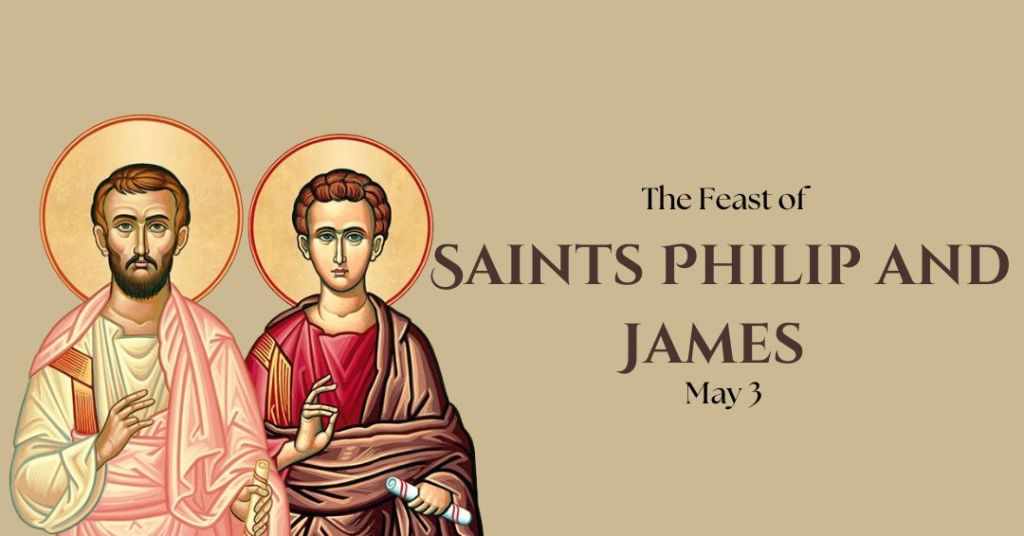
    May 3, 2025 – Feast of Sts. James and Philip

    Click here for the readings (https://bible.usccb.org/bible/readings/050325.cfm)

    When you come to church, when you pray, and beg the Lord – what do you ask? What attitude do we have in asking the Lord for grace? What inner desires do we foster as we beg the Lord?

    On this feast day of Sts. James and Philip, Jesus tells us, “if you ask anything in my name, I will do it.” But, what does it mean anything? And what does it mean to ask in Jesus’ name?

    Does Jesus mean that we can just ask anything we want? Does it mean that I can also ask Jesus to give me a lifetime premium subscription on Netflix with an unlimited supply of popcorn and bottomless four-season juice drink? Or can I also ask Jesus to make me Summa Cum Laude this coming graduation? Is this the kind of prayer that Jesus invites us?

    Today, Jesus tells us to ask “in his name.” The beauty lies in the prayer that considers the desire of God for us. It means that in our prayer we do not forget Jesus. We do not forget Jesus’s desire for us and his will for us.

    This tells us of our relationship with Jesus. This should not be understood as a mere limitation with the options we have in asking. Instead, “asking in his name” widens our perspective in asking grace from the Lord.

    This invites us to a deeper awareness of Jesus’ heart, of Jesus’ desires and of Jesus’ plans for us. It is certain that what Jesus desires for us is always good, always for our growth, always for our freedom.

    Therefore, to ask in Jesus’ name is to allow letting go on what we only want. We let go also of our own preferences which may be influenced by our selfish desires, guilt, sin and evil.

    Instead of praying – “this is what I want and wish Lord,” ask and pray rather first in this way, “what is your desire for me Lord?”

    Only then that we will be able to get away from our selfish tendencies and intentions because we shift our focus from ourselves to God. We begin to shift from praying that comes only from personal wants to praying in his name.

    This is now our prayer and our desire that in asking grace from the Lord, we may also grow more in our knowledge of Jesus. Know Jesus not just on our head level but also of the heart.

    Through the intercession of St. Philip and St. James, may we dare to encounter the Lord among our brothers and sister; to encounter the Lord in our human experiences; and to encounter him in our daily struggles in life. Hinaut pa.

  • Be that Nameless Boy today

    Be that Nameless Boy today

    May 2, 2025 – Friday of the Second Week of Easter

    Click here for the readings (https://bible.usccb.org/bible/readings/050225.cfm)

    We experience hunger when we opt not to eat as what we practice when we fast. Others experience hunger not because they chose not to eat but because they don’t have something to eat. These are forms of physical hunger. Yet, we too might experience hunger for love, for acceptance, for healing, for freedom, for peace, for reconciliation, for justice.

    Being aware of these forms of hunger in us and of our need to be satisfied and fulfilled, we too need to be aware of the hunger that others around us are suffering. Our Gospel would actually help us to be more conscious of such hunger and of other forms of hunger around us.

    St. John told us that Jesus was aware of the needs of the people. He was not just conscious of their spiritual hunger but even their physical hunger. This consciousness of Jesus impelled him to ask Phillip, “Where can we buy enough food for them to eat?” Jesus was not simply seeing their hunger, he too felt their hunger. This urged Jesus to do something.

    However, Jesus needed the participation of other people around him. Phillip could not think of anything since they did not have enough money to buy food for all.

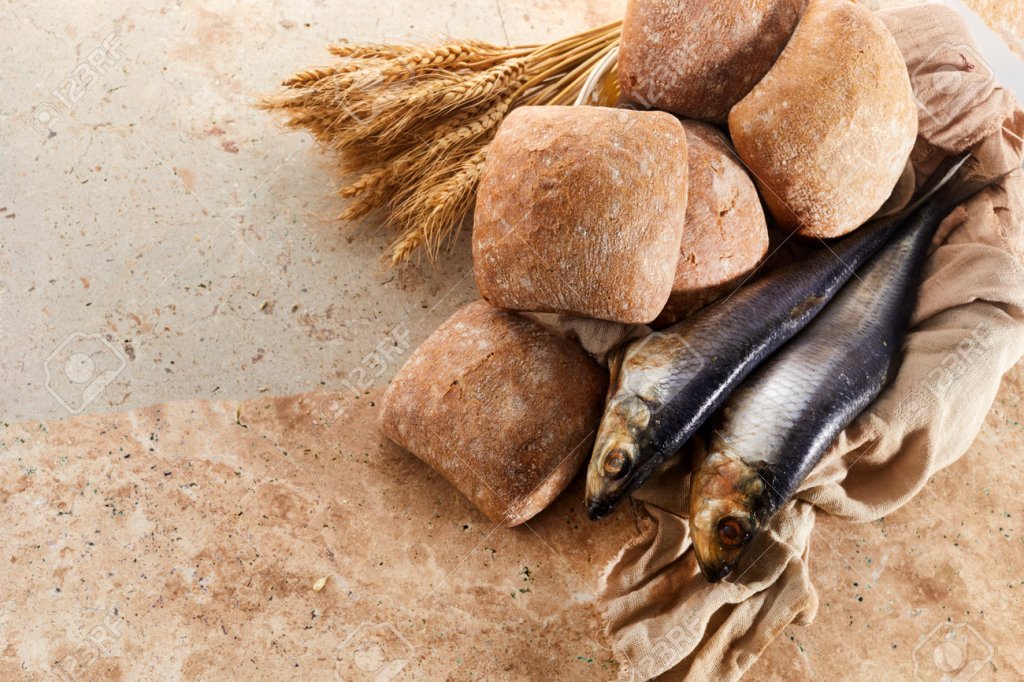
    It was Andrew who brought to Jesus a boy. The boy had five barley loaves and two fish. The appearance of the boy in the story was very symbolic. He was nameless and faceless. He was just a boy with the little food that he offered to Jesus. Yet, he and his small gesture was already something.

    The nameless boy and his small share was the perfect offering that Jesus needed. Out of that small act of kindness, Jesus did something which made everyone to wonder. Indeed, the Gospel tells us of the wonder when a small act of generosity makes a difference to many. That small share given became abundant.

    From here, the Risen Jesus invites us too to offer sincerely the little that we have. The world’s problem on hunger is too big for us to respond yet our share is so insignificant. But remember, the five loaves and two fish of that nameless boy were insignificant compared to the five thousand men. And despite, boy did not hide what he had. He, rather, offered generously what he had to Jesus.

    The boy and his action tell us now of our own vulnerabilities and insecurities. Yet, that also remind us of the power behind a generous and kind action. To give away the little that we have, makes us insecure. However, it is also through the little that we own that the Lord works wonderfully.

    Giving something and feeling how vulnerable we can be also become a true response of generosity. As the Gospel of John tells us, the Lord needs our participation, our small contribution. This is how Jesus works wonders through us and through our small acts of generosity and kindness. In this way, the Lord will be able to continue to feed the various hungers around us. These many hungers involve hunger for food, for shelter, for a home and family, for friendship, for acceptance, for love and intimacy, for healing, or for a deeper relationship with God.

    Hence, be that nameless boy today. Hinaut pa.

  • FREEDOM FROM OUR OWN PRISON CELLS

    FREEDOM FROM OUR OWN PRISON CELLS

    April 30, 2025 – Wednesday of the Second Week of Easter

    Click here for the readings (https://bible.usccb.org/bible/readings/043025.cfm)

    When I was a novice, there would be a day in a week when we would visit the city jail. In our weekly visits, as I have become comfortable making friends with the inmates, now called as, Persons Deprived of Liberty, I asked one of them who have become a close friend of mine. I asked how was he and his life inside the City Jail. Great was his dismay for the crime he did. He violated the law and so deserved to be punished. Because of this, he felt deep longing and loneliness. He had many fears but for him, he said, he had to face them because he had to pay the crime he did. He, together with the others, have been deprived of liberty because of a crime committed or suspected to have done a crime.

    Peter and John, as told to us by the Acts of the Apostles, were also deprived of liberty. This was, in fact, the second time that both were brought to the prison. They were deprived of liberty because of the jealousy of some leaders at that time. They were jealous of the many good things the apostles did. They were jealous because people believed more to Peter and John rather than to them.

    The Apostles preached Jesus and His resurrection from the dead. They too healed the sick. They helped the poor and the needy around them. They responded with generosity to those who needed their help. What the Apostles did were concrete expressions of what they believed and held in their hearts.  Their faith in the person of the Risen Jesus became their way of life.

    As both were imprisoned, surely, they too were afraid and worried on what will happen to them. However, this time, they had enough trust and faith in God. The constant invitation of Jesus, “Do not be afraid! Peace be with you!” has grown in their hearts.

    These are just two kinds of physical imprisonment. One is imprisoned because of a crime committed and the other because those in authorities were just filled with jealousy and malice towards those who did good and preached the Gospel.

    However, there is also another form of imprisonment which is not physical. This was the case of the authorities. The chief priest, Sadducees and Pharisees who continued to persecute the Apostles and felt jealous towards them, were truly imprisoned by their blindness and hardness of heart. They were imprisoned by their greed and envy, by their fear and doubts and by their refusal to believe in the resurrection of Jesus of Nazareth.

    Thus, it was self-imprisoned caused by their own jealousy and unbelief. The Gospel portrays these kinds of people with those who preferred darkness than light, because their works were evil.

    We too examine ourselves today. In what way am I also being imprisoned? Or what is it that imprisons me today? What keeps and prevents me from bring free and to be truly I am? What are those that I consider as my prison cells that suffocate and limit the person I am called to be?

    Let us be more reflective and discerning of these things. Ask the grace from the Risen Christ to enlighten and to free us from our own prison cells.

    Pray, that we may be able to see and recognize areas of our life where we are being imprisoned.

    Pray, that we may be free and become the person and community that we are called to be, and that is to be a “light.”

    Hence, believe in the Risen Christ who brings us light. Jesus was sent by the Father to redeem us and not to condemn us to death. Let us also join our prayers to Mary, Our Mother of Perpetual Help so that she may help us in recognizing better ourselves and to see the light of the face of her Son, Jesus. Hinaut pa.