The Gospel story from Matthew presents to us how truth can be manipulated by people who desired to advance their personal agenda. The soldiers who were witnesses of the Resurrection were paid not to tell what really happened but to create another story. These soldiers must have been filled with awe and wonder in the event of the resurrection. Light must have pierced into their unbelieving hearts. However, what was sad in their story was when they were presented with the immediate comfort of money.
They were willing to cover the truth of resurrection and create fake news for the sake of money. They accepted a corrupt offer to spill the untruth to people rather than to tell others of God’s power and mercy.
Why was that? Is money more powerful than God? Certainly not. It is just deceiving.
Nevertheless, apart from this sad story, we still have the women who showed to us how the resurrection of Jesus changed their life. The Gospel tells us that they were still fearful yet “overjoyed.” This means that despite the seeming darkness they have experienced in the past days and the fear that enveloped them, the presence of Jesus filled them with so much joy.
The women did not succum to despair and fear unlike the soldier who succumbed to money and corruption. The women continued to believe in Jesus in spite of the confusions and even pain and suffering that they witnessed. They never lost their hope in Jesus.
This kind of attitude in them was showed in their action as they went to the tomb early in the morning. The tomb surely would remind them of the death of Jesus, meaning, of sadness and failure, of pain and disappointment. However, even in the midst of all of these, they found a reason to find light in the midst of darkness, to find hope in the midst of hopelessness and to find life in the midst of death.
And true enough, as they desired to see Jesus, they indeed saw and witnessed the glory of resurrection. This was how they also found their mission, and that was to be Jesus’ witnesses to others.
Now, as Jesus called them to tell other disciples about him, each of us now too is called to tell others of Jesus’ presence in our very life. Galilee, then, is very important here. Galilee, indeed, was a very symbolic place.
The people in Galilee were the excluded, the poor, and the marginalized where only bad news were heard and imposed. And Jesus grew up in this environment. He indeed belonged to this marginalized-second-class people who were systematically oppressed by oppressive powers. And Jesus identifies himself with them. With them Jesus shared food, drinks and stories. Moreover, Jesus called his disciples who were mostly Galileans, in the poor and marginalized people.
Galilee now represented the world where people continued to suffer, to be marginalized and oppressed. It is in this place where Jesus will be found by the disciples and where the good news of the resurrection will also be preached.
As disciples and modern day apostles of Jesus, we are to seek also the marginalized and the oppressed in our society. We are to bring hope and good news to those who are troubled and in despair. It is to be faithful to the mission of Jesus entrusted to us his believers that we shall also meet the risen Christ. This mission is surely radical and demanding, thus, it must always be motivated through the person of Jesus with the power of the Holy Spirit. Yes, only through the person of Jesus and not in money, in benefits or comforts for ourselves.
As we respond to the call of the Risen Lord, may we find him more in our efforts in making difference in the lives of our brothers and sisters especially in this difficult times brought by the pandemic Covid-19. Hinaut pa.
An Easter message by Fr. Glenn Tito Pascual, CSsR – Prefect of Students, Redemptorist Formation Community, Davao City.
I am very afraid Lord. We are afraid. I don’t know until when my courage can last, Lord. How long?
I dread this night that I will preach before you the Easter message. I dread it because I do not know what to say to all of you about the joy, hope and the life that Easter brings. I am afraid that someone will ask,
“Is there joy about our situation? Is there still hope when more than a million across the world are sick because of covid-19? I am afraid if someone will say, what life awaits us when there are 4,428 confirmed cases and 247 death all over the Philippines as of tonight? When we second the highest number of cases in the ASEAN region, next to Malaysia, how long will this last? Until when shall we endure?”
These are the questions of many and the same questions that I also have. Honestly I do not know the answer that is why I dread this night to preach before you.
Advertisements
I tried to reflect and pray over and over again on the readings for today. It seems nothing inspired me. I caught myself still searching for an answer to the questions that I have and I share with others… “Until when Lord? Until when will this covid-19 last?”
I am very afraid Lord. We are afraid. I don’t know until when my courage can last, Lord. How long?
As I was struggling inside myself there was just nothingness, darkness, emptiness… no answer. I messaged our Community Superior and another brother in the community this morning. I told them “I cannot preach tonight. It seems I have no inspiration from God. What words to console God’s people when I myself feel that we are in darkness.”
Empty. Nothing. Darkness… then fear came.
I started to be afraid when questions came into my consciousness, “What if the lockdown continues, do we have enough food to eat? Or what if a relative, a friend a member of the family or me becomes sick of covid-19? What will happen to us?”
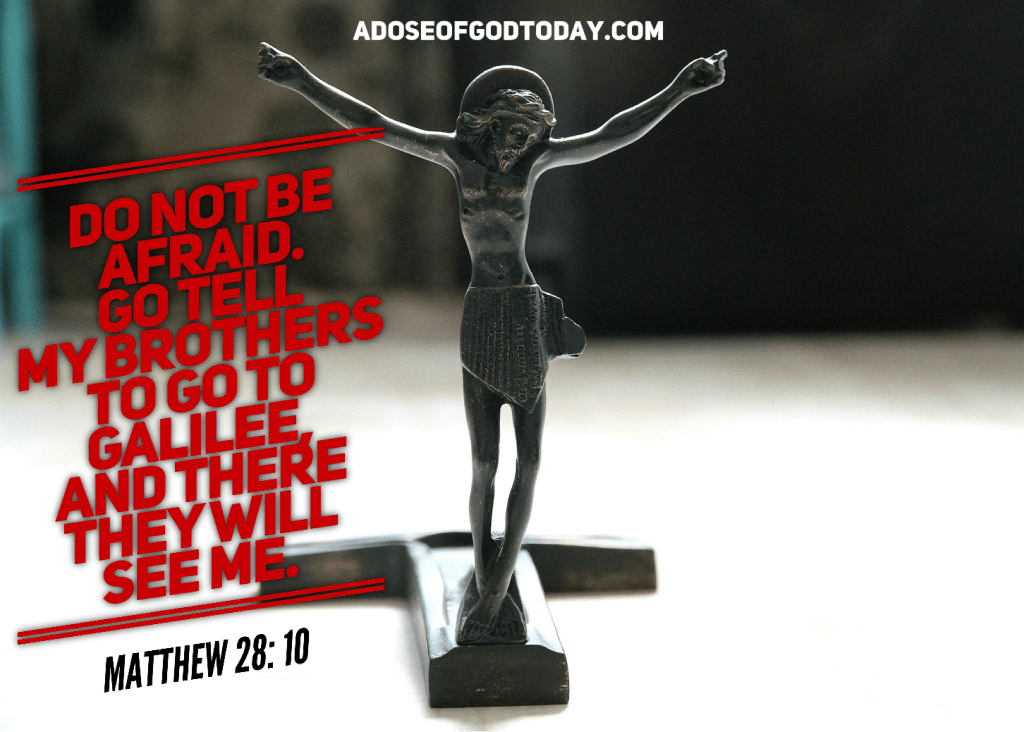
Again fear came to me. I struggled in my prayer until I glanced back at the Gospel and my eyes immediately caught sight of the words “DO NOT BE AFRAID”. When I read those words there was a seeming energy that moved me closer to read the Gospel again and the words “Do not be afraid” were repeated on the same text twice.
Click here for the video recording.
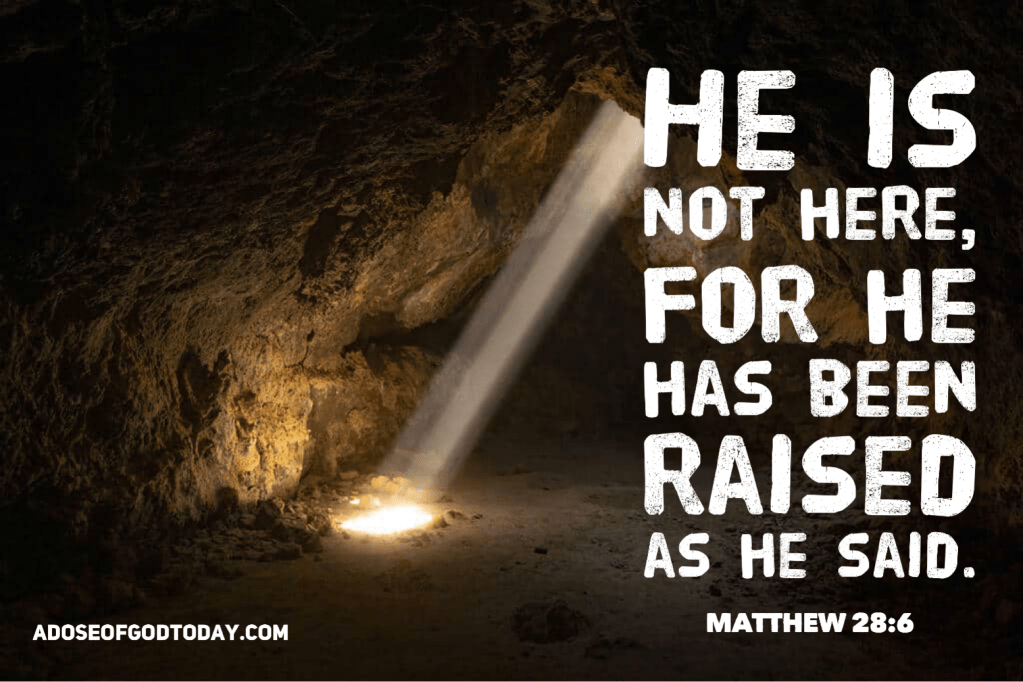
When Mary Magdalene and the other Mary went to the tomb, the angel greeted them “Do not be afraid!” The angel told them that Jesus is not in the tomb. Then the angel invited them to enter the empty tomb. The same words are also spoken to us by the angel today, “Do not be afraid!” Just as the angel invited Mary Magdalene to enter into the empty tomb, we too are invited today to enter into the seeming emptiness of our lives. We are invited to look into our questions of “how long Lord? Until when will this last?” We are invited to enter into the darkness of our fears of ‘what if someone I love is sick? What if I am the next to be sick?”
Join 2,853 other subscribers
We are invited to see that we are only people passing by on this earth. We are invited that we are nothing. We came to this world with nothing and we will leave this world with nothing except for our faith in God. This is the beauty of this Easter Vigil celebration that we started with darkness. It was dark but it is only the light of Christ that can show us back to life. “Do not be afraid!”
The same words “Do not be afraid,” are repeated in the same gospel passage. When Mary Magdalene and the other woman were fearful but overjoyed they went back to tell others. On their way they met Jesus our Lord whose message to them again was “DO NOT BE AFRAID!” Then he added, “Go and tell my brothers to go to Galilee and see me.”
In a similar way Jesus gives the same consolation to all of us in the midst of our fears, “do not be afraid.” Although we are mortals, our life on this earth will end but it is the eternal life he promised that must propel us how to live a meaningful life.
Do not be afraid. Go tell my brothers is also a command for all of us. It is a command that we need to share the life we receive in Christ. We share Christ when we take care of each other in this time of the pandemic. We tell others about Jesus when we don’t hoard our resources but to also share them to those in need. After all, even if we have gathered so much possessions for ourselves, we can’t carry them when we die. We tell others about the Easter message of life when we help each other by staying at home and keeping social distancing. We share the hope of Easter when we act as brothers and sisters to one another and not as master-slave, superior-inferior, rich-poor, or good-sinner. Do not be afraid!
Advertisements
Do not be afraid because Easter reminds us that God created the world and is recreating it anew. So let us ask the Spirit of God to give us the gift of courage, faith and hope in the midst of what is happening in our world.
In prayer we echo the song “Spirt of God, creation is groaning: Fill the earth, bring it to birth, and blow where you will. Blow, blow, blow till I be. But the breath of the Spirit blowing in me.” Amen.
The word Alleluia is a Hebrew word that expresses rejoicing!
It is just right for us now to be joyful because the Lord is risen. Jesus is alive and did not abandon us at all. We might have felt fear and haunted by the anxiety brought by the Covid-19, but God remains truly faithful. He is with us and present among us.
Jesus’ resurrection is God’s ultimate declaration of God’s justice and mercy, for those who are oppressed, those who are in pain, for those who suffered and died.
These past few days, we have been reflecting on the passion, suffering and death of our Lord. The Easter triduum that started on Holy Thursday prepared us to enter into the great suffering of Jesus on Good Friday. On that day, we were deeply touched as we remember the death of Jesus as God’s expression of love for us.
By Black Saturday, of which the Great Silence has been observed, we were invited also to continue to reflect on this great mystery of love. Last night, we anticipate the resurrection of the Lord. Today, on this Easter morn, Mary of Magdala brought the news of the empty tomb to Peter and to the beloved disciple.
It would be good for us then to look deeper on how these three received the resurrection of Jesus.
Mary of Magdala was perhaps in great sadness as she came to the tomb of Jesus on that early morning. Perhaps, Mary was not able to sleep thinking that his master died and left her. What did she expect then when she went to the tomb, in that place of sorrow and pain? The Gospel tells us that Mary did not actually see the inner part of the tomb, but, she was sure that the Lord was not there. Mary brought this news to Peter and the beloved disciple that the Lord was taken away – Mary actually thought that Jesus’ body was taken away from them.
The beloved disciple upon hearing the news ran faster than Peter and arrived first. Yet, he did not enter until Peter arrived. He just bent down and saw the linen cloths lying flat.
When Peter arrived at the tomb, he entered and saw also the linen cloths lying flat. How will he explain this empty tomb now to the other disciples? He who denied the Lord three times might have been really confused and worried.
There was no word being uttered as they saw the empty tomb and the linen cloths. There was only silence. And silence from the empty tomb. They were perhaps confused of that event. But what was interesting was the napkin that had been rolled up in its place. That napkin was used to wrap the head of Jesus.
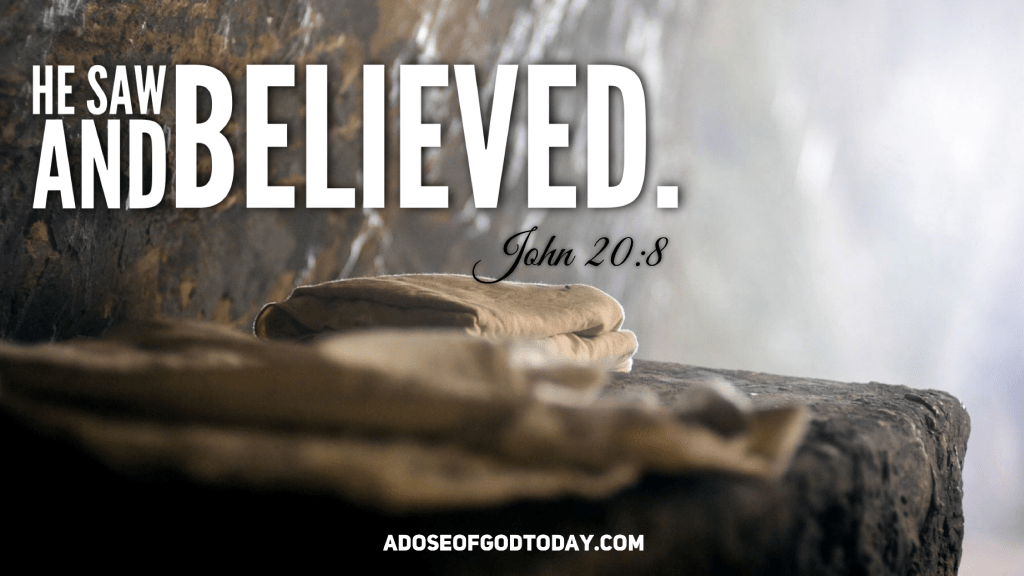
But when the beloved disciple entered also in the tomb, he saw and believed!
Yes, the beloved disciple who was dear to Jesus saw the signs, the empty tomb, the folded linens and napkin. Those were the signs that indeed the Lord was risen. He is alive. However, to these three, they did not yet fully understand what had happened.
This event triggered something in them and that is to seek their “own resurrection story.” Jesus did not appear to them immediately. Jesus allowed them to have doubts and to believe in him despite their own confusions and anxieties. Jesus permitted them to have a glimpse of his resurrection – a glimpse of the Easter joy.
This is now the invitation for us– that is to recognize our own resurrection story with the Lord.
We might find it difficult to find our own resurrection story because like Mary of Magdala and Peter, our hearts might still be clouded with despair and anxieties. Covid-19 has not yet left us until now despite the many weeks and even months for others of quarantine and lockdown. We have terribly missed by now the company of our friends and colleagues. Everyday the infection is rising and deaths are adding too.
However, let us look again of that beloved disciple who was personally close to Jesus. It was him who saw and believed!
But take note of this, what the beloved disciple saw was beyond “physical.” He did not see Jesus rising. He did not witness that. What he only saw and witnessed was the silence of the empty tomb. And beyond that, the beloved disciple felt and realized that something glorious happened. Seeing that, he believed that God conquered death. God has taken away sadness and fear. Jesus is here and he is alive. This is what he believed.
Therefore, let us come closer to Jesus because each one of us is dear to him too. In that way, we will be able to truly believe that the Lord has risen and has brought hope to all of us. This will help us to recognize the times where God has let us experience our own resurrection – in those times where we found ourselves in hopeless situation, yet we were given hope; in those times where we thought we were not valued, yet we were loved; in those times where we felt that we were abandoned, yet, after all we realized that we have friends and family members who treasured us.
Recognizing our own resurrection stories will make us more open to God’s invitation to believe in the joyful resurrection of Jesus where God dared to be at the side of the oppressed and the suffering people.
Let our faces now, be overwhelmed with our smiles and let it be translated into action by doing good things to others, by being more compassionate to your neighbor, by being considerate to those who are most in need, by being friendly and showing concern to people whom you will meet despite the “physical distancing.” Hinaut pa.
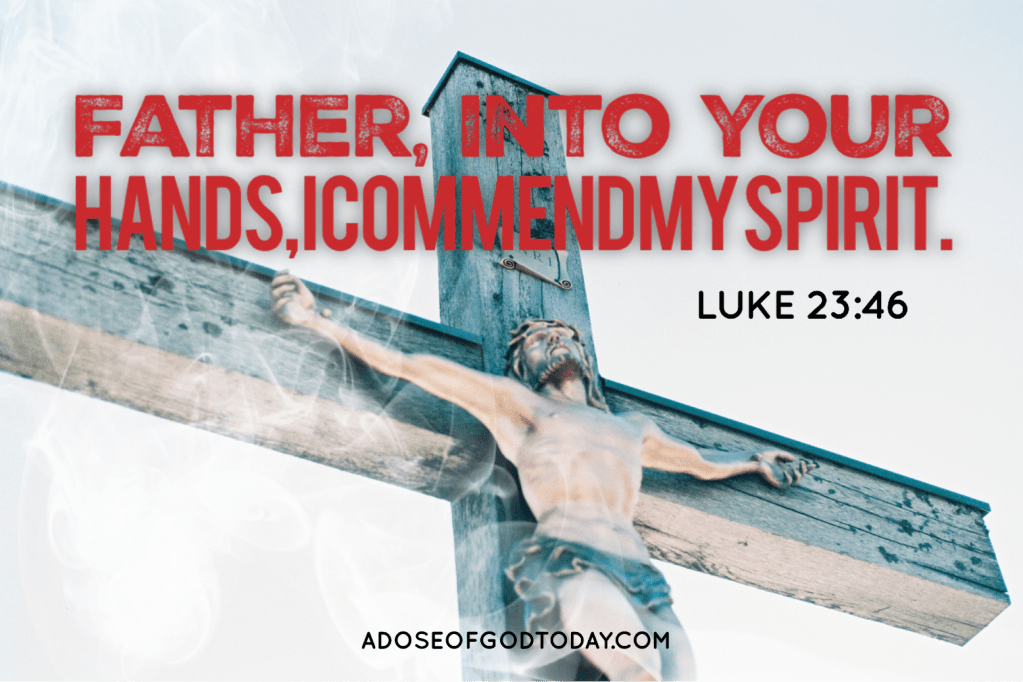
“Father, into thy hands, I commend my spirit.” (Luke 23:46)
The Seventh of the Seven Last Words of Jesus on the Cross.
Shared by Bro. Froilem Bonn Barreto, CSsR, on Good Friday, Siete Palabras
When I was informed to be the seventh sharer for this Siete Palabras, I asked myself silently, why me? What will I say since it is going to be live-streamed on Facebook. However, my formator told me that the seventh, which is “Father, into thy hands, I commend my spirit,” fits me well. Trusting in the support that was given to me by my formator, I accepted this task to courageously speak in front of you about my reflection and to share something about my life.
One of the most challenging and difficult times in our life is when we get into an experience where seemingly life does not allow us to breathe, and when life seems so unfair. When this thing happens, it does not meet our expectations. It does not let us see the beauty of life. This experience only brings us pain and misery instead of joy and comfort.
Like the rest of you, I too, have my own share of life’s ups and downs. I joined the seminary right after I graduated from high school. I enjoyed my seminary formation. However, as the old saying goes, “life is not a bed of roses.”
It was in 2002 when my life started to change. I was then a fresh graduate from college, working as a faculty member in a college institution when my mom passed away. She died of cancer at the age of 43. With my mom’s untimely death, things changed. Her death would mean missing a lot of things: her, waking us up early in the morning and cooking our meals. For me, I would surely miss her putting a hand towel on my back when I would sleep because I sweat a lot.
I believe that the words of Jesus “Father, into your hands, I commend my spirit,” invite us to re-examine our relationship with God.
I was not done yet in grieving over my mom’s death when another unpleasant surprise beset my family. In December of 2006, while on a mission exposure, around 2 a.m., I received a phone call. A woman on the other line was crying, and it took her a while until she was able to tell me the reason for her call – my aunt said that my father died of cardiac arrest. I was speechless. I did not know how to react. The first thing that I thought was my siblings. What I remembered then was that I caught myself picking and packing up my stuff because I wanted to go home. With my parents’ death, life will never be the same.
Growing up without my parents was a life filled with uncertainties. It felt like groping in the dark. I was anxious most of the time but I pretended to be strong. As the eldest in the brood of six, I was forced to take up a responsibility that was too heavy for me. I left the seminary and embraced anxieties and the responsibility to become a mother and a father not only to my siblings but myself as well.
It was difficult growing up without those people who are supposed to be there for their children. I was faced with a whole lot of concerns and issues ranging from personal, psycho-emotional, financial, and a lot more. And so, I braced myself. I worked hard from being a faculty member to being a customer service representative to being a resto-bar singer. On my rest days, I sang at weddings and other occasions just to augment the salary that I was receiving from the company.
But often, I caught myself complaining to God. In my moments of solitude, I kept on telling myself, had only my parents lived, we would never have experienced this kind of life. This particular experience created in me a feeling of resentment towards God.
In my prayer, I questioned him, “What kind of God are you?”, “What have we done, Lord, to deserve this?”Is the offering of my life to follow you not enough that in exchange, you are treating me like this? It is unfair!
In other words, I blamed God. I blamed him for everything. I was at the brink of losing my faith. I stopped going to church. And, what I disliked the most during those times was when people would come to us and comfort us by saying, “God has a purpose for doing this” and “God has a reason for everything.” Such insensitive comments!
I would react by saying, “kindly stop over spiritualizing things.” But like any other telenovelas, the story continues, the drama anthology continues. In 2006, a sister of mine, closest to me, was diagnosed with lupus, an autoimmune disease that has no cure at all. A health condition that is slowly killing her. She has been in and out of the hospital. She has two lovely and adorable kids. And thinking about her health condition bothers me a lot. In my prayer, I asked God, “Lord, please don’t allow her children to experience what we have experienced growing up without a mother.” I even shared this with my formator in one of our colloquiums. I expressed to him my fears and anxieties over the things that are beyond my control.
My dear brothers and sisters, Jesus’ last words are very powerful and compelling, I asked myself, why despite his agony, the humiliation he experienced, and unbearable pain on the cross, Jesus never blamed his Father. He instead uttered these words like a perfect prayer from the depths of his heart “Father into your hands, I commend my spirit.”
“Into your hands, I commend my spirit” is part of the psalm traditionally believed to be written by David and prayed by devout Jews. No wonder Jesus himself uttered these words before he breathed his last. It is a prayer of complete surrender, a prayer of unwavering trust to his Father. Jesus entrusted himself to his Father. “Father, into your hands, I commed my spirit” speak of a deep level of intimacy of Jesus with his Father. This line demonstrates what it is to be in a relationship with God. We see here that trust is such an essential element in a relationship. It is where a relationship should be anchored. We can only entrust something when we trust the other. There can be no genuine relationship when trust is absent. Trust brings a relationship to a deeper level and we see this concretely in the life of Jesus. No amount of pain, humiliation, and persecution prevented him from fulfilling his mission. This is because Jesus trusted his Father wholeheartedly.
Oftentimes, when we are faced with problems and difficulties, when we are carrying heavy crosses, our human tendency is that we lose track of our faith. We rely much on our human capacities and strengths. We become too focused on our suffering and pain, on what we can do to the extent that our energies are depleted, and we become exhausted. We start to complain, self-pity, regret, become anxious about what the future holds, and perhaps blame others, or even blame God. Jesus has given us a glorious example of total surrendering to God.
I believe that the words of Jesus “Father, into your hands, I commend my spirit,” invite us to re-examine our relationship with God.
Do we trust God wholeheartedly? It is so easy to say I believe in God, and I trust in Him when everything that happens is favorable to us. The real test of faith is when life offers us exactly the opposite, “Do we still manage to say, Yes Lord, I trust in you?
Trusting God does not remove our pains and suffering but transforms the meaning of these things in our life. Our faith and trust in God will sustain us as we go through this life, like Jesus whose trust in God sustained him in and through his sufferings even up to death, his death on the cross.
We continue to ask for the grace of God to strengthen our faith, to trust in His words, “come to me, all who labor and are heavily laden, and I will give you rest. .. for my yoke is easy, and my burden light.” God is indeed faithful to His promises.
Let me end this sharing with a song that speaks about total surrender to God and putting our life in Him. Let this be my prayer for you and your prayer for me as we continue this journey called life.
Alleluia. The Lord has risen. He has risen indeed, Alleluia.
Our Christian faith makes us believe and proclaim that our Lord Jesus Christ has risen into our lives. But how real and meaningful is His resurrection now in our lives? Perhaps on this year’s Easter night, Pope Francis may help us discover the meaning of resurrection in our lives today.
In his homily last 5th Sunday of Lent 2017 while reflecting on the revival of Lazarus from death, Pope Francis shared a profoundly striking reflection about our faith and life as Christian. In a video posted by Catholic News Agency on Facebook, the Pope said first these words: “In front of the big “why” of life, we have two paths: to stay to watch gloomily the tombs of yesterday and today OR to bring Jesus into our tombs.”
If we really come to think of it, in our journey through life we are always confronted with big question “Why?” Since we were kids, we ask and also being asked with “Why?” – searching for answers, reasons and sense of everything in life. And as we struggle with the question “Why” and its answers along the way, we may choose to just on our own observing-sulking with our struggle and difficulties OR we could allow Jesus to be part in our search for answers. We have the option, as Pope Francis says: “to stay to watch gloomily the tombs of yesterday and today OR to bring Jesus into our tombs.”
Then he said, “Yes, because each of us has a small tomb – some area that is a little bit dead inside the heart: a wound, an injury suffered or done, a bitterness that does not let up, a remorse that comes back and back (again and again), a sin that you cannot overcome.”…
“Each of us has a small tomb”. Though still alive and breathing, we also know that somehow somewhere deep within us something is dead or dying. These are the small tombs – our dark caves or secret holes and sides, our hurts and pains, sufferings, failures, hate, anger, hopelessness, frustrations, fears and worries, addictions, sins and shadows that we usually bury and hide from ourselves and others in our lives.
As for Pope Francis’ advice: “We identify these today – our little tombs we have inside, and there invite Jesus.” With these tombs, the invitation is really for us not to hide and suppress, but to recognize and confront them with care. And most importantly, to invite Jesus into our tombs and allow Him to be part of our death and dying inside our tombs. He can only resurrect us and bring back to life again our death and dying if only we invite and allow the Lord to be part and be with our journey & struggles in life.
But Pope Francis knows how hard it is to invite the Resurrected Jesus into our tombs, when he noticed, “It’s strange, but often we prefer to be alone in the dark caves we have inside. Instead of inviting Jesus, we are tempted to always look into ourselves, brooding and sinking in anguish. Licking our wounds rather than going to Him who says, “Come to me, you who are weary and burdened”.
The invitation and challenge of Easter – of the Lord’s resurrection in our lives is to invite the risen Lord into our own tombs. The empty tomb of Jesus reveals to us that the Lord has risen and out to offer us more than death but life and life eternal. He only wishes to be invited and partake into our own small tombs so that He can share to us New Life with Him. No more being alone – on our own in our own tombs. No more hiding, navel-gazing, just looking into oneself – licking wounds, brooding and sinking in anguish. Allow the risen Lord into our own tombs of grief, fear, sadness, anxiety, pains and sufferings for the He has something better and good to offer us – life eternal with Him.
To have a more real and meaningful celebration of Easter Season, though difficult it may be, invite the risen Lord into your own small tombs now. Let Him in and allow Him to be there and be part of everything. And perhaps ask yourself: What is the risen Lord offering me now here inside my tomb? What is it in TO me and what’s in FOR me? Healing, Forgiveness, Hope, Mercy, Love, Release, Liberation, New Life…..?
Again, as we celebrate Easter Season while even on quarantine, lockdown & social distancing, may we be reminded and be moved by the words of Pope Francis:
“In front of the big “why” of life, we have two paths: to stay to watch gloomily the tombs of yesterday and today OR to bring Jesus to (into) our tombs. Yes, because each of us has a small tomb – some area that is a little bit dead inside the heart: a wound, an injury suffered or done, a bitterness that does not let up, a remorse that comes back and back (again and again), a sin that you cannot overcome. We identify these today – our little tombs we have inside, and there invite Jesus. It’s strange, but often we prefer to be alone in the dark caves we have inside. Instead of inviting Jesus, we are tempted to always look into ourselves, brooding and sinking in anguish. Licking our wounds rather than going to Him who says, “Come to me, you who are weary and burdened”.
May we have a graced-filled Easter with our risen Lord in our inner tombs. Amen.




 A DOSE OF GOD TODAY