Author: A Dose of God Today

  • ST. ISIDORE IN BALABAGAN: AN EXAMPLE OF LIVING A SIMPLE LIFE

    ST. ISIDORE IN BALABAGAN: AN EXAMPLE OF LIVING A SIMPLE LIFE

    by Daryl Sarabia Tecson

    All of us are called to live a good and just life. We are not called to live a perfect life because none of us humans can do that. But, how can we live a good and just life? Are we not tired of giving reasons to ourselves that humans cannot live that kind of life in reality? Yet, if we can’t, why is it that there are a lot of human beings who became saints despite their imperfections?  Could it be that it is only in our mind that we keep on saying that we can’t live that kind of life?  This is because we believe that this is the reality of our existence here on earth as humans, not like God who is perfect.

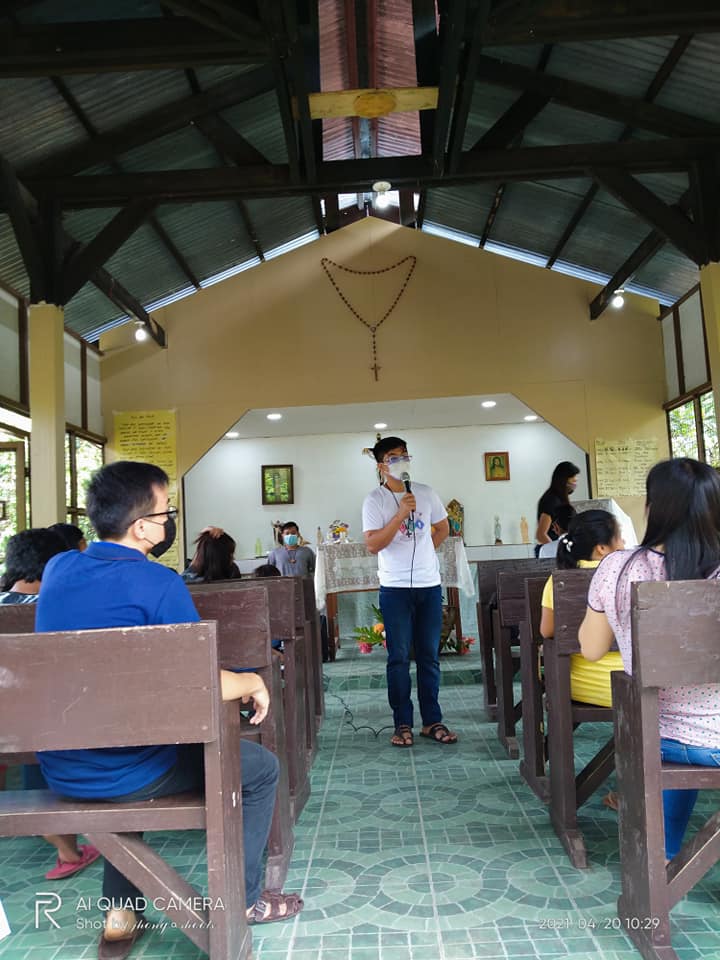
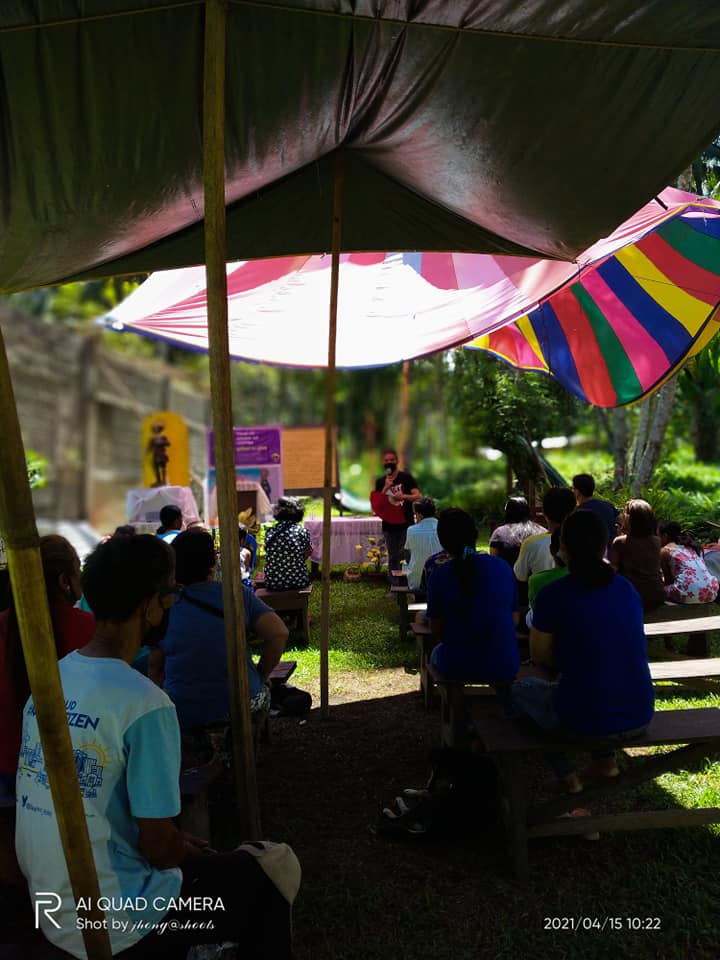
    Our mission in the parish of Balabagan , Lanao del Sur, which lasted for three months (from March to May) somehow, will answer these questions especially when one knows more about the life of Saint Isidore, their patron Saint. Majority of the population are Muslim-Maranaos. Only 20% percent are Christians, from which 5% percent are Catholics. Yet, the Christians there continue to hold on to their faith in God.
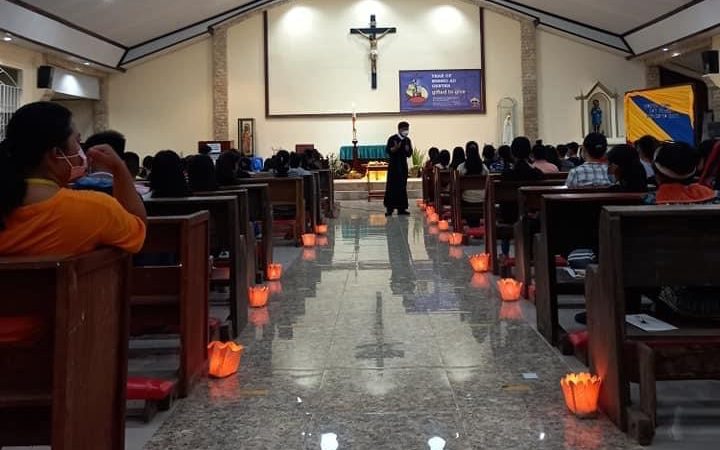
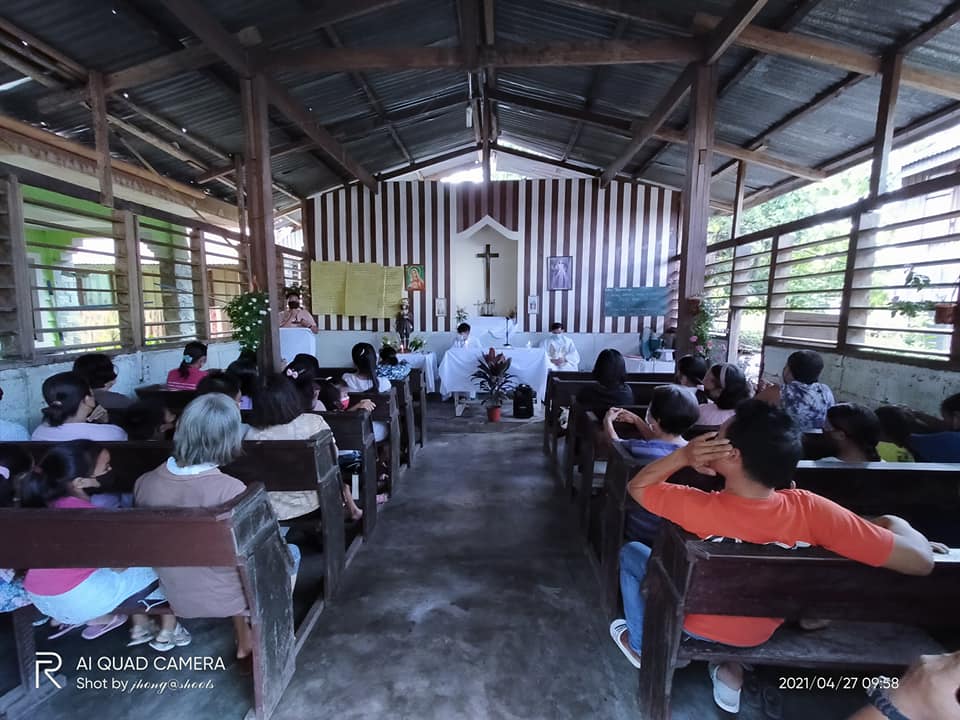
    I always believe that it is the work of the Holy Spirit when choosing a patron saint for every parish and chapel.  That is why, for me, Saint Isidore is really destined to be the patron saint of the parish of Balabagan.   Majority of the people  live a simple and harmonious life, together with their families, despite the conflicts and their bloody history. They are even surrounded by Muslim communities who also treasured their own faith, belief and culture.

    Like Saint Isidore, who was brought up in a religious family, and showed us how to live a good and just life, the whole community of Balabagan, both Christians and Muslims, showed so much compassion, and even valued their faith to God despite their differences.  These are shown through their practices and how they sacrificed their time just to praise and deepen what they believe.   

    Same with the Catholics, especially in celebrating the Holy Eucharist, they participate and respect one’s faith and belief by respecting the tradition and practices of the Muslim community.  This is also the clear message of Saint Isidore, as he was known until now, that, before he would do his work to plow his field, he would first visit some of the churches in Sevilla to pray and to celebrate the Holy Eucharist.  Because of that, Saint Isidore was known for being blessed, holy and kind to others, even to the animals.

    This is also what the community of Balabagan does at present.  Despite their own biases and reservations with other religions, still, they showed so much kindness to one another. They are all like Saint Isidore who was very approachable and kind person. Yet, this is also one of the challenges they need to look into. A challenge to be humble enough to respect and understand one another, especially with people of other religions.  The people showed much appreciation and respect to their differences in terms of culture and religion.

    Although, there were situations that brought so much pain to the Christian community, especially to the Catholics.  One of the chapels of a Christian Community experienced desecration by un-identified Maranaos.  They forcefully entered the chapel, defecated it, broke the image of Jesus on the Cross and destroyed other sacred images of the saints.  

    However,  this really communicates a message to each one of us.   In reality, we may not be able to show our love perfectly to one another, and even please anyone, yet we can always offer that little character, behavior or traits we have.  Some examples are our deep appreciation, respect, understanding and patience. And most especially our humility, no matter what culture, belief and faith we have.  

    I believe that our connection with one another is not based on our culture and religion, but a connection of humanity.  That is why, this is a deep reminder to the call of God, especially to us Catholics.  The life of St. Isidore is a clear and powerful reminder of God’s call for us to live a holy and prayerful life, to celebrate the Holy Eucharist, and to serve God’s people in whatever way we can.  

    Moreover, Saint Isidore is also known as the patron saint of nature.  That is why, it is very important for us today also to restore back our attention and care, to protect and restore the vitality of the environment.

    Lastly, we hope to deeply listen to God’s call, as to how He wants us to live in this world.  We look on the examples of our saints, like Saint Isidore, who listened well to God’s loving presence and committed his life to live a good and just life, by being simple and having a deep faith to God, that led him to be blessed, holy and humble.

    This is a reminder of God’s call for all of us to praise and glorify Him with all our hearts, so that we may be able to welcome one another into our lives, to show our respect, humility, friendship, brotherhood and understanding, despite our differences in culture and religion, and even with our own imperfections.  And we respond to this call by living simply.  Amen.

  • THE GENEROSITY OF THE PEOPLE OF BALABAGAN

    THE GENEROSITY OF THE PEOPLE OF BALABAGAN

    by Portia Awayan, FLARE

    ***From March to May, the Redemptorist Itinerant Mission Team was in the Parish of San Isidro Labrador, Balabagan, Lanao del Sur to help and facilitate the Golden (50th) Jubilee of the Parish. The three-month mission which was aimed as a way of RENEWAL AND ACCOMPANIMENT began with the Lenten Recollection in the Small Christian Communities of the Parish.

     The theme of this year’s Lenten Recollection for the parishioners of San Isidro Parish of Balabagan was “Gifted to Give,” taken from the theme of the celebration of the 5th Centenary of Christianity in our country.   The recollection aimed to deepen their reflection of this theme and relate it to the meaning of Lent. 

      The theme is taken from Matthew 10: 8, where Christ told his apostles: “Freely you have received; freely give.” It’s actually Christ’s command for his apostles to do all, to give all they’ve got for the mission.

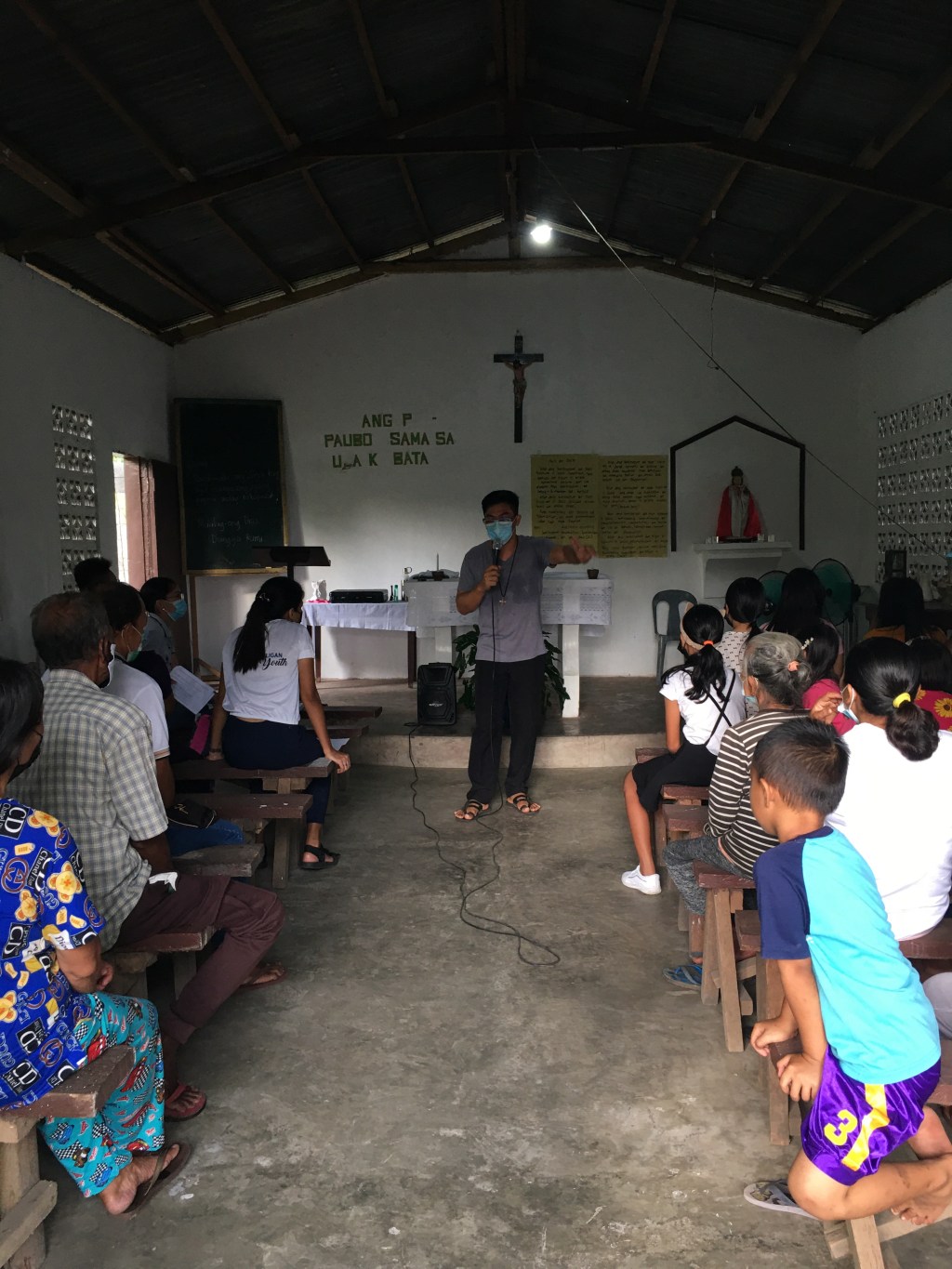
    To jump up the activity, each participant was given 5 small pieces of paper and were asked to write five of the most precious gifts they have received in their life. These could be be material things, relationships, experiences, character, etc.   Then, one-by-one, they were requested to give any of their treasured gifts to the poor, to the church, to the people of other religions, and to the mission.  

    Miss Portia giving the input of the Lenten Recollection – GIFTED TO GIVE to the Christian Community in Lower Itil, Balabagan, LDS

    It was interesting to note that most of them were willing to give and share their precious gifts, even their own family, their own lives, and their own faith to others.  Although it was just a kind of a game, but they showed how generous they are as a people.

    During the recollection, the participants began with the insight that today, with the idea of “being deserving of something you receive” or “of being entitled”, not many of us have really appreciated our gifts. Some would even lose their sense of surprise, even their gratitude and joy. However, a gift is something one does not expect, even something one does not merit, yet freely given according to the desire of the giver. Indeed, we are all gifted at an unexpected moment. So, one wonders!

    But this year, the parishioners of Balabagan reflected that they cannot only be grateful and joyful but should be awed by the gift of Christianity which the nation received 500 years ago.   At a closer look, it is not just faith that they received but the Gospel of Jesus Christ.  

    At the closest and last look, it is neither just the faith nor the Gospel that they received: It is Jesus Himself!   Thus, the celebration is not just about them; it is about Jesus.  They do not only see the gifts, but the Giver.

    Moreover, during this Lenten Season, the parishioners are reminded of the greatest gift of salvation that they have received from Jesus, through His passion, death, and resurrection!   He has reconciled the people back to the Father!  They are saved from the darkness of sin!   They have become people of the Light!  This is truly a gift that brings genuine joy to all believers, like the parishioners of Balabagan!

    The parishioners then reflected on the meaning of the centennial Logo, and on their mission as lay people.   Most importantly, they echoed that they are called to build Christian families. They put into their hearts and minds that the Vatican Council II calls the laity to develop their own family spirituality and to make their families schools of holiness and defense of family values.

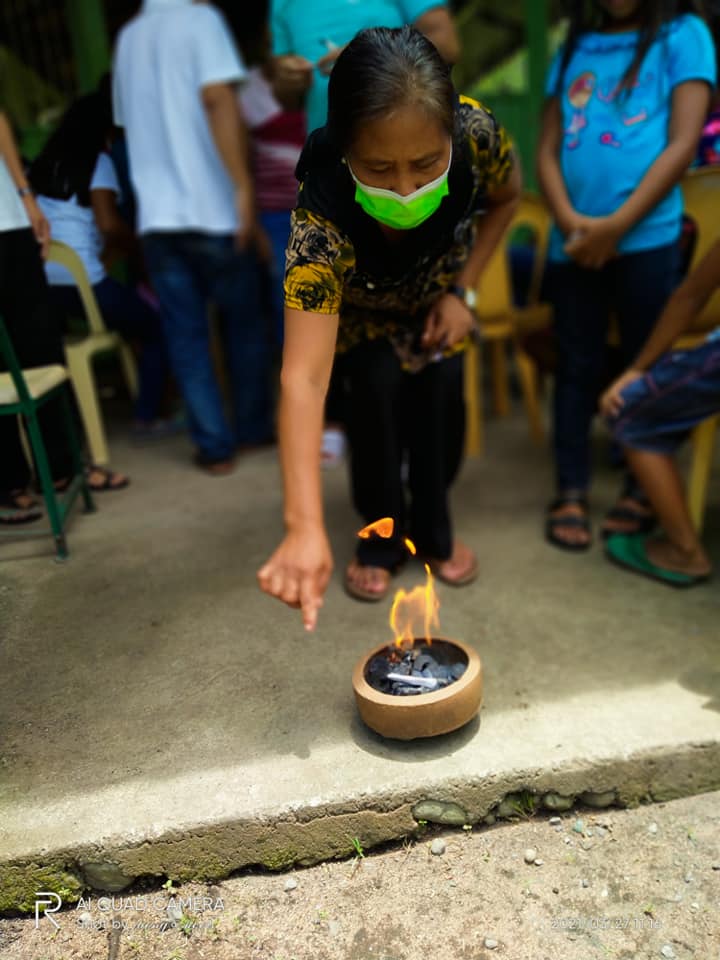
    As we ended every recollection in different communities in Balabagan, they were asked to offer the remaining piece of their treasured gift to the altar, in front of Jesus’ cross.  Without hesitation, they gracefully offered their last gift, showing their generosity as a people.  The members of the mission team could attest to this during their three-month stay in Balabagan.  They have experienced how the people welcomed them, and shared their time, talent, and material goods in all mission activities.  The team especially witnessed the kind hearts and helping hands of simple people, despite their underprivileged conditions.  No wonder, Jesus loves the poor, and reserves for them the Kingdom of God!

  • LOVE IS THE FULLNESS OF GOD

    LOVE IS THE FULLNESS OF GOD

    June 11, 2021 – Solemnity of the Most Sacred Heart of Jesus

    Click here for the readings (https://bible.usccb.org/bible/readings/061121.cfm)

    In the Book of Prophet Hosea, we have been presented with an image of God as a parent and as a healer. Hosea beautifully captures these images of God who only fills with love His child, Israel. God’s love, indeed, nurtures and heals, builds and forgives. Such way of loving from God is written in the whole Scripture that is why we are always reminded how God calls us again and again through love.

    This is best described in the Responsorial Psalm today taken from the Book of Isaiah. The Prophet expresses his confidence in God because he has experienced with God the love that gives strength and courage. God’s presence is water that fills and satisfies our empty heart, quenches the thirst in us for love and support.

    In the same confidence, Paul also reminds the Ephesians of the love of Christ which surpasses knowledge. This is love beyond idea or any ideology, but this is in its most concrete expression of love that sacrifices oneself for the sake of the beloved. This is love that gives life. This is how Paul affirms that the love of Christ truly fills us because love is the fullness of God.

    In that fullness of God, God only desires to share that love that will fill every empty but insecure and fearful heart. This is how the Gospel of John reveals to us the physical and literal overflowing of blood and water from the pierced heart of Jesus. The soldier who thrusted his lance into the side of Jesus witnessed this.

    The seemingly dead body of Jesus, flowed out blood and water which only gives life and joy, satisfies emptiness and also nurtures and heals, builds and forgives. This tells us that even when Jesus was being hurt, the Lord continues to bring out his love and only love.

    This is the very message of the Most Sacred Heart of Jesus. This Solemnity is not a mere worshipping of an organ, “the heart” per se, but of Jesus himself who constantly showed us the love of God spoken about in the Scriptures.

    There are two invitations for us today.

    First. Be filled by that love of Christ. His love only brings fullness in us. Thus, learn to be confident in his love! Be overwhelmed by his love! Seek his love that will satisfy our every hunger and thirst for love and intimacy, for acceptance and support.

    Second. Learn from his way of loving. Let our expression of love to truly give life. Let our love nurtures immaturity, builds the confidence of the fearful, heals the brokenhearted and in pain, forgives the sinner and does not plant hate and violence. Hinaut pa.

  • Bonded by the Lord’s meal

    Bonded by the Lord’s meal

    June 6, 2021 – Solemnity of the Most Holy Body and Blood of Christ

    Click here for the readings (https://bible.usccb.org/bible/readings/060621.cfm)

    In almost every Filipino homes there is a picture of Last Supper near the dining table. Have you ever wondered why in all places such picture of the Lord’s last supper is hanged near the dining table?

    This is because we, Filipinos love celebrations. We like to be part of big party or fiesta. Basically, we are meal-oriented people. We like to eat, and mealtimes are important and meaningful activity for us. Yes, we like to eat, but we like to eat together. We eat not only for nourishment but for companionship as well. For us, eating is not only a usual routine of nourishing our own physical body, but also a common activity of strengthening relationship and bonding. That is why we eat together not for the food, but for the companionship and covenant it brings. Mealtime for us is not only the time to eat, but also the opportunity to encounter – to experience one another.  This is why we don’t like to eat alone. We like to eat with companion, because for us, meals, eating, tables would mean celebrations, table-fellowship, sharing, bonding, rituals, and communion.

    The word ‘companion’ is an interesting word. It comes from two Latin words: cum which means “with”, and panis which means bread. So a ‘companion’ literally means someone whom I share bread with. And it is only a few (not all) you enjoy having meal with. There has to a bonding – a relationship first, which is deepened by the sharing of food and drink. Usually, by inviting a person to a meal, we seal our contracts, we show acceptance and approval. We know that once you are invited to take part in their table – to eat with them, it would mean that you are already accepted.  You become one of them. You belong to them.

    This is why we like the picture of the Last Supper hanging on near our dinner table because we want to be part of Lord’s celebration of life.  Taking our meals in front of the picture of the Last Supper, whatever the food is, whether lechon or bulad or ginamos, would mean we want to be a companion of Jesus and his disciples in their party celebration. This is why it is also particularly difficult for us to not able to attend Holy Mass during these pandemic times, & how insufficient it is, just to take part of the Holy Mass through the live-streaming. In other words, we do like to renew and strength our faith-relationship with Him. We want to be accepted and belong to His community. We like to be part of His family-banquet, His party. And All of these are greatly done and signified until now in our table-fellowship in the Lord’s Eucharist, in our celebration of the Holy Mass. 

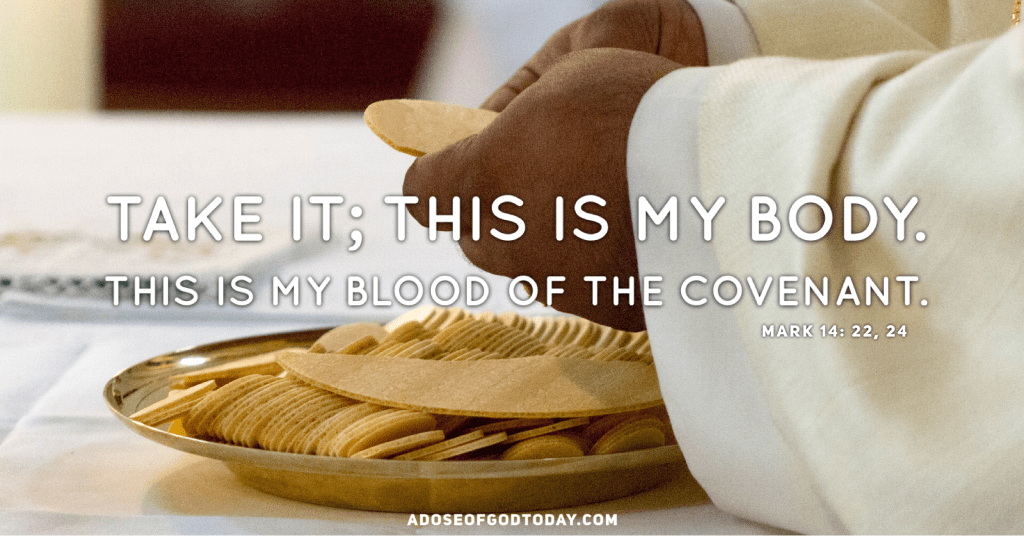
    Today, we celebrate the feast of Corpus Christi, the Body and Blood of Christ. Today, we recognize and celebrate Christ’s continuing Presence and His binding promise of love and redemption to us, through His gift of Himself in a form of bread and wine. Our readings today remind us that as in life we feed ourselves with food, the Lord also feed us with His food, not only to nourish us but also to strengthen our covenant relationship with Him. Jesus in our gospel today specially has offered us His body and blood, as our inheritance of God’s manna in the Holy Eucharist. By sharing us Himself in body and blood, Jesus sealed us new covenant-relationship with God. And because of this, we are continually nourished by God’s graces and we are in communion with Christ’s eternal life. In other words, through His body and blood, Jesus is offering us not only God’s food for our faith-life journey but also a meal-time party (or a food trip) with God. That is why every time we celebrate the Holy Eucharist, we are in covenant or in companionship with God, with Jesus, and with one another. Thus, through our table-fellowship as family and community in our celebrations of the Lord’s Eucharist every Sunday and also as Filipino in front of the picture of the Lord’s Supper, we are united with the Lord and we take part with His glory and work of redemption. 

    Perhaps if we say nowadays, “We are what we eat and who we eat with” (Tayo ay ang Anong kinain at sino ang kasama), in attending Eucharist, we as Christian proclaim that through the body and blood of Jesus we are having party-meal (food trip/ breaking bread) with God now and always.

    For those who are not able to receive communion during live-stream Masses, nowadays they pray Act of Spiritual Communion of St. Alphonsus, saying “I desire to receive you into my soul. Since I cannot now receive you sacramentally, come at least spiritually into my heart… Never permit me to be separated from You. Amen.” Such words express our deep desire to be in communion with Jesus, to be part and companion of His eucharistic sacred life.

    During these pandemic times, we pray that we may always be in communion & in companion with our risen Lord, be nourished by His body & blood, and be always united & bonded, not separated from His love & mercy.

    So Help Us God, So May it be. Amen.

  • Blessing in Disguise

    Blessing in Disguise

    June 5, 2021 – Saturday of the 9th Week in Ordinary Time

    Click here for the readings (https://bible.usccb.org/bible/readings/060521.cfm)

    A certain village trickster would constantly make fun of his church devotee neighbor. At times he would say: “What’s the point of praying, where and when God is not even helping you.” In response, the poor lady devotee would just smile in silence. Once the trickster overheard his neighbor praying: “Lord, I thank you for this daily bread. I pray that I may have enough provisions for this week, as my son’s family is also needy at this time. But it is not my will, but your will be done. I trust in you. Amen.”

    Trickster as he is, he bought a bagful of grocery, put it outside his neighbor’s door, and waited for lady’s reaction. As his neighbor joyfully found the bag of grocery, he butted in & said: “It’s from me & not from your God. See, how right am I that your God does not care for you?” Nevertheless, the devotee neighbor joyfully praised God saying: “Thank you Lord for all these blessings before me…. & for letting my good neighbor pay for it.”

    The cursed life & misfortunes of Tobit & Sarah in our first reading were now getting better. With their full faith & fidelity to God amidst life-challenges & difficulties, grace upon grace was abound anew in their lives. And all along without knowing it, they got angel Raphael to help & guide them. All along, the one who journeyed with them was their answered prayers – an angel in disguised Raphael, as God’s messages & interventions to their life’s burden & misfortunes. As they cooperated with God’s plan & will, life for them is getting better than before & what it was back then.

    Jesus in our gospel today reminds us that God hears & knows our heart’s desires, and He responds from all that we got and not from our surplus. Even without knowing it, we are worthy of His graces & blessing in our lives, whenever we are whole-heartedly & not half-heartedly believing & trusting in His ways, like that of Tobit, Sarah & the poor widow. Whether pure or superficial, God knows our heart’s intentions & readily respond to our prayers, as long as we cooperate with His ways.

    Remember God listens to our prayers & blesses our present needs. God’s blessings however usually come in disguise. We only have to believe & trust wholeheartedly and purely that things in life will turn out better than what we want & expected to be. Who knows? Perhaps the shrewdness, hypocrisy & stupidity of others might be God’s blessing in disguise for you and others. Perhaps what we are going through nowadays are blessings in disguise for our betterment.

    Here we are before you Lord. You know where, what, how we are now, and need to be. We believe & trust that You love us always & want what is better for us. Make us aware and benefit from your constant Blessings that usually comes to us hidden in disguise. May Your will, not mine & ours, be done.

    So Be it. Amen.